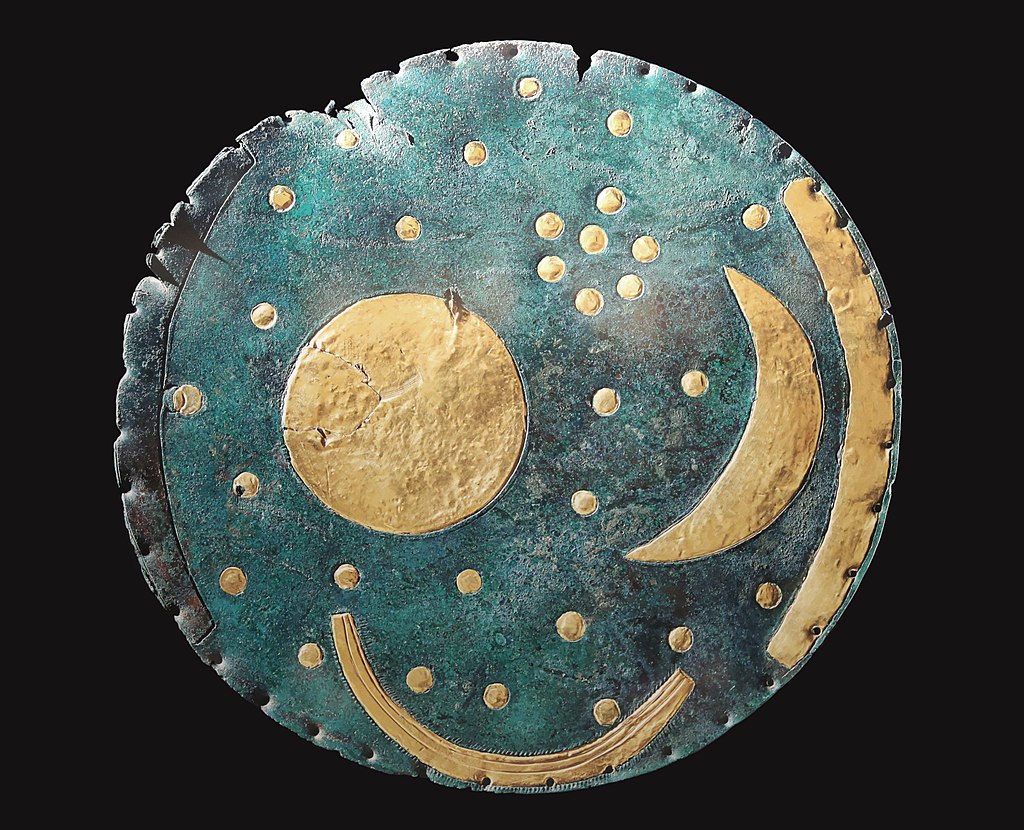
This remarkable object is made of bronze, is around 30 cm diameter and weighs about 2.2 kg. It has a blue-green patina and is inlaid with gold symbols, usually interpreted as the full moon, a lunar crescent, and stars, including a cluster of seven stars, thought to represent the Pleiades. The gold arc on the right probably represents the Sun’s path between the solstices; the angle subtended by the arc (82°) is the correct angle sunrise at the summer and winter solstices and at the latitude of the discovery site (Mittelberg, near Nebra, in Germany); there was probably another such arc on the other side of the disk (now lost). Remarkably, the tin used in making the bronze from which it is formed has been traced by metallurgical analysis to Cornwall.
The Nebra disc has been dated to c. 1800–1600 BCE (Bronze Age) which makes it the oldest (certain) depiction of celestial phenomena known from anywhere in the world. In November 2021, a replica of the Nebra Sky Disc was taken by German astronaut Matthias Maurer to the International Space Station.
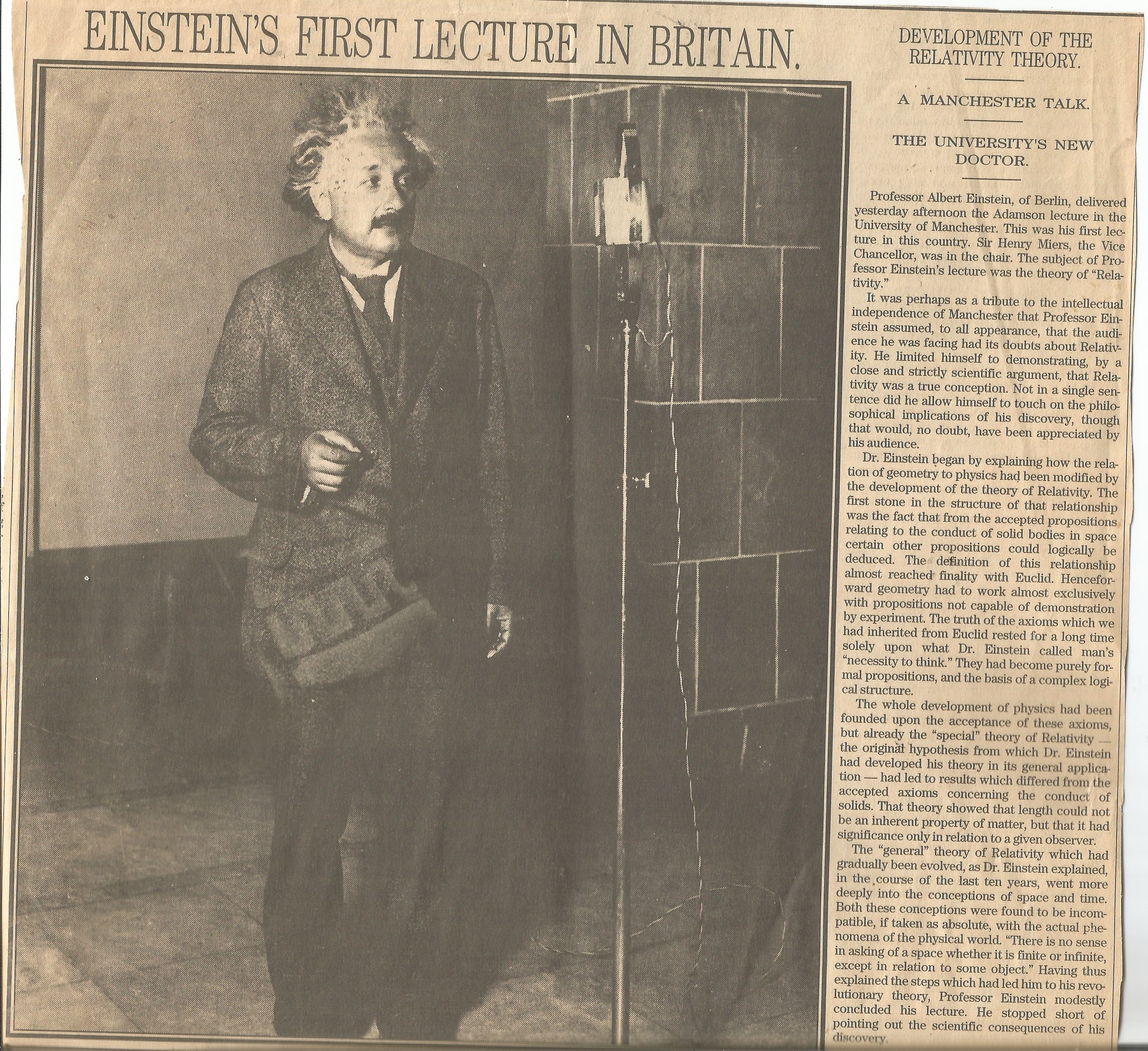
Tidying a few things up ahead of the start of term I discovered this old clipping, yellowed with age, and decided to scan it before it disintegrates entirely:
It is from the (then) Manchester Guardian which is now known as the Grauniad. The article is dated 1st October 1921, which implies that the talk must have been on the afternoon of Friday 30th September 1921. However, the University of Manchester website states that the talk was on June 9th 1921. During his visit, Einstein was awarded an Honorary Doctorate of Science by the University of Manchester, which is recorded here as having been presented on June 8th, so it appears the Guardian piece was published some time after the event. As usual, Einstein gave his lecture – to a packed house – entirely in German, as he did when he lectured in Nottingham almost a decade later.
Einstein was already famous by 1921 – largely thanks to the 1919 Eclipse results (see, e.g., here) – but it was still before he won his Nobel Prize (in 1922).
Anyway, the text down the right-hand side of the Guardian piece can be found here; it’s well worth reading!
On September 4th, when I posted a piece about the forthcoming Presidential Election in Ireland, I forgot to mention that just two days earlier was the 50th anniversary of the funeral of Éamon de Valera, founder of Fianna Fáil (one of the two largest political parties in Ireland) and architect of the Irish constitution, who died on 29th August 1975 at the age of 92. Here’s some coverage at the time by (British) Movietone News, the commentary is rather generous to him:
De Valera (nickname `Dev’) is an enigmatic figure, who was a Commandant in the Irish Republican Army during the 1916 Easter Rising, but despite being captured he somehow evaded execution by the British. There’s no evidence, incidentally, that he escaped the firing squad because he was born in America. Dev subsequently became Taoiseach (Prime Minister) and then President (Head of State) of the Irish Republic.
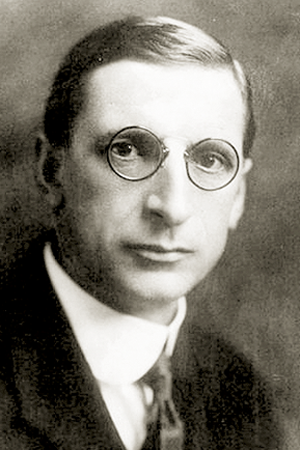
Eamon de Valera, photographed sometime during the 1920s.
There’s no question in my mind that de Valera is the most significant Irish politician of the 20th Century, which is not to say I fid him an agreeable figure at all and his legacy isn’t particularly positive. Nevertheless, his funeral was perhaps as significant event for the Irish as that of Winston Churchill had been for the British just a decade earlier.
Over the past couple of weeks RTÉ television broadcast a two-part documentary called Dev: Rise and Rule; the second part was on last night. It is quite nicely made, but disappointingly superficial and lacking in any real historical insight. The suggestion that it would “decode” Dev was unfulfilled. This is a pity because RTÉ often does good documentaries.
Anyway, this gives me an excuse to mention again, Dev’s connection with Maynooth. De Valera was a mathematics graduate, and for a short time (1912-13) he was Head of the Department of Mathematics and Mathematical Physics at St Patrick’s College, Maynooth, which was then a recognised college of the National University of Ireland. The Department became incorporated in Maynooth University when it was created in 1997. Mathematical Physics is no longer a part of the Mathematics Department at Maynooth, having first become a Department in its own right, then changing its name to the Department of Theoretical Physics and then, just last year, being subsumed within a new Department of Physics.
De Valera missed out on a Professorship in Mathematical Physics at University College Cork in 1913. He joined the the Irish Volunteers, when it was established the same year. And the rest is history. I wonder how differently things would have turned out had he got the job in Cork?
Quinto expeditionum anno nave prima transgressus1 ignotas ad id tempus gentis crebris simul ac prosperis proeliis domuit; eamque partem2 Britanniae quae Hiberniam aspicit copiis instruxit...
The first question relates to transgessus meaning “crossed”. Where did he cross? I remembered all the way back to school days reading some of this, and found the following in Vol. 1 of the Latin textbook we used back then (Wilding’s Latin Course for Schools). On page 68 of that tome we find the following as part of an exercise to translate from Latin to English:
Agricola copias Clanoventae, ubi ora Britanniae ad Hiberniam spectat...
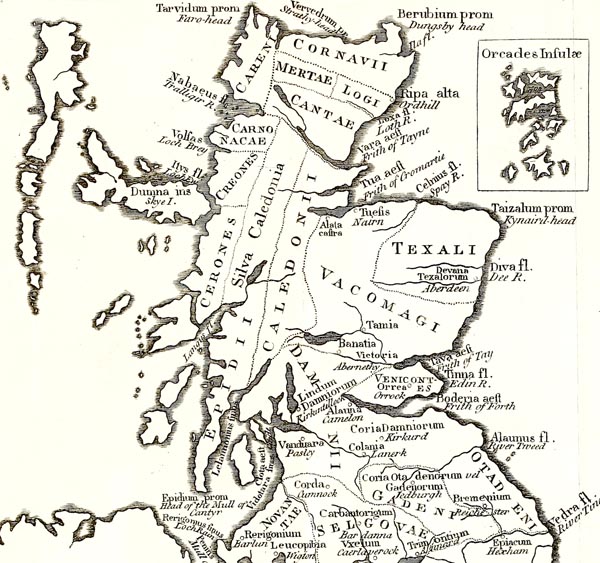
Clanoventae is a Roman name for the town of Ravenglass, near the Cumbrian coast. At the time I took this to be a direct quote from Tacitus, but it isn’t. Obviously Wilding made that bit up! There is evidence of substantial Roman activity at Ravenglass, but none that this was the place he placed the troops intended for a possible invasion of Ireland. Moreover, the actual quote from Tacitus makes it clear that he “crossed” with ships, but that doesn’t seem right when you look at the location (marked with the red thingy):
It’s quite a long way to “cross” from there to modern-day Scotland, and in any case what you would see from there is first and foremost the Isle of Man. From there he could definitely see both Britain and Ireland, but as far as I know there’s little or non direct evidence of Roman activity there, though the Romans did know it through trading interactions. They called it Insula Manavia. Tacitus does not use place names very often – there are only half-a-dozen – in the entire book about Agricola but it seems to me he would not have confused it with Hibernia.
Putting my school textbook away and turning to other commentaries, I didn’t find any real consensus but the best bet is that what Agricola crossed was the Solway Firth, and where he crossed from could well have been Maryport, also a well-known Roman military site (called Alauna). There is no direct evidence for that either, though, and the earliest directly dated evidence of significant activity there is much later, around 122AD. Agricola’s incursion to Scotland was around 81 AD.
If Agricola did cross the Solway Firth he and his army would have landed in what is now Dumfries and Galloway. Most commentaries now believe that the place from which he could see Ireland would be the Rhinns of Galloway, the hammer-shaped peninsula to the West of Stranraer. Now that isn’t the part of Scotland closest to Ireland – that would be the Mull of Kintyre, much further North – but it is pretty close, and it certainly does face across the Irish Sea with nothing in the way.
There is also plenty of evidence of Roman activity near Stranraer, including a settlement and fort in a place known to them as Rerigonium. There are also traces of a Roman road. That is important because, to the Romans, roads were primarily military structures, meant to facilitate the movement of troops and supplies quickly. Had the Romans ever invaded Ireland they would have built an extensive network of roads, as they did in England.
It seems to me that Rerigonium would have been a good choice of place to launch the putative invasion. Loch Ryan would have provided a natural harbour for the ships that would take troops the short distance to Ireland and it’s not difficult to imagine a Roman legion embarking there.
P.S. When I was a lad there were regular ferries from Stranraer to Belfast and back, but now they operate to and from Cairnryan, about 6 miles further up Loch Ryan.
About a month ago I posted an item about the National Famine Way, at the end of which I signalled my future intention to walk the 165 km 6-day route from Strokestown to Dublin. I was subsequently contacted by a number of people warning me that I might not be up to it. They didn’t put me off, but I have come up with a plan. This week – on Wednesday in fact – I will have the injections I get every six months or so to control the arthritis in my knees. Thus fortified, I intend next week to do a trial run walk consisting of the last stage of the Famine Way, from Maynooth to Dublin, along the Royal Canal. That’s about 27km and will take most of a day. I’ll stop on the way for lunch and when I get to the end I can get the train back to Maynooth. And if I run walk into difficulties I can stop at one of the intermediate stations and return from there; the canal runs right alongside the railway line for most of the way. If all goes to plan I’ll take time off next year to do the whole trip from Strokestown.
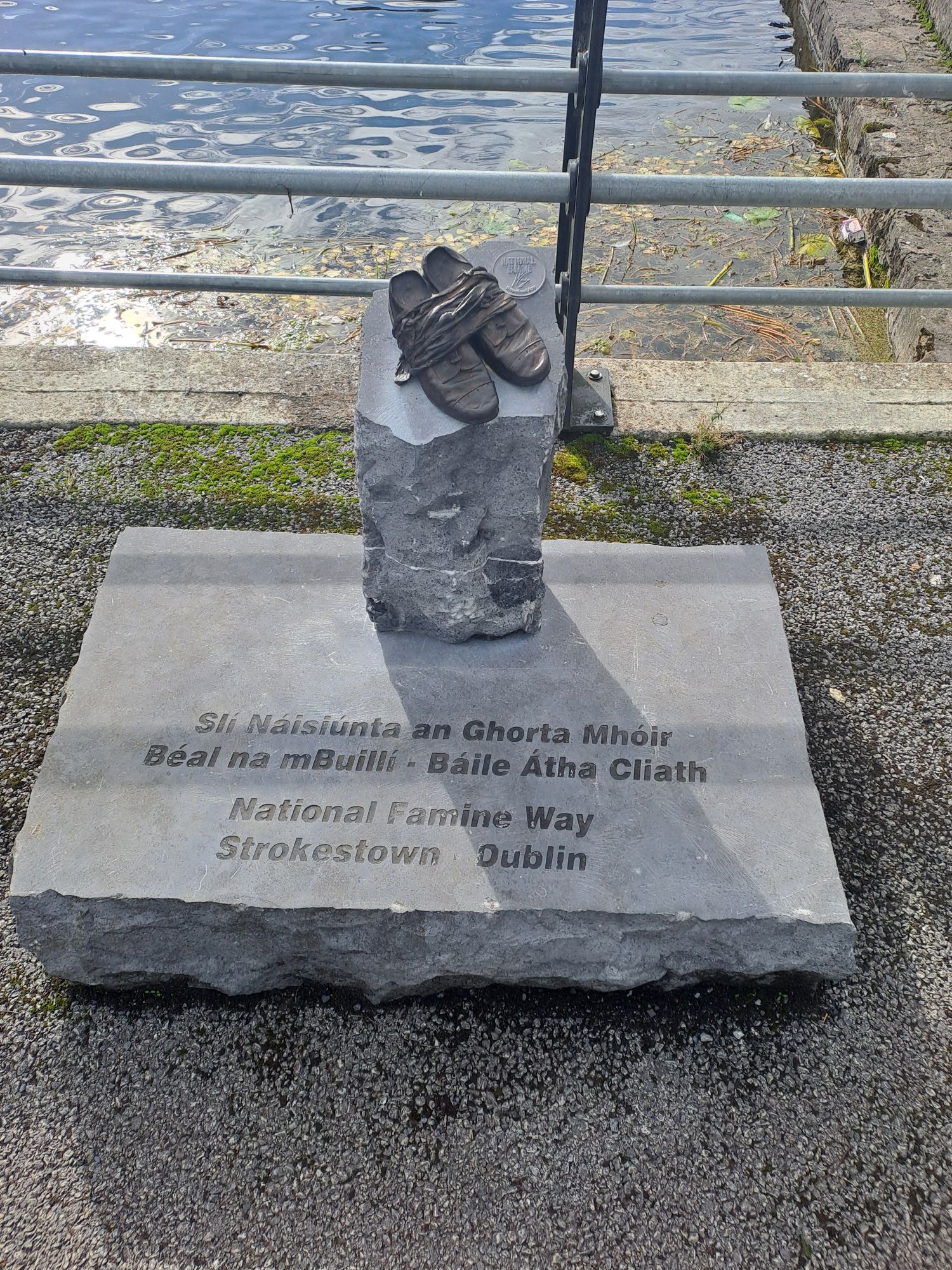
Meanwhile here’s a picture of one the poignant bronze sculptures of children’s shoes placed along the way. This one is at Maynooth harbour; there are 8 others on the way to Dublin.
To learn more about these shoes, see here, and here’s a video telling the story
Some years ago I came across a blog post relating to the discovery of a fortified settlement at Drumanagh (near Dublin) where Roman coins and goods have been found. It might have been a Roman military site, but in my mind it could equally well have been a Celtic settlement and the finds might have been loot from elsewhere.
I do find it a bit hard to believe that no Romans ever set foot in Ireland, though, and Drumanagh may well have been some sort of trading post or temporary fort for a reconnaissance mission. If that site is Roman, and that was all there was, then it didn’t amount to a full invasion and there’s certainly nothing like the roads or other infrastructure that’s so common in England and Wales.
I thought about this when at the weekend I was “reorganising” my bookshelves (by which I mean changing from one form of disorganization to another), when I came across some old Latin textbooks that included excerpts from the book De vita et moribus Iulii Agricolae which was written by Publius Cornelius Tacitus (Tacitus to you). The Agricola of the title was Gnaeus Julius Agricola, Roman Governor of Britain from around AD 77 until 85. He also happened to be the father-in-law of Tacitus, which probably accounts for the sycophantic tone of some of the writing.
The availability of this book is interesting in itself because only a solitary codicil survived the Roman Era. It eventually became a very popular source in old-fashioned British grammar schools at which Latin was compulsory, as it was at the one I went to, partly because it related to Britain and partly because of the author’s very concise and direct prose which makes much of it quite easy to translate. We didn’t read the whole book at school, but excerpts cropped up regularly to illustrate various grammatical constructions and introduce new vocabulary.
You can find the full Latin text here and an English translation here. I tried Google translate on some passages and it was terrible.
Anyway, as an exercise to my erudite readers I here include sections 23 to 26 which describe part of Agricola’s adventures in Scotland, followed by some comments. Before doing so it is worth mentioning a bit of the context. Agricola’s military campaigns at this time were often carried out in the first instance by water. Scotland was very much bandit country and slogging through the terrain on foot would have led to multiple ambushes and pitched battles.
[23] Quarta aestas obtinendis quae percucurrerat insumpta; ac si virtus exercituum et Romani nominis gloria pateretur, inventus in ipsa Britannia terminus. Namque Clota et Bodotria diversi maris aestibus per inmensum revectae, angusto terrarum spatio dirimuntur: quod tum praesidiis firmabatur atque omnis propior sinus tenebatur, summotis velut in aliam insulam hostibus.

[24] Quinto expeditionum anno nave prima transgressus ignotas ad id tempus gentis crebris simul ac prosperis proeliis domuit; eamque partem Britanniae quae Hiberniam aspicit copiis instruxit, in spem magis quam ob formidinem, si quidem Hibernia medio inter Britanniam atque Hispaniam sita et Gallico quoque mari opportuna valentissimam imperii partem magnis in vicem usibus miscuerit. Spatium eius, si Britanniae comparetur, angustius nostri maris insulas superat. Solum caelumque et ingenia cultusque hominum haud multum a Britannia differunt; [in] melius aditus portusque per commercia et negotiatores cogniti. Agricola expulsum seditione domestica unum ex regulis gentis exceperat ac specie amicitiae in occasionem retinebat. Saepe ex eo audivi legione una et modicis auxiliis debellari obtinerique Hiberniam posse; idque etiam adversus Britanniam profuturum, si Romana ubique arma et velut e conspectu libertas tolleretur.

[25] Ceterum aestate, qua sextum officii annum incohabat, amplexus civitates trans Bodotriam sitas, quia motus universarum ultra gentium et infesta hostilis exercitus itinera timebantur, portus classe exploravit; quae ab Agricola primum adsumpta in partem virium sequebatur egregia specie, cum simul terra, simul mari bellum impelleretur, ac saepe isdem castris pedes equesque et nauticus miles mixti copiis et laetitia sua quisque facta, suos casus attollerent, ac modo silvarum ac montium profunda, modo tempestatum ac fluctuum adversa, hinc terra et hostis, hinc victus Oceanus militari iactantia compararentur. Britannos quoque, ut ex captivis audiebatur, visa classis obstupefaciebat, tamquam aperto maris sui secreto ultimum victis perfugium clauderetur. Ad manus et arma conversi Caledoniam incolentes populi magno paratu, maiore fama, uti mos est de ignotis, oppugnare ultro castellum adorti, metum ut provocantes addiderant; regrediendumque citra Bodotriam et cedendum potius quam pellerentur ignavi specie prudentium admonebant, cum interim cognoscit hostis pluribus agminibus inrupturos. Ac ne superante numero et peritia locorum circumiretur, diviso et ipso in tris partes exercitu incessit.

[26] Quod ubi cognitum hosti, mutato repente consilio universi nonam legionem ut maxime invalidam nocte adgressi, inter somnum ac trepidationem caesis vigilibus inrupere. Iamque in ipsis castris pugnabatur, cum Agricola iter hostium ab exploratoribus edoctus et vestigiis insecutus, velocissimos equitum peditumque adsultare tergis pugnantium iubet, mox ab universis adici clamorem; et propinqua luce fulsere signa. Ita ancipiti malo territi Britanni; et nonanis rediit animus, ac securi pro salute de gloria certabant. Ultro quin etiam erupere, et fuit atrox in ipsis portarum angustiis proelium, donec pulsi hostes, utroque exercitu certante, his, ut tulisse opem, illis, ne eguisse auxilio viderentur. Quod nisi paludes et silvae fugientis texissent, debellatum illa victoria foret.
In [23], around 80 AD, we find that Agricola saw advantage in conquering Scotland as far as the Firth of Clyde (Clota) and Firth of Forth (Bodotria) because the tide would bring his ships a long way inland and they were separated by only a narrow stretch of land. He claims he would have gone further had he had the resources needed to do so.
[24] is the interesting one in light of the introduction to this piece . The fifth year of campaigning would have been 81 AD, long before the construction of Hadrian’s Wall. It says that Agricola crossed in his flagship (literally in the first ship, naveprima). It then goes to say that he garrisoned that part of Britain which faces Hibernia (i.e. Ireland) not out of fear but in hopes of further action. This is because he felt that Ireland offered a strategic connection between the provinces of Britain and Spain.
Some people think that the garrison Agricola formed for his putative future action, ostensibly an invasion of Ireland, was at Ravenglass in modern-day Cumbria, rather than Scotland, but it might have been further North; nobody really knows. My reading of the text is that he crossed the Firth of Clyde to the Mull of Kintyre. I remember as a kid seeing Ireland from the Mull of Kintyre and was told that on a clear day you could see as far as the mountains in Donegal from there.
Tacitus goes on to say that (my emphasis):
Ireland is smaller in size when compared to Britain, but larger than the islands of the Mediterranean. The soil, the climate and the character and manners of its inhabitants differ little from those of Britain, while its approaches and harbours are better known through trade and commerce. We also learn that Agricola has a friendly Irish chieftain in tow, who has been turfed out of his own land.
Agricola had given sanctuary to a minor chieftain driven from home by faction, and held him, under the cloak of friendship, until occasion demanded. My father-in-law often said that with one legion and a contingent of auxiliaries Ireland could be conquered and held; and that it would be useful as regards Britain also, since Roman troops would be everywhere, and the prospect of independence would fade from view.
So Agricola felt that people of Hibernia and Britain were similar and the effect of conquering the former would be to snuff out any hopes of independence in the latter. Either the planned invasion never happened, or Agricola tried it, got his fingers burnt and Tacitus chose to omit it from his account. This seems unlikely because Agricola had enough on his plate dealing with the Scottish campaign without diverting a legion to Ireland.
Anyway, the second emphasized section explains that Ireland’s ports were well known through trade and commerce, so one can infer that Romans were familiar enough to have landed there to trade, etc. I think Drumanagh was probably just one of many such stations.
In [25], a year later. Agricola is already campaigning beyond the Firth of Forth using a combination of naval and land-based forces. The Britons were wrong-footed by the Romans’ use of the sea, but mounted attacks against Roman forts. At the end of this section, Agricola, hearing that his force is about to be attacked, divides his army into three divisions and advances.
I included [26] because it mentions the Ninth Legion (in the accusative case, nonam legionem) because they are being attacked. The Ninth Legion has been the source of much speculation as the “Lost Legion”, as it disappears entirely from the historical record after about 120 AD. This unit was in the thick of the action, many times and was almost wiped out in 61 AD during the rebellion of Boudica and in other rebellions. According to Tacitus it was one of the three parts of Agricola’s army in 83 AD, though it was described as “especially weak” (maxime invalidem), and was in trouble there too, but was eventually rescued by the other two divisions. It doesn’t explain why the Ninth was the most weakened. Had it suffered more casualties than the rest of Agricola’s army or was it just not as well trained? Was part of it left as the garrison described in [24]? Could it have participated in an abortive invasion of Ireland the year before, got badly mauled in the process, and hadn’t recovered to full strength?
Bearing in mind that Tacitus wanted to portrary Agricola in a positive light, perhaps the complete rescue of the Ninth described in the text was exaggerated and its already weakened state was worsened still further by this battle? It wasn’t here that the Lost Legion was lost, however, as it cropped up elsewhere in Britain until at least 108 AD, twenty-five years later, and perhaps as late as 120 AD elsewhere on the continent. I’m not a historian but it seems to me that a plausible explanation of the fate of the Ninth Legion is that it was broken up into detachments and gradually dispersed, rather than being wiped out in one calamitous battle.
The last episode of Simon Schama‘s BBC TV series A History of Britain, called “The Two Winstons”, follows the story of the Second World War and its immediate aftermath through the eyes of two very different Englishmen, George Orwell and Winston Churchill. Near the end of the programme Schama talks about the year 1948, when a very sick Orwell wrote his last major novel, Nineteen Eighty-Four. I’ve reconstructed this section from the subtitles on my DVD of the series.
It starts with a direct quote from 1984
In our world there will be no love but the love of Big Brother, no laughter but that of triumph. No art, no science, no literature, no enjoyment, but always and only, Winston, there will be the thrill of power. If you want a picture of the future, imagine a boot stamping on a human face forever.
It continues with the voice of Simon Schama as narrator
To clear his head of the static hum of postwar London, Orwell went as far away as he could without actually leaving Britain, to the very edge of the kingdom – the Hebridean island of Jura. No electricity, no telephone, post twice a week, maybe.
And it was here, in the remotest cottage he could find, typing in bed with the machine on his knees, knowing he hadn’t long to live, that Orwell concentrated on what mattered most to him, and to Britain – the fate of freedom in the age of superpowers. As Churchill issued his grim warnings, Orwell created a common or garden plain man’s Winston – Winston Smith. The year was 1948.
When we think of 1984, most of us think of the tyranny of drabness and mass obedience ruled by Big Brother, a world of doublespeak where war is peace and lies are truth. But Orwell’s last masterpiece is most powerful and most lyrical when it describes Winston’s resistance to dictatorship, a guerrilla action fought, not with guns and barricades, but by literally taking liberties, a walk in the country, an act of love, the singing of an old nursery rhyme.
Winston Smith did all these forbidden things, prompted by a dim memory of a time when they were absolutely normal. The last refuge of freedom against Big Brother is memory. The greatest horror of 1984 is the dictator’s attempt to wipe out history.
I thought of the last sentence when I read about Donald Trump’s plan to rewrite American history for the 250th anniversary of the Declaration of Independence, but that’s just one example amid the rise of authoritarian regimes around the world. In the context of the TV programme, Schama was making a case for the importance of history as a discipline, but there is something else important to say: we should not forget the past but, perhaps even more importantly, neither should we forget about the future we wanted to see. The present is not the future I hoped for when I was younger, even in 1984, but the story isn’t over yet.
A young (male) person of my acquaintance sent me this picture a while ago. I think he found it here. I assume he thinks the old guy with the walking stick is me, and the boy is him. We’ll gloss over what he was trying to say by sending it to me but, whatever the reason, I found it intriguing.
The online description reads
Elderly man supported by boy, fresco of the Tomb of the Jugglers, Necropolis of Tarquinia (Unesco World Heritage List, 2004), Lazio, Italy, Etruscan civilization, 6th century BC.
This is from the Etruscan (i.e. pre-Roman) period and the best guess for the date is around 530 BC, so the first thing of interest is that, although it is damaged, it has survived pretty well. Fresco (paint on wet plaster, left to dry) is a very fragile medium and many made 1,000 years after this have not lasted as well. The reason for this is that the tomb was not unearthed until 1961, so it was undisturbed for about 2,500 years. The piece above is a section from a larger work that depicts a sort of funerary ritual.
Now to the description quoted above. For a start, the man is not all that “elderly” as his beard is not grey. He is however clearly older than the boy, who isn’t wearing a beard (nor anything else for that matter). The description says “supported by a boy” but if you look at the painting the older man is holding the younger man firmly by the wrist. That doesn’t look like “support” to me!
When I first saw this piece I assumed the older man was holding a staff or walking stick of some sort, but if you look at his right hand you’ll see his index finger extended as if he is pointing and the object in question is behind his hand. The stick also appears to be decorated, but I think it might be the trunk of a small tree; there are fig trees with fruit than hangs on the trunk, for example. It could be that the damaged area at the top of the stick represented foliage at the top. There are several depictions of trees elsewhere in the tomb.
Iinitially I thought the shapes under the original excerpt were meant to be waves, but it seems they are just part of an abstract frieze that runs all the way around.
So what can we infer from these clues? One interpretation is that the man with the beard is taking the boy away reluctantly for some nefarious activity? Sexual relationships between boys and older men were not uncommon in Greek civilisation so maybe that was also the case for the Etruscans?
But there is another interpretation, which I find more plausible given the context of the painting. The scenes in the centre and right represent the funeral rites, including music, but the man and boy (on the left) are clearly walking away from all that. Moreover, the figure in the central panel apparently standing in some sort of vessel looks very much like the boy in the panel above. Is the lid off to let him out, or is he about to be sealed in?
My reading of it, therefore, is that the boy is dead, and the man with the beard is no less than Charun, the demon charged with guiding the departed to the underworld. The name Charun is derived from the Greek Charon, but the character of Charun is quite different from the ferryman Charon. Anyway, he definitely looks like he’s taking the boy somewhere he doesn’t want to go, and Charun is often depicted wearing a skull cap as he is in the picture.
Now I definitely need to find out why my young friend sent me this…
Yesterday evening on my way out for a meal I got talking to a couple of people who asked for directions. It turned out that they were on the National Famine Way which, to my shame, I hadn’t heard about. When I got home I looked up the website and decided to put it on my list of things to do. The question is whether I can fit it in before term starts near the end of September…
In a time filled with tales of hunger and hearbreak, the National Famine Way commemorates just one example of the cruelty inflicted on Ireland’s poor. No fewer than 1490 starving tenants of the Mahon estate at Strokestown were evicted from their homes then marched along the Royal Canal to Dublin, escorted by the Bailiff responsible for the evictions. At Dublin they travelled by steamer to Liverpool and then crossed the Atlantic on an assortment of coffin ships bound for Canada, about a third of them dying on the way. This was called “assisted emigration”.
The sorrowful journey of the emigrants is marked by 32 pairs of bronze sculptures of children’s shoes on the National Famine Way walking trail. There is a pair at Maynooth harbour, though I’ve never noticed it.
The 165km historical trail from Roscommon to Dublin weaves mostly along the Royal Canal , which passes through Maynooth. The trail starts in Strokestown Park at the National Famine Museum and ends at the Famine statues in Dublin Docklands, close to EPIC The Irish Emigration Museum, Dublin. On foot it’s a relatively gentle but long six days of walking, which will give me a chance to exercise my old knees as well as staying overnight few places along the way giving me the opportunity to see a bit more of Ireland. Being alongside the Royal Canal it’s very flat so, although it’s a reasonable distance each day, it shouldn’t be too strenuous.
Maynooth is the last stop before Dublin, actually, so I’ll be able to stay at home for the night before doing the final stage of 27km. I was a bit worried about getting to the start, in deepest Roscommon, but there is a bus from Maynooth that goes direct to Strokestown where the jouney starts. There are recommendations of places to eat and places to stay on the way so it should be fairly relaxed. At any rate it will certainly be more comfortable than the journey of the poor souls that made the same trip in 1847, at the height of the Great Famine.
P.S. Come to think of it, I might just do the 27km from Maynooth to Dublin one day just to check out if my knees can take it.
As I mentioned yesterday, it is almost time for the repeat examination period to begin once again. In fact the first papers are due tomorrow (6th August). A couple of years ago, Maynooth University produced this nice good luck message for those resitting so I’ll repeat it here:
I was a bit surprised when I first arrived here in Ireland that the August repeat examinations are called the Autumn Repeats. After all, they happen in August which is generally regarded as summer rather than Autumn. The term is, I think, a relic of the old Celtic calendar in which the start of Autumn coincides with the start of harvesting, the old festival of Lúnasa being when people celebrated the Celtic deity Lugh, who would bring a good harvest or who, if not satisfied, could bring his wrath to bear in storms that would mess everything up. Lúnasa is the name for August in modern Irish; Lá Lúnasa is 1st August, and the first Monday in August (Lá Saoire i mí Lúnasa) (yesterday) is a Bank Holiday.
Anyway, the repeat examinations start tomorrow and go on for ten days or so, I will have four different papers to grade, though I’m expecting only one candidate each for three of them.
Every year at this time I mention the difference between the system of repeats in Maynooth compared to other institutions with which I am familiar, especially in the UK. Elsewhere, students generally take resits when, because they have failed one or more examinations the previous May, they have not accumulated sufficient credits to proceed to the next year of their course. Passing the resit allows them to retrieve lost credit, but their mark is generally capped at a bare pass (usually 40%). That means the student gets the credit they need for their degree but their average (which determines whether they get 1st, 2nd or 3rd class Honours) is affected. This is the case unless a student has extenuating circumstances affecting the earlier examination, such as bad health or family emergency, in which case they take the resit as a `sit’, i.e. for the first time with an uncapped mark.
Here in Maynooth, however, the mark obtained in a repeat examination is usually not capped. Indeed, some students – though not many – elect to take the repeat examination even if they passed earlier in the summer, in order to increase their average mark.
Some people don’t like the idea of uncapped repeats because they feel that it would lead to many students playing games, i.e. deliberately not taking exams in May with the intention of spreading some of their examination load into August. The Institute of Physics has decided to impose capped resits as part of its accreditation requirements. Some people here seem to think IOP accreditation is worth having so we’re being pushed into that requirement. I find it heavy-handed and unhelpful. It is also unimportant unless you want to do postgraduate study in physics in the UK. It doesn’t matter at all anywhere else.
If you think students have an unfair advantage if they don’t take a full diet of examinations in May, then the logical conclusion is that part-time students have an unfair advantage as do students taking micro-credentials consisting of just one or two modules. It’s the essence of the modular system that each module result should be considered on its own merit, not in relation to other modules a student may or may not have taken at the same time. One can of course argue whether the modular system is good or not, but if you have it then you should act consistently in accordance with it. You wouldn’t penalize students who have to work to support their study relative to those who don’t, would you?
And there’s no real evidence of students actually playing the system in the way the IOP thinks they do anyway. For one thing the results from the repeat examination period are not confirmed until early September so that students that deploy this strategy do not know whether they are going to be able to start their course until just a couple of weeks before term. That could cause lots of problems securing accommodation, etc, so it doesn’t seem to me to be a good ploy. Finallists adopting this strategy will not be able to graduate with the rest of their cohort and may miss several months of potential employment. I think most of our students are smart enough to realize that it’s a risky strategy.
Anyway, I’d welcome comments for or against whether resits/repeats should be capped/uncapped and on what practice is adopted in your institution.
The views presented here are personal and not necessarily those of my employer (or anyone else for that matter).
Feel free to comment on any of the posts on this blog but comments may be moderated; anonymous comments and any considered by me to be vexatious and/or abusive and/or defamatory will not be accepted. I do not necessarily endorse, support, sanction, encourage, verify or agree with the opinions or statements of any information or other content in the comments on this site and do not in any way guarantee their accuracy or reliability.