Archive for the Irish Language Category
Caisearbhán
Posted in Irish Language, Maynooth on April 11, 2025 by telescoperAn Cailín Ciúin
Posted in Film, Irish Language, Television with tags An Cailín Ciúin, Catherine Clinch on December 27, 2024 by telescoper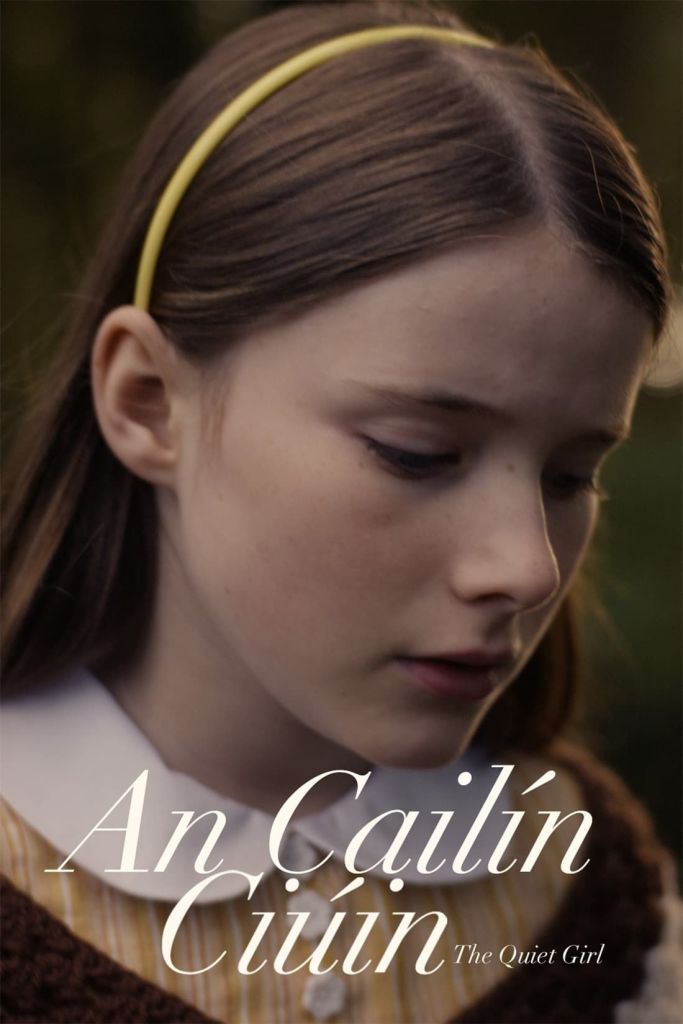
Now that the Christmas dinner and follow-up leftovers are done, I thought I’d just mention a very beautiful film I watched on the TV late on Christmas Day – An Cailín Ciúin (in English: The Quiet Girl). I was quite surprised to see it scheduled then, but TG4 is known for bold and imaginative programming.
It’s (mostly) in the Irish language, but don’t let that put you off; there are subtitles. It’s gentle, poignant and wonderfully observed. A little gem, in fact. I’d encourage you to see it if you can. It’s a fine film all round, but I can’t resist pointing out Catherine Clinch in the central role of Cáit, the quiet girl herself. She had never acted in front of a camera before this film, which makes her subtly expressiven performance all the more remarkable.
O(G)HAM
Posted in History, Irish Language with tags Maynooth University, Ogham, University of Glasgow on October 3, 2024 by telescoper
Here’s a fascinating video about a project looking into Ogham, an early-mediaeval way of writing that dates back to about the 4th Century AD.
As the video reflects, there’s some controversy about whether the ‘g’ is pronounced but most Irish people I know would say “Oham” rather than “Ogam”. Anyway, this video reports on a research collaboration between the University of Glasgow and Maynooth University that aims to harness Digital Technologies to Transform Understanding of Ogham Writing, from the 4th Century to the 21st.
An Leabharlann
Posted in Biographical, History, Irish Language, Literature, Maynooth, Poetry with tags Books, Libraries, Maynooth, Maynooth Library on July 15, 2024 by telescoperAs I’ve mentioned before on this blog, over the past year or so I’ve been trying to catch up on my reading. My stack of books I’ve bought but never read is now down to half-a-dozen or so.
With sabbatical drawing to a close, the next major life even appearing on the horizon is retirement. Since that will involve a considerable reduction in income, and consequently money to buy books, and my house already has quite a lot of books in it, I thought I’d join the local public library so that when I’ve cleared the backlog of bought books, I’ll read books from the library instead.

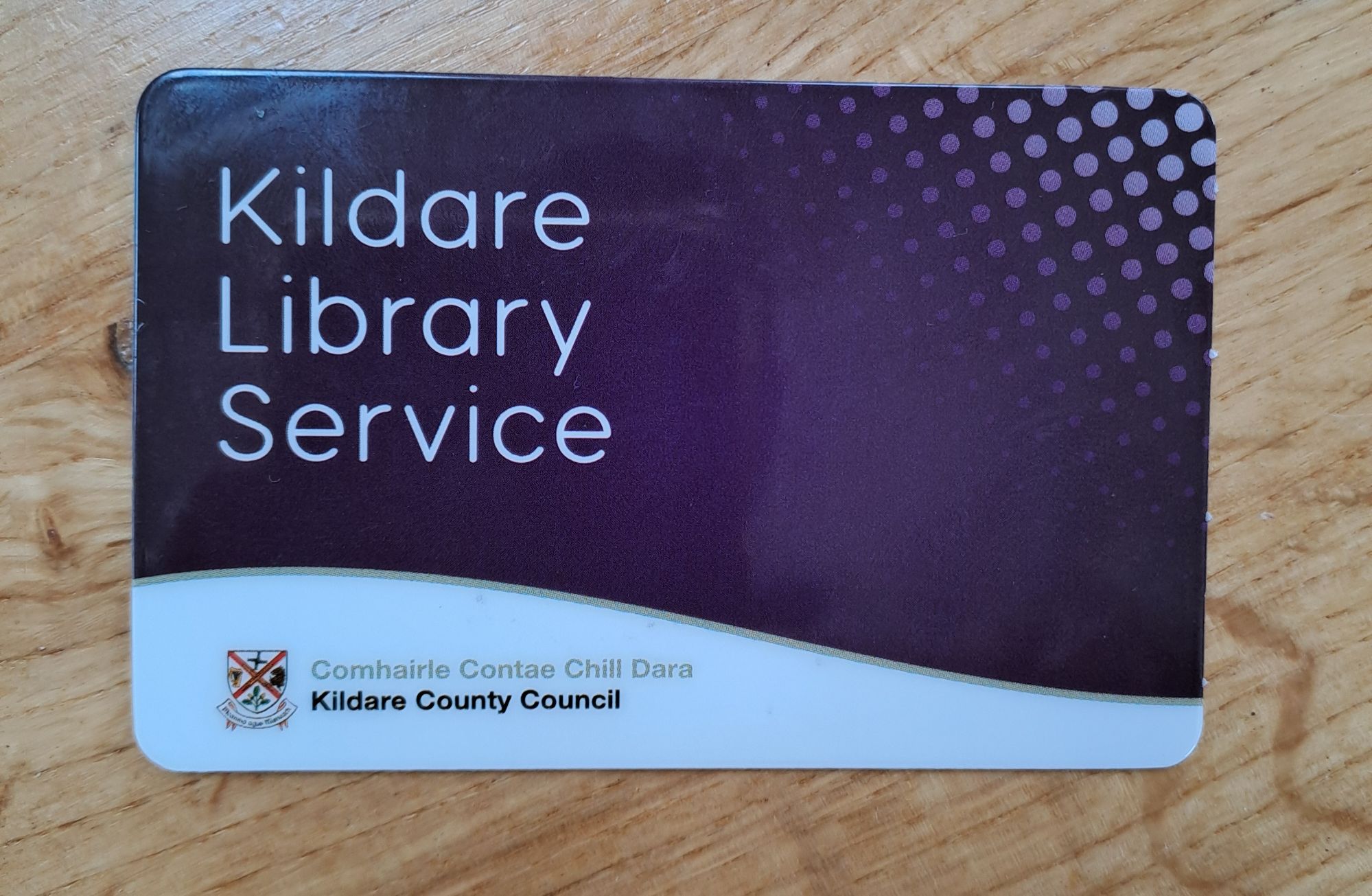
With that in mind, I just joined the public library on Main Street, Maynooth, which is only about 15 minutes’ walk from my house. It’s a small branch library but is part of a larger network across County Kildare, with an extensive online catalogue from which one can acquire books on request. All this is free of charge.
Once I got my card, I had a quick look around the Maynooth branch. It has a good collection of classic literature (including poetry) as well as Irish and world history, which will keep me occupied for quite a while. The normal loan period is 3 weeks, which provides an incentive to read the book reasonably quickly.
I borrowed books in large quantities from public libraries when I was a child. I’m actually looking forward to getting into the library habit again.
Language on Dry Land
Posted in Football, Irish Language with tags celtic, Celtic languages, England, English, gaeilge, Indo-European Languages, ireland, Irish Language, language, The Netherlands on July 13, 2024 by telescoperSince I’ve got my own computer again now I thought I’d celebrate by doing one of those rambling, inconsequential posts I haven’t had time to do recently.
Last week, in the run up to the European Championship semi-final between England and The Netherlands, I for some reason decided to look up what “The Netherlands” is in the Irish language. I did know this once, as it came up when I was trying to learn Irish a few years ago but I had forgotten. I remembered “England”, which is Sasana (cf. Saxon). Anyway, the answer is An Ísiltír. I’ll return to that in a moment.
Here are some other names:
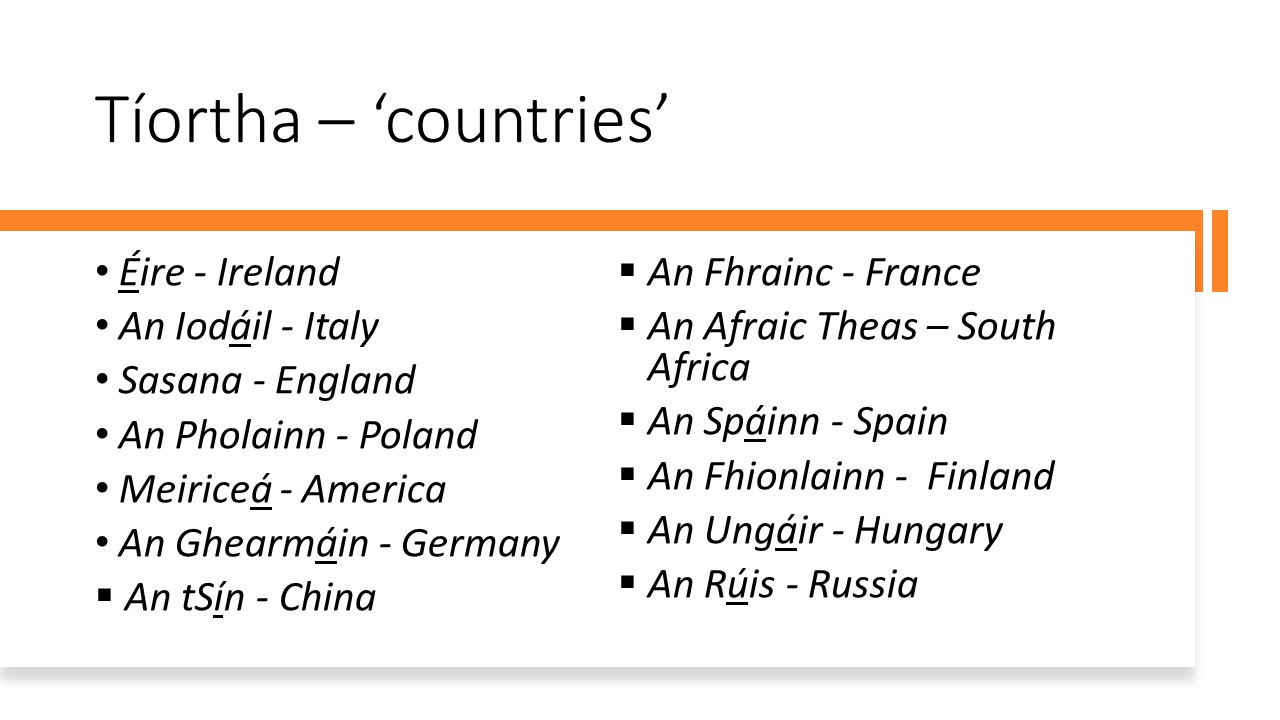
Anyway, a couple of things may be interest. One is that you can see that most country names in Irish are introduced by An. This is the definite article in Irish; there is no indefinite article. This contrasts with English in which only a few names start with the definite article, “The Netherlands” being one. The exceptions in Irish include England (Sasana) and Scotland (Albain). Wales is An Bhreatain Bheag (literally “Little Britain”). Of relevance to the final of the European Championship, Spain is An Spáinn.
I should also mention that some nouns suffer an initial consonant mutation (in the form of lenition, i.e. softening) after the direct article. In modern Irish this is denoted by an h next to the initial consonant, hence Fhrainc, for example; the Irish word for “French” is Fraincis.
The second interesting thing pertains to An Ísiltír itself. The second part of this, tír, means “country” or “nation” – see the plural in the heading above – and the first, Ísil, means “low”. An Ísiltír is therefore literally “The Low Country”. I shared this fascinating insight on social media and found in the replies a mention that the Welsh name for The Netherlands is Yr Iseldiroedda meaning literally “The Low Lands”. The first part of this is clearly similar to the Irish, but the second is the plural of a different word meaning ground or earth or an area of land. There is a word tir in Welsh that means ground or earth or an area of land but it does not mean country or nation like the very similar Irish word; the word for that is gwlad. In Irish the word for land or ground or earth (or turf) is talamh.
Welsh and Irish belong to distinct branches of the Celtic group of languages, the first wave of Indo-European languages to sweep across Europe. I blogged about this here. Celtic languages therefore share roots with many other Indo-European languages and very basic words in many branches of the tree often bear some similarity in form, if slight but significant differences in meaning. It seems that tír/tir illustrates this rather well. These two words also have a very similar form to the French terre which is derived from the Latin terra. And so I disappeared down an etymological rabbit hole and found that all these words are probably derived from a Proto-Indo-European word meaning “dry”, presumably through reference to “that which is dry” as opposed to the wet bits (although neither Ireland nor Wales is famous for being particular dry).
And to bring this little excursion back full circle, the Irish word tirim means “dry”…
On foot of an Irish idiom
Posted in Irish Language, Science Politics with tags Hiberno-English, On foot of on May 29, 2024 by telescoperI noticed the following phrasing in the media in connection with the departure of Philip Nolan from his position at Science Foundation Ireland, e.g.
On foot of the investigation, the board of SFI wrote to the five senior staff members with the findings.
Irish Independent, 29th May 2024
The use of the idiomatic phrase “on foot of” (meaning “as a result of” or “following”, etc, as distinct from “on foot”, meaning “by walking”) seems quite commonplace in Hiberno-English, even in judicial proceedings, but I’ve never encountered it at all outside Ireland. This gives me an excuse to direct your attention to this post from elsewhere about this very matter from which I stole the title of this short post. I suspect the phrase in question may be formed by direct translation from a construction in the Irish language, which would explain why it isn’t used outside Ireland, but I’m happy to be corrected if wrong…
Celestial Echoes: The Night Sky in Irish Folklore
Posted in History, Irish Language, The Universe and Stuff with tags astronomy, cconstellations, Folklore, Seán Mac an tSíthigh, star names on August 29, 2023 by telescoper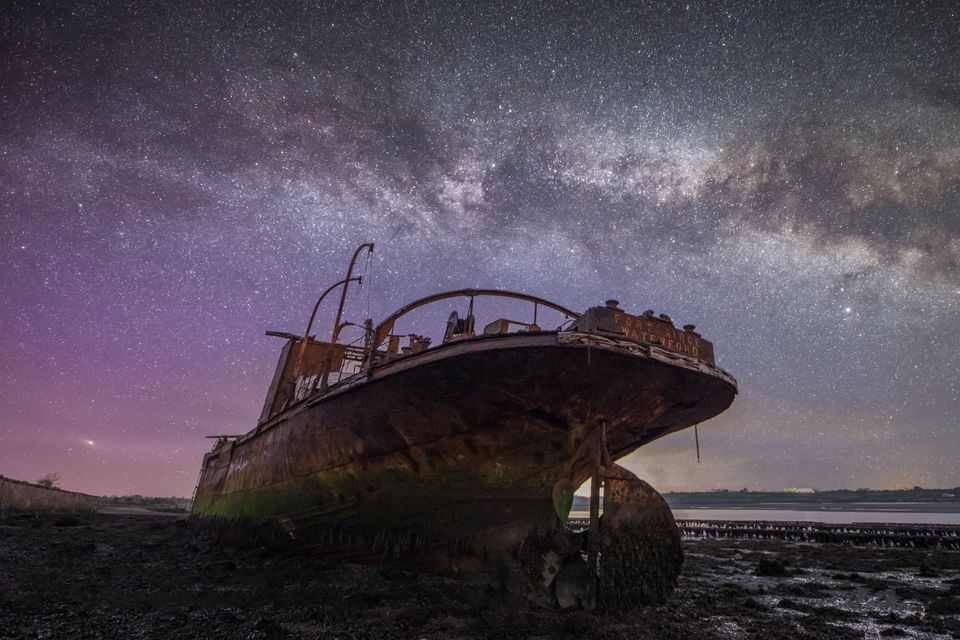
I mentioned last week that I attended a public lecture by journalist Seán Mac an tSíthigh called Celestial Echoes: the Night Sky in Irish folklore. The talk was largely about some of the names given to celestial objects and the stories attached to those names. Much of the material was drawn from an extensive National Folklore Collection held at University College, Dublin. Unfortunately, however, the index to this collection is not very good at names for stars and constellations. In some cases it isn’t obvious what those names that are recorded actually refer to and in some cases the words themselves are obscure. The lecturer stressed that many of these words would have been known by the parents or grandparents of people in the audience, but have since been lost. There’s an article here that makes a similar point in a wider context. One prominent source of folklore, for example, is the traditional style of mackerel fishing, done at night so that the phosphorescence produced by the fish could be seen, which basically no longer exists so the folk names of stars and constellations used by the fishermen for navigation have been forgotten. Some other names have obviously been influenced by the Greco-Roman constellation names, etc.
I didn’t take many notes during this very enjoyable talk, but I did jot down a few words and phrases that I thought I’d pass on here. Given that my knowledge of modern Irish is very limited and many of the words used are dialect or archaic words that you won’t find in dictionaries, I’ll restrict myself to just a few of the things that caught my ear. Many of these are very similar in Scots Gaelic. Apologies in advance for misspellings, mistranslations or other forms of incompetence!
Before we start let me just mention that the Irish word for “star” is réalta (plural réaltai), which can also mean “a light”. There is also a diminutive, réiltín. Astronomy is réalteolaíocht and astrophysics is réaltfhisic. I’ve always liked the way astrophysics looks like “real physics”!
- The Milky Way is usually Bealach na Bó Finne (the Way of the White/Fair Cow). The legend that goes with this name is of a cow that produces an endless supply of milk. The Milky Way can also have the more literal name Claí Mór na Réaltaí (the Great Wall of Stars); in Irish mór means “big or great” and must be cognate with the Welsh mawr. Another folk name is An Láir Bhán (the White Mare).
- Orion is An Bodach which can mean a man, specifically an old man, or a ghost.
- Betelgeuse is An Spor Dearg (the Red Spur); Rigel is An Spor Liath (the Grey Spur).
- The Orion Nebula is An Sparán (the purse, pouch); cf. Scots sporran.
- In modern Irish, the Pleaides is An Tréidín (the Little Flock or Herd) but there are a variety of other terms including Buaile an Bhodaigh (the ghost’s milking place) and Na Cearrbhaigh (the Gamblers, because they look like people playing cards..).
- The constellation of Leo is An Corrán (the Hook, Sickle).
- Polaris is An Réalta Thuaidh (the North Star) but also Réalta Eolais (guiding star)
- Sirius is An Réalta Mhadra (the Dog Star).
- Ursa Minor is An Dragbhoth (the Fiery House).
- Ursa Major is An Mathghamhain Mór (the Great Bear); a more modern alternative word for “bear” is mathúin. The Plough is An Camchéachta
- The Aurora Borealis can be Soilse na Speire Thuaidh (lights of the Northern sky) or na Gealáin Thuaidh or na Saighneáin.
- A Comet is réalta (an) eireabaill, (star with a tail) réalta mhongach (long-haired or maned star) or réalta (na) scuaibe (star with a brush). There is an (extremely exaggerated) account of a comet in the famous book (and mainstay of the Irish language leaving certificate) by Peig Sayers; given the timing it may have been Halley’s Comet near its 1910 perihelion.
That’s enough for now. I have a few more, but they’ll have to wait…
Lá Saoire i mí Mheitheamh
Posted in Biographical, Irish Language on June 5, 2023 by telescoperToday has been (and indeed continues to be) the June Bank Holiday (Lá Saoire i mí Mheitheamh) in Ireland. It is the equivalent of the usual May Bank Holiday in the UK in that both have their origin in the old festival of Whitsuntide (or Pentecost) which falls on the 7th Sunday after Easter. Because the date of Easter moves around in the calendar so does Whit Sunday, but it is usually in late May or early June. Here in Ireland the Bank Holiday is always on the first Monday in June whereas on the other side of the Irish Sea it is on the last Monday in May.
Anyway, in a break with tradition, we have had and still are having lovely weather over the holiday long weekend. It’s not exactlly a heatwave, but as I write the temperature is a pleasant 20° C. It being warm last night, I thought it would be nice to light a big candle and sit out in the garden for a bit with a glass of wine, but I was beset by moths and had to come back inside. My concern is that the garden is bone dry, especially considering it is early June. The lawn is looking parched. Some of the plants in my garden are also struggling a bit because of the lack of rain but some others seem to be thriving so much they’re crowding out the ones that prefer the more normal damper conditions.
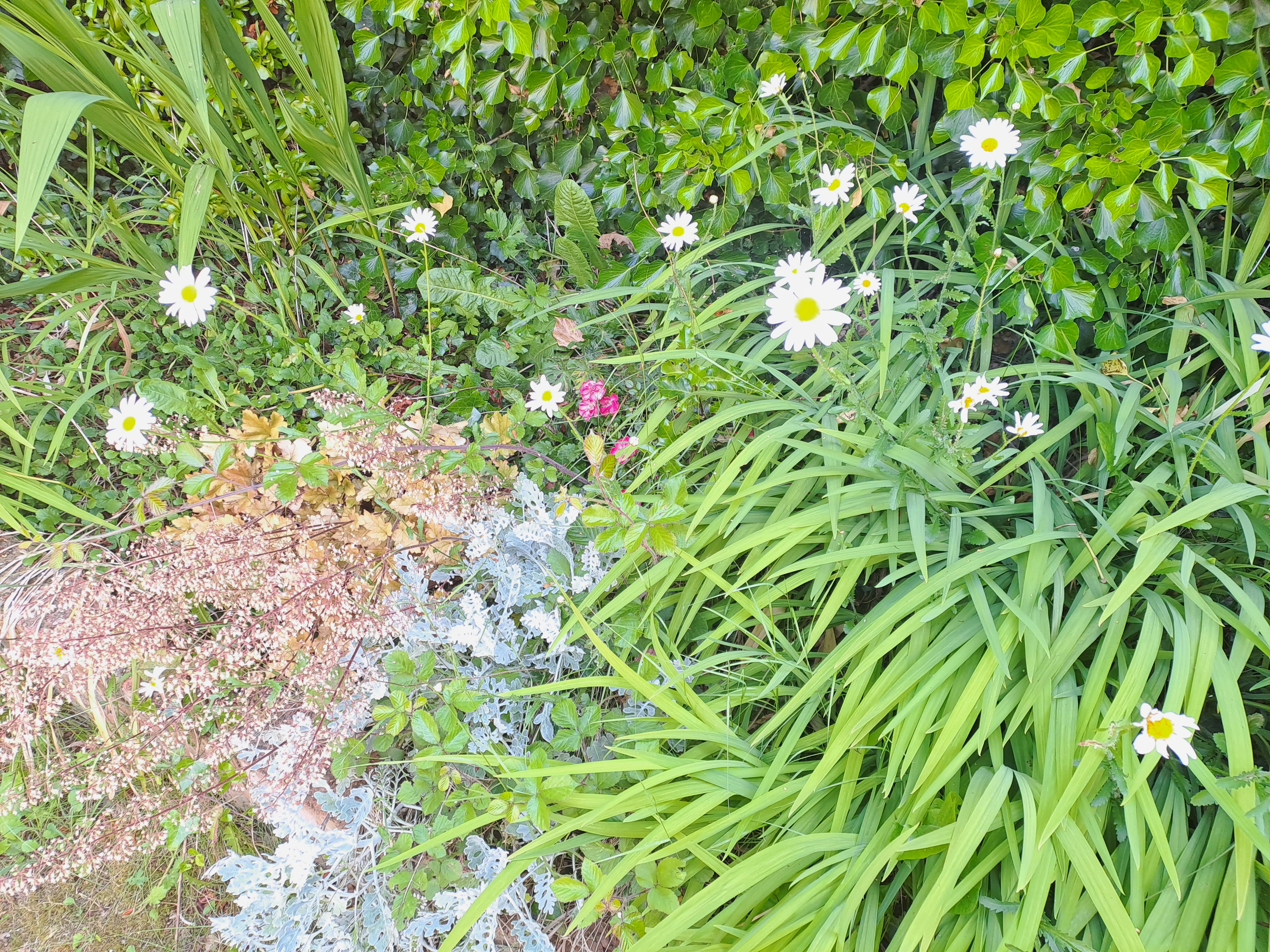
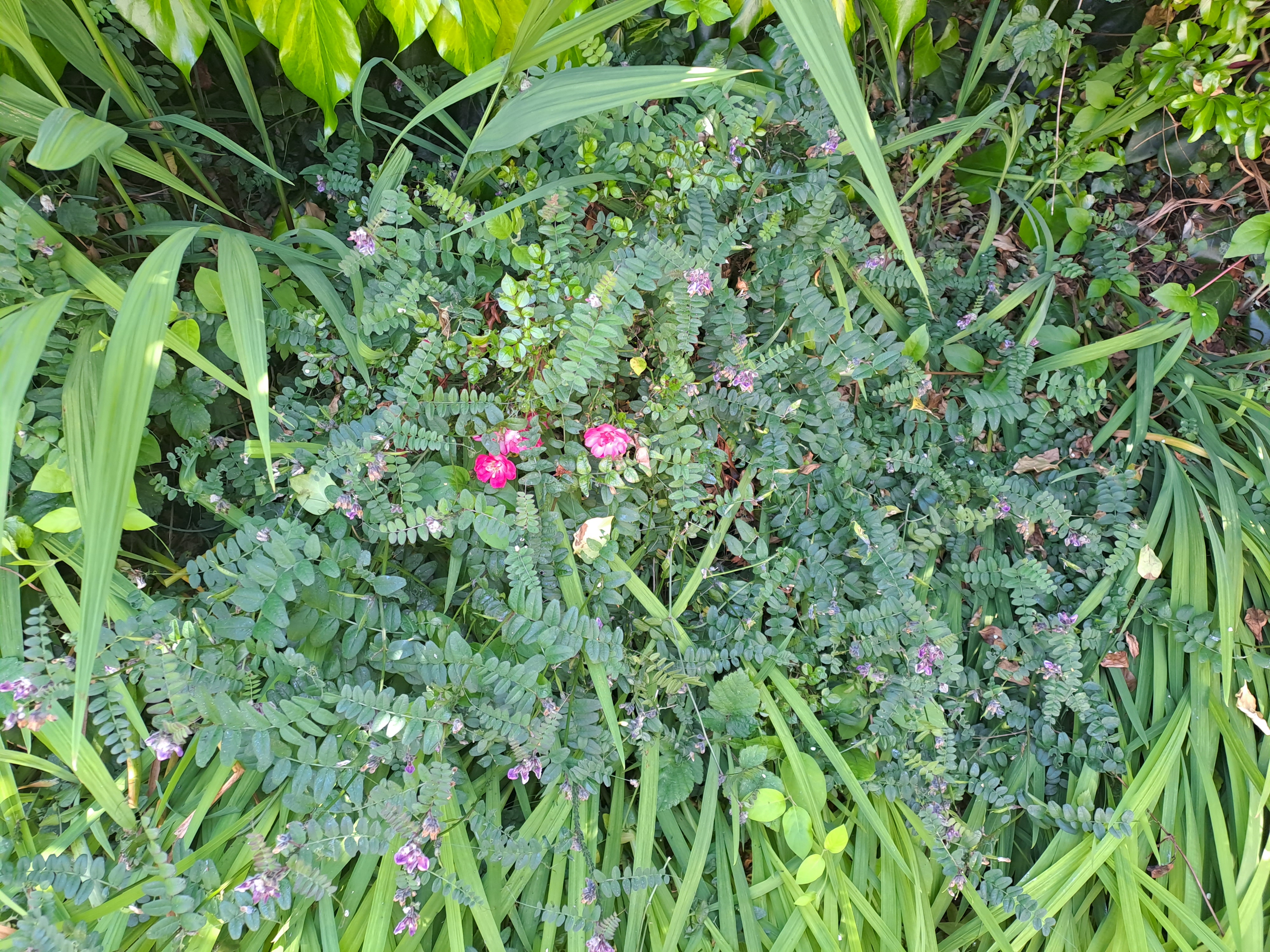
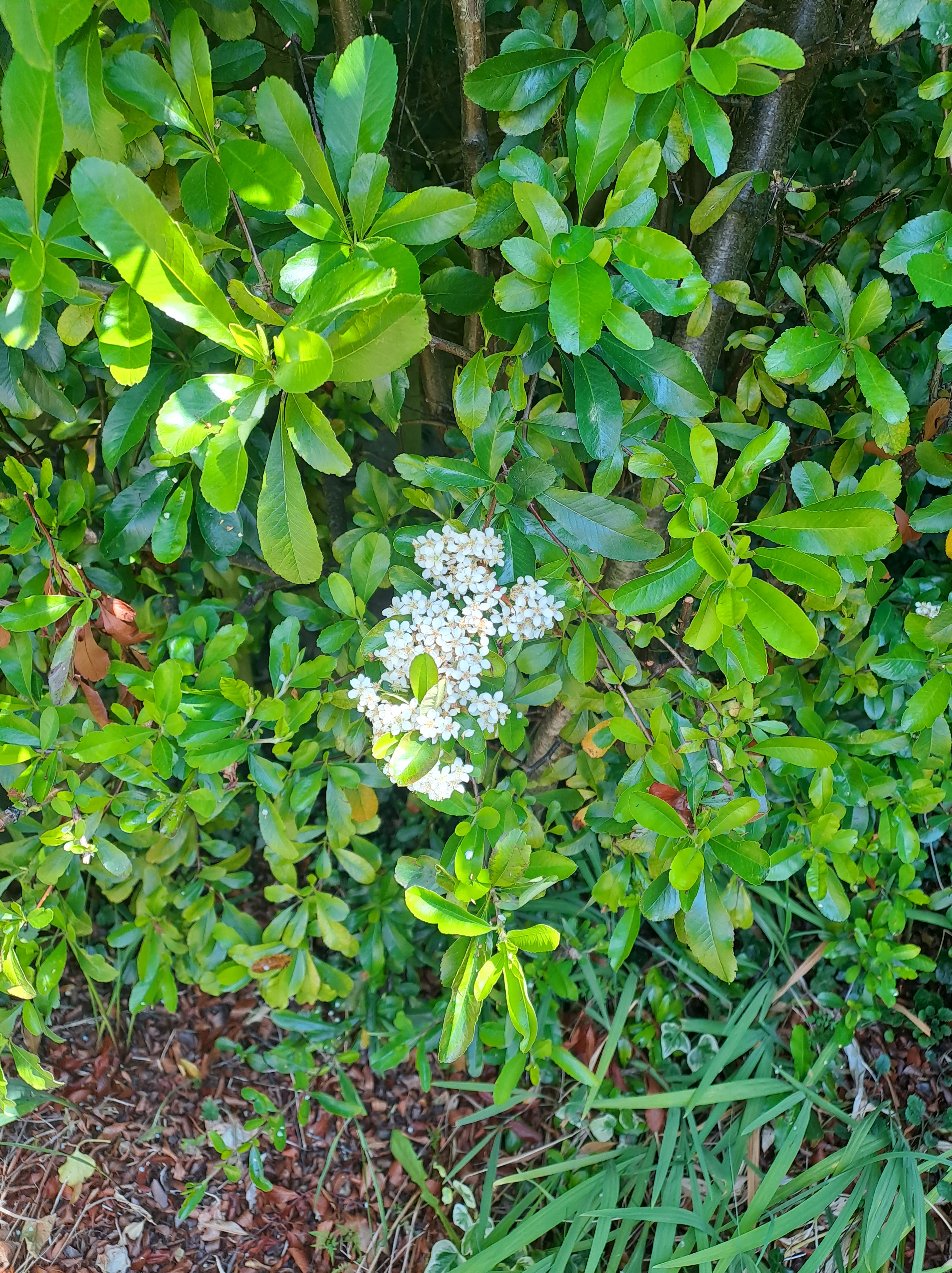
The Scarlet Firethorn – so called because it produces bright red berries – is growing like wildfire as well as flowering profusely. The flowers are nice, but I think past their peak so when they’re done I’ll take some remedial action. The other plants are basically wild flowers, which I like having in the garden as they tend to be rather robust. The long green leaves in the first two pictures are Montbretia, which produced bright red flowers later in the summer, and which is grown from bulbs.
My rear garden is enclosed by high walls but gets the sun in the morning, so I’ve been having breakfast and lunch out there for the last several days.
Anyway, it’s back to work tomorrow for our Departmental Examination Board so I’ll take it easy for the rest of the day off. After all, I’m an old man now…
Tá mé sa bhaile – Biden’s Irish
Posted in Irish Language, Politics with tags Dublin, grammar, Irish Language, Joe Biden, Oireachtas, pedantry, Pronouns on April 14, 2023 by telescoperTRIGGER WARNING: CONTAINS PRONOUNS!
Yesterday, President of the United States of America, Joe Biden, addressed a joint sitting of the houses of Oireachtas in Dublin. Predictably he included an attempt at Irish in his speech to the obvious appreciation of those attending. I was a bit confused by the way what he said was reported in the Irish media, however, e.g.


My confusion was that I didn’t think he said tá mé seo abhaile as widely reported. For one thing, even I as a beginner could see that phrase means “I am this home”, which doesn’t make any sense (not to me, anyway). There are various possibilities for what Joe Biden did say. For what it’s worth I thought it was tá mé sa bhaile which, loosely, means “I am at home”. I note that the news media have generally changed their accounts (e.g. here) to reflect this, although other forms of words are possible. I’m not surprised that Biden struggled with the pronunciation – most of us beginners do, but I think the writers and editors of the newspapers above might at least have corrected his grammar.
The phrase illustrates a couple of interesting curiosities about the Irish language. Expressing the verb “to be” in Irish isn’t as straightforward as it is English. There are two grammatically distinct ways of doing this. The two Irish forms are bí, which is like the English verb “to be” and the so-called copula, is, which is sometimes called a defective verb. It’s admittedly a bit confusing that the copula looks like the third-person singular of the verb “to be” in English, but there you go.
Going back to bí, it is frequently referred to as tá (its present tense form as in the phrase above). It can be fully conjugated in all tenses and persons but it is highly irregular. Grammatically, bí is also just like any other verb, coming first in the sentence, followed by a subject (either a separate noun or pronoun or a suffix, depending on the tense and person, as shown in the conjugations), and then its predicate and any remaining adverbial information. Thus tá mé is “I am” with the pronoun mé. The accents (síneadh fada) mean that this is pronounced taw-may.
The copula, however, is not fully conjugated for different subjects, which are always expressed by separate nouns or pronouns, and it only has two forms for different tenses: is can be used for present or future meaning, and ba (with lenition) is used for past or conditional meanings.
Among the specific situations in which the copular is must be used instead of bí but the main one is to be followed by a noun. You can’t say “I am a Professor” using tá – it has to be Is Ollamh mé – but to say “I am old” it is Tá mé sean.
One final remark. If you’re scared of pronouns please look away now. There are over 120 different pronouns in the Irish language. There’s a special version of the pronoun mé written mise which has two uses that I am aware of. One is when the copular is used for identification – so “I am Peter” is Is mise Peadar – and the other is for emphasis, when it is roughly equivalent to “myself” in English.
P.S. The Irish word for “pedantry” is pedantraí…
Nollaig na mBan
Posted in Irish Language, Literature with tags Dubliners, James Joyce, Nollaig na mBan, The Dead on January 6, 2023 by telescoper
Today is January 6th, which is Epiphany in the Church calendar, Twelfth Night, usually the day the Christmas decorations came down when I was a kid, and here in Ireland a day known as Nollaig na mBan (Women’s Christmas). You can read more about the origin of this Irish tradition here.
This allows me an excuse to be a grammar bore yet again. The Irish word for “woman” is bean, which has the plural form Ban; na is the corresponding definite article. However, in the phrase Nollaig na mBan, “women” is in the genitive case (Christmas of the women) and the B therefore undergoes lenition to become m. This sort initial consonant mutation is very common in the Irish language. Instead of being pronunced “ban” the word for women is therefore spoken as “man”. Fortunately, the written language is kind in that it leaves the unmodified consonant in place, hence mBan.
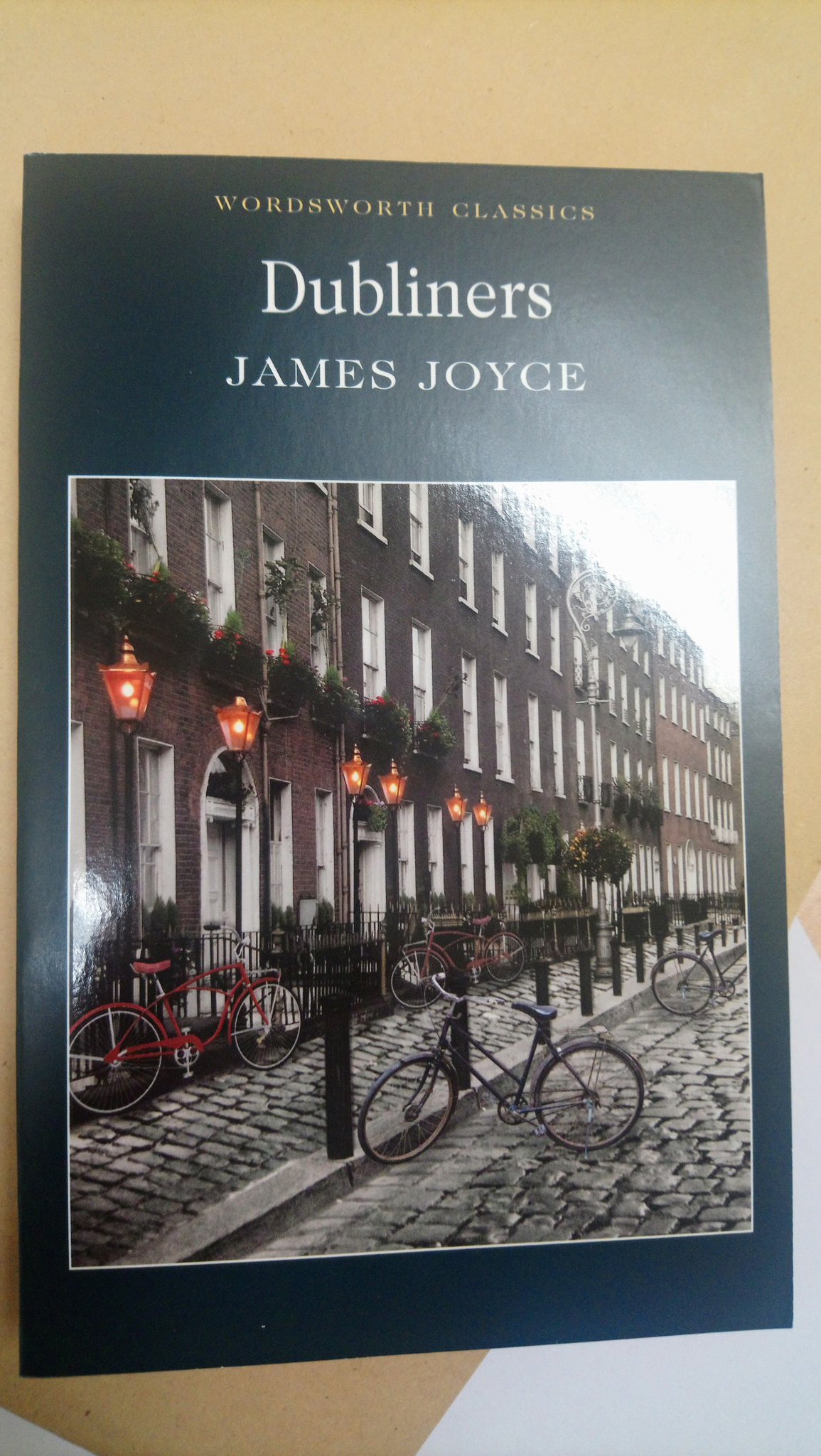
I was also reminded today that 6th January (in 1914) was the date of the gathering described in James Joyce’s wonderful short story The Dead – the last, the longest, and the best of the collection Dubliners, which I thoroughly recommend if you haven’t read it yet. It’s an ideal gateway into Joyce’s writing:
Nollaig na mBan shona daoibh go léir!


