Today, 1st December, is World Aids Day, which is dedicated to raising awareness of the AIDS pandemic caused by the spread of HIV infection, mourning those who have died of the disease, and showing solidarity with those living with HIV. In my case it’s also a day for remembering how lucky I have been.
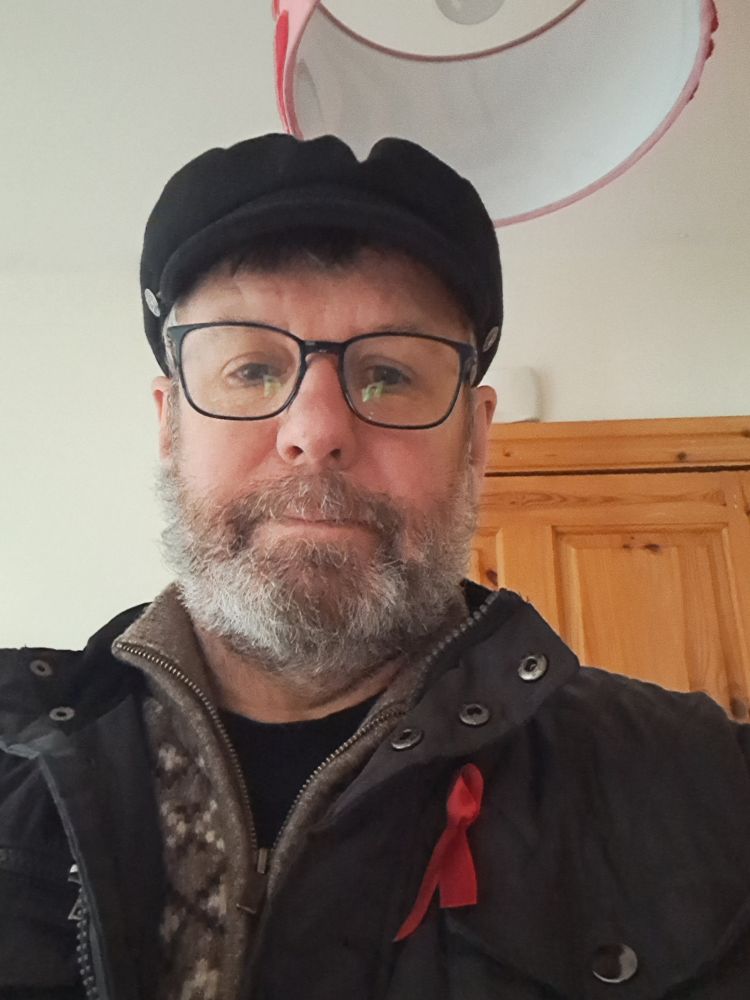
Here’s me just about to leave the house this morning with my red ribbon.
Just a quick post to point out that today is LGBTQIA+ STEM Day, which aims to celebrate to celebrate the work of LGBTQIA+ people in science, technology, engineering, and mathematics (STEM), but also to highlight the barriers still facing us.
This also provides an opportunity for me to send my best wishes to all LGBTQIA+ staff and students at Maynooth and around the world! As far as I know, my Employer is not marking this occasion. This surprises me as it is not unknown for them to engage in pinkwashing from time to time, whenever it suits them for some reason.
P.S. I’m reminded that it was 22 years ago today that Section 28 was finally repealed in England and Wales. With reactionary fforces around the world attacking our hard-won rights, it is important that we cling on to what we’ve got.
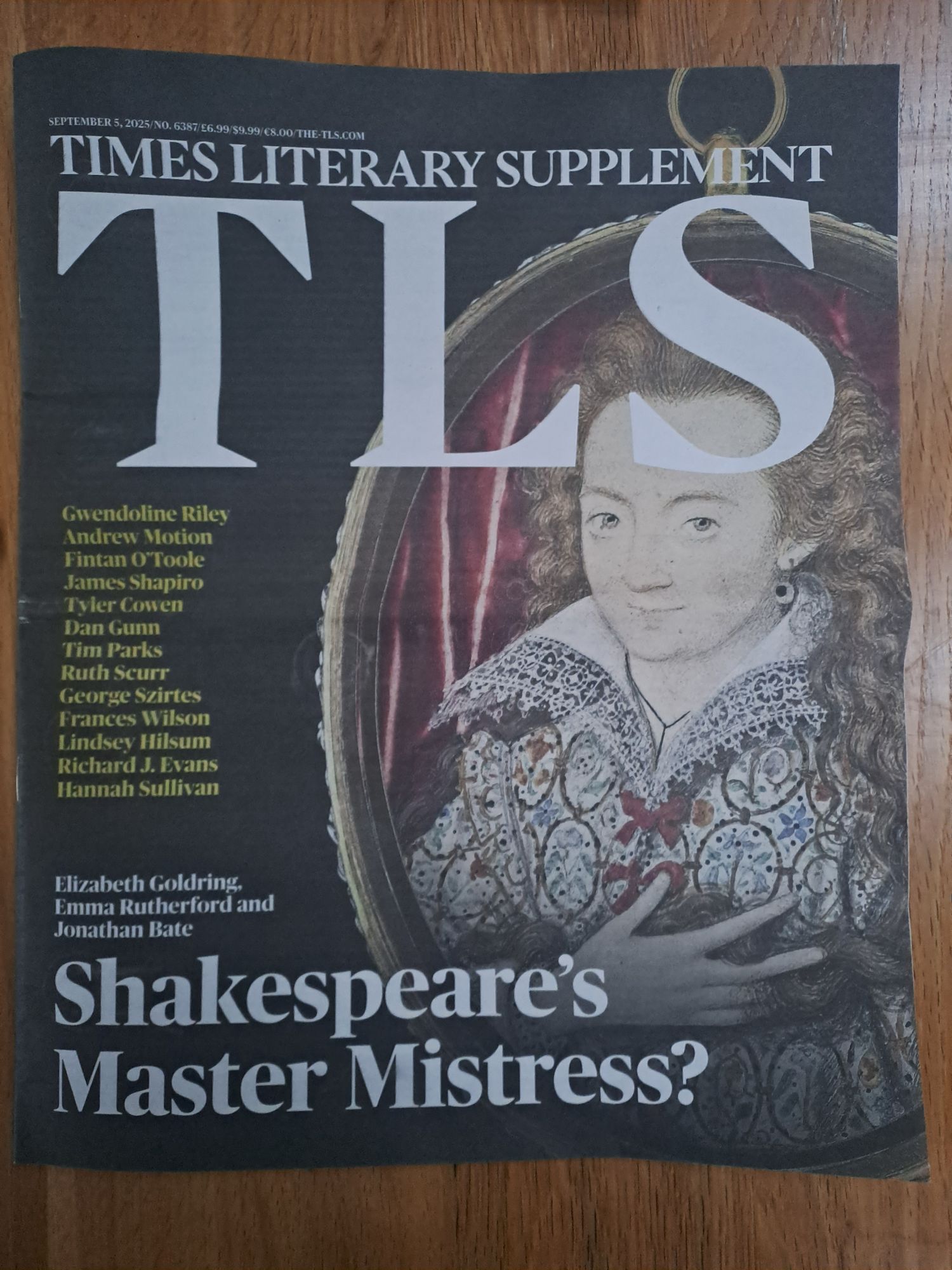
Today is National Poetry Day in the UK and Ireland but, instead of posting a poem like I usually do on this occasion, I thought I’d do a bit of reflecting on Shakespeare’s Sonnets. What prompted this is an article in the Times Literary Supplement I mentioned in a post on Monday. The cover picture shows a newly-discovered miniature by Nicholas Hilliard that is claimed to be of Henry Wriothesley, 3rd Earl of Southampton, and patron of William Shakespeare:
On the 20th May 1609, a collection of 154 Sonnets by William Shakespeare was published, which arguably represents at least as high a level of literary achievement as his plays. The “Master Mistress” in the title of the TLS article is a reference to Sonnet No. 20 in the collection, published on 20th May 1609, of 154 Sonnets by William Shakespeare, which arguably represents at least as high a level of literary achievement as his plays. Here is Sonnet No. 20 in the form usually printed nowadays:
A woman’s face with nature’s own hand painted,
Hast thou the master mistress of my passion,
A woman’s gentle heart but not acquainted
With shifting change as is false women’s fashion,
An eye more bright than theirs, less false in rolling:
Gilding the object whereupon it gazeth,
A man in hue all hues in his controlling,
Which steals men’s eyes and women’s souls amazeth.
And for a woman wert thou first created,
Till nature as she wrought thee fell a-doting,
And by addition me of thee defeated,
By adding one thing to my purpose nothing.
     But since she pricked thee out for women’s pleasure,
     Mine be thy love and thy love’s use their treasure.
The somewhat androgynous facial appearance of Henry Wriothesley – seen in other portraits – has led some to suggest that the above Sonnet was addressed to him. Others think that the poem was addressed to a young male actor (a “boy player“) who played female roles on the stage, as was usual in Shakespeare’s time. It was illegal for women to perform on stage until 1660.
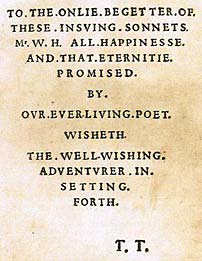
The dedication in the First Folio edition of the Sonnets, published in 1609, is shown on the left. The initials “T.T.” are accepted to stand for the name of the publisher Thomas Thorpe but the identity of “Mr. W.H.” is unknown. Of course “W.H.” is a reversal of the “H.W. ” that could be Henry Wriothesley, but would the publisher really use “Mr” to refer to a member of the nobility? Another curiosity is the prevalence of full stops, which is more characteristic of inscriptions carved in stone than on printed pages.
The First Folio edition was the only edition of the Sonnets published in Shakespeare’s lifetime and the circumstances of its publication remain uncertain to this day and not only because of identity of “Mr W.H.” For example, if it was authorised by Shakespeare, why did Shakespeare himself not write the dedication? Some have argued that it must have been published posthumously, so Shakespeare must have been dead in 1609, whereas most sources say he died in 1616.
Most of the poems (126 out of 154) contain poetic statements of love for a young man, often called the “Fair Youth”. However, there is also a group of sonnets addressed to the poet’s mistress, an anonymous “dark lady”, which are far much more sexual in content than those addressed to the “Fair Youth”. The usual interpretation of this is that the poet’s love for the boy was purely Platonic rather than sexual in nature. If Mr W.H. was a boy player then he would have been very young indeed, i.e. 13-17 years old…
Anyway, it was certainly a physical attraction: verse after verse speaks of the young man’s beauty. The first group of sonnets even encourage him to get married and have children so his beauty can continue and not die with his death. Sonnet 20 laments that the youth is not a woman, suggesting that this ruled out any sexual contact. These early poems seem to suggest a slightly distant relationship between the two as if they didn’t really know each other well. However, as the collection goes on the poems become more and more intimate and it’s hard for me to accept that there wasn’t some sort of involvement between the two. Although homosexual relationships were not officially tolerated in 17th Century England, they were not all that rare especially in the theatrical circles in which Shakespeare worked.
Oscar Wilde wrote a story called “A Portrait of Mr. W.H.” which suggests he is a young actor by the name of “Will Hughes”. The main evidence for this is Sonnet 20.
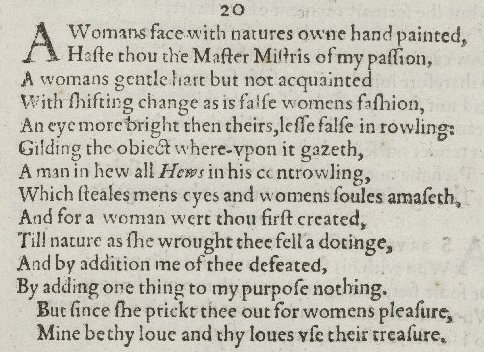
Look at the First Folio version:
The initial capital and emphasis of “Hews” seen in line 7 is very unusual and suggests that it is a joke (one of many in this poem), in the form of a pun on the preceding “hew”. It is suggested that “Hews” is actually “Hughes”. Ingenious, but I’m not convinced. There were many other meanings of “hew” in use in Shakespeare’s time; it was a variant spelling of “ewe” for example.
We’ll probably never know who Mr W.H. was – presumably not Smith – or indeed what was the real nature of his relationship to Shakespeare but we do not need to know that to read and enjoy the poems.
I do have a fundamental misgiving, though, about the assumption that the “Onlie begetter” of these sonnets means the person to whom they are addressed, or who inspired them. That assumption entirely disregards the “Dark Lady” sequence. There are at least two addressees so neither can be the only begetter, if that is what begetter is supposed to mean.
I think it more likely Mr W.H., whoever he was, is the person who caused the collection to be created and/or published, perhaps by sponsoring the First Folio. It’s also possible that these poems may have been commissioned over the years by Mr. W.H. and/or others – experts think they were written over a period of at least 16 years – and only published together at much later date. It is indeed said that some of verses were circulated in private well before they were published, though they may perhaps have been edited or otherwise tidied up for the 1609 edition. Perhaps Shakespeare supplemented his income by writing sonnets to order?
This line of thought also took me to another question: why does everyone assume that all 126 of the “Fair Youth” sonnets are about the same person? That person is never named and only occasionally described. Some of the 126 are thematically linked, but overall it is a collection rather than a sequence. Some are humorous and some are very serious indeed. Some are downright cryptic. I think it quite possible, especially if the poems really were written over a period of 16 years, that they not all addressed to the same individual. Once you accept the evident truth that there is more than one recipient, then why not more than two?
Some have taken this even further and asked: do we really know that all 154 sonnets were written by the same person? The same question is asked about Shakespeare’s work generally. Was there really one person behind his plays, or were they collaborative efforts.
Finally, I wonder for what purpose these sonnets were written. Were they actually sent to the addressee(s) as expressions of love, like letters, or were they private meditations, like one might write in a journal?
I don’t suppose we’ll ever really know the answers to these questions, but I find it fascinating that the origin of such a famous collection is enshrouded in so many mysteries! I promise to post more of them here in due course.
While writing yesterday’s post about the evolution of languages, and the importance of genetic information in reconstructing the story thereof, I was reminded of a post I wrote a while ago about the peculiarities of my own genome, a listing of which I have on a CD-ROM at home. There’s not as much data involved as you might think: it’s effectively only about 800 MB.
Anyway, to cut a long story short, it turns out that I have the CCR5-Δ32 genetic mutation. Not only that, I have it twice over, in that I have two copies (homozygotes). I must therefore have inherited it from both parents. This mutation confers virtually complete immunity from HIV-1 infection.
The above graphic shows that more than 10% of the population in Northern Europe has this mutation in just one allele (i.e. they are heterozygotic). To get an estimate of how many have the form on two alleles (i.e. homozygotic) form you can just square that number, so around 1% or more.
It is thought that the CCR5-Δ32 mutation occurred in a single individual in Scandinavia around 1,000 years ago. When I wrote that post I tacitly assumed that it had propagated passively, i.e. without any particular selection, to the modern era. That it reached 10% of the population starting from just one individual surprised me, but I let it pass.
More recently, I came across a paper about how advances in genetics have impacted epidemiological studies. In the abstract it shows that my assumption was probably incorrect.
Algorithms of molecular evolutionary theory suggested that the CCR5-Δ32 mutation occurred but once in the last millennium and rose by strong selective pressure relatively recently to a ~10% allele frequency in Europeans.
It goes on to say this:
Several lines of evidence support the hypothesis that CCR5-Δ32 was selected due to its protective influence to resist Yersinia pestis, the agent of the Black Death/bubonic plague of the 14th century.
I didn’t mention in yesterday’s post that evidence of the plague bacillus is found in a significant number of prehistoric human remains and this almost certainly played a role in the ebb and flow of populations. In the context of CCR5-∆32, however it seems that it may have been advantageous to carry it long before the arrival of HIV/AIDS. That might account for it reaching the relatively high level that it did.
Among the downsides, however, as the article explains, are an increased risk for encephalomyelitis and death when infected with the West Nile virus. Hopefully further cohort studies of people with this mutation will help elucidate its effect on other diseases.
By the way, in contrast to most people I know, I have still never had Covid-19…
Since I seem to be having a weekend dominated by feelings of nostalgia, I thought I would comment on a nice article I read yesterday about The Rocky Horror Picture Show, a cult film which got its first cinematic release fifty years ago in 1975. You can find the article here.
Here is a the original theatrical trailer:
The Rocky Horror Picture Show is redolent with nostalgia for my days in Brighton in the Eighties. For a time I lived in a shared house not far from the Duke of York’s Picture House which had fairly frequent late-night showings of Rocky Horror, but it wasn’t just a question of going to see the film. It was obligatory to dress up like the characters, join in the dancing, squirt water pistols to recreate the rain, throw rice during the wedding scene, etc.
The first time I went it took me ages to find an outfit resembling that of Dr. Frank-N-Furter, the mad scientist played by Tim Curry in the film. I eventually found suitable lingerie items in shops but failed when it came to the shoes. I couldn’t find stilettos in a size 11 anywhere. That’s probably just as well as I don’t think I’d have been able to walk in them anyway. I settled for a pair of Doctor Martens boots. I had longer hair in those days so a bit of gel did the trick for that, and a friend did the make-up for me. I had to shave my legs to wear the fishnet stockings too. I rather enjoyed dressing up, going to the show and, especially, the after-party…
I never got into the habit of cross-dressing, and haven’t got the figure for it now, but I am not at all ashamed to admit that I think some guys look very hot in lipstick and lingerie.
Today’s the day for Dublin Pride 2025. It’s thought that over 100,000 are attending! Best wishes to everyone taking part from one of The Olds. Although the weather’s not the greatest, I hope everyone has a grand time. Bród Sona Daoibh!
He left the office where he'd been given
a trivial, poorly paid job
(something like eight pounds a month, including bonuses)-
left at the end of the dreary work
that kept him bent all afternoon,
came out at seven and walked off slowly,
idling his way down the street. Good-looking,
and interesting: showing as he did that he'd reached
his full sensual capacity.
He'd turned twenty-nine the month before.

He idled his way down the main street
and the poor side-streets that led to his home.

Passing in front of a small shop that sold
cheap and flimsy merchandise for workers,
he saw a face inside, a figure
that compelled him to go in, and he pretended
he wanted to look at some coloured handkerchiefs.

He asked about the quality of the handkerchiefs
and how much they cost, his voice choking,
almost silenced by desire.
And the answers came back in the same mood,
distracted, the voice hushed,
offering hidden consent.

They kept on talking about the merchandise-
but the only purpose: that their hands might touch
over the handkerchiefs, that their faces, their lips,
might move close together as though by chance-
a moment's meeting of limb against limb.

Quickly, secretly, so the shop owner sitting at the back
wouldn't realize what was going on.
by C.P. Cavafy (1863-1933; from Collected Poems, translated by Edmund Heeley and Philip Sherrard)
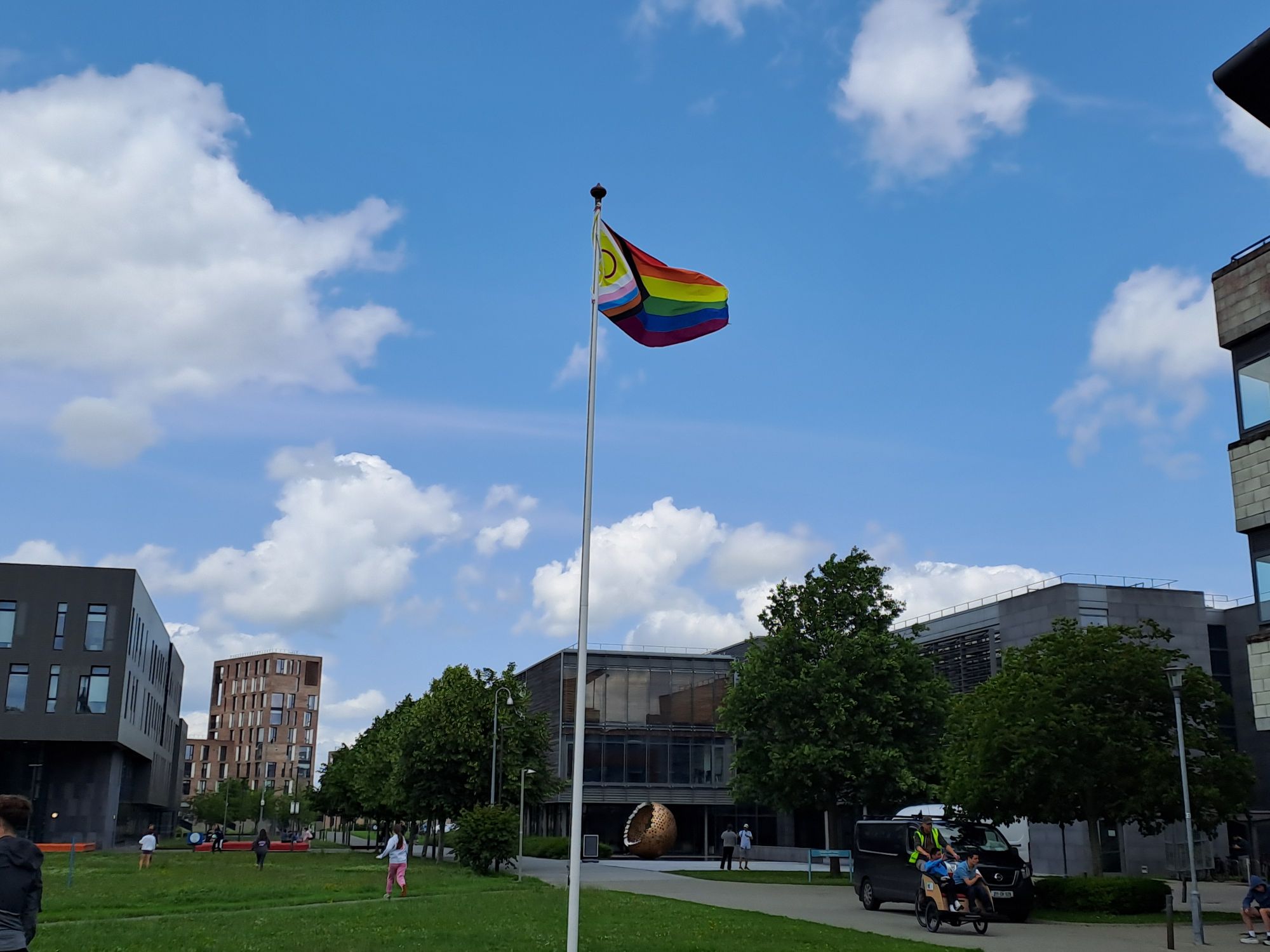
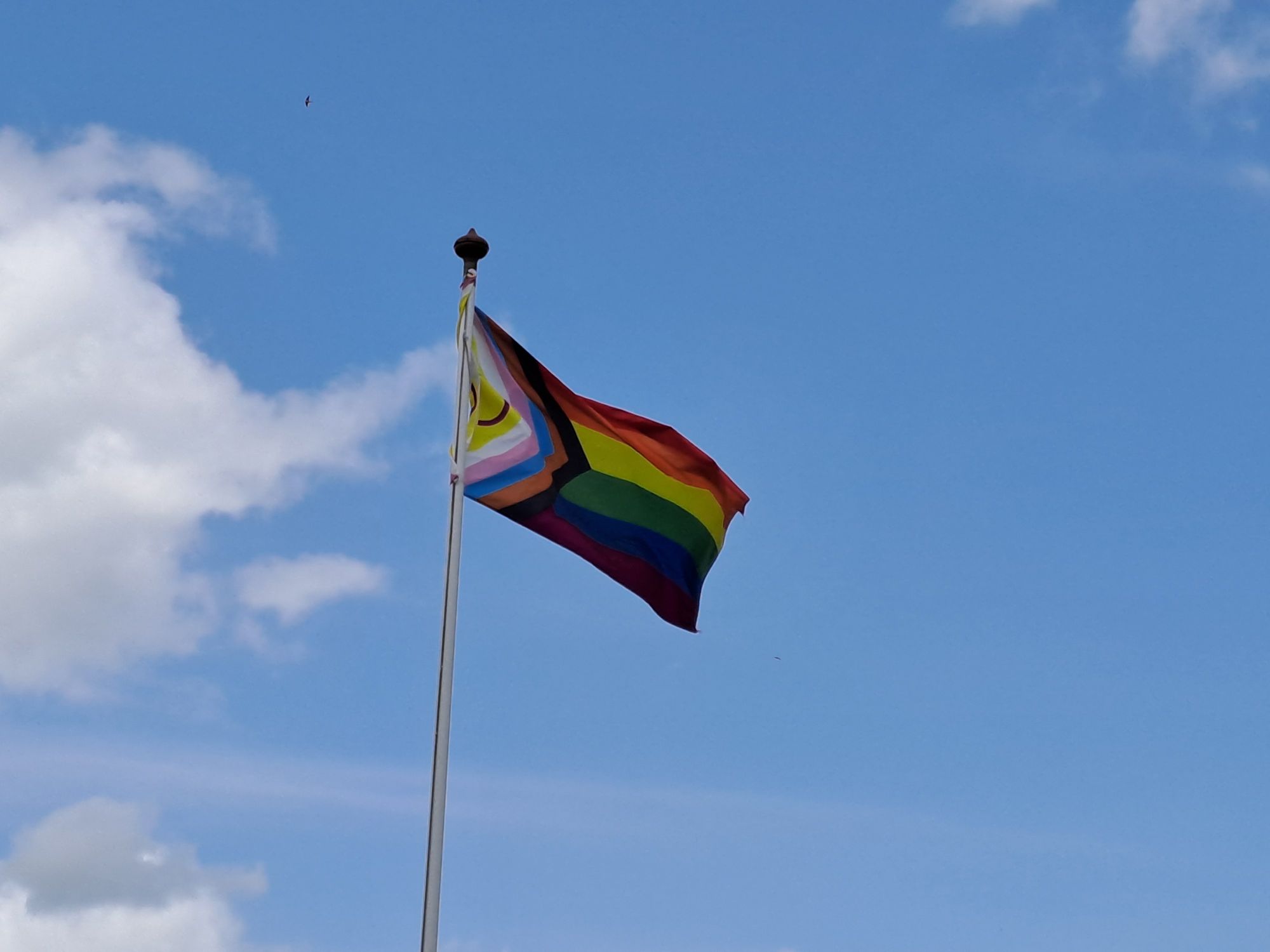
It’s 13th June, which means it’s almost halfway through this year’s Pride Month. I’ve been so busy that I am very late in posting about Pride 2025. I usually post something to mark Pride Month on 1st June (e.g. here). In fact I hadn’t even noticed the Pride Progress Flag flying on Maynooth Campus (between the Arts Block and John Hume Building) until today. I didn’t see anything on Maynooth’s social media about Pride either. I didn’t see the flag yesterday when I left the Science Building and assumed it wasn’t there. It was however raining heavily so my view may have been obscured by the rain on my spectacles, so I went back today to check. I am relieved it is there, as we need such symbols now more than ever.
With its origins as a commemoration of the Stonewall Riots of 1969, Pride remains both a celebration and protest. It’s more necessary than ever now because of the sustained abuse being aimed at trans people from all quarters, including those in political power and those sad losers who have nothing better to do that spend all day tweeting their bigotry on social media. Bigots will always be bigots, but the lowest of the low are those that masquerade as some sort of progressive while spouting their hate and prejudice.
Someone asked me the other day whether we still needed Pride. I replied that I think Pride will be necessary for as long as there are people who are annoyed by its existence. As well as a celebration and a protest, Pride is an opportunity for us all to show solidarity against those who seek to divide us. Though many LGBTQIA+ people in many countries – even those that claim to be more liberal – still face discrimination, hostility and violence, Pride Month always reminds me of how far we’ve come in the past 50 years but also serves as a reminder that the rights we have won could so easily be taken away. As I get older, I find I have become more and more protective towards younger LGBTQ+ people. I don’t want them to have to put up with the crap that I did when I was their age.
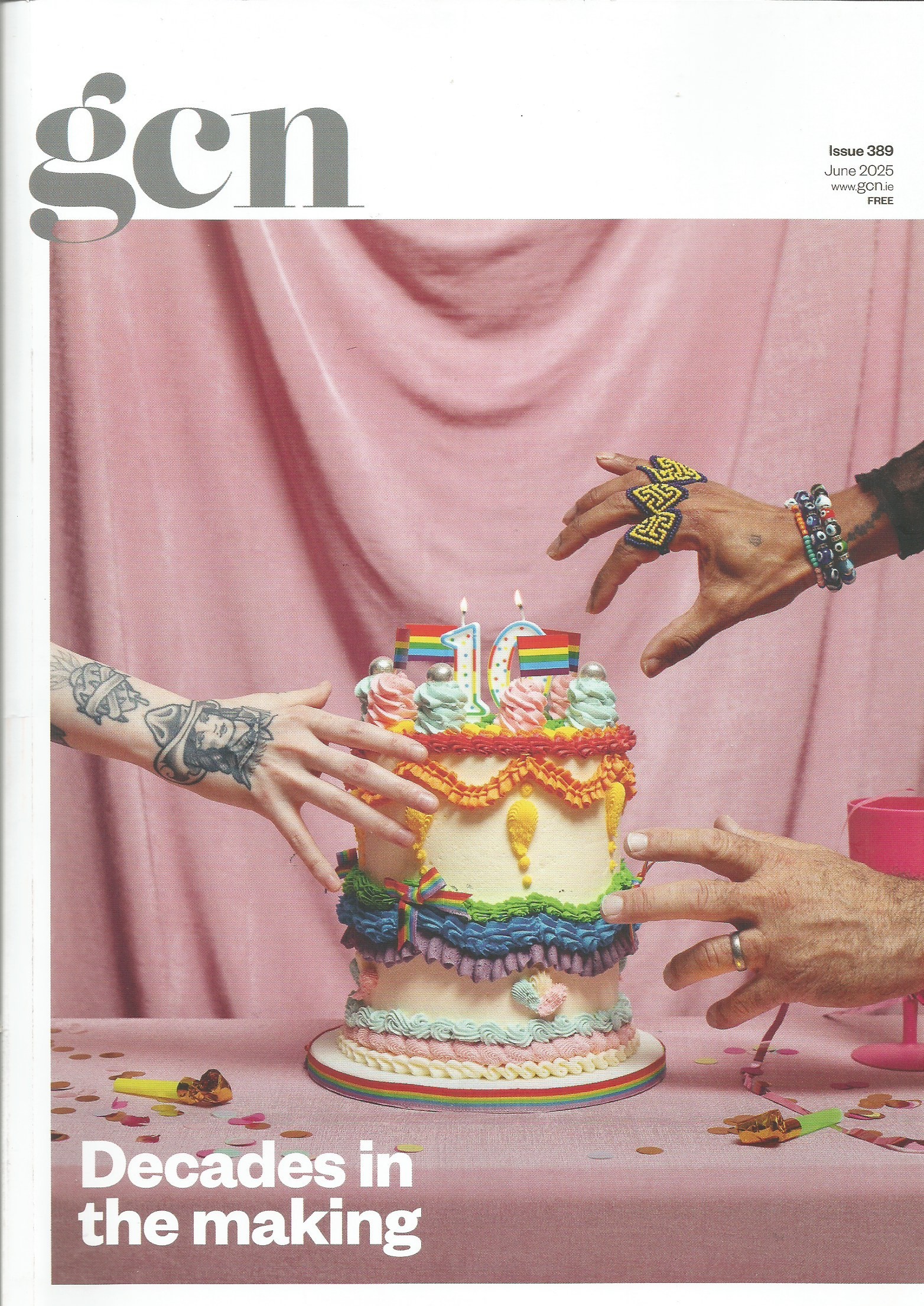
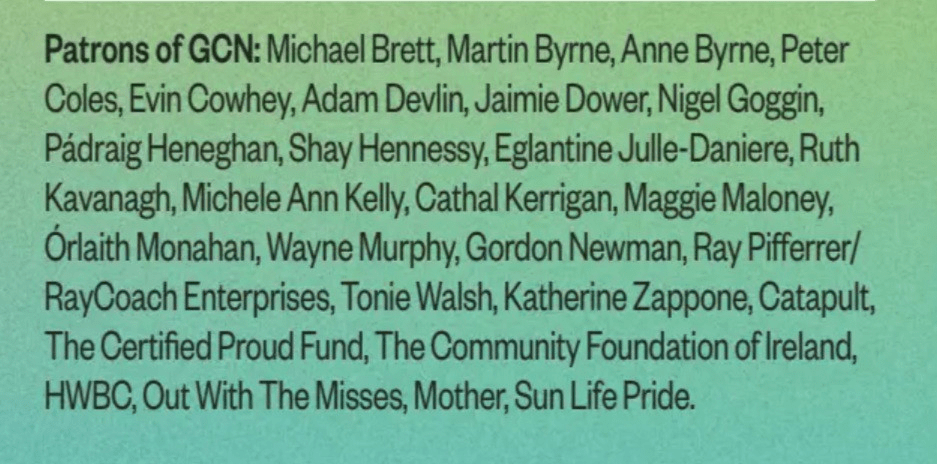
Latest issue of GCNlist of patrons
To mark this year’s Pride I decided to become a patron of Gay Community News, a free magazine that is, I hope, a vital resource to for the Irish LGBTQ+ community. I hope to take part in the Dublin Pride March on 28th June too. More generally, I would like to wish all LGBTQIA+ people around the world, but especially staff and students at Maynooth University, a very enjoyable and inspiring Pride 2025!
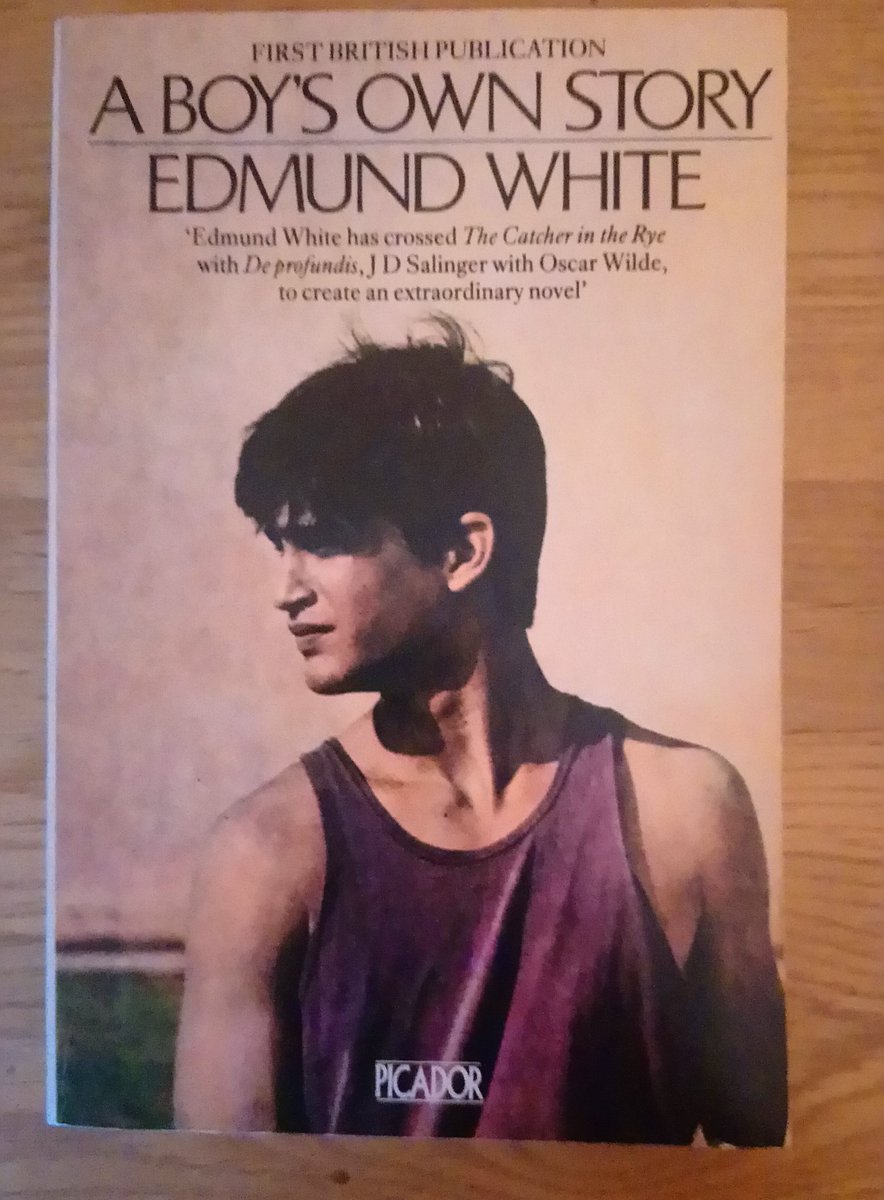
I was saddened to hear of the death on Tuesday at the age of 85 of novelist Edmund White. Like many gay men of my age I read his semi-autobiographical novel A Boy’s Own Story as a teenager, and it had a profound effect on me.
It’s the story of an adolescent boy coming to terms with his sexuality in the American mid-West during the 1950s. It is as frank about the description of gay sex as it is truthful about the confusion that goes with being a teenager. When I bought it I didn’t realize it was going to be so sexually explicit, as the whole subject of gay sex was very much taboo in those days. I didn’t think it was possible to write about such things in such a matter-of-fact way and at the same time so beautifully. The book is also unflinching in its description of the personality flaws of the central character.
The Irish Times has a collection of reflections by various writers on Edmund White that say far more, and far more eloquently, than I ever could. I’ll just say, as a (now) sixty-something gay man that Edmund White helped me on my journey to self-acceptance when I was a struggling teenager all those years ago, and for that I will always be profoundly grateful.
Attitudes in many places are more enlightened than they were decades ago. Next week, for example, sees the 10th anniversary of the equal marriage referendum in Ireland. But the rights we have won could easily be (and indeed are being ) lost if we do not defend them.
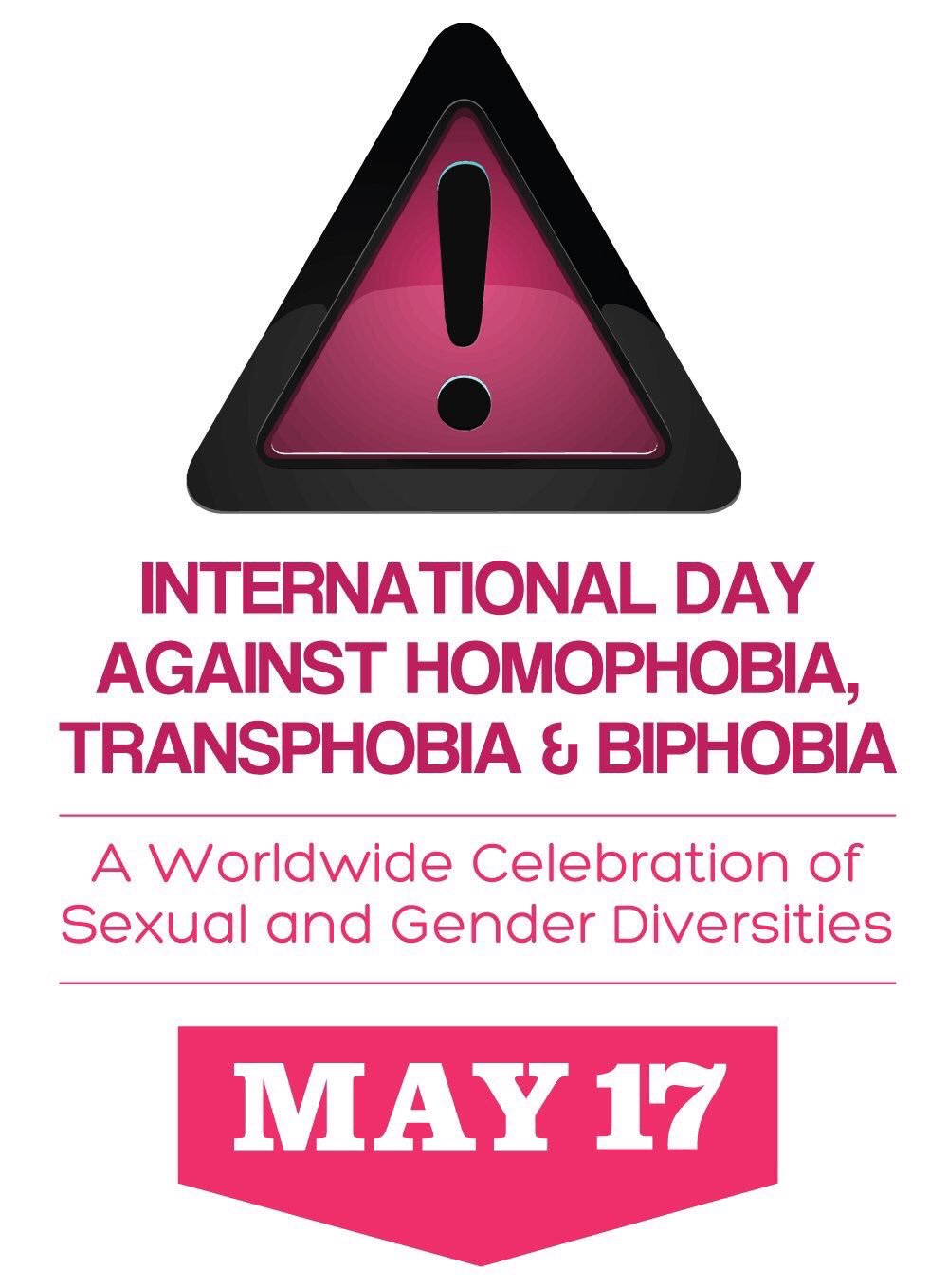
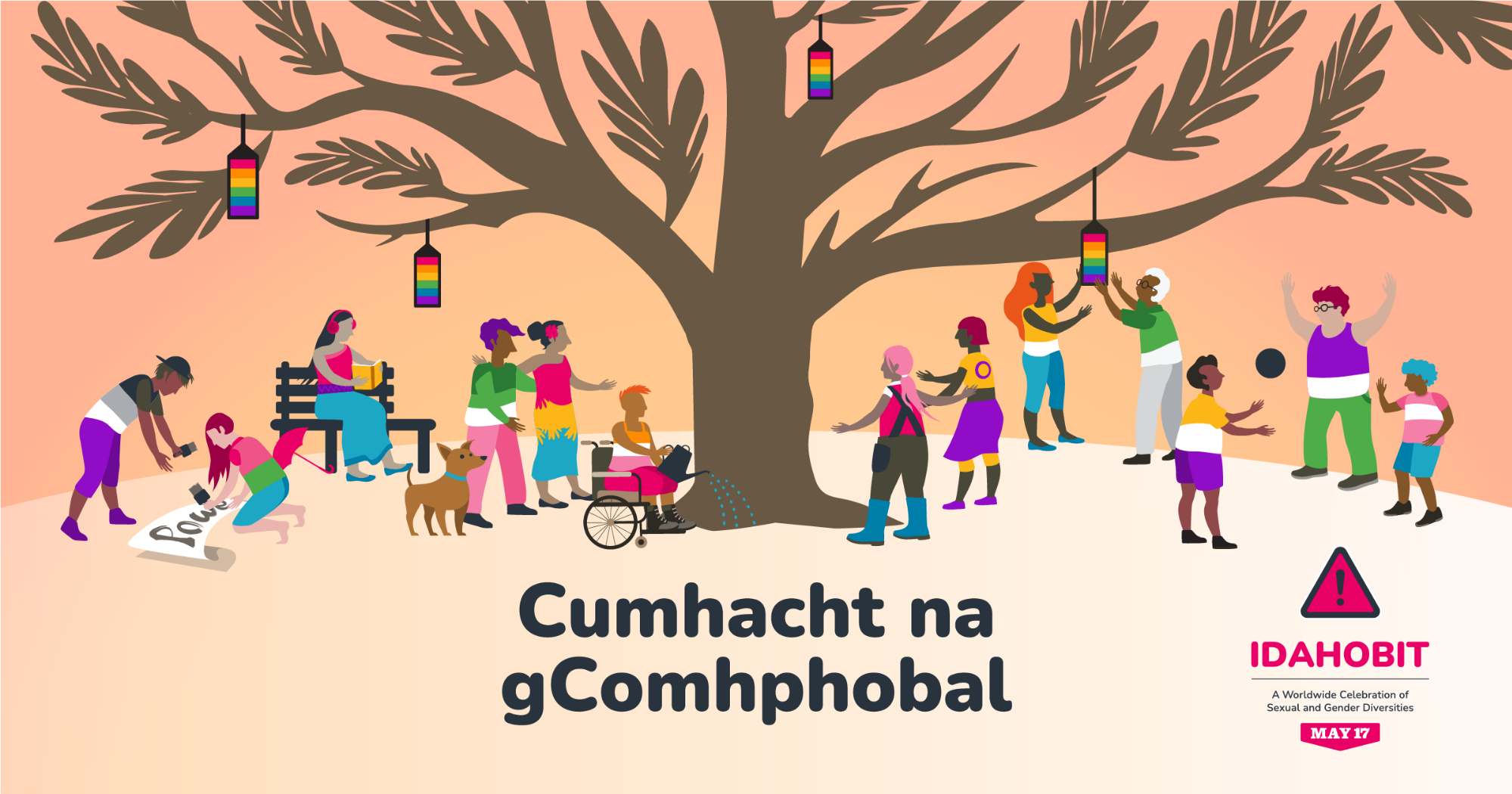
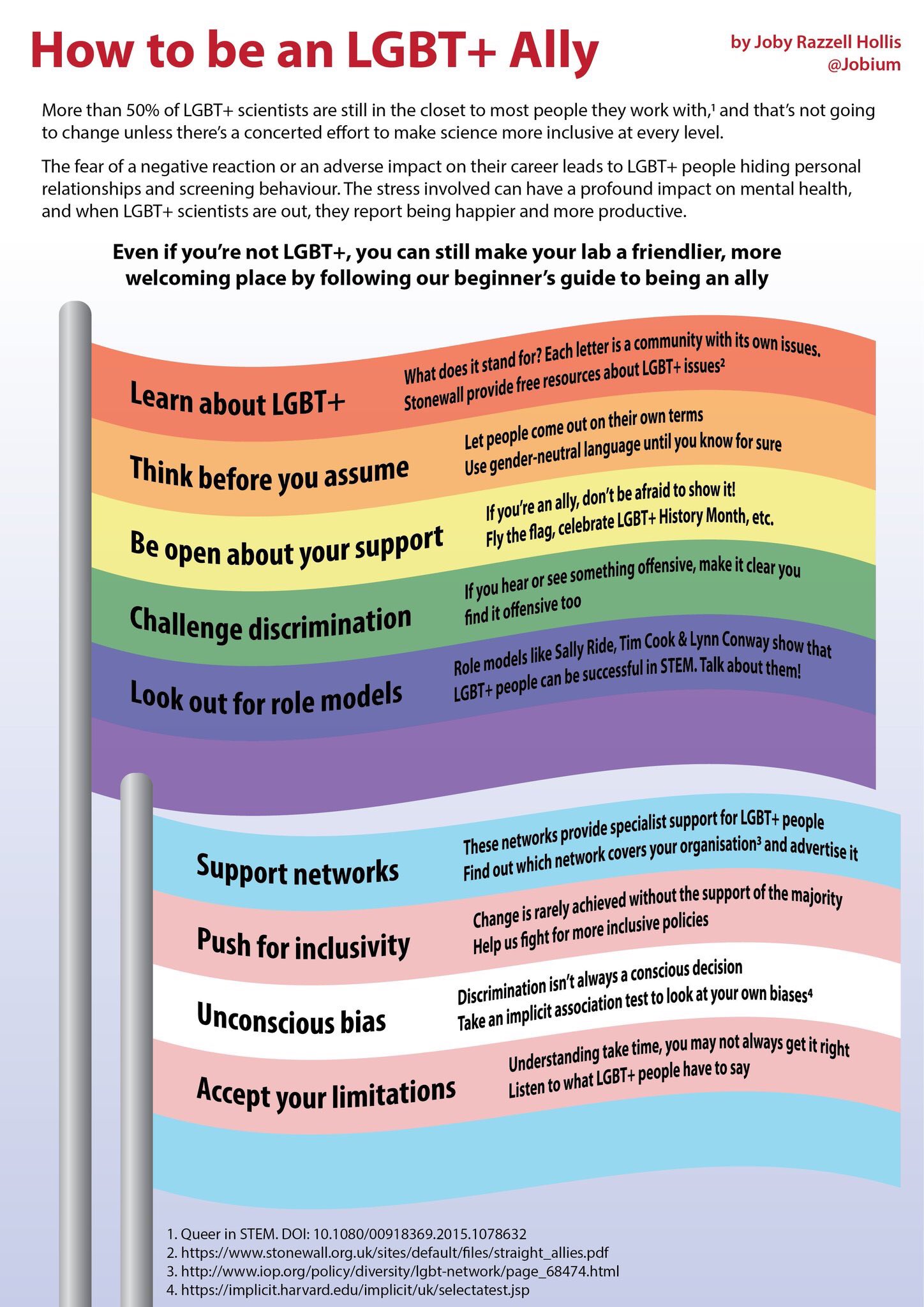
The theme for IDAHOBIT2025 is “The Power of Communities”, shown above in Irish. Even if you are not a member of our community we still need your support. Here is a useful guide I posted a few years ago about how to be a good ally.
The views presented here are personal and not necessarily those of my employer (or anyone else for that matter).
Feel free to comment on any of the posts on this blog but comments may be moderated; anonymous comments and any considered by me to be vexatious and/or abusive and/or defamatory will not be accepted. I do not necessarily endorse, support, sanction, encourage, verify or agree with the opinions or statements of any information or other content in the comments on this site and do not in any way guarantee their accuracy or reliability.




 In the Dark