Archive for the LGBTQ+ Category

Countdown to Equal Marriage

Posted in Biographical, LGBTQ+, Politics with tags , , on March 28, 2014 by telescoper


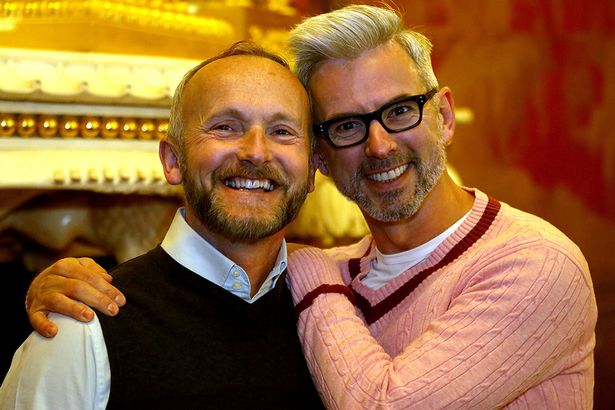
So, from midnight tonight, same-sex couples have the right to marry in England & Wales. Not surprisingly, one of the first gay weddings in the UK will be in Brighton: Andrew Wale and Neil Allard (below) will marry just a few minutes after midnight:

Neil-Allard-left-and-Andrew-Wale-3155478

Nice beards! I’d like to take this opportunity to send my very best wishes to Andrew and Neil and indeed to everyone (straight or gay) taking the plunge this weekend.

I find the fact that this has become reality absolutely amazing. When I came to the University of Sussex as a graduate student in 1985, Brighton was one of the most gay-friendly cities in the UK, if not the world. However, the veneer of tolerance was really very thin. Homophobic prejudice was still commonplace, and it was by no means uncommon for that to turn into violence, as I know to my own cost. The Local Government Act of 1988 included Section 28, which enshrined anti-gay attitudes in law. I would never have imagined at that time that, just 25 years later, a law would be passed allowing people of the same sex to marry. It still seems barely comprehensible that attitudes can have changed so much in the second half of my lifetime. Equality in marriage doesn’t mean equality in everything, of course, and prejudice obviously hasn’t vanished entirely, but it’s a start.

And what’s this tripe about same-sex marriage “threatening” of “devaluing” traditional marriage? Is the function of marriage simply to make married people feel superior to those who aren’t allowed to be married? That’s what that argument sounds like to me. If that’s what it’s for I think the state should withdraw legal recognition from all forms of marriage and let us all be treated equally by the law, as individuals.

For those who don’t approve of the change in the law, it’s all actually very simple. If you don’t approve of same-sex marriage, don’t marry someone of the same sex.

It’s all come a bit too late for me to get married. I think I’m destined to remain forever an ineligible bachelor. I will however be spending this weekend wandering around Brighton randomly asking men if they’ll marry me. This isn’t because of the change in the law. It’s what I do anyway…

I hope at least I’ll get invited to quite a few weddings in the near future. I think there’s going to be quite a lot of catching up going on…

Coming out as a scientist

Posted in Education, LGBTQ+, The Universe and Stuff with tags , on February 14, 2014 by telescoper

So here I am sitting in the library at Burlington House, the Royal Astronomical Society Council meeting I was attending having just finished slightly ahead of schedule.

I only have time for a brief post, so I’ll take the opportunity to direct your attention to an interesting piece in the Grauniad by Tom Welton. Tom is Professor of Sustainable Chemistry at Imperial College. He was also a contemporary of mine in old Sussex days. He was doing a PhD in Chemistry in MOLS while I was doing mine in Astrophysics in MAPS. Come to think of it we both did DPhils actually.

Anyway, Tom’s piece is related to something I blogged about a while ago (being a gay scientist) but he turns it the other way round and writes about how the difficulties of coming out as a scientist to your gay friends..

Mad about the Boy

Posted in LGBTQ+, Music with tags , , on February 6, 2014 by telescoper

I came across this a while ago and thought I’d save it for a rainy day. Today is very rainy indeed so here it is. Mad about the Boy was written by Noel Coward and published in 1932. It’s a song about an infatuation with a movie star  and has generally been performed by female singers, although it was apparently inspired by Coward’s own crush on Douglas Fairbanks Jnr (which wasn’t reciprocated). The song became popular again in 1992 when a version recorded by Dinah Washington was used in a famous Levi commercial, but I love this wonderfully world-weary performance by Greta Keller.


Out and G3 Awards – How about some scientists?

Posted in LGBTQ+ with tags , , , , , , on November 30, 2013 by telescoper

I’m taking it easy today so this will be a brief post to follow up on an old one in which I bemoaned the lack of (visible) Lesbian, Gay, Bisexual or Transgendered physicists. I was subsequently invited to speak at an event in London about this issue. I couldn’t make it because of other commitments, but I gather it went well. Anyway, in my earlier post I wrote

It has always annoyed me that the Independent newspaper’s annual “Pink List” of the UK’s most influential LGBT people never – and I mean never – has a single LGBT scientist on it, despite the immense amount they do not only in research, but also in teaching and outreach. It’s very sad that this work is largely unacknowledged and even sadder that a great many potential role models are hidden.

Actually this year’s Pink List did have one scientist on it, but my point remains relevant. It turns out that nominations are open for the Readers’ Awards of Out  and g3 magazines  to be voted on by the public in 2014. The prizes will awarded in April and expect to be reported in the gay media, they often lead on to more widespread publicity for the winners. So I thought I’d do my little bit to encourage folk out there to think about nominating a scientist or engineer for this prize.

You may nominate your favourite sportsperson, broadcaster, celebrity or  ‘straight ally’, but why not put forward the name of a Lesbian, Gay, Bisexual, Transgender person you know from the world of science, medicine or engineering under the ‘Inspirational Role Model of the Year’ category?

All you need for now is their name and email address, so it only takes a few seconds.

Go on. You know you want to. The link is here.

Sweet Lorraine

Posted in Jazz, LGBTQ+ with tags , , , on November 8, 2013 by telescoper

I bought the album You’re Looking at Me (A Collection of Nat King Cole Songs by Carmen McCrae on vinyl when it came out way back in 1983, and I thought I’d share one of my favourite tracks from it on here. One of the reviews of the album that came out at the time asked why she sang Sweet Lorraine without changing any of the lyrics, presumably because it’s a love song directed at a woman and the critic thought that it didn’t work when sung by another woman. Thirty years on it’s quite possible that there’s a lady somewhere (perhaps even a lady called Carmen) looking forward to marrying her Sweet Lorraine next April when such a marriage will be legal in the United Kingdom!

Where are all the LGBT astrophysicists?

Posted in Biographical, LGBTQ+, Science Politics with tags , , , , , on September 13, 2013 by telescoper

Having scoffed my lunchtime pasty in record time today, I seem to have a few spare minutes to spend writing a brief blog post on a question which popped into my mind when I accidentally discovered that somebody had recently written a blog post (about Einstein’s Blackboard) which mentions me. I used to look after this famous relic when I was in Nottingham many years ago, you see.

There’s a sentence in the post that says

Professor Coles is one of the few out gay astrophysicists in the UK.

Well, it all depends by what you mean by “few” but I think there are more gay (or lesbian or bisexual or transgendered) astrophysicists out there than most people probably think. I know quite a large number personally, dozens in fact, most of whom are “out”. It’s a safe bet that there are many more who aren’t open about their sexuality too. However, it is probably the case that LGBT scientists are much less visible as such through their work than colleagues in the arts or humanities. Read two research papers, one written by a straight astrophysicist and one by an LGBT astrophysicist, and I very much doubt you could tell which is which. Read two pieces of literary criticism, however, and it’s much more likely you could determine the sexual orientation of the writer.

There have been attempts to raise the profile of, e.g., LGBT astronomers through such initiatives as The Outlist, but only a very small fraction of the LGBT astronomers I know have their names on it. I’m not on it myself, although I used to be. It seems I’ve been struck off.

You might ask why it matters if an astrophysicist is straight or gay? Surely what is important is whether they are good at their job? I agree with that, actually. When it comes to career development, sexual orientation should be as irrelevant as race or gender. The problem is that the lack of visibility of LGBT scientists – and this doesn’t just apply to astrophysics, but across all science disciplines – could deter young people from choosing science as a career in the first place.

It has always annoyed me that the Independent newspaper’s annual “Pink List” of the UK’s most influential LGBT people never – and I mean never – has a single LGBT scientist on it, despite the immense amount they do not only in research, but also in teaching and outreach. It’s very sad that this work is largely unacknowledged and even sadder that a great many potential role models are hidden.

The effect of this invisibility is to reinforce the perception that science just isn’t something that LGBT people do. I have known gay students in physics or astrophysics who were on the verge of quitting because of this. I think it’s important for established scientists to be as open as possible about their sexual orientation to counter this. I really don’t think the consequences of coming out are as frightening as people think. This is not to say that homophobia doesn’t exist, but that straight colleagues are much more likely to be supportive than not and (with a few exceptions) most workplaces nowadays won’t tolerate discrimination or bullying based on sexual orientation.

But that brings us to the question of why we should care about whether LGBT students might be deterred from becoming scientists. This is much the same issue as to why we should worry that there are so few female physics students. The obvious answer is based on notions of fairness: we should do everything we can to ensure that people have equal opportunity to advance their career in whatever direction appeals to them. But I’m painfully aware that there are some people for whom arguments based on fairness simply don’t wash. For them there’s another argument that may work better. As scientists whose goal is – or should be – the advancement of knowledge, the message is that we should strive as hard as possible to recruit the brightest and most creative brains into our subject. That means ensuring that the pool from which we recruit is as large and as diverse as possible. The best student drawn from such a pool is likely to be better than the best student from a smaller and more restricted one.

Big companies haven’t become gay-friendly employers in recent years out of a sudden urge for altruism. They’ve done it because they know that they’d be discouraging many excellent employees from joining them. It’s exactly the same way for research.

At Sussex University we will soon be welcoming well over a hundred new students about to start their degree programmes in the Department of Physics & Astronomy. It’s a reasonable estimate than one in ten of these will be an LGBT student. The same will be true for many other departments around the country. So, regardless of your own orientation, if you’re reading this and you’re involved in teaching science just try not to assume, just because you’re talking to a science student, that you must be talking to a straight student. That shouldn’t be be too hard, should it?