Archive for the Literature Category

A Day in Autumn, by R.S. Thomas

Posted in Maynooth, Poetry with tags , , on October 5, 2021 by telescoper

Tree-lined Avenue at Maynooth University


It will not always be like this,
The air windless, a few last
Leaves adding their decoration
To the trees’ shoulders, braiding the cuffs
Of the boughs with gold; a bird preening

In the lawn’s mirror. Having looked up
From the day’s chores, pause a minute,
Let the mind take its photograph
Of the bright scene, something to wear
Against the heart in the long cold.

by R.S. Thomas (1913-2000)


Musée des Beaux Arts

Posted in Art, Poetry with tags , , , on September 11, 2021 by telescoper

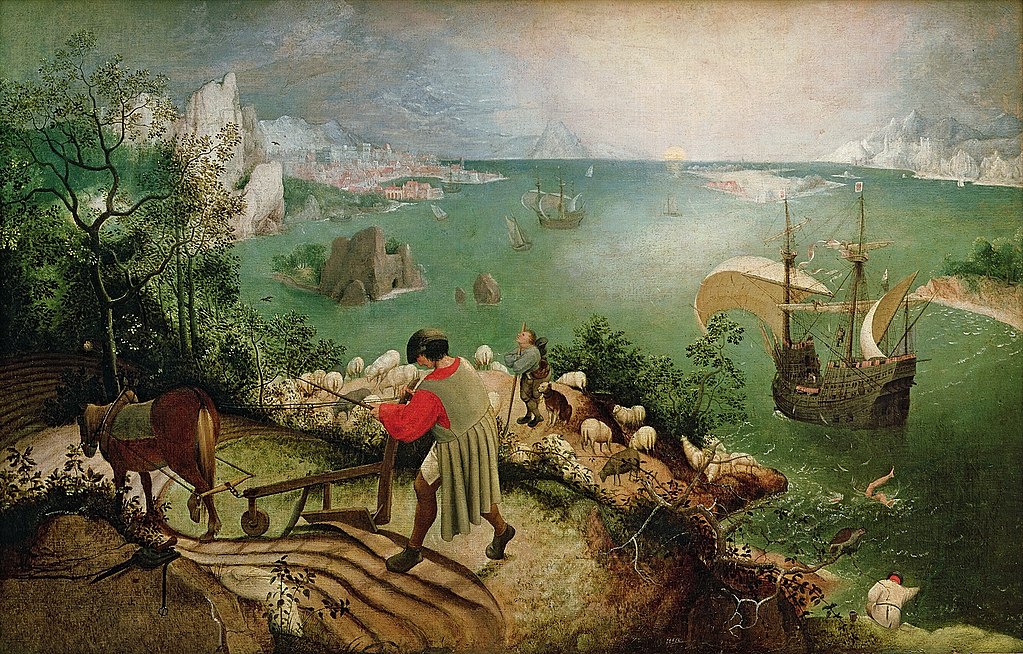
Reminiscing about the events of twenty years ago I was reminded of this poem by W.H. Auden, arguably his greatest, which for some reason I have never posted before. The painting referred to in the second part of the poem is Landscape with the Fall of Icarus by Pieter Bruegel the Elder which is in the Musée des Beaux Arts in Brussels, a visit to which inspired Auden to write this poem in 1938. I remember being quite amused when I saw it in the same gallery about 15 years ago, because it took me a while to spot Icarus! It made me think of one of those Where’s Wally cartoons…

About suffering they were never wrong,
The old Masters: how well they understood
Its human position: how it takes place
While someone else is eating or opening a window or just walking dully along;
How, when the aged are reverently, passionately waiting
For the miraculous birth, there always must be
Children who did not specially want it to happen, skating
On a pond at the edge of the wood:
They never forgot
That even the dreadful martyrdom must run its course
Anyhow in a corner, some untidy spot
Where the dogs go on with their doggy life and the torturer's horse
Scratches its innocent behind on a tree.

In Breughel's Icarus, for instance: how everything turns away
Quite leisurely from the disaster; the ploughman may
Have heard the splash, the forsaken cry,
But for him it was not an important failure; the sun shone
As it had to on the white legs disappearing into the green
Water, and the expensive delicate ship that must have seen
Something amazing, a boy falling out of the sky,
Had somewhere to get to and sailed calmly on.

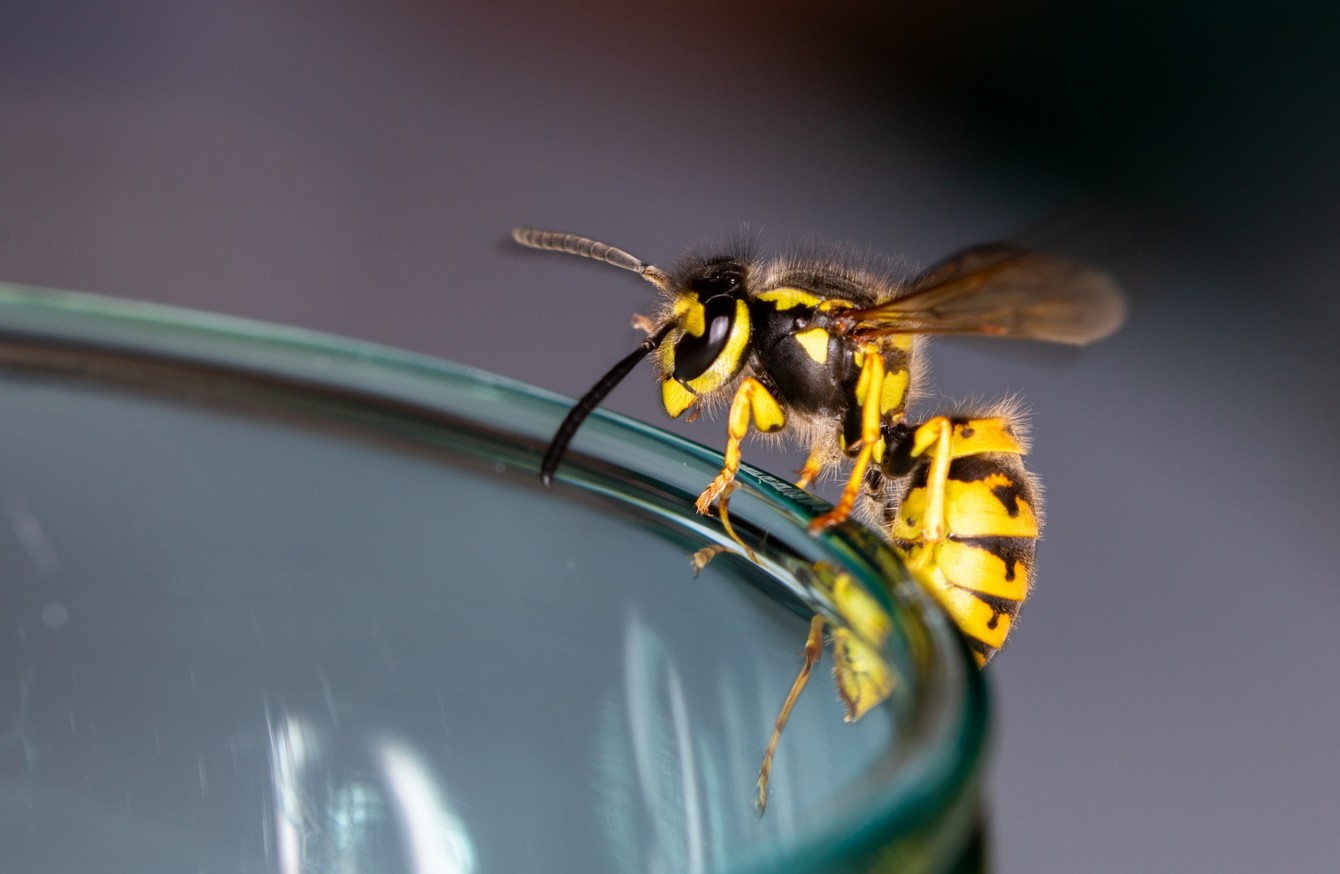
The Wasp, by John Kendall (aka Dum-Dum)

Posted in Poetry on August 29, 2021 by telescoper

Of those uncertain creatures
Who take a simple joy
In swelling up one’s features
On purpose to annoy,
Things void of natural sweetness,
Aggressive and inhosp.
(Pardon the incompleteness)
You are the first, O wasp.

There is no place we visit
In England’s pleasant land
(It isn’t your place, is it?)
But you must take a hand;
You set the nerves a-jangle,
You turn the tan to chalk
Of anglers when they angle,
Of walkers when they walk.

In no uncertain manner
You bid the bather flee;
You foil the caravanner
Who merely wants his tea;
You raid the earnest hopper,
You break upon our sports,
And are, I’m told, improper
To river girls in shorts.

We slap at you and swat you;
We fell you as we may
(The rapture when we’ve got you
Is more than words can say);
One may see great deeds daily
When men unused to strife
Brave you, albeit palely,
For screaming child or wife.

And we have learnt to fashion
A lure that cannot fail,
Born of a lasting passion
That you confess for ale;
An artful jar that cozens
You in and, when you’re tight,
Drowns you in drink by dozens,
A most immoral sight.

But when the day is sinking
And you retire to rest
That, to my private thinking,
Is where man comes out best;
Armed with his apparatus
He tracks you to the comb
Whence you come forth to bait us;
Then, when the last wasp’s home,

Bring forth, O man, your funnel;
With oil and poison come;
Take heed lest haply one’ll
Pass down a warning hum;
Insert with care the former;
Pour down the latter thick;
That should have made things warmer;
That will have done the trick.

Thus with discreet defiance
We tackle you, and yet,
For all the arts of science,
You don’t seem much upset;
Alert and undiminished
You still appear to prosp.;
I leave the word unfinished
To rhyme with you, O wasp.

by John Kaye Kendall (aka Dum-Dum)

Villanelle for Our Time – Leonard Cohen

Posted in Music, Poetry on July 1, 2021 by telescoper

Today (1st July) is Canada Day so here is something by Canada’s finest, the great Leonard Cohen.

We miss you, Leonard.

This is the faith from which we start:
Men shall know commonwealth again
From bitter searching of the heart
We rise to play a greater part


Canal Bank Walk, by Patrick Kavanagh

Posted in Maynooth, Poetry with tags , , on June 19, 2021 by telescoper

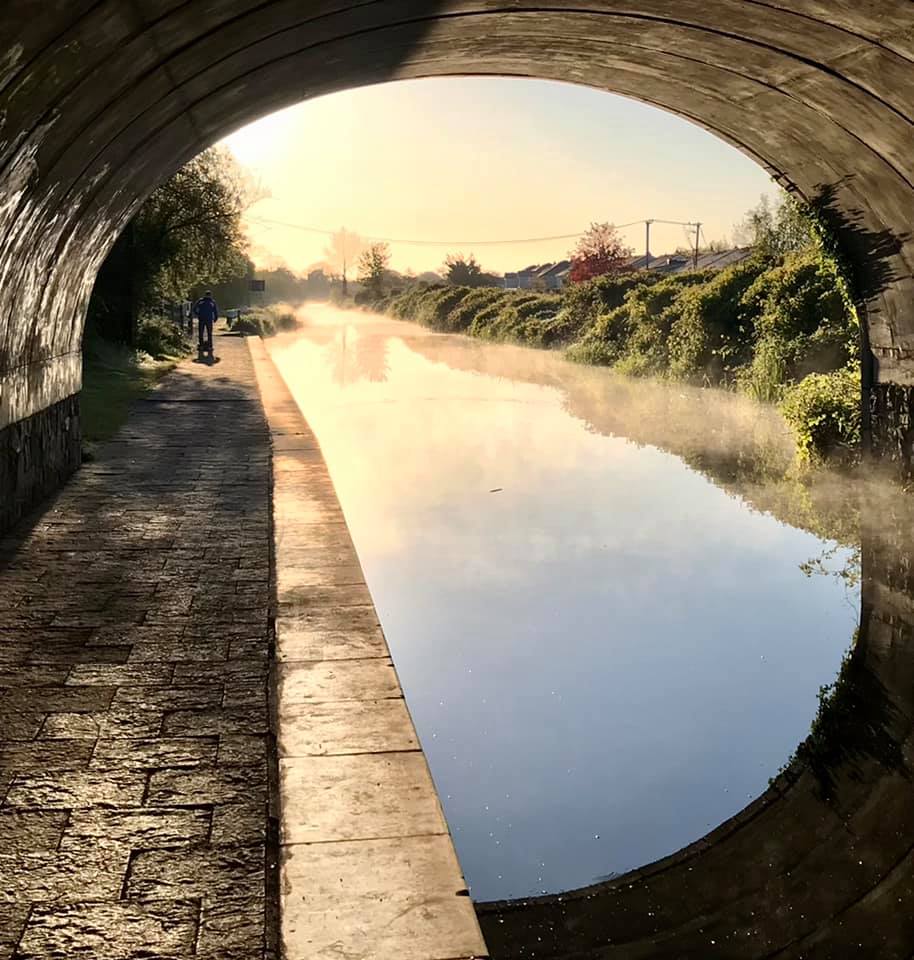
The Royal Canal, Maynooth (Picture Credit: M. Maher)

Written in 1954 when the poet was recovering from a life-threatening illness this poem – a sonnet by Patrick Kavanagh – is a celebration not only of nature’s powers of regeneration but of the delight in taking things slowly. As he expressed in his lecture Man and Poet:

We are in too great a hurry. We want a person or thing to yield their pleasures and their secrets to us quickly for we have other commitments. But it is the days when we are idle, when nothing appears to be happening, which provide us, when no one is looking, with all that is memorable.

Here is the poem Canal Bank Walk:

Leafy-with-love banks and the green waters of the canal
Pouring redemption for me, that I do
The will of God, wallow in the habitual, the banal,
Grow with nature again as before I grew.
The bright stick trapped, the breeze adding a third
Party to the couple kissing on an old seat,
And a bird gathering materials for the nest for the Word
Eloquently new and abandoned to its delirious beat.
O unworn world enrapture me, encapture me in a web
Of fabulous grass and eternal voices by a beech,
Feed the gaping need of my senses, give me ad lib
To pray unselfconsciously with overflowing speech
For this soul needs to be honoured with a new dress woven
From green and blue things and arguments that cannot be proven.

Marking Bloomsday 2021 with beard power

Posted in Beards, Biographical, Literature on June 16, 2021 by telescoper

Although my primary research interest is in the area of astrophysics and cosmology I think it is important to get involved whenever possible in interdisciplinary scholarship. My latest such contribution was to use the “find” facility on the online version of Ulysses by James Joyce to establish that the word “beard” appears 59 times in that work. A thorough analysis of the role of beards in Ulysses would make an interesting PhD topic, in my opinion.

kmflett's avatarKmflett's Blog

As former Beard of Ireland Peter Coles noted on twitter there are 59 references to beards in James Joyce’s Ulysses.

On Bloomsday 2021 the Beard Liberation Front salutes the hirsute canon of Joyce.

A typical Ulysses reference is below:

Mastiansky and Citron approach in gaberdines wearing long earlocks. They wag their beards at Bloom

(page 438)

View original post

#Bloomsday and Things Joycean

Posted in Literature with tags , , on June 16, 2021 by telescoper

So it’s 16th June, a very special day in Ireland – and especially Dublin – because 16th June 1904 is the date on which the story takes place of Ulysses by James Joyce. Bloomsday – named after the character Leopold Bloom – is an annual celebration not only of all things Joycean but also of Ireland’s wider cultural and literary heritage. Of course it’s mainly virtual this year, as it was last year.

I was toying with the idea of going into Dublin and wandering about some of the locations described in Ulysses, but I have too much work to do. Maybe next year.  Instead I thought I’d prepare dinner this evening in a style that Leopold Bloom would enjoy:

He liked thick giblet soup, nutty gizzards, a stuffed roast heart, liver slices fried with breadcrumbs, fried hen cod’s roe. Most of all he liked grilled mutton kidneys which gave his palate a fine tang of faintly scented urine.

Or perhaps not.

If you haven’t read Ulysses yet then you definitely should. It’s one of the great works of modern literature. And don’t let people put you off by telling you that it’s a difficult read. It really isn’t. It’s a long read that’s for sure -it’s over 900 pages – but the writing is full of colour and energy and it has a  real sense of place. It’s a wonderful book.

(There’s also quite a lot of sex in it….)

I’ve read Ulysses twice, once when I was a teenager and once when I was in my thirties. I then lent my copy to someone and never got it back. The copy shown above is a new one I bought last year with the intention of reading the novel again now that I live in Ireland but I sadly have not had the time yet. I will, though.

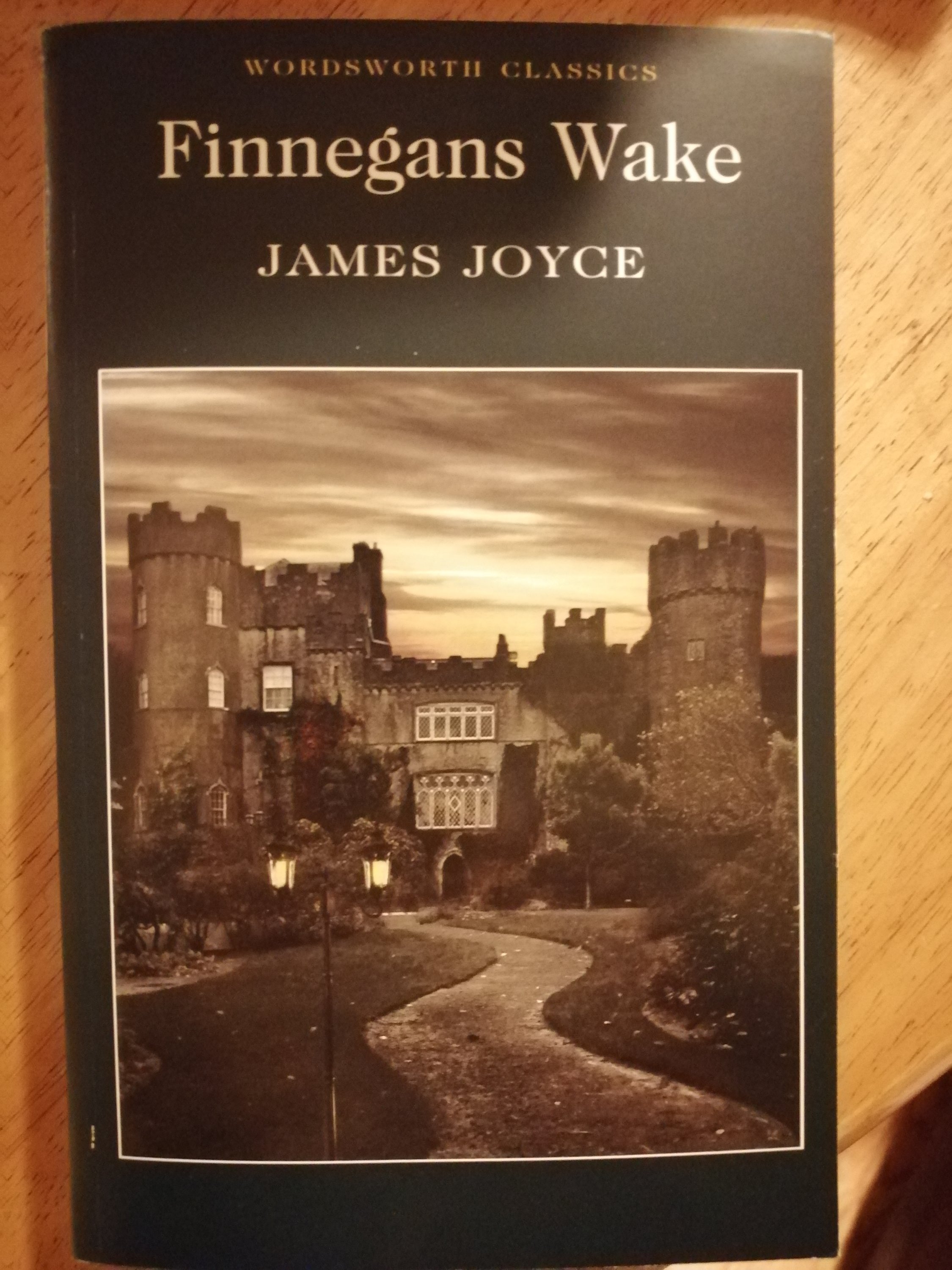
I did manage to read all of Finnegans Wake last summer which I think is quite a difficult read so I approached it by rationing myself to ten pages per day and going slowly, often reading it out loud. In many ways it’s really a more like a very long poem than a prose work. It is

Incidentally if you would like to limber up before making an attempt on either  Ulysses or Finnegans Wake I recommend this set of short stories.

But if you don’t fancy reading it you can listen to an epic 29 hour dramatisation of Ulysses on the radio via RTÉ; see here for details.

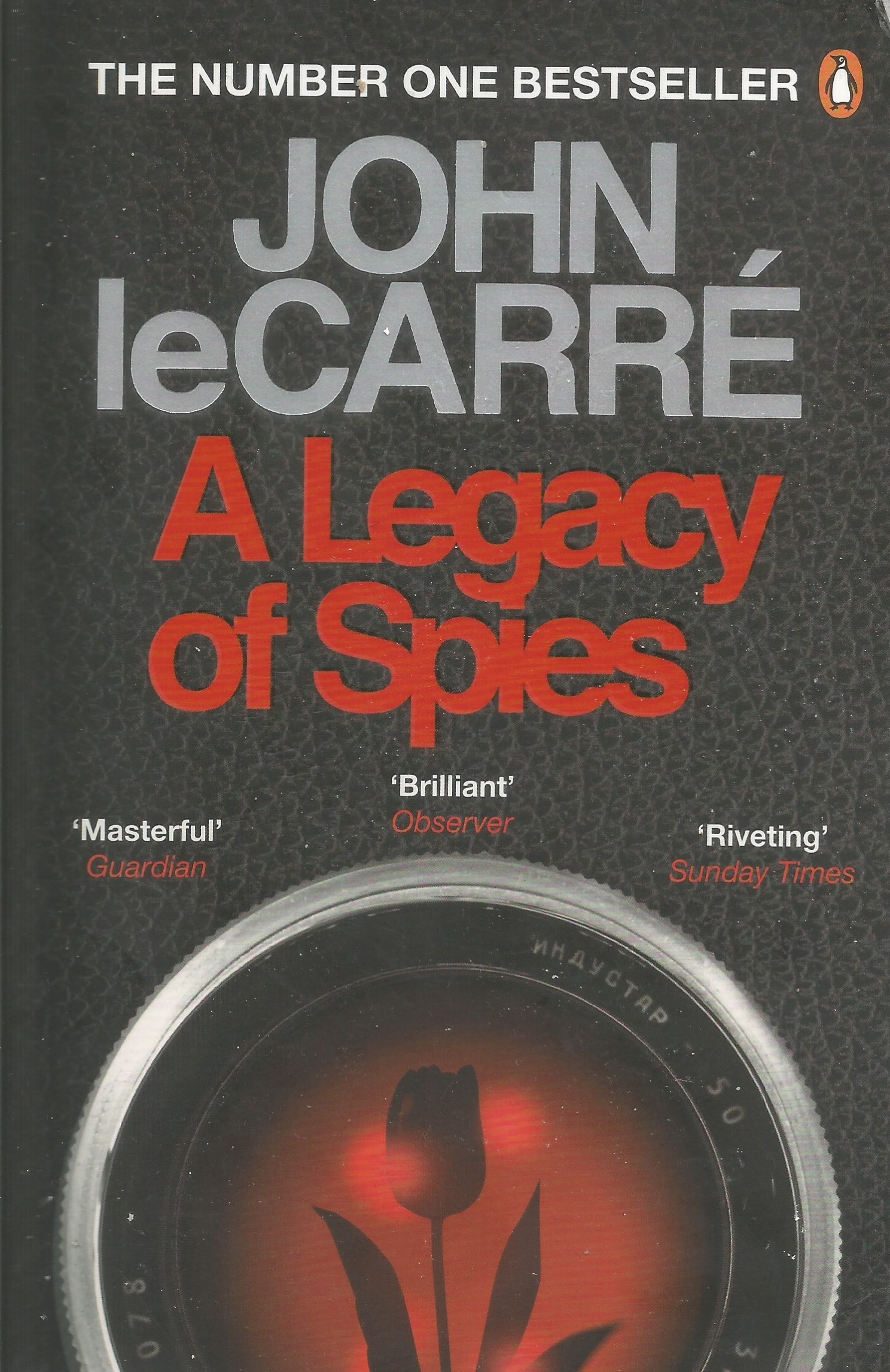
A Legacy of Spies

Posted in Literature with tags , on May 19, 2021 by telescoper

When the writer John Le Carré passed away in December 2020, I ended my little tribute to him with the following:

The last John le Carré book I bought was A Legacy of Spies (2017), which I haven’t yet got around to reading. I’ll put that on the list of Christmas reading, and drink a toast to an author who has given me so much to enjoy and to think about over so many years.

I didn’t actually get around to reading the book at Christmas. I did however notice it the other day still among my (substantial) pile of as-yet-unread books while I was looking for a distraction from examination marking, and decided to read it now, which I have. It’s very good, and also brought back a lot of memories of the entire Smiley sequence, so I heartily recommend it.

I watched the two TV series based on books by John le Carré – Tinker Tailor Soldier Spy and Smiley’s People – when they were broadcast so decided to read those books, and after those read all the others he had written by that time.

Not all his early books were great, but The Spy who came in from the Cold is excellent as are Tinker Tailor Soldier Spy, The Honourable Schoolboy and Smiley’s People – the so-called Karla trilogy. A Legacy of Spies is based on many of the characters to be found in these other novels. The central character, Peter Guillam, appears in the Karla Trilogy and the plot itself revolves around the failed operation described in The Spy who came in from the Cold that resulted in the death of Elizabeth Gold and Alec Leamas at the Berlin Wall. There are even short appearances by Jim Prideaux (the British agent captured during Operation Testify in Tinker Tailor) and right at the very end by George Smiley himself.

Smiley’s remarks at the end, looking back over his career as a spy, with all the cruelty and death and amorality that entailed, are apposite:

‘So was it all for England, then?’ he resumed. ‘There was a time, of course there was. But whose England? Which England? England all alone, a citizen of nowhere? I’m a European, Peter.

No prizes for guessing where that phrase came from!

A Legacy of Spies has an unusual narrative structure, the story told in part through flashbacks and documents. Guillam, in retirement in Brittany in his old age, is dragged into an investigation into alleged wrongdoings by the Circus and has to prepare some sort of defence but lots of important evidence is missing. He has to rely on his own memory but there are things he must withhold to protect himself and others. It’s a gripping read and made me want to read the entire sequence again right from the beginning.

April is the cruellest month

Posted in Poetry with tags , , , , on April 15, 2021 by telescoper
April is the cruellest month, breeding
Lilacs out of the dead land, mixing
Memory and desire, stirring
Dull roots with spring rain.
Winter kept us warm, covering
Earth in forgetful snow, feeding
A little life with dried tubers.

So begins Part I, The Burial of the Dead from The Waste Land by T.S. Eliot. I thought of it yesterday when I was working in the garden, though I have no lilacs.

The poem is rightly regarded as one of the most important poems of the 20th Century and Eliot one of the most important poets but in my opinion one thing he wasn’t good at was reading his own work. I always found his readings of his own work rather flat and dreary. He’s not the only poet I think that of either, but perhaps that’s just me.

Anyway, here is T.S. Eliot reading all of The Waste Land so you can make your own mind up:

Easter Hymn, by A.E. Housman

Posted in Poetry with tags , , , , on April 4, 2021 by telescoper

If in that Syrian garden, ages slain,
You sleep, and know not you are dead in vain,
Nor even in dreams behold how dark and bright
Ascends in smoke and fire by day and night
The hate you died to quench and could but fan,
Sleep well and see no morning, son of man.

But if, the grave rent and the stone rolled by,
At the right hand of majesty on high
You sit, and sitting so remember yet
Your tears, your agony and bloody sweat,
Your cross and passion and the life you gave,
Bow hither out of heaven and see and save.

by A.E. Housman (1859-1936)

Housman was an atheist. This poem was not published in his lifetime, but is the first poem in More Poems which was published shortly after his death.