Archive for the mathematics Category

Coronavirus in Ireland – the Latest!

Posted in Covid-19, mathematics on March 28, 2020 by telescoper

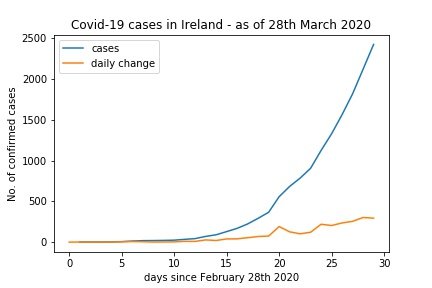
Just a quick post to point out that I’ve set up a page on which I’m tracking the number of cases of Covid-19 in the Republic of Ireland.

I intend to keep the data on that page up to date as information is announced by the HSE and won’t do lots of updates as posts. I thought I’d show the latest figures here though.

The second (log-linear) plot is perhaps more informative. It shows some evidence of a flattening compared to an exponential curve. The plot in green is an exponential with a time constant of 3.5 days; it’s not a fit to the data, it’s just there to show what exponential growth would look like on such a plot (ie a straight line).

Clifford’s `Space-Theory of Matter’

Posted in Beards, History, mathematics, The Universe and Stuff with tags , , , on February 26, 2020 by telescoper

Well, here’s another thing I didn’t know until I was informed by Twitter.

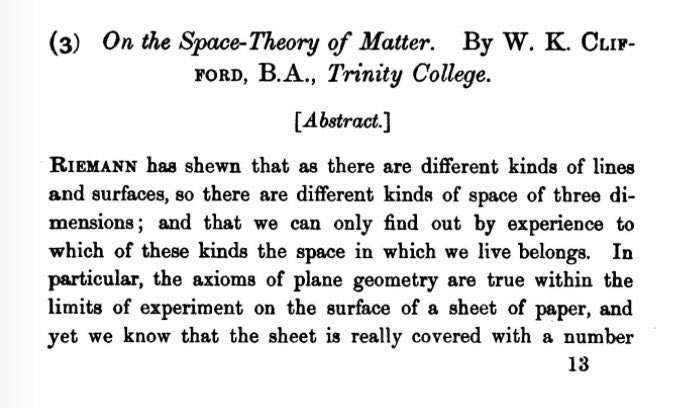
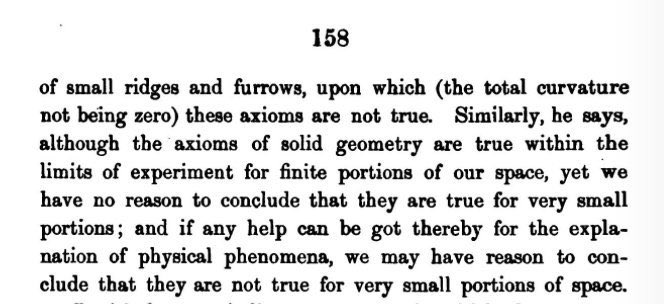
Way back in 1876 –  forty years before Einstein presented his Theory of General Relativity – the mathematician W.K. Clifford (who is most famous nowadays for the Clifford Algebra) presented a short paper in the Proceedings of the Cambridge Philosophical Society in which he speculated that space might be described by Riemannian rather than Euclidean Geometry.

Here are a couple of excerpts:

and

The paper does not contain any actual equations, and his concentration on small scales rather than large was misguided, but it is quite remarkable that he was thinking about such matters such a long time ago!

Unfortunately Clifford died very young, in 1879, at the age of 33, tuberculosis. Had he lived longer he might have been able to develop these ideas a bit further.

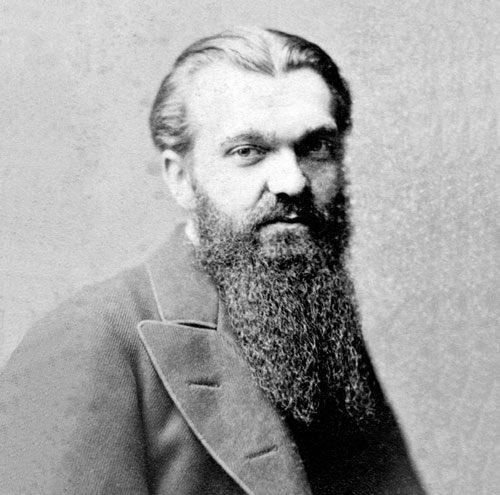
As a postscript I should mention that Clifford had an impressive beard.

What’s the Vector, Victor?

Posted in Film, mathematics, The Universe and Stuff with tags , , , on February 18, 2020 by telescoper

Following on from Sunday’s post about the trials and tribulations caused by Storm Dennis, here is a clip of a plane (an Airbus 380)  landing at Heathrow airport on Saturday.

There are other clips of this same event on Youtube and some of them describe this landing as `dangerous’. Although it undoubtedly involved skill and concentration by the pilot it’s not actually dangerous. Aircrew are trained to land in windy weather like this, and it’s fairly routine. My plane to Dublin (an Airbus 320) landed like this on Saturday evening and, although the pilot got a well-deserved round of applause on landing, nobody was ever really at risk.

As it happens, this week I start teaching vector algebra to my first-year Engineering students, so the weekend’s weather events have  given me a good illustration of vector addition. The plane has to have a velocity vector relative to the air such that the sum of it and the wind vector adds to a resultant vector directed along the runway. Lots of people seem to think this is just guesswork but it isn’t. It’s applied mathematics.

This is in principle simple as long as the crosswind is steady, but obviously the pilot needs to be alert to gusting and make adjustments along the way. When the plane has slowed down enough to land in normal conditions, the wind over the wings is still causing a bit of extra lift. You can see that in the last moments before touchdown this aircraft is gliding because of this effect. I’m told that because of this, in windy conditions planes usually descend at a steeper angle than usual.

The interesting bit for me is that the plane touches down in such a way that its body is at an angle to the runway. As soon as it has landed it has to correct this and point along the runway. I think this is done with the rudder rather than the undercarriage, but I don’t know. Perhaps any experienced pilots that happen to be reading this could give more details through the comments box?

P.S. The title of this post is a reference to the film Airplane!


It’s all a question of angles.

Posted in History, mathematics on February 14, 2020 by telescoper

I couldn’t resist reblogging this fascinating post on the origins of trigonometry by the inestimable Thony Christie..

thonyc's avatarThe Renaissance Mathematicus

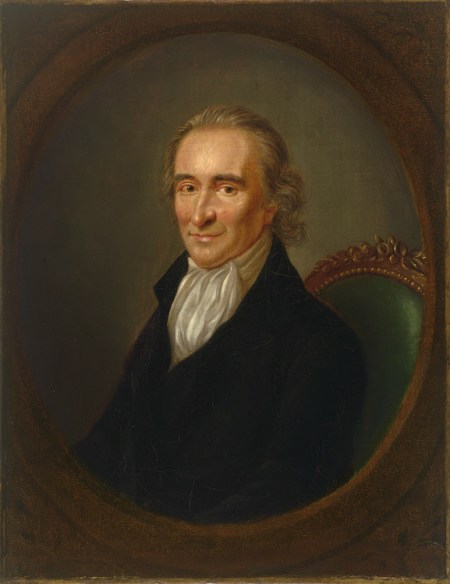
Thomas Paine (1736–1809) was an eighteenth-century political radical famous, or perhaps that should be infamous, for two political pamphlets, Common Sense (1776) and Rights of Man (1791) (he also wrote many others) and for being hounded out of England for his political views and taking part in both the French and American Revolutions.

Portrait_of_Thomas_Paine Thomas Paine portrait of Laurent Dabos c. 1792 Source: Wikimedia Commons

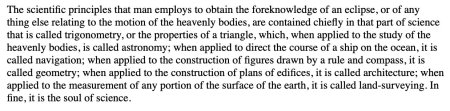
So I was more than somewhat surprised when Michael Brooks, author of the excellent The Quantum Astrologer’s Handbook, posted the following excerpt from Paine’s The Age of Reason, praising trigonometry as the soul of science:

EO_QsU2WkAIDGol

My first reaction to this beautiful quote was that he could be describing this blog, as the activities he names, astronomy, navigation, geometry, land surveying make up the core of the writings on here. This is not surprising as Ivor Grattan-Guinness in his single volume survey of the history…

View original post 1,567 more words

Searching for Synge

Posted in History, mathematics, Television with tags , , on November 14, 2019 by telescoper

John Lighton Synge (above; 1897-1995), who was an expert on geometrical approaches to general relativity, was regarded by many as the most eminent Irish mathematician and physicist since Sir William Rowan Hamilton. Synge (whose uncle was the famous playwright John Millington Synge) was born in Dublin and had spells at Trinity College Dublin, the University of Toronto and various universities in the USA before taking up a position as Senior Professor at Dublin Institute for Advanced Studies (DIAS) in 1948 from which he retired in 1972.

I have been asked by a friend to find out if there are any video recordings of Synge talking or lecturing. A quick google search turns up nothing, so I thought I would put this request out into the blogosphere to see if anyone is aware of anything.

Given the dates it seems likely that any recordings of him would be originally on film (or perhaps television) which would have to be transferred to digital format. Perhaps there is archive material at Trinity College or DIAS that could be suitable?

Happy Birthday, Quaternions!

Posted in History, mathematics with tags , , , , on October 16, 2019 by telescoper

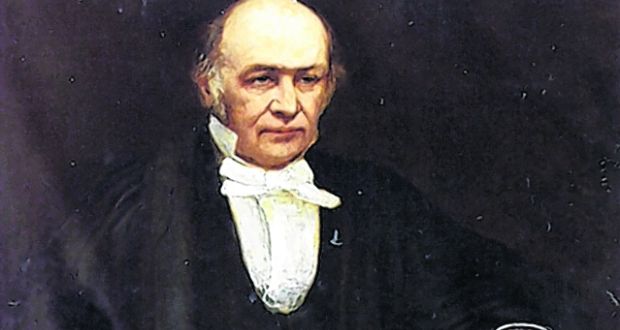
Sir William Rowan Hamilton (1805-1865)

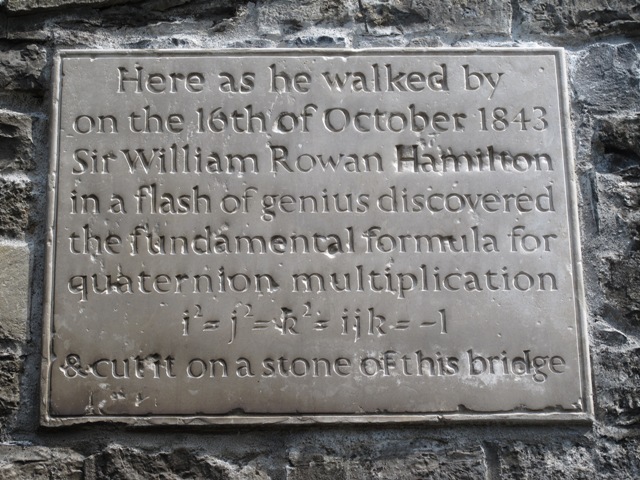
Today, October 16th, is Hamilton day! It was on this day 176 years ago, in 1843, that  William Rowan Hamilton first wrote down the fundamental result of quaternions. Apparently he was walking from his residence at Dunsink Observatory into Dublin when he had a sudden flash of inspiration  and wrote the result down on the spot, now marked by a plaque:


Picture Credit: Brian Dolan

This episode  is commemorated by an annual Hamilton Walk. Sadly,  Broombridge (Droichead Broome) is near the bridge (Broom Bridge) where Hamilton had his Eureka moment and it is on the main commuter line from Maynooth into Dublin. This is ironic because Quaternion algebra does not commute. (Geddit?)

Although it is quite easy to reach Broombridge from Maynooth, I sadly can’t attend the walk this year because I’m teaching this afternoon.

P.S. Maynooth is also home to the Hamilton Institute which promotes and facilitates research links between mathematics and other fields.

Additional Mathematics O-level 1979

Posted in Biographical, Education, mathematics with tags , , , on July 1, 2019 by telescoper

Yesterday a comment appeared on an old post of mine about the O-level Examination I took in Mathematics when I was at School. With a shock that reminded me that it was FORTY years ago this summer that I was taking my O-levels at the Royal Grammar School in Newcastle. That’s a memory lane down which I wasn’t anxious to take a trip.

For any youngsters reading this, the GCE (General Certificate of Education) Ordinary Level Examinations O-levels were taken at age sixteen in the United Kingdom back in the day; they were replaced during the 1980s by the modern GCSE Examination. For readers in Ireland the O-levels were roughly equivalent to the Junior Certificate, just as A-levels are roughly equivalent to the Leaving Certificate.

Anyway, that also reminded me that I never got round to posting the other O-level I took in Mathematics that summer, in Additional Mathematics. I thought I’d remedy that failing now, so here are the two papers I took (on Tuesday 26 June 1979 and Thursday 5 July respectively.

I had forgotten that there was so much mechanics in this actually (Section C of each paper). Is that different from equivalent papers nowadays? In fact I’d be interested in comments about the content and level of difficulty of this compared to modern examinations in mathematics via the box below.

P.S. I did ten O-levels that summer of ’79: Mathematics; Additional Mathematics; Combined Science (2); English Language; English Literature; French; Latin; History; and Geography. I still have all the papers and have only posted a subset. If anyone has requests for any others please let me know and I’ll scan them.

The First Bookie

Posted in Football, mathematics, Sport with tags , , , , , , on April 24, 2019 by telescoper

I read an interesting piece in Sunday’s Observer which is mainly about the challenges facing the modern sports betting industry but which also included some interesting historical snippets about the history of gambling.
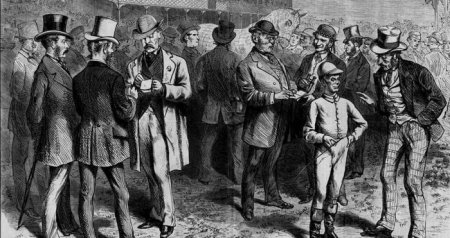
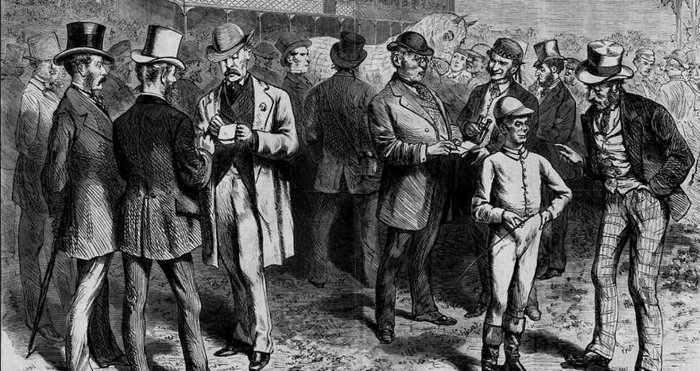
One thing that I didn’t know before reading this article was that it is generally accepted that the first ever bookmaker was a chap called Harry Ogden who started business in the late 18th century on Newmarket Heath. Organized horse-racing had been going on for over a century by then, and gambling had co-existed with it, not always legally. Before Harry Ogden, however, the types of wager were very different from what we have nowadays. For one thing bets would generally be offered on one particular horse (the Favourite), against the field. There being only two outcomes these were generally even-money bets, and the wagers were made between individuals rather than being administered by a `turf accountant’.

Then up stepped Harry Ogden, who introduced the innovation of laying odds on every horse in a race. He set the odds based on his knowledge of the form of the different horses (i.e. on their results in previous races), using this data to estimate probabilities of success for each one. This kind of `book’, listing odds for all the runners in a race, rapidly became very popular and is still with us today. The way of specifying odds as fractions (e.g. 6/1 against, 7/1 on) derives from this period.

Ogden wasn’t interested in merely facilitating other people’s wagers: he wanted to make a profit out of this process and the system he put in place to achieve this survives to this day. In particular he introduced a version of the overround, which works as follows. I’ll use a simple example from football rather than horse-racing because I was thinking about it the other day while I was looking at the bookies odds on relegation from the Premiership.

Suppose there is a football match, which can result either in a HOME win, an AWAY win or a DRAW. Suppose the bookmaker’s expert analysts – modern bookmakers employ huge teams of these – judge the odds of these three outcomes to be: 1-1 (evens) on a HOME win, 2-1 against the DRAW and 5-1 against the AWAY win. The corresponding probabilities are: 1/2 for the HOME win, 1/3 for the DRAW and 1/6 for the AWAY win. Note that these add up to 100%, as they are meant to be probabilities and these are the only three possible outcomes. These are `true odds’.

Offering these probabilities as odds to punters would not guarantee a return for the bookie, who would instead change the odds so they add up to more than 100%. In the case above the bookie’s odds might be: 4-6 for the HOME win; 6-4 for the DRAW and 4-1 against the AWAY win. The implied probabilities here are 3/5, 2/5 and 1/5 respectively, which adds up to 120%, not 100%. The excess is the overround or `bookmaker’s margin’ – in this case 20%.

This is quite the opposite to the Dutch Book case I discussed here.

Harry Ogden applied his method to horse races with many more possible outcomes, but the principle is the same: work out your best estimate of the true odds then apply your margin to calculate the odds offered to the punter.

One thing this means is that you have to be careful f you want to estimate the probability of an event from a bookie’s odds. If they offer you even money then that does not mean they you have a 50-50 chance!
On the alleged socialist dominance in academia

Posted in mathematics, The Universe and Stuff with tags , , , , on February 11, 2019 by telescoper

Various forms of Turning Point

Yesterday there came to my attention to a tweet from an organization called `Turning Point’. Disappointingly this is not as its name suggests, something to do with differential calculus, but a far-right propaganda organization which, among other things, is bemoaning the `socialist dominance in academia’.

Left-wing infiltration of university education would be a very serious matter if it existed, so to allay the fears of my readership that this is not really a problem, in the following I am going to list a few physics topics I will be teaching this week to make it clear that they can not possibly be accused of being influenced by political bias.

  • Mathematical Physics. I will be explaining how Laplace Transformations can be used to solve ordinary differential equations by seizing the means of production.
  • Quantum Mechanics. I will be demonstrating how the path integral formalism allows the result of a quantum mechanical calculation to be obtained by considering the sum over all historical class struggles.
  • Electrostatics. I will be discussing  why some substances are insulators rather than conductors using the theory of dielectrical materialism.
  • Optics. The topic here is Snell’s Law, which relates the Engels of incidence and refraction for light of a given colour and for given pair of media.

It goes without saying that students will not pass the examination on these topics unless they get enough Marx.

I hope this clarifies the situation.

Hyperbolic sine, shine or sinsh (or sinch)?

Posted in Education, mathematics with tags , , , on February 6, 2019 by telescoper

An important coffee-time discussion just revealed a significant cultural difference between members of staff here in the Department of Theoretical Physics at Maynooth University, which I wish to explore further via a completely scientific poll.

The hyperbolic sine, usually written sinh, is well known to be defined in thuswise fashion:

But the question is how do you pronounce it? Since my schooldays I have always pronounced it like `shine’ whereas I’m told others have pronounced it more like `sinch’. Yet others simply call it hyperbolic sine. What is your pronunciation?

This also gives me the excuse to tell a little story of when I was at school. One morning, which happened to be April 1st, our maths teacher started on the subject of hyperbolic functions, talking about `shine’ and `cosh’ and `tanch’. We all assumed it was an April Fool’s joke and although it was very clever it wasn’t all that funny, particularly as it went on for the whole class. We only realised it wasn’t a joke when he carried on in the same vein the following day…

And another thing, for bonus marks. In all European languages with which I am familiar (which is by no means all), the trigonometric function sin is pronounced `sinus’ not `sine’. Is English the only language to depart from sinus?

Answers through the comments box!