Archive for the mathematics Category

How to Fight Fraudulent Publishing

Posted in mathematics, Open Access with tags , , , , , , , on September 23, 2025 by telescoper

There’s a short article on arXiv with the title How to Fight Fraudulent Publishing in the Mathematical Sciences: Joint Recommendations of the IMU and the ICIAM which is well worth reading. The abstract is not useful but the prelude reads:

PreludeIn November 2023, Clarivate announced that it had excluded the entire field of mathematics from the latest edition of its influential list of ‘highly cited researchers’. This prompted the IMU and the ICIAM to conduct a more thorough investigation into the problem of fraudulent publishing in the mathematical sciences (see [1]). Understanding the problem is one thing; finding a way out and regaining control is another. With the recommendations given below, we would like to start the discussion on how, as a global community, we can achieve this. We are all concerned. It affects the very core of the science we love so much. I.A.

arXiv:2509.09877

The paper correctly identifies predatory journals and citation cartels as two consequences of the effort to quantify and rank the quality of research through scientific ‘performance indicators’, in the form of bibliometric measures and suggests some possible remedies.

Many of the recommendations are already included in the San Francisco Declaration on Research Assessment (SFDORA). Many also apply beyond the mathematical sciences (which is why I dropped the Mathematical Sciences bit in the title of the paper from the title of this blog post) and it’s not a long paper so I suggest you read it.

In my view one of the most important steps to take is to ditch the reliance on such companies as Scopus and Clarivate, who have deliberately constructed a system that is so easy to game. All higher education institutes should follow the examples of the Sorbonne University in Paris and, more recently, Utrecht University in the Netherlands. The academic publishing racket is inherently fraudulent. Too many universities, and indeed researchers employed by them, are willing participants in the system.

Back to Teaching and Coping with GenAI

Posted in Artificial Intelligence, Education, mathematics, Maynooth with tags , , , , on September 21, 2025 by telescoper

Summer is well and truly over: it’s a chilly day in Maynooth; the Autumnal Equinox takes place tomorrow; and tomorrow I return to teaching at Maynooth University. So begins my antepenultimate academic year as a university teacher.

I’ve often remarked how the academic year at Maynooth is largely defined by the astronomical phenomena of the equinoxes and solstices. This year demonstrates this perfectly: Semester 1 lectures for undergraduates begin tomorrow (22nd September), the day of the Autumnal equinox; they end on Friday 19th December with the Winter Solstice on 21st. The half-term study break coincides with Samhain, a cross-quarter day. It’s all refreshingly pagan.

This time last year, having been away on sabbatical the year before, I was preparing to teach two new modules. I have those two again this year so this year should be a bit easiest than last year. I still have to get everything sorted out, though, including setting up my Moodle pages and preparing the materials, which is what I’ve been doing today.

The timetable for my Engineering Mathematics (EE206 Differential Equations and Transform Methods) module has not changed, so my first lectures on that (a double session) are not until Tuesday. I’m also doing MP469 Differential Equations and Complex Analysis for 4th Year Mathematical Physics students again, but the lecture times for that have changed. That is because, as a consequence of the merger of the Departments of Theoretical Physics and Experimental Physics to form a single Department of Physics, times have been coordinated as far as possible to ensure that Physics students can have flexibility in their choice of theoretical or experimental-based modules. The Engineering Mathematics module has not changed because the times for those lectures are such as to fit with the needs of the Department of Engineering, rather than Physics.

The upshot of all this is that my first lecture of the new term is for MP469, tomorrow afternoon at 2pm and my second is also MP469, at 11am on Tuesday. This means that I have three hours of lectures on Tuesdays this term, but at least that makes it possible to have a day without teaching (Wednesday).

You will notice that both the modules I am teaching this term are mathematical in nature. I have been concerned about the integrity of the coursework element of these modules in the light of improvements in Generative AI. Only a couple of years ago GenAI could not solve the sort of problems I set for homework, but now it generally can – especially for EE206. I don’t altogether object to people applying artificial intelligence to solve mathematical problems, but the issue is that it does make mistakes. Moreover, instead of saying “sorry I can’t solve that problem” it will generally present a superficially plausible but incorrect solution. Although students will probably use GenAI for problem-solving, I think it is important that they learn to do such problems themselves, otherwise they won’t know whether the solution coughed up by the algorithm is correct or not. That way lies disaster.

The only way to learn mathematics is by doing it. If students get GenAI to do the mathematics for them, then they won’t learn it. In the past we have given marks for coursework (usually 20% of the module mark) mainly to encourage students to do them. Students who don’t bother to do these exercises generally do badly in the final exam (80%).

For these reasons I am moving the assessment from weekly homework sheets – which could be tackled with AI – to supervised in-class tests for which students can use notes on paper, but not laptops or phones, just like they would in the final examination. I will of course give examples for the students to have a go at themselves, and I will give feedback on their attempts, but they will not contribute to the module score. Another advantage of this approach is that students won’t have to do so much work against deadlines outside of class.

Anyway, that’s the approach I am going to try. I’d be interested to hear what others are doing to deal with GenAI. The Comments Box is at your disposal.

P.S. There is a rumour circulating that The Rapture will occur on Tuesday 23rd September, but it is as yet unclear whether this will happen before, during, or after the lectures I am due to give on that day.
De Valera Connections

Posted in History, mathematics, Maynooth, Television with tags , , , , on September 11, 2025 by telescoper

On September 4th, when I posted a piece about the forthcoming Presidential Election in Ireland, I forgot to mention that just two days earlier was the 50th anniversary of the funeral of Éamon de Valera, founder of Fianna Fáil (one of the two largest political parties in Ireland) and architect of the Irish constitution, who died on 29th August 1975 at the age of 92. Here’s some coverage at the time by (British) Movietone News, the commentary is rather generous to him:

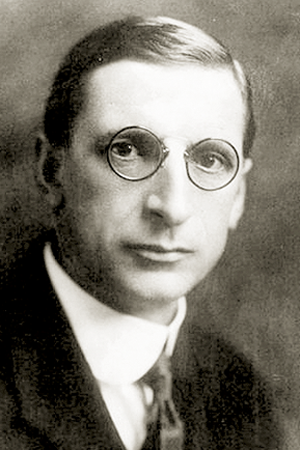
De Valera (nickname `Dev’) is an enigmatic figure, who was a Commandant in the Irish Republican Army during the 1916 Easter Rising, but despite being captured he somehow evaded execution by the British. There’s no evidence, incidentally, that he escaped the firing squad because he was born in America. Dev subsequently became Taoiseach (Prime Minister) and then President (Head of State) of the Irish Republic.

Eamon de Valera, photographed sometime during the 1920s.

There’s no question in my mind that de Valera is the most significant Irish politician of the 20th Century, which is not to say I fid him an agreeable figure at all and his legacy isn’t particularly positive. Nevertheless, his funeral was perhaps as significant event for the Irish as that of Winston Churchill had been for the British just a decade earlier.

Over the past couple of weeks RTÉ television broadcast a two-part documentary called Dev: Rise and Rule; the second part was on last night. It is quite nicely made, but disappointingly superficial and lacking in any real historical insight. The suggestion that it would “decode” Dev was unfulfilled. This is a pity because RTÉ often does good documentaries.

Anyway, this gives me an excuse to mention again, Dev’s connection with Maynooth. De Valera was a mathematics graduate, and for a short time (1912-13) he was Head of the Department of Mathematics and Mathematical Physics at St Patrick’s College, Maynooth, which was then a recognised college of the National University of Ireland. The Department became incorporated in Maynooth University when it was created in 1997. Mathematical Physics is no longer a part of the Mathematics Department at Maynooth, having first become a Department in its own right, then changing its name to the Department of Theoretical Physics and then, just last year, being subsumed within a new Department of Physics.

De Valera missed out on a Professorship in Mathematical Physics at University College Cork in 1913. He joined the the Irish Volunteers, when it was established the same year. And the rest is history. I wonder how differently things would have turned out had he got the job in Cork?

Presentation Day

Posted in Education, mathematics, Maynooth with tags , , , on August 15, 2025 by telescoper

Today was the day of the last component of our MSc in Theoretical Physics and Mathematics here in Maynooth. The students handed in their dissertations on Monday and today they all gave presentations about their work. Listening to them all was very enjoyable, actually, as they were on a range of different topics, some purely mathematical, some statistical, and some more obviously physics. Moreover, they were all very good.

I often worry that assessing presentations is much more subjective than written work in physics and mathematics. In the event, however, we usually find good consistency in the scores awarded by staff in attendance. 

It also occurred to me during today’s presentations that we may make more use of such assessments to deal with the encroaching use of AI in project dissertations. One can get a good idea if someone has actually done and understood the work if they can present it in person and answer questions. That is, after all, the main reason we do viva voce examinations at PhD level.

Listening to talk after talk in a long session can be quite wearying – conferences are usually set up like that and they’re not often useful or interesting – but today’s session was fun. Not so much for the students I suppose, as there were a few signs of nerves. When all the talks were over the students trouped off en masse (presumably to the pub) as that was the end of their course. The staff remained behind to agree a set of marks and combine them with the other components of assessment, i.e. the marks for the dissertation. The examination board meets early next week, after which the final results will go forward to the University.

It was great to see the students all completing their course successfully, especially because it is (I think) such a demanding one. My only sadness is that we won’t see them until the conferring ceremonies in October. The Masters students have been regularly present in the Department throughout the whole year and I’ve had quite a lot of interest chats with them. I saw my own project student even more frequently, once a week for almost a year. We have to banish such thoughts now, though, as our thoughts turn to next year’s intake.

I don’t think any of the MSc students will read this – for all I know they’re still in the pub! – but in any case I’d like to say congratulations to them all and wish them all the very best for the future. They’ve earned it!

Generative AI in Physics?

Posted in Artificial Intelligence, Education, mathematics, Maynooth with tags , , , , , , , , , on August 11, 2025 by telescoper

As a new academic year approaches we are thinking about updating our rules for the use of Generative AI by physics students. The use of GenAI for writing essays, etc, has been a preoccupation for many academic teachers. Of course in Physics we ask our students to write reports and dissertations, but my interest in what we should do about the more mathematical and/or computational types of work. A few years ago I looked at how well ChatGPT could do our coursework assignments, especially Computational Physics, and it was hopeless. Now it’s much better, though still by no means flawless, and now there are also many other variants on the table.

The basic issue here relates to something that I have mentioned many times on this blog, which is the fact that modern universities place too much emphasis on assessment and not enough on genuine learning. Students may use GenAI to pass assessments, but if they do so they don’t learn as much as they would had they done the working out for themselves. In the jargon, the assessments are meant to be formative rather than purely summative.

There is a school of thought that has the opinion that formative assessments should not gain credit at all in the era of GenAI since “cheating” is likely to be widespread. The only secure method of assessment is through invigilated written examinations. Students will be up in arms if we cancel all the continuous assessment (CA), but a system based on 100% written examinations is one with which those of us of a certain age are very familiar.

Currently, most of our modules in theoretical physics in Maynooth involve 20% coursework and 80% unseen written examination. That is enough credit to ensure most students actually do the assignments, but the real purpose is that the students learn how to solve the sort of problems that might come up in the examination. A student who gets ChatGPT to do their coursework for them might get 20%, but they won’t know enough to pass the examination. More importantly they won’t have learnt anything. The learning is in the doing. It is the same for mathematical work as it is in a writing task; the student is supposed to think about the subject not just produce an essay.

Another set of issues arises with computational and numerical work. I’m currently teaching Computational Physics, so am particularly interested in what rules we might adopt for that subject. A default position favoured by some is that students should not use GenAI at all. I think that would be silly. Graduates will definitely be using CoPilot or equivalent if they write code in the world outside university so we should teach them how to use it properly and effectively.

In particular, such methods usually produce a plausible answer, but how can a student be sure it is correct? It seems to me that we should place an emphasis on what steps a student has taken to check an answer, which of course they should do whether they used GenAI or did it themselves. If it’s a piece of code to do a numerical integration of a differential equation, for example, the student should test it using known analytic solutions to check it gets them right. If it’s the answer to a mathematical problem, one can check whether it does indeed solve the original equation (with the appropriate boundary conditions).

Anyway, my reason for writing this piece is to see if anyone out there reading this blog has any advice to share, or even a link to their own Department’s policy on the use of GenAI in physics for me to copy adapt for use in Maynooth! My backup plan is to ask ChatGPT to generate an appropriate policy…

Lá Saoire i mí Lúnasa

Posted in Biographical, Education, mathematics, Maynooth with tags , , , , on August 4, 2025 by telescoper

Today, Monday 4th August 2024, being the first Monday in August, is a Bank Holiday in Ireland. This holiday was created by the Bank Holiday Act of 1871 when Ireland was under British rule. While the August Bank holiday was subsequently moved to the end of August in England and Wales, it has remained at the start of August in Ireland.

We have had some proper Bank Holiday weather, in the form of Storm Floris. Although the worst of this passed to the West of Maynooth, the winds were powerful enough to blow one of my wheelie bins over.

As I mentioned last week, the first day of August marks the old pagan festival of Lughnasadh, named after the God Lugh, on which is celebrated the beginning of the harvest season. This coincides with the English Lammas Day, one of many Christian festivals with pagan origins. Traditionally this is the start of the harvest season and is celebrated accordingly, with rites involving the first fruit and bread baked from flour obtained from the first corn. It is also one of the cross-quarter days, lying roughly half-way between the Summer Solstice and the Autumnal Equinox (in the Northern Hemisphere).

I’m reminded that this time last year I was still on sabbatical. That seems like ages ago. When I resumed teaching last September I had to teach two modules I’d never taught before: a fourth-year Mathematical physics course on Differential Equations and Complex Analysis and a second-year Engineering Mathematics course. This time should be a bit easier as I get to do both of these again. Over the year I also had a final-year undergraduate project student and an MSc student. Both have been a pleasure to work with. The Masters course lasts a calendar year so that one isn’t quite finished, but the deadline for handing in their dissertation is close, next Monday (11th) in fact.

After I return to work tomorrow the next big item on the agenda is the repeat examination period, which starts on Wednesday August 6th. The fates have conspired to require me to be “on call” for four papers next Saturday (two of my own and two covering for a colleague): three of these are scheduled at 12.30 and the other one at 15.30 so I’l have to be by the phone all afternoon in case any matters arise. I also have three others scattered through the approximately ten days of the examination period.

After the repeat examinations are done, the marks uploaded, and the Examination Board has done its work, the next job will be to prepare for the new intake of students. This year’s Leaving Certificate results will be announced on Friday 22nd August, at which point we’ll see how many students (if any) we have studying Physics next academic year which, if all goes to plan, will be my antepenultimate…

Lehrer and Lobachevsky

Posted in mathematics, Music with tags , , , , , on July 28, 2025 by telescoper

I couldn’t resist adding a little anecdote by way of a postscript to yesterday’s item about the the late Tom Lehrer. I didn’t know anything about this story until yesterday when I saw it as a thread on Bluesky (credit to @opalescentopal). The whole thread can be read here, so I’ll just give you a short summary and add a bit of context.

Tom Lehrer’s debut album, Songs by Tom Lehrer, released in 1953, contained a number called Lobachevsky. At concerts he would introduce this song with the words “some of you may have had occasion to run into mathematicians and to wonder therefore how they got that way”. If you don’t know the song then you can listen to it, for example, here. This song contains this verse:

I am never forget the day
I am given first original paper to write
It was on "Analytic and Algebraic Topology
Of Locally Euclidean Metrizations
Of Infinitely Differentiable Riemannian Manifolds"
Bozhe moi!

That’s relevant to what follows.

In 1957, while he was still working as a mathematician, Lehrer co-wrote a paper for the U.S. National Security Agency, with R.E. Fagan, under the title Gambler’s Ruin With Soft-Hearted Adversary, the full text of which can be found here. For those of you unaware, the Gambler’s Ruin is an important problem in the theory of probability. The paper was an internal document but was unclassified. It was later published, in 1958, with some modifications under the title Random Walks with Restraining Barrier as Applied to the Biased Binary Counter.

The 1957 paper was filed away, attracting little attention until 2016 when the person who wrote the Bluesky thread looked at it and noticed something strange. The reference list contains six papers, indexed numerically. References [1], [2] and [4] are cited early on in the paper, and references [5] and [6] somewhat later. But nowhere in the text is there any mention of reference [3]. So what is reference [3]? Here it is:

(It’s a pity about the spelling mistake, but there you go.) Although the song Lobachevsky had been written a few years before the Gambler’s Ruin paper, and had proved very popular, nobody had spotted the prank until 2016. This is episode is testament to Lehrer’s mischievous sense of humour, and to his patience. He made a joke and then kept quiet about it for almost 60 years, waiting for the payoff!

P.S. The Lobachevsky reference was omitted from the modified paper published in 1958.

Happy Retirement, James Hirschfeld!

Posted in mathematics with tags , , on July 22, 2025 by telescoper

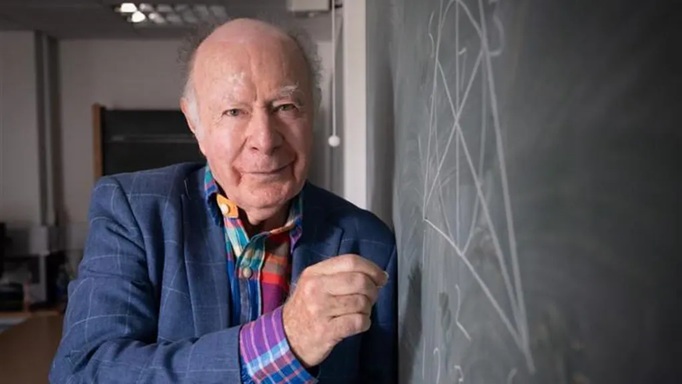
I’m indebted to my erstwhile colleague from Sussex days, Dorothy Lamb, for passing on the news that another former colleague from Sussex days, mathematician Professor James Hirschfeld, has finally retired at the age of 84. He formally retired some years ago, but remained in employment as a Tutorial Fellow. He was very popular with students and staff alike.

Prof. James Hirschfeld, picture credit: University of Sussex

James started as a lecturer at Sussex University in 1966, soon after the opening of the University, and remained working there for almost 60 years. I remember him well from both my stints here: from 1985-990 when I was a research student and then postdoc in the Astronomy Centre, and then from 2013 to 2016 when I was Head of the School of Mathematical and Physical Sciences, of which the Department of Mathematics was a part. He was an excellent colleague who knew the workings of the University inside out and provided valuable advice on many occasions.

James’s retirement was marked by an event at Sussex University. I’m sure I speak for many present and past colleagues and students in wishing him a long and happy retirement.

The 2025 Leaving Certificate Mathematics Papers

Posted in Education, mathematics with tags , , on June 7, 2025 by telescoper

As I mentioned a few days ago, examinations for the 2025 school Leaving Certificate are under way. One of the interesting things about the Irish system is that the examination papers are put up online immediately after the examinations. Students took their first paper in Mathematics (either Ordinary or Higher level) on Friday (yesterday), and there has been some reaction.

Anyway, I thought I’d share the papers here so you can see what you think. Paper 2 is on Monday 9th June, so I’ll add those papers then.

They look reasonable to me. The thing that strikes me about them is that they are much more structured than the A-level mathematics examinations I took way back in 1981.

Comments are welcome through the box below.

Update: As promised here are the Papers 2:

Reaction to Paper 2 of Higher Mathematics is that it was more challenging than Paper 1.

The Leaving

Posted in Biographical, Education, mathematics, Maynooth with tags , , , , , on June 4, 2025 by telescoper

Today is not only a significant date for me (in more ways than one), but it’s important for many young people in Ireland because the Junior Certificate and Leaving Certificate examinations both start today, so the first thing I need to do is wish everyone starting their examinations the very best of luck!

Among other things, the results of the leaving certificate examinations are important for September’s university admissions. This year the grade inflation that occurred during the pandemic years will be reduced, though it is not yet clear how. Whatever happens is likely to have a big impact on student recruitment to third-level institutions.

In the system operating in England and Wales the standard qualification for entry is the GCE A-level. Most students take A-levels in three subjects, which gives them a relatively narrow focus although the range of subjects to choose from is rather large. In Ireland the standard qualification is the Leaving Certificate, which comprises a minimum of six subjects, with many students taking more than this. This gives students a broader range of knowledge at the sacrifice (perhaps) of a certain amount of depth; it has been decreed for entry into this system that an Irish Leaving Certificate subject counts as about 2/3 of an A-level subject for admissions purposes, so Irish students do the equivalent of at least four A-levels, and many do more than this. It’s also worth noting that all students have to take Mathematics at Leaving Certificate level.

One can choose to do Leaving Certificate subjects at Ordinary or Higher level and there’s quite a big difference between the two, especially in Mathematics (of which more below).

Overall I prefer the Leaving Certificate over the UK system of A-levels, as the former gives the students a broader range of subjects than the latter (as does the International Baccalaureate). I would have liked to have been allowed to take at least one arts subject past O-level, for example.

For University admissions points are awarded for each paper according to the marks obtained and then aggregated into a total CAO points, CAO being the Central Applications Office, the equivalent of the UK’s UCAS. This means, for example, that our main Science pathway at Maynooth allows students to study Physics without having done it at Leaving Certificate level. This obviously means that the first year has to be taught at a fairly elementary level, but it has the enormous benefit of allowing us to recruit students whose schools do not offer Physics.

There is however a big problem with Mathematics. It was decided some years ago that students would get 25 extra CAO points if they got a mark of at least 40% in Higher Mathematics. This has led to more students taking the subject, which is good, but there are signs that this may have led to a decline in standards. If, for example, the marking is such that a fixed proportion of students get the top grade but more weaker students take the examination, that means that standards fall at the top end. For more discussion, see here.

Anyway, our Theoretical Physics & Mathematics course requires a good result in Higher Mathematics for entry. Will changes to the marking of Higher Mathematics this year make it harder for students to make the grade? We’ll just have to wait and see.

Moreover, since the pandemic struck, students have been able to choose to answer questions from a limited range of sections on the mathematics examination papers. That means that students can get very high grades despite knowing nothing about a big chunk of the syllabus. That matters most for subjects that require students to have certain skills and knowledge for entry into University, such as Physics. I taught part of our first year Mathematical Physics course in Maynooth for about 5 years. It was noticeable how the fraction that were comfortable with basic differentiation and integration was falling. Will this trend accelerate? Again, we’ll just have to wait and see…