Archive for the Maynooth Category

Easter Time and Sabbaticals

Posted in Biographical, Maynooth with tags on April 6, 2023 by telescoper

So it’s Maundy Thursday, i.e. the day before Good Friday, on which we are supposed to wash the feet of our disciples. Not having been issued with any disciples, I’ll have to give that bit a miss and just work as normal for the rest of today.

Tomorrow is a holiday, as is next Monday, Easter Monday. The rest of next week is a study break, a welcome pause before we embark on the rest of term.

There will still be three weeks of teaching before the end of the Semester when we return on 17th April, but I’ve actually done my last lecture in Computational Physics. I’ve taught them all the things they need for the rest of the module. When they get back students will be mainly working in groups on their mini-projects which are due in by 5th May. The other module I teach will carry on as usual until the end of term.

Anyway, the three weeks that have passed between the St Patrick’s Day study break and today have flown by, but at least I’ve kept up to date.

Yesterday I found out that I have been granted a sabbatical for half of next academic year. I had asked for a full year, but that wasn’t agreed, so I now have to decide whether to disappear from August 2023 to January 2024 or from February 2024 to July 2024. I’ve only got the Easter break to decide which option to take, so I’ll have to spend a bit of time trying to work out what to do. I had planned two different trips during a full-year sabbatical. I’ll probably have to drop one of them. I also made plans for my research students, which I’ll have to change. I’m sure I can work something out though.

My two biggest classes are in Semester 1 so I’d probably get more personal benefit from taking the first option, but it might be harder to find a replacement to teach these modules given the shorter notice. It will also be tricky to make the necessary arrangements with potential hosts elsewhere by August, which tends to motivate the second option. I’ll have to think about it.

The last time I had a sabbatical break was in 2005, when I was at the University of Nottingham. That also was just one semester. After an abortive attempt to get a J-1 visa so I could visit the University of California at Berkeley, I ended up going to Toronto, which was very nice, but instead of giving my teaching to someone else for the term I missed, it was just moved to the second semester so I had a double load when I returned. I hope nobody tries that trick this time!

At least this time there won’t be a problem with visas et cetera, as I intend to exploit the freedom of movement I have within the European Union…

Speak Out about Bullying in Academia

Posted in Harassment Bullying etc, Maynooth with tags , on April 4, 2023 by telescoper

I was interested to learn, via 9th Level Ireland, that local TD Bernard Durkan recently tabled a written question in the Dáil Éireann about harassment and bullying in Irish third-level institutions:

To ask the Minister for Education and Skills to indicate the extent to which his Department continues to monitor incidents of professional bullying throughout the higher education system; the extent to which bullying is evident in colleges throughout the country; the action taken or being taken to counter this; and if he will make a statement on the matter.

[15895/23]

The response from the Minister Simon Harris contains the following:

The Deputy will be aware that there are a number of Programme for Government (PfG) commitments aimed at addressing bullying, including a commitment to commission surveys of staff and students in the areas of harassment, sexual harassment, and bullying in higher education.

It also contains this:

The Deputy will also be familiar with the ‘Speak Out’ tool which my Department has funded. Speak Out is an online, anonymous reporting tool for staff, students and visitors to higher education institutions that was developed by the Psychological Counsellors in Higher Education Ireland with financial support from my Department, the Department of Education and the Higher Education Authority.

I must either have missed the news about Speak Out (or forgotten it) but I see that it can be accessed via my own institution, for example, here. Other universities and colleges have their own links. The dialogue page says:

The big problem with taking a bullying complaint further than mere anonymous reporting is that the legal definition of bullying is far less clear than the others. One definition I’ve found is:

Bullying is an ongoing and deliberate misuse of power in relationships through repeated verbal, physical and/or social behaviour that intends to cause physical, social and/or psychological harm.

Even this is problematic because “intent” is difficult to prove. Power relationships in academia are often distorted by the hierarchical management structures, so bullying is not just contained within the academic staff and students but also from senior management and to support staff. For that reason there’s a lot of this about. Reporting is good but I’m not sure what it actually achieves. Universities seem to be keen to hide bullying, conniving with those responsible shield them and avoid institutional harm, just as they do with harassment and other forms of abusive behaviour.

Foirmlí agus Táblaí

Posted in Education, Maynooth with tags , , on April 1, 2023 by telescoper

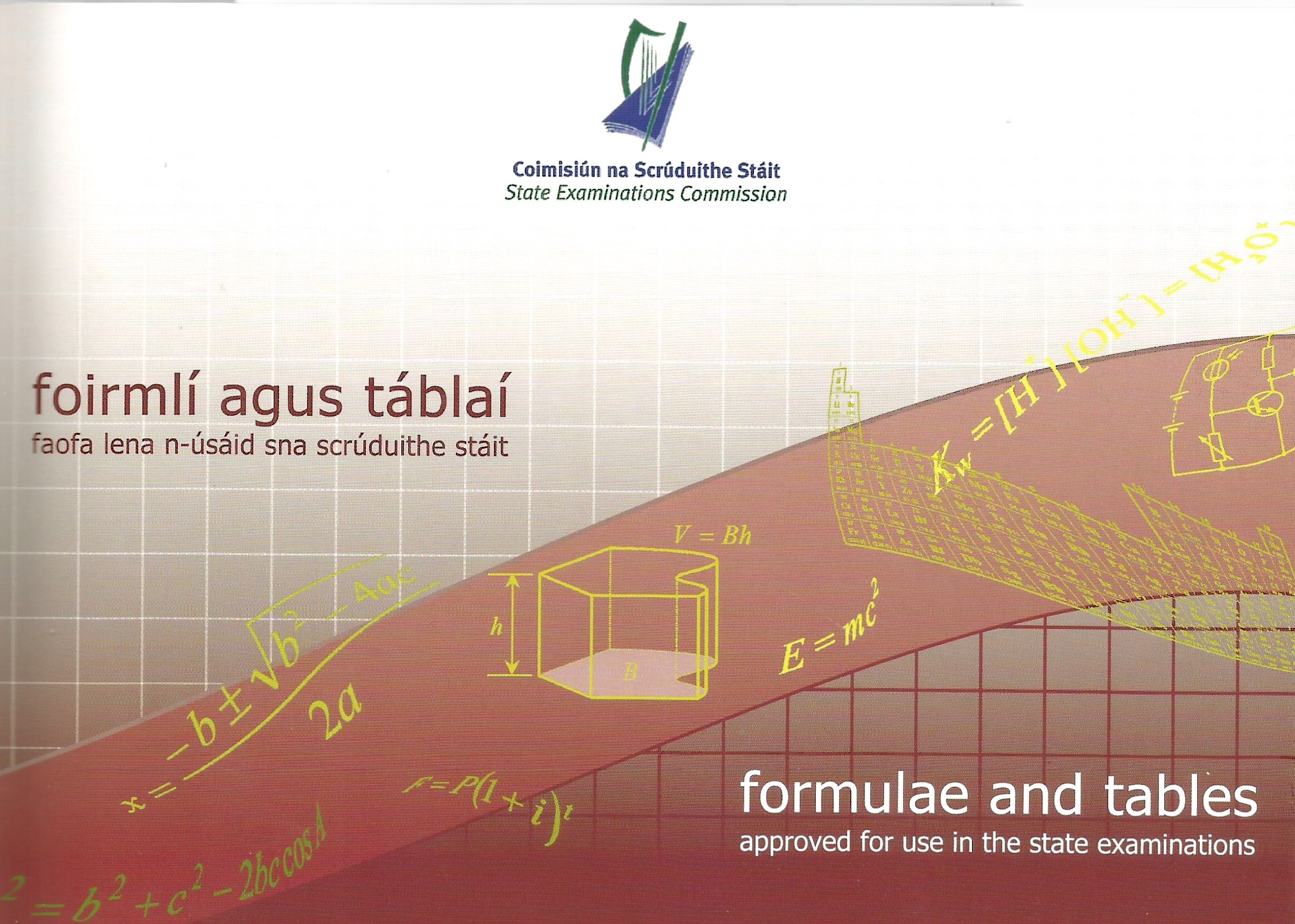
I’ve written on here before about Log Tables but since I’ve recently acquired a set of my own I thought I’d celebrate by mentioning them again. This is what the term “Log Tables” refers to in Ireland:

This book is in regular use in schools and colleges throughout Ireland, but that the term is a shorthand for a booklet containing a general collection of mathematical formulae, scientific data and other bits of stuff that might come in useful to students. There are a lot more formulae than tables, but everyone has calculators now so those aren’t really necessary. There is no table of logarithms in the Log Tables, actually. I suppose much older versions did have more tables, but as these were phased out the name just stuck and they’re still called Log Tables.

The official book costs €4. I bought it in Maynooth’s excellent local independent bookshop. The man who served me knew exactly what I meant when I asked for Log Tables.

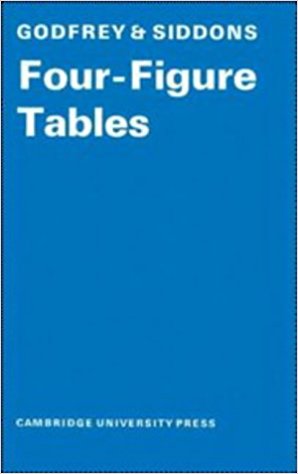
I’m old enough to remember actually using tables of logarithms (and other mathematical tables  of such things as square roots and trigonometric functions, in the form of lists of numbers) extensively at school. These were provided in this book of four-figure tables (which you can now buy for 1p on Amazon, plus p&p).

As a historical note I’ll point out that I was in the first year at my school that progressed to calculators rather than slide rules (in the third year) so I was never taught how to use the former. My set of four-figure tables which was so heavily used that it was falling to bits anyway, never got much use after that and I threw it out when I went to university despite the fact that I’m a notorious hoarder.

Students in Theoretical Physics at Maynooth are allowed to ask for Log Tables in any formal examination. The formulae contained therein are elementary in terms of physics, so won’t help very much with more advanced examinations, but I have no problem with students consulting the Log Tables if their mind goes a bit blank.  It seems to me that an examination shouldn’t be a memory test, and giving students the basic formulae as a starting point if anything allows the examiner to concentrate on testing what matters much more, i.e. the ability to formulate and solve a problem. The greatest challenge of science education at University level is, in my opinion, convincing students that their brain is much more than a memory device.

Here’s an example page that shows some elementary formulae for Mechanics with explanations as Gaeilge in English.

These formulae come up in Physics and/or Applied Mathematics at Leaving Certificate but we don’t require students taking Mechanics in the first year to have done either of those subjects so many students find pages such as this very helpful.

I was interested to learn that colleagues in the Department of Mathematics and Statistics here in Maynooth do not allow the use of Log Tables in examinations. I don’t know why.

Advanced Electromagnetism Theory Lecture Notes

Posted in Education, Maynooth, The Universe and Stuff with tags , , on March 31, 2023 by telescoper

As a member of academic staff who teaches in a publicly funded University, and in the spirit of the Open Access movement, I think that as far as possible I should put the content of my lectures in the public domain. I’ve decided today to do this with my final-year module on Advanced Electromagnetism. Here you go.

Any questions?

If you think that isn’t much for the 17 lectures I’ve given so far, just look at what I started with:

I reckon I’ve made quite a lot of progress!

Postgraduate Workers

Posted in Education, Maynooth with tags , , on March 24, 2023 by telescoper

It was good to see quite a lot of coverage in the Irish Media of yesterday’s demonstration by the Postgraduate Workers Organization (PWO) at the Dáil Éireann; see, for example, here, here and here). The PWO is campaigning for postgraduate students to be paid on a living wage and with full workers’ rights under employment law, such as sick leave entitlement and maximum working hours. You can read more about their demands in the Fair Researcher Agreement here. I endorse this campaign wholeheartedly.

Postgraduate students in Ireland are treated abysmally by the current arrangements, and their situation is rapidly getting worse. Stipend levels (the best of which are currently around €18,500) have not been adjusted for inflation for many years and the recent surge in prices has made this even worse. The living wage is around €26,000 in Ireland, and the stipend should be increased to at least that level. I would argue, and indeed have argued, that even this level would be inadequate.

University employees such as myself have recently been awarded a significant pay rise. It is patently unfair that postgraduate students, who make an essential contribution to the teaching as well as research in all academic departments, should be left behind.

The root cause of  this is the chronic underfunding of Ireland’s universities. While lecturers’ pay is determined by central agreements, it is not necessarily the case that colleges and universities are given enough funding to cover the increase. The result is that third-level institutions can’t employ enough full-time academic staff to teach the ever-increasing number of students, and instead have to rely on poorly-paid casual labour, much of which supplied by postgraduates. While I do think that PhD students benefit from having a bit of teaching experience during the course of their programme, the current situation where the students can’t afford to live unless they take on a large amount of additional work.

While the fundamental cause is clear, and lies at a Government level, it seems to me that the situation of PhD students in Ireland is exacerbated by rampant managerialism. Take my own institution, Maynooth University, for example. The ratio of undergraduate students to academic staff in Maynooth is the highest in Ireland at 28:1. Instead of investing in more academic staff, however, the University has recently gone on a spending spree to recruit more members of senior management. I put in a Freedom of Information request in recently, which revealed that Maynooth has spent around €250K since September 2020 on recruitment consultancies alone in connection with 10 senior management positions. That’s not counting the recurrent salary costs of the new staff. The addition of yet more people to an already top-heavy management structure is impossible to justify, especially when postgraduate students are struggling to make ends meet.

There seems to be much less enthusiasm here for filling academic staff positions, or even advertising them, as I have learnt recently by personal experience. Universities are communities whose primary aims are teaching and research. In my opinion postgraduate workers, collectively, contribute far more to those communities than do the President, Vice-Presidents and sundry Directors. I just wish more people recognized that. If postgraduate workers decided to withdraw their labour, the University would cease to function.

Progress in Computational Cosmology

Posted in Maynooth, The Universe and Stuff with tags , , , , , , on March 23, 2023 by telescoper

We’ve had a visitor in Maynooth for the last couple of days in the form of Mathieu Schaller, who works at Leiden University in the Netherlands. Mathieu was here to work with John Regan’s group on cosmological simulations, but also gave a Theoretical Physics seminar yesterday to a general audience including some of our undergraduate students.

Mathieu’s talk was about a project called FLAMINGO – what is it with cosmologists and acronyms? – which is a suite of simulations designed to be virtual “twins” of the next generation of surveys. This suite includes the largest cosmological simulation ever run to the present time so it can simulate redshift surveys encompassing local volumes near redshift z=0 out to very distant sources at high redshift.

It was a very interesting talk which I thought I would mention here because of one thought that struck me, which is how much the field of computational cosmology has moved on since I started in the field in 1985, almost forty years ago. Not for the first time, it was a seminar that made me feel very old. I’ve been a spectator as far as this is concerned, of course, because I don’t do massive simulation work. Nevertheless these calculations have had a huge impact in the field, and play an important role in, for example, the Euclid mission. They are used both for planning survey strategies and for analyzing the result data.

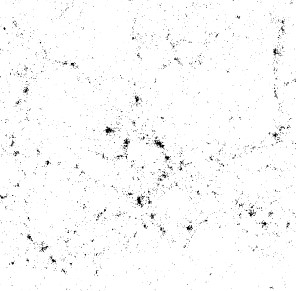
Take a look at these two pictures, which I’ve chosen to illustrate the progress there has been in the field.

The simulation on the left shows the state-of-the-art when I started my PhD DPhil in 1985 from the classic “DEFW” paper by Davis Efstathiou, Frenk & White; the one on the right I took from Mathieu’s Twitter account. These do no simulate the same volume so the scale looks different, but the morphology of the cosmic web looks similar.

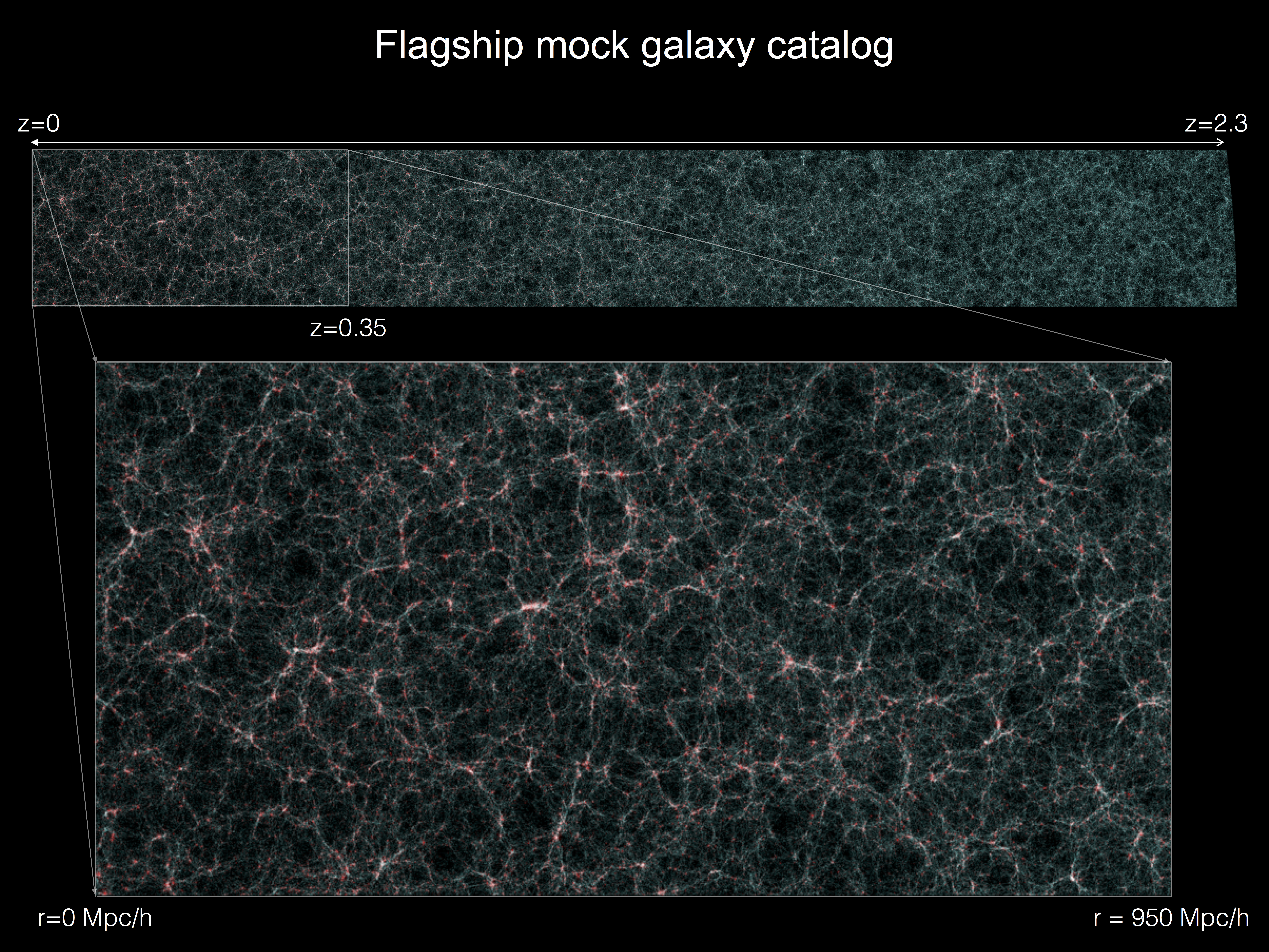
The most obvious change over the years has been the ability to generate colour graphics. The standard cosmological model has also evolved: the one on the right shows a model universe dominated by Cold Dark Matter with no dark energy, while the one on the right is the modern variant known as ΛCDM. The one on the left also is gravitational-only, i.e. no hydrodynamic effects arising from baryonic material., just the effect of the cold dark matter. The simulation on the right includes extensive modelling of baryonic physics. The largest gravity-only simulations that I’m aware of is the Euclid flagship simulation which produces mock galaxy catalogues like this:

The thing that struck me as an oldie, however, is the sheer scale of modern simulations. The DEFW simulations were done by moving N=323 particles around in a box in response to their mutual gravitational interactions. That’s just 32768 particles. The simulations Mathieu talked about involve N=50403 = 125,300,240,064 particles. That’s a factor of almost 4 million bigger. The Flagship simulations are about 16 times bigger than that, with about 2 trillion particles. Impressive! Moore’s Law is a wonderful thing…

Maynooth University Library Cat Update

Posted in Maynooth with tags on March 22, 2023 by telescoper

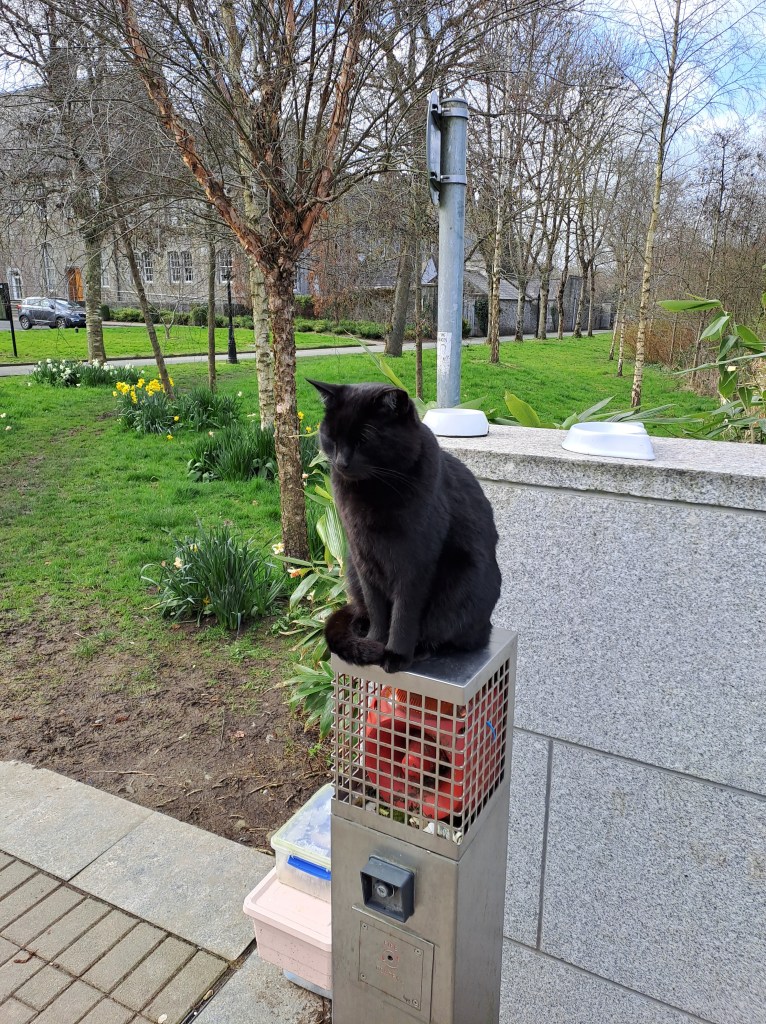
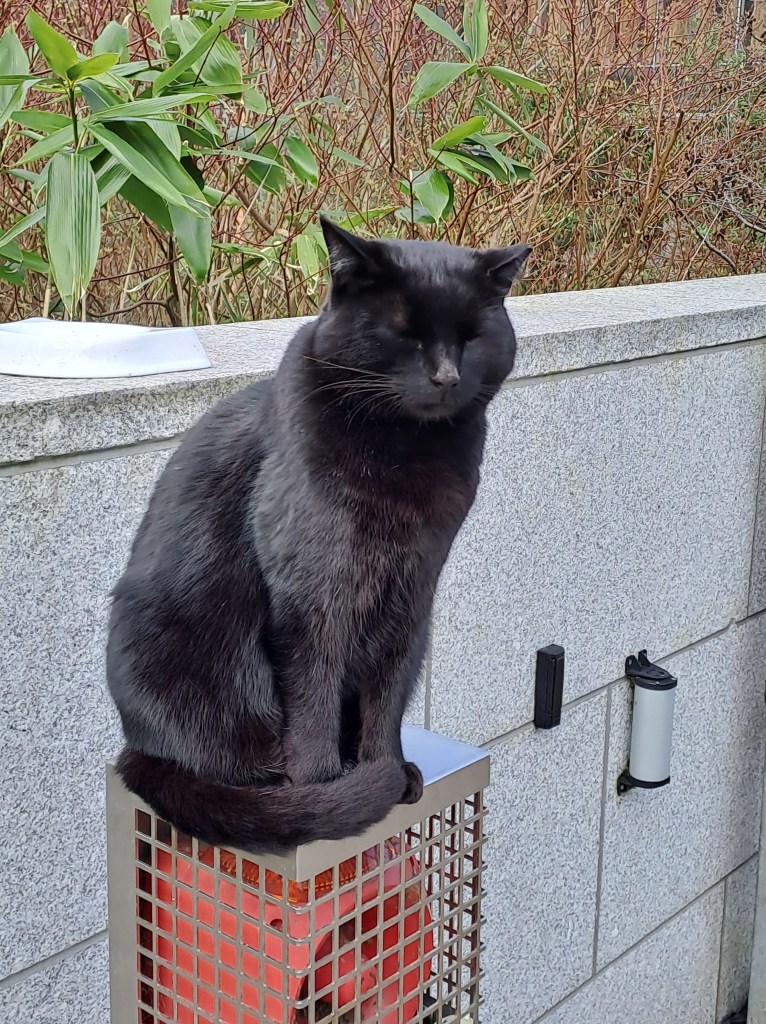
A few people have asked me whether Maynooth University Library Cat is OK, specifically whether he has recovered from the recent events that led to the temporary unavailability of his regular home. I chatted to one of the security guards on Monday when he was tending to the Cat’s box and he said that our feline friend had disappeared for a couple of days over the St Patrick’s holiday weekend but eventually returned home in the early hours on Sunday. I think that’s probably true of quite a number of humans around here too.

Anyway, it being a springlike morning, I found His Nibs on post so I took a couple of snaps of him looking rather statuesque. I couldn’t persuade him to open his eyes for the pics, probably because he was facing the sunlight, but he did so as soon as I put the camera away. He seems in rude health and no doubt enjoying the return of the students after the Study Break. He is also, as you can see, well stocked with supplies…

Over the Break

Posted in Biographical, Maynooth on March 19, 2023 by telescoper

After last week’s study break, the St Patrick’s Day holiday, and all the excitement of Ireland’s Grand Slam, I woke up this morning with a shudder at the realization that I have to start teaching again next week and I had a lot to do to prepare. As a consequence, I’ve been busy all afternoon getting lectures and coursework ready, as well as writing examination papers, the deadline for which is tomorrow. These deadlines seem to happen earlier every year!

Among the things I had to do last week was make a trip to the rheumatology clinic where I have steroid injections in my knees for arthritis. It’s not a pleasant procedure, but I have been struggling for the last few weeks and was glad when my appointment came up. It’s not really painful, but the lack of mobility does get me down a bit. For one thing, I suspended my Friday concert-going. For another, a couple of weeks ago, I had to kneel down in the computer lab to fix a cable and could hardly get up again!

It usually takes just a day or two after the jabs to feel some improvement, and so it is this time. I’m moving a lot more freely now, which is a relief, and this should last for 9 months or so.

Anyway, we now have almost three weeks of teaching before another break. I say almost three weeks because Good Friday is a holiday here, as is the following week. I hope to be able to get through my remaining lectures on Computational Physics before then so all that will remain of that module will be labs and project work for the students. And, of course, marking…

The draft exam timetable has been issued, and it looks like I have yet another Saturday paper. Ho hum. Still, after the end of May, I can hopefully start thinking ahead for what is coming over the summer and next academic year…

Lá Fhéile Pádraig sona daoibh go léir!

Posted in Beards, History, Maynooth with tags , on March 17, 2023 by telescoper

So it’s St Patrick’s Day, a bank holiday here in Ireland. I shall probably observe the festivities in Maynooth later on, though it is pouring down at the moment and very likely to rain on the parade, which starts at 11am. That would be disappointing, as it hardly ever rains in Ireland.

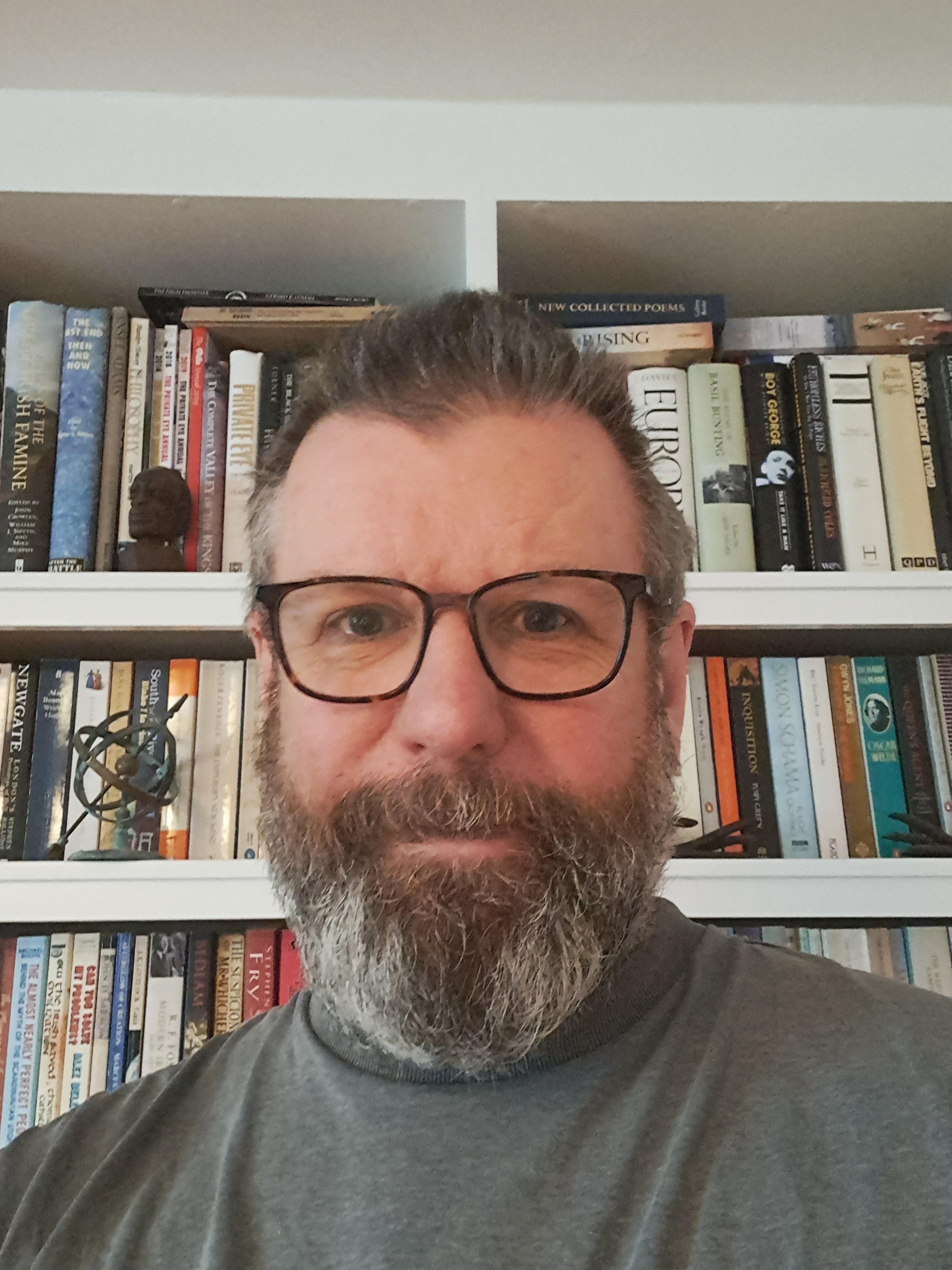
I came second in the Beard of Ireland poll, by the way. Thanks to everyone who voted for me and congratulations to the winner, Aodhan Connolly. A few people have asked for an up-to-date picture of me and my beard, so here goes:


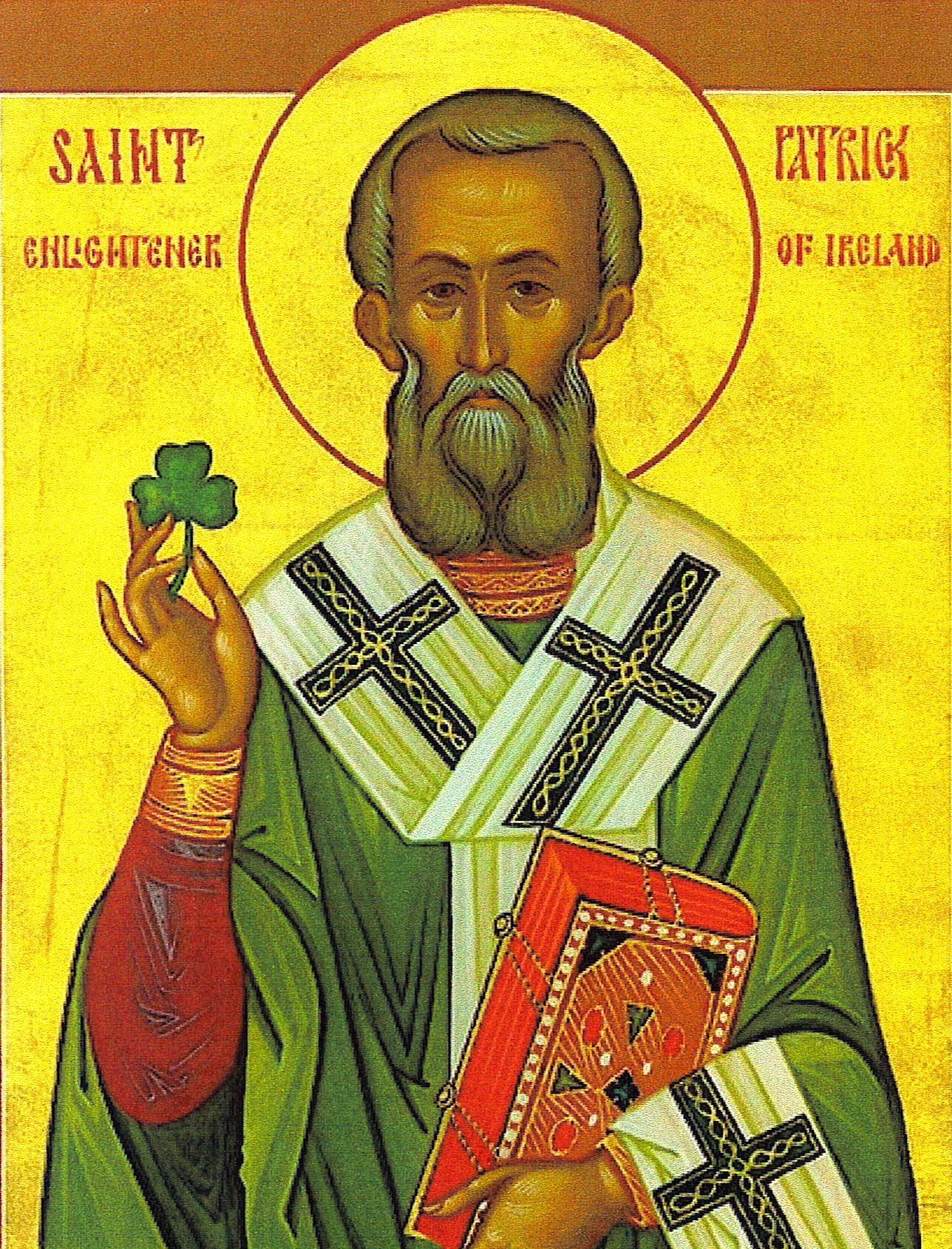
Not many facts are known about the life of St Patrick, but it seems he was born in Britain, probably in the late 4th Century AD, probably somewhere around the Severn Estuary and probably in Wales and according to virtually all artistic depictions of him he had a fine beard. It also appears that he didn’t know any Latin. When a young man, it seems he was captured by Celtic marauders coming up the River Severn and taken as a slave to Ireland. He eventually escaped back to Britain, but returned to Ireland as a missionary and succeeded somehow in converting the Irish people to Christianity.

Ireland was the first country to be converted to Christianity that had never been part of the Roman Empire. That made a big difference to the form of the early Irish Church. The local Celtic culture was very loose and decentralized. There were no cities, large buildings, roads or other infrastructure. Life revolved around small settlements and farms. When wars were fought they were generally over livestock or grazing land. The early Irish Church that grew in this environment was quite different from that of continental Europe. It was not centralized, revolved around small churches and monasteries, and lacked the hierarchical structure of the Roman Church. Despite these differences, Ireland was quite well connected with the rest of the Christian world.

Irish monks – and the wonderful illuminated manuscripts they created – spread across the continent, starting with Scotland and Britain. Thanks to the attentions of the Vikings few of these works survive but the wonderful Lindisfarne Gospels, dating from somewhere in the 8th Century were almost certainly created by Irish monks. The Book of Kells was probably created in Scotland by Irish Monks.

Saint Patrick’s Day is celebrated on March 17th, the reputed date of his death in 461 AD. Nobody really knows where St Patrick was born, though, so it would be surprising if the when were any better known.

In any case, it wasn’t until the 17th Century that Saint Patrick’s feast day was placed on the universal liturgical calendar in the Catholic Church. Indeed, St Patrick has never been formally canonized. In the thousand years that passed any memory of the actual date of his birth was probably lost, so the choice of date was probably influenced by other factors, specifically the proximity of the Spring Equinox (which is this year on Monday, March 20th).

The early Christian church in Ireland incorporated many pre-Christian traditions that survived until roughly the 12th century, including the ancient festival of Ēostre (or Ostara), the goddess of spring associated with the spring equinox after whom Easter is named. During this festival, eggs were used a symbol of rebirth and the beginning of new life and a hare or rabbit was the symbol of the goddess and fertility. In turn the Celtic people of Ireland probably adapted their own beliefs to absorb much older influences dating back to the stone age. St Patrick’s Day and Easter therefore probably both have their roots in prehistoric traditions around the Spring Equinox, although the direct connection has long been lost.

Lá Fhéile Pádraig sona daoibh go léir!

Update. I waited until it stopped raining before leaving the house, which meant that I missed the start of the Maynooth parade but there seemed to be a very good turnout. Here are some snaps of the bit I saw:

Essays and (Computational) Physics

Posted in Biographical, Education, Maynooth with tags , , , , , on March 14, 2023 by telescoper

There have been more news stories about ChatGPT and assessment in universities going around. There’s one here from The Journal and another here from The Conversation to give just two examples.

I wrote about this myself a couple of months ago in a post that included this:

I have to admit that I’ve never really understood the obsession in some parts of academia with “the student Essay” as a form of assessment. I agree that writing skills are extremely important but they’re not the only skills it is important for students to acquire during the course of a degree. Of course I’m biased because I work in Theoretical Physics, an area in which student essays play a negligible role in assessment. Our students do have to write project reports, etc, but writing about something you yourself have done seems to me to be different from writing about what other people have done. While forms of assessment in science subjects have evolved considerably over the last 50 years, other domains still seem to concentrate almost exclusively on “The Essay”.

Whatever you think about the intrinsic value of The Essay (or lack thereof) it is clear that if it is not done in isolation (and under supervision) it is extremely vulnerable to cheating.

A few people have retorted that communication skills are very important in higher education. I agree with that wholeheartedly, but it seems to me that (a) there are other ways of communicating than via formal essays and (b) there are, should be, more to academic study than  writing about things.

That said, I do think we could be doing more in some disciplines, including my own, to cultivate communication skills in general and writing skills in particular. In Theoretical Physics we certainly don’t do this as much as we should. I do have a project report in my 3rd Year computational physics module, but that is a relatively short document and the report itself counts only one-third of the marks (and the project is only 40% of the module mark).

These thoughts somehow reminded me of this. You can click on it to make it bigger if it’s difficult to read. It was the first paper (called colloquially Paper Zero) of my finals examination at the University of Cambridge way back in 1985, getting on for 40 years ago:

wpid-wp-1425648226410.jpeg

As you can probably infer from the little circle around number 4, I decided to write an Essay about topic 4. I’ve always been interested in detective stories so this was an easy choice for me, but I have absolutely no idea what I wrote about for three hours. Nor do I recall actually ever getting a mark for the essay, so I never really knew whether it really counted for anything. I do remember, however, that I had another 3-hour examination in the afternoon of the same day, two three-hour examinations the following day, and would have had two the day after that had I not elected to do a theory project which let me off one paper at the end and for which I got a good mark.

Anyway, to get back to the essay paper, we certainly don’t set essay examinations like that here in the the Department of Theoretical Physics at Maynooth University and I suspect they no longer do so in the Department of Physics at Cambridge either. At the time I didn’t really see the point of making students write such things under examination conditions but then we didn’t have ChatGPT way back then. No doubt it could generate a reasonable essay on any of the topics given.

I am skeptical about whether any of my 3rd year computational physicists would use ChatGPT to write their reports, but they might. But ChatGPT can write Python code too. Am I worried about that? Not greatly. I’ve asked it to write scripts for the various class exercises I’ve set so far and the code it has produced has usually failed. It will get better though….