Archive for the Maynooth Category

Repeat Message..

Posted in Education, Maynooth with tags , , , on August 3, 2021 by telescoper

Back to work after yesterday’s Bank Holiday and almost immediately it’s the repeat examination period at Maynooth University, which starts tomorrow. Technically these examinations are called supplemental assesssments, but we generally call them repeats.

My first supplemental assessment is tomorrow afternoon, actually. I have another on Thursday and three next week. All these papers are to be held online as has been the case for the past year and a bit. Perhaps the next set of examinations in January 2022 will be back to normal, but we have to wait and see about that.

The main purpose of writing this post was to wish all students taking exams this month the very best of luck!

I also thought it was worth mentioning for any university teachers out there reading this that although they are held at roughly the same time of year in the two countries there’s a difference in the way resits are handled in the institutions I’ve worked at in the United Kingdom and the way repeats work here in Maynooth which is implied by the slightly different name.

In UK institutions with which I am familiar students generally take resits when, because they have failed one or more examinations during the year,  they have not accumulated sufficient credits to proceed to the next year of their course. Passing the resit allows them to retrieve lost credit, but their mark is generally capped at a bare pass (usually 40%). That means the student gets the credit they need for their degree but their average (which determines whether they get 1st, 2nd or 3rd class Honours) is negatively affected.

This is the case unless a student has extenuating circumstances affecting the earlier examination, such as bad health or family emergency, in which case they take the resit as a `sit’, i.e. for the first time with an uncapped mark.

Here in Maynooth, repeat examinations are generally taken for the same reasons as in the UK but the mark obtained is not capped. Indeed, some students – though not many – elect to take the repeat examination even if they passed earlier in the summer, in order to increase their average mark. Because of the difficult circumstances this year the usual fees for a repeat examination are waived for Maynooth students this time, but I haven’t seen a noticeable increase in the number of students taking repeat papers.

When I’ve told former UK colleagues that our repeat examinations are not capped they generally  don’t  like the idea because they feel that it might lead to many students playing games, i.e. deliberately not taking exams in May with the intention of spreading some of their examination load into August. There’s not much sign of students actually doing that here, to be honest, for the reason that the results from the repeat examination period are not confirmed until early September so that students that deploy this strategy do not know whether they are going to be able to start their course until a couple of weeks before term. That could cause lots of problems securing accommodation, etc, so it doesn’t seem to me to be a good strategy.

I’d welcome comments for or against whether resits/repeats should be capped/uncapped and on what practice is adopted in your institution(s).

On Lúnasa

Posted in Biographical, Education, History, Irish Language, Maynooth on August 1, 2021 by telescoper

It’s the first of August which means it is the ancient Celtic festival of Lughnasadh (which, in modern Irish, is Lúnasa). This coincides with the English Lammas Day one of many Christian festivals which have pagan origins. Traditionally 1st August marks the start of the harvest season and is celebrated accordingly, with rites involving the first fruit and bread baked from flour obtained from the first corn.

Tomorrow being the first Monday in August it is a Bank Holiday in Ireland called Lá Saoire i mí Lúnasa. This holiday was created by the Bank Holiday Act of 1871 when Ireland was under British rule. While the holiday was subsequently moved to the end of August in England and Wales it has remained at the start of August in Ireland, which is a far better place for it in my opinion.

In the Northern hemisphere, from an astronomical point of view, the solar year is defined by the two solstices (summer, around June 21st and winter, around December 21st) and the equinoxes (spring, around March 21st, and Autumn, around September 21st). These four events divide the year into four roughly equal parts of about 13 weeks each.

Now, if you divide each of these intervals in two you divide the year into eight pieces of six and a bit weeks each. The dates midway between the astronomical events mentioned above are (roughly) :

  • 1st February: Imbolc (Candlemas)
  • 1st May: Beltane (Mayday)
  • 1st August: Lughnasadh (Lammas)
  • 1st November: Samhain (All Saints Day)

The names I’ve added are taken from the Celtic/neo-Pagan (and Christian terms) for these cross-quarter days. These timings are rough because the dates of the equinoxes and solstices vary from year to year. Imbolc is often taken to be the 2nd of February (Groundhog Day) and Samhain is sometimes taken to be October 31st, Halloween. But hopefully you get the point.

Incidentally, the last three of these also coincide closely with Bank Holidays in Ireland, though these are always on Mondays so often happen a few days away. I find it intriguing that the academic year for universities here in Ireland is largely defined by the above dates dates.

The first semester of the academic year 2021/22 starts on September 20th 2021 (the Autumnal Equinox is on September 22nd) and finishes on 17th December (the Winter Solstice is on December 21st ).  Halloween (31st October) is actually a Sunday this year so the related bank holiday is on Monday 25th October; half term (study week) always includes the Halloween Bank Holiday. The term is pushed forward a bit because it finishes on a Friday and it would not be acceptable to end it on Christmas Eve!

After a break for Christmas and a three-week mid-year exam period Semester Two starts 31st January 2022. Half-term is then from 14th to 18th March (the Vernal Equinox; is on March 20th) and teaching ends on May 6th.  More exams and end of year business take us to the Summer Solstice and the (hypothetical) vacation.

So we’re basically operating on a pagan calendar.

Another tradition seems to be that examinations come straight after bank holidays, both in May and August. The repeat examination period begins on August 4th this year. You can interpret that in two ways: one is that students have a guaranteed day off to do revision; the other is that the bank holidays in May and August are ruined by the need to prepare for exams…

Quinquennial Reflection

Posted in Biographical, Cardiff, Covid-19, Maynooth on July 29, 2021 by telescoper

One of the consequences of having written a blog for quite some time is that the back catalogue of posts provides reminders of significant anniversaries, and the opportunity to reflect on them. In this vein I noted that five years ago today, 29th July 2016 (a Friday), was my last day in office as Head of the School of Mathematical and Physical Sciences at Sussex University, a position I had held for three and a half years.

All I really remember of that last day was doing some packing and saying goodbye to some of the people I’d worked with there. I also broke down in tears twice. It’s not easy admitting defeat. Fortunately, it being summer, there were only a few people around to witness the waterworks.

I didn’t tell many people at Sussex of the main reason for my departure. There were work-related reasons – largely intense frustration with certain decisions made by Senior Management – but the main reason was that my Mam had been diagnosed with Alzheimer’s disease and her decline weighed too heavily on my mind for me to be able to function in that position. Although I think quite a few folk there feel I let them down by leaving before the end of my term, I still think it was the right decision. In fact I don’t think I really had any choice.

Incidentally, in summer 2016 there was a handover at the top of Sussex University. Michael Farthing had been V-chancellor when I arrived and he was replaced by Adam Tickell whom I met only once and only briefly before I departed. Now it seems he is stepping down after his 5-year term to become Vice-Chancellor at Birmingham University. There’ll no doubt be a new VC in post soon.

The first I knew about her final illness was at the end of 2015 when I visited Newcastle for Christmas and noticed how much her memory and behavior had changed. Shortly after that came the official diagnosis. Her condition deteriorated rapidly thereafter as dementia cruelly took hold and in 2018, being virtually completely incapacitated, she had to move into a care home. Fortunately she seemed relatively happy there. In the end it was pneumonia that took her, but at least she slipped away gently towards the end of 2019.

By leaving Sussex to go take up a part-time position, I had a notion that I might be able to help look after Mam, but I found the whole situation too painful and other things got in the way. In other words, I made excuses for myself. I wasn’t strong enough to contribute anything significant and the burden fell almost exclusively on the shoulders of others. I know I’ll never be able to put that right.

Having moved back to Cardiff it seemed my future was settled. I had a part-time position for a fixed term of three years. There was no guarantee (or indeed likelihood) of employment beyond that so I’d reconciled myself to taking early retirement in summer 2019 and disappearing into well-deserved obscurity. I fancied I might try my hand at setting crosswords to while away the time.

Then in 2017 I heard about a job opportunity at Maynooth, applied for it, and much to my surprise was offered it. I decided to accept it for reasons outlined here. I started here in December 2017, initial part-time alongside my part-time position at Cardiff. I resigned entirely from Cardiff in 2018 at which point my job here in Maynooth became full-time.

It seems no sooner I had I settled in as a full-time member of staff than I was made Head of Department of Theoretical Physics and no sooner had that happened than the Covid-19 pandemic struck. That not only increased my workload a lot (as it did for every member of staff) but made the logistics of buying a house and moving my possessions exceedingly difficult. If I’d known there was some urgency I might have been able to do it all in 2019 before the pandemic, but that didn’t happen. I did manage to buy a house in 2020 but my remaining belongings won’t be joining me from Cardiff until next month.

Despite the complications – and workload issues – I don’t regret the move to Maynooth. Whether the University feels the same is another question.

I often think the University would have been better off appointing a more junior Lecturer than a senior Professor given that so much of the workload in my current position involves teaching relatively introductory material and there is consequently very little time for research. Even less than I had at Sussex, actually. I have only published a few bits and pieces since 2017.

On the other hand, I am pleased at the steady progress being made by the Open Journal of Astrophysics and hope to have some further news on this front next month.

In summary, then, it has been a very strange five years altogether. Nothing has really gone the way I anticipated. Best laid plans and all that. The strangest thing, though, is that July 29th 2016 seems in the incredibly distant past. Perhaps that is because so many strange things have happened?

Having learnt a lesson from the last five years I’m not going to make predictions for the next five, nor even the next one! I hope we get through the pandemic sooner rather than later, and I hope the restructuring of Physics at Maynooth enables it to grow and prosper.

New Term Ahead!

Posted in Biographical, Covid-19, Education, Maynooth with tags , , on July 28, 2021 by telescoper

I know that there are quite a few people out there who think the summer is one long holiday for academic staff. Well, it may still be July but after my 10 days away that’s the holidays over as far as I’m concerned. Still, ten days’ summer holiday is ten days more holiday than I got last summer.

Next week the Repeat Examination period begins; it lasts from 4th August to 14th August. Once again these examinations are online and once again they have to be supervised by a member of academic staff. I have five paper scheduled and have to be at the screen for all of them. Then there’s the marking, checking, collation and uploading of the marks which must be done by 18th August. After that there’s an Examination Board before the final submission of all the repeat exams by August 23rd.

Incidentally, I was just checking over my Semester 1 repeat examinations and it seems like decades since I taught those modules last Autumn! The pandemic has played havoc with the perception of time!

After the Repeat Examinations are done, I have the unenviable task of preparing teaching for the next academic year. Although I’m stepping down as Head of Department of Theoretical Physics at the end of September I am still in that position until then so that task falls to me. Quite apart from the continuing uncertainty about what the Covid-19 situation will be like at the start of term (20th September), I have to deal with the fact that three out of our six full-time permanent lecturers are not available for next year. One is retiring this summer, one is departing for a position in Germany and another is on sabbatical.

The appointment of a temporary lecturer to provide sabbatical cover is normal, but the two other departures have not been replaced with permanent staff but by two one-year temporary lecturers. None of these new staff will be in post until 1st September but will have to teach a full complement of modules from 20th September onwards. Half our modules will therefore have to be reassigned, which means that the organization of teaching for the new academic year is not just the usual slight rearrangement of the previous year’s assignments but a major overhaul.

Losing two of our permanent staff to be replaced by temporary staff will of course have a negative impact on our research but that doesn’t seem to be important.

On top of al this the University is pressing ahead with a complete reorganization in the form of a merger of the Departments of Theoretical Physics and Experimental Physics which it intends to force through by 1st October 2021…

While glad that we may at last be emerging from the pandemic I’m dreading the next two months, not only because of the huge amount that has to be done by the end of September, but also because I think that period is going to set the scene for the longer-term future. I know I’m not the only academic who fears the massively increased workload dumped on us during the pandemic is going to become, to use a hackneyed phrase, “the new normal”.

Garden Flowers

Posted in Biographical, Maynooth with tags , , , , on July 25, 2021 by telescoper

It seems the weather is about to turn cooler and we may even have some rain this evening. I won’t be sorry at either of those eventualities as I’m not really cut out for the heat, and my garden could do with a bit of water on it.

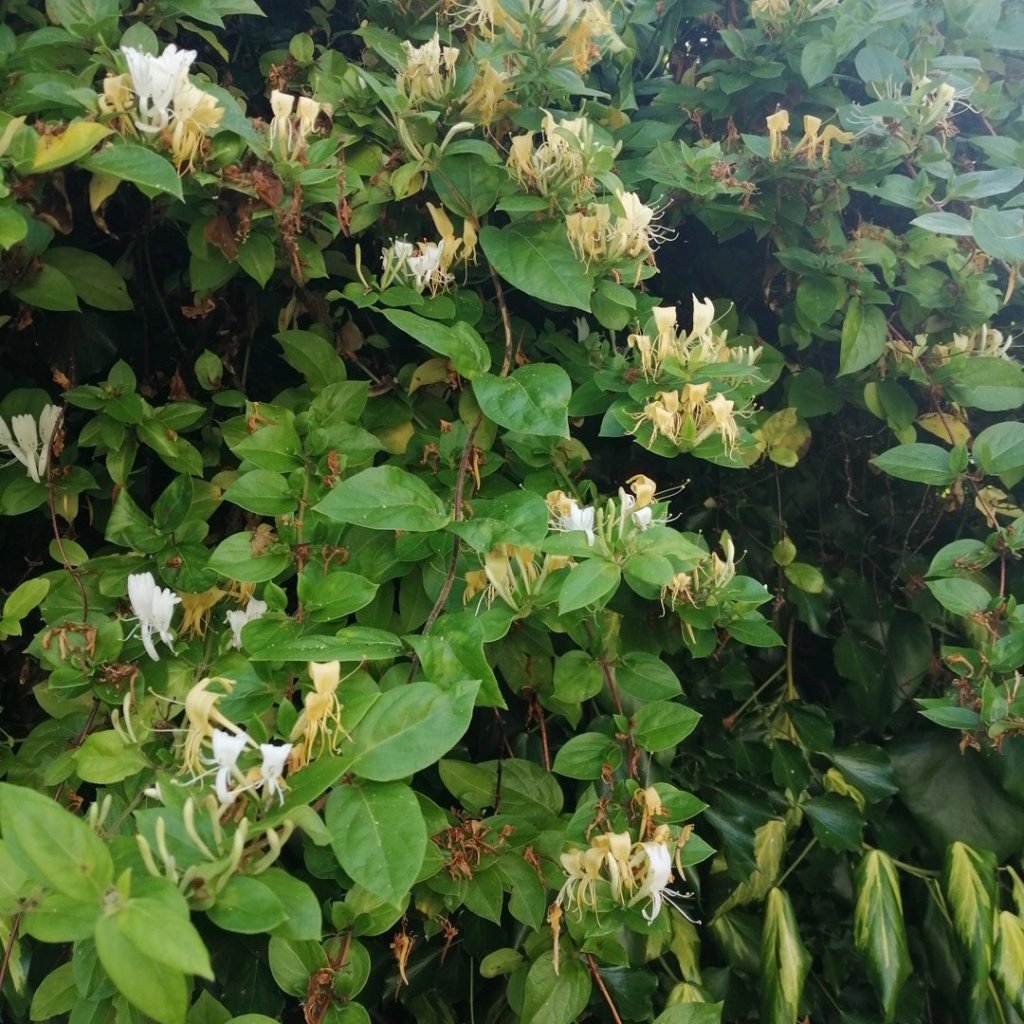
This honeysuckle is looking the worse for wear but has actually been flowering for several weeks already while still keeping its lovely fragrance. The bees like it too!

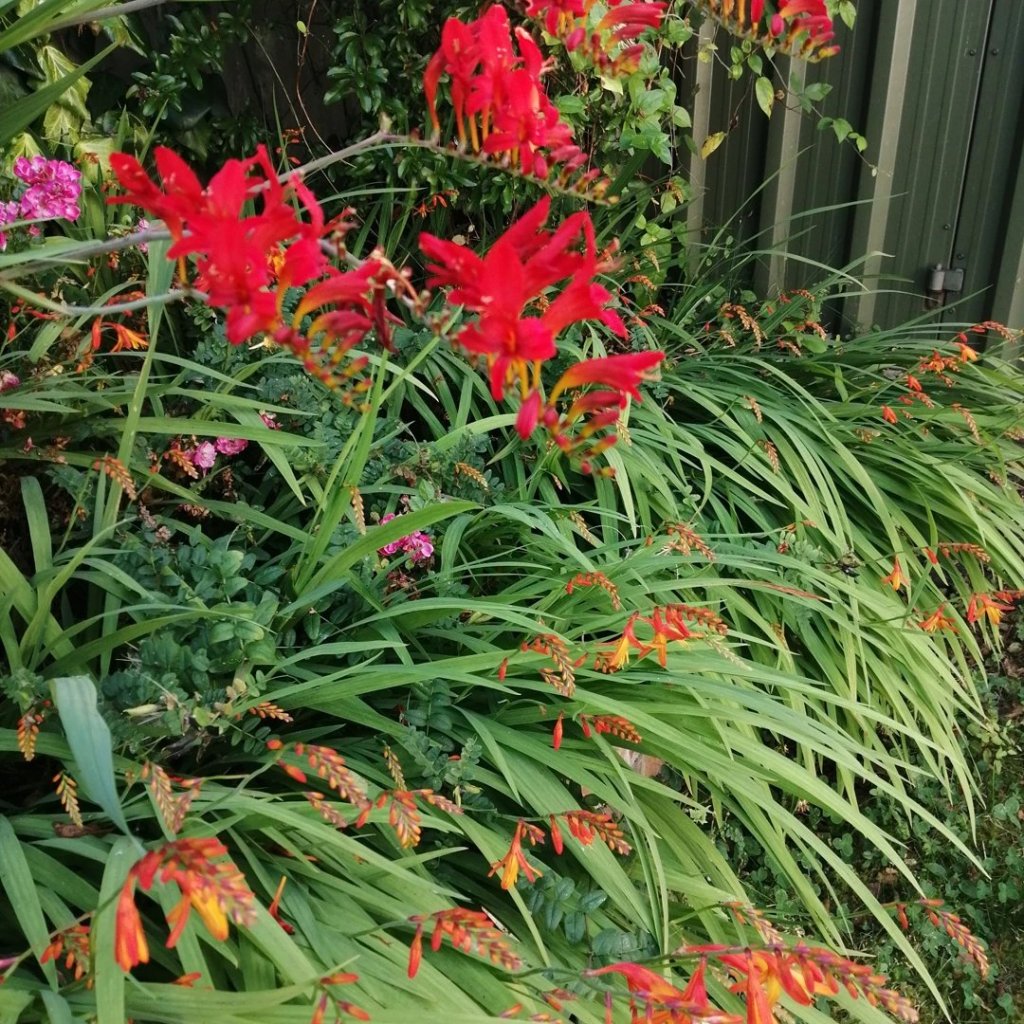
While I was out these started to flower. There’s a couple of different types of Montbretia in there:

I remember they were in flower last summer when I visited the house with a view to buying it. Was that really a year ago?

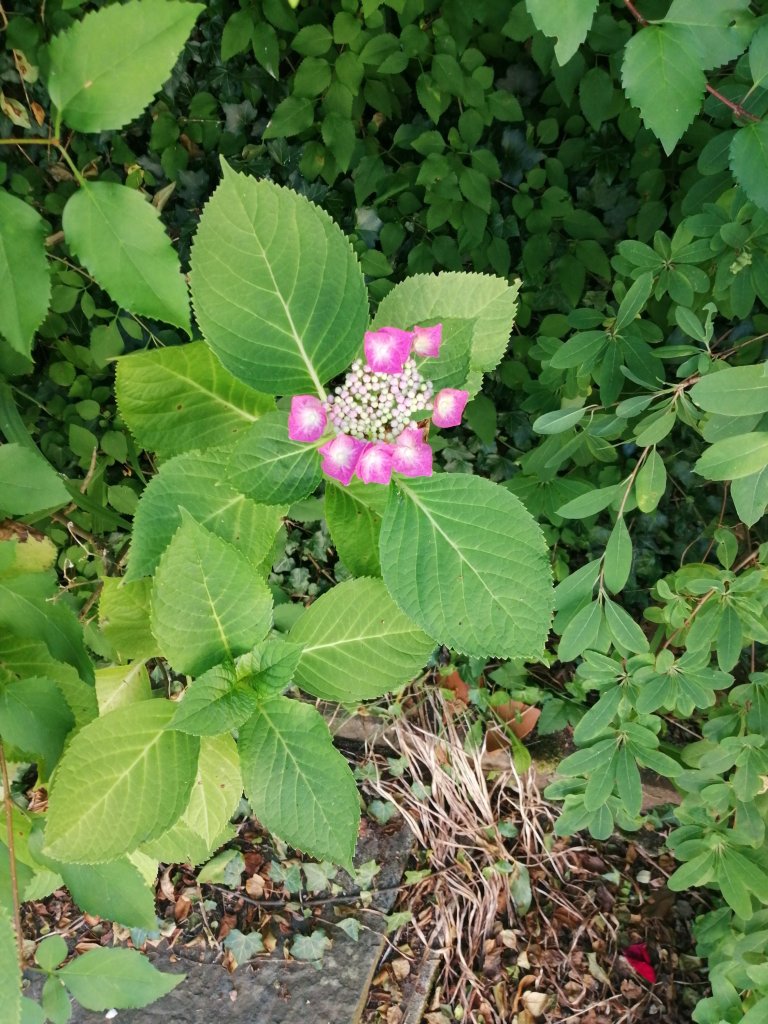
This Hydrangea also flowered while I was away. I don’t think it will last much longer so I almost missed it.

The dryness has probably made it difficult for the birds as well as the plants. A few weeks ago I found a dead blackbird on my garden table. It was just a youngster; there wasn’t a mark on it. I’m not sure why it died but it’s tough being a blackbird. They are born in several broods each year and only live a couple of weeks in the nest before being turfed out to fend for themselves. They like damp conditions and feed on worms and the like, so it’s difficult for them when it’s very dry. I guess sometimes they just don’t adapt quickly enough.

There is no shortage of live birds in the garden; there are plenty of bugs, berries and other things to eat. The dawn chorus is still rather loud but I think they tend to stay in the shade during the day. The one bird that seems to be out and about all the time is the robin.

Back to Civilisation

Posted in Biographical, Cardiff, Covid-19, Cricket, GAA, Maynooth with tags , , , on July 24, 2021 by telescoper

So last night I returned safely from Cardiff to Ireland via Birmingham. Travel both ways was relatively uneventful. There can’t have been more than 30 people on the flight in either direction. I did however almost screw up the return flight by omitting to fill in the obligatory Covid-19 passenger locator form which I hadn’t realised is now online-only. I only found out that I had to do it before they would let me on the plane, resulting in a mad scramble with a poor phone connection to get it done. After a few goes and quite a bit of stress I succeeded and was allowed to board, conspicuously the last passenger to do so. We still managed to leave early though, and the short flight to Dublin – passing directly over Ynys Môn was relaxing and arrived on schedule; the immigration officer scanned my new-fangled Covid-19 vaccination certificate but wasn’t interested in the passenger locator form that caused me so much stress on departure.

I returned to Cardiff to take a bit of a break, to check up on my house and also prepare to move the rest of my belongings to Ireland. I was relieved when I got there last week that everything was basically in order, although there were lots of cobwebs and a very musty smell, which was hardly surprising since I hadn’t been there for 15 months. The inside of the fridge wasn’t a pretty sight either.

One night last week after meeting some friends for a beer in Cardiff I walked back via Pontcanna Fields and saw, much to my surprise, Camogie practice in progress in the twilight:

Camogie Practice, Pontcanna Fields, Cardiff.

The logistics of my planned removal proved a bit more complicated than I expected but eventually I cracked it and all the arrangements are now in place. I should receive delivery here in Maynooth next month. I’m doing it on the cheap as a part-load, which is why it will take a bit longer than usual.

Cleaning and packing was very hard work owing to the intense heat over the last week or so – it was regularly over 30° C – during the day, so I took quite a few siestas. My neighbours tell me it’s been much the same here in Maynooth, although it is a bit cooler today, around 20° with a very pleasant breeze.

Despite the hard work it was nice to have a change of scenery for a bit and also to meet up with some old friends from Cardiff days. Everyone has been in a state of limbo for the last 18 months or so, and although we’re not out of the woods yet there are signs of things coming back to life. When I went to Bubs in Cardiff for a drink last week it was the first time I’d been inside a pub since February 2020!

Incidentally, most people I saw observed social distancing, wore masks, etc. The rules in Wales are still fairly strict. Although open for indoor service, bars and restaurants seem to have few customers. Some people on trains to and from Birmingham didn’t wear masks. One group of unmasked and obnoxious English passengers on my return journey were loudly boasting how backwards Wales was compared to England, where the rules have relaxed despite a huge surge in cases. I moved to another carriage.

The only other thing I managed to do was attend a Royal London One-Day Cup match at Sophia Gardens between Glamorgan and Warwickshire in the baking heat of Sophia Gardens. It turned out to be a good tight game, with Glamorgan winning by 2 wickets courtesy of two consecutive boundaries. Most of the time I was sitting there in the shade I was thinking how glad I was not to be fielding in such conditions.

One thing that was very noticeable during my stay in Wales was that it was very hard to get fresh salad vegetables and the like. That may be partly due to weather-related demand or it may be due to a shortage of lorry drivers or other staff owing to Covid-19 isolation requirements and may be a consequence of Brexit. Who knows? I’ll just say that there’s been hot weather in Ireland, where the Covid-19 pandemic is also happening but there are no reports of shortages of fresh food here. I’m very much looking forward to having a nice salad with my dinner this evening.

Anyway, I suppose that’s enough rambling. At some point I’ll have to open up my email box to see what horrors lurk therein. Still can’t be worse than the fridge I opened last week. Can it?

IRC Starting and Consolidator Awards

Posted in Maynooth, Science Politics, The Universe and Stuff with tags , , , , on July 9, 2021 by telescoper

Just a quick post to pass on the news that there are a couple of new funding programmes run by the Irish Research Council. The full description of these programmes can be found here, but here is an excerpt:

The Council is inviting applications at the early and mid-career level (Starting and Consolidator). Funding will be awarded on the basis solely of excellence, assessed through a rigorous and independent international peer-review process. Laureates will enhance their track record and international competitiveness. As well as the benefits for the laureate and their team, it is anticipated that the award will enhance the potential for subsequent ERC success as a further career milestone; indeed it will be a requirement of all laureates that they make a follow-on application to the ERC.

Fortunately the remit of the IRC is broader than Science Foundation Ireland, which has a narrow focus on research likely to lead to short-term returns, so it is more likely to appeal to those working in more speculative fundamental or frontier science, including Astrophysics. Unfortunately IRC has a lot less money than SFI.

An overview of the programme can be found in the following recording of a webinar that took place last week:

The way the call works is that you must first lodge an Expression of Interest with the institution to which you wish to apply, i.e. Maynooth University. That must be done by 27th August 2021. Full applications will then be due in November.

Extensive view of Carton House, County Kildare, with Maynooth in the distance – Willem van der Hagen

Posted in Architecture, Art, History, Maynooth with tags , , , on July 8, 2021 by telescoper

I came across the above painting on the Maynooth local history Facebook page the other day and thought I’d share it here. It’s by a fairly obscure artist called Willem van der Hagen who was Dutch but who settled in Ireland around 1720. The painting (oil on canvas, 107.6 cm by 133.6 cm) dates from around 1730 and was sold at Christie’s in 2017 for £428,750. The painting was probably commissioned by Henry Ingoldsby who inherited Carton Demesne on the death of his father Sir Richard Ingoldsby in 1712.

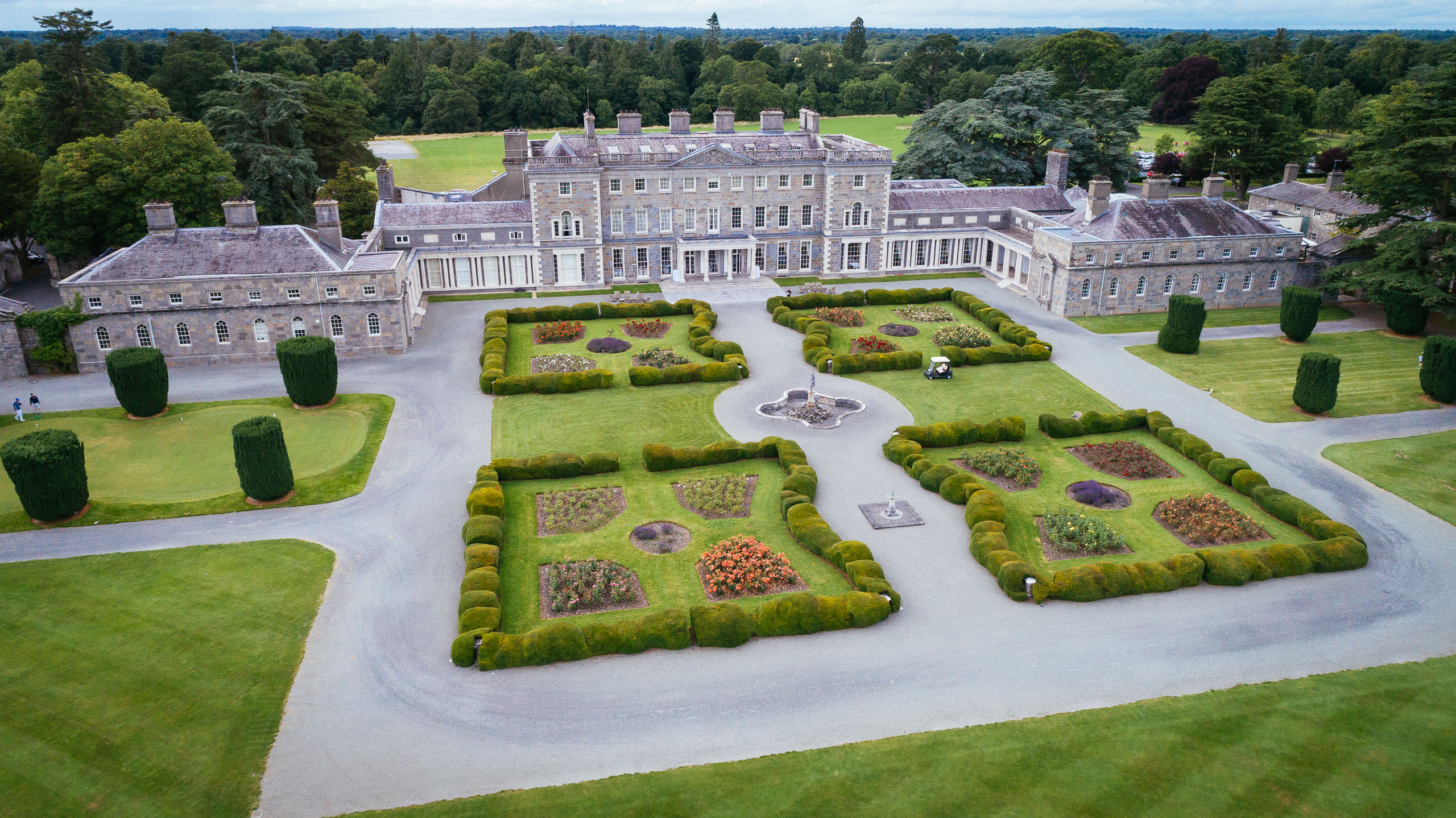
The view is of Carton House, a location very close to where I live and which I blogged about here. The grounds of Carton House are very pleasant for taking recreational walks.

The bird’s-eye view in the painting shows Carton and its demesne before the house was extensively remodelled in the mid-18th Century, although the layout is still recognizable in the modern house:

Th refurbishment of the house was undertaken by architect Richard Castle for the 19th Earl of Kildare between 1739 and 1745. The view in the painting dates from before this change and shows Carton at the centre of an elaborate formal garden. In the foreground, on the southern side of the house, avenues of lime trees radiate outward into the countryside from the enclosed entrance courtyard; on the northern side of the house can be seen a stepped series of walled gardens and terraced walks.

The gardens and demesne were also transformed when the house was rebuilt to reflect mid eighteenth-century taste. More recently the grounds have been turned into golf courses, one to the front and one to the rear as the house itself is now a golfing resort hotel so nothing remains of these extensive gardens.

In the distance to the far left you can see the ruins of the keep of the ancient FitzGerald castle in Maynooth, but St Patrick’s College was not built until the end of the 18th Century and much of the present-day town centre dates from the 19th Century so in those days Maynooth was a small place. The area between the castle and the walls surrounding Carton House demesne is now largely built-up although there is a pleasant tree-lined avenue leading from Maynooth towards the House as far as the Dunboyne Road.

In the right foreground you can see the Prospect Tower built by the Earl of Tyrconnell, which still stands. I always assumed this was some sort of folly but it was apparently intended as a mausoleum for one of the previous owners of the house.

Stepping Down

Posted in Biographical, Education, Maynooth on July 3, 2021 by telescoper

I was planning to be on leave now; I intended to make up for the fact that I didn’t get a summer holiday last year by taking most of July off. Unfortunately that was not to be and I have to stay at work for at least another week to participate in an interview panel. I may still get a couple of weeks after that but if I do it will be taken up with organizing the move of the rest of my belongings from Cardiff to Maynooth, rather than being an actual holiday.

Over the last few days, in an exhausted and demoralized state, I have been looking back over the best part of two years I have been Head of the Department of Theoretical Physics at Maynooth University – most of which has coincided with the Covid-19 pandemic. Frankly, I have found the burden of administration on top of the heavy teaching load required of me to be unmanageable. Because we are a very small Department teaching a full degree course, all of us have to teach many more modules than is reasonable for for staff who are expected to do research as well. I had to teach five modules* last academic year; that would have been bad enough even without having to do everything online and without the additional and frequently onerous duties associated with the Head of Department. There is no prospect of that burden decreasing for the foreseeable future.

I was appointed as Head of Department for three years, but last week I asked the University to let me step down from my role as Head of Department of Theoretical Physics from the end of September 2021, a year early. I’ll carry on as a Professor, hopefully with some time to do research, although my teaching duties will undoubtedly remain heavy.

At least now, if I do get some holiday this summer I’ll be spared some of the dread of what I’ll have to return to afterwards…

*For those who are wondering, two of those modules are 36 lectures (3 per week for a 12-week semester), two are 24 lectures (two per week for a semester) and one is computer-based (1 lecture + a 2hr lab session per week for a semester). That load is about average for full-time staff in the Department; if I did less someone else would have to do more.

UPDATE: 6th July. The University has agreed to my request. “Freedom Day” for me is October 1st 2021.

Ireland’s Covid-19 Models

Posted in Covid-19, mathematics, Maynooth with tags , , , , , on July 1, 2021 by telescoper

Yesterday the Chair of the National Public Health Emergency Team (NPHET), who also happens to be the President of Maynooth University, Professor Philip Nolan published a lengthy but interesting Twitter thread (which you can find unrolled here). In these tweets he explained the reason behind NPHET’s recommendation to pause the process of relaxing Covid-19 restrictions, postponing the next phase which was due to begin on 5th July with indoor dining.

The basic reason for this is obvious. When restrictions were lifted last summer the reproduction number increased to a value in the range 1.4 to 1.6 but the infection rate was then just a handful per day (on July 1st 2020 the number of new cases reported was 6). Now the figures are orders of magnitude higher (yesterday saw 452 new cases). A period of exponential growth starting from such a high base would be catastrophic. It was bad enough last year starting from much lower levels and the Delta variant currently in circulation is more transmissable. Vaccination obviously helps, but only about 40% of the Irish population is fully immunized.

Incidentally the target earlier this year was that 82% of the adult population should have received one jab. We are missing detailed numbers because of the recent ransomware attack on the HSE system, but it is clear that number has been missed by a considerable margin. The correct figure is more like 67%. Moreover, one dose does not provide adequate protection against the Delta variant so we’re really not in a good position this summer. In fact I think there’s a strong possibility that we’ll be starting the 2021/22 academic year in worse shape than we did last year.

In general think the Government’s decision was entirely reasonable, though it obviously didn’t go down well with the hospitality sector and others. What does not seem reasonable to me is the suggestion that restaurants should be open for indoor dining only for people who are fully vaccinated. This would not only be very difficult to police, but also ignores the fact that the vast majority of people serving food in such environments would not be vaccinated and are therefore at high risk.

As things stand, I think it highly unlikely that campuses will be open in September. Rapidly growing pockets of Delta variant have already been seeded in Ireland (and elsewhere in Europe). It seems much more likely to me that September will see us yet again in a hard lockdown with all teaching online.

But the main reason for writing this post is that the thread I mentioned above includes a link to a paper on the arXiv (by Gleeson et al.) that describes the model used to describe the pandemic here in Ireland. Here is the abstract:

We describe the population-based SEIR (susceptible, exposed, infected, removed) model developed by the Irish Epidemiological Modelling Advisory Group (IEMAG), which advises the Irish government on COVID-19 responses. The model assumes a time-varying effective contact rate (equivalently, a time-varying reproduction number) to model the effect of non-pharmaceutical interventions. A crucial technical challenge in applying such models is their accurate calibration to observed data, e.g., to the daily number of confirmed new cases, as the past history of the disease strongly affects predictions of future scenarios. We demonstrate an approach based on inversion of the SEIR equations in conjunction with statistical modelling and spline-fitting of the data, to produce a robust methodology for calibration of a wide class of models of this type.

You can download a PDF of the paper here.

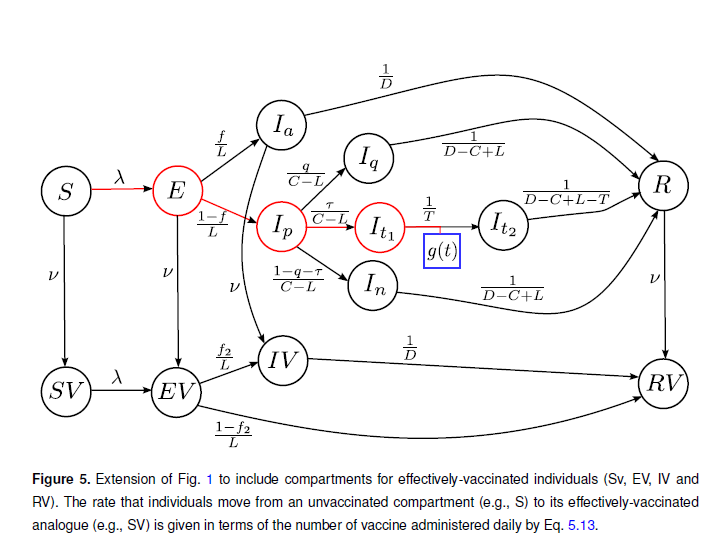
This model is a more complicated variation of the standard compartment-based models described here. Here’s a schematic of the structure:

This model that makes a number of simplifying assumptions but it does capture the main features of the growth of the pandemic reasonably well.

Coincidentally I set a Computational Physics project this year that involved developing a Python code that does numerical solutions of this model. It’s not physics of course, but the network of equations is similar to what you mind find in physical systems – it’s basically just a set of coupled ODEs- and I thought it would be interesting because it was topical. The main point is that if you study Theoretical Physics you can apply the knowledge and skills you obtain in a huge range of fields and disciplines. Developing the model does of course require domain-specific epidemiological knowledge but the general task of modelling complex time-evolving systems is definitely something physicists should be adept at doing. Transferable skills is the name of the game!

P.S. It came as no surprise to learn that the first author of the modelling paper, Prof. James Gleeson of the University of Limerick, has an MSc in Mathematical Physics.