Archive for the Maynooth Category

I’m not in Lausanne…

Posted in Biographical, Maynooth, The Universe and Stuff on May 25, 2021 by telescoper

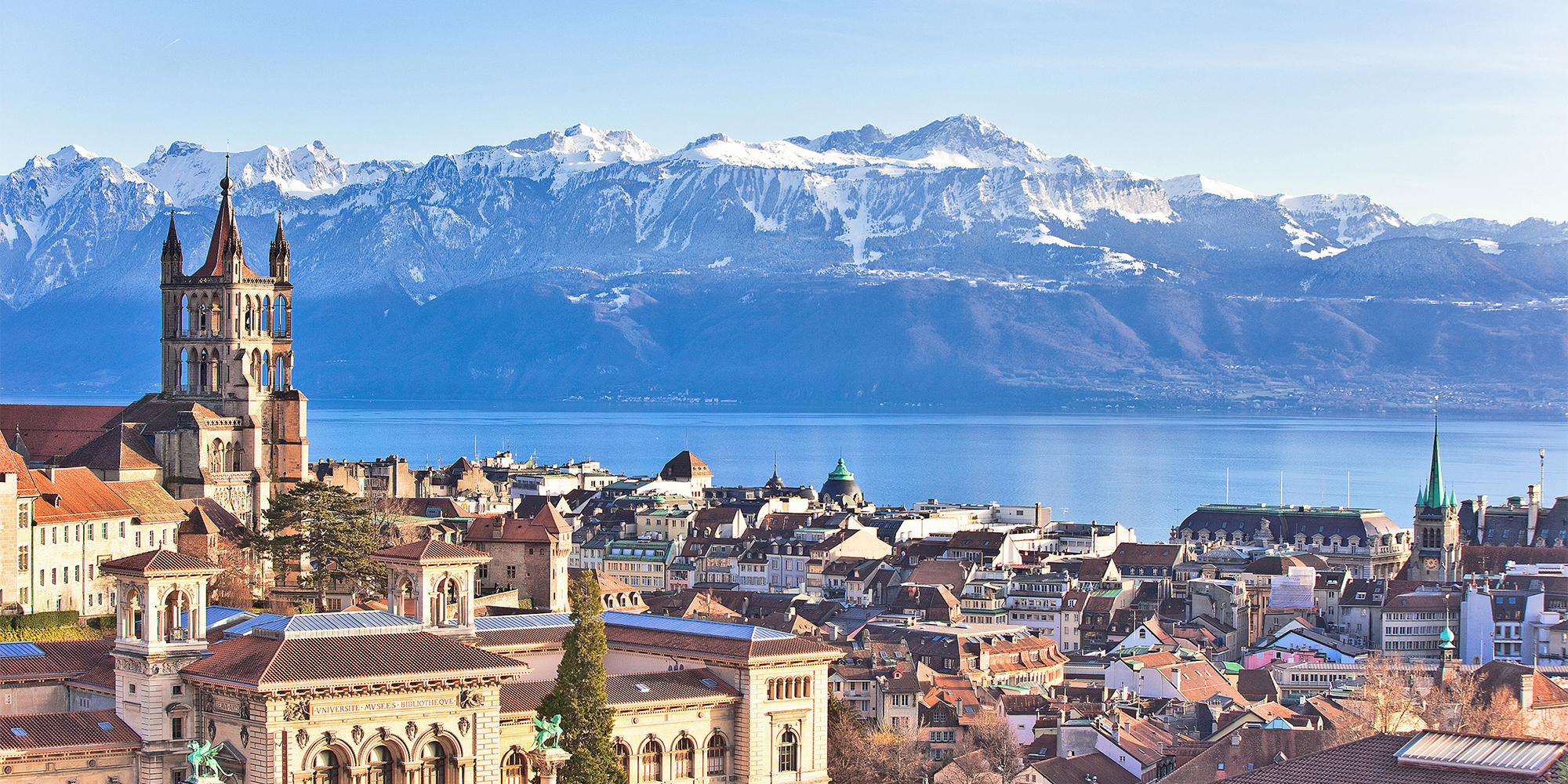
A view of Lausanne, where I am not.

For the rest of this week I shall not be in the beautiful town of Lausanne on the shores of Lake Léman in Switzerland.

The reason I am not in Lausanne is that the Annual Meeting of the Euclid Consortium is being held here this year. I was not in Barcelona for the corresponding meeting last year. At least I have actually been to Barcelona a few times. I’ve never been to Lausanne, and won’t have been even after attending a conference there.

While not in Lausanne I shall be watching the talks remotely from Maynooth but of course there is much more to a conference than the formal sessions. I am looking forward to not travelling there and back as well as not socializing with the other delegates, not sampling the local food and wine, not meeting any new people and not making any use of networking opportunities to start new collaborations. I’ll also not be rummaging around in the conference goody bag.

Above all I am looking forward to not seeing many old friends for the first time in ages and not going out for a drink with them. Instead of that I’ll be not having a drink, on my own, in Maynooth.

These virtual conferences are all very well, and of course made necessary by the Covid-19 pandemic, but what particular annoys me about them is the absence of travel means I don’t get to use my Irish passport. I deeply resent being denied the opportunity brandish it in front of my UK colleagues as I use the fast track at the airport…

Give us a break!

Posted in Biographical, Education, Maynooth on May 24, 2021 by telescoper

Taking a short break from marking exams I thought I’d share an article you can read here entitled Let’s Reclaim Summer Break arguing that Faculty members should make a point of taking a break this summer. Here’s a short excerpt:

Our work seems to have fried our willpower and our ability to unplug and left us feeling tethered to our email and work even when, ostensibly, we are taking time off. We need to rest our minds, bodies and spirits — which will inevitably enrich our ability to return to our work with new energy. We can’t all book a fancy self-care retreat on an isolated island, but maybe it’s time to commit to enjoying a guilt-free beach read. Or to taking a long walk in the middle of the day or visiting a local venue for a live music performance.

I wholeheartedly agree with this. This year has been exhausting enough but I didn’t get any time off at all last summer and it’s definitely showing. I’m completely drained. I can see the tasks piling up for this summer already so I hope I’ve got the willpower not only to say ‘no’ but to disconnect entirely for the time that is owed to me.

But my biggest fear isn’t whether I myself get a holiday this coming academic year or not. It’s that, having worked all summer last year, and put in countless hours of unpaid overtime ever since, there is a real danger that level of overwork will be the “new normal” for all of us – and I don’t just mean at my University.

We’d like to think our employers will let us relax a bit once the Covid19 pandemic is over, but another possibility is that having seen how much we’re prepared to put up with that they’ll expect that to carry on forever, with perhaps a few webinars on “resilience” thrown in for good measure.

Marking Blues

Posted in Covid-19, Education, Maynooth with tags , , , on May 21, 2021 by telescoper

“May is a pious fraud of the almanac.” – James R. Lowell

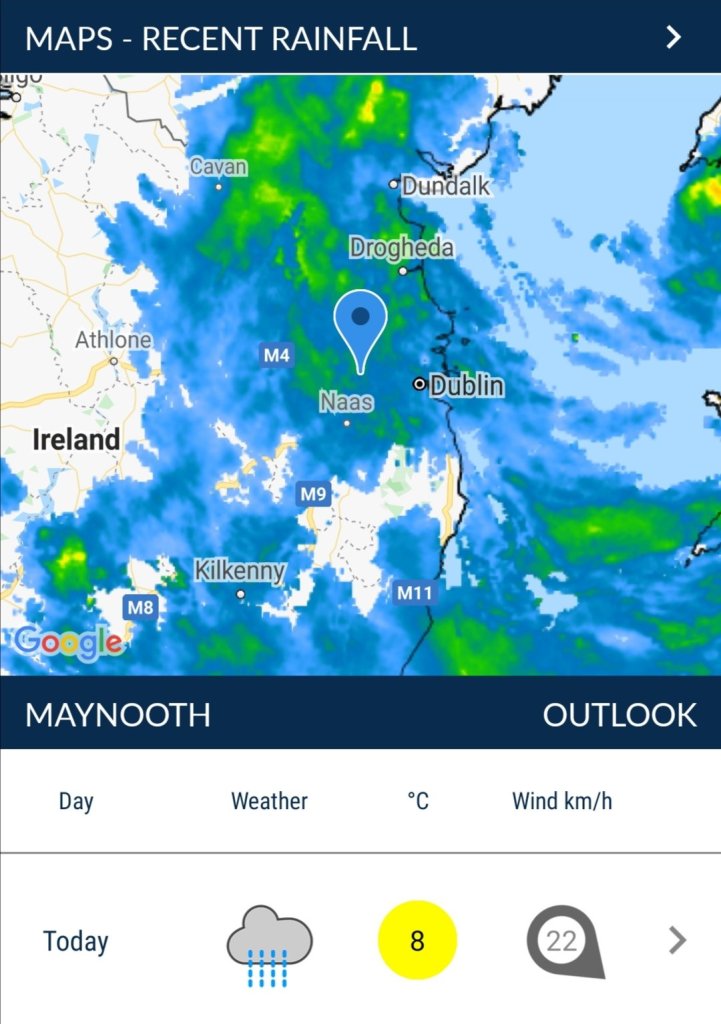
The rainy weather we’ve been having for the last few days has at least deprived me of distractions from the job at hand: the marking of examinations and other assessments. Examinations started here in Maynooth last Friday (14th May) , a week ago today, and as I write this morning another one has just started. That’s the third in the past week. Yesterday I managed to finish all the assessments for one Module, just in time for today’s batch to arrive. It’s not only examination marking of course, I’ve also had computational physics projects to assess and feedback to write. Suffice to say that it’s a busy time of year.

When I was getting this morning’s examination online timed assessment ready it suddenly struck me that some of the students taking it belong the year group that entered the University in September 2018, and are the first students I will have seen all the way through the degree as they are taking their last set of exams now and will graduate this summer.

Of course when I say “will have seen” I’m not really being honest. I’ve hardly seen any of them since last March. Although I have spoken to them via Teams I haven’t even seen them virtually, as students virtually always have their video on mute during online teaching sessions.

Because of the Covid-19 restrictions, the students on three-year programmes have had most of their teaching online since last Spring, and by the time they finish the current set of examinations half their assessment will have been online.

You’ll have to ask students whether the lack of face-to face interactions has impacted their learning, but speaking for myself as a lecturer it has made life very difficult. Lecturing to a camera is not easy, and the absence of visual cues from the audience makes it difficult to know whether what you’re saying is sinking in. I guess we’ll find out when we look at the examination grades.

Thinking about the group of students who will form the graduating class for this year, though, the saddest thing is that they will shortly finish their exams and complete their degrees. We the staff won’t have the chance to congratulate them properly, nor will they the students be able to celebrate properly with each other (as they are scattered all over the country).

Although we’ve worked very hard to do what we can over the past year and a bit, I can’t rid my mind of the feeling that this group in particular has been let down very badly. I know the circumstances are beyond our control and all that, but they just haven’t had the educational experience they expected and deserve. At least – we hope – other groups can look forward to something like normality, possibly from next year, but for this group that’s it for their third level education. It’s really not fair.

I have said so before on this blog that I think any student who wishes to should be able to repeat the last year at university free of charge in recognition that they have been severely short-changed. It seems to me that would be the right thing to do, which is why I don’t think the Government will allow it.

Now, it’s still raining so I’ll try to get some more marking done while the exam goes on.

Job in Theoretical Physics at Maynooth!

Posted in Maynooth with tags , on May 19, 2021 by telescoper

Just a short post passing on the information that we have a fixed-term job available in the Department of Theoretical Physics at Maynooth University. You can find the details here.

The position is for one calendar year starting in September 2021. I know it is a short appointment, but it seems to me that it would provide a good opportunity for an early-career academic to gain some teaching experience while carrying on their research in a lively and collegiate Department.

The deadline for applications is 23.30 on Tuesday 8th June 2021 and you should apply through the Maynooth jobs portal here.

If you’d like to know any more please feel free to contact me privately.

Oh, and please pass this on to anyone you think might be interested!

Remote Exam Time Again

Posted in Education, Maynooth with tags , , , on May 14, 2021 by telescoper

It’s Friday 14th May 2021 which means that it’s the first day of the Summer examination period here in Maynooth, so let me begin by sending my best wishes to everyone taking examinations today and over the next few weeks, wherever you are. It’s a lovely morning in Maynooth. It seems to be a law of Nature that examinations always take place when the weather outside is nice.

For readers elsewhere in the world, full-time undergraduate students at Maynooth what is called 60 “credits” in a year, usually split into two semesters of thirty credits each. This is usually split into 5-credit modules with an examination in each module at the end of each semester. Projects, and other continuously-assessed work do not involve a written examination, but the system means that a typical student will have at least 5 written examination papers in January and at least another 5 in May.  This is very similar to the system in most UK universities that I am aware of except that a full year’s work over there is 120 credits so there’s a conversion factor of 2:1. A 5-credit module in Ireland would be a 10-credit module in the United Kingdom, for example, but otherwise the system is similar.

Each examination is usually of two hours’ duration. We’ve kept that length after moving examinations online, although students are given extra time to scan and upload their answers. The question papers themselves have been slightly adapted online use by having much less “bookwork”. Generally these assessments are unsupervised and students are allowed to consult notes and textbooks so there is little point in asking them to copy out standard derivations and formulae. That means we can concentrate on the problem-solving aspects of theoretical physics, which are the most interesting bits (and perhaps the most challenging).

One big difference between our examinations in Theoretical Physics in Maynooth and those at other institutions I’ve taught at in the UK is that most of the papers here offer no choice of questions to be answered. Elsewhere  it is quite common to find a choice of two or three questions from four or five on the paper.

One  advantage of our system is that it makes it much harder for students to question-spot in the hope that they can get a good grade by only revising a fraction of the syllabus. If they’re well designed, two long questions can cover quite a lot of the syllabus for a module, which they have to in order to test all the learning outcomes. To accomplish this, questions can be split into parts that may be linked to each other to a greater or lesser extent to explore the connections between different ideas, but also sufficiently separate that a student who can’t do one part can still have a go at others. With such a paper, however, it is a  dangerous strategy for a student to focus only on selected parts of the material in order to pass.

As an examiner, the Maynooth style of examination also has the advantage that you don’t have to worry too much if one question turns out to be harder than the others. That can matter if different students attempt different questions, but not if everyone has to do everything.

But it’s not just the number of questions that’s important, it’s the duration. I’ve never felt that it was even remotely sensible for undergraduate physics examinations to be a speed test, which was often the case when I was a student. Why the need for time pressure? It’s better to be correct than to be fast, I think. I always try to set examination questions that could be done inside two hours by a student who knew the material, including plenty of time for checking so that even a student who made a mistake would have time to correct it and get the right answer. If a student does poorly in this style of examination it will be because they haven’t prepared well enough rather than because they weren’t fast enough.

My first examination is this afternoon. The subject is (3rd Year) Computational Physics. This is an unusual module as a majority of the marks (60%) come from continuous assessment in the form of four class tests (20% altogether) and a mini-project (40%). The exam is a theory paper concerned with such topics as accuracy and stability. There are two questions on the paper, both of them compulsory. Next week there is my (4th year) Advanced Electromagnetism paper with four questions, again all compulsory. Obviously I’ll have to wait to see how the students do.

In the meantime here are some tips for students

  1. Try to get a good night’s sleep before the examination!
  2. Be ready well before the start and try to ensure you won’t be disturbed for the duration.
  3. If you’re doing an unsupervised examination, download the paper and any supplementary material needed  at the start to avoid problems if you get disconnected.
  4. Read the entire paper before starting to answer any questions. In particular, make sure you are aware of any supplementary information, formulae, etc, given in the rubric or at the end.
  5. Start off by tackling the question you are most confident about answering, even if it’s not Question 1. This will help settle any nerves.
  6. Don’t rush! Students often lose marks by making careless errors. Check all your numerical results on your calculator at least twice and remember to put the units!
  7. Show your working! Especially in an unsupervised examination you need to convince the examiner that you actually did the problem rather than looking up the answer on the net somewhere.
  8. Don’t panic! You’re not expected to answer everything perfectly. A first-class mark is anything over 70%, so don’t worry if there are bits you can’t do. If you get stuck on a part of a question, don’t waste too much time on it (especially if it’s just a few marks). Just leave it and move on. You can always come back to it later.
  9. Try to finish the paper at the assigned time, i.e. use the upload time for uploading rather than doing more work. There is always the chance that you might run out of time for upload if you’re rushing right at the end.
  10. If you’re scanning and uploading answers, check that you have submitted everything you intended to. I have had several examples of missing pages over the last year…

Anyway, once again, good luck and best wishes!

A Vaccine’s Progress

Posted in Biographical, Covid-19, Maynooth on May 8, 2021 by telescoper

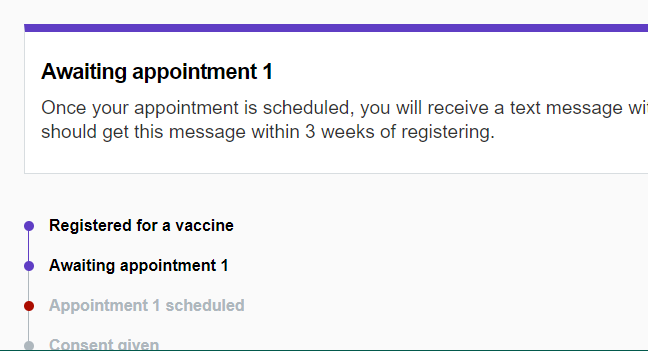
As I mentioned a few days ago, I was able to register for my shot of Covid-19 vaccine on Thursday 6th May, which I duly did. For those of you who haven’t yet registered in Ireland, it’s a straightforward process although you do need a mobile phone as well as an internet connection.

I said in my earlier post that

…I have no idea what that means for when, where or with what I will actually get vaccinated. As with so many things these days we’ll just have to wait and see.

When I registered I was informed that it would be up to three weeks before an appointment would be arranged. Actually, I got a text this morning giving the answers to all three questions I wondered about in that quote, and very interesting they turned out to be!

First my appointment is actually on Tuesday 11th May, just three days from now. The location is Citywest Convention Centre, in Saggart (outside Dublin), and the vaccine I will be receiving is Pfizer/BioNTech.

All three of these pieces of information surprised me: the date (because it is so soon – not that I’m complaining about that); the location (because I was led to believe I would be vaccinated in the County I live in, Kildare, the vaccination centre for which is Punchestown Racecourse, near Naas; Citiwest is in County Dublin); and the vaccine (for reasons I discussed here, I assumed I would be given either the AstraZeneca or Janssen (J&J) vaccine).

Anyway, I’m delighted with the way it has turned out, which means I’ll could well be fully vaccinated by the end of June, depending on the timing of the second dose.

The only (very slight) downside to this is that I was actually quite looking forward to visiting the racecourse at Punchestown as I’ve never been there before and it is an easy journey from Maynooth by bus. The consultant who looks at my knees from time to time is at Naas Hospital, so the trip is a familiar one to me. Citiwest may be marginally closer as the crow flies, but it’s basically inaccessible by public transport from here so I’ll have to get a taxi there and back. The vaccination system here seems to assume that everyone has a car as many of the big centres are in out-of-town locations hard to reach by public transport.

Some people I know who have had this vaccine have reported side-effects and others have experienced none whatsoever. I’ll just have to wait and see what happens in my case. I’ll get my jab in the morning so if I do react badly to it I’ll have an excuse for missing the Faculty Meeting scheduled for Tuesday afternoon!

What should universities keep after Covid?

Posted in Education, Maynooth with tags , , , on May 7, 2021 by telescoper

On the last day of teaching for this academic year, with reasonably encouraging signs of some form of reopening of campus education being possible in September, it will shortly be time to think about how we proceed next academic year.

It seems obvious to me that although university staff have worked very hard over the last year the Covid-19 restrictions have meant that we have not been able to provide the level of education we would have liked and most of us are longing to get back to some form of face-to-face teaching. On the other hand, the restrictions imposed upon us have generated some new approaches and it would be silly just to abandon what we have learnt and go straight back to the way things were before the pandemic.

I have two main things in mind, one on teaching and one on assessment, both of them relating to my own discipline – theoretical physics – but hopefully of some wider interest.
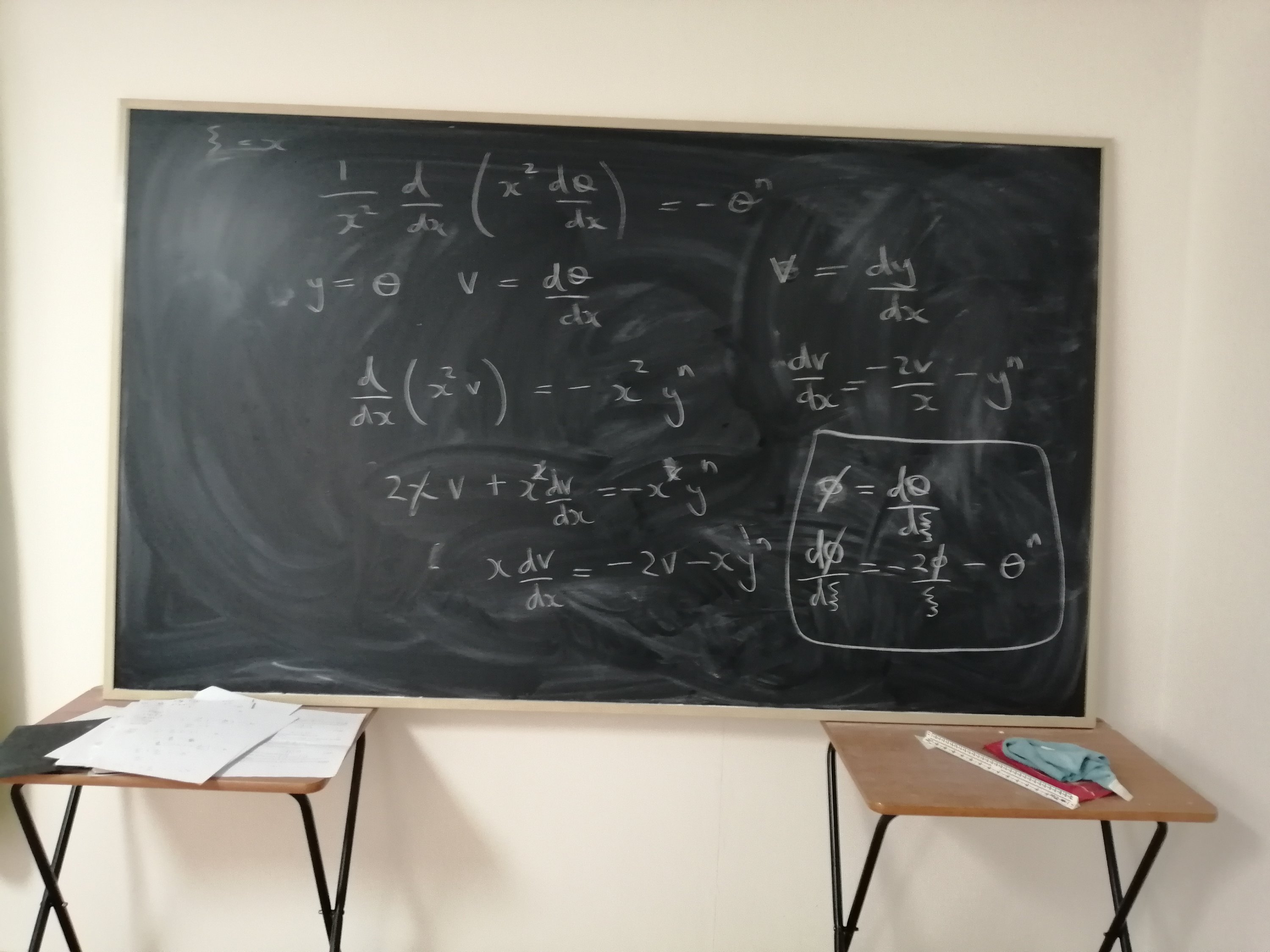
Implementing the Lane-Emden equation as two coupled first-order ODEs.

First, on teaching. Over the past year we have mainly been delivering lectures and tutorials remotely, using a mixture of platforms (Zoom, Panopto, Microsoft Teams, etc). Most lecturers have done lectures as live webcasts as well as recording the sessions to be viewed later. I have used Panopto for most of mine, actually. I am actually looking forward to being able to dismantle the setup I have in my study for this, to reclaim a bit of space, but probably won’t do so until we know for sure what we’ll be doing next Semester!

(By the way does anyone know where I should send the bill to my employers for their use of my study over the last year?)

For the record, I have found about 50% of the registered students have watched the lectures as live broadcasts from my home; the rest watch the recordings offline.

Maynooth didn’t have any facilities for lecture capture on campus until September 2020, in contrast to my two previous employers – the University of Sussex and Cardiff University – who both had systems in place long before the pandemic. I blogged about this 8 years ago, in fact. In Cardiff they actually use Panopto; all lectures were recorded as standard. In my view the benefits of lecture capture far outweigh the disadvantages, and we should incorporate recordings of lectures as part of our standard teaching provision, as a supplement to learning rather than to replace face-to-face sessions.

It seems to me that much of the argument against providing lecture recordings is from older staff who thing the younger generations should learn exactly the same way they themselves did despite the reality that classroom teaching in schools is now utterly different from what my generation experienced.

My view is that every student learns in a different way and we should therefore be doing as much as we possibly can to provide a diverse range of teaching resources so that each can find the combination that suits them best. Technology allows us to do this far better now than in the past.

Some really enjoy live lecture sessions, but others don’t. Others have reasons (such as disability) for not being able to attend in-person lectures, so providing recordings can help them. But why not in that case provide recordings for everyone? That seems to me to be a more inclusive approach.

The problem with continuing lecture capture beyond September 2021 in Maynooth is that we will need to improve the cameras and recording equipment in the large lecture rooms to make this possible for lectures with a significant mathematical content, as the existing setups in teaching rooms do not easily allow the lecturer to record material on a whiteboard or blackboard. In Cardiff the larger rooms have more than one camera, usually one on the lectern and one on the screen or whiteboard (which has to be placed further away and therefore needs to be of higher resolution). In Maynooth we only have small podium cameras in the teaching rooms.

The next topic is assessment. Since we were forced to switch to online timed assessments last May we have been doing most of our assessments that way. The student is given an exam paper at the appointed time, which they do on their own, then scan and upload their answers online (in our case via Moodle).

This mode of assessment has its problem. One is the possibility that students can collude (as there are no invigilators). Another is that not all students have a home environment conducive to taking an examination, nor a decent internet connection.

We decided to implement these as truly “open book” exams in which students are free to consult their notes, textbooks and internet resources. That format means it is pointless to ask the students to regurgitate definitions or learn derivations by rote so we concentrate on problem-solving, testing the understanding and application of concepts. Although it makes it a little harder to construct the examination papers, I think this a good way of assessing ability and knowledge of physics. If we can go do exams back on campus I think we should retain this approach at least for advanced topics, providing supervised spaces on campus to prevent collusion.

There are doubtless many other innovations we have brought in over the last year that people feel strongly about (one way or the other). Feel free to share them through the comments!
Notes from the Last Week

Posted in Biographical, Covid-19, Education, Maynooth on May 5, 2021 by telescoper

So it’s Wednesday of the last week of teaching here at Maynooth. I’ve got three lectures today, two on Advanced Electromagnetism and one on Engineering Mathematics, and after that my lecturing will be done for this Semester and indeed this academic year. In fact two of today’s lectures will be revision classes as I’ve finished covering the syllabus in both of these modules.

That doesn’t everything related to teaching is over, of course. Tomorrow we have final-year project presentations to assess and after that the final Computational Physics laboratory. That is really just a  virtual drop-in session as students finish off their mini-projects to be handed in on Friday.

Next week is a study week – so no lectures –  but I’ll be using the time to finish off grading coursework and lab tests ahead of the examinations online timed assessments, which start on Friday 14th May. As it happens I have an examination on that day so will be occupied supervising it and then immediately afterwards marking the scripts (electronically). Then next week I have two further assessments and related marking. That should all be finished by the end of May and we then have Examination Boards and related activities in June.

It’s been a tough year. This Semester in particular seems to have lasted an eternity. It’s been bad enough for the staff but has undoubtedly been worse for the students.

People are already asking about what’s going to happen for the new academic year which starts in September. The only honest answer to that is that is that we have no absolutely idea. The possibilities range from being completely back to normal with teaching in classrooms on campus to there being nothing on campus at all, like at present. Which of these turns out to be the case depends primarily on the rate of vaccination in Ireland during the summer.

Talking of which, I will be to register for my shots from tomorrow (6th May) but I have no idea what that means for when, where or with what I will actually get vaccinated. As with so many things these days we’ll just have to wait and see…

Thoughts on Lá Bealtaine

Posted in Biographical, Covid-19, Education, Maynooth with tags , , on May 1, 2021 by telescoper

Today, 1st May, Beltane (Bealtaine in Irish) is an old Celtic festival that marks the mid-point between the Spring Equinox and the Summer Solstice. It’s one of the so-called Cross-Quarter Days that lie exactly halfway between the equinoxes and solstices. These ancient festivals have been moved so that they take place earlier in the modern calendar than the astronomical events that represent their origin: the halfway point between the Spring Equinox and Summer Solstice is actually next week.

Anyway, any excuse is good for a Bank Holiday long weekend, so let me offer a hearty Lá Bealtaine shona daoibh!

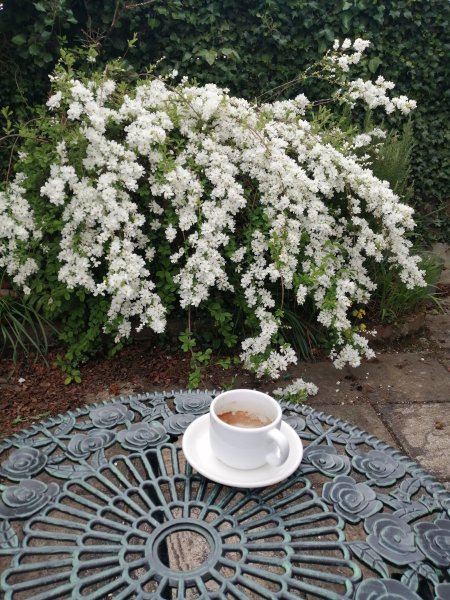
While not excessively warm, the weather is at least pleasant enough for me to have had my breakfast outside in the garden. As I was sipping my coffee I thought how much nicer it is to be in my own home during all this. The one really big positive about last year was that I managed to buy a house and move in during a few-month window when that was possible.

I put up a post last year on May Day that was dominated by Covid-19. I didn’t really imagine that we would still be under restrictions a whole year later, but I didn’t imagine that vaccines would be available so quickly either. Now it seems I will have the chance to register for my shot(s) next week with the view to getting a first dose sometime in June. Possibly.

The precise timing of my vaccination shot isn’t particularly important to me at this point, as it looks like I’ll be stuck at work all summer with no possibility of a holiday (as was the case last year). On the bright side, my three-year term as Head of Department ends after next academic year so there is some light at the end of the tunnel.

Despite the slow progress with vaccination – currently only about 28.5% of the adult population have received a first dose – and the very high case numbers – about 450 per day on average, and not decreasing – Ireland is now entering a phase of modest relaxation. I think this is far too early and that there’s a real risk of another surge here before any kind of herd immunity is achieved. I hope I’m proved wrong. At least it doesn’t look likely to get as bad as India, where the pandemic is truly out of control.

Workwise we have just completed the penultimate teaching week of Semester 2. Monday is a Bank Holiday so we have four days of teaching left, before a Study Week and the start of examinations. The last week will be busy with assessments and other things, though I imagine most lecturers will be doing revision rather than presenting a lot of new material. In the last few classes. That’s what I plan to do anyway.

Examinations Online Timed Assessment start on 14th May. I have three to supervise and then mark so much of the rest of May will be taken up with that, which has to be done before the Examination Boards in June. After that I suppose we’ll find out what our Lords and Masters have in mind for the start of next academic year…

Backwards and Forwards in Science

Posted in Biographical, Maynooth, The Universe and Stuff on April 24, 2021 by telescoper

I spent a few hours today involved with our Open Day at Maynooth University, including – as I mentioned here – giving a presentation about Theoretical Physics to complement one about Experimental Physics followed by a couple of hours of Q&A. It was a bit of a shame to be cooped up inside on such a lovely Spring day but we had a lot of interesting questions and it was all quite enjoyable.

One of the things that I tried to stress in my talk is that while there theorists and experimentalists (or observers), real science is about the interplay between the two, which I’ve illustrated in the above diagram which I use sometimes when talking about cosmology though it applies to other disciplines.

We have theoretical models – normally including a set of free parameters which we don’t know how to fix a priori. What we can do though is calculate the consequences if we did know the values of these parameters. That forward calculation is represented by the upward arrow, using theory to predict the result of a measurement. The backward calculation (inverse reasoning) involves using the measurements to infer values for the free parameters; that’s represented by the downward arrow. There’s usually a considerable amount of back-and-forth between theory space and measurement space as scientific knowledge develops. If one version of a model doesn’t fit we can adjust its parameters until it does, then we might need new data to test this iteration. It is only when the theoretical slack is sufficiently tight and freedom to adjust parameters is eliminated or severely restricted can we really test a theoretical idea definitively.

In cosmology we have only a handful of free parameters and this process has worked pretty well in providing a model in which these parameters are tightly constrained by a host of observational results. This is the standard model and although there a “tensions”, most prominently concerning the Hubble Constant, the model has survived very well. The same situation holds for the standard model of particle physics, though there is tension concerning the muon magnetic moment that I blogged about here.

I’ve written quite a lot on this blog about the inverse reasoning step – partly because I think there are many people (even professional scientists) who don’t understand this part very well and partly because cosmology provides a good example of a model with elements that can’t be calculated from first principles.

It struck me this morning, however, in answering a question about the muon magnetic moment that we often tend to assume that the forward calculation is somehow trivial. In fact the theoretical calculation of (g-2) is nothing of the sort: it requires lengthy supercomputer computations before the theory can make a prediction and there is some doubt over whether the current values of the theoretically expected value of the muon dipole moment are correct within the model.

The same issue arises in cosmology. It is not at all easy to calculate, for example, detailed properties of galaxy clustering in a given cosmological model. The forward calculation here uses huge N-body experiments. This is why a very considerable part of the effort being expended in preparation for the European Space Agency’s Euclid mission is on the simulation side.

Both particle physics and cosmology – and no doubt other fields – are thus limited by how well we can do the forward calculation and that is not going to change very soon. Nevertheless it is the interplay between theory and measurement that has driven the progress so far, and it will continue to do so even if it is the case that the more progress we make the harder it gets to go further.