As a service to the public I thought I’d share one of my lectures. This is one I did yesterday, Lecture 16 in my module MP465 Advanced Electromagnetism:

I don’t know how I managed to pad this out to a whole hour.
Follow @telescoperAs a service to the public I thought I’d share one of my lectures. This is one I did yesterday, Lecture 16 in my module MP465 Advanced Electromagnetism:
I don’t know how I managed to pad this out to a whole hour.
Follow @telescoperA few communications with former colleagues from the United Kingdom last week reminded me that, despite the Covid-19 pandemic, the deadline for submissions to the 2021 Research Excellence Framework is next week. It seems very strange to me to push ahead with this despite the Coronavirus disruption, but it’s yet another sign that academics have to serve the bureaucrats rather than the other way round.
I know quite a few people at quite a few institutions that are completely exhausted by the workload required to deal with the enormous exercise in paperwork that is intended to assess the quality and impact of research at UK universities.
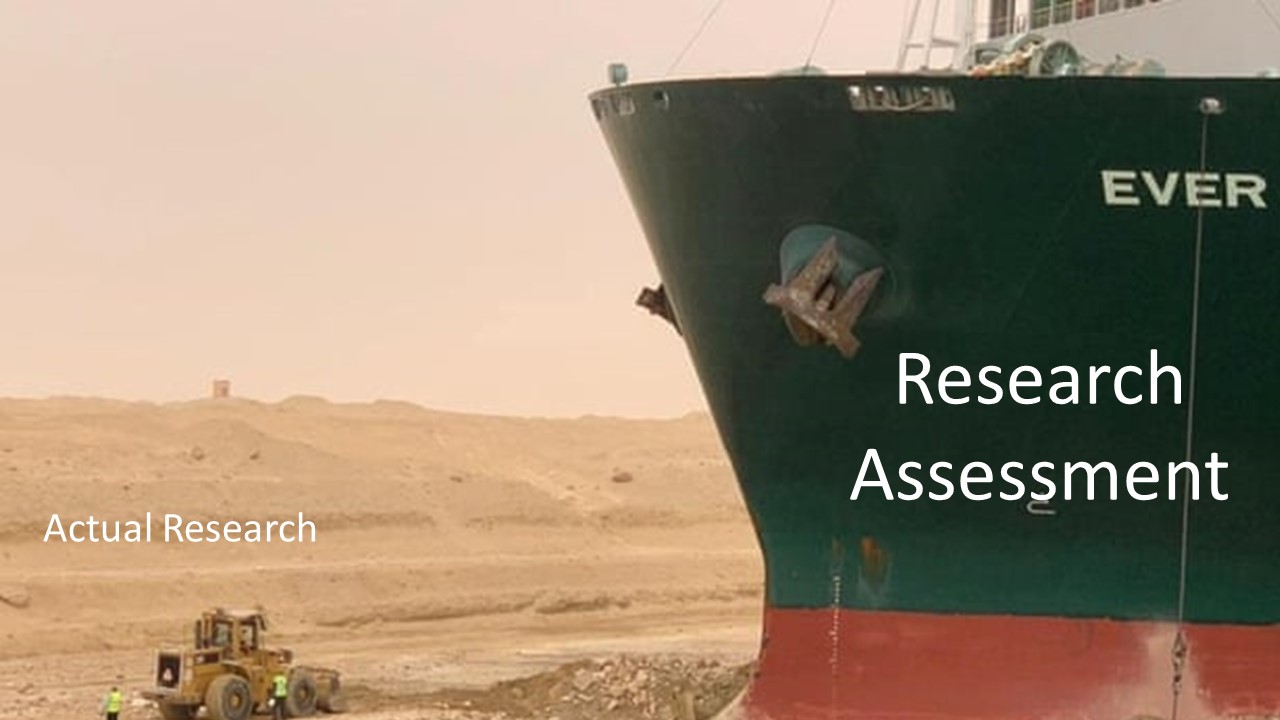
With apologies for adding to the stack of memes based on recent events in the Suez Canal, it made me think of this:
One of the major plusses of being in Ireland is that there is no REF, so I’m able to avoid the enormous workload and stress generated by this exercise in bean-counting. That’s good because there are more than enough things on my plate right now, and more are being added every day.
My memories of the last REF in 2014 when I was Head of School at Sussex are quite painful, as it went badly for us then. I hope that the long-term investments we made then will pay off, though, and I hope things turn out better for Sussex this time especially for the Department of Physics & Astronomy for which the impact and environment components of the assessment dragged the overall score down.
Not being involved personally in the REF this time round I haven’t really paid much attention to the changes that have been adopted since 2014. One I knew about is that the rules make it harder for institutions to leave staff out of their REF return. Some universities played the system in 2014 by being very selective about whom they put in. Only staff with papers considered likely to be rated top-notch were submitted.
Having a quick glance at the documents I see two other significant differences.
One is that in 2014, with very few exceptions, all staff had to submit four research outputs (i.e. papers) to be graded. in 2021 the system is more flexible: the total number of outputs must equal 2.5 times the summed FTE (full-time equivalent) of the unit’s submitted staff, with no individual submitting more than 5 and none fewer than 1 (except in special cases related to Covid-19). Overall, then there will be fewer outputs than before, the multiplier of FTE being 2.5 (2021) instead of 4 (2014). There will still be a lot of papers, of course, not least because many Departments have grown since 2014, so the panels will have a great deal of reading to do. If that’s what they do with the papers. They’ll probably just look up citations…
The other difference relates to staff who have left an institution during the census period. In 2014 the institution to which a researcher moved got all the credit for the publications, while the institution they left got nothing. In 2021, institutions “may return the outputs of staff previously employed as eligible where the output was first made publicly available during the period of eligible employment, within the set number of outputs required.” I suppose this is to prevent the departure of a staff member causing too much damage to the institution they left and also to credit the institution where the work was done rather than specifically the individual who did it.
Thinking about the REF an amusing thought occurred to me about Research Assessment. My idea was to set up a sort of anti-REF (perhaps the Research Inferiority Framework) based not on the best outputs produced by an institutions researchers, but on the worst. The institutions producing the highest number of inferior papers could receive financial penalties and get relegated in the league tables for encouraging staff to write too many papers that nobody ever reads or are just plain wrong. My guess is that papers published in Nature might figure even more prominently in this…
Anyway, let me just take this opportunity to wish former colleagues at Cardiff and Sussex all the best for their REF submission on Wednesday 31st March. I hope it turns out well
Follow @telescoperWith all the doom and gloom going around I thought I’d just pass on some local news that’s good for Maynooth!
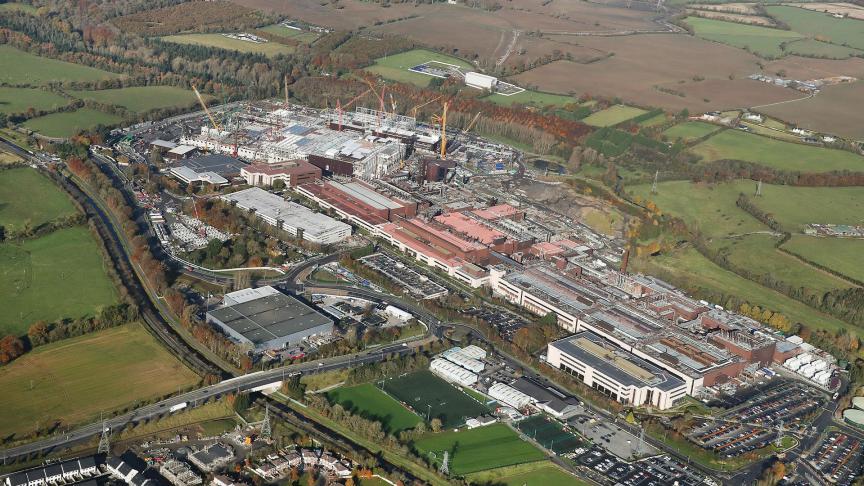
Intel’s Leixlip campus – the new construction is at the top end of the image, where the cranes are.
The giant multinational silicon chip manufacturer Intel has announced that it will be creating 1600 permanent high-tech jobs when construction is completed at its enormous new campus in Leixlip. Most of these will be graduate jobs and a sizeable fraction will go to physics graduates. Many of Maynooth’s physics graduates and postgraduates go there already of course, but this will boost their employment prospects even further. Leixlip is on the border between County Dublin and County Kildare, and is just 5 miles away from Maynooth. The construction is expected to be completed by 2023.
Incidentally, `Leixlip’ is a name of Norse origin – it means ‘Salmon’s Leap’. Apparently there was a viking settlement there, positioned because of the abundance of salmon in the River Liffey which flows through on the way to Dublin. `Leix’ is similar to, e.g., the Danish `Laks’, meaning salmon, and ‘leap’ is similar to many words in modern European languages derived from proto-Germanic sources.
Another item of good news came through my door this morning. Preliminary works have started on the extension of the DART (Dublin Area Rapid Transport) system to the West of Dublin as far as Maynooth. Currently the DART runs North-South between Malahide and Greystones:
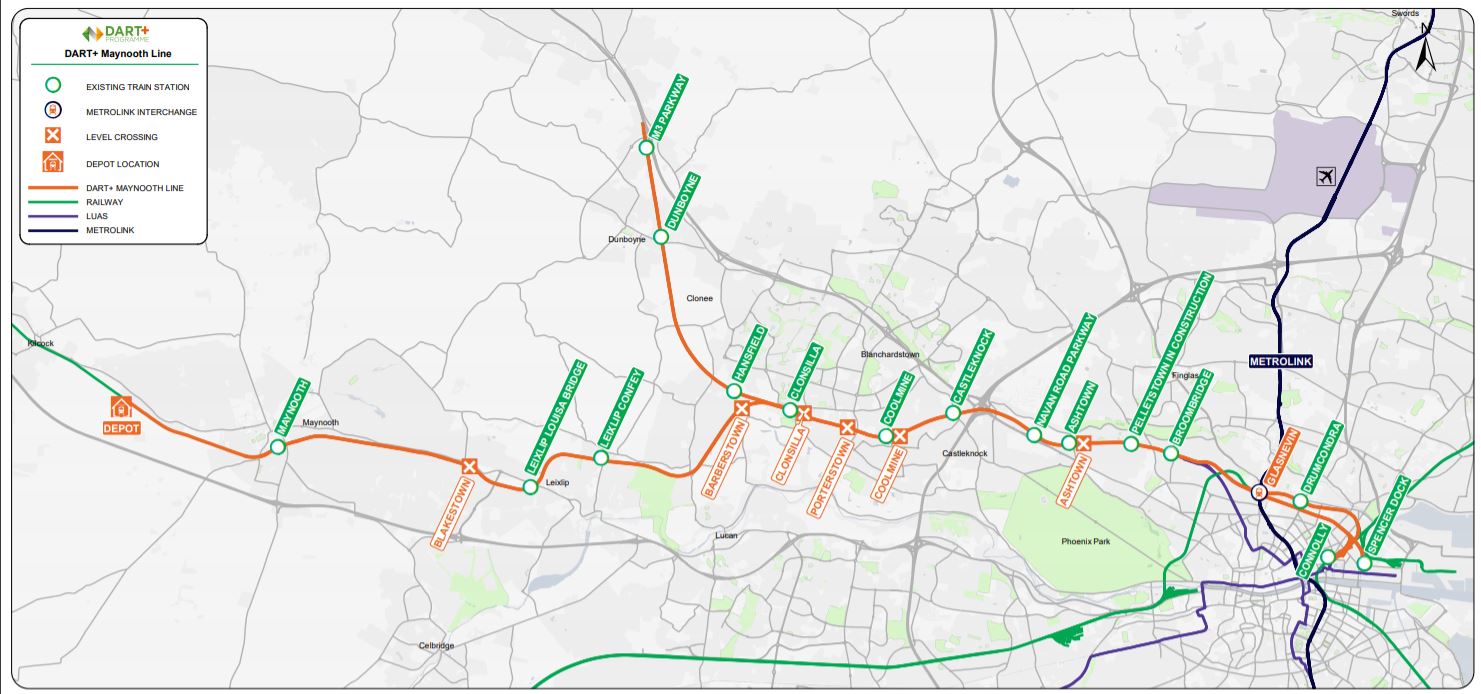
The new DART line to Maynooth will run along the existing commuter route but will use overhead electrification so new structures will have to be built beside the track. The note I received this morning concerns preliminary ground investigations for the design phase. My house is reasonably close to the line, but not close enough for me to be disturbed by the noise from trains or other work. Of course this is all preliminary and it will take several years to complete but it’s good to see it started. When finished it should make it even easier to travel from Maynooth to Dublin and back!
Follow @telescoperI’m a bit late getting round to writing something on the blog today because it has been yet another hectic day. Between my usual lecture this morning and Computational Physics Laboratory session this afternoon we also had our long-awaited Astrophysics & Cosmology Masterclass (held via Zoom).
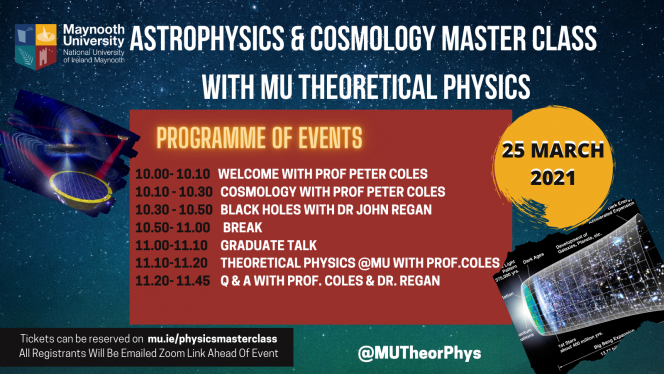
This event had been delayed twice because of Covid-19 so we were glad that it went ahead today at last!
We were a little nervous about how well it would go but as it happened I think it was a success. We had approaching a hundred schools tuning in, from Wicklow to Tralee, Longford to Monaghan, Donegal to Cork and many places between. The level of engagement was excellent. We held a question-and-answer session but were a little nervous in advance about whether we would actually get any questions. As it turned out we got a lot of questions with some very good ones among them. Reaction from students and teachers was very good.
For those who couldn’t make it to this morning’s session we did record the presentations and I’ll make the video available via YouTube in due course.
Now, I’ve been Zooming and Teaming (with a bit of Panopto thrown in) all day so if you don’t mind I’ll now go and vegetate.
Follow @telescoperIt is 9.37am Local Time in Ireland on Saturday 20th March 2021 which means that the Vernal Equinox or Spring Equinox (in the Northern hemisphere) is taking place right now!
The Spring Equinox jumped back a day last year because 2020 was a leap year and now is gradually moving forward again. Of course the actual date depends on where you are in the world. The date last year was 20th March (early in the morning) in Ireland, but 19th March (late at night) in New York.
People sometimes ask me how one can define the `equinox’ so precisely when surely it just refers to a day on which day and night are of equal length, implying that it’s a day not a specific time?
The answer is that the equinox is defined by a specific event, the event in question being when the plane defined by Earth’s equator passes through the centre of the Sun’s disk (or, if you prefer, when the centre of the Sun passes through the plane defined by Earth’s equator). Day and night are not necessarily exactly equal on the equinox, but they’re the closest they get. From now until the Autumnal Equinox days in the Northern hemisphere will be longer than nights, and they’ll get longer until the Summer Solstice before beginning to shorten again.
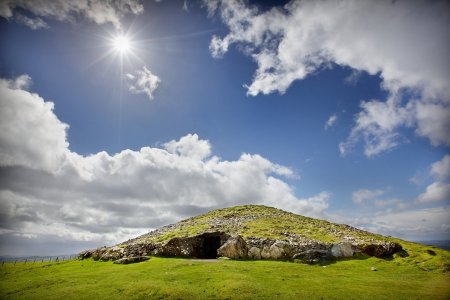
Loughcrew (County Meath), near Newgrange, an ancient burial site and a traditional place to observe the sunrise at the Equinox
Here in Ireland we celebrated Saint Patrick’s day on March 17th, the reputed date of his death in 461 AD. Nobody really knows where St Patrick was born, though, so it would be surprising if the when were any better known.
In any case, it wasn’t until the 17th Century that Saint Patrick’s feast day was placed on the universal liturgical calendar in the Catholic Church. In the thousand years that passed any memory of the actual date was probably lost, so the Equinox was perhaps rebranded for the purpose.
The early Christian church in Ireland incorporated many pre-Christian traditions that survived until roughly the 12th century, including the ancient festival of Ēostre (or Ostara), the goddess of spring associated with the spring equinox after whom Easter is named. During this festival, eggs were used a symbol of rebirth and the beginning of new life and a hare or rabbit was the symbol of the goddess and fertility. In turn the Celtic people of Ireland probably adapted their own beliefs to absorb much older influences dating back to the stone age. St Patrick’s Day and Easter therefore probably both have their roots in prehistoric traditions around the Spring Equinox, although the direct connection has long been lost.
Follow @telescoperYesterday I was summoned to a meeting on Campus so on the way there I took the opportunity to check up on Maynooth University Library Cat who I haven’t seen for over a month.
I’m glad to report that he’s every bit as active and energetic as usual.

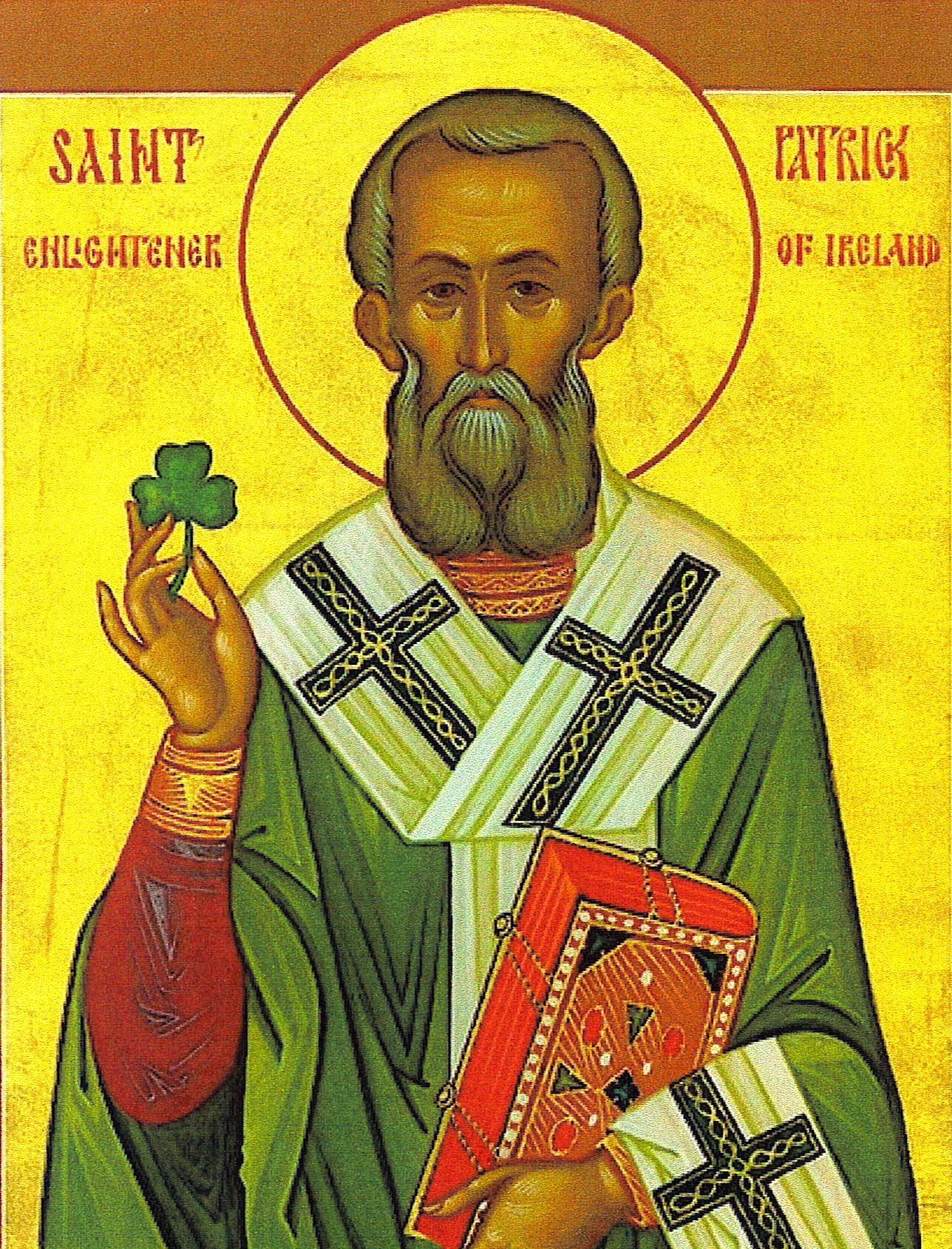
Well, it’s St Patrick’s Day, which means I’m actually taking a day off and attempting not to read work emails or do work-related things for the day. It’s a lower-key St Paddy’s Day than usual but it’s nice to take a break.
Not many facts are known about the life of St Patrick, but it seems he was born in Britain, probably in the late 4th Century AD, probably somewhere around the Severn Estuary and probably in Wales. It also appears that he didn’t know any Latin. When a young man, it seems he was captured by Celtic marauders coming up the River Severn and taken as a slave to Ireland. He eventually escaped back to Britain, but returned to Ireland as a missionary and succeeded somehow in converting the Irish people to Christianity.
Or did he? This interesting piece suggests his role was of lesser importance than many think.
However it happened, Ireland was the first country to be converted to Christianity that had never been part of the Roman Empire. That made a big difference to the form of the early Church here. The local Celtic culture was very loose and decentralized. There were no cities, large buildings, roads or other infrastructure. Life revolved around small settlements and farms. When wars were fought they were generally over livestock or grazing land. The early Irish Church that grew in this environment was quite different from that of continental Europe. It was not centralized, revolved around small churches and monasteries, and lacked the hierarchical structure of the Roman Church. Despite these differences, Ireland was quite well connected with the rest of the Christian world.
Irish monks – and the wonderful illuminated manuscripts they created – spread across the continent, starting with Scotland and Britain. Thanks to the attentions of the Vikings few of these works survive but the wonderful Lindisfarne Gospels, dating from somewhere in the 8th Century were almost certainly created by Irish monks. The Book of Kells was probably created in Scotland by Irish Monks.
The traffic wasn’t entirely one-way however. A few weeks ago I saw a fascinating documentary about the Fadden More Psalter. This is a leather-bound book of Psalms found in a peat bog in 2006, which is of similar age to the Lindisfarne Gospels. It took years of painstaking restoration work to recover at least part of the text (much of which was badly degraded), but the leather binding turned out to hold a particularly fascinating secret: it was lined with papyrus. The only other books from the same period with the same structure that are known are from the Coptic Church in Egypt.
That doesn’t mean that whoever owned the Fadden More Psalter had actually been to Egypt, of course. It is much more this book made its way to Ireland via a sort of relay race. On the other hand, it does demonstrate that international connections were probably more extensive than you might have thought.
Anyway, back to St Patrick’s Day.
Saint Patrick’s Day is celebrated on March 17th, the reputed date of his death in 461 AD. Nobody really knows where St Patrick was born, though, so it would be surprising if the when were any better known.
In any case, it wasn’t until the 17th Century that Saint Patrick’s feast day was placed on the universal liturgical calendar in the Catholic Church. Indeed, St Patrick has never been formally canonized. In the thousand years that passed any memory of the actual date of his birth was probably lost, so the choice of date was probably influenced by other factors, specifically the proximity of the Spring Equinox (which is this year on Saturday March 20th).
The early Christian church in Ireland incorporated many pre-Christian traditions that survived until roughly the 12th century, including the ancient festival of Ēostre (or Ostara), the goddess of spring associated with the spring equinox after whom Easter is named. During this festival, eggs were used a symbol of rebirth and the beginning of new life and a hare or rabbit was the symbol of the goddess and fertility. In turn the Celtic people of Ireland probably adapted their own beliefs to absorb much older influences dating back to the stone age. St Patrick’s Day and Easter therefore probably both have their roots in prehistoric traditions around the Spring Equinox, although the direct connection has long been lost.
The traditional St Patrick’s Day parades etc will not take place this year because of Covid-19 restrictions, but that doesn’t mean everyone is ignoring the day. Indeed here’s a picture of the spire of St Patrick’s College lit up in celebration:

Lá Fhéile Pádraig sona daoibh go léir!
Follow @telescoper
I thought the following might be of general interest to readers of this blog. It’s a translation into English of an MSc thesis written by a certain Jon-Ivar Skullerud of the Department of Theoretical Physics at Maynooth University. I hasten to add that Dr Skullerud hasn’t just finished his MSc. It just appears that it has taken about 30 years to translate it from Norwegian into English!
Anyway, the English version is now available on the arXiv here. There isn’t really an abstract as such but the description on arXiv says:
This is a translation into English of my Masters thesis (hovedoppgave) from 1991. The main topic of the thesis is the relation between fundamental physics and philosophy, and a discussion of several possible ontologies of quantum field theory.
I note from here that hovedoppgave translates literally into English as “main task”.
I haven’t read this thesis from cover to cover yet – partly because it’s in digital form and doesn’t have any covers on it and partly because it’s 134 pages long – but I’ve skimmed a few bits and it looks interesting.
Follow @telescoper
Today is 12th March 2021, which means it is exactly one year since Maynooth University campus closed because of Covid-19. Last year 12th March was on a Thursday and I remember doing my Computational Physics lecture in the morning and a computer lab in the afternoon and then hearing we couldn’t go back to teaching the following day. After that, as it is this year, it was the Study Week break (which includes the St Patrick’s Day holiday). Last year we all trued to use the opportunity to move all our teaching online.
I certainly didn’t imagine that a full year later we would still be working from home. Although the current lockdown isn’t as strict as that of last Spring we’re still told not to come on campus unless it is strictly necessary, and all teaching remains online.
When the campus closed last year I was living in a small flat with no internet connection, so the only way I could do my teaching was using my mobile phone data. It wasn’t great but I did the best I could.
At least I was able to use the semi-unlocking of the lockdown in late summer to complete the purchase of a house. I’ve been much more comfortable doing teaching from here for the last six months or so, although not leaving the house except to do shopping has led to an extreme sense of isolation which is not all ameliorated by endless online meetings via Zoom and Teams. That, together with the heavy workload, is all very wearying. It further annoys me how many people think “working from home” means not “working very much” or not “working at all”. What it does mean is never getting away from your work, except when you’re asleep.
I’ve noticed over the last few months that the agoraphobia from which I’ve suffered sporadically over the years has very definitely returned. Agoraphobia can be defined as:
…an anxiety disorder characterized by symptoms of anxiety in situations where the person perceives their environment to be unsafe with no easy way to escape. These situations can include open spaces, public transit, shopping centers, or simply being outside their home.
My long-term agoraphobia has been about the threat of physical violence caused by a traumatic event in the past, but now it is more general. I see too many people not taking proper precautions (face masks, social distancing, etc) that it gets me very anxious for a new reason. Supermarkets are bad enough, but it’s more general. I’m now starting to realize that I’m going to find it difficult ever to return to a “normal” life of crowded lecture theatres and campus buildings after this pandemic ends, whenever that happens.
This morning I did a tutorial (via Teams) which was my last teaching session before the mid-term break. I was exhausted even before term started so it has been a very difficult six weeks. It’s not just the teaching, it’s also the relentless stream of demands from upstairs for other things to be done. There seems very little understanding from that direction of what life is like on the front line, to be honest.
My appointment as Head of Department for Theoretical Physics was nominally three years. I am now about halfway through that term and can’t wait for it to end.
Unfortunately there isn’t much light at the end of the Covid-19 tunnel. Case numbers in Ireland remain high, and are falling slowly at best; they have actually been increasing for the last few days. Vaccination rollout is also very slow, thanks to supply issues (chiefly with AstraZeneca).
I am now fairly confident that teaching at least for the Autumn Semester of 2021/22 will again be online, as there is little chance of staff being vaccinated by the end of the summer. I know colleagues in other Irish universities who are planning for this eventuality too.
Follow @telescoperOn Monday I reported that Maynooth has selected a new President in the form of Professor Eeva Leinonen who is currently Vice Chancellor at Murdoch University in Australia. I was initially pleased to see the announcement, but news is coming out now that is filling me and my colleagues in STEM subjects with a sense of alarm.
According to this article Professor Eeva Leinonen effectively shut down all STEM subjects as separate disciplines at Murdoch University, removing the status of researchers from staff in these areas (i.e. putting them all on teaching-only positions) and turning all their teaching into support activities for other disciplines. As a consequence of this Murdoch University no longer awards degrees in science, technology, engineering and mathematics. For further information see here.
Since this news has come out I have been filled with dread that the new President will do the same here in Maynooth where the Faculty of Science & Engineering is already smaller than those of Arts and Social Sciences.
The incoming President does not take up her role until October 1st but in the meantime I hope she will clarify what her intentions are so that the perception of her being anti-science does not cast a shadow over recruitment of students and staff here.
I therefore call upon Professor Eeva Leinonen to make a public statement on her plans for STEM subjects at Maynooth.
Follow @telescoper
 In the Dark