Archive for the Mental Health Category

Reminder: Darkness into Light

Posted in Maynooth, Mental Health with tags , , on May 8, 2025 by telescoper

With your permission (or indeed without it) please let me remind you that taking part in Darkness Into Light in Maynooth on Saturday, 10th May, from 4.15am, to raise vital funds for Pieta and people affected by suicide and self-harm. This is only a couple of days away so please donate if you can.

You can help keep Pieta’s essential services FREE and available to anyone who needs them by donating now to help me reach my fundraising goal. Every euro counts. Even a small donation can make a big impact. You can contribute to my fundraiser here.

Thank you so much for your support

Darkness into Light

Posted in Maynooth, Mental Health with tags , , on May 1, 2025 by telescoper

Just a quick note to advertise that I’m taking part in Darkness Into Light in Maynooth on Saturday, 10th May, from 4.15am, to raise vital funds for Pieta and people affected by suicide and self-harm.

You can help keep Pieta’s essential services FREE and available to anyone who needs them by donating now to help me reach my fundraising goal. Every euro counts. Even a small donation can make a big impact. You can contribute to my fundraiser here.

Together, we can light up the darkness and create a brighter future for everyone.

Thank you so much for your support

A Campus Incident

Posted in Biographical, Maynooth, Mental Health with tags , , on February 5, 2025 by telescoper

I received an alarming “All Staff” email yesterday from Maynooth University that contained the following:

 I am writing to inform you of a serious incident on South Campus last night (Monday, February 3rd). An individual entered the campus and engaged in unprovoked physical altercations against a small group of students and staff. Based on our current understanding, this appears to be an isolated incident. The suspect has been arrested, and the Gardaí are investigating.  

That was all it said about the nature of the incident which took place on Monday evening at about 18.50. The University was closed all day Monday for the Bank Holiday and I knew nothing about it until I received the email. I found the lack of information very concerning. More details were available in the local news (e.g. here), however, including the fact that a person had been arrested and charged and was due to appear in the District Court at Naas this morning. The fact that the matter was in front of the courts was no doubt the reason no further information was disclosed to staff.

After the hearing, the case was covered in the usual court reporting (e.g. here) which reveals that the victim of the serious assault was a priest who needed treatment in hospital; three students were also attacked and some property damaged. The accused was charged with four counts of assault causing harm, two counts of criminal damage and one count of burglary; he has a history of psychiatric problems and was remanded without bail for evaluation in the medical wing of Cloverhill prison. It seems the individual concerned may have experienced some kind of psychotic episode.

All we can hope is that the victims recover speedily from their injuries and the shock caused by such an episode. I hope they all receive counselling. This looks like very much like a failure of Ireland’s mental health system to take proper care of the person responsible. In the long term I hope that he gets proper treatment. That way at least some good might come out of this awful incident.

Mental Health and Graduate Studies

Posted in Biographical, Mental Health with tags , , , , , , , , on October 3, 2024 by telescoper

There has been a lot of comment on social media about a recent article in Nature about the mental health of graduate students and the numbers looking for treatment. There are many sources of stress that can have a negative effect on mental health, including financial pressures and poor accommodation to name but two. These aren’t really specific to graduate studies. One that is is the pressure to produce results. That actually continues throughout an academic career – burnout is a very real phenomenon – but it’s probably worse during the “apprenticeship” phase when one is inexperienced and still learning the trade.

“Productivity” is indeed important but should not be interpreted as having to work ridiculously long hours. I remember many years ago commenting on an article that claimed 80-100 hours a week was not unusual. There are people who can sit at their desks for 12 hours a day without producing anything very much at all. It’s not the hours that matter, but what you do with them. In no way will indulging your outside interests (sporting, cultural, political, or “other”…),  or simply relaxing, detract from your ability to do research. As a matter of fact, I think such diversions actually improve your work, as well as (of course) your general well-being.

I think it is fair to say that you have to work hard to do a PhD. I worked hard on mine back in the day. But don’t think that means it has to be a grim slog. I can only speak for myself, but I greatly enjoyed my time as a graduate student. I think this was at least in part because when I was doing my PhD I had plenty of outside interests (including music, sport and (ahem) “nightlife”)  and took time out regularly to indulge them. I did experience mental health problems later during my PhD, but these were not caused by being a research student.

I can think of many times during my graduate studies when I was completely stuck on a problem – to the extent that it was seriously bothering me. On such occasions I learned to take a break. I often found that going for a walk, doing a crossword, or just trying to think about something else for a while, allowed me to return to the problem fresher and with new ideas. I think the brain gets into a rut if you try to make it work in one mode all the time.

There were indeed many times during my time as a research student – and have been since – that I worked extremely long hours – all night sometimes. I wouldn’t say exactly that was because I “enjoyed” it, but that I wanted to know an answer and couldn’t get the problem out of my head.  I’ve stayed up into the early hours of the morning trying to finish a crossword too. Not because I had to, but because I couldn’t put it down unfinished. I know that makes me a saddo in many minds, but I think that’s the sort of obsessiveness and tenacity a researcher needs: becoming so absorbed by the task in hand that you don’t notice the passage of time.

I don’t think anyone should try to infer too much from these personal reflections, but I do think there’s one important point that I try to point to every graduate student I advise and that is to look after your mental health. Perhaps the Nature article has a positive side, in that at least graduate students are seeking help. Recognizing that you might have a problem is a very important first step.

Fear of Falling

Posted in Biographical, Brighton, Mental Health with tags , , , on July 28, 2024 by telescoper

The other day I slipped in the garden and fell into a flowerbed. It wasn’t serious as it was a raised bed so I didn’t fall far, though I did get a bit of a gash on my leg where I hit the little wall around it. It had been raining so everything was wet and I needed to clean myself up as well as clean my wound. I think it’s fair to say, though, that only my dignity really suffered (and a few plants got a bit squashed).

When I was safely back inside the house I got thinking about the difference between “to fall” and “to have a fall”. It seems to me that when someone is young you would say that they fell, but for an older person it would be that they “had a fall”. I’m not sure at what age the transition occurs, but I insist that I fell. I didn’t have a fall.

Thinking a bit more about it, perhaps it’s not the age of the person falling per se but the seriousness of the event. The likelihood of injury  of course increases with age. If you fall you get up reasonably quickly afterwards. If you have a fall then you would probably be injured, possibly seriously, and might need assistance.  If you have a great fall, of course, not even all the King’s horses and all the King’s men could help you.

All of which nonsense leads me to reflect on one of my phobias. I often say that I’m scared of heights, but it’s really not as simple as that. I have a fear of edges, i.e. sudden drops, even if they’re not particularly high. It gets worse with height – I had problems on my terrace in Barcelona, for example. This fear is irrational because I know I’m at no risk of falling, but there you go. Curiously, I don’t think I ever had this when I was a child.

Years ago when I was having therapy, this subject came up. The therapist guessed that it started when I got beaten up in Brighton back in the 1980s. During that event, I fell and, I think, hit my head on the edge of the pavement which knocked me out and scrambled my wits for some time afterwards. It’s possible being near a visible edge triggers some sort of flashback to this event.

I hope my more recent tumble doesn’t leave me with a fear of flower beds.

Chaos in Rome and Barcelona

Posted in Barcelona, Euclid, Mental Health with tags , , , , , , on June 19, 2024 by telescoper

What I thought would be a straightforward trip back from Rome to Barcelona turned into nothing of the sort.

I arrived at Roma Termini station and got on a train for Fiumicino Airport. The train didn’t move, however, and eventually we passengers were told that we should get off and take a bus or a taxi because of “a problem on the line” which would take an indefinite time to fix.

I went to see if I could get a bus, but the queue was predictably enormous. Same story for taxis. After waiting over an hour I had all but given up hope of catching my flight when suddenly it was announced that the track problem was fixed and I got back on the train. It reached the airport in good time and I passed a very long queue of people waiting to travel in the opposite direction; trains into Roma Termini from Fiumicino had also been cancelled:

I still thought I would miss the flight, but I thought that once in the airport I could perhaps book another. Helped by the fact that I had already checked in online and only had hand luggage, however, I made it through security and to the gate just  in time to board.

So, all seemed well. I’ve travelled enough in Italy to have learnt how to cope with a fair amount of chaos.

I got back to Barcelona – which is somewhat cooler than Rome – just about on time and took the Aerobus as usual. Unfortunately, I had forgotten that today was the day that roads in the area around my flat were closed for a Formula 1 “Road Show”. The bus stopped at the edge of the sealed off area and passengers – many heavily laden with luggage – were left to make their way through the dense crowds. Whoever decided it was a good idea to block some of the busiest roads in Barcelona during the evening rush hour has a lot of questions to answer. The crush around Plaza de Catalunya was absurd and potentially dangerous, and not only for people like me who find such situations very difficult.

When I eventually got to my flat, I saw a protest against this stupid event had let to standoff in the street with some sinister-looking cops.

At home, and after a relaxing shower, I thought the day’s tribulations were over until I switched on my laptop and found it wouldn’t start:

Automatic Repair didn’t work so I logged a ticket with Maynooth IT Services. If they can’t fix it, it looks like I’ll be unable to work until I get a new machine…

…and blogging using my phone like this!

The Challenges of Large Collaborations in STEM

Posted in Biographical, Harassment Bullying etc, Mental Health with tags , , , , , on August 12, 2023 by telescoper

There’s a new paper on the arXiv by Kamiel Janssens and Michiko Ueda that addresses some of the challenges that arise for people working in large STEM collaborations. Although the sample they use is drawn from gravitational-wave collaborations I think many of the patterns that emerge will also apply elsewhere, e.g. in the Euclid Consortium.

Here is the abstract:

Large-scale international scientific collaborations are increasingly common in the field of STEM (Science, Technology, Engineering, and Mathematics). However, little is known about the well-being of the members participating in these `big science’ collaborations, which can present unique challenges due to the scale of their work. We conducted a survey among members of three large, international collaborations in the field of gravitational-wave astrophysics in the summer of 2021. Our objective was to investigate how career stage, job insecurity and minority status are associated with reported levels of depressive symptoms as well as the desire to leave academia. We found that early-career scientists and certain minoritized groups reported significantly higher levels of depressive symptoms compared to senior members or those who do not consider themselves as a member of minoritized groups. Furthermore, relatively young members, staff scientists/engineers, and those experiencing high levels of job insecurity and lack of recognition were more likely to frequently consider leaving academia. Our findings suggest that improving recognition for personal contributions to collaborative work and providing clearer job perspectives could be two key factors in enhancing the well-being of young scientists and reducing the potential outflow from academia.

arXiv:2308.05107

I would like to add a personal note. When I was an early-career researcher in cosmology I was for the most part given a free hand to work on whatever I wanted to do. My first papers were either sole author or with one or two others, being people I’d met and wanted to collaborate with. Nowadays many opportunities – indeed, most – for postdocs are associated with very large teams into which one just has to fit. The work is also highly directed with little choice of what to do, and it is harder to individuals to shine even if the team is well managed, and not all senior scientists in such collaborations have good leadership skills. Theoretical astrophysics is challenging enough but sometimes the really difficult thing is the behaviour of other people!

I’m not saying that this way of working is necessarily bad, just that it is very different from what I experienced. It does not therefore surprise me to hear that many, especially younger, people struggle in the current environment and why it is important for large collaborations to do the best they can to help. I think part of that involves us oldies recognizing that things are very different now from what they were like back in our day.

A Birthday Thank You!

Posted in Biographical, Mental Health with tags on June 17, 2023 by telescoper

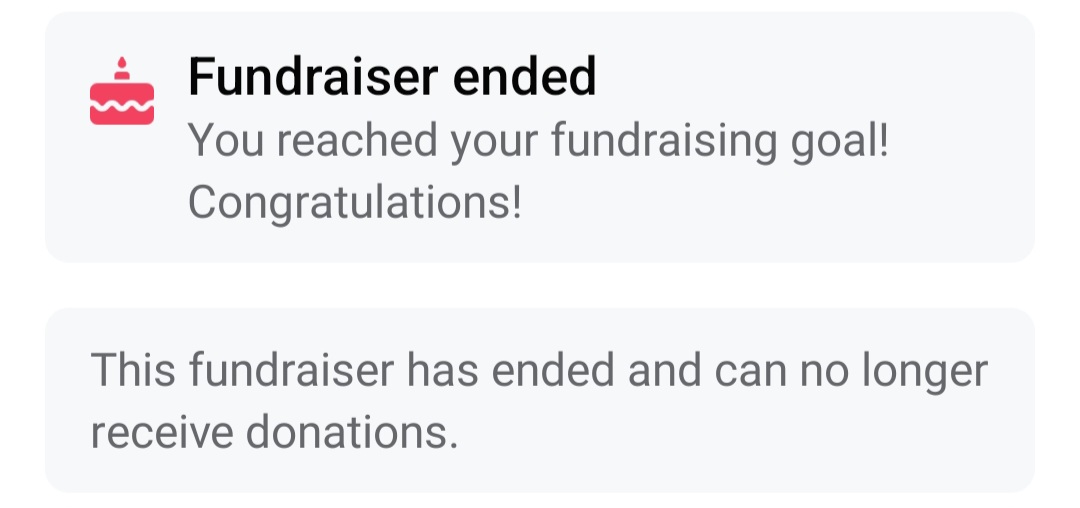
You may recall that a couple of weeks ago, on the occasion of my birthday, I started a fundraiser  for Pieta, which is a charity working to prevent suicide and self-harm. Well, the fundraiser is now closed and I’m very glad to say that the official fundraiser on Facebook reached my target. I know that quite a few more people gave directly to Pieta without going through Facebook so the amount of money raised overall comfortably exceeded the goal. Thank you so much to everyone who made a contribution. I really do appreciate it.

Birthday Fundraiser…

Posted in Biographical, Mental Health with tags , , on June 2, 2023 by telescoper

My birthday is coming up and for my birthday this year I’m asking for donations to Pieta, which is a charity working to prevent suicide and self-harm. I’ve chosen this cause because their mission means a lot to me. I hope you’ll consider contributing; every little bit will help.

You can donate here by my Facebook Fundraiser. Facebook takes care of the donation processing with no fees. If you decide to give, you can choose who can see that you donated, or donate privately. The Fundraiser will stay open for a couple of weeks or so.

If you prefer you can also donate directly to Pieta here and you can do that at any time.

The Hate is still Out There

Posted in Biographical, LGBTQ+, Mental Health with tags , , on May 21, 2023 by telescoper

A few days ago I mentioned on this blog the case of a gay teenager in Navan being beaten up by boys from the same school; there was a news report here. Five youths were subsequently arrested but have now been released without charge. I felt a strong sense of dismay when I heard the news of their release, as the decision to let them go seemed to declare open season on homophobic violence. It may however because the assailants have to be treated as minors.

Press coverage related to this story has generally condemned the sharing on social media of a video showing the violent assault. There are quite a few people, however, including me, who think that the Gardaí would not have taken any action at all had they not been shamed into doing so by the publicity generated by the video.

Regular readers of this blog will probably understand why this case resonates with me: a similar thing happened to me way back in the 1980s. There are differences, of course. For one thing, I was rather older – in my mid-twenties rather than mid-teens. For another, the incident wasn’t reported to the police. There wasn’t any point in those days. The Brighton police at that time were notorious for dismissing complaints of gay-bashing despite the fact it was an endemic problem. People I knew who had reported such incidents usually found themselves being investigated rather than their assailants. In those days the law did not recognize homophobic offences as hate crimes. Far from it, in fact. Attacking a gay person was, if anything, considered to be a mitigating circumstance. This attitude was fuelled by a number of high-profile cases (including a number of murders) where gay-bashers had been acquitted or charged with lesser offences after claiming their victim had provoked them.

Another difference is that I didn’t go to hospital. I had a black eye, a fat lip and a lot of bruises, and had been unconscious for a time, but there didn’t seem to be any serious physical damage. The psychological effects were far from negligible, though, and I have experienced intermittent mental health problems ever since, sometimes needing to be hospitalized for psychiatric treatment. You can read about this here; a short summary is that I should have got help with this much earlier. The important thing now is that the boy who was targeted in Navan gets proper treatment and counselling. I wish him a speedy recovery.

Here’s something I wrote in 2010 after in the blog post describing my own experience of homophobic violence:

Now fast-forward about 20 years. Attitudes have definitely changed, and so has the law. Certain types of criminal offence are now officially recognized as hate crimes: the list treats sexual orientation as equivalent to race, gender, religious belief and disability in such matters. The Police are now obliged to treat these with due seriousness, and penalties for those found guilty of crimes exacerbated by homophobia are consequently more severe.

Recently, there are increasing signs of a backlash against LGBT+ people, most obviously in America but also here in Ireland. Much of this is fueled by toxic rhetoric of the Far Right who seem to want to target trans people. Social media, especially Twitter are awash with transphobic abuse and threats of violence for the reason that trans people are perceived to be easy targets. It’s up to the rest of us to make sure this strategy does not work.

I worry that the rights that the LGBT+ community has taken so long to win, could so easily be taken away. If we are complacent and pretend that everything is fixed because we have equal marriage then we will soon see those rights being eroded. LGBT+ people have to remain active and visible, show solidarity with one another, and keep pushing against all forms of discrimination, harassment and bullying wherever it happens. And the first step in doing that is to raise awareness that there is a serious problem.

I was reflecting on my own encounter with violence the other day. I try not to think about that very much, but I found myself wondering where the four guys who attacked me are now. They were about the same age as me, so will be around 60 now. Do you think the hate they expressed with their fists back in the 1980s has gone away? More importantly, do you think it reasonable that I should believe that? I don’t. The hate is still out there and will find its expression at the slightest provocation.

The reference to hate crimes in the above quote relates to the UK, of course. I was a little surprised to see that until very recently there was no legal definition of a hate crime in Ireland. Legislation has only just been introduced on this subject, with cross-party support. Among other provisions:

The new legislation will criminalise any intentional or reckless communication or behaviour that is likely to incite violence or hatred against a person or persons because they are associated with a protected characteristic. The penalty for this offence will be up to five years’ imprisonment.

The protected characteristics in the new legislation are: race; colour; nationality; religion; national or ethnic origin; descent; gender; sex characteristics; sexual orientation; and disability.

It remains to be seen how the new law works in practice.