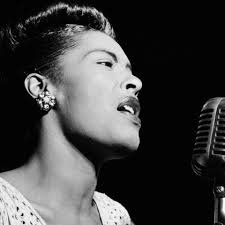
Well, I’ve been on duty all day so far at the Open Day I mentioned yesterday and am about to knock off and go home for a rest but first I thought I’d share this wonderful version of Cherokee, a tune that because of its complex chord changes is generally regarded as a test piece for jazz musicians. You’d never guess that from the ease that Clifford Brown shows as he tackles the 64-bar harmonic labyrinth at a breakneck tempo. If you want an example of jazz as a white knuckle ride, this is it!
Clifford Brown was a phenomenal virtuoso on the trumpet and it’s so sad that he died so young, at the age of 25, in a car accident. This performance was recorded in August 1953 and features an extended solo by Clifford Brown followed by a series of four-bar exchanges with the great drummer Art Blakey. Other principals are Percy Heath on bass and John Lewis on piano; Gigi Gryce (alto) and Charlie Rouse (tenor) also participate on the intro and outro. Enjoy!
Well, it’s Shrove Tuesday, Pancake Day, Mardi Gras and Fat Tuesday which gives me four excuses to post this lovely old record made by Humphey Lyttelton’s Paseo Jazz Band in the early Fifties. That’s the band that featured Humph’s regular crew alongside a number of London’s marvellous West Indian musicians of the time, hence the abundance of percussion and the resulting infectious calypso beat. Enjoy!
It behoves me to spend most of this evening at a postgraduate Open Evening here at Maynooth University so I thought I’d take a little tea break and post a bit of Jazz.
This recording, made in 1954, is from one of the famous `All-Star’ jam sessions organized by impresario Norman Granz. These are fascinating for jazz fans because they provide a rare opportunity to hear extended solos from great musicians, not confined to the usual three-minute 78rpm records of the period. This one is almost half an hour long altogether, and was originally issued in two parts (on either side of an LP record) so there’s a rather clumsy edit half way through. There are also a few jumps on the record, but I don’t think they spoil this classic too much.
Norman Granz liked to select contrasting musicians for these spontaneous recordings and this line-up was clearly intended to juxtapose modernist trumpeter Dizzy Gillespie with his boyhood inspiration Roy Eldridge. It is indeed fascinating to hear them play one after the other, but the star of this show for me is the great clarinettist Buddy De Franco whose solo is absolutely superb – few Jazz clarinettists are able to match his control in the upper register. The other musicians clearly enjoy his solo too; I’m pretty sure that it’s Dizzy Gillespie you can hear delivering the encouraging shouts as De Franco gets into full flood.
The soloists (in order) are: Flip Phillips (tenor sax); Bill Harris (trombone); Buddy De Franco (clarinet); Oscar Peterson (piano); Herb Ellis (guitar); Dizzy Gillespie (trumpet); and Roy Eldridge (trumpet). The other musicians providing rhythm accompaniment are Ray Brown (bass) and Louie Bellson (drums). That’s not a bad band is it?
The tune played here is the swing era standard Stomping at the Savoy which is a good choice for this kind of jam session because (a) everyone knows it (b) the melody is quite simple, and (c) it has interesting chords for the musicians to improvise over. It is in standard 32-bar AABA format with a relatively simple A section (Db6, Ab9, Db6, Ddim, Ebm7, Ab7, Db, Db) but has a B section (bridge) with considerable chromatic embellishment (Gb9/G9, Gb9, B13/F#m6, B13, E9/F9, E9, A13, Ab9b); these are assuming that it is played in Db. It’s fascinating to hear how each of the soloists navigates the middle eight on this record.
Stomping at the Savoy is usually played a bit faster than it is here, but I like this beautifully relaxed and comfortably swinging tempo.
UPDATE: By an amazing coincidence*, Part 1 of this session was played by Bernard Clarke last night on The Blue of the Night (at about 10.30).
*It’s not a complete coincidence, as we had an exchange on Twitter about it a while ago and he said he would try to play it sometime – it was nevertheless a surprise that he played it on exactly the same day as I posted this!
Judging by the statistics provided by WordPress about the traffic on this blog, there’s less than overwhelming interest in the posts I do about Jazz. Whenever I put such an item on here the number of hits invariably goes down nearly as steeply as when I post poetry. On the other hand, there is at least some overlap between people who like Jazz and people who read this blog for other reasons. Last week, for example, during the public defence of a PhD thesis in Copenhagen the candidate made reference to an album by the great pianist, composer and bandleader Duke Ellington. A large part of the dissertation was devoted to foreground contamination of the cosmic microwave background, which is why Piano in the Foreground came up. I even asked a question about the album cover at the end of the talk – I recognized Duke Ellington and drummer Sam Woodyward, but couldn’t name the bass player. It turned out to be a trick question, in that two bass players appear in the personnel listing of the album, but the one in the picture is Aaron Bell.
Undaunted by the likely negative impact on my blog statistics, I thought I would share the album here. Ellington didn’t record many albums with a piano trio, which is a great shame as he had a wonderful individual style that comes across very well in that setting. He was also extremely influential pianist – you can definitely hear his influence in Thelonious Monk, for example.
Here is the whole album via Youtube and very fine it is too. I hope you enjoy it as much as I did listening to it over the weekend for the first time in decades!
It’s been a very busy week so I’m about to go home and dive into a glass or two of wine, but before doing that I thought I’d leave a little something for the weekend.
Among the other things I have to do next week is make a short trip to Copenhagen to examine a PhD candidate. This track was recorded live at Copenhagen on September 8 1961 and it features Eric Dolphy (alto sax), Bent Axen (piano), Erik Moseholm (bass) and Jørn Elniff (drums). The tune The Way You Look Tonight is an old standard, written in 1936 by Dorothy Fields and Jerome Kern, but what a version this is! Dolphy tears through the changes on this performance, reinventing the piece in a way that turns what might be a routine tune into something absolutely new and refreshing. The combination of virtuosity and exuberance of the saxophone playing in this phenomenal performance is absolutely exhilarating. Enjoy!
Time for a quick lunchtime post before I settle down to an afternoon of marking coursework.
On Monday evening after finishing preparing my lectures and things for Tuesday, I decided to tune in for a while to The Blue of the Night on RTÉ Lyric FM which is presented by Bernard Clarke. This is a programme that I listen to quite often in the evenings as I enjoy its eclectic mix of music.
Anyway, the Blue of Monday Night included a recording of the movement Ondine from the piano suite Gaspard de la Nuit by Maurice Ravel. As I listened to it, I started to think of an entirely different piece, the jazz classic Giant Steps, by John Coltrane (which I’ve actually posted on this blog here). Not really expecting anything to come of it, I sent a message on Twitter to Bernard Clarke mentioning the fact that the Ravel piece reminded me of Giant Steps. A few minutes later I was astonished to hear Giant Steps playing. Bernard had not only replied to me on Twitter, but had slipped the Coltrane track into the programme. Which was nice.
That confirmed the similarity in my mind and I did some frantic Googling to see if anyone else had noticed the similarity. Of course they have. In a rather dense article about music theory (most of which I don’t understand, having never really studied this properly) I found this:
I didn’t know at first what the up and down arrows annotating the two pieces were, but they represent the harmonic progression in a very interesting way that I had never thought about it before. The assertion is that in some sense the (sub-dominant) IV and (dominant) V chords which very common in popular music are closely related. To see why, imagine you play C on a piano keyboard. If you go 7 semitones to the right you will arrive at G, which is the root note of the relevant V chord. That’s up a perfect fifth. But if instead you go 7 semitones to the left you get to F which is a fifth down but is also a perfect fourth if looked at from the point of view of C an octave below where you started. In this way `up’ arrow represents a perfect fifth up (or a perfect fourth down) while the `down’ arrow is a perfect fifth down or a perfect fourth up. This is deemed to be the basic (or `simple proper’) chord progression.
Single or double arrows to left or right represent substitutions of various kinds (e.g. a minor third), but I won’t go further into the details. The key point is that while the actual chords differ after the first few changes because of the different substitutions, the chord progression in these two piece is remarkably similar judged by the sequence of arrows. The main exception is a different substitution in bar 3 of the Coltrane excerpt. Both pieces end up achieving the same thing: they complete an entire chromatic cycle through a sequence of basic progressions and substitutions.
I don’t know whether Coltrane was directly inspired by listening to Ravel or whether they both hit on the same idea independently, but I find this totally fascinating. So much so that I’ll probably end up trying to annotate some of the chord changes I’ve worked out from other recordings and see what they look like in the notation outlined above.
I came across this on Youtube a while ago and I quite often play it when I’m at work if I’m in need of an aural pick-me-up when I’m flagging a bit. The tune All The Girls Go Crazy is one of many manifestations of a 16-bar blues theme that was fairly ubiquitous in New Orleans Jazz. The recording is by a band led Ken Colyer who I think is on cornet rather than trumpet on this track, but the Youtube poster gives no other information about the personnel or the date. I’m going to stick my neck out and say that the clarinettist sounds to me like Ian Wheeler and the drummer is without doubt Colin Bowden, one of the very best drummers in this style that the UK has ever produced. If I’m right then I think the date is somewhere around the mid-1950s, at the peak of the New Orleans revival in the UK. No doubt some other jazz fan out there will correct me if I’m wrong!
Ken Colyer (`the guvnor’) had very firm ideas about how New Orleans music should be performed, and you’ll notice that there’s much more ensemble work here than you find in the typical string-of-solos approach adopted by many `Trad’ bands of the period.
I’m going to look very silly if it’s not Colin Bowden on drums here, but for me he (or whoever else is the drummer) is the star of this performance, as it is he who is responsible for the steadily increasing sense of momentum, achieved without speeding up (which is the worst thing a rhythm section can do). Notice how he signals the end of each set of 8-bars with a little figure on the tom-toms and/or a cymbal crash, and it is by increasing the strength of these that he raises the excitement level. Notice also that he also has the last word with his cymbal, something jazz drummers are wont to do.
P.S. If you look here, you’ll see a certain Peter Coles playing alongside Ken Colyer in the 1970s. It’s not me, though. It’s my uncle Peter…
Following the advice of novelist E.M. Forster to `only connect’, I thought I’d do just that by only connecting two bits of news. The first is that legendary saxophonist Pharaoh Sanders is playing at the National Concert Hall in Dublin next month and the second is that astronomers have been discussing whether or not a moon can have a moon and, if it can, whether it should be called a moonmoon or a submoon or something else. Well, I think such an object should be called a Moon Child, after the album by Pharaoh Sanders from which this is the title track. With a link like that, I’m sure it’s only a matter of time before I get offered a job as a radio presenter!
Mention the name Elkie Brooks to people of my generation or older and most will think of her popular hits from the late 1970s, especially Pearl’s A Singer which made the UK Top Ten in 1977. Elkie Brooks has however had a long and very distinguished career as a Jazz and Blues singer, including regular performances over the years with trumpeter Humphrey Lyttelton and his band. This particular track was recorded in 2002, when Humph was already in his eighties, but I think it’s a lovely performance so I thought I’d share it here.
Trouble in Mind is a very familiar tune that has been recorded countless times by jazz musicians. In fact an earlier manifestation of Humph’s Band made a very nice instrumental version way back in 1950 which I have on an old Parlophone 78. The tune is usually credited to Richard M. Jones, but it has its roots in much older spirituals and folk songs. There are a couple of things worth mentioning about it despite it being so well known.. Although Trouble in Mind is a blues, it is a slightly unusual one because it’s an eight-bar blues rather than the more usual twelve-bar variety. The other thing is that there’s something about this tune that suits a rhythm accompaniment in sixth notes, as exemplified by drummer Adrian Macintosh on this track when the vocal starts.
There’s also some fine trombone on this (by Pete Strange) and a nice bit of banter from Humph at the beginning. Enjoy!
Having moved some of my CD & record collection to Ireland, I was listening to some music last night including this track that I blogged about many moons ago. Looking at that old post this morning, I noticed that the Youtube link was defunct so decided to update it. More importantly, I realized that I’d made a few mistakes which I thought I should correct, as well as some other edits.
This slow blues features an extended clarinet solo by the great Sidney Bechet. I’ve loved Blue Horizon ever since I was a kid, and think it has a good claim to be the finest instrumental blues ever recorded. I also heard it more recently at the funeral of one of my Dad’s old jazz friends. Listening to in that context, it struck me that it’s not just one of the greatest blues performances, but must also be one of the greatest laments that has ever been produced in music of any kind. It’s absolutely pure sadness – there’s no bitterness, anger or resentment about it – and it develops through the stately choruses into a sense of great pride and even, ultimately, of triumph.
Many years I blogged about the thrill of high-speed jazz. This performance is at the other end of the scale in terms of tempo, but you can still feel pull of the harmonic progression underlying the tune which in this case is basically the standard 12-bar blues, but with a few substitute chords thrown in. The last set of four bars in the 12-bar blues ends with the familiar V-IV-I cadential pattern (often known as the blues cadence) leading back to the root at the end of each chorus. Although Bechet plays quite a lot across the bar lines, the gravitational pull of that sequence of chords is very strong and it tells you very clearly that one chapter of the story has finished and another is about to start.
Bechet builds his solo over this relatively simple structure in six choruses in a slow and stately fashion, but makes telling use of searing blue notes of heart-rending emotional power as the intensity builds. If you don’t know what a blue note is then listen, from about 2.12 onwards, to a chorus that always makes the hairs stand up on the back of my neck.
I should also mention that the fine piano accompaniment on this all-time classic piece (recorded in December 1944) is provided by Art Hodes and the mournful response from the trombone is supplied by Vic Dickenson. Bechet’s raw power and very broad vibrato probably won’t suit scholars of the classical clarinet, but I think this is absolutely wonderful. If I ever had to compile a list of my all-time favourite records, this would definitely be on it.
The views presented here are personal and not necessarily those of my employer (or anyone else for that matter).
Feel free to comment on any of the posts on this blog but comments may be moderated; anonymous comments and any considered by me to be vexatious and/or abusive and/or defamatory will not be accepted. I do not necessarily endorse, support, sanction, encourage, verify or agree with the opinions or statements of any information or other content in the comments on this site and do not in any way guarantee their accuracy or reliability.