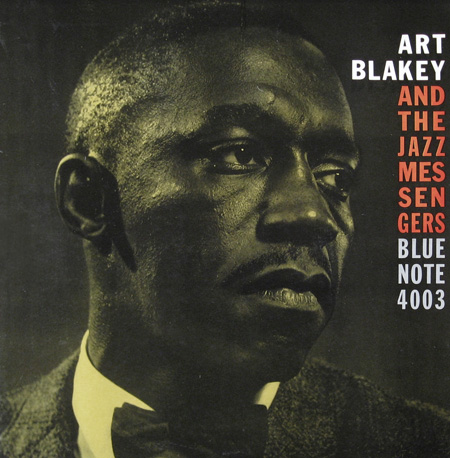
Back in Cardiff I was going through my collection of old LPs and found this track on a Blue Note collection. It’s standard written by Harold Arlen called Get Happy. I hadn’t listened to it for ages and I’d forgotten how great it is. It was recorded in 1953 by a six-piece band led by trombonist Jay Jay Johnson, with Clifford Brown (trumpet), Jimmy Heath (tenor saxophone), John Lewis (piano), Percy Heath (bass) and Kenny Clarke (drums). They’re all great musicians, and they make a wonderfully rich ensemble sound for a small band, but the star of the show is without doubt the great Clifford Brown , whose solo is absolutely sensational. Just listen to the way he plays the bridge on his first chorus. Superb!
Follow @telescoperArchive for the Jazz Category
Get Happy!
Posted in Jazz with tags Clifford Brown, Get Happy, J.J. Johnson, Jazz on August 8, 2016 by telescoperMinor Swing (for the National Day of Belgium)!
Posted in Jazz with tags Django Reinhardt, Jazz, Minor Swing on July 21, 2016 by telescoperNot far from the hotel in which I stayed during my visit to Ghent last week is a small but pleasant jazz bar called Minor Swing. I mentioned to some colleagues as we passed by the place that it was clearly named after the tune by Django Reinhardt (who was born in Belgium). In fact it was something of a signature tune for him. Anyway, Radio 3 reminded me this morning that today (21st July) is Belgian National Day so I thought I’d mark the occasion on this blog by posting a version of Minor Swing that demonstrates Django’s superlative gift for melodic improvisation, together with violinist Stephane Grappelli and the Quintet of the Hot Club of France.
Follow @telescoperDizzy Atmosphere
Posted in Jazz with tags Charlie Parker, Dizzy Atmosphere, Dizzy Gillespie, Rhythm Changes on July 6, 2016 by telescoperWhenever I’m in dire need of inspiration – which happens a lot these days – I usually turn to music. I found this not long ago and decided to share it here because it’s not just inspirational, but awe-inspiring. I don’t have any information about the date or location of this recording of Dizzy Atmosphere – except that it’s obviously live, and that it features the composer Dizzy Gillespie on trumpet after a great solo by the great Charlie Parker on alto saxophone. Bird is absolutely on fire in this performance! In case you’re interested this is yet another bebop standard that’s built on rhythm changes though it is in an unusual key (A♭) for such pieces. Anyway, never mind about that, just listen to Bird flying through this!
Follow @telescoper
Jazz and Physics
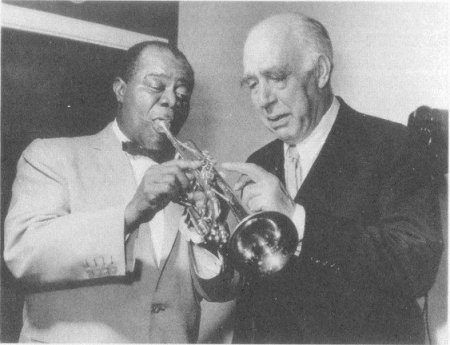
Posted in History, Jazz, The Universe and Stuff with tags Louis Armstrong, Niels Bohr on May 26, 2016 by telescoperNo time for a full post today, so I’ll just share this intriguing picture I found on the interwebs of two great figures from very different fields: Jazz trumpet legend Louis Armstrong and pioneering quantum physicist, Niels Bohr.

When I first saw this I assumed it had been photoshopped, but I’m reliably informed that the picture is genuine and that it was taken in Copenhagen in 1959. Other than that I know nothing of the circumstances in which it was taken. I’d love to hear from anyone who knows the full story!
Follow @telescoperBuddy DeFranco Plays Rhythm Changes
Posted in Jazz with tags Buddy DeFranco, clarinet, Jazz, Rhythm Changes on April 21, 2016 by telescoperThe late great Buddy DeFranco was the musician who finally convinced me that I’d never be any good at playing the clarinet, though I still make the occasional half-hearted attempt. He nevertheless remains a musical hero of mine, not least because he was one of the few people to play clarinet in a “modern” style. I found this transcription of one of his solos on Youtube a while ago and thought I’d share it here. Twelve choruses of rhythm changes at a brisk tempo provide the foundation for a great jazz musician who unleashes a flood of improvisation. Feel free to play along at home!
Follow @telescoperPanama
Posted in History, Jazz with tags Bunk Johnson, Jazz, New Orleans, Panama on April 4, 2016 by telescoperFor some reason today’s news made me think of this famous old record by Bunk Johnson.
Bunk Johnson was born in New Orleans way back in 1879 and he made his name playing trumpet in the very early days of jazz, including – if his own account can be believed – a stint with the legendary Buddy Bolden. He was regarded by many, including Louis Armstrong no less, as one of the top trumpeters in New Orleans in the period between 1905 and 1915. Jazz had begun with the marching bands that performed in New Orleans but then largely moved into the bordellos of Storyville, the biggest (legal) red light district in the history of the United States. When Storyville was closed down in 1917 most professional jazz musicians lost their only source of regular income. However, a few years later, in 1919, the United States Senate proposed the 18th Amendment to the Constitution which prohibited the manufacture, distribution and sale of alcohol for human consumption and ushered in the era of Prohibition. This turned Chicago into a bootlegger’s paradise and jazz musicians flocked there to perform in the numerous speakeasies. That’s why the great New Orleans Jazz records of the 1920s were all made in Chicago and it also caused the music to evolve in new directions. Bunk Johnson did not join the mass exodus to Chicago and his career faded into obscurity, ending entirely in 1931 when he had his front teeth knocked out in a brawl and could no longer play the trumpet.
However, in 1942, Bunk Johnson was rediscovered as a very old man by some young jazz fans who travelled to New Orleans and recorded him playing with a band of local musicians in the basement of a house courtesy of a new set of dentures. Despite the poor sound quality of the recording, the resulting tracks proved incredibly popular, ushering in the New Orleans Revival that began in the United States and then propagated across to Europe after the war to the extent that many revivalist bands even sedulously acquired the “recorded-in-a-garage” sound. Bunk Johnson passed away in 1947 but George Lewis, who plays clarinet on this track, carried the flag for “authentic” New Orleans jazz for many years after that, visiting Europe on many occasions. My Dad played the drums with him a few times..
P.S. I’ve always felt particularly sorry for Walter Decou, who played piano on the famous Bunk Johnson records of 1942, because apparently he was pounding away like a good ‘un but you can barely hear a note from him on any of them!
Follow @telescoper
All of Me – Billie Holiday & Lester Young
Posted in Jazz with tags All of Me, Billie Holiday, Jazz, Lester Young on March 8, 2016 by telescoperAfter an even more stressful day than usual I decided to have a quick look at Youtube before going home. That’s how I found this rare and priceless gem. It’s a wonderful performance of All of Me featuring one of the greatest combinations of musical talent in Jazz history, Billie Holiday and Lester Young, but it’s a discarded track that was never released on record. “Why would anyone discard such a masterpiece?”, I hear you ask. Well, that’s simply because it ran over the three minutes that could fit onto an old-style 78rpm disk. The reason it is too long is that there’s more than the usual ration of Lester Young’s tenor saxophone, in the form of a superb extended solo that is so beautiful it brought tears to my eyes. This is as perfect a performance as you could hope to hear, but it is brought back down to Earth at the end by the recording engineer whose only comment from the box when the exquisite music subsides is “It’s a bit long”…
Follow @telescoper
Uncompromising Expression
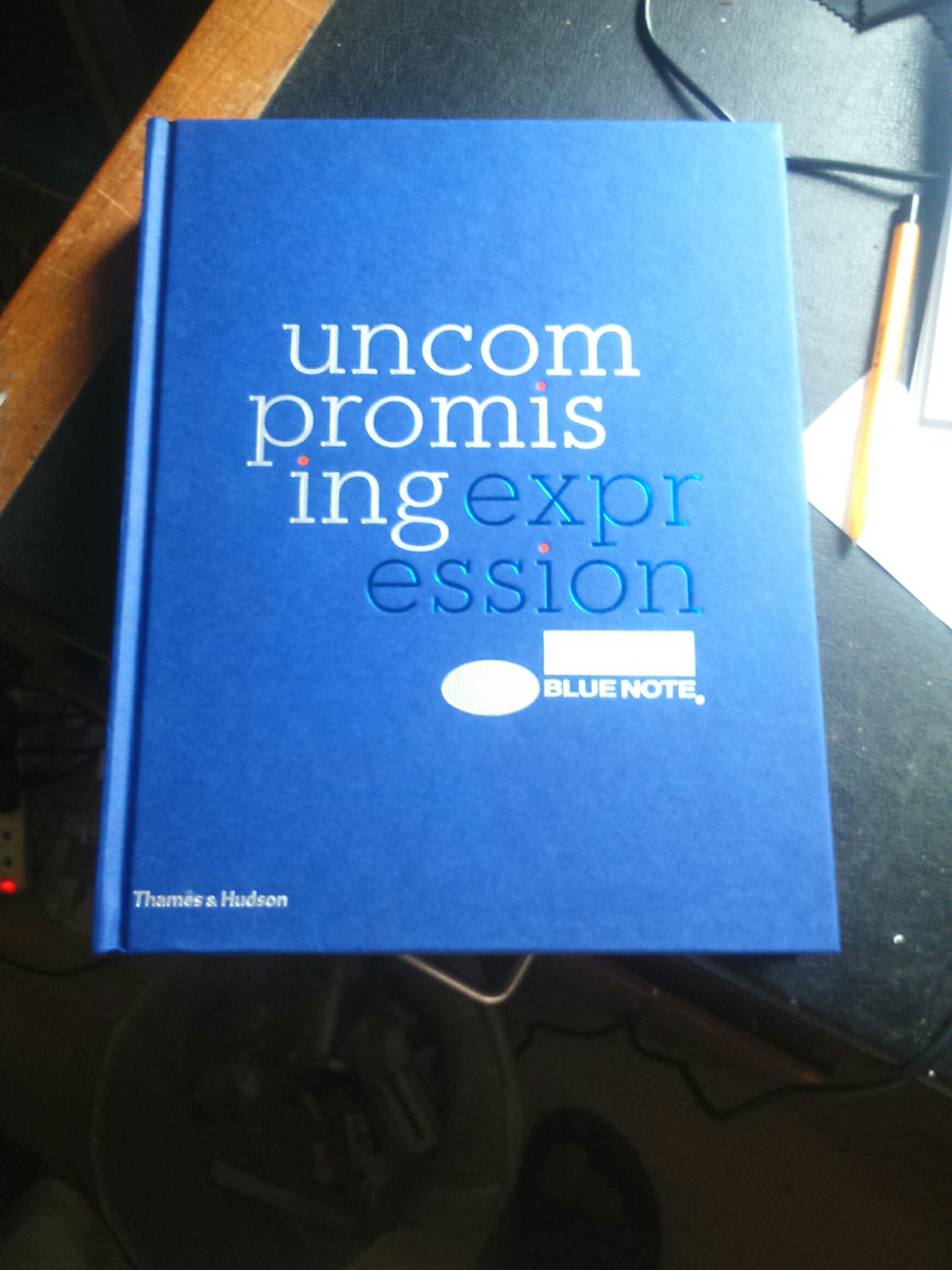
Posted in History, Jazz with tags Blue Note, Uncompromising Expression on February 21, 2016 by telescoperI don’t get much time for self-indulgence these days, but last week I treated myself to this book:
Written by Richard Havers, this is an excellent illustrated history of the legendary record label, Blue Note. Although primarily associated with post-war Jazz, Blue Note began with a number of classic recordings from the era of Sidney Bechet, Edmond Hall and Bunk Johnson.
I have only had time to dip into it so far, but what I have seen is superb, not only in terms of the text but also copious examples of the artwork that gave Blue Note albums their distinctive look.
Uncompromising Expression is a must- have for Jazz fans, although at just under £50 it’s not cheap. Fortunately I got a book token for Christmas!
Follow @telescoperJazz at the Pawnshop
Posted in Jazz with tags Arne Domneus, Bengt Hallberg, Egil Johansen, George Riedel, Jazz, Jazz at the Pawnshop on February 17, 2016 by telescoperSometime in the late Seventies I bought a vinyl LP called Jazz at the Pawnshop, which featured live performances by four veterans of the Swedish Jazz scene; Arne Domnerus (alto saxophone), Bengt Hallberg (piano), Egil Johansen (drums) and George Riedel on bass. Sadly, three of the four musicians involved are no longer with us; only George Riedel is still alive, but at least their music lives on.
The content was recorded in Stockholm over two days in December 1976 at a Jazz club on a site where a pawnshop once stood, hence the name. The album was reissued on CD in 1996 and then, just last year, somebody posted it on Youtube. That gives me an excuse to share my favourite track, which features the band not playing one of the classic bebop tunes on which they cut their teeth when they were young, but the Lil Hardin composition from a much earlier era Struttin’ with some Barbecue which was something of a vehicle for her husband, Louis Armstrong. Not, ‘Strittin’ by the way as it says on the Youtube link.
I loved this track from the moment I first heard it, from the intriguing out-of-tempo opening through a jaunty bossa nova passage, and evolving into an extended improvised exploration by Domnerus set against typically bebop-inspired patterns from the rhythm section. Modern jazz treatments of tunes from the classic era don’t always turn out well, but this one surely did. Enjoy!
Follow @telescoper
Fat Tuesday – Eh La Bas!
Posted in Jazz with tags Eh La Bas, Mardi Gras, New Orleans, Preservation Hall on February 9, 2016 by telescoperToday’s the day we call in England Shrove Tuesday. We’re apparently all supposed to get shriven by doing a penance before Lent . Another name for the occasion is Pancake Day, although I’m not sure what sort of pennance it is to be forced to eat pancakes.
Further afield the name for this day is a bit more glamorous. Mardi Gras, which I translated using my schoolboy French as Fat Tuesday, doesn’t make me think of pancakes but of carnivals. And being brought up in a house surrounded by Jazz, it makes me think of New Orleans and the wonderful marching bands that played not just during the Mardi Gras parades but at just about every occasion for which they could find an excuse, including funerals.
The Mardi Gras parades gave rise to many of the great tunes of New Orleans Jazz, many of them named after the streets through which the parade would travel, mainly in the famous French Quarter. Basin Street, South Rampart Street, and Bourbon Street are among the names redolent with history for Jazz fans and musicians around the world. I also remember a record by Humphrey Lyttelton‘s 1950s band called Fat Tuesday.
The New Orleans Mardi Gras has on recent occasions sometimes got a bit out of hand, and you probably wouldn’t want to take kids into the French Quarter for fear they would see things they shouldn’t. Personally, though, I’d love the chance to savour the atmosphere and watch the parades. Anyway, here’s an infectious little number performed for you by the inestimable Preservation Hall Jazz Band from New Orleans; the Preservation Hall is located in the French Quarter. It’s a traditional song with original lyrics in the local Creole Patois, but often also performed in standard French. The words are all about eating, which makes it somewhat relevant to today, although that’s only their surface meaning. You might recognize the tune from other songs that borrowed the theme, but this one is the Daddy! You don’t often hear it played with as strong a Caribbean influence on the rhythm as this version, and the excellent banjo solo is evocative of the Cajun music or Louisiana, but that blending of cultures and traditions is exactly what made New Orleans such an important place in musical history…
Follow @telescoper