Last week’s post about Vincent Price reminded me of the film that really established him as a movie actor, the classic film noir Laura, in which he played the parasitic boyfriend of the eponymous heroine. If you’ve never seen the film, you should because in my opinion it hasn’t dated at all even though it was made in 1944. A song with the same name written for the film in 1945 (after the filming was completed) became a popular hit at the time as well as a favourite for jazz musicians, spawning numerous cover versions including one by the great Charlie Parker. Those of you who associate Bird with jagged bebop tunes played at a frenetic pace might be surprised to hear his take on this romantic ballad, particularly as it involves him playing with strings. The Charlie Parker with Strings session recorded in 1950 received mixed reviews from the critics, primarily because many of the arrangements are a bit bland, but while I don’t like all these tracks, I do think Parker’s version of Laura is a gem in which he reveals a sensitive side to his music-making that isn’t often appreciated.
Follow @telescoperArchive for the Jazz Category
Laura
Posted in Film, Jazz with tags Charlie Parker, Charlie Parker with Strings, Film Noir, Laura on August 30, 2012 by telescoperAblution
Posted in Jazz with tags All the things you are, bebop, Jazz, Jerome Kern, Lee Konitz, Ronnie Ball on August 26, 2012 by telescoperI haven’t posted any jazzy bits for a while. I don’t know why. Anyway, I just found this track, called Ablution, by alto saxophonist Lee Konitz . Unless my ears deceive me the pianist on this track is Ronnie Ball (British, by the way) whose comping makes no attempt to disguise the fact that it is a variation on the famous Jerome Kern tune All The Things You Are, the unusual chords of which have made it a popular vehicle for jazz musicians to improvise on ever since it was written back in 1939. In the bebop era it was typical practice to base original compositions on top of the chord sequences of standard tunes, and this is a prime example although I don’t know in this case whether Lee Konitz managed to get away without paying composer’s royalties!
Follow @telescoper
You’re Driving Me Crazy
Posted in Jazz with tags Al Cohn, Billie Holliday, Lester Young, Marilyn Moore on August 16, 2012 by telescoperAt the end of a long, trying (and rather muggy) day what better than a bit of Cool Jazz from the West Coast of the US of A. This lovely track was recorded in 1957; it features singer Marilyn Moore, who clearly based her vocal style very closely on that of Billie Holiday, and an arrangement by tenor saxophonist Al Cohn who in turn based his style very closely on that of the great Lester Young. Come to think of it, Marilyn Moore and Al Cohn sound more like Billie Holliday and Lester Young than Billie Holliday and Lester Young ever managed to on any of the many great records they made together…
Follow @telescoperGrave Thoughts
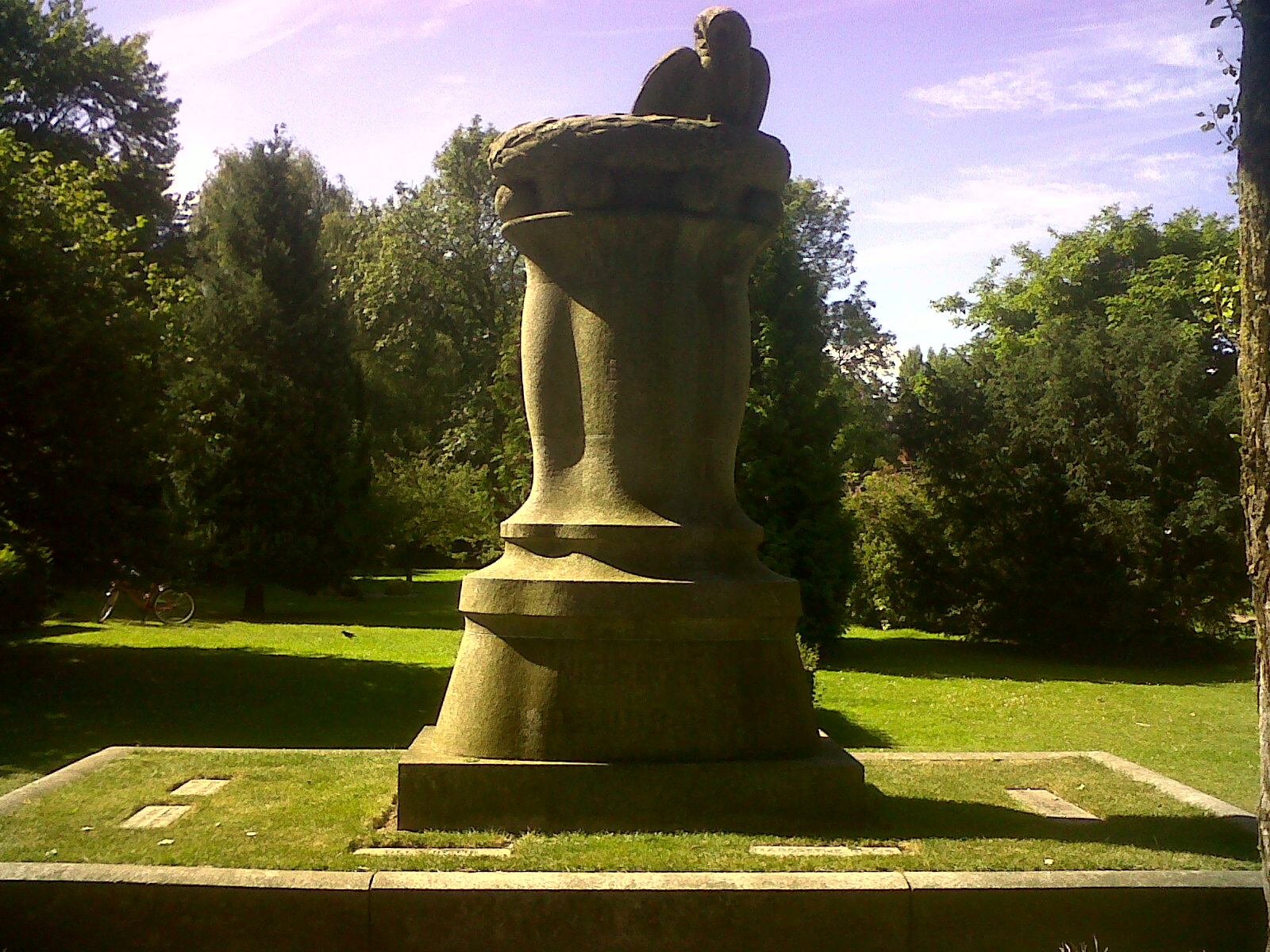
Posted in Biographical, History, Jazz, Literature with tags Assistens Kirkegard, Ben Webster, Copenhagen, Hans Christian Andersen, Kenny Drew, Niels Bohr on August 12, 2012 by telescoperIt being a lovely day in Copenhagen yesterday I decided to go for a long walk. My destination was the famous Assistens Kirkegård which is in the Nørrebro district of the city. You might think that was a rather morbid choice of place to go for a stroll in the sunshine, but actually it’s not that way at all. It’s actually a rather beautiful place, a very large green space criss-crossed by tree-lined paths. We British have a much more reserved attitude to cemeteries than the Danes seem to have, at least judging by yesterday; joggers and cyclists pass through Assistens Cemetery at regular intervals, and many people were having picnics or just sunbathing between the gravestones. And of course there were many tourists wandering around, myself included. I found this matter-of-fact attitude to the dead rather refreshing, actually.
Incidentally, I was also surprised to see a number of Jewish burials among the Christian ones. I don’t know if this happens in British graveyards.
Part of the attraction of Assistens Kirkegård – the name derives from the fact that it was originally an auxiliary burial place, outside the main city, designed to take some of the pressure off the smaller cemeteries in the inner areas – is the large number of famous people buried there. The cemetery is extremely large (about 25 hectares), and the maps don’t show the locations of all the famous people laid to rest there, but I did find quite a few.
Here for example is the memorial to one of the most famous Danes of all, Hans Christian Andersen

Going by the number of signposts pointing to it, this must be one of the most popular sites for visitors to the cemetery, along with the grave of the philosopher Søren Kierkegaard. One can also quite easily locate the memorial which marks the last resting place of Niels Bohr and various other members of his family:
But it’s not only Danes that are buried here. There’s a corner of one plot occupied by a number of famous American Jazz musicians, including pianist Kenny Drew and, most famously of all, tenor saxophonist Ben Webster whose gravestone is rather small, but clearly very well tended, no doubt by a Danish jazz lover:

Unfortunately, I was unable to locate one of the graves I wanted to find, that of the great Heldentenor Lauritz Melchior. I was surprised to find his name was absent from the main index. I know he was cremated and his ashes buried there, and I even found a picture of his memorial on the net, but the cemetery is so large that without further clues I couldn’t find it. I’ll have to go back on a subsequent visit after doing a bit more research.
It’s very interesting that some of the smaller graves are extremely well-tended whereas many of the more opulent memorials are in a state of disrepair. My ambition is to be forgotten as quickly as possible after my death so the idea of anyone erecting some grandiose marble monument on my behalf fills me with horror, but I have to say I do find graveyards are strangely comforting places. Rich and poor, clever and stupid, ugly and beautiful; death comes to us all in the end. At least it’s very democratic.
And after about three hours strolling around in the cool shade of the trees in Assistens Kirkegård the thought did cross my mind there still seems to be plenty of room…
Follow @telescoperWavy Gravy
Posted in Jazz with tags Blue Note, gravitational waves, Jazz, Kenny Burrell, Midnight Blue, Stanley Turrentine on July 31, 2012 by telescoperI was looking through my collection of old CDs last night and saw a track on Kenny Burrell’s classic album Midnight Blue with the title Wavy Gravy. I hadn’t noticed the name before, but thought it might do as a theme tune for my Cardiff colleagues who work on gravy waves gravitational waves…
Anyway, the album was recorded at the Van Gelder Studio, Englewood Cliffs, New Jersey on April 06-07, 1963, and originally released on Blue Note (4123). The complete personnel listing is: Kenny Burrell (guitar); Stanley Turrentine (tenor saxophone); Major Holley, Jr. (bass); Bill English (drums); Ray Barretto (congas).
Follow @telescoperLonesome Waterloo Sunset Blues
Posted in Jazz, Music with tags Johnny Dodds, Lonesome Blues, Louis Armstrong, The Kinks, Waterloo Sunset on July 27, 2012 by telescoperJust saw the song Waterloo Sunset by the popular beat combo The Kinks in a list of the ten best songs about London in this week’s New Statesman. I wonder if anyone else has noticed the remarkable resemblance between that tune and the classic Lonesome Blues recorded by Louis Armstrong and the Hot Five in 1926, with the main theme played by legendary clarinettist Johnny Dodds:
I wonder if, by any chance, they might be related?
Follow @telescoperSummer Time
Posted in Jazz with tags Sidney Bechet, Summertime on July 22, 2012 by telescoperWell, summer seems to have made it to Cardiff – and elsewhere in the UK judging by the news – so what better excuse to post this solo version of George Gershwin’s classic Summertime by the great Sidney Bechet. This isn’t the classic Blue Note recording of 1939 I have posted already but a live version which I think is even better. Enjoy that unmistakeably gorgeous tone on the soprano saxophone…
Follow @telescoper

