With the passing, on Sunday, of Ahmad Jamal, at the age of 92, another legendary Jazz musician has left us. He was a consistently inventive pianist, of great elegance, and a wonderful knack of deconstructing a tune into its component parts before reassembling it into something fresh. His formative years were a time when many keyboard players emphasized virtuosic brilliance, but Jamal’s approach was relaxed and spare. He was great letting his story develop gradually but very enjoyably through a series of riffs over a compelling rhythmic foundation. A perfect example is this track, Poinciana, from a hugely popular album Live at the Pershing: But Not For Me, recorded in 1958 with Israel Crosby on bass and Vernel Fournier on drums. Ahmad Jamal is no longer with us, but this groove will last forever!
R.I.P. Ahmad Jamal (born Frederick Russell Jones, 1930-2023).
When my father passed away in 2007, the main music music played at his funeral was the hymn or spiritual (and of course Jazz standard) Just a Closer Walk with Thee. It’s a lovely old traditional tune that often plays a central role in New Orleans style funerals and is a melody that, at least for me, has a deep association with loss and bereavement. The recording that was played on that occasion was this one, made at the same session as the track I posted a few days ago, featuring the same personnel (including my Dad on the drums), but with vocals by a fine Jazz and Blues singer by the name of Annie Jenkins.
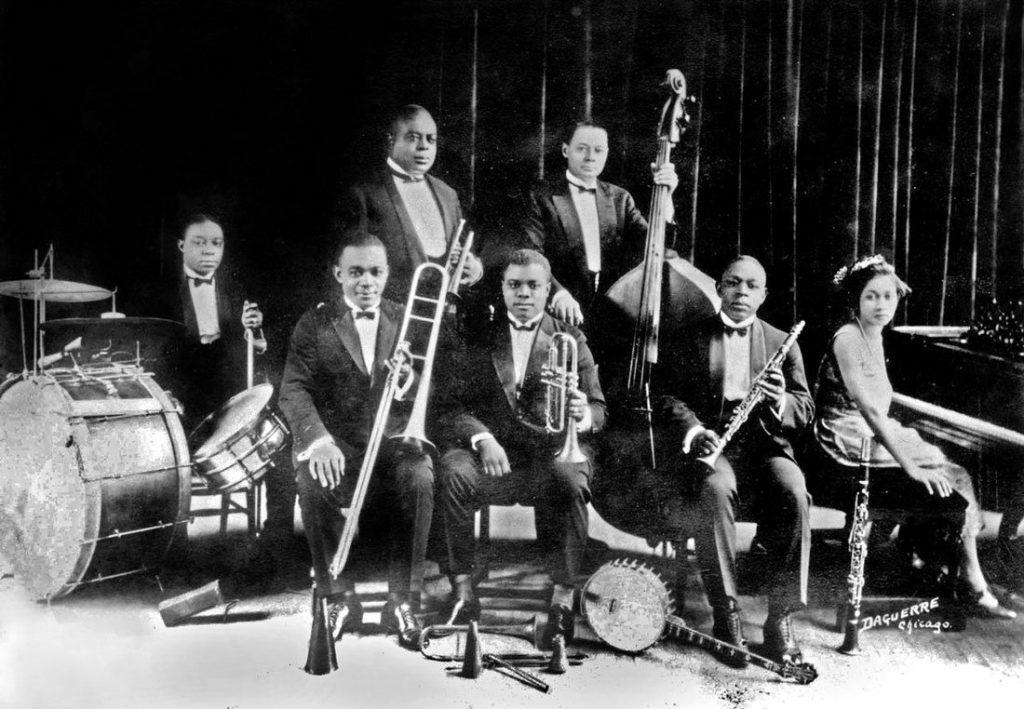
King Oliver’s Creole Jazz Band vintage 1923. From the left: Warren “Baby” Dodds (drums); Honore Dutrey (seated front, trombone); Joe “King” Oliver (standing rear, cornet); Louis Armstrong (seated front, cornet); Bill Johnson (standing rear, string bass and banjo); Johnny Dodds (seated front, clarinet); and Lil Hardin (piano)
I’ve been looking forward to this day because it marks an important jazz centenary. Or at least I think it does. There’s some contradictory evidence about whether it was April 5th 1923 or April 6th, or maybe both, when King Oliver‘s Creole Jazz Band did its first ever recording session at the Gennett studios in Richmond, Virginia. They recorded 20 sides in that session, which may well have involved two days with a break in between or working through the night.
These dates represent a remarkable occasion not only because King Oliver’s band was really the first jazz Supergroup, but also because it had been joined just a few months earlier by a young cornet player by the name of Louis Armstrong. This session therefore represent the first examples of Louis Armstrong ever heard on record.
It is somewhat surprising that this historic session happened at the Gennett studios. The band was based on Chicago, Illinois, and the studios were in Richmond, Virginia, so it required a long road trip to get there. Moreover the studio building wasn’t exactly in a prime location, as it was right next to a railroad line:
Gennett Recording Studios, Richmond Virginia (Picture Credit here)
Musicians had to time their recordings so as to avoid the noise from passing trains. Still, records only lasted about 3 minutes in those days so presumably weren’t so frequent as to make it difficult to fit in a take between two of them! Recording techniques were rather primitive in those days though, and the sound quality that emerged isn’t great.
The lineup for the band is shown in the picture at the top of this page. It’s interesting to note that four of these musicians (Armstrong, Hardin, and the Dodds brothers) were to feature regularly from 1925 onwards in the classic Hot Fives and Hot Sevens. King Oliver’s band, however, had style that was very different from these later records, with a much greater emphasis on polyphony, much more complex arrangements, and much less emphasis on solos. Also, King Oliver’s band played to live audiences on a regular basis, but the Hot Fives and Hot Seven only ever performed as such in recording studios.
As far as I understand how this band worked, King Oliver made the arrangements. I don’t think they used full written scores, but tended to play from wonderfully intricate “head arrangements” worked out beforehand, with ensemble passages, gaps for breaks and solos, and King Oliver introducing the (usually very catchy themes). Armstrong and Johnny Dodds improvised a decorative counterpoint, and Honore Dutrey added harmonic breadth to the ensemble. This must have been a great learning experience for the young Louis Armstrong, has he had to develop a great ear for what was going on around him to play like this. I gather that Louis Armstrong often tended to play very loud so he was kept well in the background in these early Gennett sessions, but such a prodigious talent was never going to play second fiddle for long and in later sessions he effectively duets with King Oliver and swapped leads with him freely and completely intuitively, producing a sound that was entirely unique. I am always astonished by how much is going on in these old records, even if you can’t hear it all very well!
I’ve mentioned before that, over time, this classic type of polyphonic Jazz – derived from its New Orleans roots – gradually morphed into musical form dominated by much simpler arrangements and a succession of virtuoso solos. This change was also reflected in the differing fortunes of Louis Armstrong and King Oliver. The former went on to become an international celebrity, while the latter lost all his savings when his bank went bust during the Wall Street Crash and ended his life working as a janitor.
As well as Gennett, this band recorded with other labels in 1923 including Okeh and Columbia. Sadly however they split up at the end of 1923 over disagreements about a possible tour in 1924. Only about 40 sides were ever recorded King Oliver’s Creole Jazz Band. Many of them are absolutely marvelous.
This is the first track recorded by the band in April 1923. It’s called Just Gone. It’s a scratchy old record, with a rather compressed acoustic, so it’s like putting your next to one end of a tunnel leading back a hundred years, but it’s a good example of the Creole Jazz Band’s style. Joe Oliver’s lead cornet clearly influenced Louis Armstrong’s later style. You have to listen hard to hear Satchmo in the background on this track, but it’s worth the effort. You’re listening to a piece of music history, and a wonderful piece at that.
The newly enhanced version of this blog, improved at great expense, enables me to upload audio files. I thought I’d check out that facility by sharing this rendition of the tune Petite Fleur which was written in 1952 by the great Sidney Bechet but made famous by Monty Sunshine by a recording with Chris Barber’s band in 1959. The version here was performed in the 1990s in a little recording studio in Gateshead. Can you identify the clarinet player? (Hints: (i) it is not Sidney Bechet; (ii) nor is it Monty Sunshine; and (iii) it was my Dad playing the drums…)
It’s a very sad coincidence that just the day after I had reason to blog about the death of Wally Fawkes, I have to mention the death of another superb jazz musician also associated with the clarinet, Tony Coe, who has passed away at the age of 88. In a prolific career and leader and sideman, Tony Coe also played with Humphrey Lyttelton’s band (from 1957-61) but he is best known for his work in more modern forms of jazz. He was known for the virtuosity and originality of his style, not only on clarinet but on tenor, alto and soprano saxophone. I read yesterday that he was also the first music teacher of Tim Garland who, on his Facebook page, mentions that he found Coe’s tenor playing rather reminiscent of that of the great Paul Gonsalves, which I’d never thought of before but is true.
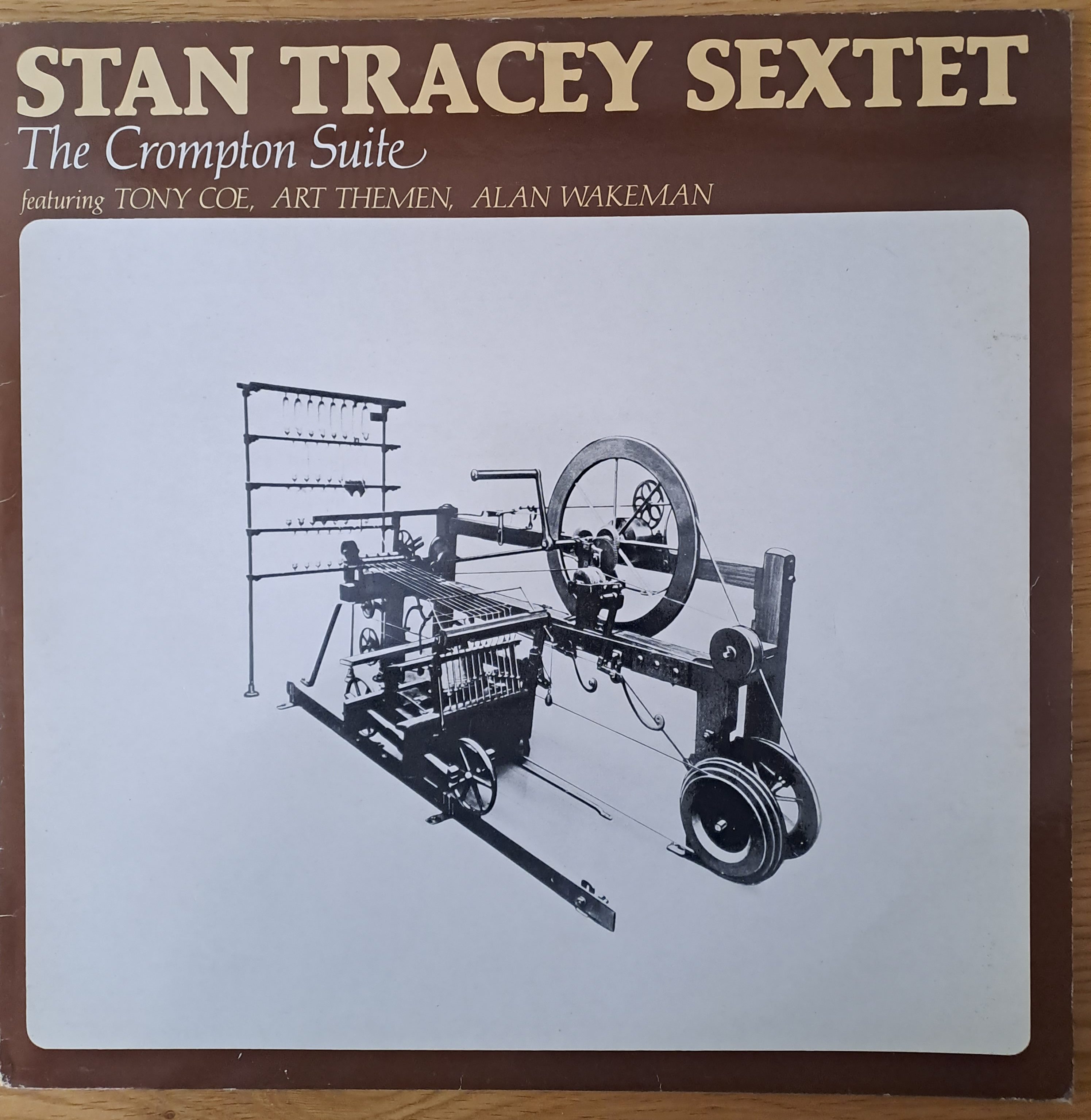
My first encounter with Tony Coe was on an album I bought round about 1981 called The Crompton Suite by the Stan Tracey Sextet. It’s a rare find on vinyl these days but I still have my copy:
I haven’t heard this for ages because I no longer have a turntable and as far as I’m aware it hasn’t been re-released on any digital format, but I remember it very well and would have picked a track from this album as a tribute if it were on YouTube but instead here’s a lovely recording he made just a couple of years ago with John Horler on piano, the title track of the very nice album Dancing in the Dark:
I just heard today – via the latest Private Eye – of the passing of Wally Fawkes on 1st March at the age of 98. His name won’t be familiar to many of the readers of this blog, but it is a name that I grew up with in a jazz-loving family. Wally Fawkes played clarinet with Humphrey Lyttelton’s band in its heyday in the late 40s and early 50s and was the last surviving member of that group. That band may have had a rhythm section that always sounded like its members were wearing diving boots, but the front line of Humphrey Lyttelton (trumpet), Wally Fawkes (clarinet) and Keith Christie (trombone) was truly outstanding.
Wally Fawkes wasn’t just a musician, though. He was also the acclaimed cartoonist known by the pseudonym Trog, and contributed a variety of cartoons to a variety of magazines and newspapers, including the long-running comic strip Flook. He was also an occasional contributor to Private Eye. He had to give up drawing in 2005 because of failing eyesight, after 62 years in the business.
I’ve already drawn attention to Wally Fawke’s excellence as a clarinet soloist with the Lyttelton band on The Onions at the famous 1954 Festival Hall Concert so it seems apt to pay tribute to his skills as both a cartoonist and a musician by returning to that concert for him playing his own composition Trog’s Blues. Wally Fawkes was a huge admirer of Sidney Bechet, and this tune clearly pays homage to Bechet’s monumental Blue Horizon (which I think is the finest instrumental blues ever recorded) but while Bechet’s blues performances were hewn from granite, Wally’s were wrought from finest porcelain.
I got home this evening to find the sad news that legendary saxophonist Wayne Shorter has passed away at the age of 89. I only got to hear him live once, many moons ago, when he was part of a band led by drummer Jack de Johnette (I think that was in the early 1990s) but I have a big collection of CDs of him in various settings, including with Miles Davis, The Jazz Messengers, and, of course, Weather Report. As a tribute I feel it’s appropriate to post a great record he made as leader.
Speak No Evilwas recorded in 1964 and released as a Blue Note LP in 1966. It features a superb band, including Freddie Hubbard (tpt), Herbie Hancock (p), Ron Carter (b) and Elvin Jones (d) alongside Shorter himself on tenor saxophone. It’s one of the must-have jazz albums, and it demonstrates Shorter’s flair for composition as well as improvisation. In both respects his approach to this album is very different from that he took just a few years earlier with Art Blakey’s Jazz Messengers. Standout tracks on this album include the suave yet unsettling Dance Cadaverous, the brooding Fee-fi-fo-fum, and the curiously agitated Witch Hunt.
Every piece on this album was composed by Shorter and as a player he revels in the ambiguous harmonies he created alongside the melodies. Although his style is clearly influenced by Sonny Rollins and John Coltrane, his tone is unlike either of these other giants, and Shorter expresses his individuality through varying emphasis producing asymmetric phrases. His playing is very quick-witted, full of abrupt changes of mood and dashes of fierce humour. A good example is Infant Eyes, a theme made up of three 9-bar phrases, played at a leisurely pace, on which Shorter’s lines impose a sense of determined exploration when many other soloists would have dawdled.
Anyway, don’t take my word for it. You can listen to the full album as a playlist on Youtube. The track order is: Witch Hunt, Fee-Fi-Fo-Fum, Dance Cadaverous, Speak No Evil, Infant Eyes and Wild Flower.
Today is Shrove Tuesday, Pancake Day, and Mardi Gras, which gives me three excuses to post an authentic New Orleans parade tune from way back in 1927.
Jazz began with the marching bands that performed in New Orleans but then largely moved into the bordellos of Storyville, the biggest (legal) red light district in the history of the United States. When Storyville was closed down in 1917 as a threat to the health of the US Navy most professional jazz musicians lost their only source of regular income. Fortunately the very lawmakers who condemned jazz for its association with vice and crime soon passed a law that unwittingly ensured the music’s survival, proposing the 18th Amendment to the Constitution of the United States, passed in 1919, which prohibited the manufacture, distribution and sale of alcohol for human consumption. This was soon followed by the Volstead Act, which gave federal government the powers to enforce the 18th amendment. This ushered in the era of Prohibition, which turned Chicago into a bootlegger’s paradise almost overnight and jazz musicians flocked there to perform in the numerous speakeasies. That’s why so many of the great New Orleans Jazz records of the 1920s were actually made in Chicago.
Although the exodus was substantial, not all Jazz musicians left New Orleans. Many stayed there and kept the roots of the music going while it branched out in Chicago and, later, New York. Most of the bands that stayed kept going through the depression but never really achieved great commercial success until the traditional Jazz revival of the 1940s and 1950s. This example is a record produced by the Victor Record Company who sent a recording unit to New Orleans in 1927 to record some of the musicians who had stayed behind, many of them still playing in the marching band tradition of Buddy Bolden.
The title is To-Wa-Bac-A-Wa. I don’t know what it means but it’s an old French creole version of a tune that has subsequently reappeared many times in different forms with different names, most notably Bucket’s Got A Hole In it. The band is Louis Dumaine’s Jazzola Eight. Besides the lead cornet of Louis Dumaine, who lived from 1889 to 1949, it’s worth mentioning the clarinet style of Willie Joseph, which is heavily influenced by that of the great Johnny Dodds.
Anyway, it’s the kind of jaunty march-like number that’s perfect as a Mardi Gras parade tune and it always puts a spring in my step every time I hear it! There are also some old photographs of Mardi Gras parades to get you in the mood.
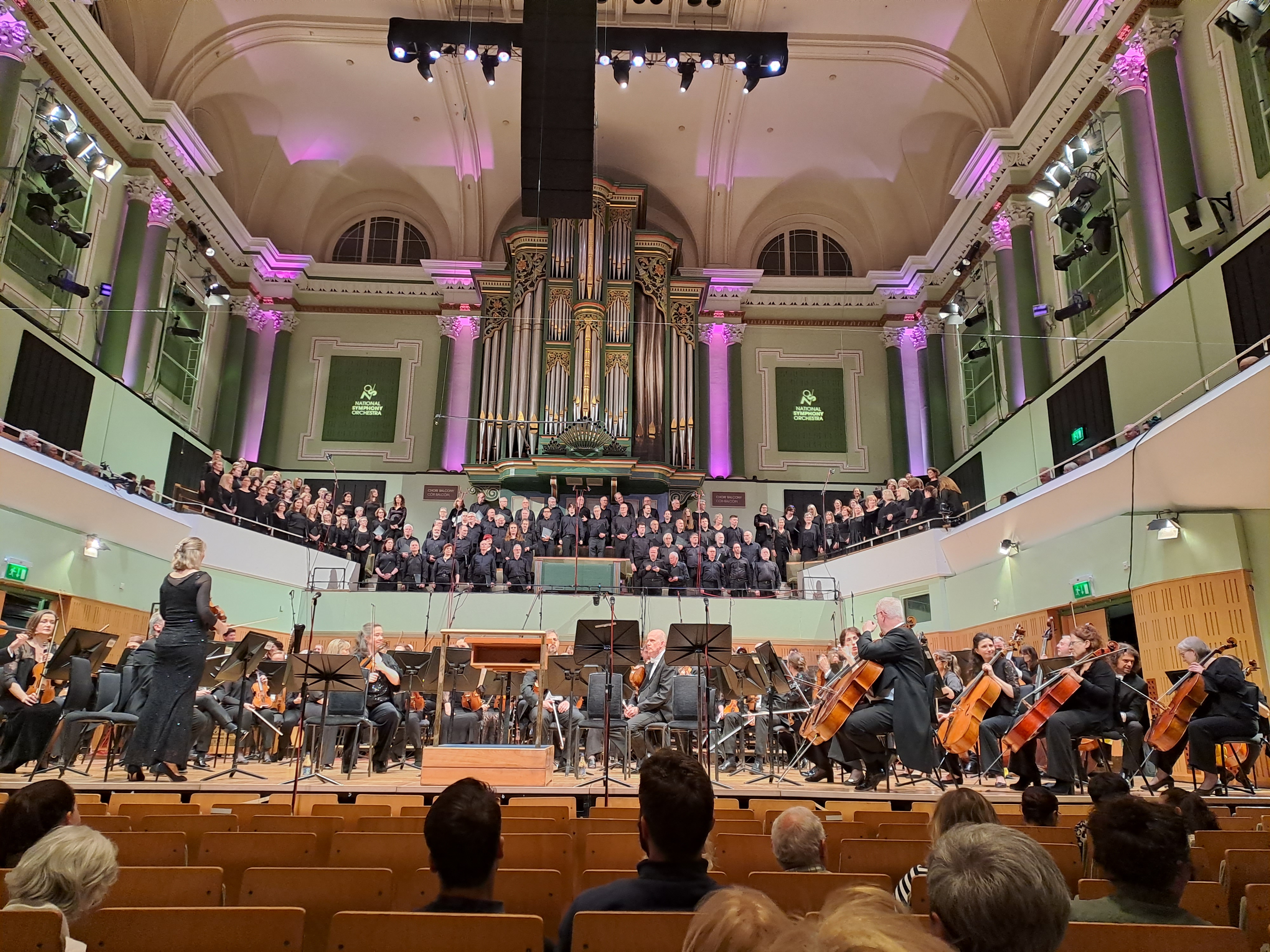
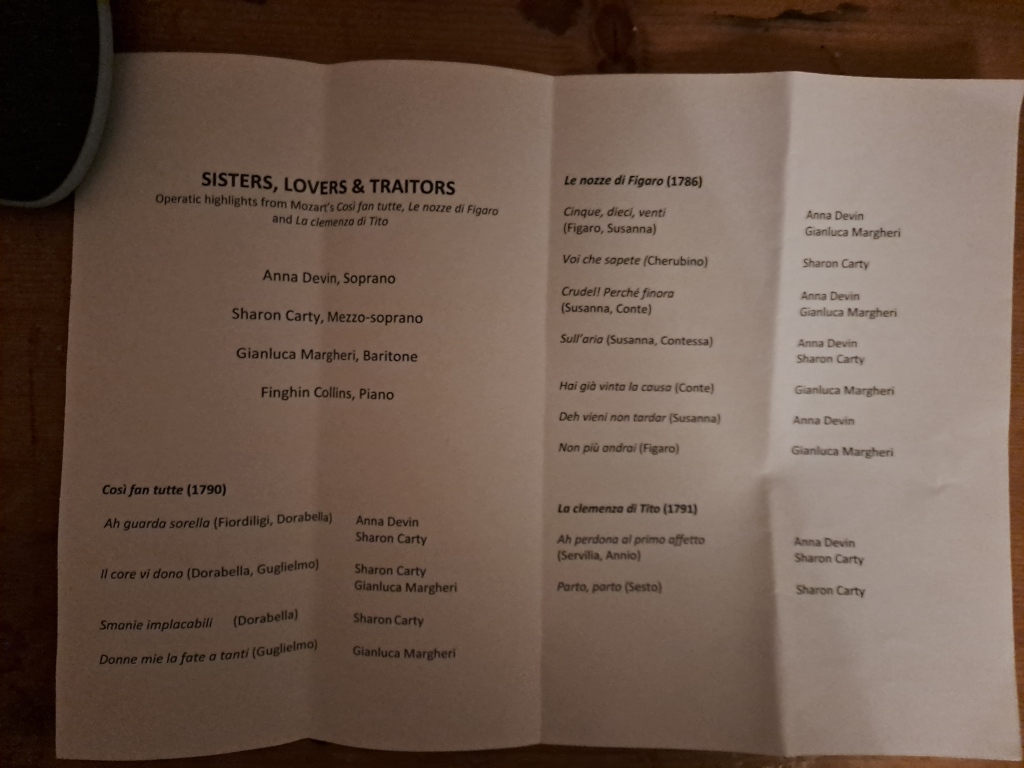
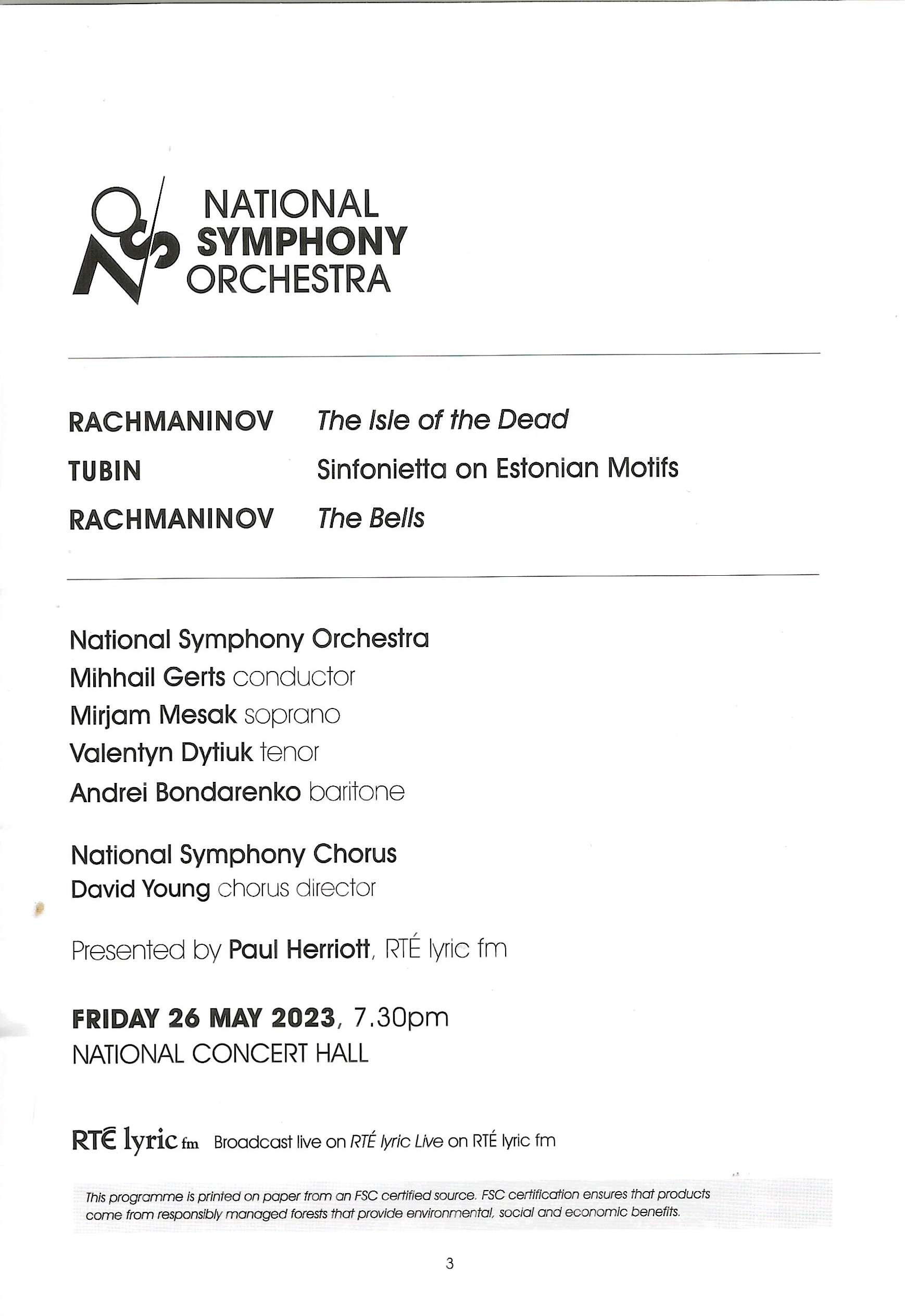
Last night’s concert by the National Symphony Orchestra at the National Concert Hall in Dublin was one that I’d been looking forward to for a long time. It didn’t disappoint! Congratulations to the National Symphony for yet another excellent concert, this time under the direction of guest conductor Case Scaglione.
The first half of the programme consisted of The Unanswered Question by Charles Ives and Beethoven’s Piano Concerto No. 4 with soloist Federico Colli. That’s an interesting juxtaposition, made even more interesting by the Beethoven piece was played directly after the Ives without a break for applause. I wondered what was up when Case Scaglione walked on stage with Federico Colli who took his seat at the piano at the start of the concert. There is no piano part in The Unanswered Question, so Colli sat quietly until the end of that piece and then went straight into the opening piano statement of the Beethoven. I wasn’t expecting this before the performance but it worked very well. The only problem is that I didn’t get the chance to applaud at the end of The Unanswered Question.
The Unanswered Question is one of my favourite works by Charles Ives (along with Three Places in New England), a composer whom I admire greatly. I wrote a piece about him some years ago, actually. The Unanswered Question, was completed in 1908 (although it was revised later) and is subtitled “A Cosmic Landscape”. It’s a sort of meditation on the philosophical problem of existence. It comprises three different voices: muted strings playing notes from a G-Major triad (a rather “churchy” key, giving the flavour of a simple hymn). Then, played (in this performance) from the balcony behind the conductor, a solo trumpet poses the Question: a five note figure that is repeated with almost imperceptible variations several times during the work. The reply to the Question comes from the woodwinds, whose dissonant response is at first plaintive but then increasingly agitated and frustrated. Then the Question comes again without an answer, but the strings carry on quietly in G Major until everything goes quiet.
The Piano Concerto No. 4 by Ludwig van Beethoven is in G Major, so there is a continuity between the two pieces in terms of tonality, although of course the musical language is very different. It was composed in 1805/6, a hundred years before the Ives. It’s an audacious piece right from the start as it opens with unaccompanied piano. The second movement is a kind of dialogue between the orchestra and the piano, which at times sounds more like an argument as the orchestra makes a series of rather harsh statements with somewhat conciliatory responses from the piano. The last movement is a more conventional and jovial Rondo, by which time the solo trumpeter from the Ives piece had found her way back to the stage from the balcony. I’ve heard this movement several times played on its own on the radio.
Federico Colli cut a dashing figure in a grey suit and waistcoat with a high collar and a voluminous white cravat. He was well up to the demands of the piece, playing very expressively, tenderly at times and with virtuosic brilliance when called for.
After the wine break we returned for the majestic Symphony No. 1 by Jean Sibelius. This is one of the great symphonies and another favourite of mine – I have several different recordings of it and have heard it on the radio many times – but I had never heard it performed live in person before last night. The First Movement (initially Andante) opens with a theme played by solo clarinet. It then moves into allegro energico which was played very briskly in this performance (in contrast to some famous recordings which slow it down). The motif played by the clarinet at the start permeates the whole work, returning in different guises and endowing the composition with a strong sense of unity. It’s all shot through with great romantic tunes and has wonderful dynamics. In short, it’s a masterpiece. Not bad for a First Symphony!
I’ve always been a not-so-secret admirer of American songwriter and record producer Burt Bacharach, but when someone told me the other day that there’s an album called Blue Note Plays Burt Bacharach I assumed it was a wind up because Blue Note Records has for many years been an uncompromising voice at the cutting edge of modern jazz rather than the lighter and more popular form of music exemplified my Mr B.
There’s no reason why two forms of excellence can’t exist together, however, and the album is definitely real and is a very nice compilation of Bacharach numbers from Blue Note albums featuring various musicians over the years. Here’s an example featuring Stanley Turrentine on tenor sax, with McCoy Tyner on piano, Bob Cranshaw on bass and Micky Roker on drums. The tune is What The World Needs Now Is Love. Doesn’t it just?
The views presented here are personal and not necessarily those of my employer (or anyone else for that matter).
Feel free to comment on any of the posts on this blog but comments may be moderated; anonymous comments and any considered by me to be vexatious and/or abusive and/or defamatory will not be accepted. I do not necessarily endorse, support, sanction, encourage, verify or agree with the opinions or statements of any information or other content in the comments on this site and do not in any way guarantee their accuracy or reliability.