The song Mad about the Boy was written by Noel Coward and published in 1932. It’s a song about an infatuation with a movie star and has generally been performed by female singers, although it was apparently inspired by Coward’s own crush on Douglas Fairbanks Jnr (which wasn’t reciprocated). The song became popular again in 1992 when a version recorded by Dinah Washington was used in a famous Levi commercial. . I never liked Noel Coward’s own recording – with him singing in a curious falsetto – very much at all, although I suppose it is authentic to what Coward was writing about. For a long time my favourite version was Dinah Washington’s but recently I came across this version, which has now, for me, eclipsed that one.
Blossom Dearie was a very underrated singer and pianist. Her voice – very high and girlish – was well suited to the whimsical songs she seemed to like to sing, but it meant that she wasn’t taken as seriously as a singer as she might have been. The lack of appreciation of her singing also extended to her piano playing, which was consistently excellent and innovative. No less a pianist than the great Bill Evans was a huge admirer of her musicianship, and he even attributed his use of stacked fourths in the left hand as inspired by Blossom Dearie. Other reasons to like this recording are that it was made live at Ronnie Scott’s Club in London and she goes straight into a verse that’s missed in many versions, probably because it uses the word “gay”. I love the way the accompaniment changes the mood each time she repeats the verses.
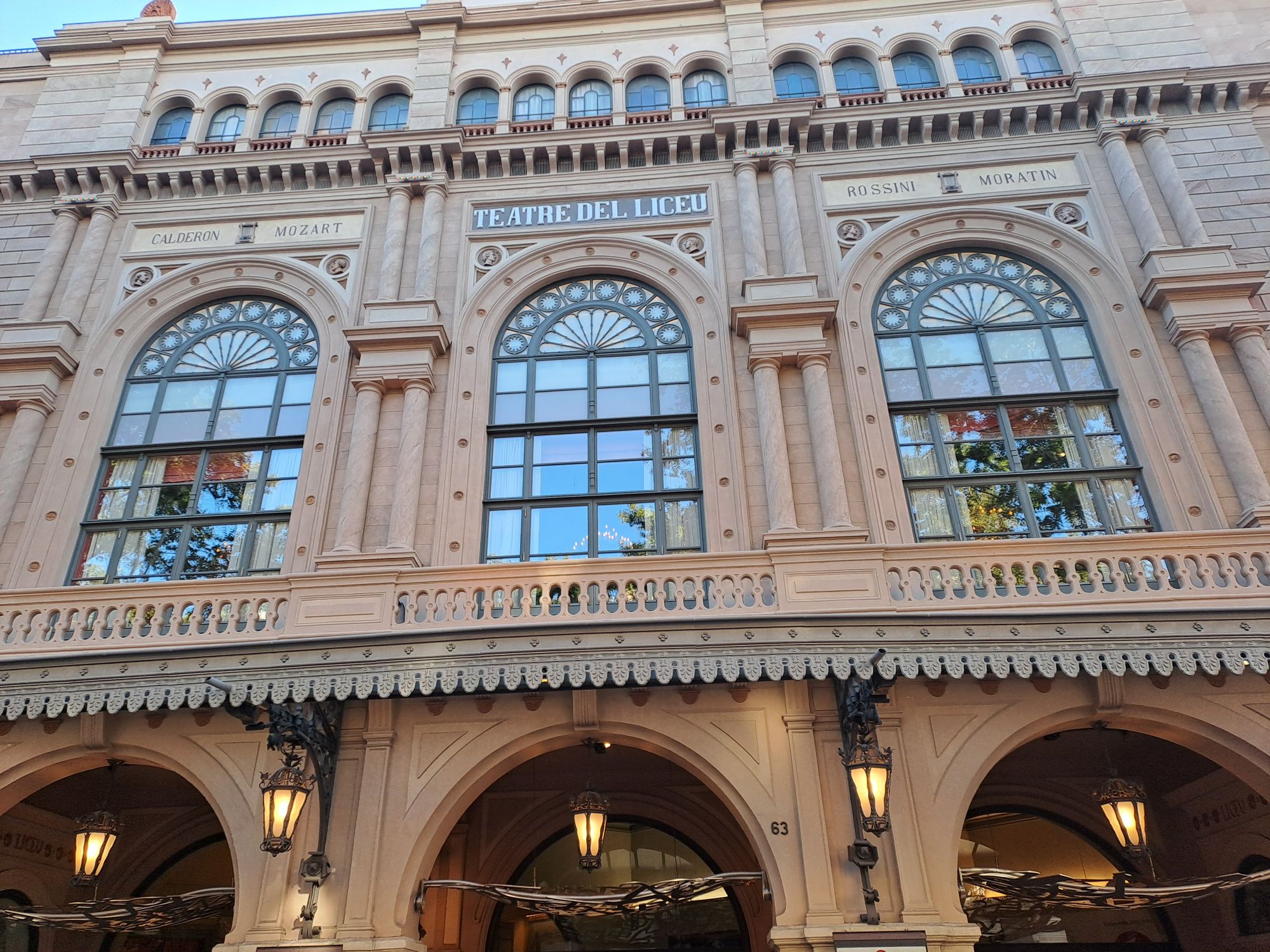
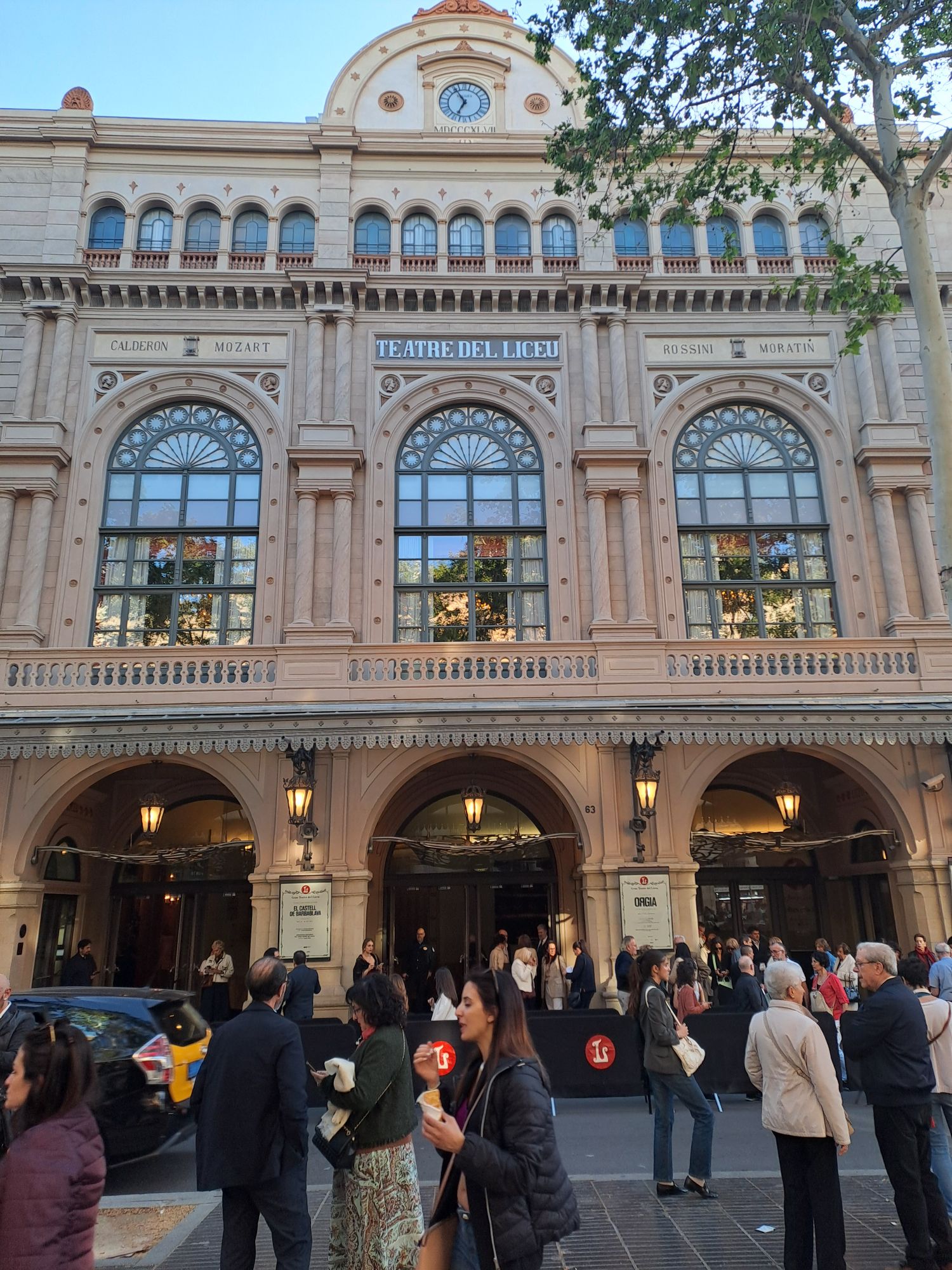
I was thinking last weekend that in, all the time I’ve spent in Barcelona this year, and all the times I’ve travelled through the Metro station called Liceu, I’ve never been inside the Gran Teatre del Liceu. I decided to remedy that by booking a ticket to see last night’s performance of Bluebeard’s Castle, a one-act Opera by Béla Bartók. The theatre is actually on La Rambla, and I had to dodge through the hordes of tourists to get there, but it’s an easy walk from my apartment.
El Liceu is indeed very beautiful inside and deserves its reputation as one of the world’s finest opera houses. The main hall is about the same size as that of the Royal Opera House in Covent Garden, with a seating capacity of over 2,000, and it does have a similar decor, with red and gold everywhere. When I booked my ticket (on Monday) there were plenty of seats available to choose from, so I wondered what the attendance would be like. As it turned out, it wasn’t quite full but there was a good crowd in.
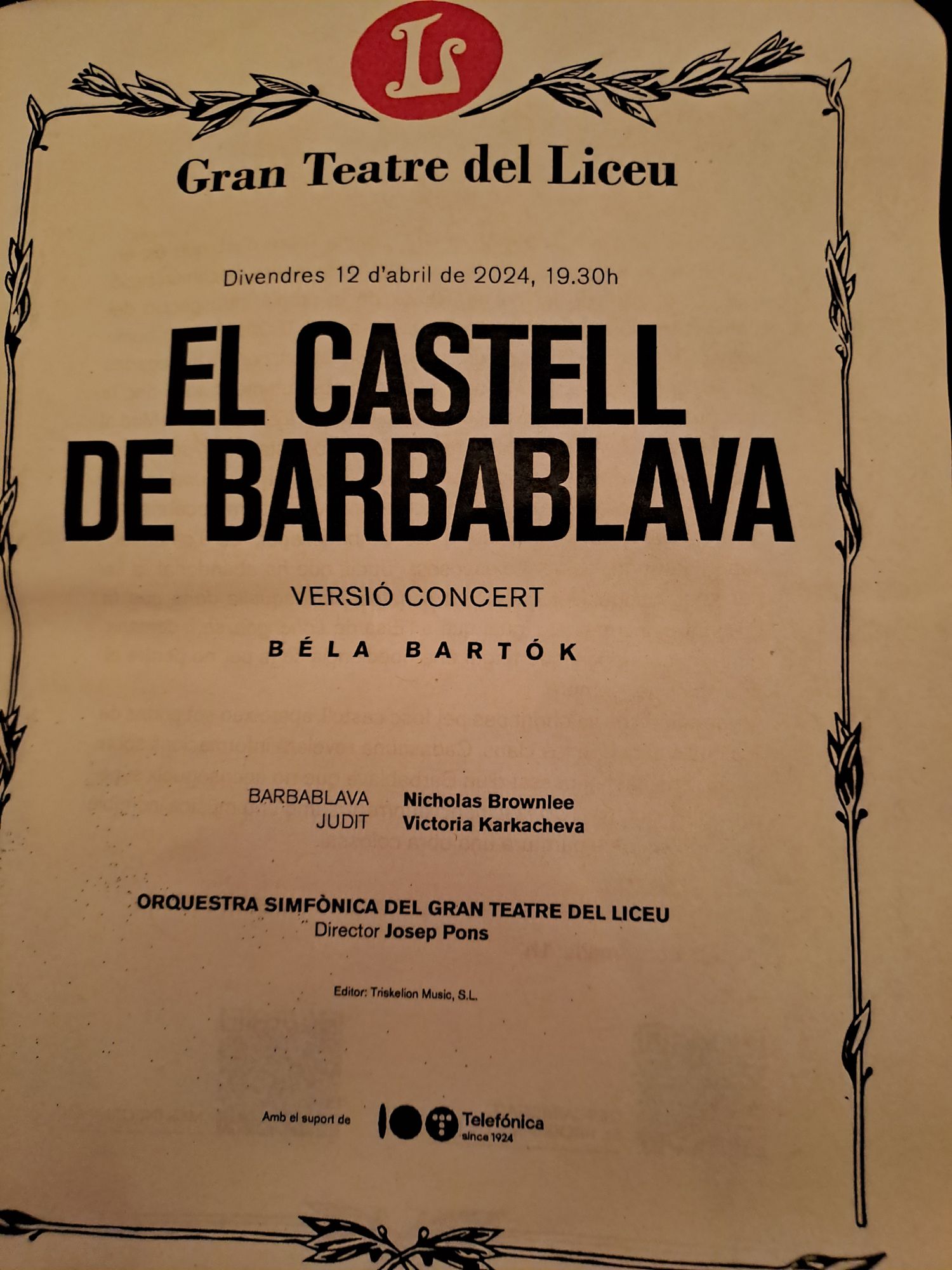
I have seen Bluebeard’s Castle a couple of times before, but it surprises me that there are no old reviews in my back catalogue on this blog. From that observation I deduce that both times I saw it were before 2008, which is when I started blogging. I do think it’s a masterpiece, however, which is why I jumped at the chance to see and hear it again. Last night’s was a concert performance, i.e. without staging, which works well with this Opera as there are only two principals and it sometimes it’s good to leave a lot to the listener’s imagination. The performance was in the original Hungarian language, with surtitles provided in Catalan, Spanish and English.
The Opera is based on a French folk legend of Bluebeard, a murderous character foreshadowing Jack the Ripper, and Judith, who has for some reason fallen in love with him, despite it being widely believed that he murdered his previous wives. She travels with him to his castle and, when they arrive, she starts to ask Bluebeard some uncomfortable questions as she makes her way through the dark castle. Seven doors appear to which Bluebeard holds the keys. Each one will reveal information about the personality and past of a Bluebeard. The first door opens to reveal a blood-soaked torture chamber, for example. And that’s just the start…
The final door reveals his former wives, apparently still alive. But are they ghosts? Who knows? Judith doesn’t seem to mind. She becomes the fourth wife and disappears into the darkness enfolding the other three. That’s the end.
The Opera doesn’t really have that much to do with the folk story. It is really an allegory – the rooms contain secrets of Bluebeard’s past, including past relationships, which he has locked away deep inside himself. Only Judith’s persistent questioning can persuade him to reveal them.
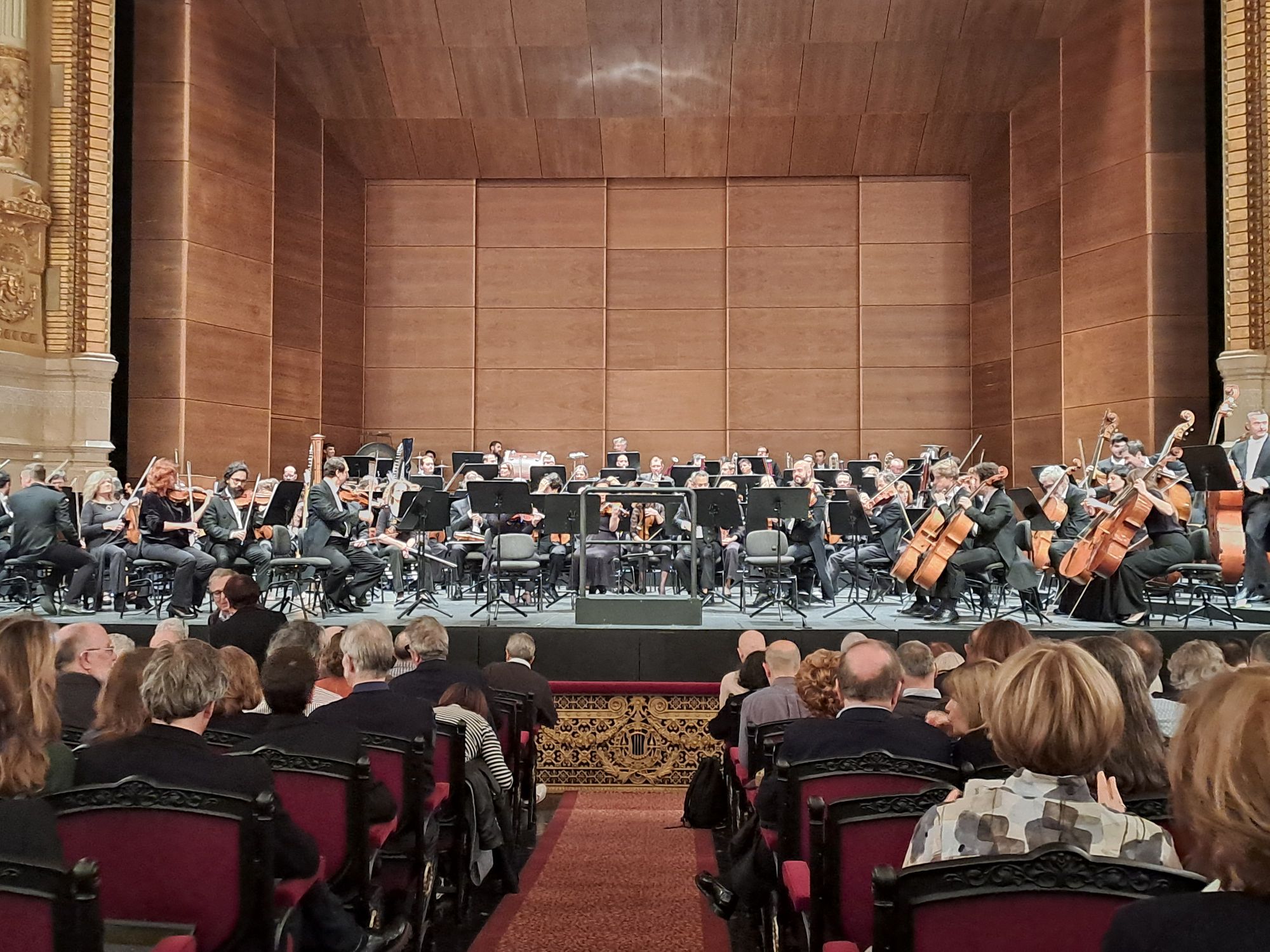
The music for Bluebeard’s Castle is extraordinarily rich and varied, changing as each door is opened. A large orchestra is needed to produce these changes of texture, as you can see in the picture I took before the performance. The musicians, under the direction of Josep Pons, played superbly as well as supplying eery sighs when the libretto demanded it. Vocals were supplied by bass-baritone Nicholas Brownlee as Bluebeard and mezzo soprano Victoria Karkacheva; both were excellent.
The performance lasted only about an hour. One of the things about going to an Opera in the evening is that one usually has to have something to eat before the performance, because it’s likely to be too late afterwards to find anywhere still serving food. That doesn’t apply here in Spain, where people generally eat rather late. I was thinking as I left last night that it was the first time I had been to an Opera that started at 7.30pm after which it was still too early to have dinner!
I’ve been meaning to post this track for some time but for some reason haven’t got around to it until now. It was recorded in Germany in 1951 and is a solo performance by legendary guitarist, blues singer and guitarist Big Bill Broonzy. The song, often called the Ballad of John Henry, tells the story of the folk hero John Henry, a man whose job was to use a 12lb hammer drive a steel drill into a rock to make holes for explosives to blast the rock in constructing a railroad tunnel. In the legend, John Henry is pitted against a steam-powered drill. He beats the machine, but is exhausted by his efforts and dies with his hammer in his hand.
By the way, you will hear reference in the song to a “shaker”. This was a man whose job it was to hold the drill – an object like a chisel – against the rock while it was struck by the hammer, and move it about to loosen the rock around it. I dread to think what happened if the hammerman missed the drill.
The historical facts around the location of the story of John Henry and indeed the identity of the hero are open to debate, but it’s a wonderful song and this is a brilliant and very characteristic performance of the song by Big Bill Broonzy whose singing, playing, and announcement to the song, will bring it all back to anyone lucky enough to hear him in the flesh. Bill Broonzy was on a European tour at the time this record was made, and I have back at home a very old LP of him singing and playing at the Dancing Slipper in West Bridgford, in Nottingham. I also have a copy of the album from which this performance is taken, the other side of which is by Graham Bell and his Australian Jazz Band. The full introduction to John Henry begins with Bill Broonzy saying rather sardonically “Thank you. Thank you. Thank you. I’m glad to be here too, don’t think I ain’t” before the rest of it that you hear.
I’m just back from my second night at the Sydney Opera House, at which I saw Opera Australia’s production of Mozart’s The Magic Flute. What has been a very warm day turned into a very sultry evening, and it was nice to take my drink outside during the interval to admire the view:
I’ve lost track of how many different productions I have seen of this strange and wonderful masterpiece, and this was a distinctly Australian version. Technically it’s not an opera, but a singspiel: the recitative – the bit in between the arias – is spoken rather than sung. It’s really more like a musical comedy in that sense, and was originally intended to be performed in a kind of burlesque style.
The Magic Flute also has many points of contact with the pantomime tradition, including the character of the villainous Monostatos who, in this performance, was reminiscent of Rolf Harris. Papageno was a working class Australian, sporting a mullet, and carrying an Esky in place of the usual array of nets and birdcages. On her first entrance, the Queen of the Night put me in mind of Gloria Swanson in Sunset Boulevard. Sarastro, with long hair and flowing robes, looked like the leader of some sort of New Age cult; his acolytes were dressed in everyday casual clothes. The three boys – referred to as “spirits” in this production – were actually two boys and a girl, but “spirit” is a gender-neutral term so that’s fine.
I won’t even attempt to explain the plot, if you can call it that, because it’s completely daft. It’s daft, though, in a way that much of life is daft, and I think that’s the secret of its enduring popularity. Mozart’s music carries you along and constantly seems to be telling you not to take it all too seriously. It seems to me that it must be hard to get the balance right between the comedy (which frequently border on the slapstick) and the serious. The worst thing to do is to make it too pompous. This production doesn’t fall into that trap, but in playing it virtually entirely for laughs I think it misses the depths that make a truly successful version. The ending – in which the rays of the Sun are supposed to dispel the darkness – involved a big reveal to a picnic with the chorus in beach wear and sunglasses. There’s a lot to be said for sunshine, and I found the idea mildly amusing, but there should be more to the end of this Opera than that. On the other hand, Pamina’s aria in Act II, when she is heartbroken because she thinks Tamino has abandoned her, was intensely moving, so it wasn’t all shallow.
The sets are simple but use clever devices to suggest the extraordinary scene changes required by the libretto, including pyramids, forests, waterfalls and flames. The ordeals by fire and water, for example, are depicted using reflective strip curtains, red for fire and blue for water. The dragon in Act I is conjured up by shadow puppets against a translucent curtain.
Papageno, played by an understudy whose name I didn’t catch, was the pick of the performers but overall the cast was not particularly strong vocally. David Parkin’s basso wasn’t nearly profundo enough for Sarastro and he struggled with the lowest notes. I’m not sure either why he also played The Speaker, who is a distinct role. Giuseppina Grech as the Queen of the Night looked fabulous and hit her high notes, but the elaborate coloratura passages were not well articulated.
This probably seems very negative than I intended. There is much to enjoy in this production. It’s very entertaining, and at times riotously funny. It was just a bit too superficial for my taste.
Last night I fulfilled a longstanding ambition of mine, to see an opera at the Sydney Opera House. It wasn’t that easy to get tickets, but last night I managed to see Opera Australia’s production of La Traviata by Giuseppe Verdi.
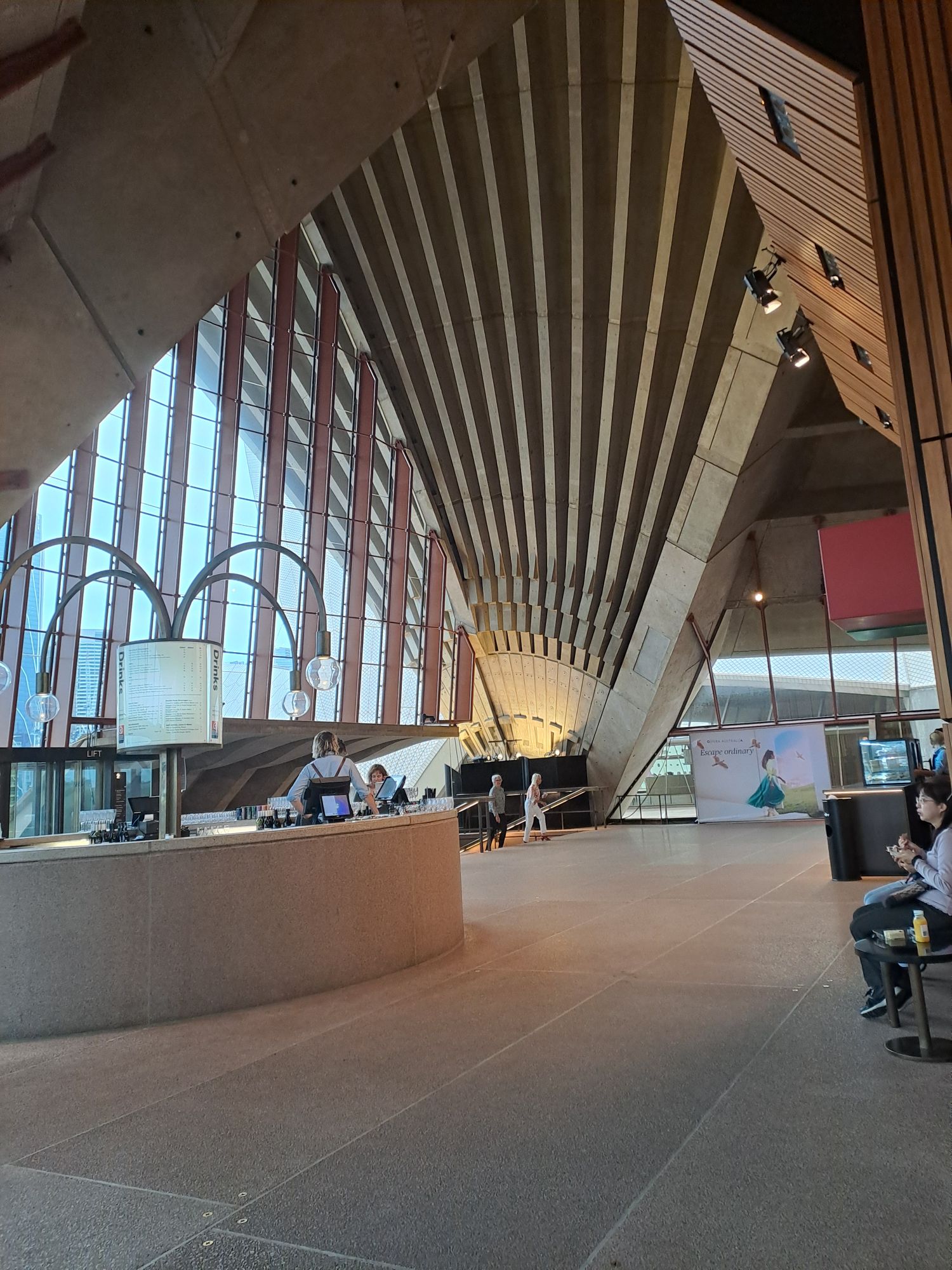
Foyer and BarJoan Sutherland Theatre
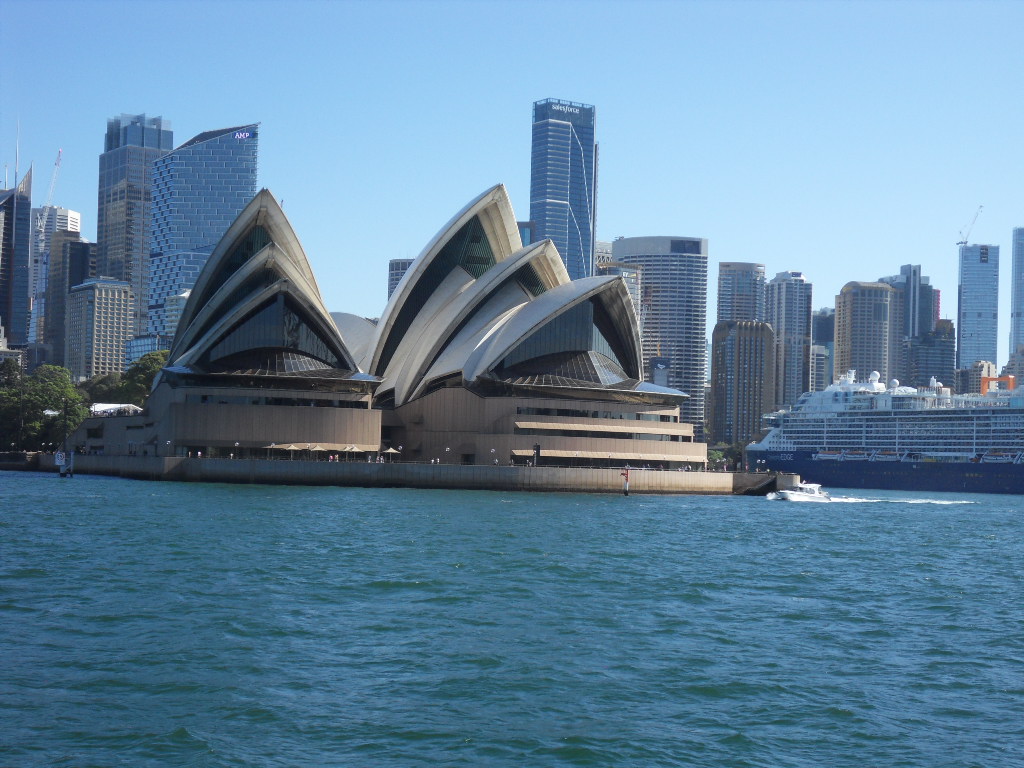
First a couple of comments about the Sydney Opera House. It is of course a splendid building but rather complicated inside, with surprising staircases and bizarre balconies. At dinner on Thursday, one of the locals here told me it is like a “1960s vision of The Future”, which is very apt. One of the nice things is that you can take your drink outside to get a breath of fresh air and a view of the harbour, which is very nice in the dark with all the lights from the boats and surrounding houses. The Joan Sutherland Theatre – where the operas are staged – is very nice. I have to say, though, that it’s a bit smaller than I’d anticipated. The seating capacity is just over 1500, while the Wales Millennium Centre – where Welsh National Opera perform – can seat 2500 people.
I took this picture from the Harbour Ferry
Sydney Opera House from the Harbour Ferry
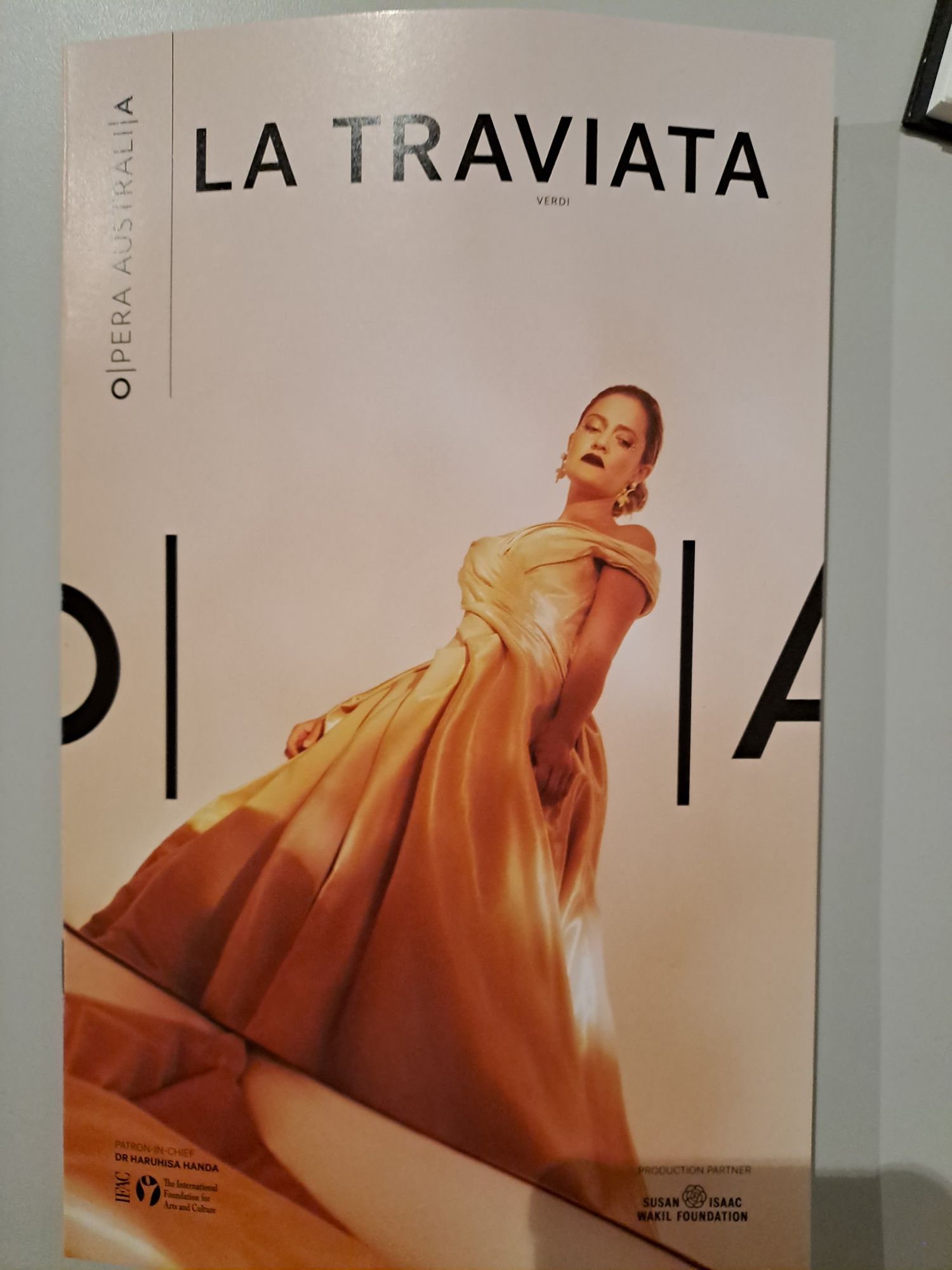
The Joan Sutherland Theatre is actually in the slightly smaller edifice to the left; the other side is a Concert Hall. Anyway, the place has a nice ambience and very friendly staff. They even give out free programmes!
And so to the performance. The staging in this production is relatively simple, with the opulence of the Paris settings achieved by costumes and lighting rather than by scenery. In Act II Scene 1, when Violetta and Alfredo are in the country, the back of the set is opened out to give a view of gardens and a tree. This device returns to touching effect at the end; see below. Costumes and design are pretty much 19th Century, with some (deliberate) anachronisms in dress style for humorous effect.
The Opera is in three acts, lasting about 2 hours and 30 minutes with one interval. When I heard there was only one wine break interval I wondered how they would manage it without making the performance a bit lop-sided. In fact the break came between Scenes 1 and 2 of Act II, with the first scene performed as a continuation of Act 1 and Act III following directly from Scene 2. It worked well, with changes of costume and scenery achieved onstage by the cast in view of the audience.
This production has been running since December 2023 but the principals changed earlier this month (February). We saw Sophie Salvesani as Violetta, Tomas Dalton as Alfredo Germont, and Luke Gabbedy as Giorgio Germont (Alfredo’s Father); all of them Australian born and bred. The performance was sung in Italian.
La Traviata is one of the most enduringly popular of all operas – and is one of the most frequently performed. It’s quite curious that its first performance in Venice was a complete disaster and it took several revisions before it became established as part of the operatic repertoire. A production like the one we saw last night, however, makes it abundantly clear why it is such an evergreen classic. Act I in particular is just one memorable tune after another.
The opera is based on the novel La Dame Aux Caméliaswhich later became a play with the same name. It tells the story of Violetta, a glamorous courtesan and flamboyant darling of the Paris party scene. She meets a young chap called Alfredo at a spectacular do in her house in Act I and he tells her he’s completely in love with her. She laughs him off and he departs crestfallen. When the party’s over and he’s gone, though, she finds herself thinking about him. The trouble with Violetta is that she is already seriously ill with consumption (tuberculosis) at the start. She knows that she is doomed to die and is torn between her desire to be free and her growing love for Alfredo.
Cut to Act II, Scene I, a few months later. Violetta and Alfredo are shacked up in a love nest away from Paris. While Alfredo is away paying off some of Violetta’s bills, Alfredo’s father Giorgio turns up and tries to convince Violetta to abandon her relationship with his son because its scandalous nature threatens their family’s prospects, particular his daughter’s (Alfredo’s sisters) plans to get married. Violetta eventually agrees to do a runner. Alfredo returns and meets his father who tries to convince him to return to his family in Provence. Alfredo is distraught to hear of Violetta’s departure, refuses to go with his father, and vows to find Violetta again.
Scene 2 is back in Paris, at the house of a lady called Flora. There’s a lot of singing and dancing and general riotousness.Alfredo turns up, slightly the worse for drink and proceeds to gamble (winning a huge amout of money). Violetta turns up and Alfredo insults her by throwing his winnings at her. He’s then overcome by remorse but the Baron Douphol, a wealthy friend of Violetta, is outraged and challenges Alfredo to a duel.
Act III is set a few months later in Violetta’s bedroom where she’s clearly dying. Alfredo has run off after wounding the Baron in a duel. The doctor gives Violetta just a few hours to live. Alfredo returns. The lovers forgive each other and embrace. Violetta dies.
I thought Sophie Salvesani was a very convincing and sympathetic Violetta. She has a very nice, fluid voice and engaging stage presence. Violetta is a demanding role- there are several tricky coloratura passages to cope with – but her character is quite complicated too. Although we know she’s ill right from the start she’s not by any means a passive victim. She’s a courtesan who has clearly put it about a bit, but she’s also got a strong moral sense. She’s vulnerable, but also at times very strong.
All the cast sang very well, actually. I particularly liked the baritone of Luke Gabbedy (though even with his make up he looked too young to be Alfredo’s Daddy).
The look of the opera – staging, lighting and costumes – also worked very well. The Paris parties were riots of colour and movement with just as much debauchery as desired. The start of Act III finds the same set as Act I, bare apart from a Chaise Longue, bathed in a ghostly greenish light. A particularly moving touch was right at the end when Violetta is dying. Here last lines (and the last of the Opera) are:
È strano! Cessarono gli spasimi del dolore. In me rinasce – m’agita insolito vigor! Ah! ma io ritorno a viver! Oh gioia! (Ricade sul canapè.)
How strange! The spasms of pain have ceased: A strange vigour has brought me to life! Ah! I shall live – Oh, joy! (She falls down, senseless, upon the sofa.)
Most productions I have seen follow these directions but, in this one, before delivering these lines, Violetta stands up, while the other members of the cast present on stage – Alfredo, Giorgio, the maid Annina, and the Doctor – freeze as she sings the lines in full voice. The back of the set lifts up and shows the tree we saw in Act II and Violetta walks out into the sunshine while a double takes the place of the lifeless Violetta on the sofa. The implication is that she is already dead when she sings these last lines. It’s a powerful device, and puts quite a different perspective on the ending.
Anyway, congratulations to Opera Australia on an excellent production which I enjoyed greatly.
P.S. I’ll be going again to the Sydney Opera House next week, to see their Magic Flute.
It is February 12th 2024, one hundred years to the day since the first performance of George Gershwin’s composition Rhapsody in Blue at the Aeolian Hall in New York by Paul Whiteman and his Palais Royal Orchestra with the composer himself on piano. This piece is has been a concert favourite for decades, but is usually heard in an arrangement for piano and full symphony orchestra which dates from 1942. The orchestration for that version was provided by Ferdi Grofe who had scored the original for Whiteman’s much smaller band back in 1924. Gershwin originally wrote the piece for two pianos, but didn’t know much about orchestration and had handed that task over to Grofe which the latter completed just a few days before the performance on February 12th 1924. It was not until the rehearsal with Whiteman’s band, however, that the famous opening took its now familiar shape.
The clarinet player with Paul Whiteman’s band in 1924 was a chap called Ross Gorman. It was his job to play the first few bars of Rhapsody in Blue, which had been scored for solo clarinet, consisting of a trill and then a long rising scale or arpeggio of more than two octaves. When they did the first play through Gorman didn’t play it as written but instead followed the trill with part of the scale followed by a long smeared glissando. Gorman often used smears to mimic laughing or sobbing noises, so this was a kind of trademark of his and came very naturally to him (though it is quite difficult to play a long glissando like this, especially slowly). There’s no question that it was “jazzed up” with humorous intent, but Grofe and Gershwin loved Gorman’s way of playing it, and that’s how it has been played ever since.
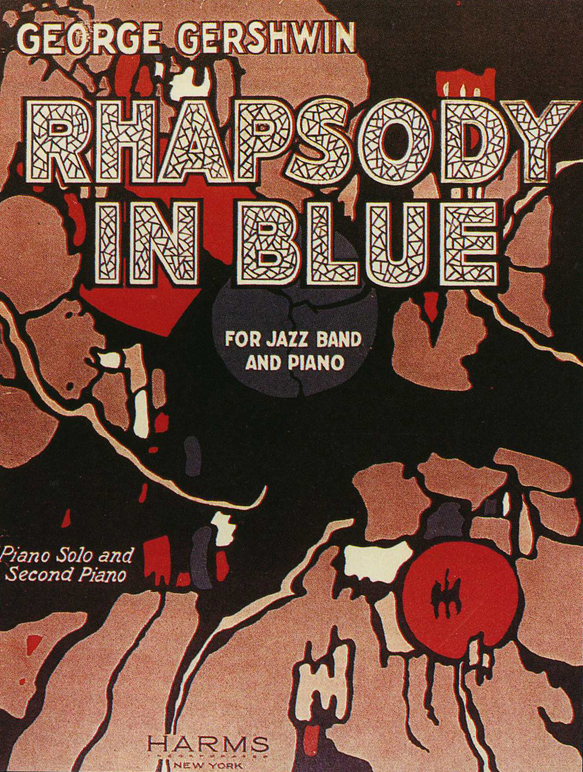
Rhapsody in Blue was a hit with the audience at its first performance, and has remained so with audiences around the world ever since. Sales of sheet music were good too! Critical reception was somewhat different, but those who disliked it were mostly judging it in comparison with classical music forms (e.g. a piano concerto) that it wasn’t attempting to be. I think it’s a piece to be enjoyed for its exuberance and atmosphere rather than thematic development or other more refined criteria.
There isn’t a recording of the original performance of 1924, but there is one of the same arrangement played by Paul Whiteman’s band in 1927 – complete with Ross Gorman on clarinet and George Gershwin again on piano. The difference is that it was played a bit faster for this recording than it was in concert so that it would fit on two sides of a 12″ record. Although I do think some modern performances of Rhapsody in Blue are too slow, this sounds to me rather rushed in places. The sound quality isn’t great either. Nevertheless, it’s an important piece of music history and it did sell over a million copies, so it would be remiss of me not to share it today!
Recorded in New York, July 27, 1952 with: Joe Newman (tp); Paul Quinichette (ts); Oscar Peterson (p); Freddy Green (g); Ray Brown (b); and Gus Johnson (d).
With gale force winds, torrential rain and hailstones, the weather is pulling out all the stops today; so here, from the album Shakespeare and all that Jazz by Cleo Laine with a band led by John Dankworth, here is a lovely version of the song Blow, Blow, Thou Winter Wind from As You Like It by William Shakespeare
I always loved how Cleo Laine sang Jazz without trying to put on an American accent!
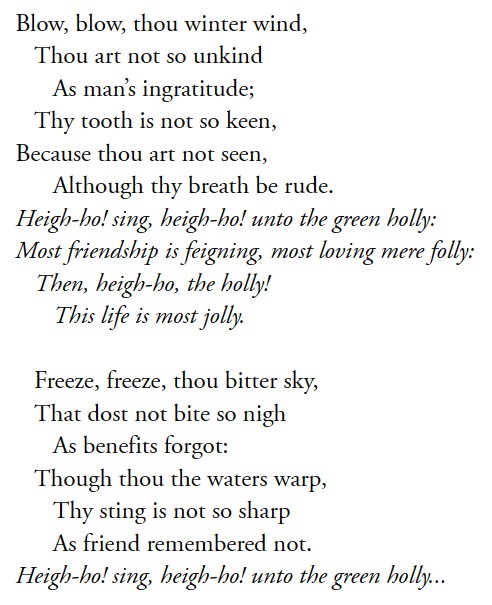
And here are the words, if you want to sing along at home:
As I am still in Spain for a for more days before the Christmas break I thought I would share a vaguely relevant piece of music, Spanish Key from the 1970 album Bitches Brew by Miles Davis. This I don’t have time to write a long piece about this album, but I will say that of all the abrupt changes of musical direction during the career of Miles Davis, this album is probably the most startling and many jazz fans – even ardent admirers of Miles Davis – don’t like it at all. Anyway, des goûts et des couleurs on ne discute pas…
This track is particularly interesting to me because I’ve long wondered about the title and the musical structure. I’m not at all sure, but it seems likely to me that the title indicates the relationship of this piece to the track Flamenco Sketches from the classic album Kind of Blue recorded over a decade earlier. In that album, Miles was experimenting with jazz based not on traditional keys and scales, but on modes. In Flamenco Sketches there is a section based on a major phrygian mode which is commonly used in flamenco music. Spanish Key is in a very different style – much faster for one thing – but it has a similar pattern involving changes from E to D to D (phrygian) to E (phrygian) and G (mixolydian). Apparently Miles gave minimal instruction to his musicians about what to play, but did have prearranged signals to shift from one mode to another, such as happens about 3:15 in the recording when he ushers in a guitar solo by John McLaughlin, and around 12:46 when the mood abruptly changes as Miles introduces a new theme. I also think it was a stroke of genius to include a bass clarinet on this album; on this track it adds a Moorish element to the Spanish tinge.
Anyway, there’s so much going on in this track that it’s more instructive to listen to it than write about it, so here you are. Enjoy!
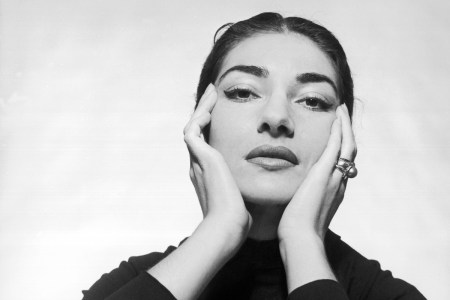
Today, 2nd December 2023, is the centenary of the birth of the most renowned opera singer of her time, Maria Callas. I couldn’t let this occasion pass without posting a tribute, Tonight I’ll be sipping wine and listening to some historic recordings of her. I think every classical radio station in the world will tonight be paying tribute to this remarkable artist.
Maria Callas was born on December 2nd 1923 in New York city, of Greek parents who had moved there the previous year, and christened Maria Anna Sofia Cecilia Kalogeropoulou. Her mother, disenchanted with her deteriorating marriage, abandoned her husband (Maria’s father) and took Maria and her sister back to Athens in 1937. Maria enrolled at the National Conservatoire of Greece the same year after winning a scholarship with the quality of her voice, which
was warm, lyrical, intense; it swirled and flared like a flame and filled the air with melodious reverberations.
At this age, Maria was a rather plump young lady with a rather deep singing voice. Initially, she aspired to be a contralto but at the Conservatoire she was encouraged instead to become a dramatic soprano. Accordingly, she underwent special training to raise her natural pitch (or tessitura) and learned how to control her remarkable voice more accurately so she could sing in a sufficiently disciplined fashion that she could take on the dazzling coloratura passages that she would perform in later years with such success. She also worked on her chest tones to broaden the scope of her voice in the mezzo region. Although she became more technically refined as a singer during this period, there were some things that didn’t change. One was the sheer power of her voice, which is something that we tend to notice less in these days of microphones and studio recordings. People who heard her sing live confess to being shocked at the sheer scale of sound she could deliver without amplification. Perhaps more tellingly, she eschewed many of the devices sopranos tended to use to control the highest notes (usually involving some alteration of the throat to produce accuracy at the expense of a thinner and more constricted tone). When Callas went for a high note, she always did so in a full-throated manner. This often produced a piercing sound that could be intensely dramatic, even to the extent of almost knocking you out of your seat, but it was a very risky approach for a live performance. Audiences simply weren’t used to hearing a coloratura sing with such volume and in such a whole-hearted way. It wasn’t always pretty, but it was certainly remarkable and often very moving. It was this aspect of her voice that led her friend Tito Gobbi (who sang with her in Tosca) to call it una grande vociaccia, which I translate in my schoolboy Italian as meaning something like “a big ugly voice”. That isn’t meant to be as disparaging as it sounds (Gobbi was a great admirer of Callas’ singing).
Having listened to lots of recordings of Maria Callas I have to admit that they are certainly not all good. Sometimes the voice didn’t come off at all. Unkindly, one colleague said that she “sang with her ovaries”. When she talked about her own voice, Callas herself often referred to it as if it were some independent creature over which she had very little control. Anyway, whatever the reason, when she was bad she was definitely bad. But I adopt the philosophy that one should judge artists (and scientists, for that matter) by their best work rather than their worst, and when Callas was good she was simply phenomenal, like a sublime and irresistible force of nature. Nobody else could bring characters to life in the same way. That’s why they called her La Divina.
Although her talent was very raw in the beginning there was no question that she always had a voice of exceptional power and dramatic intensity. When she started singing professionally she immediately attracted lavish praise from the critics not just for her voice but also for her acting. As a young soprano she sang in an astonishing variety of operas, including Wagner‘s Tristan und Isoldeand Die Walküre, neither of which one would now associate with Callas.
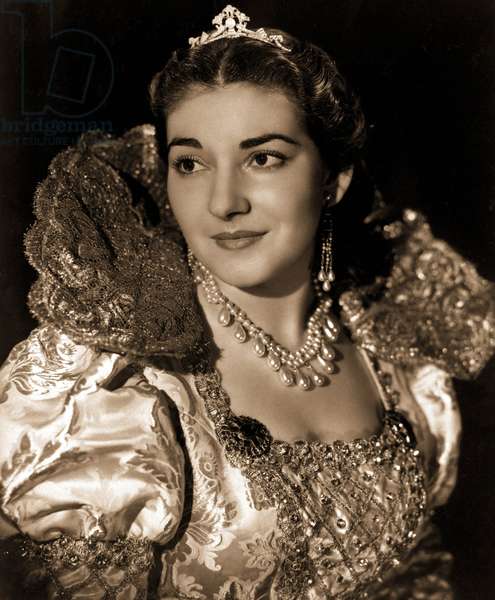
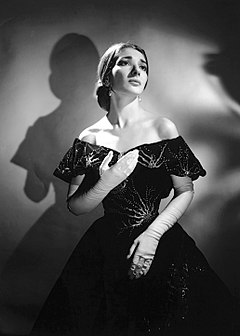
Maria Callas as Elvira in ‘I Puritani’, Teatro la Fenice, Venice, 1949Maria Callas as Violetta in `La Traviata’, Covent Garden, London, 1958
It was in the late 1940s that Callas began to take an interest in the type of opera that would really make her name. Bel canto opera was rather unfashionable at that time, probably because audiences preferred the grittier and more realistic verismo style. Virtually single-handed, Callas resurrected the bel canto canon by injecting a true sense of drama into works which had previously just been seen as vehicles for the singers to demonstrate their art. Callas brought an entirely new dimension to the great operas by Bellini (Norma, I Puritani, La Somnambula…) and Donizetti (Lucia di Lammermoor, Anna Bolena), although she was sufficiently versatile to also perform brilliantly in the verismo syle of Verdi and Puccini as well as lesser known composers such as Giordano (Andrea Chenier). Recordings of many of these performances are available, but it is sad that this glorious period of her singing career happened just a bit before high quality equipment was available so the true glory of her voice isn’t always evident.
In 1953, Callas decided that she wanted to change her appearance, perhaps so she would look more appropriate for the parts she was playing on stage. At the time she weighed almost 200lbs. In order to lose weight as quickly as possible, she followed the barbarous but highly effective expedient of swallowing a tapeworm. She lost 80lbs in a matter of months. The dramatic loss of weight changed her body and her face, emphasizing her high angular cheekbones and giving her a striking look very well suited to the opera stage. But it also affected her voice somewhat, especially at the upper end where she seems to have found it more difficult to avoid the dreaded “wobble” which was one of the alleged imperfections that critics tended to dwell upon.
Callas also had very poor eyesight which required her to wear very thick spectacles in order to see at all, a thing she refused to do onstage with the result that she was virtually blind during performances. In fact, during a performance of Tosca at Covent Garden she leant too far over a candle and her hair caught fire. Improvising magnificently, Tito Gobbi, as the loathsome Scarpia, extinguished the fire by throwing water at her before the audience had noticed. Although they weren’t much use for seeing with, her eyes were a great asset for her acting, in turns flashing like a demon then shining like an angel.
After her weight loss, Callas was suddenly no longer just a wonderful singer but also a strikingly beautiful woman. Her career took a back seat as she started to revel in the glamorous lifestyle that opened up in front of her. Her voice deteriorated and she performed rather less frequently. Eventually she embarked on a love affair with Aristotle Onassis, a notorious serial collector of trophy women. She hoped to marry him but he abandoned her to marry Jackie Kennedy, widow of John F. Kennedy.
She never really recovered from the failure of this affair, retired from singing and lived out the last years of her life as a virtual recluse in her apartment in Paris. She died in 1977.
I had heard a lot about Maria Callas when I was younger, but the recordings that I listened to (generally from the 1960s) were really not very good, as her voice was undoubtedly much diminished by then. I just assumed that, as is the case with many artists, the legend of Callas was all mere hype. Then, about 20 years ago, I was listening to BBC Radio 3 and they played the final scenes of the great 1954 recording of Norma with Callas in the title role, conducted by Tullio Serafin. I was completely overwhelmed by the emotion of it and tears flowed freely from my eyes. I’ve always had a tendency to blub when I hear really beautiful music, but as I’ve got older I’ve learned not to be embarrassed by it.
In England, Callas is probably best remembered for her performances in Tosca in Covent Garden. I have recordings of her in that role and they are really wonderful. But there are many fine recordings of Tosca by other singers, some of which are almost as good. In the case of Norma, though, there isn’t any other performance that comes within a mile of the Callas version. Or if there is, I’ve yet to hear it.
Now I know that there are some people, even opera lovers, who just don’t get Callas at all (just look at the comment boards on Youtube, etc). I grant that she wasn’t always the most accurate singer, and I don’t think you could say her voice had a purely classical beauty. But even if you don’t like her voice you have to admit that she revitalized the opera stage and brought a new public into the theatres. I can’t imagine what the state of opera would be now, if there hadn’t been a Callas, and you can’t argue that she is now an iconic figure. What I admire most about her is that, like it or loath it, her voice is instantly recognizable. In this sense, she always puts me in mind of a kind of operatic version of Billie Holliday. She’s a far cry from the many bland mediocrities that pass themselves off as opera singers nowadays.
I’m going to end with the obligatory clips from Youtube. There’s a lot of Callas on there, not all of it good. I’ve chosen a couple of items, although neither of them has a proper video. The first was performed live in 1955 in front of the notoriously difficult audience at La Scala in Milan and recorded from a radio broadcast so that the sound quality is very poor. A studio recording of this aria, from Andrea Chenier, features most movingly in the film Philadelphia. This live version, however, is notable for a number of reasons. One is that you get some idea of the power of the Callas voice in the way she pushes aside the entire orchestra and is even able to cut through the distortions introduced by the rather primitive recording technology. The second thing is that she sings it so beautifully, with such feeling, lovely phrasing, and so much colour and vitality. Listen to the way the texture of her voice matches perfectly her changing emotions as she tells her story. The shattering, climactic high C that occurs near the end is a perfect example of what I was saying above. She stabs this note out like her life depended on it. It sends shivers down my spine and clearly had the same effect on the audience. The thunderous applause that follows the end of this aria is quite frightening in its intensity, but gives a good idea how much her public adored her. If you can put up with the lo-fi recording, this is certainly a better performance than the studio version.
The final piece has to be from Norma. I think Bellini is a wonderful composer of opera, but he doesn’t make life easy for the singers. There’s never any doubling of the vocal line by the orchestra so the singer is very exposed. This doesn’t bother Maria Callas. This is the famous aria Casta Diva, which has become a kind of signature tune for her and it’s one of the pieces that she always seemed to perform beautifully. It might be a bit hackneyed but I love it and, after all, it’s my blog. There’s also a nice compilation of pictures.
I wonder how many times and in how many places, Casta Diva is being played today?
The views presented here are personal and not necessarily those of my employer (or anyone else for that matter).
Feel free to comment on any of the posts on this blog but comments may be moderated; anonymous comments and any considered by me to be vexatious and/or abusive and/or defamatory will not be accepted. I do not necessarily endorse, support, sanction, encourage, verify or agree with the opinions or statements of any information or other content in the comments on this site and do not in any way guarantee their accuracy or reliability.