Archive for the Music Category

A Plan for Sunday

Posted in Biographical, Maynooth, Music with tags , , , , on March 8, 2020 by telescoper

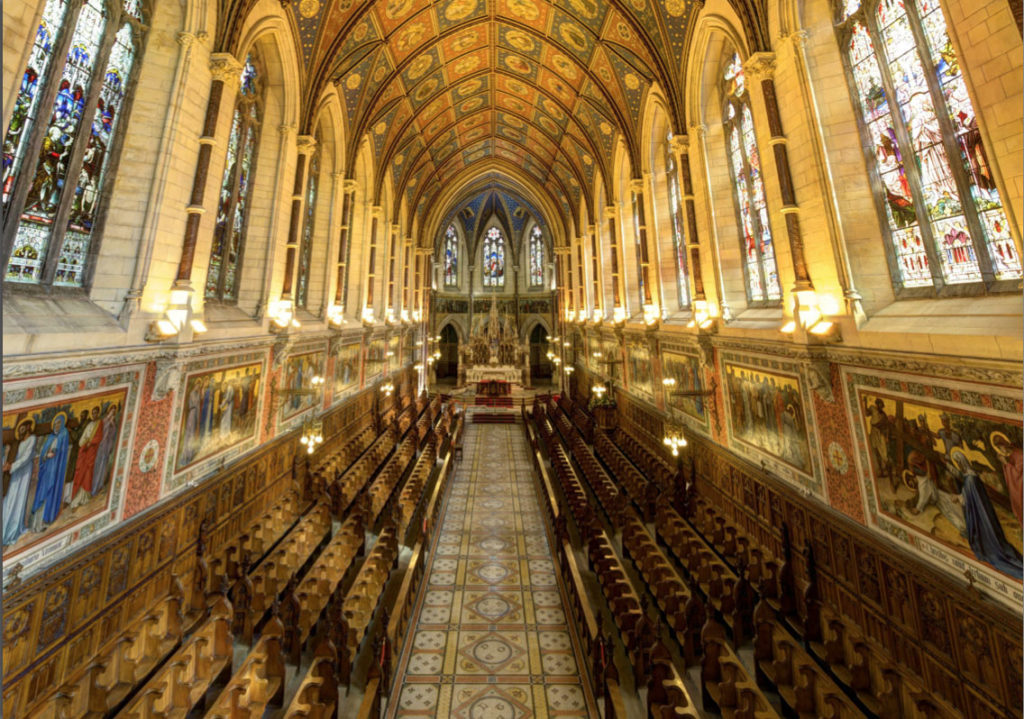
Later this afternoon, I shall be going here….

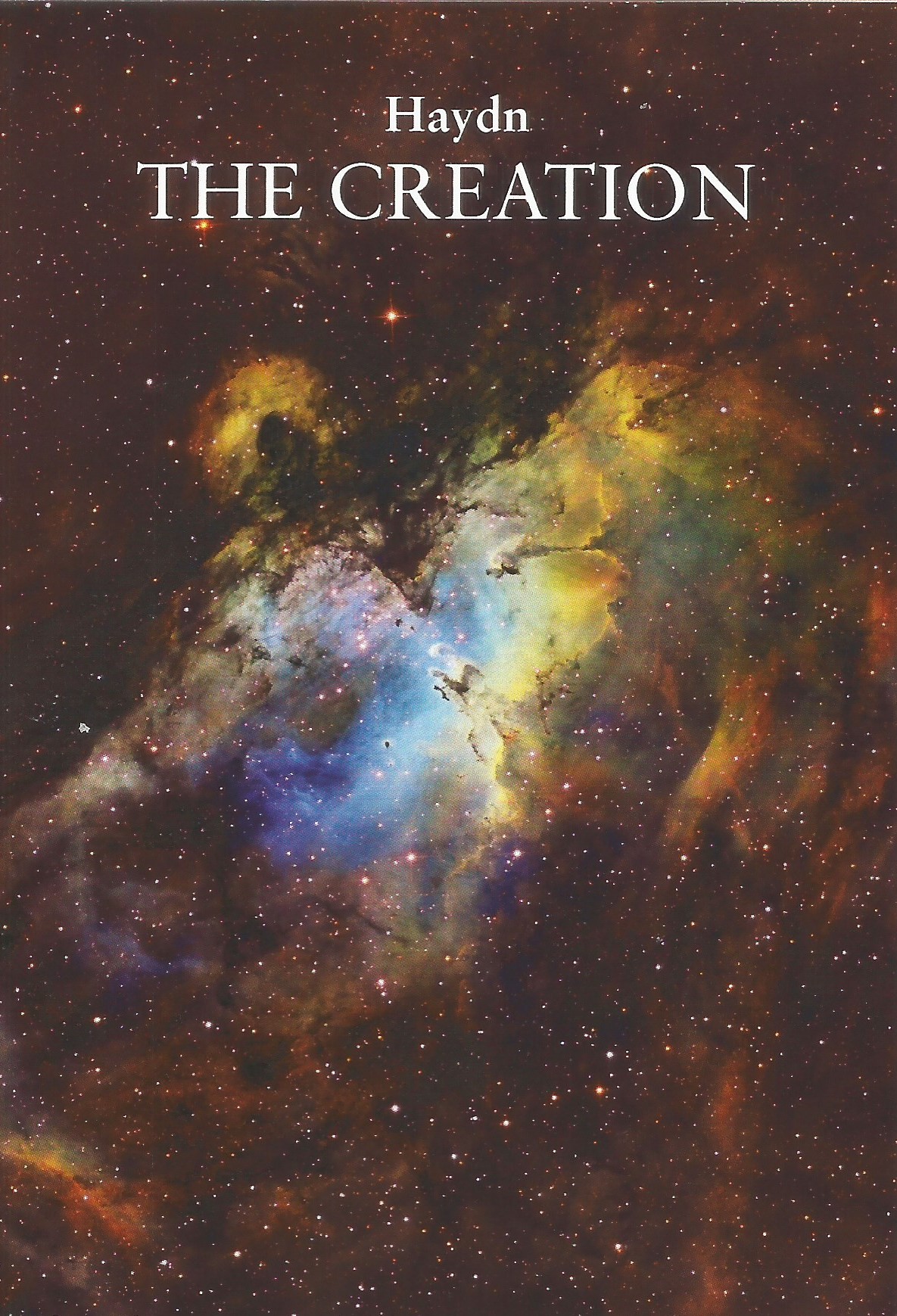
..to hear this…

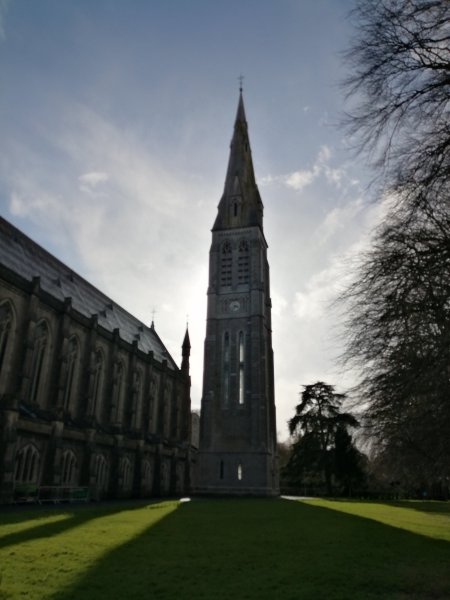
I took this picture on the way there, with the Sun behind the bell tower…

..and when I’m home afterwards I will write a bit about it here.

R.I.P. McCoy Tyner (1938-2020)

Posted in Jazz with tags , , , , on March 7, 2020 by telescoper

I had just got home last night when I heard the sad news of the death at the age of 81 of the brilliant pianist McCoy Tyner. When I was looking through my collection of jazz recordings after hearing about this I was struck by how many of them featured McCoy Tyner, most of them in association with John Coltrane that lasted about five years. Tyner’s style was enormously influential as well as immediately recognizable, especially for the way he used his left hand to punch out chords in much the same way as a right-handed boxer uses his left jab.

Tyner had a very long career as a solo musician and it would be wrong the give the impression that his work with Trane from about 1960 to 1965 was all he did, but when choosing something to share in his memory I kept coming back to that period.

In the end I decided to post a classic piece from the John Coltrane era. This is the title track from the 1961 album My Favorite Things which, as it happens, is one of my favourite things. Coltrane plays soprano sax on this track; apparently he hadn’t played a soprano sax at all until 1960, when Miles Davis bought him one. I like its use on this particularly recording as it gives the performance a very “Eastern” sound.

You might think that a song from The Sound of Music would be unlikely material for John Coltrane to tackle, but in fact he does something extremely interesting with it: the melody is heard numerous times throughout the track, but instead of playing solos over the written chord changes, the soloists improvise over just two chords, E minor and E major, in a manner that seems influenced by Indian music. The whole thing is played in waltz time, but drummer Elvin Jones not only keeps an intense but fluidly swinging pulse going in 3/4 but also does so much around and across that central beat.

In My Solitude

Posted in Jazz with tags , , , on March 2, 2020 by telescoper

Whether or not you’re in a state of self-isolation because of coronavirus, please give up three and a bit minutes of your time to listen to this little gem by the quartet that was led for a short time by Ruby Braff (cornet) and George Barnes (guitar). That band not only knew how to play but also exactly when to stop, as demonstrated on this exquisite live version of the great Duke Ellington song, In My Solitude. Michael Moore is on bass (arco on parts of this number) and Wayne Wright on rhythm guitar, but it’s Ruby Braff who takes the lead on this one, using his beautiful tone to stunning effect…


Fidelio in Dublin

Posted in Opera with tags , , , , , , on February 23, 2020 by telescoper

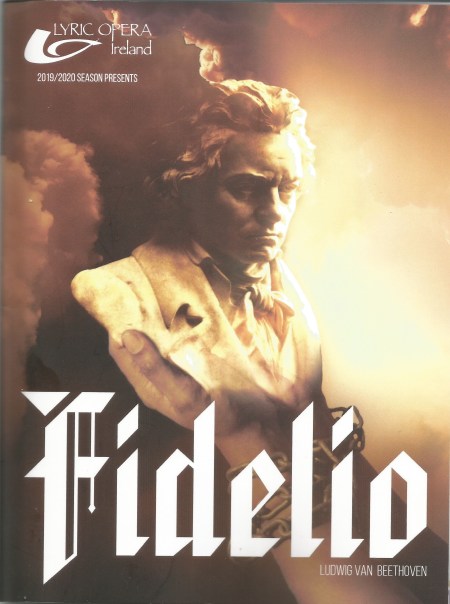
Yesterday evening found me once again at the National Concert Hall in Dublin for a performance of Beethoven’s only Opera, Fidelio, performed by Lyric Opera Ireland together with the young musicians of Sinfonua conducted by Tony Purser. The event was, of course, part of the Beethoven 250 celebrations that will be taking place all this year in concert halls around the world. The National Concert Hall isn’t really designed for opera, so the orchestra had to squeeze into the space between the front row of the stalls and the stage. I was a few rows back, but I could still read the scores on the desks!

A synopsis of the Opera is as follows.

Leonore (Sínead Campbell-Wallace) has disguised herself as a man, Fidelio, and has gained employment as assistant to the chief gaole, Rocco (Mikhail Svetlov), of the state prison in the hope of finding and freeing her imprisoned husband Florestan (Samuel Sakker). To complicate matters, Rocco’s daughter, Marzelline (Rachel Croash), has fallen in love with Fidelio, which annoys her suitor Jaquino (Patrick Hyland) even though he doesn’t know Fidelio is actually a woman. Leonore persuades Rocco to let her help him in the underground cells where the political prisoners are held in inhuman conditions. The prison governor, the villainous Don Pizarro (Gyula Nagy), learns of an impending inspection by the minister and decides that Florestan – who has been particularly cruelly treated – must be killed to hide the evidence of his abuse. Leonore hears of the plan to murder her husband and, as the prisoners are briefly allowed out into the sunlight, she searches in vain for Florestan among them. He is still in chains below ground. Eventually Leonore and Rocco descend into the darkness of the dungeon and find Florestan, near death, having a vision of an angel that has come to rescue him. Leonore looks on as Pizarro arrives and tries to kill her husband, but she stops him and reveals her true identity. In the nick of time (geddit?), the Minister, Don Fernando (Felix Kemp), arrives and, appalled by what he sees, commands that all the prisoners be released. Leonore sets her husband free.

Much of Beethoven’s music from his “middle period” – Fidelio was first performed in 1805 – is about the struggle for political liberty and social justice that was taking place throughout Europe at the time so it’s not difficult to see why he was attracted to this story. Although originally written in three acts, it is now performed in a version with only two. This gives the opera a fascinating structure. The music in Act I is clearly a nod back in the direction of Mozart, while Act II is dramatically different, specifically with a much wider range of orchestral colour, and is clearly a look forward towards Romanticism. There are no less than four published versions of the overture. Last night we heard the standard one often called Leonore No. 3, but more often simply known as Fidelio.

Fidelio is really a singspiel (a form of opera in which the recitative is spoken or declaimed rather than sung). In this performance the spoken dialogue was in English while the sung part was in the original German. There were surtitles too, so the plot was easy to follow. Given the constraints of the National Concert Hall the set was simple but nonetheless effective, and the a mixture of 19th century and modern dress. Part of the chorus performed from the choir stalls behind the stage. In the first act they were dressed as prisoners but during the interval they changed into ordinary everday clothes, a device I found very effective. A story of wrongful imprisonment is as relevant today as it was in Beethoven’s time. This point was emphasized near the end of Act I when the prisoners are briefly allowed out from their cells: children in modern dress mingled with them, holding photographs of people of all races and generations who have been unjustly taken away.

I thought the principals were outstanding. Sínead Campbell-Wallace (soprano) was a superb Leonore, both vocally and dramatically, Samuel Sakker (tenor) impressed, Mikhail Svetlov (bass) was in fine voice throughout, and (perhaps the pick of them all) Hungarian baritone Gyula Nagy was a wonderfully sinister Don Pizarro.

So far so good, but there were some less than ideal things about this production, chiefly the intonation. For many people the highlight of this Opera is the wonderful Prisoners’ Chorus (“O welche Lust….”) when the inmates of the gaol are temporally released to get some fresh air. They staggered onto the stage, eyes blinking at the light, but their incarceration had obviously robbed some of  them of a sense of pitch and the started horrifically out of tune. From time to time the orchestra – especially the brass – also struggled to find the correct pitch, producing some painfully jarring moments.

It’s hard to believe that it has been the best part of a decade since I first saw Fidelio, in a production by Welsh National Opera. Both that one and this one offered much to enjoy, but I still have to see a production that really does this work justice.

Wagner & Bruckner at the National Concert Hall

Posted in Music with tags , , , , , , , on February 22, 2020 by telescoper

I had to brave some very inclement weather on the way to last night’s performance at the National Concert Hall in Dublin for a performance by the RTÉ National Symphony Orchestra, under the direction of Mihhail Gerts (deputising for Natalie Stutzmann who had to withdraw “due to unforeseen circumstances”). The concert consisted of the Prelude to Act I and the Good Friday Music from the Opera Parsifal by Richard Wagner followed by Symphony No. 7 by Anton Bruckner. To my surprise these pieces were performed without a wine break interval.

As was the case a couple of weeks ago for Bruckner 8, a big orchestra was required, including a quartet of Wagnertuben.

While not everyone likes Wagnerian Opera performed in entirety there must be very few people who don’t enjoy the overtures. A programme consisting entirely of Richard Wagner’s Preludes would make for a wonderful concert, and the Prelude to Act I of Parsifal, although very familiar, is so beautiful that it bears repeated listening. Whenever I hear it I can’t help thinking of the poignant last scene of the very last episode of Inspector Morse: `Goodbye Sir’, says Lewis and kisses the dead Morse on the forehead to the accompaniment of this music from Parsifal.

The Good Friday Music occurs at the start of the Third Act of Parsifal so is in a sense also a Prelude. Even out of the context of the Opera, it provides a wonderful opportunity for reflection and contemplation because it is so subtle and understated, somewhat uncharacteristically for Wagner.

These two pieces last about half an hour, and normally one would expect an interval after them, especially since the Symphony is over an hour in duration. I’m not sure what the reason was for playing the Bruckner straight after the Wagner, but it seems to have been a last minute decision. The printed programme contains the usual `INTERVAL_ 20 minutes’ so I had ordered a drink for the interval; nobody had told the bar staff there wouldn’t be one. I got my money back, though.

One positive aspect of the lack of a pause was that it made the connection between Bruckner’s composition and Wagner even more obvious. The radiant first movement of Bruckner’s Seventh Symphony, with its noble melody soaring over shimmering violin tremolos is very reminiscent of Wagner, as is much of the rest of the Symphony (including the orchestration). Bruckner famously idolized Wagner and this composition is at least partly a tribute to his musical hero. It is said that Bruckner had a premonition of Wagner’s death in 1883 and the cymbal crash during the second (slow) movement symbolizes the moment that he found out that his premonition had come true. That whole movement (marked Sehr feierlich und sehr langsam; very solemn and very slow) is very moving: sombre though not excessively mournful. The third movement Scherzo is marked Sehr Schnell (very fast) but I found the tempo last night rather restrained. I was expecting something a bit wilder. The last movement actually sounded to me more like Mahler than Wagner.

The Seventh is probably Bruckner’s best known and most performed Symphony. It was certainly a big hit for him when it was first performed in 1884. I enjoyed last night’s performance. Usually videos of these concerts are put on the Lyric FM Youtube channel shortly after the performance, but when I looked just now last night’s wasn’t there yet. I’ll put a link up as soon as it appears.

UPDATE: Here, as promised, is the recording:


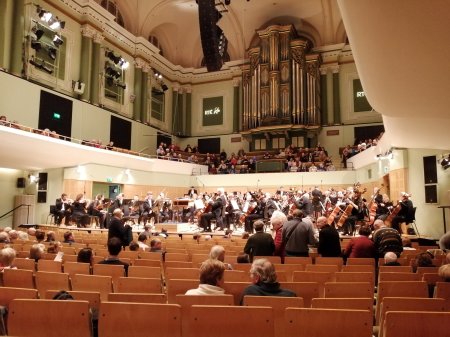
The picture above was taken a while before the performance and, although quite a few more people came in before it started, there were still quite a few empty seats. The National Concert Hall posted a (small) financial loss last year. I do the best I can to support it by attending as frequently as I can, but I am always saddened a bit to see so many empty seats. Anyway, I shall be back there this evening for a special event which is part of the Beethoven 250 celebrations, so watch this space!

Thelonious Monk plays Duke Ellington

Posted in Jazz with tags , , , , on February 17, 2020 by telescoper

This morning there was a reminder on the radio that today is the anniversary of the death of the great Thelonious Monk, who died on 17th February 1982. I went to a concert by British pianist Stan Tracey the day after the sad news broke and he threw away his intended play list and played nothing but Monk tunes for the whole evening. It was a wonderful concert and a moving tribute from one musician to another who had clearly influenced him deeply.

Last week I was asked by a young man to recommend some albums because he wanted to find out more about Monk’s music. Among those I suggested was Thelonious Monk plays Duke Ellington which was recorded in 1956 for the Riverside Label, and features a trio of Thelonious Monk (piano), Oscar Pettiford (bass) and Kenny Clarke (drums).

This is an unusual album because it finds Monk doing what the recording executives asked, namely to play standard tunes rather than his original compositions. The most performed jazz composer of all time* is Duke Ellington so he was a natural source of material to choose, and the album that resulted is absolutely fascinating not least because Monk clearly relates very well to Ellington’s music. In fact it’s one of my all-time favourites. Here is just one track from it, I let a Song go out of my Heart. Enjoy!

*The second most performed jazz composer of all time is none other than Monk himself!

How are things in Glocca Morra? – Sonny Rollins

Posted in Jazz with tags , , on February 12, 2020 by telescoper

À propos de rien, but to chill for a few minutes while I have a cup of tea after this afternoon’s Engineering Mathematics lecture, I thought I’d post a piece of music. As regular readers of this blog (both of them) will know, I listen to quite a lot of jazz. In the course of doing that it has often struck me that there can hardly be a tune that’s ever been written – however unpromising – that some jazz musician somewhere hasn’t taken a fancy to and done their own version. Louis Armstrong turned any amount of base metal into gold during his long career, but here’s an example from a more modern legend, Sonny Rollins, who is still going strong at the age of 89.

The full personnel listing is Sonny Rollins (tenor saxophone); Donald Byrd (trumpet); Wynton Kelly (piano); Gene Ramey (bass); and Max Roach (drums). The track was recorded in 1956. The band is playing a tune called How are thing in Glocca Morra? and it was written for the 1947 musical Finian’s Rainbow (which I hate). This version, though is absolutely gorgeous.  It clearly doesn’t take much to inspire a genius…

R.I.P. Mirella Freni (1935-2020)

Posted in Opera with tags , , on February 10, 2020 by telescoper

I was deeply saddened last night to hear of the death at the age of 84 of legendary operatic soprano Mirella Freni who belonged to the generation of stars that included Joan Sutherland, Renata Tebaldi, Renata Scotto and Maria Callas. Freni’s light and elegant voice was perfectly suited to lyric roles, especially Mozart and Puccini, although in the later years of her long career she did broaden her repertoire considerably. For me (and I guess many others) her signature role was as Mimi in La Bohème to which she brought not only lovely singing, but a wonderful tenderness and warmth to the character. As a small tribute here she is in that role with the great Luciano Pavarotti (who was born in the same town as Freni, Modena).

R.I.P. Mirella Freni (1935-2020)

Bruckner: Symphony No. 8

Posted in Music with tags , , , , , on February 8, 2020 by telescoper

Last night I once again found myself settling into a seat at the National Concert Hall in Dublin for a performance by the RTÉ National Symphony Orchestra, this time under the direction of Mihhail Gerts. There was only one item on the menu – the Symphony No. 8 by Anton Bruckner – but what a feast it turned out to be!

Bruckner had a habit of making multiple revisions to his scores, and the Eighth Symphony is no exception to this. There are two major versions (usually referred to as the 1887 and 1890 versions) but also numerous edited variations of these two. For the record last night we heard the edition made by Robert Haas, based mainly on the 1890 version, but replacing some pieces which had been edited out of the 1887, perhaps most notably a quiet passage in the Third (Adagio) Movement.

This is a colossal work, lasting about 90 minutes in performance and requiring a huge orchestra so the stage was very crowded when the concert got under way.

As well as larger than usual string sections, the brass section comprises no less than eight horns, three trumpets, three trombones and a tuba as well as a quartet of Wagnertuben which you don’t often see in a symphony orchestra. These instruments have a sound somewhere between that of the horns and the trombones and they add an immense solidity to the section that produces a wall of sound that has an extraordinary effect when heard live, especially during the fortissimo passages (of which there are several in this work).

Woodwinds include a bass clarinet and a contrabassoon alongside the more usual clarinets and flutes, and there are three harps and percussion. A special mention must be made of the timpanist (Grahame King) who was given a huge amount to do, and did it all exceptionally well.

The work is structured in four movements, each of which involves a shift from minor to major (the piece opens in C minor) but each covers a very varied musical landscape. The overall atmosphere of the work varies too. At times it is tranquil (or perhaps merely resigned) but it often evokes a sense of conflict and sometimes even terror. It does, however, end in a glorious crescendo that gives a sense of triumph. Along the way there is some truly memorable passages: a gorgeous dialogue between flutes and clarinets in the 2nd Movement (Scherzo) comes to mind, and the Adagio as a whole is just magnificent.

I have never heard this work performed live, and have to admit I got completely lost in the performance. Despite the length of the concert, I never looked at my watch once during the whole thing. Congratulations to Mihhail Gerts and the entire orchestra for taking us on such an epic journey. I enjoyed every second of it, and so I think did the rest of the audience, because the end was greeted with a standing ovation.

But you don’t need to rely on my opinion. You can’t beat live music, but the entire concert is here for you to enjoy as live on the Lyric FM stream. Enjoy!

Beethoven from Brexit Day

Posted in Music with tags , , on February 4, 2020 by telescoper

I may not have been able to attend the concert at the National Concert Hall in Dublin on Friday 31st January, but I did listen to it live on the Radio. Now you can experience the whole thing yourself via the Youtube recording of the live stream. The programme consisted of three pieces by Ludwig van Beethoven played by the RTÉ National Symphony Orchestra under the direction of Leonard Slatkin:

  • The Consecration of the House Overture
  • Violin Concerto (soloist Stefan Jackiw)
  • Symphony No. 7

I very much enjoyed listening to the concert, especially the up-tempo finale of the Seventh Symphony. I gather there was a problem with the live stream that meant the sound wasn’t broadcast along with the pictures, but they’ve fixed it on the recording so now you can experience both sight and sound from the NCH: