Archive for the Music Category

Verdi’s Macbeth at Welsh National Opera

Posted in Opera with tags , , , on September 16, 2016 by telescoper

csacfbuwgaa6mew

Last night I saw the new Welsh National Opera production of The Scottish Opera Macbeth by Giuseppe Verdi at the wonderful Wales Millennium Centre (above), resplendent in the sunshine of a late summer evening.

The original version of this opera was first performed in 1847, quite early in Verdi’s career, but was signicantly revised for a revival about twenty years later. Verdi’s two other Shakespeare-inspired operas, Falstaff and his masterpiece Otello, were written after a gap of about forty years after Macbeth, perhaps because Verdi discovered in Macbeth how difficult it is to adapt an entire play, especially one by Shakespeare, into an opera. The basic problem is that the text is far too long, so has to be drastically abridged to create a workable libretto. Macbeth is one of Shakespeare’s shorter plays in terms of word count, but it does have many changes of location. You can see the problems this posed for Verdi and his librettist Francesco Maria Piave, because the opera sometimes feels rather disjointed. Watching last night I sometimes felt that it was like watching the plot unfold on fast-forward. Another problem is that Macbeth is that many famous speeches have be truncated or cut out altogether. I’m quite familiar with the play, having studied it at school, but until last night had never seen the Opera, so it was a bit of disappointment to find Macbeth’s great soliloquy after the death of Lady Macbeth chopped to only a couple of lines. The same is the case with Lady Macbeth’s great speech upon the arrival of Duncan (“the Raven himself is hoarse…).

On the other hand, there is Verdi’s music, which provides a dramatic landscape of its own and smooths over some of the limitations imposed by the operatic form.

But enough of the problems with the Opera as compared to Shakespeare’s play and back to last night’s performance. This production had its first night last Saturday to relatively mixed reviews. I have to say that I thought it was superb. The action is set in the modern Scotland of a dystopian parallel universe, with a governing elite dressed in kilts and smart tweeds kept in power by armed paramilitaries in body armour, and assorted ruffians in shell suits and bobble hats. The Three Witches who prophesy that Macbeth is to be King are in this production actually three groups of seven or eight, each group having its own distinctive costume, their multiplicity producing a disturbingly scary effect. They also sang wonderfully, as did the rest of the truly outstanding Chorus of Welsh National Opera who were on blistering form.

wno-macbeth-wno-chorus-witches-photo-credit-richard-hubert-smith-9482

Members of the WNO Chorus as one of the three groups of Witches

Some reviewers found the staging unnecessarily brutal, which seems to me to be a rather silly view to take. This is Macbeth, not Mary Poppins! But in any case this isn’t the gorefest that I’ve seen in some theatrical versions of the play. In fact, the most bloodthirsty acts happen offstage. The exception is the assassination of Banquo who is stabbed and suffocated with plastic sheeting in front of the audience; his subsequent sudden appearance as a ghost in the famous banquet scene, his head still covered with bloody plastic, is accomplished with a smart piece of theatrical misdirection, and is startlingly effective.

When I read Macbeth at school it struck me that by far the most interesting character in the play was Lady Macbeth. Although her husband is a brave warrior on the battlefield he’s in many ways a bit of a drip. She has power over him and it is her that drives him on to his ultimate destruction. In this production Lady Macbeth (played by Mary Elizabeth Williams) is portrayed as a kind of cross between Imelda Marcos and Elena Ceaușescu (complete with a vast collection of fur coats and expensive shoes), the wife of a tyrannical leader unaware of the inevitability of his downfall. The staging of Acts III and IV plays on the obvious parallels with other historical dictatorships.

Mary Elizabeth Williams as Lady Macbeth dominated the first two acts of the play, her very fine voice (great power and lovely mezzo tones) matched by a powerful stage presence. That she overshadowed baritone Luis Cansino as Macbeth is not a criticism – I think it should be that way. Lady Macbeth does not appear at all in Act III and only once in Act IV when we see she has already lost the plot along with her marbles, sleepwalking and possessed by hallucinations. Soon after that, she dies (offstage), aand Macbeth himself surrenders to his fate at the hands of Macduff. At the very end, though, after his death aria, and just before the curtain falls, it is Fleance (the young son of the murdered Banquo and the future King) who cuts the throat of the dying Macbeth.

Anyway, if you have read the reviews of this production then don’t let them put you off. I thought it was a very provocative and interesting take on a familiar story and well worth going to see unless you only like your opera bland and formulaic.

Back On Green Dolphin Street

Posted in Biographical, Jazz with tags , , , , , on September 12, 2016 by telescoper

I was listening to this wonderful track yesterday and couldn’t resist reposting a piece I wrote I wrote about it over 7 years  ago. If I were ever to be asked on one of those programmes where you have to pick examples of your favourite music, this would probably be the first I’d write on my list.

Years ago in 1980, when the great pianist Bill Evans passed away suddenly, Humphrey Lyttelton paid tribute to him on his radio programme “The Best of Jazz” by playing a number of tracks featuring him. I didn’t really know much about Bill Evans at the time – I was only 17 then – but one track that Humph chose has been imprinted on my mind ever since, and it’s one of those pieces of music that I listen to over and over again.

The track is On Green Dolphin Street, as recorded in 1958 by the great Miles Davis sextet of the time that featured himself on trumpet, John Coltrane on tenor sax, Julian “Cannonball” Adderley on alto sax, Jimmy Cobb on drums, Paul Chambers on bass and Bill Evans on piano. This is the same band that played on the classic album Kind of Blue, one of the most popular and also most innovative jazz records of all time, which was recorded a bit after the recording of On Green Dolphin Street.  I love Kind of Blue, of course, but I think this track is even better than the many great tracks on that album (All Blues, Flamenco Sketches, Blue in Green, etc). In fact, I’d venture the opinion – despite certainty of contradiction – that this is the greatest Jazz recording ever made.

On Green Dolphin Street was suggested to Miles Davis the band’s leader by the saxophonist Cannonball Adderley. It was the theme tune from a film from the late 1940s. It’s also the title of a more recent very fine novel by Sebastian Faulks.

I think the Miles Davis version demonstrates his genius not only as a musician himself but also as a bandleader. On Green Dolphin Street definitely bears the Miles Davis hallmark, but it also manages to accommodate the very different styles of the other musicians and allows them also to impose their personality on it. This is done by having each solo introduced with a passage with the rhythm section playing a different, less propulsive, 3/4 time behind it. This allows each musician to set out their stall before the superb rhythm section kicks into a more swinging straight-ahead beat  (although it still keeps the 3/4 feel alongside the 4-4, courtesy of brilliant drumming by Jimmy Cobb) and they head off into their own territory. As the soloists hand over from one to the other there are moments of beautiful contrast and dramatic tension, especially – and this is the reason why Humph picked this one in 1980 – when Bill Evans takes over for his solo from Cannonball Adderley. He starts with hesitant single-note phrases before moving into a richly voiced two handed solo fully of lush harmonies. It’s amazing to me to hear how the mood changes completely and immediately when he starts playing, and it always sends shivers down my spine.

Not that the other soloists play badly either. After Bill Evans’s short but exquisite prelude, Miles Davis takes over on muted trumpet, more lyrical and less introspective than in Kind of Blue but still with a moody,  melancholic edge. He’s followed by John Coltrane’s passionately virtuosic solo which floods out of him in an agonized stream which contrasts with Miles’ poised simplicity. By contrast, Cannonball Adderley is jaunty and upbeat, sauntering through his solo up to that wonderful moment where he hands over to the piano. Then Miles Davis takes over again to take them to the conclusion of the piece.

I’m not into League tables for music, but this is definitely fit to put up alongside the greatest of them all…

Horowitz plays Schubert

Posted in Music with tags , , on September 9, 2016 by telescoper

This was doing the rounds on Facebook earlier this summer and I meant to post it on here, but forgot. Anyway, better late than never.  This is the great Vladimir Horowitz playing the Impromptu No. 3  in G flat major D899  by Franz Schubert. It’s a stunning performance to watch as well as listen to, despite – or maybe because of – the fact that he was an old man at the time and this was to be his last concert in Vienna. I love the way he takes his time to settle at the start, and then all of a sudden, his hands apparently almost still, he starts to caress the keyboard with his fingers and this beautiful music comes to life, almost as if it’s coming directly from another world. Take a few minutes off, and let some beauty into your heart..


R.I.P. Rudy van Gelder (1924-2016)

Posted in Jazz with tags , , , , on September 1, 2016 by telescoper

One of the sad items of news that appeared last week while I was indisposed was the death at the age of 91 of legendary recording engineer Rudy van Gelder. He was the man who established the sound of a huge proportion of the greatest Jazz records made in the 1950s and 60s, including classic albums on the Blue Note, Prestige and Impulse labels by musicians of the calibre of Miles Davis, John Coltrane, Sonny Rollins and Art Blakey. It’s quite unusual for sound engineers to become famous, but Van Gelder certainly did and his passing has left us with a priceless legacy of extraordinary music.

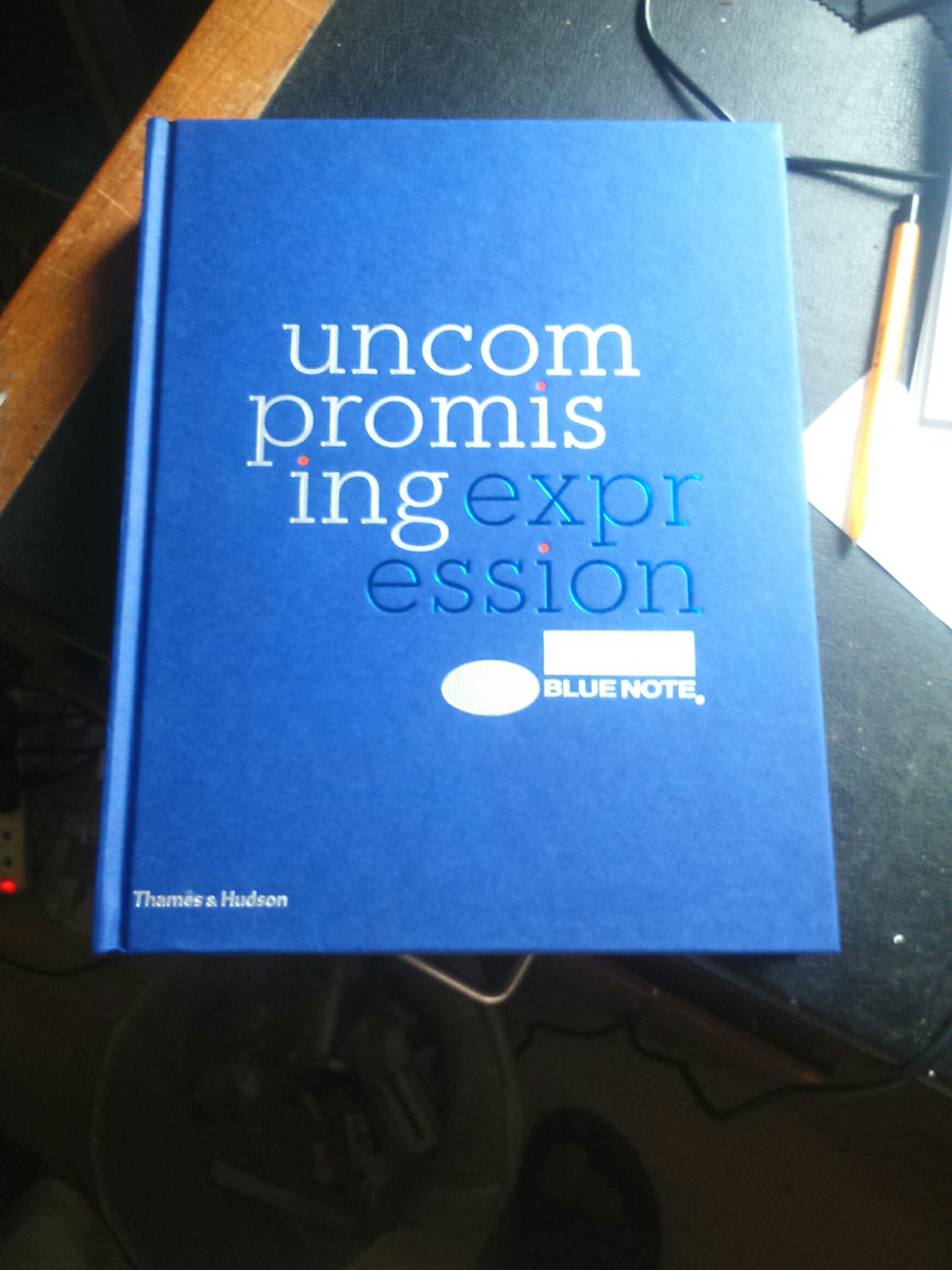
By sheer coincidence, one of the books I took with me to read in hospital was this:

image

Written by Richard Havers, this is an excellent illustrated history of the legendary record label, Blue Note. Blue Note began with a number of classic recordings from the era of Sidney Bechet, Edmond Hall and Bunk Johnson, but it was the post-bebop era that really established the label  in terms of sound and distinctive artwork:
image

Van Gelder’s  first recording studio was set up in his house in Hackensack, New Jersey, and it was probably because of the unsuitable shape of the room he used that he experimented so much with, e.g.,  the number and placing of microphones and in the way he mixed the tapes do produce a much fuller sound than was typical for jazz recordings of that era.  He moved to a bigger house – again with a built in studio – later on, but stuck by many of his earlier innovations.

One immediate result of his habit of close-miking both solo and backing instruments – he was known to use three mikes on the drums, which was unheard of at the time – and recording them as “hot” as possible, was that he guaranteed that his records would have a huge and vibrant sound when played on a gramophone or jukebox. He also captured the unique sound that Miles Davis created when he played the trumpet with a Harman mute. When Miles moved from Prestige to another label he asked their engineers to reproduce exactly what Van Gelder had done. They wouldn’t -or couldn’t – do it.

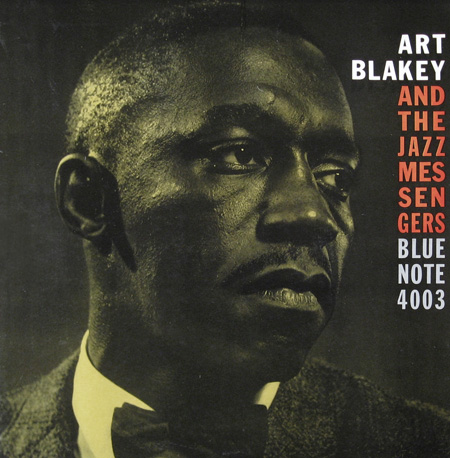
Not everyone approved of Van Gelder’s approach. You can read some severe criticisms here. Some musicians – including Charles Mingus – didn’t like the sound at all either. But there’s no question that what he did brought a new dimension to what was an extraordinarily creative time for Jazz. An astonishing fraction of the great records described in the book I mentioned above were recorded by him. As a tribute I’m including the record that for me established the Blue Note sound, Moanin’ by Art Blakey and the Jazz Messengers recorded in Van Gelder’s Hackensack Studio, New Jersey in 1958, the cover of which is shown above.

Rest in Peace, Rudy Van Gelder (1924-2016).

Get Happy!

Posted in Jazz with tags , , , on August 8, 2016 by telescoper

Back in Cardiff I was going through my collection of old LPs and found this track on a Blue Note collection. It’s standard written by Harold Arlen called Get Happy. I hadn’t listened to it for ages and I’d forgotten how great it is. It was recorded in 1953 by a six-piece band led by trombonist Jay Jay Johnson, with Clifford Brown (trumpet), Jimmy Heath (tenor saxophone), John Lewis (piano), Percy Heath (bass) and Kenny Clarke (drums). They’re all great musicians, and they make a wonderfully rich ensemble sound for a small band, but the star of the show is without doubt the great Clifford Brown , whose solo is absolutely sensational. Just listen to the way he plays the bridge on his first chorus. Superb!

Minor Swing (for the National Day of Belgium)!

Posted in Jazz with tags , , on July 21, 2016 by telescoper

Not far from the hotel in which I stayed during my visit to Ghent last week is a small but pleasant jazz bar called Minor Swing. I mentioned to some colleagues as we passed by the place that it was clearly named after the tune by Django Reinhardt (who was born in Belgium). In fact it was something of a signature tune for him. Anyway, Radio 3 reminded me this morning that today (21st July)  is Belgian National Day so I thought I’d mark the occasion on this blog by posting a version of Minor Swing that demonstrates Django’s superlative gift for melodic improvisation, together with violinist Stephane Grappelli and the Quintet of the Hot Club of France.

Vesti La Giubba

Posted in History, Opera with tags , on July 19, 2016 by telescoper

On what looks set to be the hottest day of the year I’m getting ready to head off to the Brighton Dome for this afternoon’s graduation ceremony for the School of Mathematical and Physical Sciences. This requires the wearing of ridiculously heavy robes on top of a suit which means that I’ll probably melt even before I start reading the names out. Anyway, the need to wear silly clothes for this performance reminded me of the famous aria Vesti La Giubba, which I translate roughtly as “Put on the costume”, from the  Opera Pagliacci. Here is a collection of recordings of this by the great Enrico Caruso, whose 1907 version of Vesti La Giubba was the world’s first million-selling record.


Egmont

Posted in History, Music with tags , , , on July 12, 2016 by telescoper

It was just brought to my attention that one of the historical landmarks of Ghent, the location of the conference I am currently at, is the home of Lamoral, Count of Egmont whose execution in 1568 sparked an uprising against Spanish occupation that eventually led to the independence of the Netherlands. The house itself is extremely old, being built in 1200 from roman bricks.

Egmont was also the inspiration behind Beethoven’s  famous overture played here in suitably dramatic style by the Berlin Philharmonic under the direction of Herbert von Karajan.


Dizzy Atmosphere

Posted in Jazz with tags , , , on July 6, 2016 by telescoper

Whenever I’m in dire need of inspiration – which happens a lot these days – I usually turn to music. I found this not long ago and decided to share it here because it’s not just inspirational, but awe-inspiring. I don’t have any information about the date or location of this  recording of Dizzy Atmosphere – except that it’s obviously live, and that it features the composer Dizzy Gillespie on trumpet after a great solo by the great Charlie Parker on alto saxophone. Bird is absolutely on fire in this performance!  In case you’re interested this is yet another bebop standard that’s built on rhythm changes though it is in an unusual key (A♭) for such pieces. Anyway, never mind about that, just listen to Bird flying through this!


The Flowers in the Field: The Somme Remembered

Posted in Music, Poetry with tags , , , , , , on July 1, 2016 by telescoper

I’ve posted this at 7.20am on 1st July 2016. Precisely one hundred years ago, following a heavy artillery bombardment that had been going on for a week, an enormous mine was exploded  under a fortified position at Hawthorn Ridge near Beaumont Hamel on the River Somme in France. Here is footage of the actual explosion:

Ten minutes later, the first French and British troops went “over the top” on the first day of the Battle of the Somme. It was to be the bloodiest day in the history of the British Army.

Here is an edited version of a piece I wrote some time ago about this battle and its aftermath.

–0–

Twelve summers ago, in 2004, I spent an enjoyable day walking in the beautiful Peak District of Derbyshire followed by an evening at the opera in the pleasant spa town of Buxton, where there is an annual music festival. The opera I saw was A Turn of the Screw, by Benjamin Britten: a little incongruous for Buxton’s fine little Opera House which is decorated with chintzy Edwardiana and which was probably intended for performances of Gilbert & Sullivan light comic operettas rather than stark tales of psychological terror set to unsettling atonal music.

When Buxton’s theatre was built, in 1903, the town was a fashionable resort at which the well-to-do could take the waters and relax in the comfort of one of the many smart hotels.

Arriving over an hour before the opera started, I took a walk around the place and ended up on a small hill overlooking the town centre where I found the local war memorial. This is typical of the sort of thing one can see in small towns the length and breadth of Britain. It lists the names and dates of those killed during the “Great War” (1914-1918). Actually, it lists the names but mostly there is only one date, 1916.

The 1st Battalion of the Nottingham and Derbyshire Regiment (known as the Sherwood Foresters) took part in the Battle of the Somme that started on 1st July 1916. For many of them it ended that day too; some of their names are listed on Buxton’s memorial.

On the first day of this offensive, the British Army suffered 58,000 casualties as, all along the western front, troops walked slowly and defencelessly into concentrated fire from heavy machine guns that were supposed to have been knocked out by the artillery barrage that preceded the attack. The bombardment had been almost entirely ineffective, and it finished well before the British advance started, so the Germans had plenty of time to return to their positions and wait for the advancing British. It had also been believed that the artillery shells would have cut the barbed wire protecting German positions. It didn’t. British and French troops who got entangled were sitting ducks. Carnage ensued.

Rather than calling off the attack in the face of the horrific slaughter, the powers that be carried on sending troops over the top to their doom for months on end. By the end of the battle (in November that year) the British losses were a staggering 420,000, while those on the German side were estimated at half a million. The territory gained at such a heavy price was negligible.

These numbers are beyond comprehension, but their impact on places like Buxton was measurably real. Buxton became a town of widows. The loss of manpower made it impossible for many businesses to continue when peace returned in 1918 and a steep economic decline followed. It never fully recovered from the devastation of 1916 and its pre-war posterity never returned.

And the carnage didn’t end on the Somme. As the “Great War” stumbled on, battle after battle degenerated into bloody fiasco. Just a year later the Third Battle of Ypres saw another 310,000 dead on the British side as another major assault on the German defences faltered in the mud of Passchendaele. By the end of the War on 11th November 1918, losses on both sides were counted in millions.

–0–

I decided to end this piece with the following video featuring music by George Butterworth (A Shropshire Lad: Rhapsody for Orchestra, inspired by the poetry of A.E. Housman, and one of the few surviving complete works of this composer). Images of present-day Shropshire are interspersed with photographs taken on the Somme in 1916. I chose this because George Butterworth too lost his life in the Battle of the Somme (on 5th August 1916). Lest we forget.