After an even more stressful day than usual I decided to have a quick look at Youtube before going home. That’s how I found this rare and priceless gem. It’s a wonderful performance of All of Me featuring one of the greatest combinations of musical talent in Jazz history, Billie Holiday and Lester Young, but it’s a discarded track that was never released on record. “Why would anyone discard such a masterpiece?”, I hear you ask. Well, that’s simply because it ran over the three minutes that could fit onto an old-style 78rpm disk. The reason it is too long is that there’s more than the usual ration of Lester Young’s tenor saxophone, in the form of a superb extended solo that is so beautiful it brought tears to my eyes. This is as perfect a performance as you could hope to hear, but it is brought back down to Earth at the end by the recording engineer whose only comment from the box when the exquisite music subsides is “It’s a bit long”…
I’m going to be incommunicado for yet another “Awayday” today so I thought I’d post this to tide the blog over until Saturday when I’ll be back on campus for yet another Applicant Visit Day.
I heard this piece on Radio 3 a while ago and was intrigued enough to describe it on Twitter as “weird but groovy”. The presenter, Mr James Jolly, mentioned that comment live on air so I briefly felt like a celebrity. The Boléro sur un thème de Charles Racquet is a piece for organ and percussion that was actually improvised in its first performance by renowned organist and composer Pierre Cochereau in 1973, and transcribed by his son, Jean-Marc Cochereau. I think it’s a remarkably original piece of music.
This morning, as usual, I was woken this morning by the breakfast programme on BBC Radio 3. There is a regular slot called Bach Before Seven which I always listen to despite the risk of harpsichords. This morning I was delighted that the choice was an arrangement of Brandenburg Concerto No. 3 by Johann Sebastian Bach played by the Jacques Loussier Trio. It might have been a much for some classical purists, but I liked it a lot. Bach’s music is so beautifully constructed that it can stand being pulled around in all sorts of ways.
If you’re of a certain age (like) me you might also remember that happiness is a cigar called Hamlet but not remember who played the tune. It was, fact, Jacques Loussier and his trio doing their take on the so-called Air on the G String, also by Johann Sebastian Bach And before you get too sanctimonious and music-hysterical about this version, I’ll just add that it is well known that Bach enormously enjoyed improvisation. Many jazz musicians of my acquaintance really love Bach’s music, and I have a sneaking feeling the great man would have enjoyed this take on his composition!
Ps. Coincidentally Sunday’s Azed crossword offered this clue for 19 down:
“One re-interpreting Bach, central duo halved, more unsatisfactory (7)”
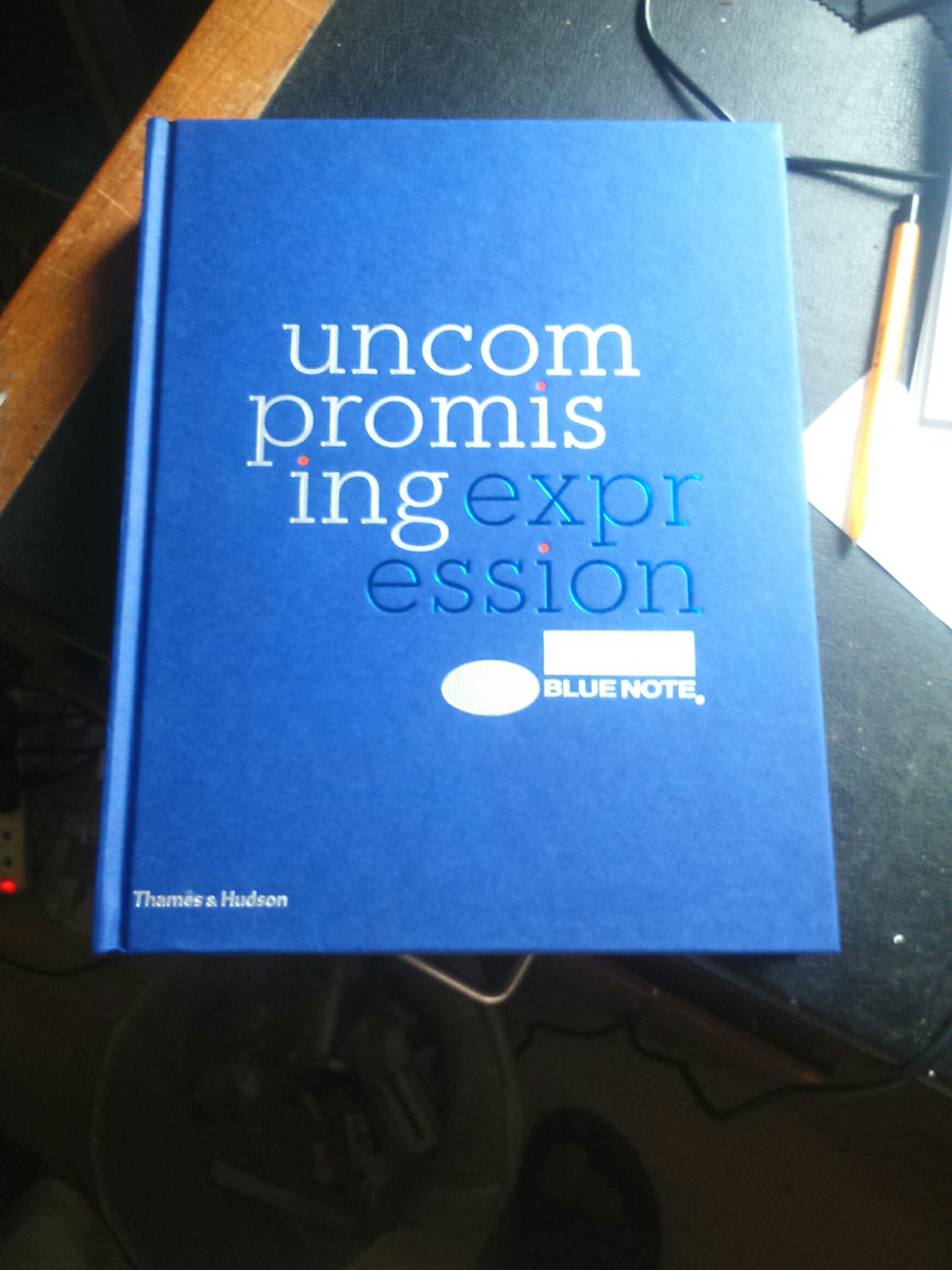
I don’t get much time for self-indulgence these days, but last week I treated myself to this book:
Written by Richard Havers, this is an excellent illustrated history of the legendary record label, Blue Note. Although primarily associated with post-war Jazz, Blue Note began with a number of classic recordings from the era of Sidney Bechet, Edmond Hall and Bunk Johnson.
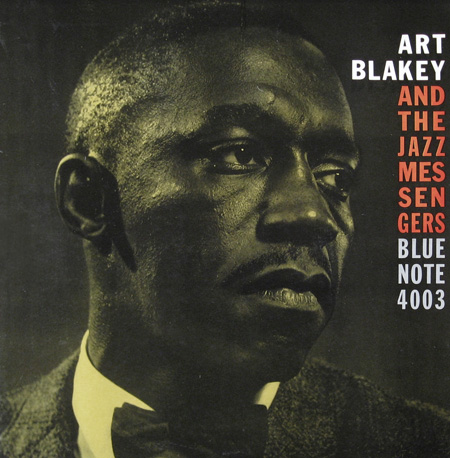
I have only had time to dip into it so far, but what I have seen is superb, not only in terms of the text but also copious examples of the artwork that gave Blue Note albums their distinctive look.
Uncompromising Expression is a must- have for Jazz fans, although at just under £50 it’s not cheap. Fortunately I got a book token for Christmas!
Sometime in the late Seventies I bought a vinyl LP called Jazz at the Pawnshop, which featured live performances by four veterans of the Swedish Jazz scene; Arne Domnerus (alto saxophone), Bengt Hallberg (piano), Egil Johansen (drums) and George Riedel on bass. Sadly, three of the four musicians involved are no longer with us; only George Riedel is still alive, but at least their music lives on.
The content was recorded in Stockholm over two days in December 1976 at a Jazz club on a site where a pawnshop once stood, hence the name. The album was reissued on CD in 1996 and then, just last year, somebody posted it on Youtube. That gives me an excuse to share my favourite track, which features the band not playing one of the classic bebop tunes on which they cut their teeth when they were young, but the Lil Hardin composition from a much earlier era Struttin’ with some Barbecue which was something of a vehicle for her husband, Louis Armstrong. Not, ‘Strittin’ by the way as it says on the Youtube link.
I loved this track from the moment I first heard it, from the intriguing out-of-tempo opening through a jaunty bossa nova passage, and evolving into an extended improvised exploration by Domnerus set against typically bebop-inspired patterns from the rhythm section. Modern jazz treatments of tunes from the classic era don’t always turn out well, but this one surely did. Enjoy!
Today’s the day we call in England Shrove Tuesday. We’re apparently all supposed to get shriven by doing a penance before Lent . Another name for the occasion is Pancake Day, although I’m not sure what sort of pennance it is to be forced to eat pancakes.
Further afield the name for this day is a bit more glamorous. Mardi Gras, which I translated using my schoolboy French as Fat Tuesday, doesn’t make me think of pancakes but of carnivals. And being brought up in a house surrounded by Jazz, it makes me think of New Orleans and the wonderful marching bands that played not just during the Mardi Gras parades but at just about every occasion for which they could find an excuse, including funerals.
The Mardi Gras parades gave rise to many of the great tunes of New Orleans Jazz, many of them named after the streets through which the parade would travel, mainly in the famous French Quarter. Basin Street, South Rampart Street, and Bourbon Street are among the names redolent with history for Jazz fans and musicians around the world. I also remember a record by Humphrey Lyttelton‘s 1950s band called Fat Tuesday.
The New Orleans Mardi Gras has on recent occasions sometimes got a bit out of hand, and you probably wouldn’t want to take kids into the French Quarter for fear they would see things they shouldn’t. Personally, though, I’d love the chance to savour the atmosphere and watch the parades. Anyway, here’s an infectious little number performed for you by the inestimable Preservation Hall Jazz Band from New Orleans; the Preservation Hall is located in the French Quarter. It’s a traditional song with original lyrics in the local Creole Patois, but often also performed in standard French. The words are all about eating, which makes it somewhat relevant to today, although that’s only their surface meaning. You might recognize the tune from other songs that borrowed the theme, but this one is the Daddy! You don’t often hear it played with as strong a Caribbean influence on the rhythm as this version, and the excellent banjo solo is evocative of the Cajun music or Louisiana, but that blending of cultures and traditions is exactly what made New Orleans such an important place in musical history…
I was listening to BBC Radio 3 last night. The evening concert happened to feature Mahler’s wonderful 4th Symphony, so obviously I turned the volume up. All of which reminded me of this scene from the film Educating Rita, featuring Julie Walters and Maureen Lipman. Fortunately in my case nobody rang the doorbell. I am not to be disturbed when listening to old Gustav.
After spending most of the day on campus for the first Applicant Visit Day of 2106 at the University of Sussex I went home feeling a bit exhausted, but my spirits were soon lifted when I switched on BBC Radio 3 to find a broadcast just startiong of Tannhäuser (or Tannhäuser und der Sängerkrieg auf Wartburg to give it it’s full title). It wasn’t quite the usual Saturday Night Live from the Met because the performance was actually recorded on October 31st 2015 at the Metropolitan Opera in New York, so I won’t quibble about that. Composed in 1845, Tannhäuser is a relatively early work by Richard Wagner which he called a “Romantic opera in three acts” indicating that it has the structure of a conventional opera; later on in his career he was to abandon that format in favour of the Music Drama (which is not built on a succession of arias and recitatives) as Tannhäuser is.
I won’t go into too much detail of the plot, but Tannhäuser is basically about typical Wagnerian themes: the conflict between spiritual and earthly love, between life and death, and the hope of redemption. The eponymous hero, a minstrel knight, takes a walk on the wild side in Act I by visiting Venusberg, in the course of which he is unfaithful to his beloved Elizabeth. He turns up in Act II at Wartburg where there i a sort of mediaeval Eurovision Song contest. First singer up is the naive but honorable Wolfram who sings a beautiful song about courtly love, but Tannhäuser finds it all a bit tame and sings a much raunchier number, which reveals that he’s been a naughty boy. There is uproar, swords are drawn and it all gets a bit fraught. Eventually Tannhäuser is persuaded to atone for his transgressions by undertaking a pilgrimage to Rome. Unfortunately for him the Pope isn’t in an absolving mood and tells him he’s going to suffer eternal damnation. In Act III, Tannhäuser, clearly unhinged, talks about returning to Venusberg – if he’s damned anyway he might as well go out with a bang – but then he discovers his beloved Elizabeth is dead and, overcome by grief and remorse, he dies too.
Regular readers of this blog will know that I have an ambivalent attitude to Wagner, but last night I was hooked from the moment I switched the radio on and listened right through to the end, which came four hours later. I have heard Tannhäuser before and knew the familiar show-stoppers (especially the famous Pilgrim’s Chorus, which is as uplifting a piece of music as you will hear anywhere). What was so very special last night, however, was the quality of the singing, which was truly wonderful all the way through the principals and chorus. The broadcast is available on iPlayer for the next month. If you have never had a taste of Wagner, give it a go. This opera is full of great tunes but they were sung better in this performance than in any other I have heard. As a little taster, here is Wolfram (sung by baritone Peter Mattei) from the same production we heard last night, singing his Act III aria O du mein holder Abendstern (O thou my fair evening star).
The Times Higher has given me yet another reason to be disgruntled this week, in the form of an article that talks about the possible effect of the proposed Teaching Excellence Framework (TEF) on “creative” subjects. What bothers me about this piece is not that it criticises the TEF – I think that’s an unworkable idea that will cause untold damage to the University system if, as seems likely, it is railroaded through for political reasons – but that the author (Nigel Carrington, Vice-Chancellor of the University of Arts London), like so many others, lazily implies that STEM disciplines are not creative. I think some of the most intensively creative people in the world are to be found in science and engineering and creativity is something we try very hard to nurture in students at Sussex University regardless of discipline.
Anyway, while feeling grumpy about this article, I remembered this video of an interview with the great jazz pianist, Bill Evans. Jazz is undoubtedly an intensely creative form, not only because it requires spontaneous real-time conversion of ideas into sounds. Evans talks with great passion and insight about creativity in music-making, but the striking thing about what he says at the very beginning about the need to analyse your subject at a very elementary level before proceeding in order to create something that’s “real” applies equally well to, e.g. theoretical physics as it does to jazz.
In the following section he reiterates this point, but also stresses the discipline imposed by a particular form and why this does not limit creativity but makes it stronger.
It’s better to do something simple that is real. It’s something you can build on. because you know what you’re doing. Whereas, if you try to approximate something very advanced and don’t know what you’re doing, you can’t build on it.
No matter how far I might diverge or find freedom in this format, it only is free insofar that it has reference to the strictness of the original form. That’s what gives it its strength.
In much the same way, theoretical physics is not made less creative because it has to obey the strict rules of mathematics but more so. This is true also in the fine arts: the more limited the canvas the more creative the artist must be, but it also applies to, e.g. engineering design. Self-teaching is important in STEM subjects too: the only really effective way of learning, e.g. physics, is by devoting time to working through ideas in your own mind, not by sitting passively in lectures.
All subjects require technical skill, but there is more to being a great jazz musician than mastery of the instrument just as there’s more to being a research scientist than doing textbook problems. So here’s to creativity wherever it is found, and let’s have a bit more appreciation for the creative aspects of science and engineering!
The views presented here are personal and not necessarily those of my employer (or anyone else for that matter).
Feel free to comment on any of the posts on this blog but comments may be moderated; anonymous comments and any considered by me to be vexatious and/or abusive and/or defamatory will not be accepted. I do not necessarily endorse, support, sanction, encourage, verify or agree with the opinions or statements of any information or other content in the comments on this site and do not in any way guarantee their accuracy or reliability.