Archive for the Music Category

The Last Song on the Voyager Golden Record

Posted in Music with tags , , , , on December 22, 2014 by telescoper

Totally spontaneously and without any prompting whatsoever from any reader of this blog (?), I’ve decided today to post a piece of music. I don’t usually like posting single movements from classical works. I much prefer listening to them in the context for which they were orginally devised rather than as “bleeding chunks” because the entire composition should be greater than the sum of its parts. That is true of Beethoven’s magnificent late String Quartets, but some of the parts are nevertheless so exquisite on their own that I don’t mind at all hearing them separately. I posted the wonderful Heiliger Danksgesang (the third movement of Quartet No. 15 in A Minor, Opus 132) some time ago. That’s a piece of music that is very special to me for a number of reasons. This time, though, it’s String Quartet No. 13 in  B♭ major, Opus 130.

This is an unusual quartet, consisting of no less than six movements. In the original version the last movement was a very long and intricate double fugue, but for all its magnificence this enormous movement perplexed audiences who were no doubt expecting something closer to the traditional structure of a string quartet. Beethoven then wrote an alternative final movement, much shorter and lighter, and published the original final movement as a standalone work, the Große Fuge (Opus 133).

But it’s the penultimate, fifth, movement that I wanted to share. This is marked “Cavatina. Adagio molto espressivo.” This is one of those pieces of music that makes everything else disappear from my mind whenever I hear it. Its poignancy and lyricism are felt even more deeply when you realise that Beethoven himself never heard it, except in his mind’s ear. He was already profoundly deaf when he composed this work and indeed he died before the first performance of the final version of the quartet, so never even saw it being played.

Of all the pinnacles of European culture and civilisation, Beethoven’s late quartets must be among the very highest, but this short movement transcends even that level of achievement and reaches something utterly sublime. I think it’s entirely apt that this is the last piece of music on the famous Golden Records which the Voyager spacecraft are carrying into the depths of interstellar space. Close your eyes and think of that as you listen to the music.

PS. A “cavatina” is a “short and simple song”, hence the use of the word “song” in the title, but it doesn’t really do this piece justice, but there really aren’t any words that can describe it adequately.

Parisian Thoroughfare

Posted in Jazz with tags , on December 14, 2014 by telescoper

Ahead of my short trip to Paris tomorrow, of which more anon, I thought I’d post this wonderful performance by quintessential bebop pianist Bud Powell of his own composition, Parisian Thoroughfare. This track comes from the same B;ue Note album The Amazing Bud Powell as the version of Over The Rainbow I posted recently, which is one of the most played on my iPod. I hope you like this,

Bud Powell: Over the Rainbow

Posted in Jazz with tags , , on December 6, 2014 by telescoper

There can  hardly be a tune ever written that some jazz musician somewhere hasn’t taken a fancy to and done their own original version, however unpromising the raw material. Louis Armstrong had a particularly amazing ability to turn base metal into solid gold, making glorious music out of tunes nobody else wanted to touch.

These thoughts came into my head when I was listening last night to this version of Over the Rainbow,  by the great Bud Powell, which I think is brilliant, despite the mawkish sentimentality of the original song. Bud Powell had serious mental illness to deal with – he suffered numerous breakdowns and was heavily medicated in an attempt treat his schizophrenia – and also had a long-term problem with narcotic abuse; the two issues were no doubt related.

Although he moved to Paris in 1959 to make a fresh start, his self-destructive tendencies caught up with him. The quality of his playing deteriorated, his behaviour became erratic and he eventually died in 1966. Before leaving the States, however, Powell had made a number of recordings in which he demonstrated the virtuosity and musical imagination that established him as one of the greatest jazz pianists of all time, and certainly the leading stylist of the bebop era.

Bud Powell’s version of Over the Rainbow is one of my all-time favourite pieces of music. Although clearly inspired by Art Tatum, Powell’s  treatment of the tune is startlingly original because he puts so much variation into the way he plays it, alternating a lush romantic style with jagged boppy lines and dark undertones introducing a strong element of parody juxtaposed with a more orthodox treatment of the melody.  By any standards, this is a masterpiece, and a vivid portrayal of the battle between light and darkness that mirrored his own experiences of life.

Una Furtiva Lagrima

Posted in Biographical, Opera with tags , , , , on December 2, 2014 by telescoper

Too busy for a proper post today so here’s a bit of music. On Saturday I had the pleasure of listening on BBC Radio 3 to a live broadcast of the opera L’elisir d’amore from Covent Gardens, one of my all-time favourite works. I definitely have a thing for the kind of Italian Bel Canto exemplified by the work of Gaetano Donizetti and this is one of his greatest; certainly his most performed anyway. One the surface it’s a light romantic comedy with a very silly plot involving a quack doctor and a fake potion, but it’s beautifully characterized and has considerable dramatic depth and wonderful music. I don’t mind daft operas, as long as they’re sufficiently daft to be true to real life…

Anyway, listening on the radio made me realise how long it has been since I went to see an opera live. Looking at the Covent Garden website to see if there were any more performances due, I saw the prices of the remaining tickets, which brough tears to my eyes. All of which brings me to the highlight of L’elisir d’amore, the Act III aria Una Furtiva Lagrima, one of the most famous and beautiful tenor arias in the entire repertoire. Here it is, sung by the late great Pavarotti. Enjoy!

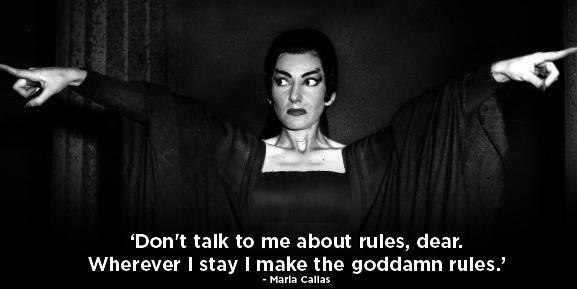
Oh, and while I am on the theme of opera I’ll just mention that Maria Callas was born on this day in 1923. Happy Birthday, La Divina!

Callas

Hubble Images With Music By Herschel

Posted in History, Music, The Universe and Stuff with tags , , on November 20, 2014 by telescoper

Too busy for a full post today, so here’s a little stocking filler. The, perhaps familiar, pictures are taken by the Hubble Space Telescope but the music is by noted astronomer (geddit?) Sir William Herschel – the Second Movement of his Chamber Symphony In F Major, marked Adagio e Cantabile. Although best known as an astronomer Herschel was a capable musician and composer with a style very obviously influenced by his near contemporary Georg Frideric Handel. Although music of this era puts me on a High Harpsichord Alert, I thought I’d share this example of music for those of you unfamiliar with his work…

200 Years of Sax – Anniversary Poll

Posted in History, Music with tags , , , on November 6, 2014 by telescoper

Today is the 200th anniversary of the birth of famous Belgian Adolphe Sax, inventor of the saxophone. To mark this occasion I thought I’d undertake a bit of audience participation and get you out there in internet land to vote on the greatest proponent of said instrument. I’ve populated the list with people I consider to be likely contenders, but feel free to add your own if your favourite is missing!

R.I.P. Acker Bilk (1929-2014)

Posted in Jazz with tags , , , on November 3, 2014 by telescoper

Yesterday evening I heard the sad news that “trad” jazz stalwart Acker Bilk had died, aged 85. With his trademark bowler hat and goatee beard, he was one of the leading figures of the post-war British jazz scene. He scored considerable commercial recording success with the Paramount Jazz Band, especially with Stranger on the Shore which was in the British Charts for 50 weeks in 1962, was the first record by a British artist to hit No. 1 in the American Billboard charts, and was greatly admired by no less a figure than Duke Ellington. There are tributes all over today’s newspapers (e.g. here) that do better justice to Acker Bilk than I could, so I’ll just post one track as a special tribute. This track, Train Song, the B-side of The Harem, was recorded in the year of my birth and I have loved it since I was a kid.

Rest in peace, Acker Bilk (1929-2014)


Charlie Christian: Swing to Bop

Posted in Jazz with tags , , , , , , , on November 2, 2014 by telescoper

I was transferring some old CDs onto my iPod the other day, and in the process of doing that I realized that in all the six years I’ve been running this blog I haven’t posted a single item about the great guitarist Charlie Christian, who did more than any other individual to promote the use of the electrical guitar and thus had an enormous influence on the development of  20th century music. The only reason I can think of why his is not a household name is that he died so young, in 1942, of tuberculosis, at the age of just 25.

Born in 1916, Charlie Christian came to prominence with Benny Goodman‘s orchestra during the 1930s. That in itself merits a remark. Benny Goodman was one of the first white bandleaders in the Swing Era to have black musicians in his band at a time when both musicians and audiences were generally racially segregated in the United States of America. Goodman deserves great credit for picking the best musicians he could find, regardless of the colour of their skin; Lionel Hampton is another prominent example. Bringing the young Charlie Christian into his band also testifies not only to his refusal to pander to racism, but also his willingness to experiment with new musical ideas, not least taking the guitarist out of the rhythm section and placing him as front-line soloist.

Here’s an excellent example of Charlie Christian playing with Benny Goodman’s Orchestra in 1939. I remember that my Dad wasn’t all that keen on Benny Goodman’s clarinet playing, which he regarded as “too clinical”. In fact many jazz writers also tend to refer to Benny Goodman’s playing as “unemotional”. I can’t agree. I admit that the band is a bit “slick”, but the clarinet on this track is absolutely sensational to me, and I find it a joy to listen to over and over again.  There’s also fine Cootie Williams on trumpet on this version of Fats Waller’s composition Honeysuckle Rose:

Commercial records from the 1930s were strictly limited by the available technology to 3 minutes’ duration, so Charlie Christian’s solo on that track  is necessarily brief.  You can hear much more of him on the historically important amateur recordings made during the early 1940s of late-night jam sessions at Minton’s Playhouse in New York City. This is an excerpt from a piece called Swing to Bop recorded in 1941, which shows how far Charlie Christian had advanced in just a couple of years. His improvised solo is way ahead of its time in the way it develops through an effortless string of musical ideas into an exploration of the harmonic possibilities of the chord sequence that I find absolutely sensational to listen to.

Not many people knew it at the time, because tracks like this weren’t made commercially available, but a musical revolution was brewing. Charlie Christian changed the course of jazz history, helping to usher in the bebop era, but his influence on rock-and-roll guitar is also incalculable.

Incidentally, I think Swing to Bop is actually the Count Basie tune Topsy in disguise, or at least the chords thereof. Listen to Topsy here and see if you agree..

Volare

Posted in Music with tags , on October 6, 2014 by telescoper


Signore, ascolta!

Posted in Opera with tags , , , , on October 3, 2014 by telescoper

Time for a Friday lunchtime end-of-the-week kind of a post. This is the great Montserrat Caballé singing the beautiful aria Signore, ascolta! from the Opera Turandot by Giacomo Puccini. As the title suggests, you should listen to the whole thing because it’s lovely, but be prepared for something truly astonishing from about 2.16 onwards as the singer demonstrates unbelievable control by holding that final high note in a way that doesn’t seem humanly possible..