Archive for the Music Category

200 Years of Sax – Anniversary Poll

Posted in History, Music with tags , , , on November 6, 2014 by telescoper

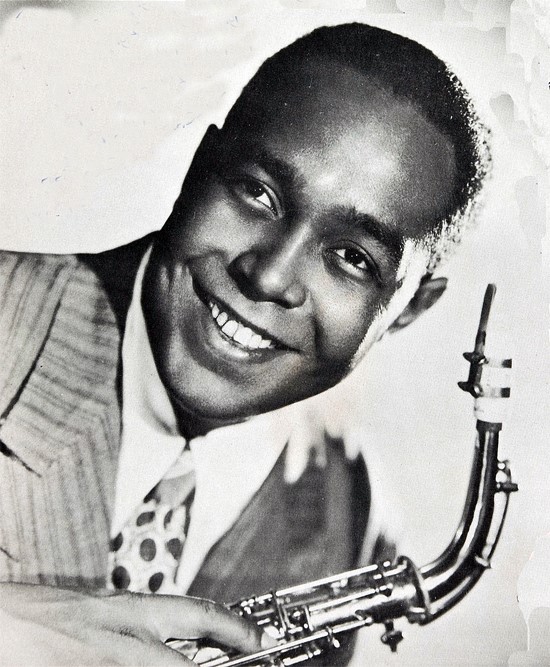
Today is the 200th anniversary of the birth of famous Belgian Adolphe Sax, inventor of the saxophone. To mark this occasion I thought I’d undertake a bit of audience participation and get you out there in internet land to vote on the greatest proponent of said instrument. I’ve populated the list with people I consider to be likely contenders, but feel free to add your own if your favourite is missing!

R.I.P. Acker Bilk (1929-2014)

Posted in Jazz with tags , , , on November 3, 2014 by telescoper

Yesterday evening I heard the sad news that “trad” jazz stalwart Acker Bilk had died, aged 85. With his trademark bowler hat and goatee beard, he was one of the leading figures of the post-war British jazz scene. He scored considerable commercial recording success with the Paramount Jazz Band, especially with Stranger on the Shore which was in the British Charts for 50 weeks in 1962, was the first record by a British artist to hit No. 1 in the American Billboard charts, and was greatly admired by no less a figure than Duke Ellington. There are tributes all over today’s newspapers (e.g. here) that do better justice to Acker Bilk than I could, so I’ll just post one track as a special tribute. This track, Train Song, the B-side of The Harem, was recorded in the year of my birth and I have loved it since I was a kid.

Rest in peace, Acker Bilk (1929-2014)


Charlie Christian: Swing to Bop

Posted in Jazz with tags , , , , , , , on November 2, 2014 by telescoper

I was transferring some old CDs onto my iPod the other day, and in the process of doing that I realized that in all the six years I’ve been running this blog I haven’t posted a single item about the great guitarist Charlie Christian, who did more than any other individual to promote the use of the electrical guitar and thus had an enormous influence on the development of  20th century music. The only reason I can think of why his is not a household name is that he died so young, in 1942, of tuberculosis, at the age of just 25.

Born in 1916, Charlie Christian came to prominence with Benny Goodman‘s orchestra during the 1930s. That in itself merits a remark. Benny Goodman was one of the first white bandleaders in the Swing Era to have black musicians in his band at a time when both musicians and audiences were generally racially segregated in the United States of America. Goodman deserves great credit for picking the best musicians he could find, regardless of the colour of their skin; Lionel Hampton is another prominent example. Bringing the young Charlie Christian into his band also testifies not only to his refusal to pander to racism, but also his willingness to experiment with new musical ideas, not least taking the guitarist out of the rhythm section and placing him as front-line soloist.

Here’s an excellent example of Charlie Christian playing with Benny Goodman’s Orchestra in 1939. I remember that my Dad wasn’t all that keen on Benny Goodman’s clarinet playing, which he regarded as “too clinical”. In fact many jazz writers also tend to refer to Benny Goodman’s playing as “unemotional”. I can’t agree. I admit that the band is a bit “slick”, but the clarinet on this track is absolutely sensational to me, and I find it a joy to listen to over and over again.  There’s also fine Cootie Williams on trumpet on this version of Fats Waller’s composition Honeysuckle Rose:

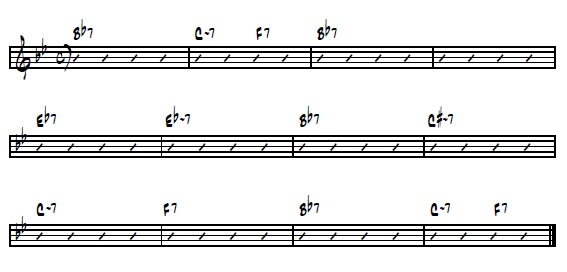
Commercial records from the 1930s were strictly limited by the available technology to 3 minutes’ duration, so Charlie Christian’s solo on that track  is necessarily brief.  You can hear much more of him on the historically important amateur recordings made during the early 1940s of late-night jam sessions at Minton’s Playhouse in New York City. This is an excerpt from a piece called Swing to Bop recorded in 1941, which shows how far Charlie Christian had advanced in just a couple of years. His improvised solo is way ahead of its time in the way it develops through an effortless string of musical ideas into an exploration of the harmonic possibilities of the chord sequence that I find absolutely sensational to listen to.

Not many people knew it at the time, because tracks like this weren’t made commercially available, but a musical revolution was brewing. Charlie Christian changed the course of jazz history, helping to usher in the bebop era, but his influence on rock-and-roll guitar is also incalculable.

Incidentally, I think Swing to Bop is actually the Count Basie tune Topsy in disguise, or at least the chords thereof. Listen to Topsy here and see if you agree..

Volare

Posted in Music with tags , on October 6, 2014 by telescoper


Signore, ascolta!

Posted in Opera with tags , , , , on October 3, 2014 by telescoper

Time for a Friday lunchtime end-of-the-week kind of a post. This is the great Montserrat Caballé singing the beautiful aria Signore, ascolta! from the Opera Turandot by Giacomo Puccini. As the title suggests, you should listen to the whole thing because it’s lovely, but be prepared for something truly astonishing from about 2.16 onwards as the singer demonstrates unbelievable control by holding that final high note in a way that doesn’t seem humanly possible..

I told you once, I told you twice..

Posted in Jazz with tags , on September 26, 2014 by telescoper

I thought I’d wind things down for the weekend by posting a little bit of British jazz history. It’s perhaps not very well known that the great Sidney Bechet came to England in 1949 and did a concert and a recording session with Humphrey Lyttelton’s band while he was here. What’s also not very well known is how controversial this was, as in the immediate post-war years the Musician’s Union had persuaded the UK government to ban American artists from performing over here. Humph was having none of it, thank goodness, and here we have the legacy. Here is the unmistakeable Sidney Bechet on soprano sax, playing a traditional blues called I told you once, I told you twice with Humph on trumpet, Wally Fawkes on clarinet and, stealing the show, the absolutely superb Keith Christie on trombone. The only problem is that the youtube version cuts out a bit early…

After the concert they played together, Bechet summoned Humph in order to deliver a kind of end-of-term report on the band in which he pointed out little criticisms of their playing and so on. Bechet was a forceful character and often a harsh critic but when he got to Keith Christie he expressed nothing but unqualified admiration. There’s not much higher praise than that in the world of jazz.


The Arrival of the Queen of Sheba

Posted in Biographical, Music with tags , , , on September 14, 2014 by telescoper

It’s been such a hectic week getting ready for our new arrivals at the University of Sussex that I’ve been largely limited to posting short items and recycled material. Today is no exception either, as I have been on campus again for another Freshers’ induction week event and now have to prepare a talk for new students in the School of Mathematical and Physical Sciences for tomorrow morning. Anyway, all these busy preparations made me think today of the famous instrumental passage from Act III of Handel’s Oratorio Solomon which depict in wonderfully lively fashion  similar preparations preceding the Arrival of the Queen of Sheba. I know that’s a feeble pretext for posting a bit of music, but I thought I’d at least put a little twist on it by including a performance rather different from what you might be expecting.

This version of The Arrival of the Queen of Sheba is by wonderful Welsh harpist Glenda Clwyd whom I remember hearing play at a couple of events when I was living in Cardiff. This clip is of an impromptu performance and there are a couple of small mistakes, but I think it’s a lovely rendition, the uniquely gentle sound of the harp making it less frantic than most versions.


September Song – the Django Reinhardt version

Posted in Jazz with tags , , on September 11, 2014 by telescoper

Summer’s drawing to a close and preparing for the imminent arrival of new intake of students is taking up a lot of my time this week, so I thought I’d just put up something I’ve posted before, in the form of a piece of music that celebrates the genius of Django Reinhardt, the great Belgian-born gypsy guitarist who overcame the terrible  injuries he suffered as a child (in a fire in his caravan) to become one of the greatest jazz musicians of all time.  He had a unique style of playing the guitar he invented himself to get around the fact that the third and fourth digits on his left hand were so badly burned he could effectively only use two fingers. He also had an unparalleled gift for melodic improvisation that won him admirers all around the world and across all styles of music. Add him to your list of famous Belgians right away, for he was most certainly a musical genius.

Here he’s playing the beautifully poignant September Song, by Kurt Weill:

Oh, it’s a long, long while from May to December
But the days grow short when you reach September


Copenhagen, Cosmology and Coleman Hawkins

Posted in Biographical, Jazz, The Universe and Stuff with tags , , on August 18, 2014 by telescoper

Now that I’ve finally checked into my hotel in the wonderful city of Copenhagen I thought I’d briefly check in on the old blog as well. I’m here once again for a meeting, this time as an invited speaker at the 2nd NBIA-APCTP Workshop on Cosmology and Astroparticle Physics; NBIA being the Niels Bohr International Academy (based in Denmark) and APTCTP being the Asia Pacific Centre for Theoretical Physics (based in Korea). This is the kind of meeting I actually like, with relatively few participants and lots of time for discussion; as a welcome gesture for the first day there was also free beer!

I decided for some reason to try an experimental route getting here. There wasn’t a flight at a convenient date and  time from Gatwick, the nearest airport to my Brighton residence, so I decided to get an early morning flight from Heathrow instead. The departure time of 06:40, however, left me with the difficulty of getting there in time by public transport as the relevant trains don’t run overnight. I toyed with the idea of booking an airport hotel for the night, but decided that would be extravagant so instead opted to get a coach from Brighton; this was cheap and comfortable – only a handful of other passengers got on the bus – and got me there right on schedule. The downside was that I had to catch the 01:40 from Brighton Coach Station, which arrived at about 4am at Heathrow Terminal 3. It was quite interesting finding the normally busy terminal almost deserted but although I did a self-service check-in straight away the bag drops didn’t open until almost 5am. None of the cafes in the check-in area were open, so I had to hang around for an hour before finally getting rid of my luggage and passing through to the airside whereupon I nabbed some coffee and a bite to eat.

The flight was almost uneventful. Unfortunately, however, as we came in to land at Copenhagen’s Kastrup airport, a young person sitting behind me vomited uncontrollably and at considerable length, producing a steady flow both of chunder and unpleasant noises. The aftermath was quite unpleasant, so I was quick out of the blocks when the plane finally came to a stop at the gate. An aisle seat turned out to have been a wise choice.

Assuming it would be too early to check into the hotel that had been booked for me, I decided to go straight to the meeting but got to the Niels Bohr Institute’s famous Auditorium A near the end of the first talk, about the Imprint of Radio Loops on the CMB (a subject I’ve blogged about), which is a shame because (a) its interesting and (b) some of my own work was apparently discussed. That happens so rarely these days I’m sorry I missed it.

I was a bit tetchy as a result of my sleepless night, though I limited the expression of this to a  couple of rants about frequentist statistics during the discussions.

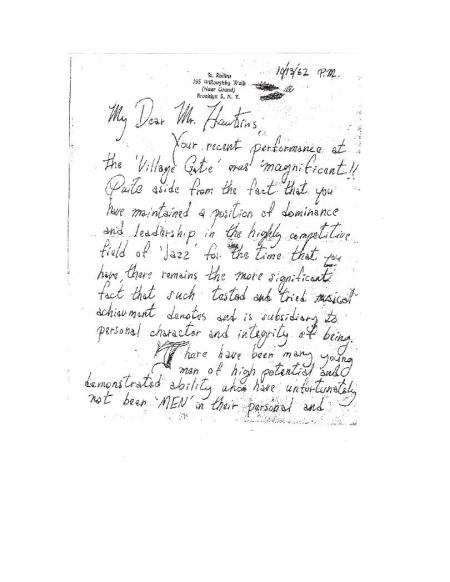
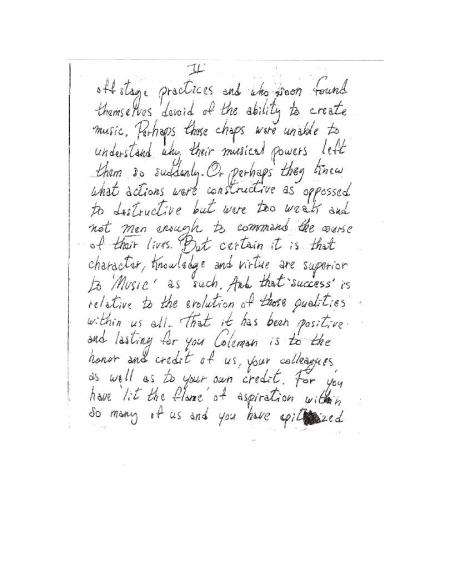
After the free beer I finally made my way to the hotel and checked in. It’s not bad, actually. There can’t be that many hotel rooms that have a picture of the great tenor saxophonist Coleman Hawkins on the wall:

SAMSUNG DIGITAL CAMERA

Anyway, I was due to give the conference summary on Friday but I’ve been moved forward to Wednesday so I’d better think of something to say. Maybe in the morning though, I could do with an early night…

The Statistics of the “Great War”

Posted in Music, Poetry with tags , , , , , on August 4, 2014 by telescoper

Since today, 4th August 2014, is the centenary of Britain’s entry into the First War I thought I’d repost an edited version of a piece I wrote some time ago which says very clear what I feel about the War that some people insist on calling “Great”…

–0–

Ten summers ago, in 2004, I spent an enjoyable day walking in the beautiful Peak District of Derbyshire followed by an evening at the opera in the pleasant spa town of Buxton, where there is an annual music festival. The opera I saw was A Turn of the Screw, by Benjamin Britten: a little incongruous for Buxton’s fine little Opera House which is decorated with chintzy Edwardiana and which was probably intended for performances of Gilbert & Sullivan comic operettas rather than stark tales of psychological terror.

When Buxton’s theatre was built, in 1903, the town was a fashionable resort at which the well-to-do could take the waters and relax in the comfort of one of the many smart hotels.

Arriving over an hour before the opera started, I took a walk around the place and ended up on a small hill overlooking the town centre where I found the local war memorial. This is typical of the sort of thing one can see in small towns the length and breadth of Britain. It lists the names and dates of those killed during the “Great War” (1914-1918). Actually, it lists the names but mostly there is only one date, 1916.

The 1st Battalion of the Nottingham and Derbyshire Regiment (known as the Sherwood Foresters) took part in the Battle of the Somme that started on 1st July 1916. For many of them it ended that day too; some of their names are listed on Buxton’s memorial.

On the first day of this offensive, the British Army suffered 58,000 casualties as, all along the western front, troops walked slowly and defencelessly into concentrated fire from heavy machine guns that were supposed to have been knocked out by the artillery barrage that preceded the attack. The bombardment had been almost entirely ineffective, and it finished well before the British advance started, so the Germans had plenty of time to return to their positions and wait for the advancing British.

Rather than calling off the attack in the face of the slaughter, the powers that be carried on sending troops over the top to their doom for months on end. By the end of the battle in November that year the British losses were a staggering 420,000, while those on the German side were estimated at half a million. The territory gained at such a heavy price was negligible.

These numbers are beyond comprehension, but their impact on places like Buxton was measurably real. Buxton became a town of widows. The loss of manpower made it impossible for many businesses to continue when peace returned in 1918 and a steep economic decline followed. It never fully recovered from the devastation of 1916 and its pre-war posterity never returned.

And the carnage didn’t end on the Somme. As the “Great War” stumbled on, battle after battle degenerated into bloody fiasco. Just a year later the Third Battle of Ypres saw another 310,000 dead on the British side as another major assault on the German defences faltered in the mud of Passchendaele. By the end of the War on 11th November 1918, losses on both sides were counted in millions.

I thank my lucky stars that I never had to live through conflict on the scale my grandparents’ generation had to face and curse those who have inflicted that fate on others. I quote a great First World War poet, Siegfried Sassoon (writing here in prose) whose words are as apt today as they were ninety years ago:

I have seen and endured the sufferings of the troops, and I can no longer be a party to prolonging these sufferings for ends which I believe to be evil and unjust. On behalf of all those who are suffering now I make this protest against the deception that is being practised on them; also I believe that I may help to destroy the callous complacency with which the majority of those at home regard the continuance of agonies which they do not share, and which they have not sufficient imagination to realize.

That could just as easily have been written about Iraq or Afghanistan or Ukraine or Gaza as Flanders (1917).

Last night I listened to a broadcast of the Mozart Requiem on BBC Radio 3. Mozart  left this piece unfinished at his death. The performance was preceded by an interesting discussion about the subsequent completion by his student, Süssmayr, and the various alternatives including the one by Robert Levin we heard last night. Of course nobody will know exactly how Mozart intended this work to be completed because Mozart died before he was able to finish it. We’ll never know what the millions that died before their time during World War 1 would have achieved either. Among the lists of the dead and maimed  were great poets, artists, musicians, scientists and engineers but we’ll never know what they might have created because death had the last word.

I thought I’d end with a poem by, Wilfred Owen. This is his Anthem for Doomed Youth, the references in the poem to church services adding tragic irony to his already powerful verse.

What passing-bells for these who die as cattle?
-Only the monstrous anger of the guns.
Only the stuttering rifles’ rapid rattle
Can patter out their hasty orisons.
No mockeries now for them; no prayers nor bells;
Nor any voice of mourning save the choirs,-
The shrill, demented choirs of wailing shells;
And bugles calling for them from sad shires.

What candles may be held to speed them all?
Not in the hands of boys but in their eyes
Shall shine the holy glimmers of good-byes.
The pallor of girls’ brows shall be their pall;
Their flowers the tenderness of patient minds,
And each slow dusk a drawing-down of blinds.

Wilfred Owen died in battle in 1918, aged 25, just a week before the armistice was signed. Another statistic.