Archive for the Music Category
I wish I knew how it would feel to be free..
Posted in Jazz with tags I Wish I knew How it would feel to be free, Jazz, Nina Simone on January 18, 2015 by telescoperThe Giant Steps of Buddy DeFranco
Posted in Jazz with tags bebop, Buddy DeFranco, Charlie Parker, clarinet, Glen Miller, John Coltrane, Terry Gibbs on January 11, 2015 by telescoperChristmas Eve saw the passing of another great Jazz artist, the clarinettist Buddy DeFranco , at the grand old age of 91. Not surprisingly, glowing tributes to him have appeared in all the mainstream media as well as in specialist jazz sources as he was an absolutely superb musician as well as a distinctive stylist. Alongside countless other measures of his greatness and popularity, he won no less than twenty Downbeat Magazine Awards and nine Metronome Magazine Awards as the number one jazz clarinettist in the world.
It’s an interesting facet of jazz history that the clarinet, a mainstay of jazz styles from the New Orleans roots through to the Swing Era, fell into disfavour in the post-war era with the advent of bebop when it was largely eclipsed by the saxophone. Very few musicians persisted with the clarinet into the era of modern jazz, but Buddy DeFranco was one who did. That’s not to say that he disliked swing music though. In fact he began his career playing with big bands of that era, such as those led by Gene Krupa and Tommy Dorsey. One of the most famous bands of that era, the Glenn Miller Orchestra, formed in 1935 and saw its greatest popularity during the Second World War. It was disbanded in 1944 on the death of its leader, but it started again in 1956 and, although it has had a number of changes of personnel, it is still going strong. So strong that there’s a minimum two year waiting list if you want to book the Glenn Miller Orchestra for a gig! With the 70th anniversary of the end of World War Two coming up this year, I’ve no doubt that there’ll be a great deal of nostalgia evoked by renditions of Moonlight Serenade..
The distinctive sound of the original Glenn Miller Orchestra largely derived from the unusual arrangement of its reed section: usually four saxophones playing in harmony, topped by a high clarinet lead. Many jazz fans found that blend a bit too honeyed compared with the likes of, e.g., the Count Basie Orchestra but there’s no question that it gave the band an immediately recognisable sound. Despite his predilection for more modern jazz idioms, especially bebop, Buddy DeFranco obviously very much liked the idea of a big band with a clarinet playing such a prominent part and, in fact, he was the leader and musical director of the revived Glenn Miller Orchestra from 1966 until 1974, and also guested with them on a number of occasions after that.
Anyway, Buddy DeFranco was one of the most technically accomplished clarinettists in all of jazz. Very few have ever been able to match his control, particularly in the upper register. But what I admired most about him was his willingness to take on material not usually associated with his instrument. Here’s a great example, of him playing the John Coltrane classic Giant Steps together with Terry Gibbs on vibraphone. When I saw the relatively low quality reproduction of the film I assumed the sound quality would be similarly poor, but some superb remastering work has been done and this sounds terrific.
Rest In Peace, Buddy DeFranco (1923-2014).
Follow @telescoperHubble + Beethoven
Posted in Music, The Universe and Stuff with tags Beethoven, Hubble Space Telescope, Ludwig van Beethoven on January 10, 2015 by telescoperIn an attempt to get away from the horrors of the last few days I thought I’d offer this video I just found on Youtube. It features majestic, life-affirming music from the 2nd Movement of Beethoven’s Symphony No. 7 in A Major along with some wonderful astronomical images from the Hubble Space Telescope. Science and art for all humanity. How pathetic our petty squabbles appear when we think about the Universe or listen to great music.
Follow @telescoperThe Last Song on the Voyager Golden Record
Posted in Music with tags 5th Movement, Beethoven, Cavatina, Opus 130, String Quartet No. 13 on December 22, 2014 by telescoperTotally spontaneously and without any prompting whatsoever from any reader of this blog (?), I’ve decided today to post a piece of music. I don’t usually like posting single movements from classical works. I much prefer listening to them in the context for which they were orginally devised rather than as “bleeding chunks” because the entire composition should be greater than the sum of its parts. That is true of Beethoven’s magnificent late String Quartets, but some of the parts are nevertheless so exquisite on their own that I don’t mind at all hearing them separately. I posted the wonderful Heiliger Danksgesang (the third movement of Quartet No. 15 in A Minor, Opus 132) some time ago. That’s a piece of music that is very special to me for a number of reasons. This time, though, it’s String Quartet No. 13 in B♭ major, Opus 130.
This is an unusual quartet, consisting of no less than six movements. In the original version the last movement was a very long and intricate double fugue, but for all its magnificence this enormous movement perplexed audiences who were no doubt expecting something closer to the traditional structure of a string quartet. Beethoven then wrote an alternative final movement, much shorter and lighter, and published the original final movement as a standalone work, the Große Fuge (Opus 133).
But it’s the penultimate, fifth, movement that I wanted to share. This is marked “Cavatina. Adagio molto espressivo.” This is one of those pieces of music that makes everything else disappear from my mind whenever I hear it. Its poignancy and lyricism are felt even more deeply when you realise that Beethoven himself never heard it, except in his mind’s ear. He was already profoundly deaf when he composed this work and indeed he died before the first performance of the final version of the quartet, so never even saw it being played.
Of all the pinnacles of European culture and civilisation, Beethoven’s late quartets must be among the very highest, but this short movement transcends even that level of achievement and reaches something utterly sublime. I think it’s entirely apt that this is the last piece of music on the famous Golden Records which the Voyager spacecraft are carrying into the depths of interstellar space. Close your eyes and think of that as you listen to the music.
PS. A “cavatina” is a “short and simple song”, hence the use of the word “song” in the title, but it doesn’t really do this piece justice, but there really aren’t any words that can describe it adequately.
Follow @telescoperParisian Thoroughfare
Posted in Jazz with tags Bud Powell, Parisian Thoroughfare on December 14, 2014 by telescoperAhead of my short trip to Paris tomorrow, of which more anon, I thought I’d post this wonderful performance by quintessential bebop pianist Bud Powell of his own composition, Parisian Thoroughfare. This track comes from the same B;ue Note album The Amazing Bud Powell as the version of Over The Rainbow I posted recently, which is one of the most played on my iPod. I hope you like this,
Follow @telescoperBud Powell: Over the Rainbow
Posted in Jazz with tags Bud Powell, Over the Rainbow, Wizard of Oz on December 6, 2014 by telescoperThere can hardly be a tune ever written that some jazz musician somewhere hasn’t taken a fancy to and done their own original version, however unpromising the raw material. Louis Armstrong had a particularly amazing ability to turn base metal into solid gold, making glorious music out of tunes nobody else wanted to touch.
These thoughts came into my head when I was listening last night to this version of Over the Rainbow, by the great Bud Powell, which I think is brilliant, despite the mawkish sentimentality of the original song. Bud Powell had serious mental illness to deal with – he suffered numerous breakdowns and was heavily medicated in an attempt treat his schizophrenia – and also had a long-term problem with narcotic abuse; the two issues were no doubt related.
Although he moved to Paris in 1959 to make a fresh start, his self-destructive tendencies caught up with him. The quality of his playing deteriorated, his behaviour became erratic and he eventually died in 1966. Before leaving the States, however, Powell had made a number of recordings in which he demonstrated the virtuosity and musical imagination that established him as one of the greatest jazz pianists of all time, and certainly the leading stylist of the bebop era.
Bud Powell’s version of Over the Rainbow is one of my all-time favourite pieces of music. Although clearly inspired by Art Tatum, Powell’s treatment of the tune is startlingly original because he puts so much variation into the way he plays it, alternating a lush romantic style with jagged boppy lines and dark undertones introducing a strong element of parody juxtaposed with a more orthodox treatment of the melody. By any standards, this is a masterpiece, and a vivid portrayal of the battle between light and darkness that mirrored his own experiences of life.
Follow @telescoperUna Furtiva Lagrima
Posted in Biographical, Opera with tags Gaetano Donizetti, Le'lisir d'amore, Luciano Pavarotti, Maria Callas, Una Furtiva Lagrima on December 2, 2014 by telescoperToo busy for a proper post today so here’s a bit of music. On Saturday I had the pleasure of listening on BBC Radio 3 to a live broadcast of the opera L’elisir d’amore from Covent Gardens, one of my all-time favourite works. I definitely have a thing for the kind of Italian Bel Canto exemplified by the work of Gaetano Donizetti and this is one of his greatest; certainly his most performed anyway. One the surface it’s a light romantic comedy with a very silly plot involving a quack doctor and a fake potion, but it’s beautifully characterized and has considerable dramatic depth and wonderful music. I don’t mind daft operas, as long as they’re sufficiently daft to be true to real life…
Anyway, listening on the radio made me realise how long it has been since I went to see an opera live. Looking at the Covent Garden website to see if there were any more performances due, I saw the prices of the remaining tickets, which brough tears to my eyes. All of which brings me to the highlight of L’elisir d’amore, the Act III aria Una Furtiva Lagrima, one of the most famous and beautiful tenor arias in the entire repertoire. Here it is, sung by the late great Pavarotti. Enjoy!
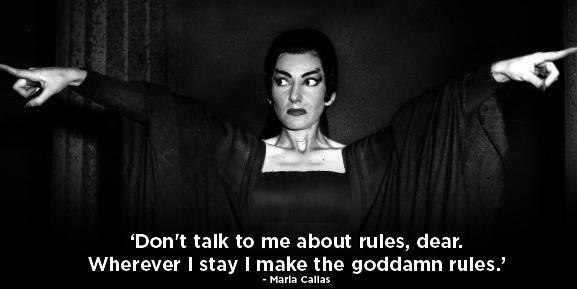
Oh, and while I am on the theme of opera I’ll just mention that Maria Callas was born on this day in 1923. Happy Birthday, La Divina!
Hubble Images With Music By Herschel
Posted in History, Music, The Universe and Stuff with tags Astronomer, Hubble Space Telescope, William Herschel on November 20, 2014 by telescoperToo busy for a full post today, so here’s a little stocking filler. The, perhaps familiar, pictures are taken by the Hubble Space Telescope but the music is by noted astronomer (geddit?) Sir William Herschel – the Second Movement of his Chamber Symphony In F Major, marked Adagio e Cantabile. Although best known as an astronomer Herschel was a capable musician and composer with a style very obviously influenced by his near contemporary Georg Frideric Handel. Although music of this era puts me on a High Harpsichord Alert, I thought I’d share this example of music for those of you unfamiliar with his work…
Follow @telescoper200 Years of Sax – Anniversary Poll
Posted in History, Music with tags Adolphe Sax, Jazz, music, saxophone on November 6, 2014 by telescoperToday is the 200th anniversary of the birth of famous Belgian Adolphe Sax, inventor of the saxophone. To mark this occasion I thought I’d undertake a bit of audience participation and get you out there in internet land to vote on the greatest proponent of said instrument. I’ve populated the list with people I consider to be likely contenders, but feel free to add your own if your favourite is missing!
Follow @telescoper

