Archive for the Music Category

Mu süda, ärka üles

Posted in History, Music with tags , , , on June 28, 2014 by telescoper

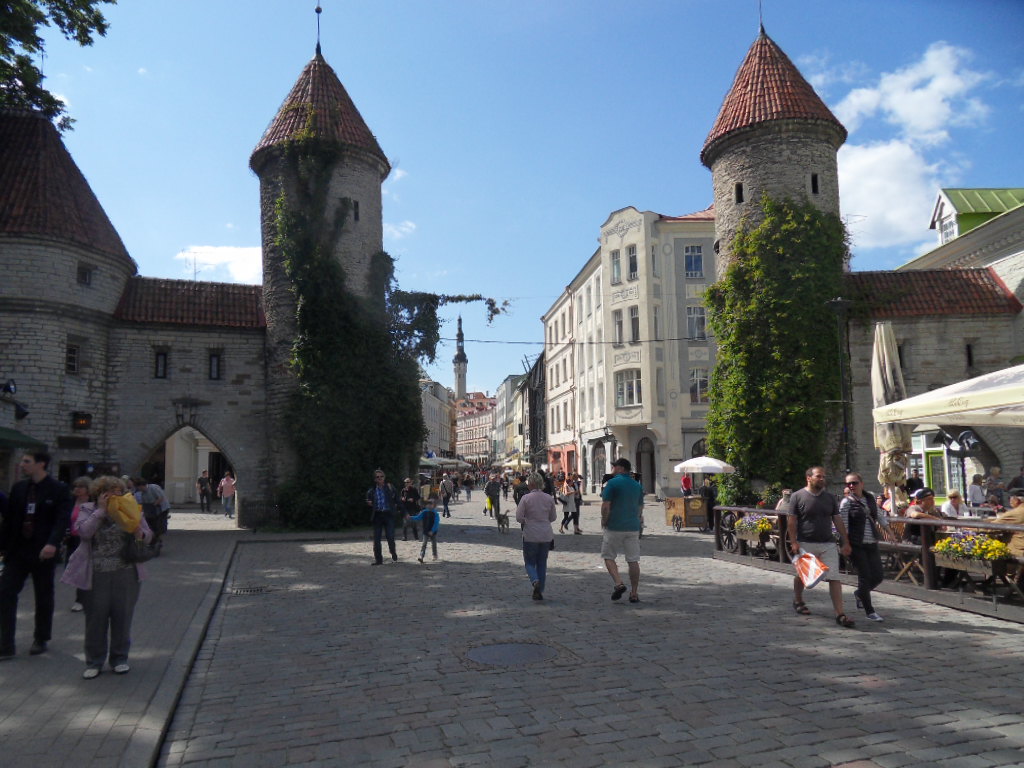
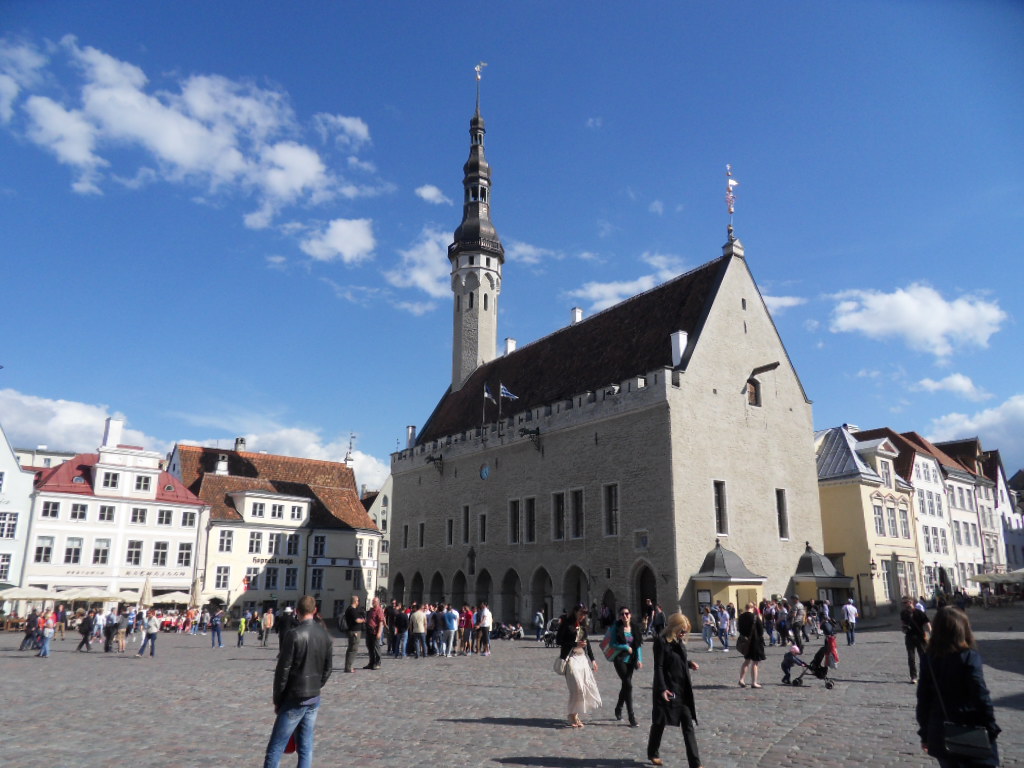
Well, the conference is over. I did my summary talk this afternoon and most of the conference attendees have already begun their journey home. I’m coming back to England tomorrow so I spent the early evening doing a bit of exploration. The conference schedule has been so packed that this is the first time I’ve been able to act like a tourist. I have to say the old town of Tallinn really is exceptionally beautiful, especially in the bright summer sunshine. Here’s a couple of pictures I took on my stroll.

SAMSUNG DIGITAL CAMERASAMSUNG DIGITAL CAMERASAMSUNG DIGITAL CAMERA

On Friday we had the conference dinner at the House of the Blackheads, which doesn’t sound so promising in English but is in fact a spending old building in the centre of Tallinn. To my delight we were serenaded by a choir (The Estonian Girls’ TV Choir). Estonia is a small country, with a population of only 1.3 Million, but it has an exceptionally strong musical tradition especially in choral music. Estonia has more choirs per unit population than any other country in the world, or so I’m told. Even more than Wales!

Anyway, this is the folk hymn they started with last night; the lights were dimmed in the ancient hall and the girls stood around the dining hall holding candles as they sang. The effect was stunning. Mu süda, ärka üles which means Awake, my heart is a traditional song, but the wonderful arrangement is by a composer who is quite new to me, Cyrillus Kreek.

I’ll complete my series of summaries of the conference tomorrow morning.

Music for the Solstice

Posted in Music with tags , on June 21, 2014 by telescoper

Well, in case you didn’t realize, the summer solstice (when the Sun reaches its most northerly point in the sky) occurred at 11.51 BST today. I guess that means it’s all downhill from here. Anyway, this gives me some sort of excuse for me posting a piece of music I’ve loved ever since I was a young child for its energy and wit. It’s the Overture to a Midsummer Night’s Dream, which was written by Felix Mendelssohn when he was just 17 years old, and even so it’s his Opus 21. This performance is by the Leipzig Genwandhausorchester conducted by Kurt Mazur. Enjoy!

Song for my Father

Posted in Jazz with tags , , on June 19, 2014 by telescoper

I was saddened last night to hear of the death at the age of 85 of the great Jazz pianist Horace Silver. BY way of a small tribute here’s the original composition Song for my Father as issued on Blue Note in 1964. Silver managed to fuse the forthright hard bop style he pioneered with the (then) trendy Bossa Nova beat to create a jazz classic. Listen out for a wonderful solo by the fabulous Joe Henderson on tenor sax too.

RIP Horace Silver (1928-2014)

Träume

Posted in Music with tags , , , on June 11, 2014 by telescoper

I know this old record is a bit crackly, but just listen to the voice! This is the wondrous Kirsten Flagstad, recorded in 1948 with Gerald Moore on piano, singing Träume, the last of the five Wesendonck Lieder by Richard Wagner.

As a person Wagner was definitely a complete shit, but you have to admit he wrote some beautiful music. Perhaps there really is some good in every person…

Dialogues des Carmélites

Posted in Opera with tags , , , , , on June 8, 2014 by telescoper

I don’t usually blog about Opera unless it’s to do with a performance I’ve actually attended in person, but I couldn’t resist posting something about the live broadcast from the Royal Opera House in Covent Garden of Dialogues des Carmélites by Francis Poulenc that I heard last night on BBC Radio 3.

I’m basically a complete ignoramus when it comes to the music of Poulenc. With the exception of a few small chamber pieces of his that I’ve heard (and very much liked) I don’t know much about him as a composer at all. Last night’s performance however has inspired me to rectify that omission. To that end I’d be grateful of any recommendations through the comments box.

Anyway, back to Dialogues des Carmélites. This is based on the true story of the martyrdom of sixteen Carmelite nuns during the French Revolution. Not knowing what to expect I was completely stunned by the music, much more melodic than I had expected, and beautifully played by the Orchestra of the Royal Opera House under the direction of Sir Simon Rattle. There are so many references to other composers in this piece that my head was spinning, but the strongest influence I could hear was Giacomo Puccini. Indeed, at times it sounded more like Puccini than Puccini ever did! I was gripped by the whole performance, but the ending, with the nuns singing the Salve Regina as they walk one by one to the scaffold, the dread sound of the guillotine repeatedly falling was utterly horrific and utterly compelling. In fact it was such a powerful experience I was trembling at the finish. Perhaps the fact that it was an audio broadcast only made it even more intense, precisely because so much was left to the imagination. It wasn’t exactly easy listening, but as a piece of music drama it was a triumph.

The entire performance is available for the next seven days on the BBC iPlayer in High Definition sound via this link. If you make time to listen to it, I promise you won’t regret it – although the ending might give you nightmares!

Another thing worth mentioning was that this was the largest cast ever to appear on the stage of the Royal Opera House; no less than 167 people altogether. Among those involved were members of Streetwise Opera, a charitable organization quite new to me, which uses music to help homeless people make positive changes in their lives. This is such a brilliant idea that I sent a donation to support their work. I urge you to do likewise.

Moses und Aron

Posted in Opera with tags , , , , , on May 25, 2014 by telescoper

Last night I found myself once again in the Wales Millennium Centre in Cardiff Bay, the bank holiday weekend giving me enough breathing space to head back to Wales for a short break and take in an Opera.

As it turned out there was a rare treat on the menu: the first night of a new Welsh National Opera production of Moses und Aron by Arnold Schoenberg. It was well worth the trip from Brighton.

Schoenberg had only completed two of the three acts by the time of his death in 1951 so the Opera is unfinished. On the other hand the Biblical story of the Exodus is so familiar that it doesn’t matter too much that some is missing. But although the plot is well known the Opera gives it several new dimensions.

Moses is chosen by God to lead his people from captivity but he is deeply troubled by the difficulty of this task because of his old age and the ‘clumsiness of his tongue’. Moses’ brother Aron has a much easier way with words (and pictures) so they join forces and lead the Jews from captivity into the wilderness.

Moses has deep reservations about Aron’s freedom with the use of images and other gimmicks, with good reason. In Act 2 while Moses is away receiving the Ten Commandments and whatnot, leaving Aron in charge, Aron permits all kind of lewd and ungodly behaviour, all starting with his use of images to depict God. Upon Moses’ return all that comes to an end, but it has exposed an irreconcilable disagreement between the two brothers about what if anything of the divine can ever be expressed in words. Moses’ concept of God is absolute and unknowable, requiring faith rather than understanding; Aron is content to use the Method of Images.

I’m not qualified to go into the theology behind all this, but it did have some resonance with me as a scientist. How much of the truth of creation do we capture with our words and equations, or are they just images?

Anyway, back to the Opera. The staging was modern, Act I was a lecture room or conference centre. Moses appeared as an ageing professor and Aron as a sort of Teaching Assistant. The Israelites were depicted as rowdy and occasionally violent students. The set changed slightly in Act 2 to resemble a movie theatre, implying that Aron’s images were cinematic, presumably violent and pornographic.

Moses was played by the legendary Sir John Tomlinson. His deeply sonorous voice and compelling stage presence provided a perfect focus for the production. Aron was Mark Le Brocq, whose fine performance was all the more remarkable because he was understudy for Rainer Trost who was unwell; to pick up such a challenging part at a few hours’ notice can not be easy and he did wonderfully well. As always, the Chorus of Welsh National Opera were also excellent.

Schoenberg’s music for Moses un Aron is resolutely serialist, which will no doubt put some people off. I found it gripping and starkly beautiful, performed with consummate artistry by the Orchestra of Welsh National Opera under the direction of Lothar Koenigs.

All in all, yet another wonderful evening of music drama courtesy of WNO. Only two performances of Moses und Aron were planned for Cardiff this season; the other is next Friday (30th May). I’m glad that the Wales Millennium Centre was nearly full, as I hope WNO will continue putting on rare and challenging music like this. Unfortunately it seems the Arts Council have other ideas, and have just cut their grant to WNO. Fewer new productions and more revivals are in store from now on.

Space is the Place: 100 Years of Sun Ra

Posted in Jazz, The Universe and Stuff with tags , , , , on May 22, 2014 by telescoper

When I’m struggling to find the time or the inspiration to write a blog post, serendipity usually comes to the rescue. A post on Twitter just alerted me to the fact that today is the 100th birthday of  Sun Ra, one of the most extraordinary composers and bandleaders of the 20th Century; was born Herman Poole Blount in Bimingham, Alabama, on 22nd May 1914. From the 1950s, until his death in 1993, Sun Ra led various combinations of musician in bands with various permutations of names involving the word Arkestra, such as the Blue Universe Arkestra and the Solar Myth Arkestra. He himself played keyboards, sometimes solo and sometimes with huge bands  of over 30 musicians; his music touched on virtually the entire history of jazz, from ragtime to swing music, from bebop to free jazz. He was also  one of the first musicians, in any genre to make extensive use of electronic keyboards.

He never achieved mainstream commercial success, but was a prolific recording artist with a cult following, partly fuelled by his outrageous claims to have been born not on Earth but on Saturn and the fact that much of his music was to do with space travel. Quoted in Jazziz magazine

They really thought I was some kind of kook with all my talk about outer space and the planets. I’m still talking about it, but governments are spending billions of dollars to go to Venus, Mars, and other planets, so it’s no longer kooky to talk about space

Quite. In fact, Sun Ra developed a complex performing identity based on his music, “cosmic” philosophy, and poetry. He abandoned his birth name, took on the persona of Sun Ra (Ra being the ancient Egyptian god of the sun), and often dressed in the style of an ancient Egyptian pharoah, as in the video clip. In other words, he was very odd.

At this point you’re probably thinking this is all a bit “New Age” and heading in the direction of Charlie Parker‘s Private Hell, one of my favourite Gary Larson cartoons:

However, although I admit Sun Ra’s music is eclectic, outrageous and sometimes downright mystifying, it also has a marvellous coherence to it maintained as his style evolved over four decades and is consistently imbued with a powerful sense of the Jazz tradition.  In fact, I think Charlie Parker would have approved. I know I do! Anyway, whatever I think, the music of Sun Ra has withstood its skeptics and detractors for generations and long may it continue to do so. The world needs more of his kind.

To give a taste of his music, here is the classic album Space is the Place in its entirety (at least until it gets taken off Youtube for copyright violation!):


KlezMahler

Posted in Music with tags , , , , , , on May 20, 2014 by telescoper

For my second experience of this year’s Brighton Festival I went last night to the Brighton Dome Concert Hall to see a show called KlezMahler. I wasn’t quite sure what I was in for when I turned up but it turned out to be great fun and I’m glad I went.

The first half of the concert featured the Aurora Orchestra. Their main item was Symphony No. 1 by Gustav Mahler. I’ve heard this symphony played live before, but not quite like this. The Aurora Orchestra numbers only fifteen musicians: two violins, and one each of viola, cello, double bass, flute, oboe, clarinet, bassoon, horn, trumpet, trombone, harp, timpani and percussion. The arrangement for this “Chamber Orchestra” was done by Ian Farrington.

The result was fascinating and illuminating. Gone of course were the lush string textures and towering crescendi of a full symphony orchestra. A small force simply can’t hope to generate that kind of experience. On the other hand, what one gets in compensation is the ability to hear much more clearly how the piece is put together because everything is so much crisper. It must be very demanding to play a symphony like this, as each invidual instrument is very exposed, but these musicians have a very good account of the work. In places I found myself uncomfortable with the balance between different sections and the lack of oomph sometimes made it all sound rather tinny, but by and large I found it very interesting. I still prefer the bigger orchestral sound, but I did learn a lot from this “Mahler Light” arrangement. It was, however, a bit like being presented with an X-ray when you thought you were going to get a photograph!

The third movement of Mahler’s first symphony includes a section in which he produces the sound of a Jewish Klezmer band, which gives a hint as to how this piece fits in with the rest of the programme. Preceding Mahler 1 in the first half of the concert was a piece for solo clarinet (Fantasie by Widmann) and a traditional Doina from Romania (a form of improvised funereal lament) again played on a solo clarinet, this time situated offstage in the circle. The latter piece was particularly moving and well played.

After the interval we heard the She’Koyokh Klezmer Music Ensemble, who treated us to some traditional Klezmer music as well as other folk music from Eastern Europe. In fact their opening number, if I recall correctly, was from Turkey and it featured the very distinctive vocal style of Sigem Aslan. They played with great veuve and vitality and not inconsiderable virtuosity too. There was even an audience singalong in the middle. Some way into their set they were joined by members of the Aurora Orchestra. I felt that adding more musicians had the effect of somehow diffusing the impact of the original band, giving it a little less bite. That’s not to say however that the music wasn’t enjoyable because it certainly was!

There’s a taster of their style on this video:

It’s probably now obvious what the idea behind the concert was. Here it is as stated in the programme:

Iain Farrington’s dazzling chamber orchestra arrangement of Mahler’s Symphony No. 1, placed alongside a selection of klezmer and folk music performed by members of Aurora and She’koyokh, reveals the musical influences and inspirations behind Mahler’s masterpiece with new clarity. This will be an evening of insight and inspiration, eloquence and exuberance.

For my money it certainly succeeded in its aim. Bravo KlezMahler!


Incidentally, as a Jazz fan, I’ve often wondered about the influence that Klezmer might have had on the musical development of clarinettists like Benny Goodman. Here’s an example of his playing when he was young:

The opening of this does sound to me very Klezmery. What do you think?


The Tempest in Musick

Posted in Brighton, Literature, Music with tags , , , , , , , on May 17, 2014 by telescoper

I haven’t done a music review type of thing on this blog for some time, for the simple reason that I haven’t had the time to go to many live music events recently. However, this being Festival time in Brighton I felt I should make an extra-special effort to take a bit of time out to take in a bit of culture. All work and no play and all that.

Anyway, yesterday evening found me in the Concert Hall of the Brighton Dome for a performance entitled The Tempest in Musick by the New London Consort. The programme for the show featured all the music written for the 17th and early 18th century revivals of William Shakespeare’s play, The Tempest. That in itself tells an interesting story. In 1667, after the Restoration of the Monarchy, John Dryden and Willian Davenant put together an enlarged and adapted version of Shakespeare’s play with a host of new characters and numerous musical interludes and additions. This piece was later revised further  aa number of times, each including even more music, a process which culminated in a semi-operatic version compiled by Thomas Shadwell in 1674. As if Shakespeare’s original tale were not exotic enough, these new versions had extra devils, Tritons, and Nereids along with spectacular stage effects and costumes. London audiences clearly wanted to let their hair down after the severe restrictions on popular entertainment imposed by Puritans during the Protectorate. The Shadwell version was the top show in London for over fifty years: it ran from 1674 until 1728, until it was eventually replaced in popularity by The Beggar’s Opera.

In the concert we heard most if not all of the music that survives from the multiple revivals and revisions of the Tempest, written by various composers over the period 1667 to 1712, including a setting of “Dear pretty youth” by Henry Purcell dated to 1695. There were two different versions of the most famous song from the original play, Full Fathom Five, sung by Ariel:

Full fathom five thy father lies;
Of his bones are coral made;
Those are pearls that were his eyes;
Nothing of him that doth fade,
But doth suffer a sea-change
Into something rich and strange.
Sea-nymphs hourly ring his knell:
Ding-dong.
Hark! now I hear them — Ding-dong, bell

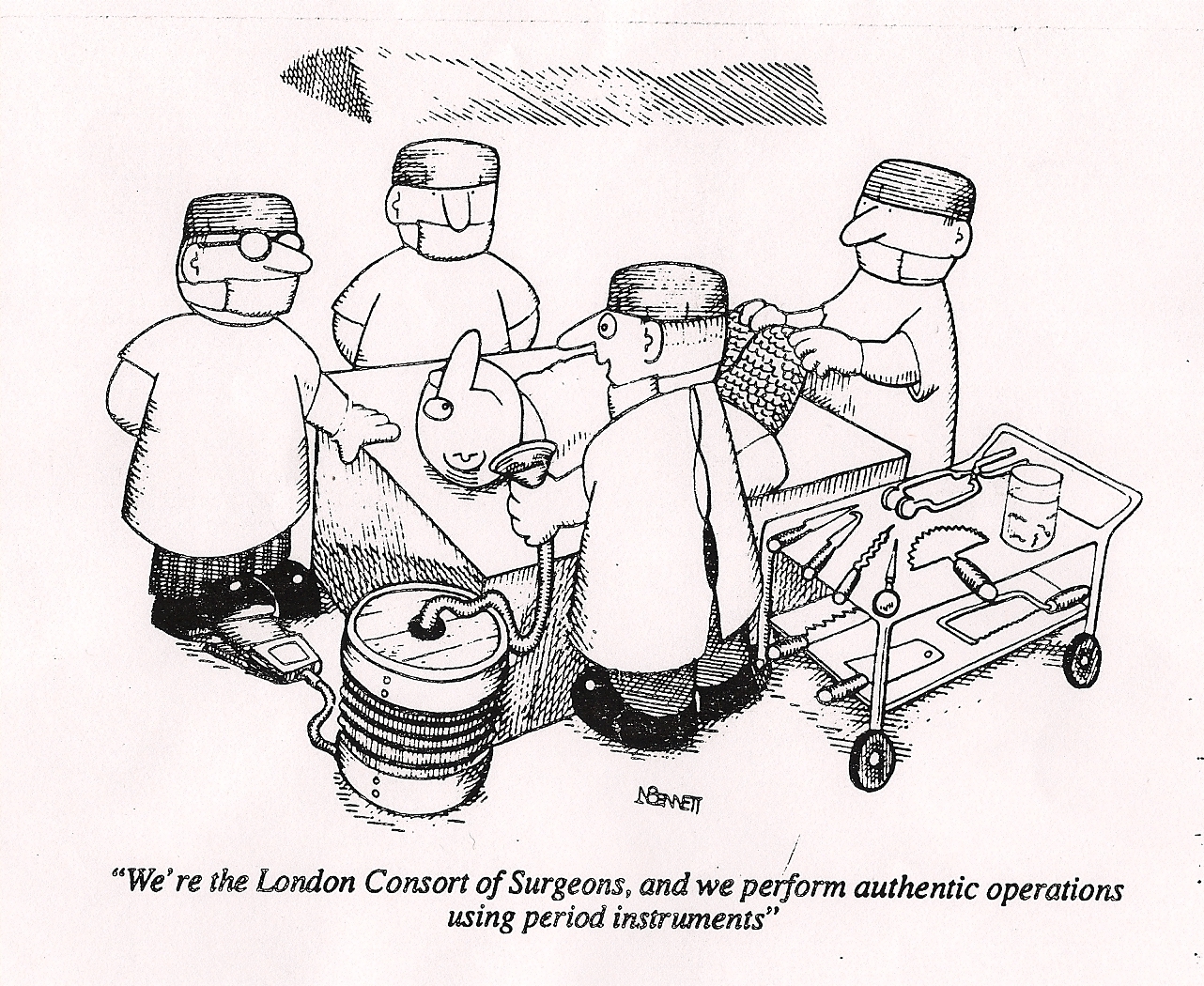
Of course the New London Consort play using period instruments, which gives me an excuse to post this again:

periodinstruments

I’m not a fan of period instruments generally, but because of the historical interest in the music I thought I’d give it a go. I had grave misgivings when I saw that the musicians were to be directed by David Roblou from a harpsichord, but decided to grit my teeth and perservere instead of fleeing to the nearest pub.

As it happened, although it was good in parts, the concert basically just confirmed my prejudices. To start with, much of the music is very ordinary and the musicians for the most part failed to bring it to life. The strings, played without vibrato throughout and occasionally rather ragged to boot, didn’t produce much in the way of colour or dynamics; this way of playing also exposed their uncertain pitching. The recorders, a long way from the audience right at the back of the stage, found it difficult to project. They would have been much better off in a smaller venue, I think, especially because of the large gap between audience and stage left for standing customers (of whom there were very few). The dreaded harpsichord was barely audible too. Not that I’m complaining about that.

On the other hand there was some brilliant trumpet playing by Simon Munday on a period instrument. Also I think this is the first time I’ve ever heard a Serpent played and I really enjoyed hearing it. Apart from these highlights though I found the music rather undistinguished and the performance curiously flat.

The singing was much better: the three lovely female voices (Anna Dennis, Faye Newton and Penelope Appleyard) are worth mentioning and tenor Jorge Navarro-Colorado sang well and was a striking presence on stage during the occasional semi-staged pieces. I wasn’t that keen on any of the bass-baritones though.

I realise that there will probably be early music fans out there who would have loved last night’s performance. That’s fine of course. Les gouts et les couleurs ne se discutent pas.
 

Sibelius of the Rings

Posted in Film, Music with tags , , , , , on May 13, 2014 by telescoper

My frame of mind for the day is largely determined by what is playing on BBC Radio 3 when it switches on at 6am as it does every morning to wake me up. This morning it happened to be the rousing Intermezzo from the Karelia Suite by Jean Sibelius. An intermezzo is very often a piece of fairly nondescript music played while people change the sets on stage during an opera or theatre performance, but this one is actually a terrific piece in its own right.

Often when the radio switches on when I’m asleep I don’t actually wake up immediately, but somehow seem to be able to incorporate the music into a dream. As I slowly emergedfrom my slumbers this morning my half-asleep mind somehow put this music together with a sort of action replay of the Ride of the Rohirrim, as Theoden’s army arrives to relieve the siege of Minas Tirith from The Lord of the Rings; the preamble fits well with the riders and horses gathering into line and preparing for battle, and the main theme conjures up the subsequent cavalry charge in rousing fashion.

My lunchtime task today has therefore been to find a clip of the film on Youtube and see how the music works. I suggest you turn the sound off the film clip (first youtube link) and let it run until about 58s in before starting the second which has the actual music on it. That way the peak of the crescendo and loud cymbal crash in Sibelius’ score coincides with the impact of the charge upon the orc formation.