Archive for the Cricket Category

Summer’s Over

Posted in Biographical, Cricket, Maynooth with tags , , , on September 28, 2025 by telescoper

I’ve done quite a few posts recently about the ending of summer – the Autumnal Equinox, the resumption of teaching, the start of a new season at the National Concert Hall are three indicators – but now we really have reached which I regard as the definite conclusion. Yesterday saw the last day of the last round of matches in cricket’s County Championship.

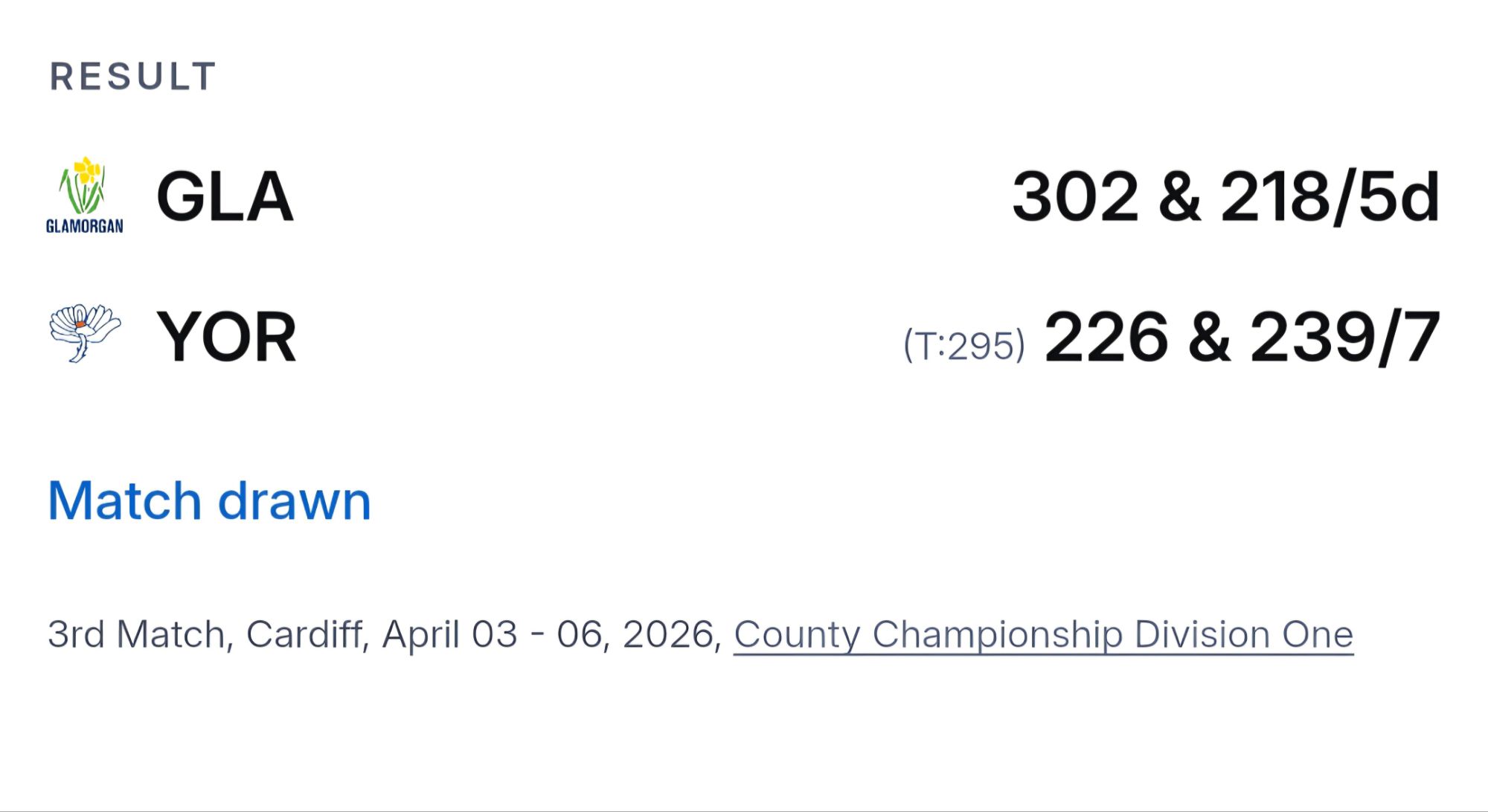
I haven’t followed cricket very closely since I moved to Ireland, but I do look and see how Glamorgan are getting on. The County Championship started very poorly for them, with a thrashing by Middlesex, but they improved substantially and went into the last round of matches secure in 2nd place of Division 2. They lost their last match in Cardiff against a team from the Midlands, by 7 wickets – a game that actually ended on Friday – but they still finished second. That means that they get promoted to Division 1 for the first time in 21 years.

I wouldn’t bet against them being relegated straight away, though. Last time they got promoted (in 2004) they played just one season (2005) in the First Division, during which they lost 14 of their 16 matches, and dropped back down. They almost got promoted in 2010 but were pipped for second place by Worchestershire, who were the beneficiaries of an exceedingly generous – let’s put it that way – declaration by Sussex that allowed them to win their last match. Anyway, to avoid the drop next season Glamorgan need to improve their pace attack considerably. I wonder who, if anyone, they’ll sign?

Glamorgan plays an important role in the international cricket ecosystem, especially with the Ashes coming up. Many of Australia’s star players – including Marnus Labuschagne, Michael Neser, and Usman Khawaja – only came to prominence after stepping up to the big time to play for Glamorgan.

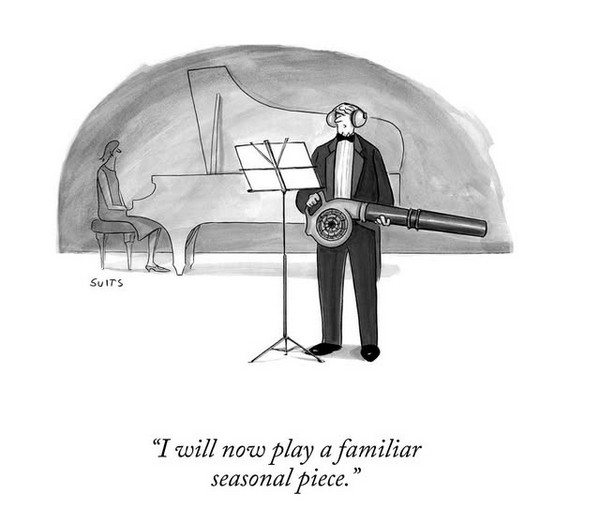
Knowing that the cricket season was almost over, on Friday I decided to give my front lawn one last mow too. The mower is now in the shed until next spring. Leaves have been falling for some time already, so I swept up what I could after cutting the grass. That reminds me to share this, which I found on Bluesky:

I really hate those things

Anyway, we have completed one week of teaching at Maynooth University which passed off reasonably smoothly. I only had one timetabling glitch, but that was resolved trivially by just swapping two sessions. This year the Department of Physics has quite a lot of students in the final-year on the Physics with Astrophysics programme, run before the merger by the Department of Experimental Physics. Now we’re combined we can share the load and I’ll be supervising a couple of students on an astrophysics project, which will be a new experience. I haven’t really taught much astrophysics since coming here nearly eight years ago, so this will make a nice change.

Cricket Limbo

Posted in Cricket, Music with tags , , , , , on August 5, 2025 by telescoper

Since moving to Ireland I haven’t seen much cricket, though I do follow some games on the internet and watch the highlights from time to time. Yesterday’s final-day victory by India over England by just six runs at the Oval brought to an end an excellent series of five Test matches, drawn 2-2 with one match drawn. Chris Woakes had to go into bat at Number 11 with an arm in a sling because of a dislocated shoulder. Shades of Colin Cowdrey going in to bat against the West Indies at Lord’s in 1963 with a broken arm. Neither Cowdrey nor Woakes faced a ball, actually. England drew in 1963, while still six runs behind with one wicket standing, while Woakes was not out as India won by six runs. A series draw just about seems a fair result to me.

Test cricket is something special and the 2025 England vs India series had more than the usual share of memorable moments. The two teams were evenly matched, tempers got a bit frayed from time to time, but both sides should be congratulated for providing such magnificent fare. A Test Match series is a cricket feast like no other.

As Keith Flett mentions in his blog, the Oval test has traditionally the last of the summer, usually taking place later in August, the lengthening shadows given that distinctive end-of-season feel. This year, however, the Oval test finished on 4th August (yesterday), and there’s no more Test cricket this summer. The schedule has been pushed forward to accommodate the gimmicky and unintestering competion called The Hundred, which starts today. The first of the last three County Championship fixtures don’t start until September 8th. It’s all a bit shit, really.

Anyway, just for nostalgia’s sake, I thought I’d post the old theme song from the BBC’s cricket coverage (when it used to be free on TV). It is Soul Limbo by Booker T. & the M.G.’s. We never got to hear the whole track, but as proper cricket is in Limbo for a month it seems appropriate to do so now.

How to Hold your Hurley

Posted in Cricket, GAA, Maynooth with tags , , , , , on July 6, 2025 by telescoper

This is a big weekend for fans of hurling, as we have reached the semi-final stage of the All Ireland Senior Hurling Championship. Yesterday Cork trounced Dublin by 7-26 to 2-21. I’ve never seen such a high scoring game at the top level, nor a margin as large as 20 points (a goal is worth 3 points)! Though not expected by many to progress, Dublin had deservedly beaten Limerick in the quarter-finals but they were never in the game yesterday.

The other semi-final takes place this afternoon at 4pm, and is between Kilkenny and Tipperary. Which of these will meet Cork in the Final? We’ll soon find out!

Update: it was another high scoring match, finishing Kilkenny 0-30 to Tipperary’s 4-20, so Tipperary won by 2 points (with a goal in the last minute). The All Ireland Final will therefore be between Cork and Tipperary.

Both semi-finals are held at Croke Park, as is the final. Many supporters come through Maynooth on their way to these matches, as we’re on the train line that goes into Dublin Connolly via Drumcondra (the nearest station to Croke Park). There is an arrangement by which supporters can park their cars at the GAA ground in Maynooth and take the train, as there is no chance of parking near Croke Park.

Yesterday evening I needed to do a quick trip to the shops and ran into a crowd of returning Cork supporters who had just arrived by train. Most fans were in very good humour (unsurprisingly) but a few were very much the worse for drink: one young lad had passed out on the footpath and concerned pedestrians called an ambulance; over the road at the bus terminus Gardaí were dealing with a drunk and aggressive person; and in Supervalu a hopelessly inebriated bloke staggered into the off-licence part to get more booze but ended up falling over and dropping the cans he had picked up, with one bursting and making a mess all over the floor.

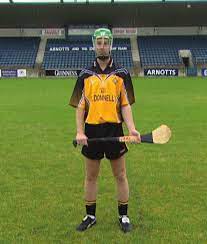
Anyway, none of this is to do with the intended subject of this post. Cork’s victory yesterday reminded me of a little bit of hurling information that I found interesting, concerning the way to hold the hurley. Having been brought up on a different bat-and-ball game (cricket), I was surprised to learn that in hurling you are supposed to hold the bat the wrong way round! What I mean by that is that in cricket the batter holds the bat with the dominant hand at the bottom of the handle near the blade and the other hand at the top. For illustration, here’s a forward defensive shot played by a right-hander:

For illustration, on the left, there’s a forward defensive shot played by a right-hander. You can see the left hand at the top of the handle and the right hand near the bottom. Shots like this are played predominatly with the bat moving in a vertical plane, guided by the left hand with the right hand guiding the direction. A hook or pull shot is played with the same grip but swinging the bat across the body from right to left with more bottom hand.

When I was at school I tried batting left-handed in the nets. It was quite interesting. I found I could play defensive shots equally well that way as with my usual right-handed stance, but I couldn’t play attacking shots very well at all.

It’s the same arrangement in baseball (or rounders, as we call it on this side of the Atlantic). The batter will hold the bat with their weaker hand nearer the end of the handle, i.e. towards the thin end.

On the other hand (!), a hurler holds the hurley the other way round. On the right you can see a hurler at the ready position, with his right hand at the top of the handle and the left hand near the blade. When striking the sliotar (ball), the hands are moved closer together. Holding the end of the hurley in the dominant hand means that more strength can be applied when reaching away from the body with one hand, something that isn’t really done in cricket. The typical long-range strike of the sliotar is rather like a hook shot in cricket, except it’s played the opposite way across the body.

Here’s a video:

This seems very unnatural if you have been brought up to use the opposite basic grip, which explains why so many struggled even to hit the sliotar at the practice at the EAS Social Dinner in Cork a couple of weeks ago. In Ireland, however, kids learn to play hurling when they’re still in kindergarten so this is instilled at a very early age.

The Test Final and Final Examination Board

Posted in Cricket, Education, Maynooth with tags , , , , , , on June 12, 2025 by telescoper

Had I not been obliged to attend this morning’s final Examination Board for Theoretical Physics programmes at Maynooth University, I would have been at Lord’s today watching Day 2 of the World Test Cricket final between Australia and South Africam where it is now the Tea interval. There certainly wouldn’t have been any cricket in Maynooth this morning, as there has been torrential rain all day so far, but the Exam Board went ahead and finished even before South Africa were all out in their first innings for 138, after late-order collapse, in response to Australia’s first innings total of 212.

As I already mentioned, today’s Examination Board we went through the results in the presence of our External Examiner. Since this is the end of the academic year, we also looked at the final grades of those students who are completing their studies this year in order to consider the classification of their degrees. Another (pleasant) duty of our Examination Board was to award prizes for the best performance, not just for finalists but for students at every stage, including the first year. These will be announced in due course.

But that’s not quite the end of it – there is an overall University Examination Board that covers all courses in the University to formally bring an end to the examination process. It is not until after all the Boards have done their business that the students get their marks. If all goes to plan, students will receive their final marks on Friday 27th June.

Soon after that, on Tuesday 1st July, we have a Consultation Day, where

Staff will be available in all Departments to discuss results with students. Students are entitled to see their examination scripts if they wish, these will be generally available on this day or at another mutually convenient time.

If I had my way we would actually give all students their marked examination scripts back as a matter of routine. Obviously examination scripts have to go through a pretty strict quality assurance process involving the whole paraphernalia of examination boards (including External Examiners), so the scripts can’t be given back immediately but once that process is complete there doesn’t seem to me any reason why we shouldn’t give their work, together with any feedback written on it,  back to the students in its entirety. I have heard it argued that under the provisions of the Data Protection Act students have a legal right to see what’s written on the scripts – as that constitutes part of their student record – but I’m not making a legalistic point here. My point is purely educational, based on the benefit to the student’s learning experience.

That’s one set of examination duties done and dusted, but not everything. Next Tuesday I am Internal Examiner for a PhD at Maynooth and, about a month from now, I have to travel to a foreign land to be an External Examiner. It’s all go…

Reaching Nelson

Posted in Cricket, History, OJAp Papers with tags , , , , , on December 9, 2024 by telescoper

This morning I published another paper at the Open Journal of Astrophysics and in the process I noticed that took us to a total 111 articles this year. I got to thinking about the significance of that number in cricket, where it goes by the name of Nelson

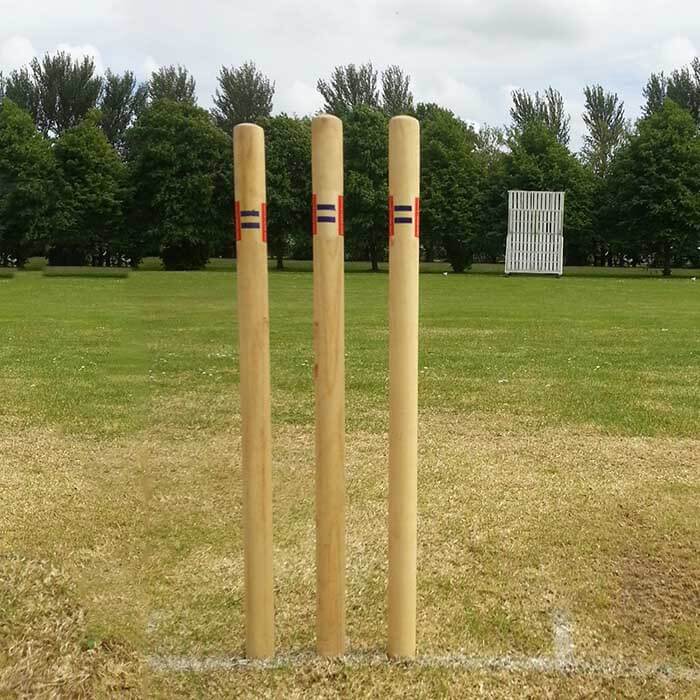
In cricket – at least in England – Nelson is supposed to be an unlucky number. The reason for this could well be that the number 111 looks like a set of stumps without the bails (see left). (For those of you not up with the lingo, the bails are two smaller bits of wood that sit on top of the stumps. ) The absence of the bails could mean that they have been dislodged, signifying that a batter is out. Also umpires remove the bails at close of play, so it could indicate that the match is over.

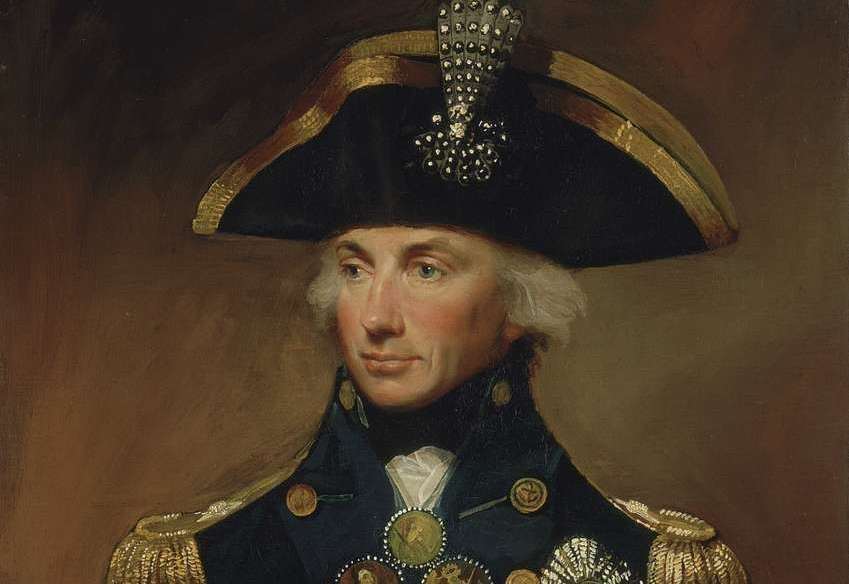
What’s less clear is the connection with Horatio, Lord Nelson (right). The version I was told at school was that Nelson had “one eye, one arm, and one Trafalgar”. Some also say “Destiny” instead of “Trafalgar”. Those are polite versions. Others say the third one refers to a part of the male anatomy. Bill Frindall used to say “one eye, one arm, and one et cetera“. Who knows which, if any, of these is right?

In any case this does give me the chance to point out that, contrary to popular myth, Nelson didn’t lose an eye anyway. In 1794, Nelson was in action at the Siege of Calvi during the Invasion of Corsica when a cannonball struck a nearby sandbag and sprayed him with sand and gravel. Nelson’s right eye was damaged by this, but he didn’t lose it although he had little effective vision through it thereafter.

Meanwhile, I just saw this notification on LinkedIn about yesterday’s post:

Close of Play

Posted in Cricket, Poetry with tags , , , , , , on September 29, 2024 by telescoper

Today saw the end of this year’s County Championship cricket season, which I take to be definition of the official end of summer.  It seems to have come very late this year, and the weather not particularly clement for the last day.

I like county cricket, and hope to be able to see more when I retire and have the time, but I haven’t followed many games this year. I was away for much of the season and a bit busy to pay too much attention for the rest. I still keep an eye on how Glamorgan are doing, though, because of the time I spent living in Cardiff. In fact they won their last game against Gloucestershire yesterday to finish 6th  in the 2nd Division. The match had been affected by rain but both captains decided to try to make a game of it by each forfeiting an innings after Glamorgan declared their first innings 381/4with the best part of two days to play. Gloucestershire never looked like reaching that total and were bowled out for 189. The other Championship game between these two teams, in June, ended in a remarkable tie as Glamorgan were bowled out for 592 needing 593 to win. Of course the great success of the year for Glamorgan was winning the One Day Trophy, beating Somerset in a final deferred by a day and truncated by rain.

Elsewhere in the County Championship, Surrey won the 1st Division while Lancashire and Kent were relegated. Sussex won the 2nd division title and they and Yorkshire were promoted to Division 1 for next season. With Lancs and Yorks in different divisions, there wasn’t be a Roses match this summer, and there won’t be one next season either!

Anyway, as I’ve done before,  it seems apt to mark the end of the County Championship with one of the classic cricket poems, Close of Play  by Thomas Moult.

How shall we live, now that the summer’s ended,
And bat and ball (too soon!) are put aside,
And all our cricket deeds and dreams have blended —
The hit for six, the champion bowled for none,
The match we planned to win and never won? …
Only in Green-winged memory they abide.

How shall we live, who love our loveliest game
With such bright ardour that when stumps are drawn
We talk into the twilight, always the same
Old talk with laughter round off each tale —
Laughter of friends across a pint of ale
In the blue shade of the pavilion.

For the last time a batsman is out, the day
Like the drained glass and the dear sundown field
is empty; what instead of Summer’s play
Can occupy these darkling months ere spring
Hails willows once again the crowned king?
How shall we live so life may not be chilled?

Well, what’s a crimson hearth for, and the lamp
Of winter nights, and these plump yellow books
That cherish Wisden’s soul and bear his stamp —
And bat and ball (too soon!) are put aside,
Time’s ever changing, unalterable score-board,
Thick-clustered with a thousand names adored:
Half the game’s magic in their very looks!

And when we’ve learnt those almanacs by heart,
And shared with Nyren … Cardus ….the distant thrill
That cannot fade since they have had their part,
We’ll trudge wet streets through fog and mire
And praise our heroes by the club-room fire:
O do not doubt the game will hold us still!


R.I.P. Derek Underwood (1945-2024)

Posted in Cricket, R.I.P. with tags , , , , on April 16, 2024 by telescoper

Another sporting hero of my youth has passed away. Derek Underwood – “Deadly” was his nickname – was a bowler like no other. Officially a left-arm orthodox spinner, with a rather flat-footed run-up, and a characteristic twist of his body as he delivered the ball at a brisk medium pace with infallible accuracy, he was not only a prolific taker of wickets but also an extremely difficult bowler to score off. He played for Kent for 24 seasons, his entire First Class career, during which he took 2,465 wickets at a remarkable average of 20.28. Underwood was a regular in the England Test side from 1966 onwards, barring an interruption when he joined Kerry Packer’s cricket circus in the 70s, and played his last Test match in 1982.

Tributes to Derek Underwood have understandably focused on his bowling, but it should be mentioned that, although of limited ability with the bat, he was a capable and stubborn night-watchman who didn’t give his wicket away easily. I remember seeing him bat in that role with great courage (and without a helmet) against Lillee and Thomson, getting struck on the body several times in the process.

When I was a kid I used to get completely absorbed watching him bowl, even on good wickets, and he never seemed to bowl badly and you could see batters getting visibly impatient at his refusal to bowl them a ball they could hit. Here is a little tribute video produced by Kent Cricket Club, with action mostly from the 1960s: you can see what a handful he was when he could use his pace to extract extra bounce from the pitch.

Rest in Peace Derek Underwood (1945-2024)

Rainy Season

Posted in Biographical, Cricket, Irish Language with tags , , , , on September 30, 2022 by telescoper

Yesterday saw the end of this year’s County Championship cricket season*, which many people regard as the official end of summer. As if to prove the point today, strong westerly winds have brought a deluge of rain all morning.

While I was waiting for my coffee to brew before venturing out into the rain this morning I was thinking about some idiomatic expressions for heavy rain. The most familiar one in English is Raining Cats and Dogs which, it appears, originated in a poem by Jonathan Swift that ends with the lines:

Drowned puppies, stinking sprats, all drenched in mud,
Dead cats and turnip tops come tumbling down the flood.

My French teacher at school taught me the memorable if slightly indelicate Il pleut comme vache qui pisse, although there are other French expressions involving, among other things nails, frogs and halberds.

One of my favourites is the Welsh Mae hi’n bwrw hen wragedd a ffyn which means, bizarrely, “It’s raining old ladies and sticks”. There is also Mae hi’n bwrw cyllyll a ffyrc – “It’s raining knives and forks”.

Related idiomatic expressions in Irish are constructed differently. There isn’t a transitive verb meaning “to rain” so there is no grammatical way to say “it rains something”. The way around this is to use a different verb to represent, e.g., throwing. For example Tá sé ag caitheamh sceana gréasaí which means “It’s throwing cobblers’ knives”.

Talking (of) cobblers, I note that in Danish there is Det regner skomagerdrenge – “It’s raining shoemakers’ apprentices” and in Germany Es regnet Schusterjungs – “It’s raining cobblers’ boys”.

Among the other strange expressions in other languages are Está chovendo a barba de sapo (Portuguese for “It’s raining toads’ beards”), Пада киша уби миша (Serbian for “It’s raining and killing mice”),  Det regner trollkjerringer (Norwegian for “It’s raining female trolls”) and Estan lloviendo hasta maridos (Spanish for “It is even raining husbands”).

No sign of any husbands outside right now so I’ll get back to work. My PhD student is giving a seminar this afternoon so I have to think of some difficult questions to ask her! (Joking).

*For the record I should mention that Glamorgan drew their last game of the County Championship against Sussex (at Hove) and thus finished in 3rd place in Division 2. They might have beaten Middlesex to second place had they won and Middlesex lost their final matches but in the end both games were high scoring draws. Glamorgan lost to Middlesex in feeble style a couple of weeks ago so I think it was fair outcome.

A Physicist’s Tribute to Shane Warne (1969-2022)

Posted in Cricket, The Universe and Stuff on March 4, 2022 by telescoper

I was shocked to see just now the news that legendary Australian legspinner Shane Warne has passed away suddenly at the age of just 52. I always admired his bowling hugely no doubt partly because having tried to bowl leg-breaks myself I have some idea how difficult it is to do well! I thought as a tribute I would rehash a piece I posted about 12 years ago about the prodigious amount of spin Shane Warne was able to generate.

For those of you not so familiar with cricket here’s a clip of another prodigious spinner of the ball, Australia’s legend of legspin Shane Warne:

For beginners, the game of cricket is a bit similar to baseball (insofar as it’s a game involving a bat and a ball), but the “strike zone” in cricket is a physical object ( a “wicket” made of wooden stumps with bails balanced on the top) unlike the baseball equivalent, which exists only in the mind of the umpire. The batsman must prevent the ball hitting the wicket and also try to score runs if he can. In contrast to baseball, however, he doesn’t have to score; he can elect to play a purely defensive shot or even not play any short at all if he judges the ball is going to miss, which is what happened to the hapless batsman in the clip.

You will see that Warne imparts considerable spin on the ball, which has the effect of making it change direction when it bounces.  The fact that the ball hits the playing surface before the batsman has a chance to play it introduces extra variables that you don’t see in baseball,  such as the state of the pitch (which generally deteriorates over the five days of a Test match, especially in the “rough” where bowlers have been running in).
A spin bowler who causes the ball to deviate from right to left is called a legspin bowler, while one who makes it turn the other way is an offspin bowler. An orthodox legspinner generates most of the spin from a flick of the wrist while an offspinner mainly lets his fingers do the torquing.

Another difference that’s worth mentioning with respect to baseball is that the ball is bowled, i.e. the bowler’s arm is not supposed to bend during the delivery (although apparently that doesn’t apply if he’s from Sri Lanka). However, the bowler is allowed to take a run up, which will be quite short for a spin bowler, but long like a javelin thrower if it’s a fast bowler. Fast bowlers – who can bowl up to 95 mph (150 km/h) – don’t spin the ball to any degree but have other tricks up their sleeve I haven’t got time to go into here. A typical spin bowler delivers the ball at speeds ranging from 45 mph to 60 mph (70 km/hour to 100 km/hour).

The physical properties of a cricket ball are specified in the Laws of Cricket. It must be between 22.4 and 22.9 cm in circumference, i.e. 3.57 to 3.64 cm in radius and must weigh between 155.9g and 163g. It’s round, made of cork, and surrounded by a leather case with a stitched seam.

So now, after all that, I can give a back-of-the-envelope answer to the question I was wondering about on the way home. Looking at the video clip my initial impression was that the ball is deflected  by an angle as large as a radian, but in fact the foreshortening effect of the camera is quite deceptive. In fact the ball deviates by less than a metre between pitching and hitting the stumps. There is a gap of about 1 metre between the popping crease (where the batsman stands) and the stumps – it looks much less from the camera angle shown – and the ball probably pitches at least 2 metres in front of the crease. I would guess therefore that it actually deflects by an angle less than twenty degrees or so.

What happens physically is that some of the rotational kinetic energy of the ball is converted into translational kinetic energy associated with a component of the velocity  at right angles to the original direction of travel. In order for the deflection to be so large, the available rotational kinetic energy must be non-negligible compared to the original kinetic energy of the ball. Suppose the mass of the ball is M, the translational kinetic energy is T=\frac{1}{2} Mv^2 where v is the speed of the ball. If the angular velocity of rotation is \omega then the rotational kinetic energy \Omega =\frac{1}{2} I \omega^2, where I is the moment of inertia of the ball.

Approximating the ball as a uniform sphere of mass M and radius a, the moment of inertia is I=\frac{2}{5}Ma^2.  Putting T=\Omega, cancelling M on both sides and ignoring the factor of \frac{2}{5} – because I’m lazy – we see that the rotational and translational kinetic energies are comparable if

v^2 \simeq a^2\omega^2,

or \omega \simeq \frac{v}{a}, which makes sense because a\omega is just the speed of a point on the equator of the ball owing to the ball’s rotational motion. This equation therefore says that the speed of sideways motion of a point on the ball’s surface must be roughly comparable to speed of the ball’s forward motion. Taking v=80 km/h gives v\simeq \frac{80 \times 10^3}{60 \times 60} \simeq 20 m/s and a\simeq 0.036 m gives \omega \simeq 600 radians per second, which is about 100 revolutions per second. This would cause a huge deviation (about 45 degrees), but the real effect is rather smaller as I discussed above (see comments below). If the deflection is actually around 15 degrees then the rotation speed needed would be around 30 rev/s.

This estimate is obviously very rough because it ignores the direction of spin and the efficiency with the ball grips on the pitch – friction is obviously involved in the change of direction – but it gives a reasonable ballpark (or at least cricketground) estimate.

Of course if the bowler does the same thing every time it’s relatively easy for the batsman to allow for the spin. The best  bowlers therefore vary the amount and angle of spin they impart on each ball. Most, in fact,  have at least two qualitatively different types of ball but they disguise the differences in the act of delivery. Offspinners typically have an “arm ball” which doesn’t really spin but holds its line without appearing to be any different to their spinning delivery. Legspinners usually have a variety of alternative balls,  including a topspinner and/or a flipper and/or a googly. The latter is a ball that comes out of the back of the hand and actually spins the opposite way to a legspinner while being produced with apparently the same action. It’s very hard to bowl a googly accurately, but it’s a deadly thing when done right.

Another thing also worth mentioning is that the rotation of the cricket ball also causes a deviation of its flightpath through the air, by virtue of the Magnus effect. This causes the ball to curve in the air in the opposite direction to which it is going to deviate on bouncing, i.e. it would drift into a right-handed batsman before breaking away from him off the pitch. You can see a considerable amount of such movement in the video clip,  away from the left-hander in the air and then back into him off the pitch. Nature clearly likes to make things tough for batsmen!

With a number of secret weapons in his armoury the spin bowler can be a formidable opponent, a fact that has apparently been known to poets, philosophers and astronomers for the best part of a thousand years:

The Ball no Question makes of Ayes and Noes,
But Right or Left, as strikes the Player goes;
And he that toss’d Thee down into the Field,
He knows about it all — He knows — HE knows!

The Rubaiyat of Omar Khayyam [50]

A Trophy for Glamorgan!

Posted in Cricket with tags , , , on August 19, 2021 by telescoper

Just a brief post but I thought I’d say something about Glamorgan’s cricketers, because it’s such a rare event and I might not get the chance to write a similar post for a while!

This evening Glamorgan actually won a trophy! They beat Durham by 58 runs in the final of the Royal London One-Day Cup (a 50 overs competition) which was held at Trent Bridge. That’s the first competition they have won since 2004.

Glamorgan batted first and managed to score 296 for 9 with skipper Kiran Carlson- who is only 23 – scoring 82 and the last pair, Carey and Hogan, putting on 33 runs. Durham were never ahead of the run rate but Sean Dickson kept them in with a chance until he ran out of partners and was sreanded in 84 not out, with the last four wickets falling for just 12 runs to leave them on 238 all out with one ball less than five overs remaining. The last wicket to fall was the hapless Chris Rushworth, out first ball caught by wicket-keeper Tom Cullen.

People will say that the Royal London Cup has been devalued by the absence of players on account of The Hundred, but that has affected all the teams and the competition has produced some really good games and I am delighted for the players to have won a trophy at last. Congratulations to them!

(It’s still not proper cricket mind….)