I’m on an early-morning train from Cork to Dublin, missing the final day of EAS 2025. I’d like to thank the organisers and all the contributors for an extremely successful meeting. I’m looking forward to EAS 2026, which will be held in Lausanne (Switzerland).
Yesterday was another busy day, during which I attended – among other things – sessions on gravitational lensing and a plenary talk by Andy Fabian. The latter event reminded me that in my final year as an undergraduate I took a “Minor Option” on High-Energy Astrophysics lectured by Andy Fabian. That was 40 years ago…
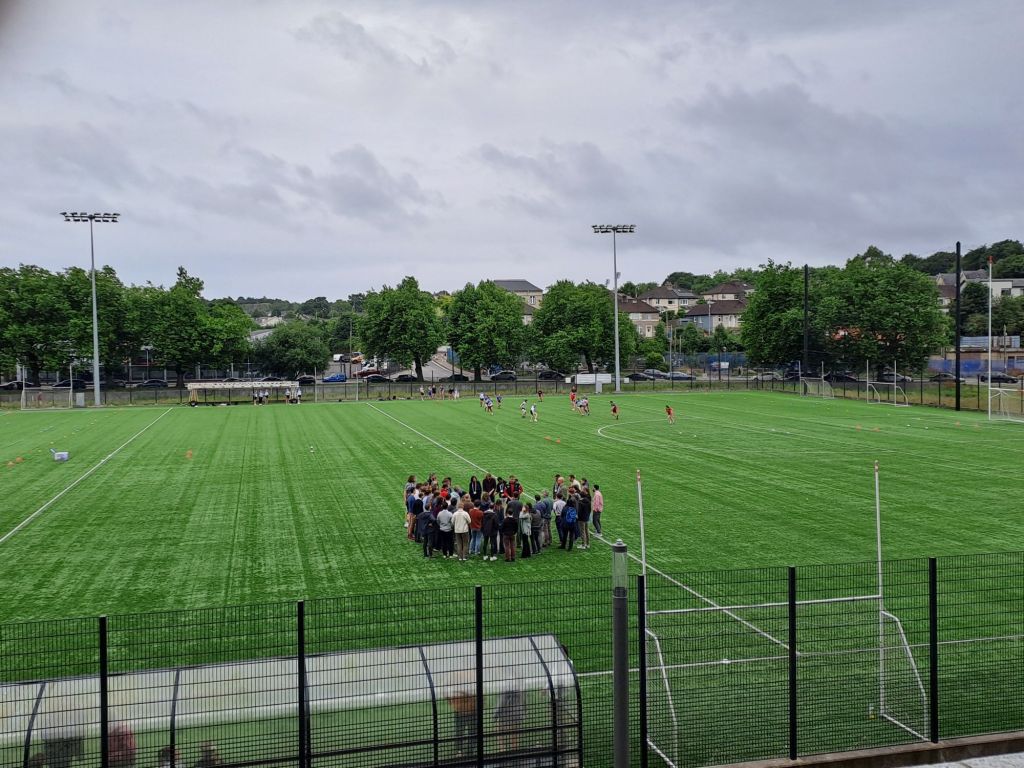
After the scientific programme for the day was over, participants were bussed to Páirc Ui Chaoimh, Cork’s main GAA Stadium, for the conference dinner. Some of the participants had the chance to try their hands at hurling before the food.
After the food, there was traditional Irish music, with the audience joining in the singing and dancing. A good time was had by all.
Incidentally, Cork play Dublin next weekend in the semi-finals of the All-Ireland Senior Hurling Championship. To the surprise of many, Dublin knocked out Limerick in the quarter-finals. The other semi-final is between Kilkenny and Tipperary. Those people who attempted to put hurley to sliotar last night will be even more amazed at the level skill on display in those games.
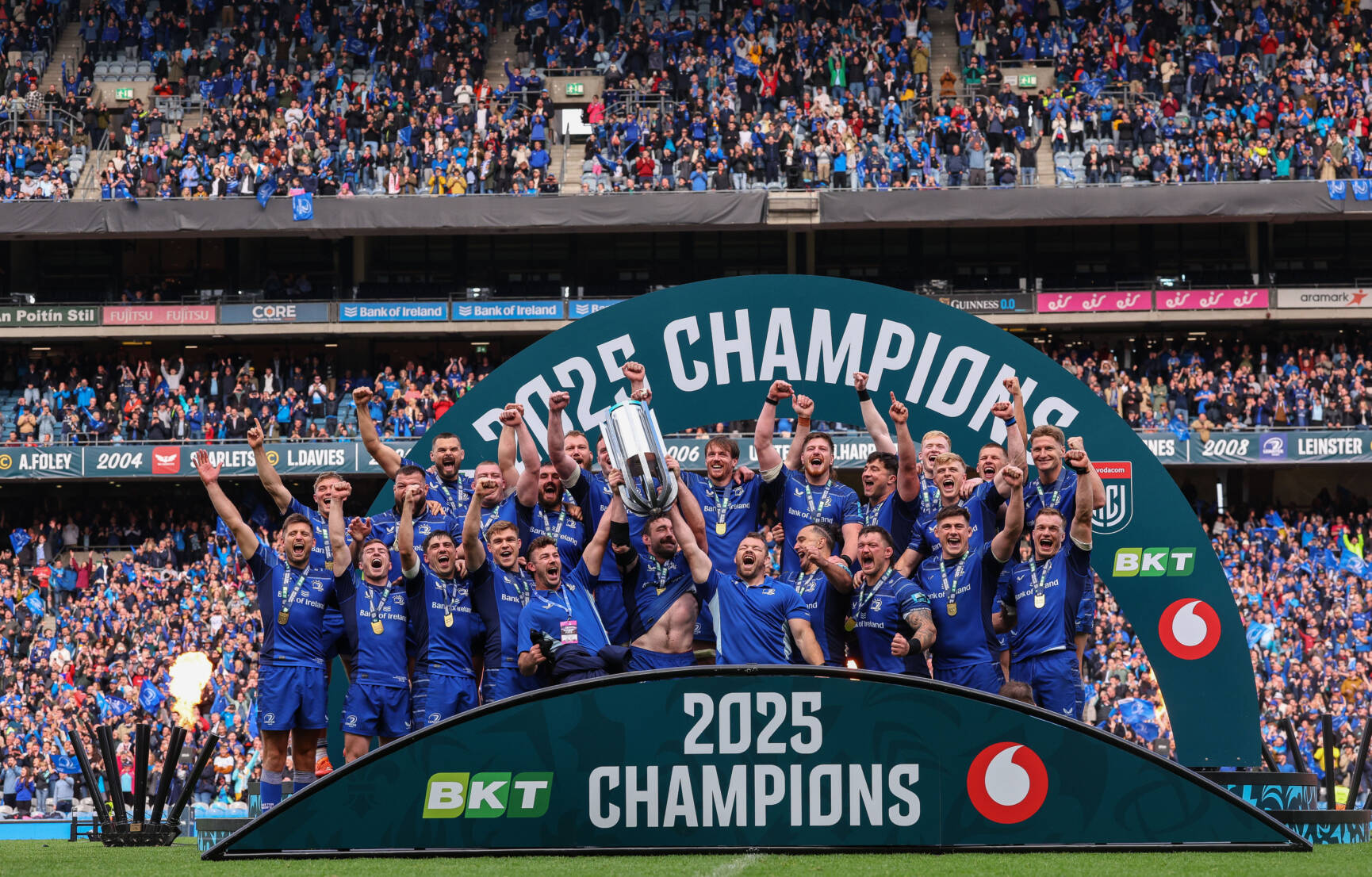
The 2024/5 United Rugby Championship ended today with a convincing win by Leinster over the South African team Vodacom Bulls (who are based in Pretoria). The game was played this evening in torrential rain at Croke Park; Leinster emerged victorious in the inclement conditions by 32-7.
Leinster have had a habit of being front-runners in the league part of this competition, only to fall in the knockout stages. I was a bit concerned that this year might follow the same pattern, as the Bulls have had considerable success agains Leinster over the years and Leinster failed to perform against Northampton in the European Champions Cup in a game they were expected to win. It was also a blow that one of their best players, scrum-half Jameson Gibson-Park was withdrawn from the squad this morning owing to injury. In the end, however, it wasn’t even a very close game, Leinster’s defence proving so solid that the Bulls could penetrate it only once.
The last time Leinster won the United Rugby Championship – way back in 2021 – it wasn’t even called the United Rugby Championship: it was called the Pro14, although two teams were not able to play that year because of Covid-19 restrictions so there were only 12 teams in it. The incorporation of four South African teams (Bulls, Stormers, Sharks and Lions) increased the number of teams to 16 and made it a much more difficult competition. I still think it is too long, though. The games featuring the Irish teams in this competition (Leinster, Munster, Connacht and Ulster) are broadcast free-to-air on television here and I watch quite a few of them. There are 16 teams in this competition, divided into four pools of four: each side plays the 15 others once, and an additional game against the other three in their pool, meaning 18 games per team. After 18 rounds, all that happens is that the bottom eight in the league table are eliminated and the top eight go into the knockout stage. Eighteen games is a long slog when all it does is eliminate half the teams, and it means that there’s much less at stake in individual matches. Still, now the Six Nations is over I’ll be watching the URC for the rest of the season, starting next weekend.
Had I not been obliged to attend this morning’s final Examination Board for Theoretical Physics programmes at Maynooth University, I would have been at Lord’s today watching Day 2 of the World Test Cricket final between Australia and South Africam where it is now the Tea interval. There certainly wouldn’t have been any cricket in Maynooth this morning, as there has been torrential rain all day so far, but the Exam Board went ahead and finished even before South Africa were all out in their first innings for 138, after late-order collapse, in response to Australia’s first innings total of 212.
As I already mentioned, today’s Examination Board we went through the results in the presence of our External Examiner. Since this is the end of the academic year, we also looked at the final grades of those students who are completing their studies this year in order to consider the classification of their degrees. Another (pleasant) duty of our Examination Board was to award prizes for the best performance, not just for finalists but for students at every stage, including the first year. These will be announced in due course.
But that’s not quite the end of it – there is an overall University Examination Board that covers all courses in the University to formally bring an end to the examination process. It is not until after all the Boards have done their business that the students get their marks. If all goes to plan, students will receive their final marks on Friday 27th June.
Soon after that, on Tuesday 1st July, we have a Consultation Day, where
Staff will be available in all Departments to discuss results with students. Students are entitled to see their examination scripts if they wish, these will be generally available on this day or at another mutually convenient time.
If I had my way we would actually give all students their marked examination scripts back as a matter of routine. Obviously examination scripts have to go through a pretty strict quality assurance process involving the whole paraphernalia of examination boards (including External Examiners), so the scripts can’t be given back immediately but once that process is complete there doesn’t seem to me any reason why we shouldn’t give their work, together with any feedback written on it, back to the students in its entirety. I have heard it argued that under the provisions of the Data Protection Act students have a legal right to see what’s written on the scripts – as that constitutes part of their student record – but I’m not making a legalistic point here. My point is purely educational, based on the benefit to the student’s learning experience.
That’s one set of examination duties done and dusted, but not everything. Next Tuesday I am Internal Examiner for a PhD at Maynooth and, about a month from now, I have to travel to a foreign land to be an External Examiner. It’s all go…
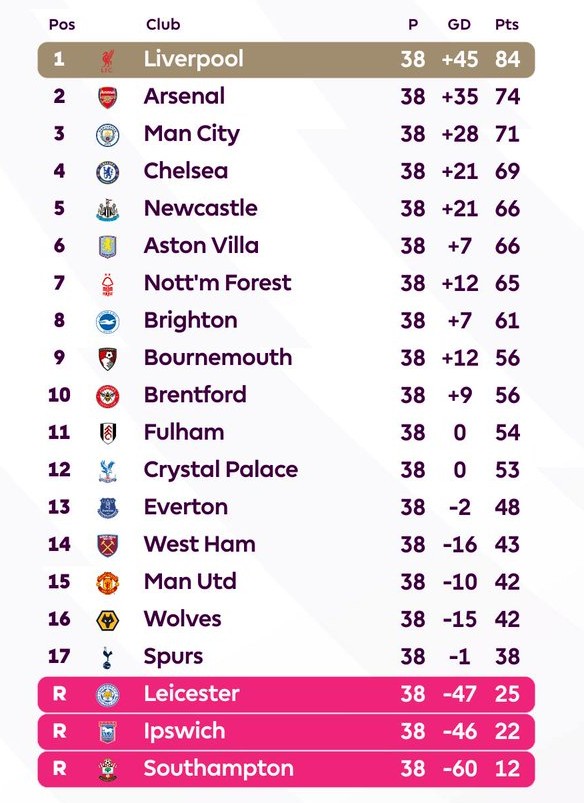
Now all the final results are in and validated, the Board can now proceed to the classification of Honours for the 2024/25 English Premier League.
There were 20 candidates, no absences, and no extenuating circumstances recorded.
As Chair, I will remind you of the regulations as we go through. Fortunately, as was the case last year, matters are relatively straightforward.
Looking at the last column we can see straight away that the top three all get first-class honours, the same as last year although the performance of the top candidates was not as impressive. Liverpool finished top of the class, followed by Arsenal and Manchester City. Chelsea finish with the top 2.1, the External Examiner having decided not to recommend they be rounded up. They may however still win a prize if they pass a special test next week in the form of the Europa Conference Legue final. Despite a disappointing last paper, Newcastle United finish in 5th place. They also collected a prize in the form of the CaribouCabibboCalabi-Yau League Cup. The top five all go on to further study in the UEFA Champions League next year.
I must draw your attention to the peculiar case of Tottenham Hotspur, who finished in 17th place, on 38. This is technically a fail, but the rules allow a pass by compensation in such a situation. Moreover, after their success in the Europa Conference League final over Manchester United, Tottenham also qualify for the Champions League next year.
Aston Villa, Nottingham Forest and Brighton & Hove Actually also get upper second-class honours. Villa go into the Europa Cup along with Crystal Palace who only got a 2.2 (lower-second, with 53%) but go through by virtue of winning the FA Cup. Nottingham Forest, in 7th place, have to go into the Europa Conference League playoffs.
Bournemouth, Brentford and Fulham are also in the range for a 2.2 but failed to secure places in Europe for next season.
Everton, West Ham, Manchester United and Wolverhampton Wanderers all get third-class degrees.
The bottom three (Leicester, Ipswich and Southampton) all fail outright and must take at least a year out before trying again.
(I think may have been spending too long recently marking examinations…)
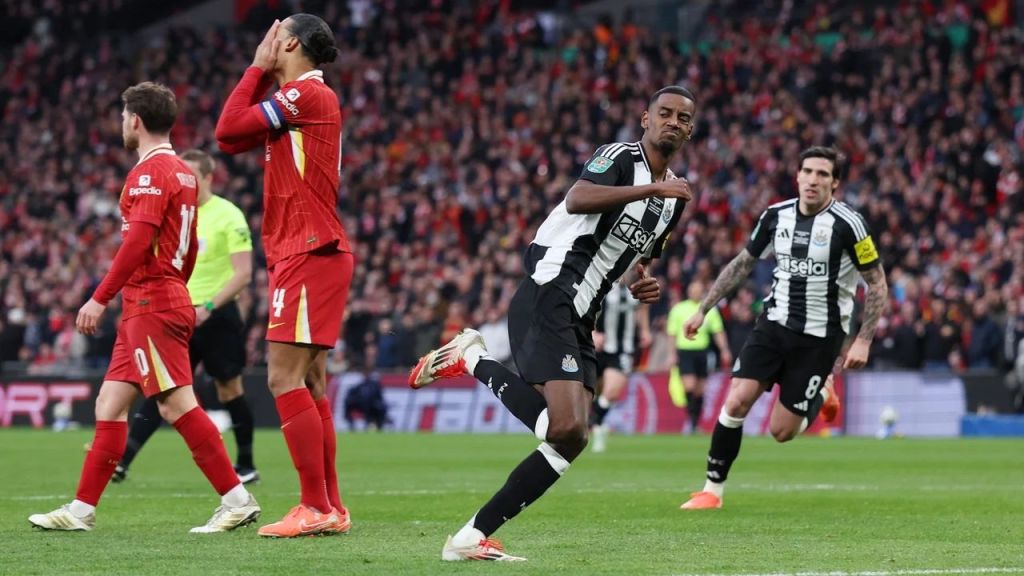
I’m old enough to remember when the Carabao Cup was called the League Cup, and I’m (just) old enough to remember Newcastle United winning the Fairs Cup in 1969. I’m also old enough to remember countless cup final defeats, but I’m not old enough to remember the last time The Toon won a domestic trophy (the FA Cup in 1955), so today’s victory against Liverpool presents a unique opportunity to celebrate a Cup success. Even if it isn’t the most important piece of silverware, such an event is something I’d taken for granted I’d never be able to blog about!
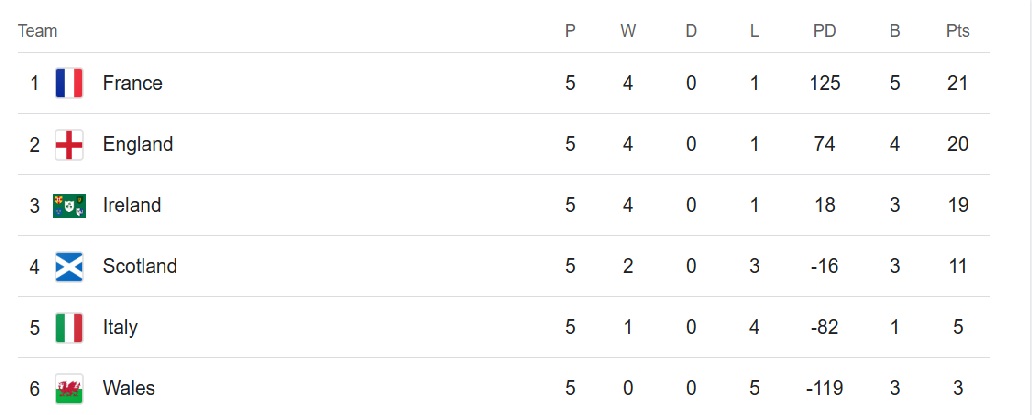
Yesterday I watched the last round of matches in this years Six Nations rugby Championship so, as I did last year, I thought I would do a quick summary of the games and the competition as a whole.
In the first game yesterday, thanks largely to their own errors, Ireland struggled to beat a spirited Italian side in Rome 17-22. That put them briefly top of the table, but with fewer bonus points and a worse points difference than either England or France so needed both those teams to lose in order to win the Championship. Hope of that happening vanished quickly when England scored a try about 2 minutes into their game against Wales in Cardiff, quickly followed by another. England thereafter ran riot and won 68-14 taking them to the top. England did play well, but Wales were very poor. To be honest, I found the game a bit painful to watch. If it had been boxing the referee would have stopped the fight. Memories of the great Welsh teams of the past are very distant nowadays. It’s hard to see where they go from here, with their second successive Wooden Spoon.
Then it was time for the finale, France versus Scotland. I did think that France would win easily but Scotland gave it a good go, and were unlucky not to take a lead into half-time. They wilted in the second half, however, and France duly picked up a bonus point win and the Championship. They are worthy winners, and all credit to them.
(The atmosphere at the Stade de France last night was so raucous that I had difficulty hearing the commentators over the crowd noise. I find commentators rarely add much to the experience, so this isn’t a complaint. In fact, I think it would be good if TV broadcasts allowed the viewer to turn off the commentary but keep the sounds from the stadium.)
The only game France lost was against England on a rainy day at Twickenham on 8th February, a game I watched. France should really have won that game but made a ludicrous number of mistakes and lost by a single point at the death. But for that Les Bleus would have had a Grand Slam. Fair play to England for hanging on and showing great resilience. After an unconvincing start as the competition went on they got better and better, though they needed a slice of luck to beat Scotland 16-15 as Finn Russell missed a conversion that would have won the game.
Up until last week the only team able to do a Grand Slam was Ireland, but they were outplayed in Dublin by France who won 42-27. Sports journalists have a habit of seeing everything as either a triumph or a disaster, and the Irish media portrayed that as the latter. The way I see it is that Ireland’s rugby team reached a high-water mark with their Grand Slam two years ago since when a number of important players have retired. It’s been a time for reconstruction and rebuilding. This is the way of things. I remember Ireland beating France comfortably last season, but France came back strongly this year. At least Ireland collected another Triple Crown, beating England, Wales and Scotland.
After last night’s game I was reflecting on why I enjoy the Six Nations so much. I think it’s mainly because there are relatively few games so each one takes on a significance, either in the context of the Championship or because it represents a longstanding rivalry (e.g. the Calcutta Cup). The point is that there is real jeopardy attached to many of the games. Contrast this with the United Rugby Championship. The games featuring the Irish teams in this competition (Leinster, Munster, Connacht and Ulster) are broadcast free-to-air on television here and I watch quite a few of them. There are 16 teams in this competition, divided into four pools of four: each side plays the 15 others once, and an additional game against the other three in their pool, meaning 18 games per team. After 18 rounds, all that happens is that the bottom eight in the league table are eliminated and the top eight go into the knockout stage. Eighteen games is a long slog when all it does is eliminate half the teams, and it means that there’s much less at stake in individual matches. Still, now the Six Nations is over I’ll be watching the URC for the rest of the season, starting next weekend.
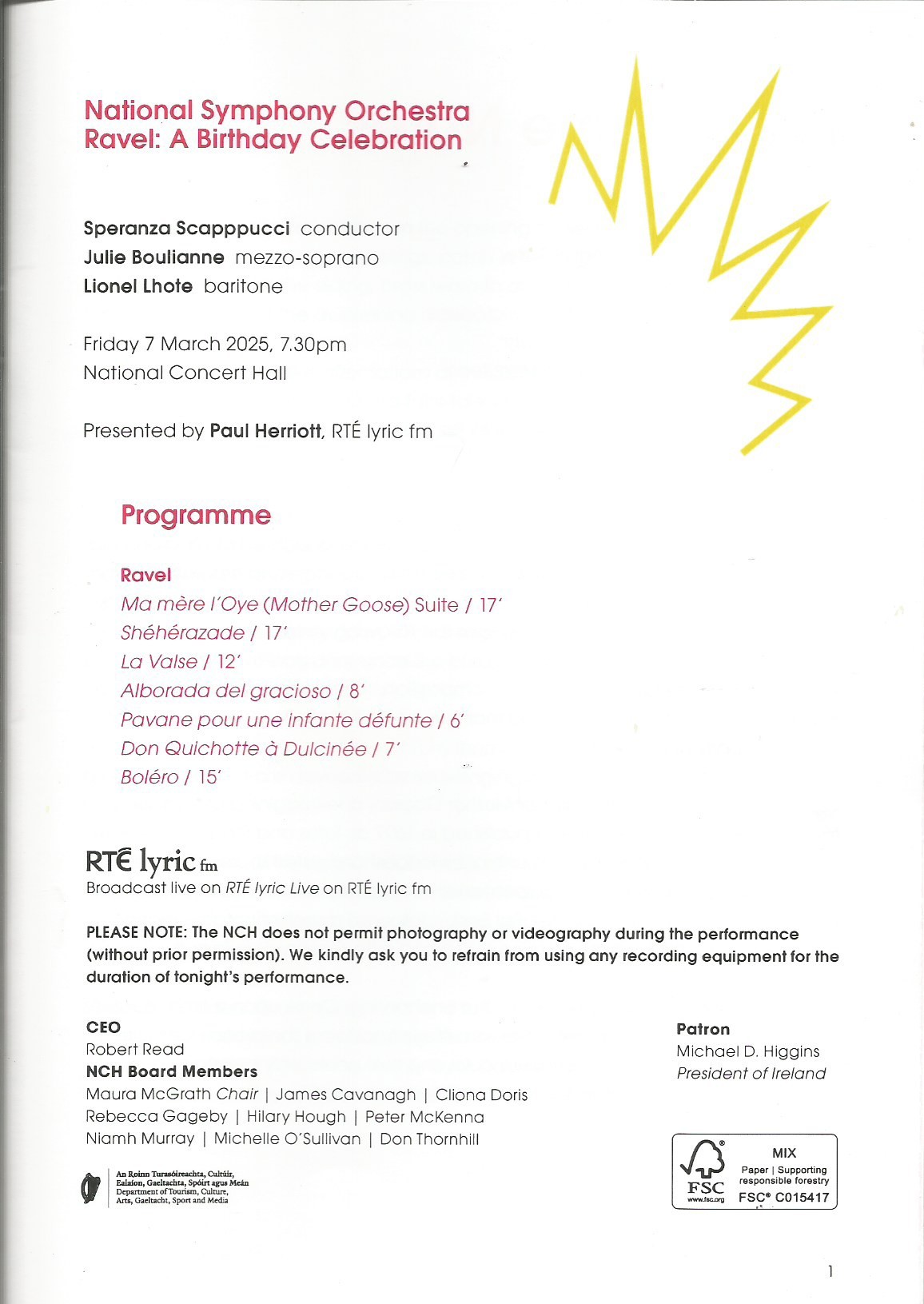
Yesterday (8th March 2025) was the 150th anniversary of the birth of Maurice Ravel and the National Symphony Orchestra celebrated it in fine fashion with all-Ravel programme for last night’s concert under the direction of guest conductor Speranza Scappucci (whose name aquired an extra p for the printed programme):
As you can see, it was basically a selection of Ravel’s greatest hits and there’s no surprise that the concert ended with a performance of Boléro, which is by no means the most interesting of Ravel’s compositions but is easily his most famous. Ravel himself said that `it has no music in it’, meaning that it doesn’t have any variation or thematic development or invention, but was written deliberately as an experiment to see how far he could get in writing a work that was entirely based on rhythm and repetition. The result was a smash hit and earned him a very great deal of money, but he grew to resent the fact that it was so much more popular than the other works he himself thought were much better. I know some people who hate this piece, but I think it’s great fun and always enjoy hearing it. Last night was no exception.
The composition of Boléro is so simple that even a non-musician like me can play it. It’s basically written in a slow 3/4 time signature on which is superimposed the following figure:
The second part is basically a repeat of the first, with the last two eighth notes replaced with triplet. The whole pattern consists of 24 notes. I once tried to count how many times it is repeated in a performance of Boléro, but gave up when I got to 100. I think it must be over 200 times. This figure is introduced first on a single snare drum, which carries on playing it for the duration, i.e. for about 15 minutes in total. As the piece develops the same pattern is picked up by various other instruments, either alone in combination. A second snare drum joins in too. The key to the piece is to keep this all very strictly in tempo, as the piece gradually gets louder.
As I’ve mentioned before on this blog, my Father was a (jazz) drummer. I remember once borrowing his snare drum and attempting to play along with a recording of Boléro. The pattern shown above is not that hard to play in itself, but it’s not as easy as you probably think to keep in tempo as you play it louder and louder. At the start it’s fine: you begin by tapping the sticks on the skin of the drum very close to the rim. To increase the volume you gradually move the point of impact closer to the centre of the drum, which naturally makes it louder. However, to get louder still you have to increase the distance the sticks move, and that makes it tougher to keep to tempo. Playing along at home is one thing, but playing the percussionist playing this in an orchestra must leave the drummer feeling very exposed. One mistake, any speeding up or slowing down, and the whole performance will be ruined. Percussionists very often have little to do for long passages in an orchestral work, but this takes it to the opposite extreme. It requires constant concentration, but no variation or embellishment is allowed. I suppose professional musicians just get into the zone and don’t think about the possibility of screwing up. Last night the task fell to Section Leader Rebecca Celebuski, who performed it flawlessly.
The bolero rhythm is just one element of the composition, of course. There is a melody, in two parts. The first simple and catchy, the second bluesier and a bit syncopated. Each part is played twice, passed around the instruments of the orchestra, first individually and then in combinations. Sometimes the melodic line is doubled, but there are no complicated harmonies and the piece stays in C major throughout, apart from a sudden change of key near the very end. The second part of the melody allows the musicians to release their inner jazz a bit, playing behind or across the beat to generate the feeling that the tune is trying to escape the confines of the incessant rhythm. As is the case in jazz, this sense of tension only works if the basic rhythm is kept strictly in tempo as the crescendo builds
The third element of the composition is the simplest of all, but I feel that it is very important in determining whether a performance of Boléro really rocks. That is a rhythmic pulse based on the three beats of the underlying 3/4. When they’re not playing the melody or shadowing the bolero pattern, the orchestra play this figure and it ends up being boomed out by the timpani in tremendous style but also as the piece progresses the stress shifts between the three beats as different instruments contribute.
I know it’s a familiar piece but I really enjoyed last night’s performance. I’ll also reiterate that as well as making a great sound, a full symphony orchestra playing during a piece like this is also a tremendous thing to watch.
Anyway, it wasn’t all about Boléro. In the first half we had the orchestral suite Ma mère l’Oye (My Mother the Goose), the song cycle Shéhérazade with vocals by excellent mezzo-soprano Julie Boulianne, and La Valse. The last of these is a masterpiece, originally conceived as a tribute to the Viennese waltz, but not composed until after TheFirst World War, and turned into a kind of tragic parody, starting out sombre and brooding, gradually building into a garish intensity and then into a brutal, almost chaotic, ending.
After the wine break we heard Alborado del Gracioso, a beautifully atmospheric with a strong Spanish influence and the orchestral version of Pavane pour une infante défunte, played well but a little too slowly for my tastes, and the only piece of the evening that I’d never heard before, Don Quichotte à Dulcinée, a miniature song cycle lasting just 7 minutes, comprised of settings of three poems by Paul Morand. Soloist was baritone Lionel Lhote who not only sang very well but had a very engaging stage presence.
And then it was Boléro, received with great applause and a standing ovation, and then by train back to Maynooth. There were a lot of French people in Dublin last night, presumably not for the Ravel, but for this afternoon’s rugby. They will be enjoying themselves in the city right now, as France convincingly beat Ireland 27-42 in the Six Nations, to end the home team’s hopes of a grand slam. Disappointment for the Boys in Green, but France were excellent and thoroughly deserved to win. Losing to a side as good as that is no disgrace.
This morning I published another paper at the Open Journal of Astrophysics and in the process I noticed that took us to a total 111 articles this year. I got to thinking about the significance of that number in cricket, where it goes by the name of Nelson…
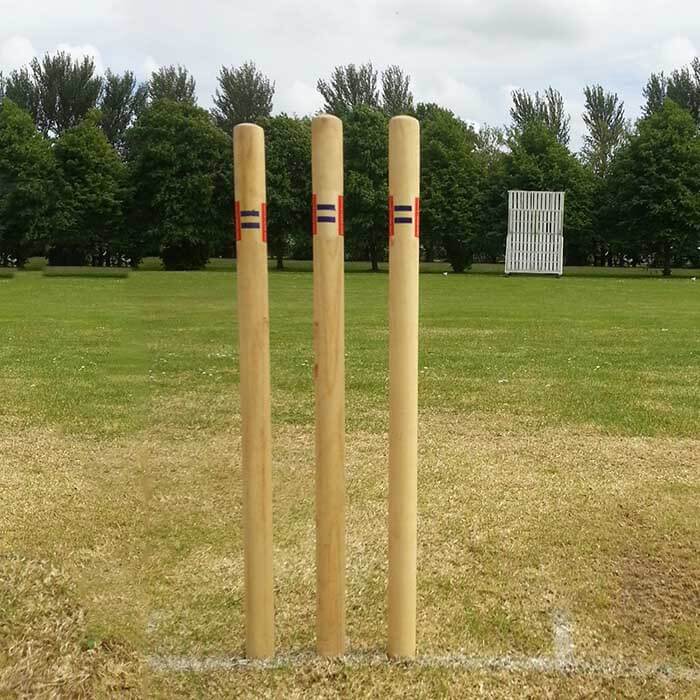
In cricket – at least in England – Nelson is supposed to be an unlucky number. The reason for this could well be that the number 111 looks like a set of stumps without the bails (see left). (For those of you not up with the lingo, the bails are two smaller bits of wood that sit on top of the stumps. ) The absence of the bails could mean that they have been dislodged, signifying that a batter is out. Also umpires remove the bails at close of play, so it could indicate that the match is over.
What’s less clear is the connection with Horatio, Lord Nelson (right). The version I was told at school was that Nelson had “one eye, one arm, and one Trafalgar”. Some also say “Destiny” instead of “Trafalgar”. Those are polite versions. Others say the third one refers to a part of the male anatomy. Bill Frindall used to say “one eye, one arm, and one et cetera“. Who knows which, if any, of these is right?
In any case this does give me the chance to point out that, contrary to popular myth, Nelson didn’t lose an eye anyway. In 1794, Nelson was in action at the Siege of Calvi during the Invasion of Corsica when a cannonball struck a nearby sandbag and sprayed him with sand and gravel. Nelson’s right eye was damaged by this, but he didn’t lose it although he had little effective vision through it thereafter.
Meanwhile, I just saw this notification on LinkedIn about yesterday’s post:
I don’t think I’ve ever written a blog post about the League of Ireland (soccer) before, but since it’s a holiday weekend and I’ve just watched Dundalk versus Shamrock Rovers on the telly, I thought I’d do a quickie.
I’ve been following this year’s League of Ireland Premier Division with some interest as it has been very close. You can see how competitive the league is just by looking at the table: 35 games played with three points for a win and the top team only has 60 points! Each team plays the others 4 times, incidentally, making a total of 36 games. The last round of matches happens next Friday, 1st November; the season runs from February to November.
Anyway, Shelbourne seemed to be battling it out with Derry City for the top spot, but then St Patrick’s Athletic and Shamrock Rovers starting gaining ground, as Both Derry and Shelbourne stumbled. Today’s result was important because Shamrock Rovers had to win to keep the competition alive. Favourites to win against the bottom club, they didn’t play very well but scraped home 1-0. The gap in quality between top and bottom of this league is really very small.
Now the situation is simple: if Shelbourne win on Friday – or if Shamrock Rovers don’t – then Shelbourne are champions. If Shelbourne lose or draw and Shamrock Rovers win then Shamrock Rovers are champions. On paper, Shelbourne have the tougher game, away at Derry City, while Shamrock Rovers at home to Waterford. It’s a toss-up who will win.
UPDATE: 1st November. They left it very late but Shelbourne beat Derry 1-0 to take the title. Shamrock Rovers also won, but to no avail…
P.S. As the crow flies, Shamrock Rovers (who play at Tallaght Stadium) is the nearest Premier Division club to Maynooth
Today saw the end of this year’s County Championship cricket season, which I take to be definition of the official end of summer. It seems to have come very late this year, and the weather not particularly clement for the last day.
I like county cricket, and hope to be able to see more when I retire and have the time, but I haven’t followed many games this year. I was away for much of the season and a bit busy to pay too much attention for the rest. I still keep an eye on how Glamorgan are doing, though, because of the time I spent living in Cardiff. In fact they won their last game against Gloucestershire yesterday to finish 6th in the 2nd Division. The match had been affected by rain but both captains decided to try to make a game of it by each forfeiting an innings after Glamorgan declared their first innings 381/4with the best part of two days to play. Gloucestershire never looked like reaching that total and were bowled out for 189. The other Championship game between these two teams, in June, ended in a remarkable tie as Glamorgan were bowled out for 592 needing 593 to win. Of course the great success of the year for Glamorgan was winning the One Day Trophy, beating Somerset in a final deferred by a day and truncated by rain.
Elsewhere in the County Championship, Surrey won the 1st Division while Lancashire and Kent were relegated. Sussex won the 2nd division title and they and Yorkshire were promoted to Division 1 for next season. With Lancs and Yorks in different divisions, there wasn’t be a Roses match this summer, and there won’t be one next season either!
Anyway, as I’ve done before, it seems apt to mark the end of the County Championship with one of the classic cricket poems, Close of Play by Thomas Moult.
How shall we live, now that the summer’s ended, And bat and ball (too soon!) are put aside, And all our cricket deeds and dreams have blended — The hit for six, the champion bowled for none, The match we planned to win and never won? … Only in Green-winged memory they abide.
How shall we live, who love our loveliest game With such bright ardour that when stumps are drawn We talk into the twilight, always the same Old talk with laughter round off each tale — Laughter of friends across a pint of ale In the blue shade of the pavilion.
For the last time a batsman is out, the day Like the drained glass and the dear sundown field is empty; what instead of Summer’s play Can occupy these darkling months ere spring Hails willows once again the crowned king? How shall we live so life may not be chilled?
Well, what’s a crimson hearth for, and the lamp Of winter nights, and these plump yellow books That cherish Wisden’s soul and bear his stamp — And bat and ball (too soon!) are put aside, Time’s ever changing, unalterable score-board, Thick-clustered with a thousand names adored: Half the game’s magic in their very looks!
And when we’ve learnt those almanacs by heart, And shared with Nyren … Cardus ….the distant thrill That cannot fade since they have had their part, We’ll trudge wet streets through fog and mire And praise our heroes by the club-room fire: O do not doubt the game will hold us still!
The views presented here are personal and not necessarily those of my employer (or anyone else for that matter).
Feel free to comment on any of the posts on this blog but comments may be moderated; anonymous comments and any considered by me to be vexatious and/or abusive and/or defamatory will not be accepted. I do not necessarily endorse, support, sanction, encourage, verify or agree with the opinions or statements of any information or other content in the comments on this site and do not in any way guarantee their accuracy or reliability.






 In the Dark