Archive for the The Universe and Stuff Category

Fourier, Hamilton and Ptolemy

Posted in History, Poetry, The Universe and Stuff with tags , , , , , , , on December 17, 2018 by telescoper

As we stagger into the last week of term I find myself with just two lectures to give in my second-year module on Vector Calculus and Fourier Series. I didn’t want to present the two topics mentioned in the title as disconnected, so I linked them in a lecture in which I used the divergence theorem of vector calculus to derive the heat equation, the solution of which led Joseph Fourier to devise his series in Mémoire sur la propagation de la chaleur dans les corps solides (1807), a truly remarkable work for its time that inspired so many subsequent developments.

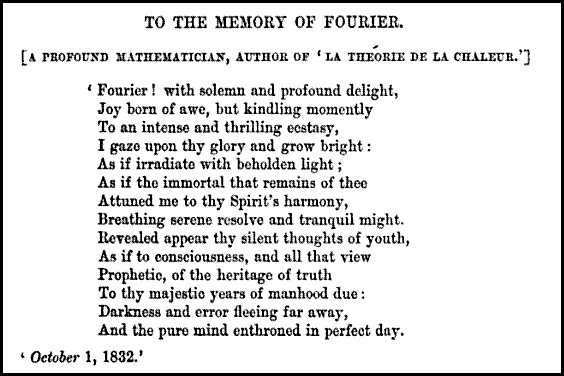
Fourier’s work was so influential and widely admired that it inspired a famous Irish mathematician William Rowan Hamilton to write the following poem:

Hamilton-for Fourier

The serious thing that strikes me is not the quality of the verse, but how many scientists of the 19th Century, Hamilton included, saw their scientific interrogation of Nature as a manifestation of the human condition just as the romantic poets saw their artistic contemplation and how many poets of the time were also interested in science.

Anyway I was looking for nice demonstrations of Fourier series to help my class get to grips with them when I remembered this little video recommended to me some time ago by esteemed Professor George Ellis. It’s a nice illustration of the principles of Fourier series, by which any periodic function can be decomposed into a series of sine and cosine functions.

This reminds me of a point I’ve made a few times in popular talks about Astronomy. It’s a common view that Kepler’s laws of planetary motion according to which which the planets move in elliptical motion around the Sun, is a completely different formulation from the previous Ptolemaic system which involved epicycles and deferents and which is generally held to have been much more complicated.

The video demonstrates however that epicycles and deferents can be viewed as the elements used in the construction of a Fourier series. Since elliptical orbits are periodic, it is perfectly valid to present them in the form a Fourier series. Therefore, in a sense, there’s nothing so very wrong with epicycles. I admit, however, that a closed-form expression for such an orbit is considerably more compact and elegant than a Fourier representation, and also encapsulates a deeper level of physical understanding.

On Probability and Cosmology

Posted in The Universe and Stuff with tags , , , on December 12, 2018 by telescoper

I just noticed a potentially interesting paper by Martin Sahlén on the arXiv. I haven’t actually read it yet, so don’t know if I agree with it, but thought I’d point it out here for those interested in cosmology and things Bayesian.

Here is the abstract:

Modern scientific cosmology pushes the boundaries of knowledge and the knowable. This is prompting questions on the nature of scientific knowledge. A central issue is what defines a ‘good’ model. When addressing global properties of the Universe or its initial state this becomes a particularly pressing issue. How to assess the probability of the Universe as a whole is empirically ambiguous, since we can examine only part of a single realisation of the system under investigation: at some point, data will run out. We review the basics of applying Bayesian statistical explanation to the Universe as a whole. We argue that a conventional Bayesian approach to model inference generally fails in such circumstances, and cannot resolve, e.g., the so-called ‘measure problem’ in inflationary cosmology. Implicit and non-empirical valuations inevitably enter model assessment in these cases. This undermines the possibility to perform Bayesian model comparison. One must therefore either stay silent, or pursue a more general form of systematic and rational model assessment. We outline a generalised axiological Bayesian model inference framework, based on mathematical lattices. This extends inference based on empirical data (evidence) to additionally consider the properties of model structure (elegance) and model possibility space (beneficence). We propose this as a natural and theoretically well-motivated framework for introducing an explicit, rational approach to theoretical model prejudice and inference beyond data.

You can download a PDF of the paper here.

As usual, comments are welcome below. I’ll add my thoughts later, after I’ve had the chance to read the article!


Bill Bonnor on Cosmology with Negative Mass

Posted in mathematics, The Universe and Stuff with tags , , , , , on December 10, 2018 by telescoper

My post from Friday about negative mass in cosmology reminded me of my days at Queen Mary and discussions I had at that time with Bill Bonnor, who retired in 1985 but was a regular visitor to the weekly Relativity Seminars. I was sad to discover just now that Bill actually passed away in 2015 (at the age of 94) so I thought I would post a little note as a short tribute.

Bill Bonnor was an old-school mathematical relativist, which I definitely am not, but I recall talking to him quite a lot in the coffee room because we had a shared interest in gambling games. He had a liking for the fixed-odds competition in the football pools, which he played with considerable success.

Anyway, Bill Bonnor published a paper in 1989 about Negative Mass in General Relativity. It’s not all about cosmological implications of negative mass, but I’ve just typed up a quick summary. In fact I used some of this in a university examination question many moons ago!

Before reading this, you might wish to look up active the terms gravitational mass, passive gravitational mass, inertial mass and equivalence principle, which you can find discussed here (for example).

Negative Mass, Phlogiston and the State of Modern Cosmology

Posted in Astrohype, The Universe and Stuff with tags , , on December 7, 2018 by telescoper

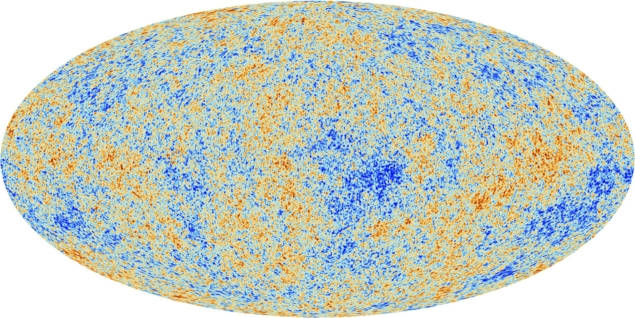
A graphical representation of something or other.

I’ve noticed a modest amount of hype – much of it gibberish – going around about a paper published in Astronomy & Astrophysics but available on the arXiv here which entails a suggestion that material with negative mass might account for dark energy and/or dark matter. Here is the abstract of the paper:

Dark energy and dark matter constitute 95% of the observable Universe. Yet the physical nature of these two phenomena remains a mystery. Einstein suggested a long-forgotten solution: gravitationally repulsive negative masses, which drive cosmic expansion and cannot coalesce into light-emitting structures. However, contemporary cosmological results are derived upon the reasonable assumption that the Universe only contains positive masses. By reconsidering this assumption, I have constructed a toy model which suggests that both dark phenomena can be unified into a single negative mass fluid. The model is a modified ΛCDM cosmology, and indicates that continuously-created negative masses can resemble the cosmological constant and can flatten the rotation curves of galaxies. The model leads to a cyclic universe with a time-variable Hubble parameter, potentially providing compatibility with the current tension that is emerging in cosmological measurements. In the first three-dimensional N-body simulations of negative mass matter in the scientific literature, this exotic material naturally forms haloes around galaxies that extend to several galactic radii. These haloes are not cuspy. The proposed cosmological model is therefore able to predict the observed distribution of dark matter in galaxies from first principles. The model makes several testable predictions and seems to have the potential to be consistent with observational evidence from distant supernovae, the cosmic microwave background, and galaxy clusters. These findings may imply that negative masses are a real and physical aspect of our Universe, or alternatively may imply the existence of a superseding theory that in some limit can be modelled by effective negative masses. Both cases lead to the surprising conclusion that the compelling puzzle of the dark Universe may have been due to a simple sign error.

For a skeptical commentary on this work, see here.

The idea of negative mass is no by no means new, of course. If you had asked a seventeenth century scientist the question “what happens when something burns?”  the chances are the answer would  have involved the word phlogiston, a name derived from the Greek  φλογιστόν, meaning “burning up”. This “fiery principle” or “element” was supposed to be present in all combustible materials and the idea was that it was released into air whenever any such stuff was ignited. The act of burning separated the phlogiston from the dephlogisticated “true” form of the material, also known as calx.

The phlogiston theory held sway until  the late 18th Century, when Antoine Lavoisier demonstrated that combustion results in an increase in weight implying an increase in mass of the material being burned. This poses a serious problem if burning also involves the loss of phlogiston unless phlogiston has negative mass. However, many serious scientists of the 18th Century, such as Georg Ernst Stahl, had already suggested that phlogiston might have negative weight or, as he put it, `levity’. Nowadays we would probably say `anti-gravity.

Eventually, Joseph Priestley discovered what actually combines with materials during combustion:  oxygen. Instead of becoming dephlogisticated, things become oxidised by fixing oxygen from air, which is why their weight increases. It’s worth mentioning, though, the name that Priestley used for oxygen was in fact “dephlogisticated air” (because it was capable of combining more extensively with phlogiston than ordinary air). He  remained a phlogistonian longer after making the discovery that should have killed the theory.

The standard cosmological model involves the hypothesis that about 75% of the energy budget of the Universe is in the form of “dark energy”. We don’t know much about what this is, except that in order to make our current understanding work out it has to act like a source of anti-gravity. It does this by violating the strong energy condition of general relativity.

Dark energy is needed to reconcile three basic measurements: (i) the brightness distant supernovae that seem to indicate the Universe is accelerating (which is where the anti-gravity comes in); (ii) the cosmic microwave background that suggests the Universe has flat spatial sections; and (iii) the direct estimates of the mass associated with galaxy clusters that accounts for about 25% of the mass needed to close the Universe.

A universe without dark energy appears not to be able to account for these three observations simultaneously within our current understanding of gravity as obtained from Einstein’s theory of general relativity.

I’ve blogged before, with some levity of my own, about how uncomfortable this dark energy makes me feel. It makes me even more uncomfortable that such an enormous  industry has grown up around it and that its existence is accepted unquestioningly by so many modern cosmologists.

Isn’t there a chance that, with the benefit of hindsight, future generations will look back on dark energy in the same way that we now see the phlogiston theory?

Or maybe, as the paper that prompted this piece might be taken to suggest, the dark energy really is something like phlogiston. At least I prefer the name to quintessence. However, I think the author has missed a trick. I think to create a properly trendy cosmological theory he should include the concept of supersymmetry, according to which there should be a Fermionic counterpart of phlogiston called the phlogistino..

A LIGO Orrery

Posted in The Universe and Stuff with tags , , , , on December 5, 2018 by telescoper

Following yesterday’s post here is a nice video visualization of all the black hole binary mergers so far claimed to have been detected by Advanced LIGO. They’re computer simulations, of course, not actual black holes (which you wouldn’t be able to see). I always thought an Orrery was a clockwork device, rather than a digital computer, but there you go. Poetic license!

I can’t say I’m very keen on the music.

The New Wave of Gravitational Waves

Posted in The Universe and Stuff with tags , , , , on December 4, 2018 by telescoper

I think it’s very sneaky of the LIGO Scientific Collaboration and the Virgo Collaboration to have released two new gravitational wave papers while I was out of circulation fora  couple of days, so I’m a bit late on this, but here are links to the new results on the arXiv.

You can click on all the excerpts below to make them bigger.

First there is GWTC-1: A Gravitational-Wave Transient Catalog of Compact Binary Mergers Observed by LIGO and Virgo during the First and Second Observing Runs with this abstract:

Here is a summary of the properties of the binary systems involved in the events listed in the above paper:

There are several (four) events in this catalogue that have not previously been announced (or, for that matter, subjected to peer review) despite having been seen in the data some time ago (as far back as 2015). I’m also intrigued by the footnote on the first page which contains the following:

…all candidate events with an estimated false alarm rate (FAR) less than 1 per 30 days
and probability > 0.5 of being of astrophysical origin (see Eq. (10) for the definition) are henceforth denoted with the GW prefix.

The use of false discovery rates is discussed at length here as a corrective to relying on p-values for detections. The criteria adopted here don’t seem all that strong to me.

The second paper is Binary Black Hole Population Properties Inferred from the First and Second Observing Runs of Advanced LIGO and Advanced Virgo which has this abstract:

I’ve been teaching and/or preparing lectures all day today, so I haven’t yet had time to read these papers in detail. I will try to read them over the next few days. In the meantime I would welcome comments through the box about these new results. I wonder if there’ll be any opinions from the direction of Copenhagen?

UPDATE: Here’s a montage of all 10 binary black hole mergers `detected’ so far…

I think it’s safe to say that if GW151266 had been the first to be announced, the news would have been greeted with considerable skepticism!

More Science Beards of Note

Posted in Beards, The Universe and Stuff with tags , , , , , , , , , , , , , , on November 30, 2018 by telescoper

Following yesterdays post in response to the news that the Bank of England has released a list of names of the scientists who have been nominated to appear on the new £50 note, I have collected a few more great beards of British science.

If you recall, Beard Liberation Front spokesperson Keith Flett has argued on his blog for Lord Kelvin (William Thomson) who is indeed a worthy candidate, being both a very distinguished scientist and the possessor of a splendid beard:

However, it must be pointed out that Kelvin was just one of many distinguished British scientists to have been hirsute, especially in the Victorian Era. Two that spring immediately to mind are James Prescott Joule (after whom the SI unit of energy is named):

There is also of course James Clerk Maxwell, who formulated the classical theory of electromagnetism:

I posted those three yesterday, but here are some extras.

First, from an older era, there is John Napier (1550-1617) the mathematician and astronomer perhaps most famous for inventing logarithms:

Next is Joseph Swan, noted for the development of the incandescent light bulb who, incidentally, was born in Sunderland (which is in the Midlands).

Then there is engineer, mathematician and physicist Oliver Heaviside

Oliver Lodge is best known for his work on the development of radio communications:

Another well-known hirsute scientist inventor is Scottish-born Alexander Graham Bell, whose strongest association is with the first working telephone system.

Here’s physicist, chemist and physical chemist William Crookes:

And finally in this batch there is astronomer and mathematician John Couch Adams who did not grow a beard until relatively late in life, but whose facial hair definitely deserves recognition:

Anyway, please keep them coming! You can submit other candidates through the comments box. If you include a link to a picture I will update and include in this post. Note, however, that to be eligible the person must: (a) be a scientist; (b) be British; (c) be dead; and (d) not have been on a banknote before. For example, Charles Darwin has previously been on the tenner so he is ruled out and many other famous beards in science are ruled out by virtue of not being British.

Science Beards of Note

Posted in Beards, The Universe and Stuff with tags , , , , , , , on November 29, 2018 by telescoper

So the Bank of England has released a list of names of the scientists who have been nominated to appear on the new £50 note. In response to this, Beard Liberation Front spokesperson Keith Flett has argued on his blog for Lord Kelvin (William Thomson) who is indeed a worthy candidate, being both a very distinguished scientist and the possessor of a splendid beard:

However, it must be pointed out that Kelvin was just one of many distinguished British scientists to have been hirsute, especially in the Victorian Era. Two that spring immediately to mind are James Prescott Joule (after whom the SI unit of energy is named):

There is also of course James Clerk Maxwell, who formulated the classical theory of electromagnetism:

Anyway, please submit other candidates through the comments box. If you include a link to a picture I will update and include in this post. Note, however, that to be eligible the person must: (a) be a scientist; (b) be British; (c) be dead; and (d) not have been on a banknote before. For example, Charles Darwin has previously been on the tenner so he is ruled out and many other famous beards in science are ruled out by virtue of not being British.

Physics: Mathematical or Theoretical or Experimental?

Posted in Education, Maynooth, The Universe and Stuff with tags , , , on November 26, 2018 by telescoper

Fresh from doing two Open Day talks last week I thought I’d write a few words here about something that cropped up in the question-and-answer session.

For a start, I should explain that here at Maynooth University there are two Physics departments, one the Department of Theoretical Physics (of which I am a Faculty member) and the other the Department of Experimental Physics. These two units are in the same building but are largely separate in terms of teaching and research.

For instance, when students enter on our General Science degree programme they have to choose four subjects in the first year, including Mathematics (much as I did when I did my Natural Sciences degree at Cambridge back in the day). Picking `double physics’ (i.e. Experimental Physics and Theoretical Physics) uses up two of those choices, whereas Physics was a single choice in the first year of my degree.

To confuse matters still further, the Department of Theoretical Physics only recently changed its name from the Department of Mathematical Physics and some of our documentation still carries that title. I got asked several times at the weekend what’s the difference between Theoretical Physics and Mathematical Physics?

As far as Maynooth is concerned we basically use those terms interchangeably and, although it might appear a little confusing at first, having both terms scattered around our webpages means that Google searches for both `Mathematical Physics’ and `Theoretical Physics’ will find us.

It’s interesting though that Wikipedia has different pages for Mathematical Physics and Theoretical Physics. The former begins

Mathematical physics refers to the development of mathematical methods for application to problems in physics. The Journal of Mathematical Physics defines the field as “the application of mathematics to problems in physics and the development of mathematical methods suitable for such applications and for the formulation of physical theories”. It is a branch of applied mathematics, but deals with physical problems.

while the latter starts

Theoretical physics is a branch of physics that employs mathematical models and abstractions of physical objects and systems to rationalize, explain and predict natural phenomena. This is in contrast to experimental physics, which uses experimental tools to probe these phenomena.

The difference is subtle,and there is obviously a huge amount in common between these two definitions, but it is perhaps that Theoretical Physics is more focused on the use of mathematics to account for the results of experiment and observations whereas Mathematical Physics concerns itself more with the development of the necessary mathematical techniques, but I’m sure there will be readers of this blog who disagree with this interpretation.

For the record here is what Wikipedia says about Experimental Physics:

Experimental physics is the category of disciplines and sub-disciplines in the field of physics that are concerned with the observation of physical phenomena and experiments. Methods vary from discipline to discipline, from simple experiments and observations, such as the Cavendish experiment, to more complicated ones, such as the Large Hadron Collider.

I’d say that theoretical physicists are more likely than mathematical physicists to be working closely with experimentalists. I count myself as a theoretical physicist (that’s what I did in Part II at Cambridge, anyway) though I do work a lot with data.

Anyway, as an experiment, I asked the audience at my Open Day talks if they could name a famous physicist. Most popular among the responses were the names you would have guessed: Einstein, Hawking, Feynman, Dirac, Newton, Schrodinger, and some less familiar names such as Leonard Susskind and Brian Greene. Every single one of these is (or was) a theorist of some kind. This is confirmed by the fact that many potential students mention similar names in the personal statements they write in support of their university applications. For better or worse, it seems that to many potential students Physics largely means Theoretical (or Mathematical) Physics.

Although it is probably good for our recruitment that there are so many high-profile theoretical physicists, it probably says more about how little the general public knows about what physics actually is and how it really works. For me the important thing is the interplay between theory and experiment (or observation), as it is in that aspect where the whole exceeds the sum of the parts.

It might seem a bit strange to have two Physics departments in one University – though it seems to work alright in Cambridge! – but I think it works pretty well. The one problem is that there isn’t a clear entry point for `Physics’ without an adjective. Students can carry Theoretical Physics and Experimental Physics through all the way to final year and get a joint honours degree (50% theory and 50% experiment) or they can pick one to do single honours, but we might attract a few more students if the former possibility were just called `Physics’. Perhaps.

Circular Polarization in the Cosmic Microwave Background?

Posted in The Universe and Stuff with tags , , , , on November 23, 2018 by telescoper

Some years ago I went to a seminar on the design of an experiment to measure the polarization of the cosmic microwave background. At the end of the talk I asked what seemed to me to be an innocent question. The point of my question was the speaker had focussed entirely on measuring the intensity of the radiation (I) and the two Stokes Parameters that measure linear polarization of the radiation (usually called Q and U). How difficult, I asked, would it be to measure the remaining Stokes parameter V (which quantifies circular polarization)?

There was a sharp intake of breath among the audience as if I had uttered an obscenity, and the speaker responded with a glare and a curt `the cosmic microwave background is not circularly polarized’. It is true that in the standard cosmological theory the microwave background is produced by Thomson scattering in the early Universe which produces partial linear polarization, so that Q and U are non-zero, but not circular polarization, so V=0. However, I had really asked my question because I had an idea that it might be worth measuring V (or at least putting an upper limit on it) in order to assess the level of instrumental systematics (which are a serious issue with polarization measurements).

I was reminded of this episode when I saw a paper on the arXiv by Keisuke Inomata and Marc Kamionkowski which points out that the CMB may well have some level of circular polarization. Here is the abstract of the paper:

(You can click on the image to make it more readable.) It’s an interesting calculation, but it’s hard to see how we will ever be able to measure a value of Stokes V as low as 10-14.

A few years ago there was a paper on the arXiv by Asantha Cooray, Alessandro Melchiorri and Joe Silk which pointed out that the CMB may well have some level of circular polarization. When light travels through a region containing plasma and a magnetic field, circular polarization can be generated from linear polarization via a process called Faraday conversion. For this to happen, the polarization vector of the incident radiation (defined by the direction of its E-field) must have non-zero component along the local magnetic field, i.e. the B-field. Charged particles are free to move only along B, so the component of E parallel to B is absorbed and re-emitted by these charges, thus leading to phase difference between it and the component of E orthogonal to B and hence to the circular polarization. This is related to the perhaps more familiar process of which causes the plane of linear polarization to rotate when polarized radiation travels through a region containing a magnetic field.

Here is the abstract of that paper:

(Also clickable.) This is a somewhat larger effect but differs from the first paper in that it is produced by foreground processes rather than primordial physics. In any case a Stokes V of 10-9 is also unlikely to be measurable at any time in the foreseeable future.