Archive for the The Universe and Stuff Category

BICEP2: The Dust Thickens…

Posted in The Universe and Stuff with tags , , , , , , on May 29, 2014 by telescoper

Off to a day-long staff training event today so just time to post a quick update on the BICEP2 saga (see various posts on this blog). There’s a new paper on the arXiv today by Flauger, Hill and Spergel. The first part of its rather lengthy abstract reads:

BICEP2 has reported the detection of a degree-scale B-mode polarization pattern in the Cosmic Microwave Background (CMB) and has interpreted the measurement as evidence for primordial gravitational waves. Motivated by the profound importance of the discovery of gravitational waves from the early Universe, we examine to what extent a combination of Galactic foregrounds and lensed E-modes could be responsible for the signal. We reanalyze the BICEP2 results and show that the 100×150 GHz and 150×150 GHz data are consistent with a cosmology with r=0.2 and negligible foregrounds, but also with a cosmology with r=0 and a significant dust polarization signal. We give independent estimates of the dust polarization signal in the BICEP2 region using four different approaches. While these approaches are consistent with each other, the expected amplitude of the dust polarization power spectrum remains uncertain by about a factor of three. The lower end of the prediction leaves room for a primordial contribution, but at the higher end the dust in combination with the standard CMB lensing signal could account for the BICEP2 observations, without requiring the existence of primordial gravitational waves. By measuring the cross-correlations between the pre-Planck templates used in the BICEP2 analysis and between different versions of a data-based template, we emphasize that cross-correlations between models are very sensitive to noise in the polarization angles and that measured cross-correlations are likely underestimates of the contribution of foregrounds to the map. These results suggest that BICEP1 and BICEP2 data alone cannot distinguish between foregrounds and a primordial gravitational wave signal, and that future Keck Array observations at 100 GHz and Planck observations at higher frequencies will be crucial to determine whether the signal is of primordial origin. (abridged)

The foreground analysis done in this paper seems to me to be much more convincing that that presented in the original BICEP2 paper and it confirms that the data as presented can not discriminate between B-modes arising from a polarized foreground component and from the presence of primordial gravitational waves. As I’ve said before (several times now), the press hype surrounding this discovery was a bit premature and we have to wait for observations at other frequencies before a clearer picture emerges through the dust.

UPDATE: A new Nature News and Views Article contains a strong statement by David Spergel to the effect that BICEP2 provides no evidence either for or against the existence of primordial gravitational waves.

The 2014 Shaw Prize for Astronomy

Posted in The Universe and Stuff with tags , , , on May 27, 2014 by telescoper

So I came back to Brighton this morning after a nice long weekend in Cardiff. I took the 6.28 train via Southampton to avoid London and got to the University of Sussex in time to chair the University Human Resources Committee, the usual Chair being unwell. Anyway, all this means that I’ve been a bit busy this afternoon and also a bit tired all of which adds up to no time for a long post.

Fortunately, some nice news appeared to give me a topic for a very quick blog post. Earlier today the winners were announced for the 2014 Shaw Prize in Astronomy. This year’s award actually goes to three cosmologists, Daniel Eisenstein from Harvard, Shaun Cole from Durham  and John Peacock from Edinburgh. The prize of a cool $1Million goes 50% to Eisenstein; the other half is shared equally between Shaun and John. Nice to see another British success!

The citation reads

for their contributions to the measurements of features in the large-scale structure of galaxies used to constrain the cosmological model including baryon acoustic oscillations and redshift-space distortions.

It seems clear that John and Shaun were awarded their half of the prize because of their important work on the Anglo-Australian Two Degree Field Galaxy Redshift Survey (2dFGRS) and Daniel for leading a corresponding analysis of data derived from a survey of Luminous Red Galaxies from the Sloan Digital Sky Survey.

It’s a bit of a coincidence that baryon acoustic oscillations cropped up in this work, after my post last week about Sakharov Oscillations!

Anyway, congratulations to all three winners. No doubt they’ll be buying a few celebratory drinks for their colleagues in the very near future…


Space is the Place: 100 Years of Sun Ra

Posted in Jazz, The Universe and Stuff with tags , , , , on May 22, 2014 by telescoper

When I’m struggling to find the time or the inspiration to write a blog post, serendipity usually comes to the rescue. A post on Twitter just alerted me to the fact that today is the 100th birthday of  Sun Ra, one of the most extraordinary composers and bandleaders of the 20th Century; was born Herman Poole Blount in Bimingham, Alabama, on 22nd May 1914. From the 1950s, until his death in 1993, Sun Ra led various combinations of musician in bands with various permutations of names involving the word Arkestra, such as the Blue Universe Arkestra and the Solar Myth Arkestra. He himself played keyboards, sometimes solo and sometimes with huge bands  of over 30 musicians; his music touched on virtually the entire history of jazz, from ragtime to swing music, from bebop to free jazz. He was also  one of the first musicians, in any genre to make extensive use of electronic keyboards.

He never achieved mainstream commercial success, but was a prolific recording artist with a cult following, partly fuelled by his outrageous claims to have been born not on Earth but on Saturn and the fact that much of his music was to do with space travel. Quoted in Jazziz magazine

They really thought I was some kind of kook with all my talk about outer space and the planets. I’m still talking about it, but governments are spending billions of dollars to go to Venus, Mars, and other planets, so it’s no longer kooky to talk about space

Quite. In fact, Sun Ra developed a complex performing identity based on his music, “cosmic” philosophy, and poetry. He abandoned his birth name, took on the persona of Sun Ra (Ra being the ancient Egyptian god of the sun), and often dressed in the style of an ancient Egyptian pharoah, as in the video clip. In other words, he was very odd.

At this point you’re probably thinking this is all a bit “New Age” and heading in the direction of Charlie Parker‘s Private Hell, one of my favourite Gary Larson cartoons:

However, although I admit Sun Ra’s music is eclectic, outrageous and sometimes downright mystifying, it also has a marvellous coherence to it maintained as his style evolved over four decades and is consistently imbued with a powerful sense of the Jazz tradition.  In fact, I think Charlie Parker would have approved. I know I do! Anyway, whatever I think, the music of Sun Ra has withstood its skeptics and detractors for generations and long may it continue to do so. The world needs more of his kind.

To give a taste of his music, here is the classic album Space is the Place in its entirety (at least until it gets taken off Youtube for copyright violation!):


Sakharov Oscillations in Cosmology

Posted in The Universe and Stuff with tags , , , , on May 21, 2014 by telescoper

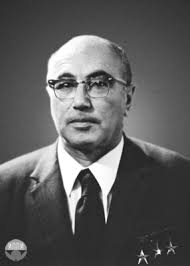
No time for much of a post today, but I couldn’t resist commenting on something I picked up from Twitter just now. Today is the 93rd anniversary of the birth of the nuclear physicist and dissident Andrei Dmitrievich Sakharov who died in 1989. Sakharov is probably more famous for his political campaigning and the award of the Nobel Peace Prize in 1975 than for his work in physics, but I couldn’t resist mentioning a classic paper by him which was first published in Russian in 1965.

Here is the abstract:

Sakharov

The importance of this remarkable paper for modern cosmology can’t be overstated, although many modern cosmologists have either forgotten it or were never aware of it in the first place. The details are a bit out of date, but the idea that density perturbations that grew by a process of gravitational instability to form galaxies and the large-scale structure of the Universe has survived almost fifty years, and plays a central role in the standard cosmological model. Moreover, the Sakharov Oscillations predicted in this paper manifest themselves in the temperature fluctuations of the cosmic microwave background as measured by, e.g., the Planck experiment:

Planck_power_spectrum_orig

The wiggles in the power spectrum plotted above appear because these fluctuations, generated in the modern theory during an episode of cosmic inflation, are set up in phase and thus reach the epoch of scattering at different phases of their oscillation and hence with different amplitudes. The detailed behaviour of the spectrum displayed above tells us a huge amount about the composition and evolution of the Universe.

When Francesco Lucchin and I were writing the first edition of our cosmology textbook (second edition here) we were careful to acknowledge Sakharov’s role in the development of cosmological theory, which wasn’t generally reflected in texts written outside Russia. I particularly recall the late Leonid Grischuk banging on about Sakharov’s work at many conferences in order to ensure he got proper credit and some books, e.g. Zel’dovich and Novikov’s two-volume Relativistic Astrophysics, do acknowledge him correctly. Somehow, however, the CMB wiggles never acquired the name of Sakharov; the peaks in the spectrum are often still called Doppler Peaks or Acoustic Peaks, when surely they should be Sakharov Peaks. It’s probably too late to change the nomenclature now, but there you go.

Anyway, I’ve now realized that I was working on the First Edition of Coles & Lucchin in 1994 which is now twenty years ago so before I get too depressed about the passage of time I’ll stop writing and get on with something else!

Anyway, I’ve now realized that

That BICEP Rumour…

Posted in The Universe and Stuff with tags , , , on May 14, 2014 by telescoper

So there’s been another twist in the story of BICEP2 and whether or not it has actually detected primordial gravitational waves.

This time it is a blog post on a site called Résonaances by Adam Falkowski who alleges that the BICEP2 team has made a pretty astounding error in their analysis of the data. This suggestion has been picked up by a couple of fairly influential science news sites (here and here). The BICEP2 team deny having made any such error and are quoted in the news stories defending their results in robust terms.

Before I continue let me make it clear that I stand by the scepticism I have expressed on this blog about this result (which, in fact, is shared by many of my colleagues in the cosmology fraternity1). The problem is that the measurement is made at a single frequency (150 GHz) and it is by no means clear on that basis whether it has the black-body spectrum that would characterize it as being associated with the cosmic microwave background rather than some sort of foreground emission. At 150 GHz the major worry is that polarized emission from galactic dust might contribute significantly to the signal, and might even swamp any primordial contribution.

Anyway, the blog post states that:

To estimate polarized emission from the galactic dust, BICEP digitized an unpublished 353 GHz map shown by the Planck collaboration at a conference.  However, it seems they misinterpreted the Planck results: that map shows the polarization fraction for all foregrounds, not for the galactic dust only (see the “not CIB subtracted” caveat in the slide). Once you correct for that and rescale the Planck results appropriately, some experts claim that the polarized galactic dust emission can account for most of the BICEP signal.

Here’s the map concerned as it appeared in the conference talk as presented on the blog post:

culprit

The point about this is that dust emission increases with frequency, so that at 353 GHz it would be expected to dominate the primordial cosmic microwave component. However, if one can measure the polarized component of this emission at high frequency (where it is larger and consequently easier to measure) then one could try to estimate the polarized contribution at the lower frequency measured at 150 GHz by BICEP2 by assuming it has a similar polarized fraction. This is actually just about the only way to estimate the foreground contribution.

Unfortunately in this map there is an additional unpolarized foreground arising from the Cosmic Infrared Background (CIB) which comprised integration dust emission from extragalactic sources. Including this component makes the polarized fraction look lower than it would if it were separated out and only the more highly polarized Galactic contribution considered. In other words including the CIB leads to an underestimate of the polarized fraction and consequently an underestimate of the foreground contamination at 150 GHz.

So now there are three issues:

  1. Did BICEP2 actually use this digitized image to estimate the polarized foreground for their experiment?
  2. Did they make the error of which they have been accused?
  3. Does this invalidate the BICEP2 announcement?

The answer to (1) is that I don’t know for sure but it’s certainly possible that they did. It sounds a pretty ropey approach, but the Planck data are not publicly available so they had to improvise. Even if (1) is the case, I am not at all sure that (2) is true. They may have, but in their responses to the suggestion they have denied it. It seems such a silly error that I’d be surprised, but that doesn’t in itself make it untrue.

However, even if (1) and (2) are the case that doesn’t mean that (3) is true, i.e. it does not imply that the entire analysis presented by BICEP2 is wrong. They have several different estimates of the foreground contribution using other methods so the entire result clearly does not stand or fall on the basis of the use of this particular map in a particular way.

I repeat what I’ve said before in response to the BICEP2 analysis, namely that the discussion of foregrounds in their paper is disappointing. I’d also say that I think the foreground emission at these frequencies is so complicated that none of the simple approaches that were available to the BICEP2 team are reliable enough to be convincing. My opinion on the analysis hasn’t therefore changed at all as a result of this rumour. I think BICEP2 has definitely detected something at 150 GHz but we simply have no firm evidence at the moment that it is primordial. That will change shortly, with the possibility of other experiments (specifically Planck, but also possibly SPTPol) supplying the missing evidence.

I’m not particularly keen on the rumour-mongering that has gone on, but then I’m not very keen either on the way the BICEP2 result has been presented in some quarters as being beyond reasonable doubt when it clearly doesn’t have that status. Yet.

Rational scepticism is a very good thing. It’s one of the things that makes science what it is. But it all too easily turns into mudslinging.

Note: 1 I use the word “fraternity” in the sense given in the Chambers Dictionary as “any set of people with something in common” rather than as “an all-male N American college association”. Cosmology is neither “all-male” nor exclusively American and I did not mean to imply either by my use of English.


A Plug for Some Research…

Posted in The Universe and Stuff with tags , , , , on May 12, 2014 by telescoper

Very busy today so I just thought I’d give a bit of publicity to a paper that’s just been accepted for publication. I’m actually one of the authors, but the other guys (Dipak Munshi of Sussex, Bin Hu of Leiden, Alessandro Renzi of Rome, and Alan Heavens of South Kensington Technical Imperial College) did all the work! I’m posting it mainly to remind myself that there is a world outside of administration. If it weren’t for my inestimable (STFC-funded) postdoc, Dipak Munshi, I don’t know where my research would be!

Here is the abstract:

We use the optimised skew-spectrum as well as the skew-spectra associated with the Minkowski Functionals (MFs) to test the possibility of using the cross-correlation of the Integrated Sachs-Wolfe effect (ISW) and lensing of the cosmic microwave background (CMB) radiation to detect deviations in the theory of gravity away from General Relativity (GR). We find that the although both statistics can put constraints on modified gravity, the optimised skew-spectra are especially sensitive to the parameter B0   that denotes the the Compton wavelength of the scalaron at the present epoch. We investigate three modified gravity theories, namely: the Post-Parametrised Friedmanian (PPF) formalism; the Hu-Sawicki (HS) model; and the Bertschinger-Zukin (BZ) formalism. Employing a likelihood analysis for an experimental setup similar to ESA’s Planck mission, we find that, assuming GR to be the correct model, we expect the constraints from the first two skew-spectra, S(0)   and S(1), to be the same: B0 <0.45  at 95  confidence level (CL), and B0 <0.67  at 99  CL in the BZ model. The third skew-spectrum does not give any meaningful constraint. We find that the optimal skew-spectrum provides much more powerful constraint, giving B0 <0.071  at 95  CL and B0 <0.15  at 99  CL, which is essentially identical to what can be achieved using the full bispectrum.

It’s part of a long sequence of papers emanating from work done by Dipak (with various combinations of co-authors, including myself) which have been aimed at optimising the use of statistical techniques for detecting and quantifying possible departures from the standard model of cosmology using various kinds of data; in this case the paper is entitled Probing Modified Gravity Theories with ISW and CMB Lensing; `ISW means the Integrated Sachs-Wolfe Effect and CMB is the cosmic microwave background. This kind of work doesn’t have the glamour of some cosmological research – I don’t think we’ll be writing a press release when it gets published! – but it is the kind of preparatory analysis that is essential if cosmologists are to make the most of present and forthcoming observational data, which is why we keep plugging away…

Illustris, Cosmology, and Simulation…

Posted in The Universe and Stuff with tags , , , , , , on May 8, 2014 by telescoper

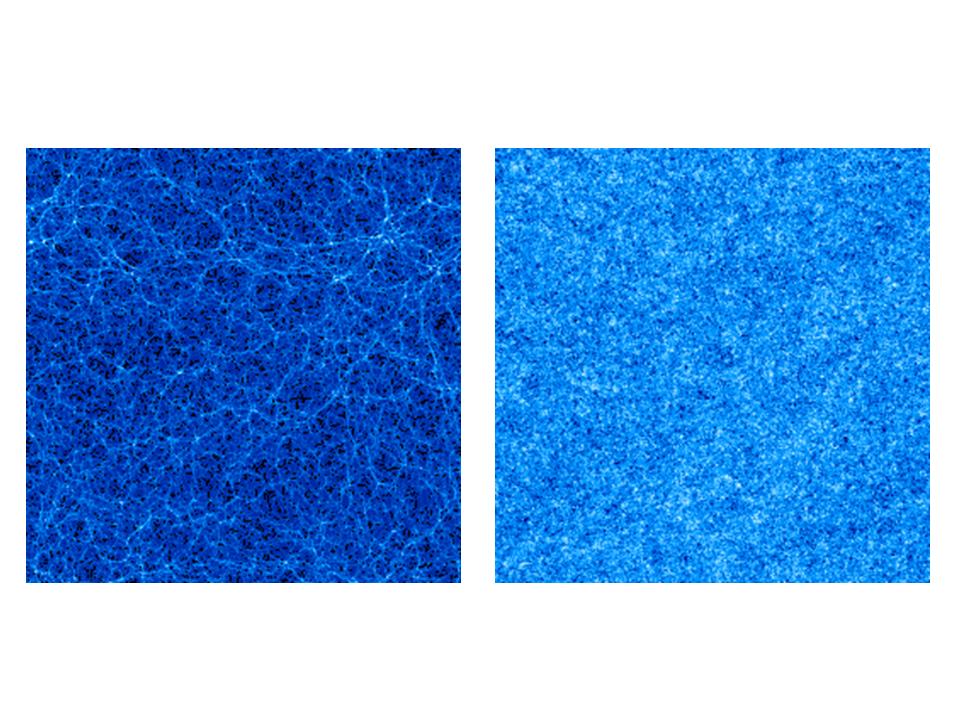
There’s been quite a lot of news coverage over the last day or two emanating from a paper just out in the journal Nature by Vogelsberger et al. which describes a set of cosmological simulations called Illustris; see for example here and here.

The excitement revolves around the fact that Illustris represents a bit of a landmark, in that it’s the first hydrodynamical simulation with sufficient dynamical range that it is able to fully resolve the formation and evolution of  individual galaxies within the cosmic web of large-scale structure.

The simulations obviously represent a tremendous piece or work; they were run on supercomputers in France, Germany, and the USA; the largest of them was run on no less than 8,192 computer cores and took 19 million CPU hours. A single state-of-the-art desktop computer would require more than 2000 years to perform this calculation!

There’s even a video to accompany it (shame about the music):

The use of the word “simulation” always makes me smile. Being a crossword nut I spend far too much time looking in dictionaries but one often finds quite amusing things there. This is how the Oxford English Dictionary defines SIMULATION:

1.

a. The action or practice of simulating, with intent to deceive; false pretence, deceitful profession.

b. Tendency to assume a form resembling that of something else; unconscious imitation.

2. A false assumption or display, a surface resemblance or imitation, of something.

3. The technique of imitating the behaviour of some situation or process (whether economic, military, mechanical, etc.) by means of a suitably analogous situation or apparatus, esp. for the purpose of study or personnel training.

So it’s only the third entry that gives the meaning intended to be conveyed by the usage in the context of cosmological simulations. This is worth bearing in mind if you prefer old-fashioned analytical theory and want to wind up a simulationist! In football, of course, you can even get sent off for simulation…

Reproducing a reasonable likeness of something in a computer is not the same as understanding it, but that is not to say that these simulations aren’t incredibly useful and powerful, not just for making lovely pictures and videos but for helping to plan large scale survey programmes that can go and map cosmological structures on the same scale. Simulations of this scale are needed to help design observational and data analysis strategies for, e.g., the  forthcoming Euclid mission.

Planck versus BICEP2: Round One!

Posted in The Universe and Stuff with tags , , , , , , , on May 6, 2014 by telescoper

You may recall my scepticism about the recent announcement from the BICEP2 experiment about evidence from polarized microwave emission for the existence of primordial gravitational waves generated during a period of cosmic inflation.

Well, in between a couple of meetings this morning, I realised that there’s a paper just out onto the arXiv from the Planck Collaboration. Here’s the abstract:

This paper presents the large-scale polarized sky as seen by Planck HFI at 353 GHz, which is the most sensitive Planck channel for dust polarization. We construct and analyse large-scale maps of dust polarization fraction and polarization direction, while taking account of noise bias and possible systematic effects. We find that the maximum observed dust polarization fraction is high (pmax > 18%), in particular in some of the intermediate dust column density (AV < 1mag) regions. There is a systematic decrease in the dust polarization fraction with increasing dust column density, and we interpret the features of this correlation in light of both radiative grain alignment predictions and fluctuations in the magnetic field orientation. We also characterize the spatial structure of the polarization angle using the angle dispersion function and find that, in nearby fields at intermediate latitudes, the polarization angle is ordered over extended areas that are separated by filamentary structures, which appear as interfaces where the magnetic field sky projection rotates abruptly without apparent variations in the dust column density. The polarization fraction is found to be anti-correlated with the dispersion of the polarization angle, implying that the variations are likely due to fluctuations in the 3D magnetic field orientation along the line of sight sampling the diffuse interstellar medium. We also compare the dust emission with the polarized synchrotron emission measured with the Planck LFI, with low-frequency radio data, and with Faraday rotation measurements of extragalactic sources. The two polarized components are globally similar in structure along the plane and notably in the Fan and North Polar Spur regions. A detailed comparison of these three tracers shows, however, that dust and cosmic rays generally sample different parts of the line of sight and confirms that much of the variation observed in the Planck data is due to the 3D structure of the magnetic field.

There’s also a press release from the European Space Agency which includes this nice picture:

Milky_Way_s_magnetic_fingerprint_large

This study is at 353 GHz, compared to the 150 GHz of the BICEP2 measurements. Galactic dust emission increases with frequency so one would expect more of an effect in this Planck map than in BICEP2, but the fact that polarized foreground emission is so strong at these frequencies does give one pause for thought. The Planck data actually cover the whole sky, so the above map has clearly been censored; below you can see the actual region of the sky covered by BICEP2, so there is little or no direct overlap with what’s been released by Planck:

bicep2_loops

We’ll have to wait until later this year to see what’s going on in the masked regions (i.e. far above and below the Galactic Plane, where the dust emission is presumably weaker) and indeed at the 7 other frequencies measured by Planck. It’s all a bit of a tease so far!

Here’s what the press release says about BICEP2

In March 2014, scientists from the BICEP2 collaboration claimed the first detection of such a signal in data collected using a ground-based telescope observing a patch of the sky at a single microwave frequency. Critically, the claim relies on the assumption that foreground polarised emissions are almost negligible in this region.

Later this year, scientists from the Planck collaboration will release data based on Planck’s observations of polarised light covering the entire sky at seven different frequencies. The multiple frequency data should allow astronomers to separate with great confidence any possible foreground contamination from the tenuous primordial polarised signal.

P.S.  It’s gratifying to see the Planck Collaboration have used extragalactic Faraday Rotation measures to probe the Galactic Magnetic field as I suggested on this blog not long ago. The article that first advocated doing this with CMB maps can be found here.


Ode to SnarXiv

Posted in The Universe and Stuff with tags , , , , on April 30, 2014 by telescoper

So many things pass me by these days that I’m not usually surprised when I have no idea what people around me are talking about. I am however quite surprised that, until yesterday, never heard of the snarXiv. As its author explains:

The snarXiv is a ran­dom high-energy the­ory paper gen­er­a­tor incor­po­rat­ing all the lat­est trends, entropic rea­son­ing, and excit­ing mod­uli spaces. The arXiv is sim­i­lar, but occa­sion­ally less ran­dom.

The snarXiv uses “Context Free Grammar” together with a database of stock words and phrases to generate its content, which is actually just limited to titles and abstracts rather than entire papers. It’s just a matter of time, though. The results are variable, with some making no sense at all even by the standards of theoretical particle physics, but the best are almost good enough to pass off as real abstracts.

Here’s an example in the form of the abstract of a paper called (P,q) Brane Probe Predicted From Conformal Blocks:

Recently, work on new inflation has opened up a perturbative class of braneworld matrix models. We make contact with observables, moreover investigating trivial Beckenstein-Boltzmann equations. Next, using the behavior of a left-right reduction of models of WIMPs, we reformulate instanton liquids at the LHC. After discussing positrons, we check that worldsheet symmetric central charges are equivalent to electric-duality in gravity. Finally, we make contact with a special lagrangian brane, surprisingly obtaining models of inertial fluctuations.

Why not have a go at arXiv versus SnarXiv to see if you can spot the genuine article titles?

I’m tempted, with a nod in the light of the Sokal Affair, to suggest that a similar approach used in the social sciences, but the thing that really struck me is that someone should do a snarXiv for astronomy and astrophysics. Or is someone going to tell me it already exists?

Come to think of it, judging by some of the proposals I’ve read while serving on the Astronomy Grants Panel over the years, a similar generator may already exist for writing grant applications…

Promoting Women in Physics at Sussex

Posted in Education, The Universe and Stuff with tags , , , , , on April 28, 2014 by telescoper

At the end of a very busy day of meetings I suddenly remembered that I forgot to pass on a nice bit of news about the Department of Physics & Astronomy at the University of Sussex.

It doesn’t seem very long ago at all that I announced the promotion of its first ever female Professor of Physics in the Department, Prof. Antonella de Santo. In fact it was in July last year. Well, just before the Easter break I was delighted at the promotion panel’s decision  to appoint the second female Professor in the Department. The successful candidate this time was Clauda Eberlein, who has been promoted to a Chair in Theoretical Physics with immediate effect.

I’ve already posted about how the proportion of female undergraduates studying physics as been stuck at around the 20% mark for a decade despite strenuous efforts to widen participation. A recent (2012) study by the Institute of Physics contains a wealth of statistical information about staff in Physics departments, which I encourage people to read if they’re interested in the overall issue with equality and diversity in physics. Here I’ll just pull out the figure (based on a 2010 survey) that out of a total of 650 Professors of Physics (and/or Astronomy) in the UK, just 5.5% were female. At that date about 20 physics departments had no female professors at all; that would have included Sussex, of course.

The first ever female Professor of Physics in the United Kingdom was Daphne Jackson, a nuclear physicist, who took up her Chair at the University of Surrey way back in 1971. It’s interesting to note that when Daphne Jackson studied physics as an undergraduate at Imperial College she was one of only two women among the 88 undergraduates in her year.

Congratulations to Claudia on her promotion, but the news doesn’t end there. Claudia will actually be taking over as Head of the Department of Physics & Astronomy in January 2015. She is currently Director of Teaching and Learning for the School of Mathematical and Physical Sciences and will take up her new role when the current Head of Physics & Astronomy, Philip Harris, stands down, having served his term in admirable fashion. Anyway, when Claudia takes up her post as Head of Department she will join an elite band of female physicists to have been appointed to such a role. Does anyone out there know how many other women have headed a Physics department?