Archive for the The Universe and Stuff Category

Dond’escono quei vortici?

Posted in Education, Opera, The Universe and Stuff with tags , , , , on November 10, 2012 by telescoper

Just time for a quickie today. I seem to be writing that virtualy every day at this time, in fact. Anyway, yesterday I gave the last of a series of lectures on Fluid Dynamics during which I talked a little bit about the Navier-Stokes equation, and introduced the concept of turbulence, topic that Richard Feynman described as “the most important unsolved problem in classical physics”. Given that the origin of turbulence is so poorly understood, I had to cover it all fairly qualitatively but did at least explain that its onset is associated with high values of the Reynold’s Number, an interesting dimensionless number that characterizes the properties of viscous fluid flow in such a way as to bring out the dynamical similarity inherent in the equations. The difficulty is that there is no exact theory that allows one to calculate the critical value of the Reynold’s number and in any particular situation; that has to be determined by experiments, such as this one which shows turbulent vortices (or “eddies”) forming downstream of a cylindrical obstacle placed in flowing fluid. The (laminar) flow upstream, and in regions far from the cylinder, has no vorticity.

What happens is obviously extremely complicated because it involves a huge range of physical scales – the vorticity is generated by very small-scale interactions between the fluid elements and the boundary of the object past which they flow. It’s a very frustrating thing for a physicist, actually, because one’s gut feeling is that it should be possible to figure it out. After all, it’s “just” classical physics. It’s also of great practical importance in a huge range of fields. Nevertheless, despite all the progress in “exotic” field such as particle physics and cosmology, it remains an open question in many respects.

That’s why it’s important to teach undergraduates about it. Physics isn’t just about solved problems. It’s a living subject, and it’s important for students to know those fields where we don’t really know that much about what is going on…

PS. The title is a quotation from the libretto of Mozart’s opera, Don Giovanni, uttered by the eponymous Count as he is dragged down to hell. It translates as “Whence come these vortices?” Pretentious, moi?

If physicists analysed election results…

Posted in Bad Statistics, Politics, The Universe and Stuff on November 7, 2012 by telescoper

I think this is a wonderfully sharp satirical take on pollsters, physicists and statistics…

freakofnature's avatarFreak of Nature

Mainstream media outlets around the world have declared Barack Obama the victor in yesterday’s US presidential elections, but particle physicists at CERN say that the race is still too close to call.

With every state except Florida reporting, the New York Timesannounced that Obama had won the popular vote and easily gained the electoral college points needed to win re-election. The Princeton Election Consortium put the probability of Obama’s victory at 99.2%.

But that confidence level is still several standard deviations away from the point at which particle physicists would be willing to declare the next president. According to the norms of the field, pollsters would have to be 99.99995% confident that Obama had won before physicists would be willing to call the race.

“All we can say right now is there is some evidence that Barack Obama will return to the White House in January,” says Marcus Georgio…

View original post 237 more words

Fun with Vortex Rings

Posted in Education, The Universe and Stuff with tags , , on November 5, 2012 by telescoper

I decided to squeeze in a little bit about vortex rings into this morning’s lecture, partly because they illustrate the connections between fluid vorticity and magnetism, and partly because they’re fun…

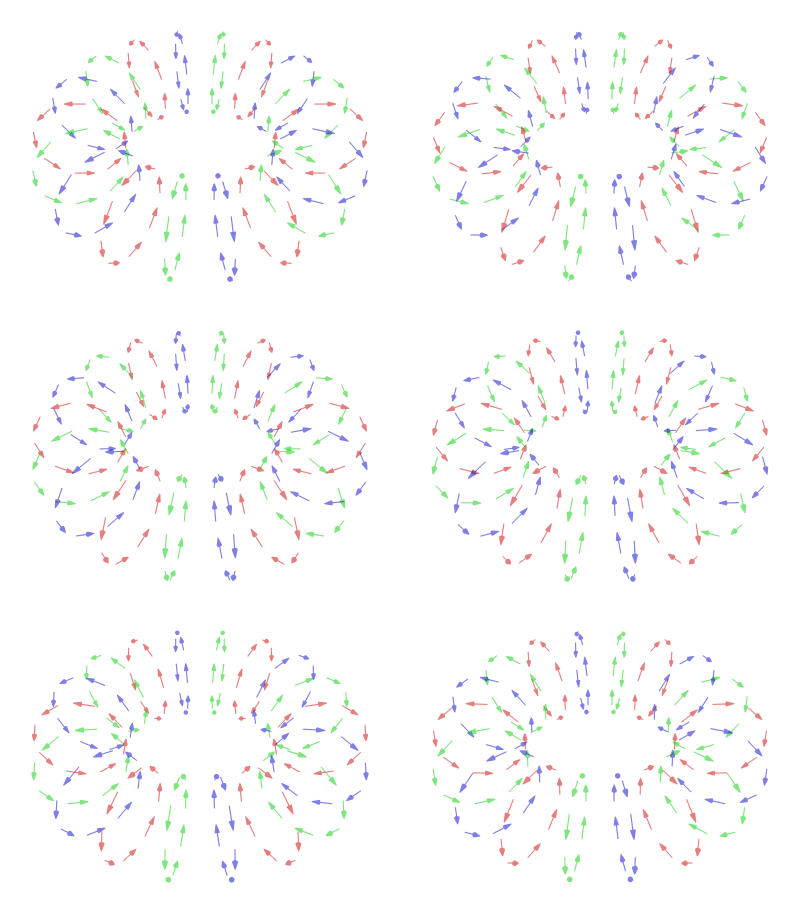
Here’s an animation of a vortex ring showing how the fluid elements move around it (you might need to click on it to make it animate):

It’s quite easy to generate vortex rings in everyday situations, the simplest way being when a mass of fluid is impulsively pushed from an enclosed space through a narrow opening. In this case the poloidal flow is set in motion, at least in part, by interaction between the outer parts of the fluid mass and the edges of the opening. This results in fluid elements travelling in little circles, like those above, around a “core”; the direction of the vorticity is at right angles to these circles, i.e. in the toroidal direction. A vortex line can be formed from by joining together the vorticity vectors from each little circle to form a circle defining the core of the vortex ring. The behaviour of vortex lines in flows like this is entirely analogous to that of magnetic field lines. In this case, the vortex line follows the motion of the fluid, which is at right angles to it, so it propagates more-or-less without disruption. This is how most vortex ring toys work, such as shown in the two examples here; the second is far more dramatic!

The last video features some naturally-occurring vortex rings (as well as some  distinctly man-made examples). What I didn’t realise until I found this video last night is that whales and dolphins know how to make vortex rings too, only underwater. Why do they do this? Is there an evolutionary explanation? I doubt it! I think they’re just having fun.

At the Mountains of Madness

Posted in Literature, The Universe and Stuff with tags , , , , on November 1, 2012 by telescoper

Well, I don’t know whether it is some sort of Hallowe’en skit or what, but the estimable arXiv has certainly served up something unusual today, in the form of a paper by one Benjamin K. Tippett with the intriguing title Possible Bubbles of Spacetime Curvature in the South Pacific. Here is the abstract:

In 1928, the late Francis Wayland Thurston published a scandalous manuscript in purport of warning the world of a global conspiracy of occultists. Among the documents he gathered to support his thesis was the personal account of a sailor by the name of Gustaf Johansen, describing an encounter with an extraordinary island. Johansen`s descriptions of his adventures upon the island are fantastic, and are often considered the most enigmatic (and therefore the highlight) of Thurston`s collection of documents.

We contend that all of the credible phenomena which Johansen described may be explained as being the observable consequences of a localized bubble of spacetime curvature. Many of his most incomprehensible statements (involving the geometry of the architecture, and variability of the location of the horizon) can therefore be said to have a unified underlying cause.

We propose a simplified example of such a geometry, and show using numerical computation that Johansen`s descriptions were, for the most part, not simply the ravings of a lunatic. Rather, they are the nontechnical observations of an intelligent man who did not understand how to describe what he was seeing. Conversely, it seems to us improbable that Johansen should have unwittingly given such a precise description of the consequences of spacetime curvature, if the details of this story were merely the dregs of some half remembered fever dream.

We calculate the type of matter which would be required to generate such exotic spacetime curvature. Unfortunately, we determine that the required matter is quite unphysical, and possess a nature which is entirely alien to all of the experiences of human science. Indeed, any civilization with mastery over such matter would be able to construct warp drives, cloaking devices, and other exotic geometries required to conveniently travel through the cosmos.

Despite the unusual subject matter, it certainly doesn’t read like a skit, which means that if that’s what it is then it’s a very good one. Alternatively, it could just be that Dr Tippett might be taking it all a bit too literally. However, the paper is full of names that will ring a bell to anyone familiar with the works of H.P. Lovecraft, especially those relating to Cthulhu. Anyway, sounds like an ideal topic for further investigation. Time to put my grant-writing hat on!

P.S. The title of this post is taken from ref. [2] in the aforementioned arXiv paper.

A Sense of Proportion – Postscript

Posted in The Universe and Stuff with tags , , on October 30, 2012 by telescoper

It took all day to do so, evidently because I’m old and slow, but this morning’s post eventually got round to reminding me of this cartoon, the context of which is described here. Was that really in 1992? That was twenty years ago!

The Total Perspective Vortex

Posted in The Universe and Stuff with tags , , on October 30, 2012 by telescoper

Vortices are swirling around in my mind these days. Not only because of Hurricane Sandy, but also because I’ve got to prepare a couple of lectures about vorticity in fluid mechanics to give next week. Anyway, all that reminded me of this classic sequence from the original radio series The Hitchhiker’s Guide to the Galaxy, by the late great Douglas Adams. I particularly agree with the conclusion “that if life is going to exist in a Universe of this size, then the one thing it cannot afford to have is a sense of proportion”.

Gravity Waves Detected!

Posted in The Universe and Stuff with tags , , on October 29, 2012 by telescoper

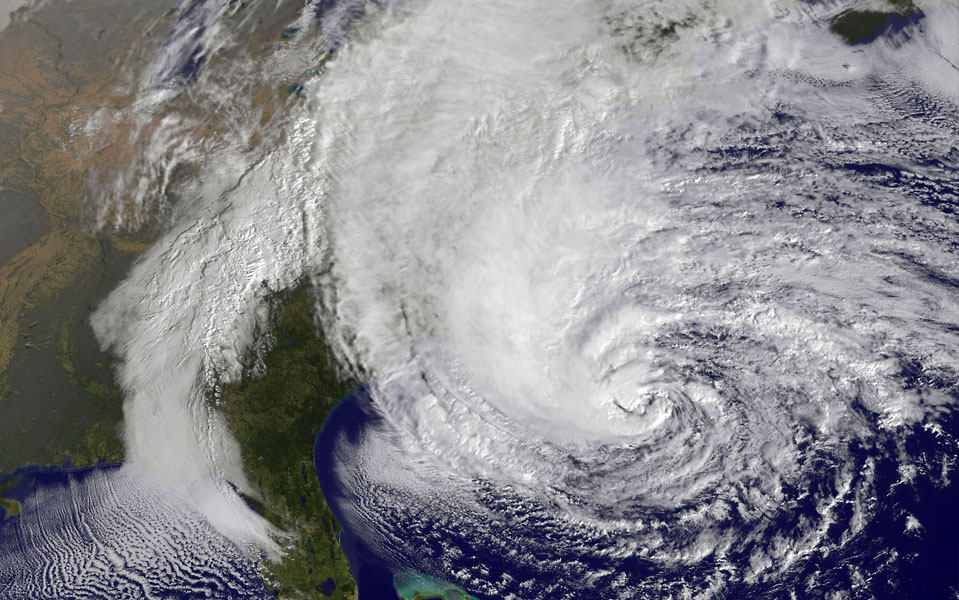
At last, for all you sceptics out there, Hurricane Sandy has finally provided definitive proof of the existence of gravity waves, clearly visible to the South West of the storm…

Apologies if you thought I meant gravitational waves. The confusion was entirely intentional.

Philosophy of Science Poll

Posted in The Universe and Stuff with tags , , on October 20, 2012 by telescoper

I’m told the following quotation from esteemed theoretical physicist Stephen Hawking is very profound:

Because there is a law such as gravity, the universe can and will create itself from nothing.

Huh? I can’t make sense of it at all. Is it just me that finds it entirely devoid of either logic or  meaning?

Please tell Mr Polldaddy what you think….

You might even try to explain it to me via the comments box, but be patient because I’m thick.

A Particle Physics Job at Sussex

Posted in The Universe and Stuff with tags , on October 19, 2012 by telescoper

Following hard on the heels of Tuesday’s news, and the subsequent advert for astronomy jobshere is an announcement of a permanent job in theoretical particle physics at the University of Sussex. I quote from the advertisement:

Candidates are expected to hold a doctorate in theoretical physics and have a strong track record of internationally recognised research in the areas of collider phenomenology, physics beyond the Standard Model, flavour physics, and/or precision tests. The successful applicant will be expected to teach at both the undergraduate and postgraduate level.

Sussex has in recent years invested in SM and BSM phenomenology through faculty appointments both in theoretical and experimental physics. We seek an individual suited and committed to further strengthening and developing this effort.

The group’s wider research interests include model-building, quantum field theory, quantum gravity, and early universe cosmology. It benefits from a close relationship with the Sussex Experimental Particle Physics group, currently expanding its ATLAS effort, an STFC-funded research consortium with Royal Holloway, University of London, and membership of the NExT Institute. The University of Sussex is part of the South East Physics Network (SEPnet).

I’ll be interested to see how many people apply as a result of seeing this here announcement, so if you do fill in an application form  be sure to answer the question “Where did you see this post advertised” with “In the Dark”!

Three Astronomy Jobs at Sussex

Posted in The Universe and Stuff with tags , , , on October 18, 2012 by telescoper

Following hard on the heels of Tuesday’s news, here is an announcement of three (new, permanent) jobs in Astronomy at the University of Sussex. Full details are in the above link, but the gist is that applications are invited for 3 permanent, full-time faculty positions within the Astronomy Centre.

The 8 existing faculty have research interests that span the observation, modelling/simulation and theory of extragalactic astronomy and cosmology.  We are seeking talented and ambitious colleagues whose research interests complement and extend our current activity.

This advertisement will in due course appear elsewhere, e.g. in the November AAS Jobs Register.

I’ll be interested to see how many people apply as a result of seeing this here announcement, so if you do fill in an application form  be sure to answer the question “Where did you see this post advertised” with “In the Dark”!