Archive for the The Universe and Stuff Category

`How Physical Cosmology Grew’ – The Nobel Lecture of Jim Peebles

Posted in The Universe and Stuff with tags , on December 11, 2019 by telescoper

It seems like yesterday when I heard the news that Jim Peebles had been awarded a Nobel Prize in Physics, but this week the man himself has been in Stockholm receiving the honour amid a number of press engagements and other formalities including the Nobel Lecture, which has now appeared on Youtube and is well worth watching if you’re at all interested in cosmology!


The Eddington Eclipse Expeditions and Astronomy Ireland

Posted in History, Talks and Reviews, The Universe and Stuff with tags , , , , , , on December 10, 2019 by telescoper

After a full shift during the day at Maynooth University, yesterday evening I made my way into Dublin to give a talk to a very large audience in the famous Schrödinger Lecture Theatre in Trinity College, Dublin, an event organized by Astronomy Ireland. I have given a number of talks on the topic of the 1919 Eclipse Expeditions during this centenary year, but I think this one had the biggest audience! We adjourned to a local pub for a drink afterwards before I dashed off to get the last train back to Maynooth.

Here are the slides I used during the talk:

This time there was an important addition to my usual talk, courtesy of Professor Peter Gallagher of DIAS. He brought along the actual 4″ object glass used in the expedition to Sobral (Brazil) in 1919. I have previously only shown a picture of it. The appearance of the actual lens drew a spontaneous round of applause from the audience, and I have to admit it was a remarkable feeling to hold a little piece of history in my hand!

Obviously I was careful not to drop this item. It is on permanent display in Dunsink Observatory, by the way, if you want to see it yourself. I hope it made its way back here safely!

After the talk was over I was chatting to a couple of members of the audience when Peter Gallagher took this nice picture actually through the lens:

Picture Credit: Peter Gallagher

I look rather old in this picture. Obviously a trick of the lens.

New Publication at the Open Journal of Astrophysics!

Posted in OJAp Papers, Open Access, The Universe and Stuff with tags , , , , , , on December 9, 2019 by telescoper

We have published yet another new paper at The Open Journal of Astrophysics!

Here is a grab of the overlay:

The authors are Emilio Bellini (Oxford, UK), Ludovic van Waerbeke (University of British Columbia, Canada), Shahab Joudaki (Oxford) and David Alonso (Cardiff)

You can find the accepted version on the arXiv here. This is another one for the `Cosmology and Nongalactic Astrophysics’ section, which is proving rather popular.

We would be very happy to get more submissions from other areas, especially Stellar and Planetary astrophysics. Hint! Hint!

P.S. Just a reminder that we now have an Open Journal of Astrophysics Facebook page where you can follow updates from the Journal should you so wish..

Good News for Quantum Computing in Ireland (and Maynooth)!

Posted in Maynooth, The Universe and Stuff with tags , , , , , , on December 8, 2019 by telescoper

I am sitting in Cardiff Airport waiting for my flight back to Dublin so I thought I’d pass on some good news that arrived last night.

Yesterday, Minister for Business, Enterprise and Innovation, Heather Humphreys, TD, together with Minister for Employment Affairs and Social Protection, Regina Doherty, TD, announced that 16 innovative projects have been successful under the second round of the Disruptive Technologies Innovation Fund administered by Enterprise Ireland. The projects will share €65 million out to 2022.

Graphic purporting to represent Quantum Computing

One of the projects selected for funding is called Quantum Computing in Ireland: A Software Platform for Multiple Qubit Technologies. To be eligible for this kind of funding, projects must involve businesses and this particular project includes IBM Ireland Ltd, MasterCard Ireland, Rockley Photonics and Equal 1 Laboratories, the latter two being SMEs based in the Dublin area. The project also involves the Tyndall National Institute (Cork); University College Dublin; and Maynooth University (full name: National University of Ireland, Maynooth). This is the first large collaboration in Ireland in this area.

The Maynooth involvement comes via the Department of Theoretical Physics, in the form of Dr Jiri Vala, so congratulations to him. I’m delighted that all the hard work that went into preparing and presenting this bid has paid off.

Maynooth will receive a relatively small (but still very welcome) slice of the financial cake (~€600k) but it’s nevertheless an important strategic success. In a difficult funding climate it is important for a small Department to get involved in collaborations, both nationally and internationally, and also to make the most of any opportunities that present themselves. That is not to say that we plan to neglect research in basic science, but this we have to strike a balance that allows both the flourish.

There’s another piece of good news for Quantum Computing in Ireland to report on top of this. The 2nd European Quantum Technologies Conference (EQTC 2020) will take place in late Noember next year in Dublin. The website is here.

How Ireland Made Einstein Famous

Posted in History, Talks and Reviews, The Universe and Stuff with tags , on December 6, 2019 by telescoper

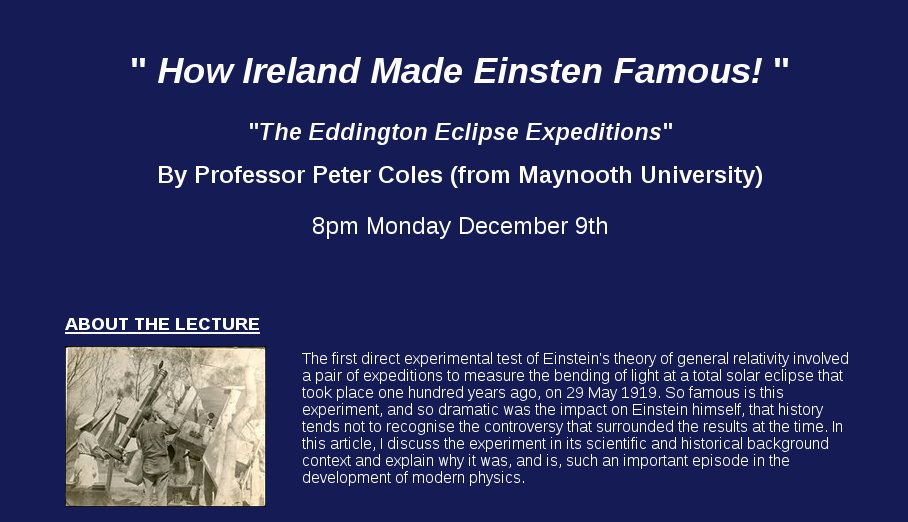
Before I depart for the weekend I thought I’d mention that I’m giving a talk on Monday evening (9th December) at 8pm in the Physics Building at Trinity College Dublin. The talk is followed by a reception in the Lombard Inn. Part of the advert is shown above but you can read more details at the Astronomy Ireland website.

If you’re around in Dublin on Monday then maybe I’ll see you there!

The Funeral of Lorentz

Posted in History, The Universe and Stuff with tags , , on December 6, 2019 by telescoper

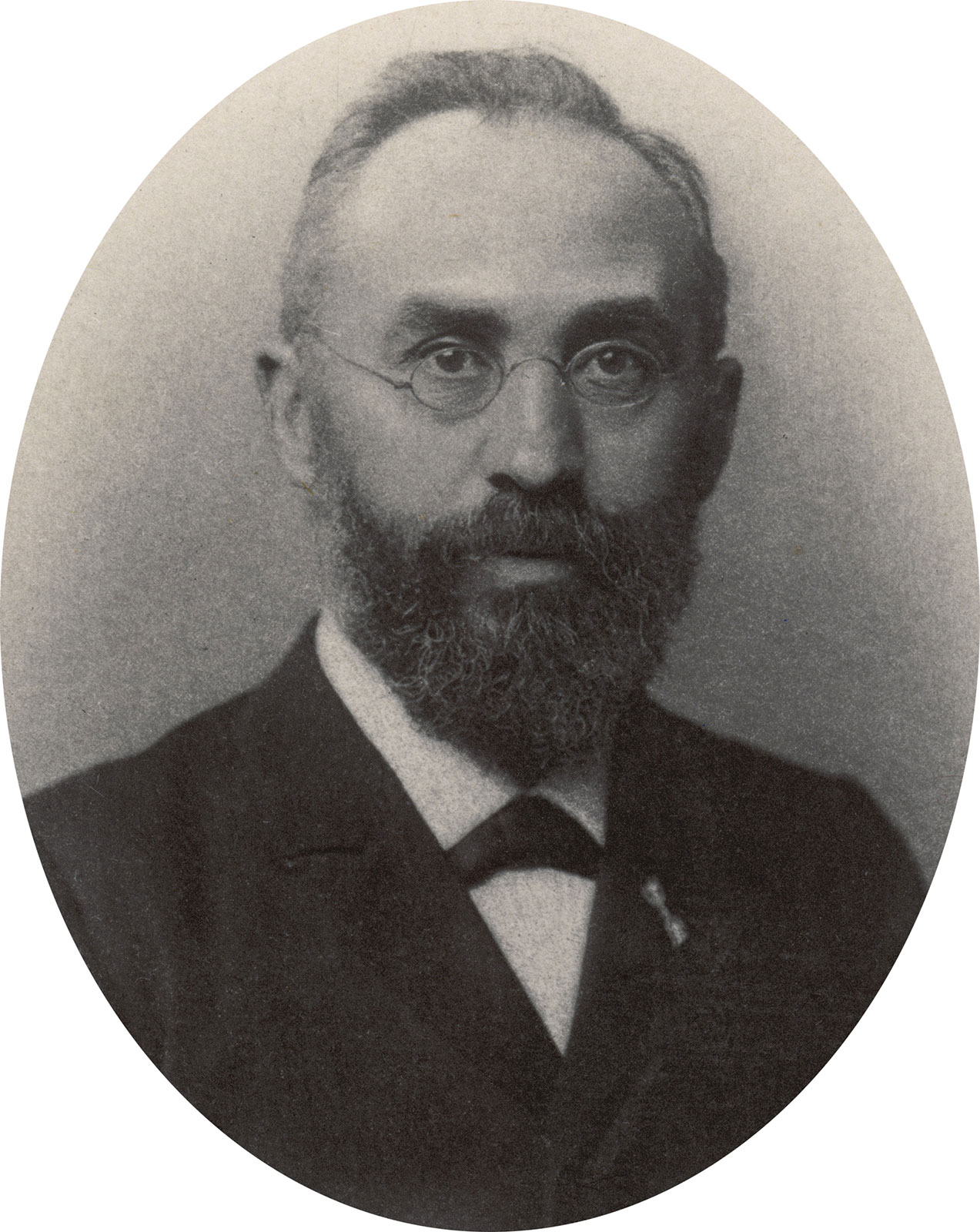
In a post a couple of days ago I mentioned the Dutch physicist Hendrik Lorentz, whose work helped establish the foundations of the theory of special relativity.

Hendrik Lorentz (1853-1928)

Doing a quick google about Lorentz I came across this remarkable silent footage of his funeral in 1928 in the town of Haarlem in the Netherlands.

from the Wikipedia page of Lorentz:

The funeral took place at Haarlem at noon on Friday, February 10. At the stroke of twelve the State telegraph and telephone services of Holland were suspended for three minutes as a revered tribute to the greatest man the Netherlands has produced in our time. It was attended by many colleagues and distinguished physicists from foreign countries. The President, Sir Ernest Rutherford, represented the Royal Society and made an appreciative oration by the graveside.

The footage of the funeral procession shows a lead carriage followed by ten mourners, followed by a carriage with the coffin, followed in turn by at least four more carriages, passing by a crowd at the Grote Markt, Haarlem from the Zijlstraat to the Smedestraat, and then back again through the Grote Houtstraat towards the Barteljorisstraat, on the way to the “Algemene Begraafplaats” at the Kleverlaan (northern Haarlem cemetery).
Einstein later gave a eulogy at a memorial service at Leiden University.

It was clearly a very grand affair which demonstrates high regard in which Lorentz was held not only by physicists but by the wider public.


The Relativity of Beards

Posted in Beards, History, The Universe and Stuff with tags , , , , on December 4, 2019 by telescoper

In my first-year module on Mechanics and Special Relativity, I’ve just moved on to the part about Special Relativity and this afternoon I’m going to talk about the Lorentz-Fitzgerald contraction or, as it’s properly called here in Ireland, the Fitzgerald-Lorentz contraction.

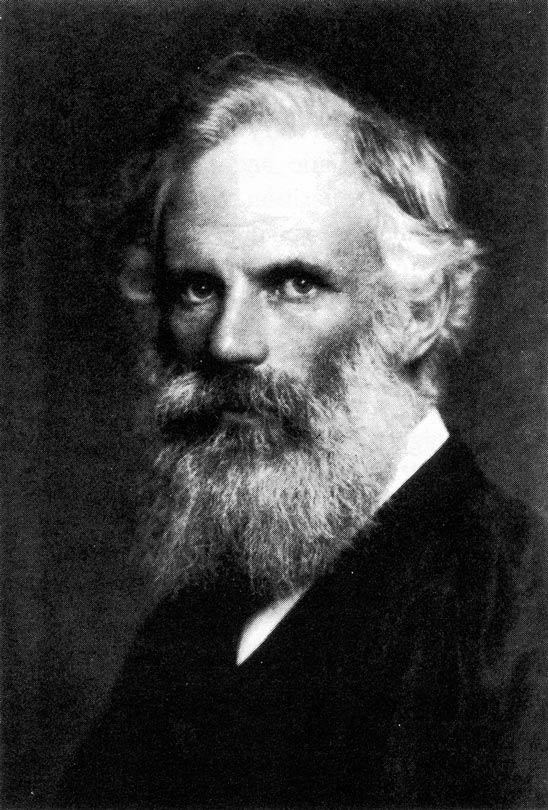
The first thing to point out is that the physicists George Francis Fitzgerald and Hendrik Lorentz, though of different nationality (the former Irish, the latter Dutch), both had fine beards:

George Francis Fitzgerald (1851-1901)
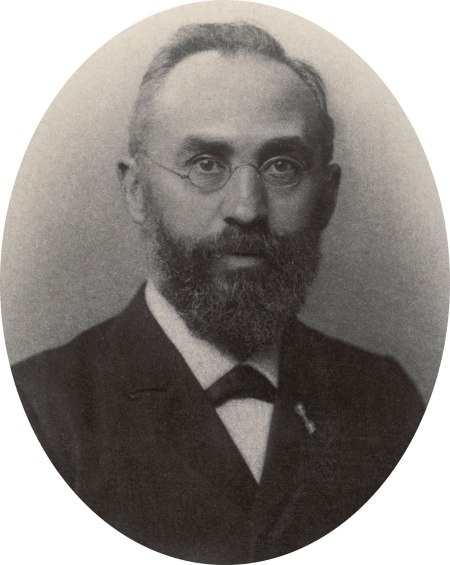
Hendrik Lorentz (1853-1928)

One of the interesting things you find if you read about the history of physics just before Albert Einstein introduced his theory of special relativity in 1905 was how many people seemed to be on the verge of getting the idea around about the same time. Fitzgerald and Lorentz were two were almost there; Poincaré was another. It was like special relativity was `in the air’ at the time. It did, however, take a special genius like Einstein to crystallize all that thinking into a definite theory.

Special relativity is fun to teach, not least because it throws up interesting yet informative paradoxes (i.e. apparent logical contradictions) arising from  that you can use to start a discussion. They’re not actually paradoxes really logical contradictions, of course. They just challenge `common sense’ notions, which is a good thing to do to get people thinking.

Anyway, I thought I’d mention one of my favorite such paradoxes arising from a simple Gedankenerfahrung (thought experiment) here.

Imagine you are in a railway carriage moving along a track at constant speed relative to the track. The carriage is dark, but at the centre of the carriage is a flash bulb. At one end (say the front) of the carriage is a portrait of Lorentz and at the other (say the back) a portrait of Fitzgerald; the pictures are equidistant from the bulb and next to each portrait is a clock.The two clocks are synchronized in the rest frame of the carriage.

At a particular time the flash bulb goes off, illuminating both portraits and both clocks for an instant.

It is an essential postulate of special relativity that the speed of light is the same to observers in any inertial frame, so that an observer at rest in the centre of the carriage sees both portraits illuminated simultaneously as indicated by the adjacent clocks. This is because the symmetry of the situation means that light has to travel the same distance to each portrait and back.

Now suppose we view the action from the point of view of a different inertial observer, at rest by the trackside rather than on the train, who is positioned right next to the centre of the carriage as the flash goes off. The flight flash travels with the same speed in the second observer’s frame, but this observer sees* the back of the carriage moving towards the light signal and the front moving away. The result is therefore that this observer sees the two portraits light up at different times. In this case the portrait of Fitzgerald is lit up before the portrait of Lorentz.

Had the train been going in the opposite direction, Lorentz would have appeared before Fitzgerald. That just shows that whether its Lorentz-Fitzgerald contraction or Fitzgerald-Lorentz contraction is just a matter of your frame of reference…

But that’s not the paradoxical thing. The paradox is although the two portraits appear at different times to the trackside observer, the clocks still appear show the same time….


*You have to use your imagination a bit here, as the train has to be travelling at a decent fraction of the speed of light. It’s certainly not an Irish train.


New Publication at the Open Journal of Astrophysics!

Posted in OJAp Papers, Open Access, The Universe and Stuff with tags , , , , , , , , on December 2, 2019 by telescoper

We have published another new paper at The Open Journal of Astrophysics. We actually published this one last week but (presumably because of the Thanksgiving holiday) it has taken longer than usual to register the DOI with Crossref and I held off mentioning this paper here until everything was sorted.

Here is a grab of the overlay:

The authors are Farhad Feroz and Mike Hobson of the Cavendish Laboratory at the University of Cambridge (UK), Ewan Cameron (now at Oxford, UK) and Anthony N. Pettitt of Queensland University of Technology in Australia.

You can find the accepted version on the arXiv here. This version was accepted after modifications requested by the referee and editor. Because this is an overlay journal the authors have to submit the accepted version to the arXiv (which we then check against the copy submitted to us) before publishing; version 3 on the arXiv is the accepted version (which contains a link to updated software).

It is worth mentioning a couple of points about this paper.

The first is that it is mainly a statistical methods paper rather than astrophysics per se but it does contain applications to astrophysics and cosmology and, more relevantly, was posted on the `Instrumentation and Methods for Astrophysics’ section on the arXiv. The Editorial Board felt that we should consider it for publication because our rule for whether a paper can be considered for publication in the Open Journal of Astrophysics is stated clearly on our instructions for authors:

We apply a simple criterion to decide whether a paper is on a suitable topic for this journal, namely that if it it is suitable for the astro-ph section of the arXiv then it is suitable for The Open Journal of Astrophysics.

So far our publication list is dominated by papers in `Cosmology and Nongalactic Astrophysics’ and `Instrumentation and Methods for Astrophysics’ (which is not surprising given its origin) but we would be very happy to get more submissions from other areas, especially Stellar and Planetary astrophysics. Hint! Hint!

The other point to make is that this paper actually appeared on the arXiv over six years ago and has been widely cited as a preprint but it has never previously been published by a journal. The Editorial Board felt that we should consider it for publication in order to ensure that it is properly curated and citations properly assigned, but we treated it as a new submission and sent it out for review just like any other paper. The review led to some changes and, most importantly, a few updates to the software which you can find here. The editorial process has been quite lengthy for this paper but I think we have done a valuable service to the community in reviewing and publishing this paper.

P.S. Just a reminder that we now have an Open Journal of Astrophysics Facebook page where you can follow updates from the Journal should you so wish..

Another easy physics problem…

Posted in Cute Problems, The Universe and Stuff with tags , , , on November 26, 2019 by telescoper

Many moons ago I posted an `easy’ physics problem from the Physics A-level paper I took in 1981. The examination comprised two papers in those days (and a practical exam); one paper had long questions, similar to the questions we set in university examinations these days, and the other consisted of short questions in a multiple-choice format. The question I posted was one of the latter type. I was reminded about it recently because, years on, it appears people are still trying it (and getting it wrong).

Anyway, since I’m teaching similar things to my first-year Mathematical Physics class I thought I’d put up another question from the same paper.

And here is a poll in which you may select your answer:

Comments on or criticisms of the question are welcome through the comments box…


New Publication at the Open Journal of Astrophysics!

Posted in OJAp Papers, Open Access, The Universe and Stuff with tags , , , , , , on November 24, 2019 by telescoper

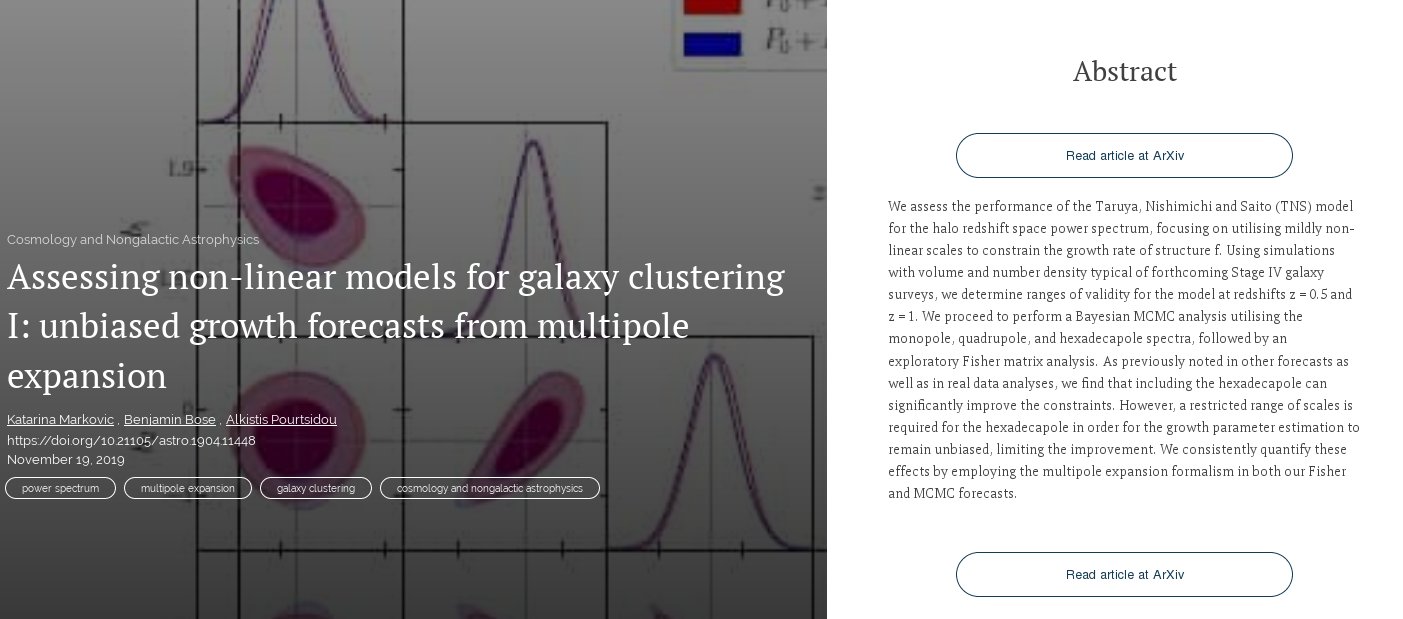
Yesterday we published another new paper at The Open Journal of Astrophysics. Here is a grab of the overlay:

The authors are Katarina MarKovic (now of JPL in California), Benjamin Bose (of the University of Geneva) and Alkistis Pourtsidou (Queen Mary, University of London).

You can find the accepted version on the arXiv here. This version was accepted after modifications requested by the referee and editor. Because this is an overlay journal the authors have to submit the accepted version to the arXiv (which we then check against the copy submitted to us) before publishing; version 2 on the arXiv is the accepted version.

I’d like to apologize to the authors for a delay in publishing this paper. It was ready to go a couple of weeks ago, but we had some trouble with an extension to the platform provided by Scholastica which was intended to register Digital Object Identifiers automatically and thus speed up the process. Unfortunately we found some bugs in, and other problems with, the new software and in the end have given up and reverted to the old manual registration process. Hopefully Scholastica will be able to offer a working system for DOI registration before too long.

Anyway, you will see that this is one for the `Cosmology and Nongalactic Astrophysics’ folder. We would be happy to get more submissions from other areas, especially Stellar and Planetary astrophysics. Hint! Hint!

P.S. Just a reminder that we now have an Open Journal of Astrophysics Facebook page where you can follow updates from the Journal should you so wish..