Archive for the Uncategorized Category

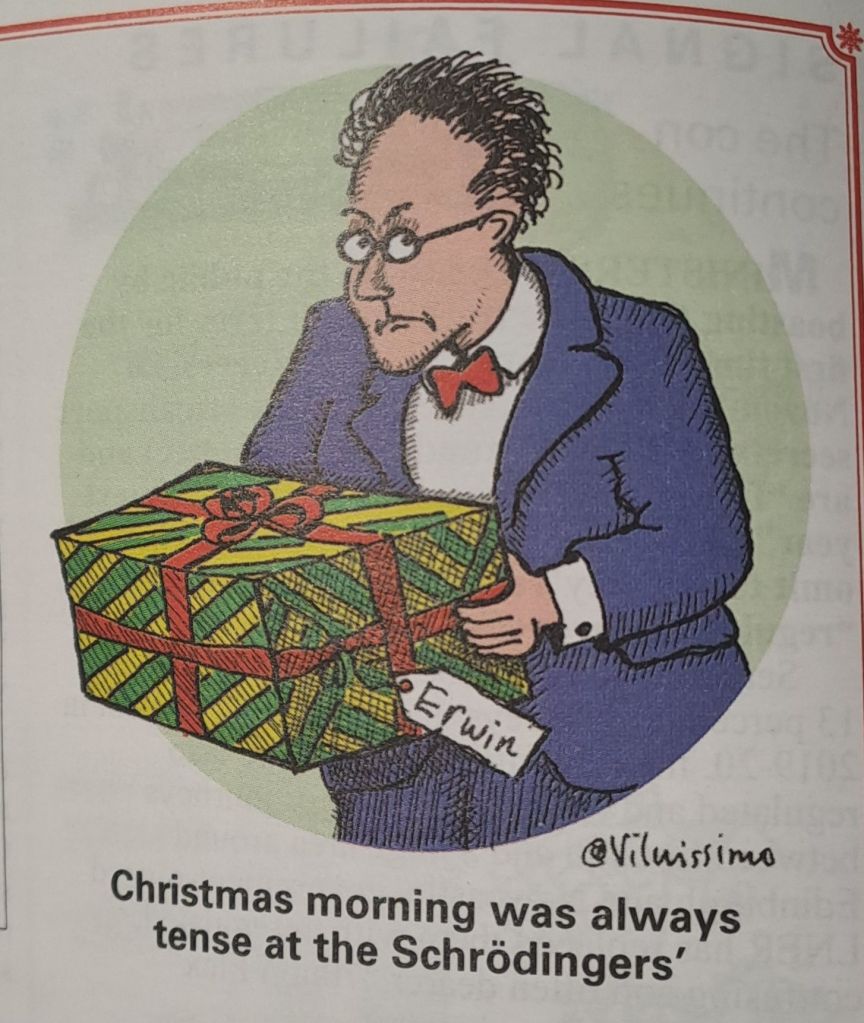
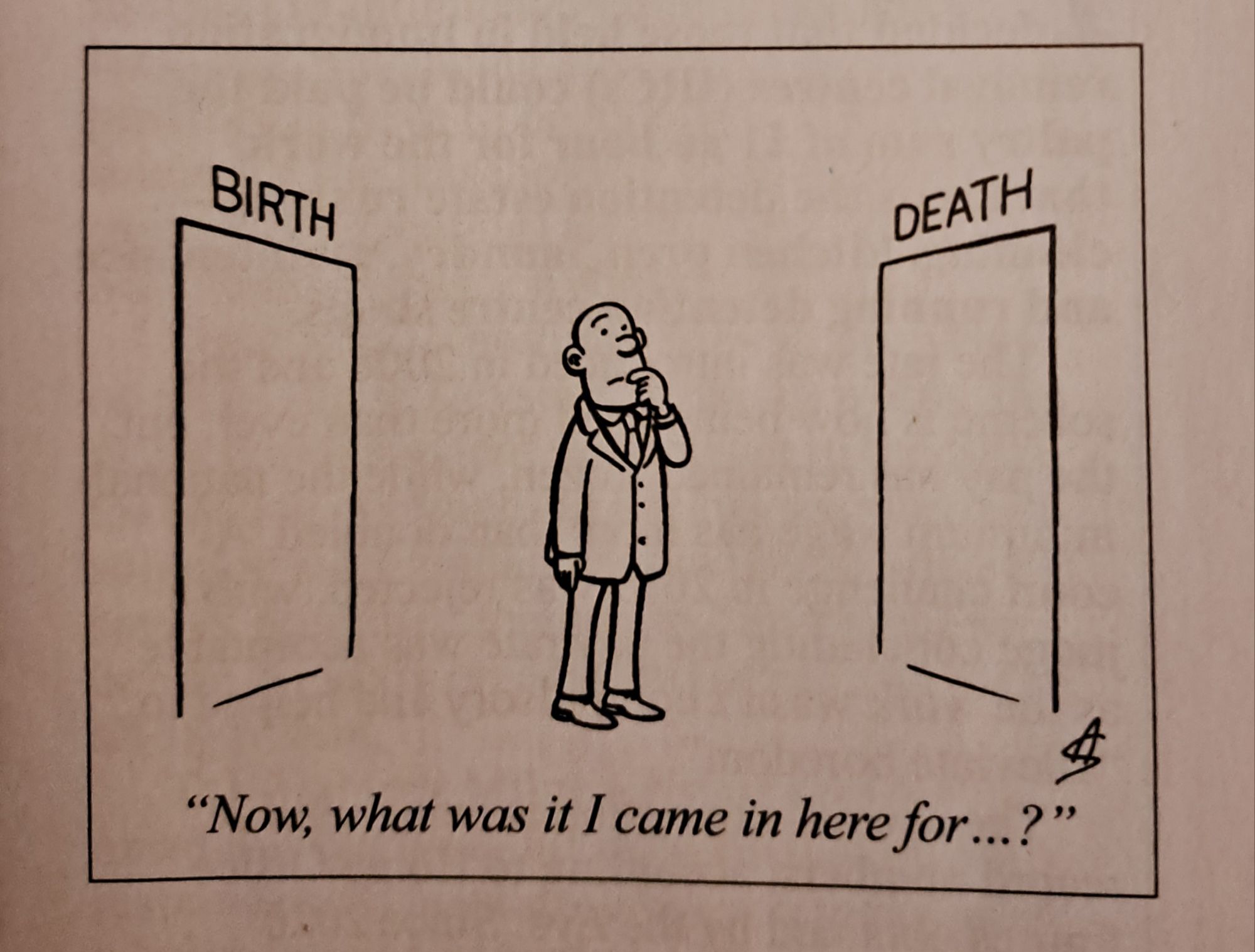
An Introduction to Philosophy

Posted in Uncategorized with tags , on December 11, 2025 by telescoper
Cartoon from Private Eye

Mozart and Bruckner at the National Concert Hall

Posted in Biographical, Music, Uncategorized with tags , , , , , , , on December 6, 2025 by telescoper

I was worried I might have to miss last night’s concert by National Symphony Orchestra Ireland conducted by Anja Bihlmaier at the National Concert Hall. I bought the ticket some weeks ago and was looking forward to it, but I had been a bit unwell earlier in the week and didn’t want to go only to cough all the way through, possibly infecting others on the way. By Friday afternoon, however, I felt a lot better and took the decision to go for it. I’m very glad I did because I enjoyed the music enormously and didn’t cough or sneeze once!

There were only two items on the menu, another pairing of Mozart and Bruckner.

In the first half we heard the Piano Concerto No. 15 by Wolfgang Amadeus Mozart played by Boris Giltberg. This piece was written in 1784 when the composer had reached the ripe old age of 28. It’s an enjoyable and entertaining piece, not perhaps as profound as some of the later piano concertos (Mozart wrote 27 altogether), but well worth listening to. It’s also regarded as one of the most difficult to play, though Boris Giltberg made it look easy enough and was clearly enjoying himself while he played it as I’m sure did the composer when he performed it for the first time in Vienna. The three movements follow a standard fast-slow-fast pattern; the last being a sprightly Rondo, part of which features in the soundtrack of an episode of Inspector Morse: Who Killed Harry Field?

After generous applause, Giltberg returned to the stage to play a very solo encore piece. I didn’t recognize it, but someone I know who was there told me it was by Robert Schumann but didn’t know the name. When I got home I spent a good half-hour going through recordings until I finally identified it as the Arabeske in C Major. Anyway, it was a very nice way to send us into the wine break.

After the interval we had Anton Bruckner‘s monumental Symphony No. 9, which was unfinished at Bruckner’s death in 1896. Insufficient material was recovered after the composer’s death to enable a reconstruction of the missing 4th movement, so this work is generally performed in its incomplete state with only three movements. Even so, it’s an immense work in both length and ambition, lasting over an hour in performance and calling for a large orchestra.

The majestic first movement (marked FeierlichMisterioso; solemn & mysterious) with its soaring themes and thunderous climaxes always puts me in mind of a mountaineering expedition, with wonderful vistas to experience but with danger lurking at every step. At times it’s rapturously beautiful, at times terrifying. It’s not actually about mountaineering, of course – Bruckner meant this symphony to be an expression of his religious faith, which, in the latter years of his life must have been pretty shaky if the music is anything to go by.

The second movement (Scherzo) is all juddering rhythms, jagged themes and harsh dissonances reminiscent (to me) of Shostakovich. It alternates between menacing, playful and cryptic; the frenzied animation of central Trio section is especially disconcerting.

The last movement  (Adagio)  begins restlessly, with an unaccompanied violin theme and then becomes more obviously religious in character in various passages of hymn-like quality, still punctuated by stark crescendi. In this movement Bruckner doffs his cap in the direction of Richard Wagner,  especially when the four Wagner tubas appear, and the movement reaches yet another climax with the brass bellowing out the initial violin theme. This dies away and the movement comes to an unresolved, poignant conclusion. With a long pause in silence as if to say “that’s all he wrote”, the concert came to an end.

Although I’ve loved this work for many years I’ve only ever heard it once before in concert.  The live performance definitely adds other dimensions you will miss on a recording and I enjoyed it enormously. For one thing you can see how hard the musicians – especially the cellos and basses – have to work. The sight of a large symphony orchestra working together to produce amazing sounds is quite something.

The National Symphony Orchestra Ireland may not be the Berlin Philharmonic but I was generally very impressed, there was split note in the brass section near the end, but this was a minor blemish. The performance was very warmly received by the audience. The NCH wasn’t full, but it was quite a good attendance.

That’s not quite the end of my concert-going for 2025. I’m off to Messiah next week. Well, you have to, don’t you? It’s Christmas..

More Google Garbage

Posted in Uncategorized with tags , , , on August 24, 2025 by telescoper

I couldn’t resist sharing this as part of an occasional series about Google AI Garbage. Earlier this evening (Sunday 24th August 2025), I searched to see if there was a BBC Proms concert this evening. This is what the AI summary produced. I think it’s priceless, right down to the last line!

Interlude

Posted in Uncategorized on July 9, 2025 by telescoper

I am going to be away until the weekend, and in any case I’ve been a bit overwhelmed with things over the last few days, so I’m going to take a short break from blogging. I’ll (probably) start again on Saturday. Normal service will be resumed as soon as possible.

Last Remarks

Posted in Biographical, Education, Euclid, Maynooth, The Universe and Stuff, Uncategorized with tags , , on May 11, 2025 by telescoper

On Friday (9th May), the last day of undergraduate teaching at Maynooth, I gave the last lecture in my module on Particle Physics. I actually finished the syllabus on Tuesday (6th) so the final one was more a revision class than a lecture. I used it to go through some past examination questions and (try to) answer some general points raised by the class.

What surprised me about this lecture was that, as has usually been the case, there was more-or-less a full attendance. Examinations in Maynooth start on Friday (May 16th), but the Particle Physics examination is not until May 27th, near the end of the examination period. I therefore expected that many students would be concentrating on their revision for their other modules, which have exams earlier in the season or finishing their projects (which are due in before the exams start). There were one or two absences, but most came anyway. In fact there was even an extra student, one of our MSc students. When I saw him at the back of the lecture hall I asked, jokingly, why he had come. He replied “I haven’t got anything better to do”. I wasn’t sure how to interpret that!

That lecture was at 11am. Later that day, at 3pm, I gave a Departmental colloquium (which had quite a big audience). The title was Euclid: The Story So Far and the abstract was

The European Space Agency’s Euclid satellite was launched on 1st July 2023 and, after instrument calibration and performance verification, the main cosmological survey is now well under way. In this talk I will explain the main science goals of Euclid, give a brief summary of progress so far, showcase some of the science results already obtained, and set out the time line for future developments, including the main data releases and cosmological analysis.

The audience for these talks is very mixed: experimental and theoretical physics staff, postgraduates and even some undergraduate students (including some who were in my lecture earlier) so it was quite a general talk rather than one I might give to an specialist astrophysics audience. If you’re interested you can find the slides here.

Having a quick cup of tea after the end of the talk and before I headed off to catch the train, I talked briefly with a student who is taking his final examinations at Maynooth this year. He told me that I had actually given the first lecture he attended when he had just started his first year and the colloquium was the last talk he would attend at Maynooth. That would be the case for quite a few students in the audience, I suppose, but it won’t be true for any in future: I am no longer teaching any modules taken by first year students, and I’ll be retired when the current first year students graduate…

Shostakovich 50 at the National Concert Hall

Posted in Uncategorized with tags , , , , , , , , on May 10, 2025 by telescoper

Last night’s concert at the National Concert Hall in Dublin was billed Shostakovich 50 because 2025 marks the 50th anniversity of the death in 1975 of Dmitri Shostakovich, whose First Symphony was performed after the interval, by the National Symphony Orchestra under the direction of guest conductor John Storgårds. As you can see, though, the programme was quite varied and no fewer than three other composers were represented.

The first piece was The Oceanides, tone poem by Jean Sibelius intended to evoke the sea nymphs of Greek mythology. It’s quite a short piece – only eleven minutes in performance – but full of movement, suggesting the ebb-and-flow of the sea and its different moods, from tranquil to stormy. Its place on the programme made it a good workout for the orchestra and a wonderful starter to whet their appetite of the audience for the rest of the menu.

After that appetizer we had a performance of the Rhapsody on a Theme by Paganini by Sergei Rachmaninov with soloist Yukine Kuroki at the piano. This piece comprises a set of 24 variations on a them from one of Paganini’s caprices for solo violin. The Rhapsody on a theme of Paganini is piece full of contrasts: sometimes pyrotechnical, sometimes lyrical. My favourite section is the 18th variation, in which a lovely romantic melody emerges and is picked up by the whole orchestra in a manner that’s very characteristic of Rachmaninov. This tune is just an inversion of the theme transposed into a different  key and slowed down.

The Rachmaninov alone was worth the cost of the ticket. I was amazed how pianist Yukine Kuroki coped with the technical challenges of this work but also how she managed to generate so much power for a person of such slight build. Rachmaninov himself was quite a large man who had hands like shovels, so his work often places difficult demands on a soloist. Not last night, though, as Yukine Kuroki not only played with great accomplishment but also clearly enjoyed herself. In the passages during which the piano was not playing she was bouncing up and down and tapping her feet waiting for her cue. It was lovely to watch as well as to listen to. I’ll also mention that she was wearing a gorgeous one-shoulder dress with a vivid red colour.

After the wine break interval we returned for a piece that was new to me, the Symphony No. 3 ‘White Interment’ by Ukrainian composer Victoria Vita Polyova. This is described a symphony, but it doesn’t have the traditional structure in terms of movements. It has instead a rather static structure, consisting of thematic blocks based on a poem Now always snows. It’s a sombre and rather minimalist piece, with little of the development you would expect from a true symphony, but the sound world it creates is layered in interesting ways. I enjoyed the performance.

And finally we have the Symphony No. 1 by Dmitri Shostakovich which I don’t think I had heard in concert before. The most astonishing thing about this work was that he wrote it as a graduation piece for the St Petersburg Conservatory. Its first performance was in 1926, when the composer was only 19. It is a substanial work over four movements (the last two played without interruption) and there are passages within it in which you can see that he had already found much of the distinct voice that he used in his later compositions. This piece isn’t really reminiscent of any other composers, either.

The performance was excellent, with particularly strong work by the woodwinds and brass. It was very well received by the NCH audience which is always very generous with its applause.

Debussy, McNeff & Rachmaninov at the NCH

Posted in Uncategorized with tags , , , , , , , , on February 1, 2025 by telescoper

Last night was my first trip of the year to the National Concert Hall in Dublin. I had planned to go on 17th January but by the time I got around to buying a ticket it was sold out. Fortunately, it was broadcast live on the radio and is still available on the RTÉ Player. I had a ticket for last Friday’s concert but bottled out of going because of transport worries about Storm Éowyn. That concert went ahead, apparently, but wasn’t broadcast so I missed it. Last night was third time lucky, and I’m very glad I got there!

The conductor of the National Symphony Orchestra for last night’s performance was Columbian-born Lina González-Granados in what I believe to have been her first appearance with the NSO. I certainly hope she comes back as she was very good indeed. I think the members of the orchestra enjoyed themselves as much as the audience!

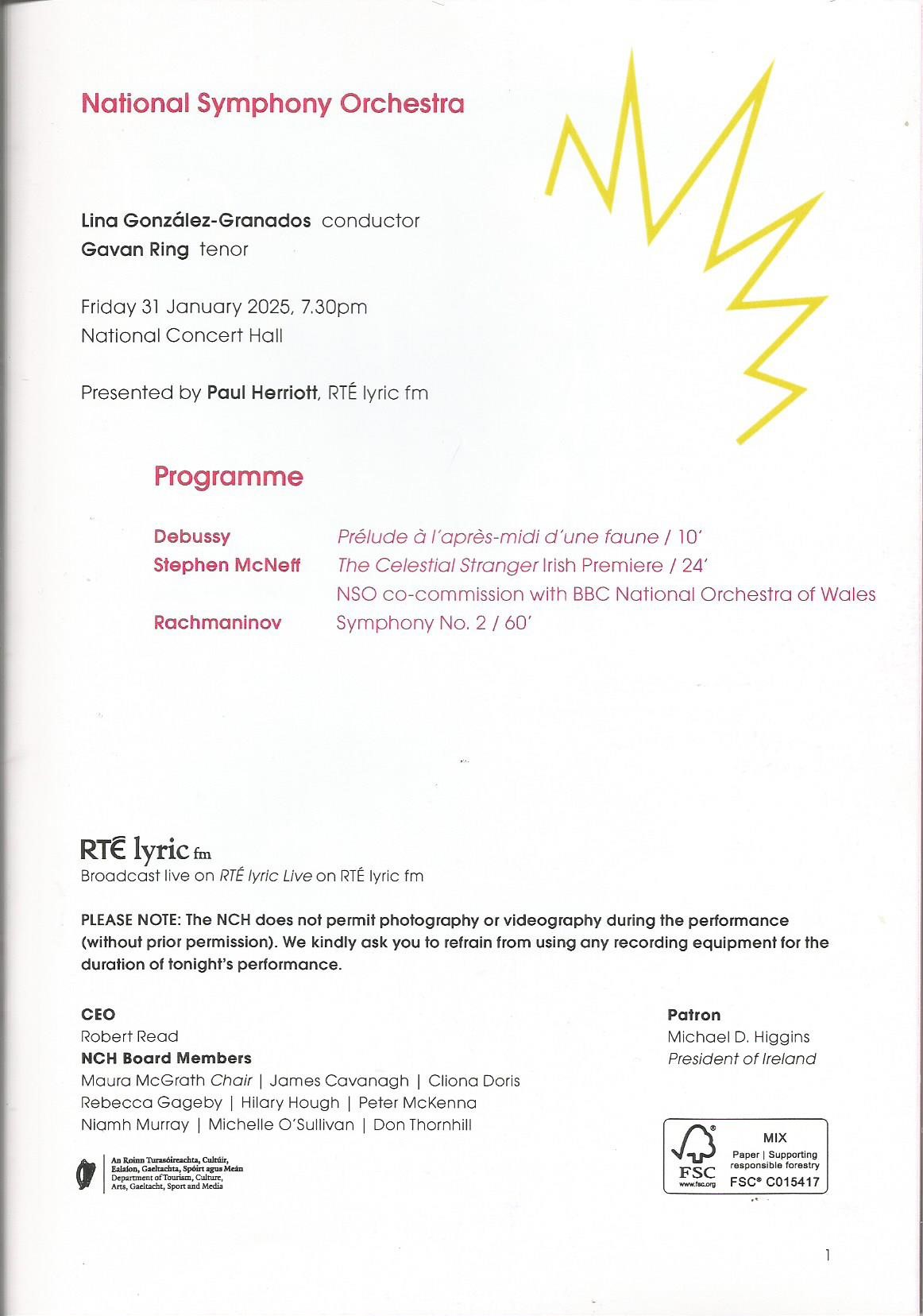
As you can see from the programme, the concert opened with a very familiar piece, Prélude à l’après-midi d’un faune by Claude Debussy, which was performed with all the shimmering sensuality it demands. Some very lush playing by the strings on this one, and lovely work by the woodwinds made it sound very fresh although I’ve heard it many times.

After that tenor Gavan Ring joined the orchestra to perform the Irish Premiere of The Celestial Stranger, a song cycle composed by Belfast born composer Stephen McNeff. This consists of settings of five poems, two by Thomas Traherne (including the one that gives its name to the collection, a remarkable work that I will post in its entirety later on). The next poem is by Walt Whitman and is titled As The Time Draws Nigh in the programme, but is not the well-known Whitman poem of that title but seems to have been adapted from various texts, including Years of the Modern. After that is a famous poem by Dylan Thomas, The hand that signed the paper and the cycle concludes with an adaptation of Farewell to Thee, written by Liliʻuokalani (former monarch of Hawaii). It’s a varied collection but there is a narrative behind the choice: a visitor from outerspace (the Celestial Stranger) arrives on Earth and reacts joyfully to begin with. As time goes on, however, he finds out more about war and and death and finally takes his leave.

The music is as varied as the choice of verse. I felt some influence of Britten in the first piece, but the rest is very different. Gavan Ring was in fine voice and the orchestra responded very well to the very different demands of this work compared to the first.

After the interval it was time for the main course of the evening, Rachmaninov’s Second Symphony. It’s a remarkable work because it’s not only a “proper” symphony in its construction and development but also the best part of an hour of one glorious melody after another. It’s a gorgeous work altogether, but the third movement (Adagio) is especially beautiful. I love the way Rachmaninov starts this movement one of his big romantic tunes, but then hides it while passages develop through a solo  clarinet and strings. You know the tune is coming back though, and when it does the emotional impact brought the audience to a collective swoon. This is romantic music in all senses of the word, just the ticket for a cole January evening. It was a very fine performance, not least because you could see how much both conductor and orchestra were enjoying themselves. Hats off to Lina González-Granados who had just the right balance of control and expressiveness. She look quite exhauasted at the end, actually. She had worked hard to earn her standing ovation.

Publisherballs

Posted in Uncategorized with tags , , , , , on January 26, 2025 by telescoper

Private Eye has a regular feature called “Commentatorballs” which contains various verbal gaffes perpetrated by sports commentators, usually sent in by members of the public. It used to be called “Colemanballs” after David Coleman, but the name was changed after he passed away in 2013. Years ago, I had a couple of my own contributions published, actually.

Anyway, I’m seriously thinking about running a similar feature on this blog devoted to outrageous blunders made by academic publishers.

Here’s one that would make a good entry in “Publisherballs” from the journal Radiology Case Reports, published by – you guessed it – Elsevier:

On the left you see the title, author data and abstract and on the right an extract from the text that clearly shows it was generated by ChatGPT or some other AI bot. The authors cut and pasted the output without even noticing that the software they were using was explaining it could not respond to the prompt they gave it. Clearly the careful editorial process at the journal didn’t even go as far as reading the paper…

Meta Bollocks

Posted in Uncategorized on January 25, 2025 by telescoper

I’ve been thinking about doing this for a long time, but last week I decided to end my dealings with Meta. The usefulness of Facebook in particular has been declining rapidly owing to the proliferation of adverts and far-right propaganda that I spent more time blocking than reading, and it’s very difficult to find anything from your actual friends in among the noise. In other words, Facebook has well and truly turned to shit. The decision by the CEO Mark Zuckerberg to ditch all moderation at Meta and align himself with America’s Felon-in-Chief was the last straw. I just don’t want to engage with the people Meta wants me to engage with. Life’s too short.

A while ago I deleted my Instagram and Threads accounts and today, having downloaded all my data, I completed the process by deleting my personal account on Facebook, along with the page I had set up to post from this blog, and the page for the Open Journal of Astrophysics. My personal account on Facebook has existed since 2007 so there was quite a lot to download, but it’s all done now and all these accounts have gone. I also uninstalled WhatsApp.

The good news is that my BlueSky account now has over 5.7K follows, heading towards the number i used to have on Twitter before I deleted that account. The level of engagement there is good, and it’s a far friendlier environment than Xitter. I also have an account on Mastodon where I have over 1200 followers and similarly good engagement. 

I’m also on LinkedIn, by the way. Posts from here go there automatically too. I don’t log on very often but I am frequently amused by the alternative jobs it suggests for me. Last week it recommend I try a new career as a kitchen porter.

Bluesky Embed Test

Posted in Art, Biographical, Uncategorized with tags , , , on January 16, 2025 by telescoper

It’s been a very busy day today so I just have time to test out the new “Bluesky embed” feature on WordPress. That means I can share a selection of my very best shitposts directly here. Try this one:

It seems to work on some browsers but not others. How is it for you?