Here I am in Heathrow Airport waiting for a flight after a couple of days in London.
Every time I visit London it becomes harder to believe that I actually lived there years ago. On Thursday evening I took a stroll around Soho and walked past this place…
I used to be a member at Ronnie Scott’s and spent many late nights there back in the day. It must be about 25 years since I last set foot inside. I must go again for old times’ sake, but I didn’t have time on this trip.
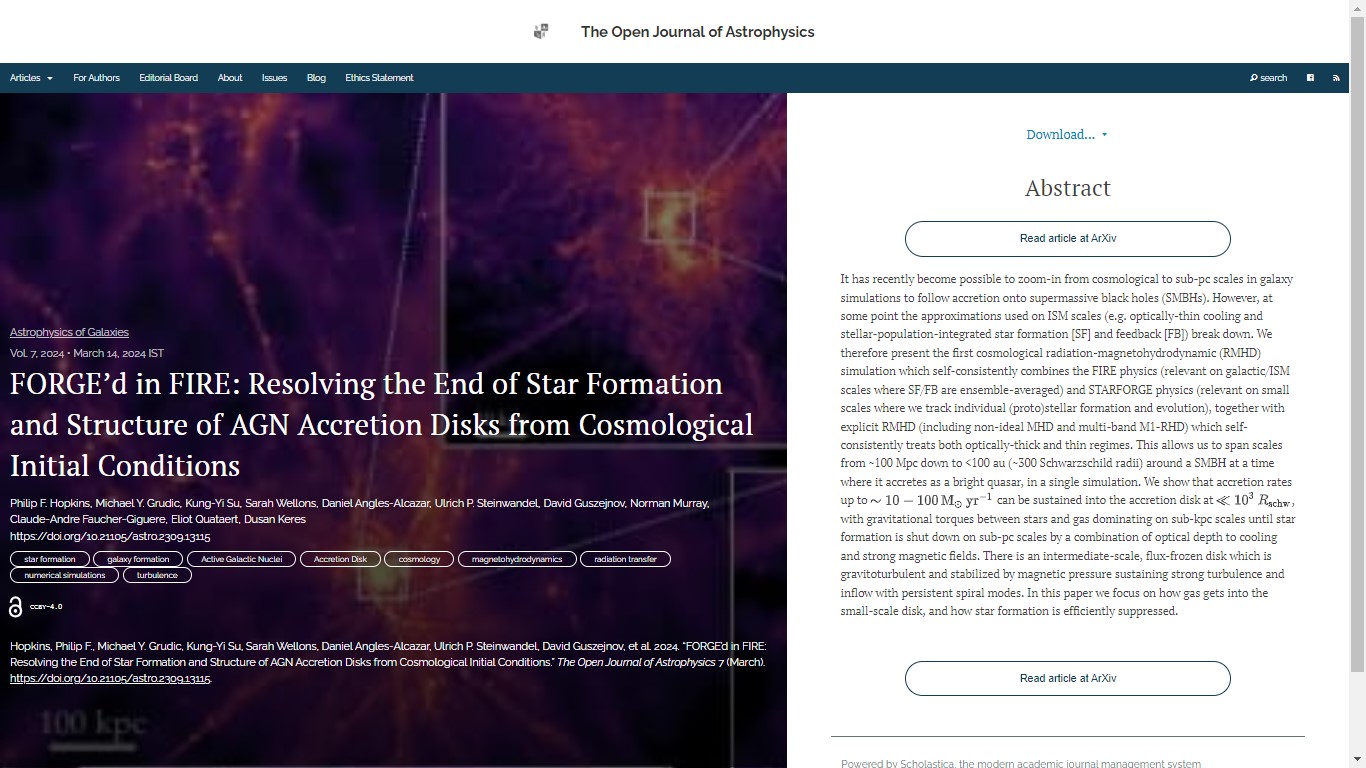
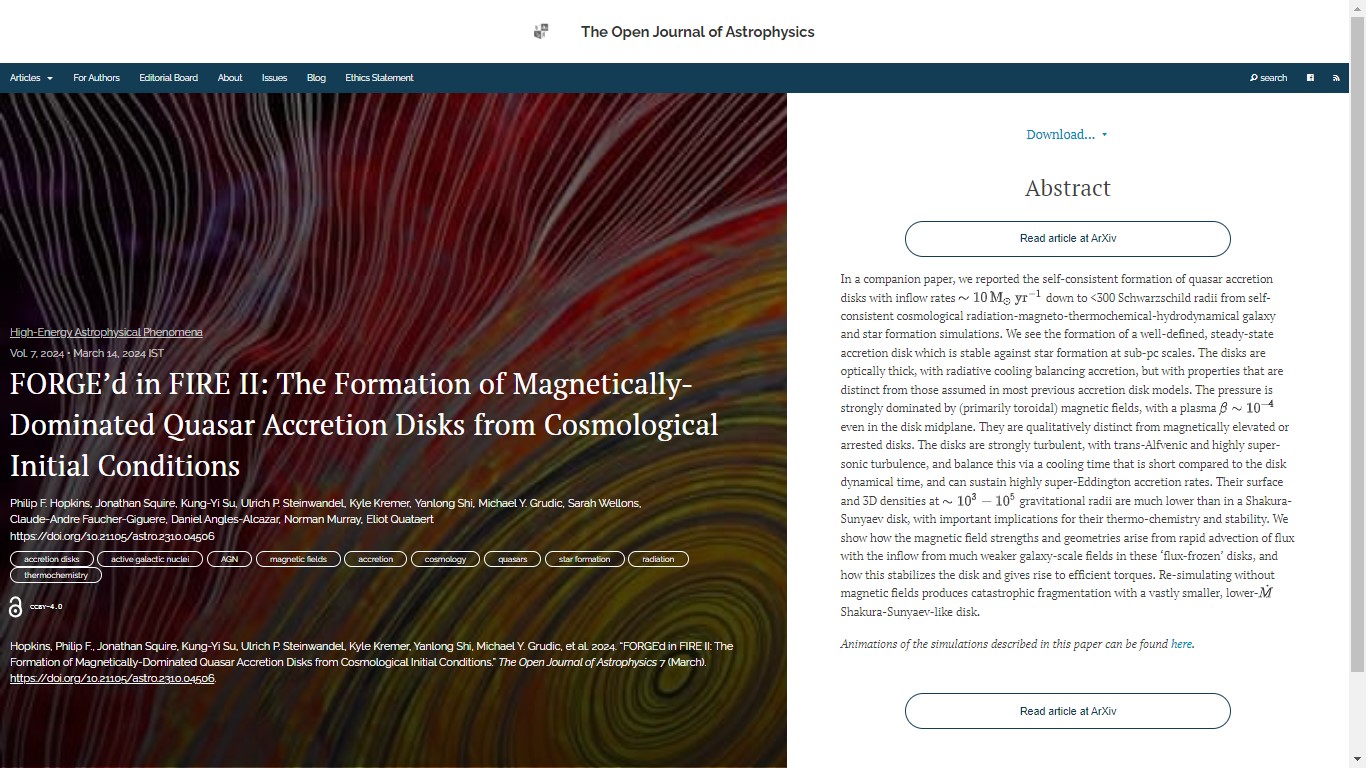
Yesterday (Friday) was a very busy day, but a pleasant one. I spent the morning at a discussion meeting about Simulation based Inference in Astrophysics at which I learnt a lot. I didn’t attend the whole meeting however as I had to take some time out in the afternoon to do other things. I also met up with a couple of people I haven’t seen in person for a while, only to find out later that they both won Royal Astronomical Society Awards. Congratulations, then, to Pedro Ferreira on his Eddington Medal (Pedro is a member of the Editorial Board of the Open Journal of Astrophysics) and Sarah Kendrew for her part in the Team Award given to the MIRI instrument team for JWST.
After that I went to the “Parish Dinner” of the RAS Club at the Travellers in Pall Mall, which is the occasion when new members are elected by an arcane process defined by some truly bizarre rules. Somehow, though, the outcome turned out fine.
Anyway, I’ll soon be en route to a different part of not-Barcelona, so I think I’ll stretch my legs before the flight.
Having arrived in that London I thought I’d check out a nice little exhibition at the Royal Academy called Impressionists on Paper. As its name suggests, this is a collection of drawings, sketches, and studies done with charcoal, pencil pastels, and occasionally watercolours, all done on paper. The artists involved cover the spectrum from Degas to Toulouse-Lautrec. My favourite is the study by Seurat that became part of a very famous painting but which is wonderful in its own right.
Well, it’s 2024 and time to start a new volume – the seventh – of the Open Journal of Astrophysics with the very first paper of the new year. The paper in question is the 1st paper in Volume 7 (2024) and the 116th altogether. This one was published on 8th January 2024.
The title is “A new timestep criterion for N-body simulations” and it presents a new method for estimating characteristic dynamical timescales in N-body simulations, based on derivatives up to fourth order, which can be used to adjust timesteps used in numerical computations. The paper is in the folder marked Earth and Planetary Astrophysics as the paper discusses applications to orbital dynamics in planetary systems, but the method is of much wider applicability.
The authors are Dang Pham & Hanno Rein (University of Toronto, Canada) and David S. Spiegel (Google, USA).
Here is the overlay of the paper containing the abstract:
You can click on the image of the overlay to make it larger should you wish to do so. You can find the officially accepted version of the paper on the arXiv here.
Some important cosmological results have just been announced by the Dark Energy Survey Collaboration. I haven’t had time to go through them in detail but I thought it was worth doing a quick post here to draw attention to them. The results concern a sample of Type Ia supernovae (SN Ia) discovered during the full five years of the Dark Energy Survey (DES) Supernova Program, which contains about 1500 new Type Ia Supernovae that can be used for cosmological analysis. The paper is available on the arXiv here; the abstract is:
The key numerical result of interest is the equation-of-state parameter for dark energy, designated by w, which occurs in the (assumed) relationship between pressure p and effective mass density ρ of the form p=wρc2. A cosmological constant – which for many cosmologists is the default assumption for the form of dark energy – has w=-1 as I explained here. This parameter is one of the things Euclid is going to try to measure, using different methods. Interestingly, the DES results are offset a bit from the value of -1, but with quite a large uncertainty.
While the results for the equation-of-state parameter are somewhat equivocal, one thing that is clear is that the new SNIa measurements do confirm the existence of dark energy, in that the data can only be described by models with accelerating expansion, as dramatically demonstrated in this Figure:
I think this figure – or versions of it – will very rapidly appear in public talks on cosmology, including my own!
A cold and miserable day in Cardiff yesterday got even sadder when news came out of the death of Welsh rugby legend John Peter Rhys Williams known universally as “JPR” after the winger John James Williams (another great player), joined the national team and became “JJ”. JPR was one of the superb players who dominated Welsh rugby in the 1970s; he stood out even in such exalted company. In my opinion JPR is was the greatest full-back ever.
JPR was instantly recognizable on the field: tall and craggy, with characteristic long hair, prominent sideburns, socks always rolled down around his ankles, he was an imposing figure whether patrolling the defensive lines or stepping up to join the attack. In the famous 1973 match in Cardiff between The Barbarians and New Zealand he was described by commentator Cliff Morgan as “a man who never shirks his responsibility”. Just watch the memorable opening try where you’ll see JPR in the thick of the action, twice shrugging off dangerous tackles around his neck, the second time receiving the ball from Phil Bennett to start the passing move from deep inside his own half.
Many people forget that the man himself scored a great try in that game too:
As a full-back, JPR was often the last line of defence. Sometimes, tidying up after a kick from the opposition, he would clear his lines by kicking. More often, though, he would spot a weakness and go charging forward, ball in hand, not afraid to run straight at the opposition. He was quick to spot gaps in his own defence too, rushing to provide cover, often with last-ditch try-saving tackles.
As good as he was at turning defence into attack, he was even better when his side were already in control. Here are two tries he scored for Wales against England in 1976 that demonstrate his superb positional sense in attack as well as his sheer physical strength.
(Wales achieved a Grand Slam in 1976; England got the Wooden Spoon.)
JPR was a tough, aggressive and uncompromising man on the field – players certainly knew when he’d tackled them! – but a gentleman off it, and held in a very high regard throughout the rugby world and beyond. His loss is immeasurable. One by one the legends are leaving us. The world is poorer without them.
Rest in peace, J.P.R. Williams (1949-2024)
P.S. When living in Cardiff years ago I had the pleasure of meeting and talking with two Welsh rugby legends, Gerald Davies and Phil Bennett (the former at a function, the latter at a book-signing). Both were charmingly modest men. I never really met JPR properly but I remember vividly stepping out of my house in Pontcanna on a Six Nations match day and finding myself face-to-face with him in the street. He must have been around 60 then and was still the same imposing figure he was in the 1970s. I recognized him immediately. I wanted to say something and perhaps even shake his hand, but I was too star-struck.
P.P.S. JPR was a fully-qualified orthopaedic surgeon and a Fellow of the Royal College of Surgeons. This is a reminder that back in the 1970s, Rugby Union was still an amateur game.
So here I am after a very busy day in a very cold Cardiff, about to have a pizza for dinner having accomplished quite a few of the things I’d planned, despite having to return to base for a couple of telecons: Euclid business has resumed in earnest after the break.
It has just started snowing.
Earlier today, my perambulations took me through Bute Park, where there was quite a lot of evidence of storm damage, including this:
Fallen tree by the River Taff.
The snow is now falling steadily.
Snow on The Friary, Cardiff
I hope it doesn’t go on too long as I have to get a train later in the week, and even a light dusting seems to bring the rail network to a standstill!
With Nollaig na mBan yesterday that’s the festive season over for me, and time to resume my sabbatical. Joining the crowd of post-Christmas travellers at the airport, today I took my first flight of 2024, complete with last-minute change of gate, apart from which all went perfectly to plan. I won’t be returning to Barcelona immediately, however, as I have a things to do in various different parts of not-Barcelona.
I’m in Cardiff now, where it is fine and dry but very cold, and spending a few days in Cardiff to start with. After that I’ll be taking a train to London to attend a meeting at the Royal Astronomical Society, followed by dinner at the R.A.S Club on Friday 12th January.
Coincidentally, Friday’s dinner is rather appropriately at the Travellers Club, rather than the usual Athenaeum (which is unavailable for some reason). I couldn’t attend any of these occasions between October and December as I was in Barcelona, and for a couple of years. In fact I haven’t been able to attend much at all since the bicentennial dinner in 2020 because of the pandemic and subsequent workload issues. I’m not sure if I’ll be able to go to any others this year either, so I’m looking forward to Friday (despite having to pay the arrears on my subscription) because it is the Parish Dinner, when new members are elected. Owing to the arcane complexity of the rules, and the fact that it all happens after the consumption of a great deal of wine, this usually makes for an amusing occasion.
Meanwhile, in Maynooth, preceded by a few days of revision lectures and tutorials, the January examinations start on Friday 12th January too. Students will therefore be returning from their breaks, swapping the Christmas decorations for the austerity of the examination halls. Although I’m not involved in examinations this year, I’d like to take this opportunity to wish all students at Maynooth and elsewhere all the best for the forthcoming ordeals, and the same for all academic staff whose ordeal by marking will come in due course…
I have been asked a number of times about whether or not the Open Journal of Astrophysics will be listed on Scopus. For myself, I couldn’t care less about getting listed by Scopus – which is a profit-making service run by publishing giant Elsevier as a gate-keeper for the academic publishing industry. I have, however, heard from many individuals around the world that their research managers and the like actually take it seriously, to the extent that a journal isn’t counted as a journal unless Scopus tells them that is the case.
I’m well aware that hanging the “Approved by Elsevier” tag on the Open Journal of Astrophysics would open us up to the accusation that we collaborating with the enemy. I fully understand that moral objection, but I had to weigh it up against the serious practical difficulties facing researchers who are being forced to pay for Gold Open Access as a result of the absence of OJAp from the Scopus approved list. In the end I decided to apply, but to continue to argue against the use of Scopus and related proprietary databases by research institutions as I consider them just as corrosive as league tables.
Last November, therefore, I decided to hold my nose and apply for Scopus listing; I blogged about this here. Just to clarify, although institutions and organizations pay to subscribe to Scopus, a journal doesn’t have to pay to be listed. The application process, though free, is nevertheless rather time-consuming and I was told to expect the process to take several months. I submitted the application on 21st November 2023.
I was quite surprised yesterday (5th January 2024) to receive an email from Scopus containing the following:
The Scopus Content Selection & Advisory Board (CSAB) has reviewed your application and approved it for coverage.
For your information, the reviewer comments are copied below:
+ The articles are consistently of high academic quality, consistent with the journal’s stated aims. + This title is a very welcome addition to the literature.
So there we are. The Open Journal of Astrophysics will indeed be listed on Scopus, though I’m told it might take a few weeks to appear as such. From now on, whenever anyone asks me about this I have a definite answer!
This has, however, reminded me to re-apply for listing by Clarivate. I did apply for this way back in March but the application was rejected on the grounds that we weren’t publishing enough papers (although we publish more papers than many of the journals currently listed by them). Since then our rate of publication has increased substantially, however, so I don’t think they can raise the same objection again.
It will be interesting to see if listing by Scopus makes any difference to the rate of submissions and the geographical distribution of the authors concerned. My guess is it probably will, but not immediately. We’ll just have to wait and see?
Professor Philip Moriarty of Nottingham University – a former colleague of mine – has written a blog post in protest at his institution’s most recent and most blatant attempts to game the wretched World University Rankings system. I encourage you to read it in its entirety.
The post will touch a nerve with many colleagues around the world who will want to sign – as I have done – the open letter contained therein which is aimed at persuading not only Nottingham but other universities both in the UK and elsewhere to follow the example of Utrecht and abandon these absurd and meaningless rankings.
To sign the open letter please follow this link and to see a list of signatories see here.
Please sign – and spread the link to – this open letter as widely as possible. I’m sure there are many more academics out there who would be more than happy to sign!
The views presented here are personal and not necessarily those of my employer (or anyone else for that matter).
Feel free to comment on any of the posts on this blog but comments may be moderated; anonymous comments and any considered by me to be vexatious and/or abusive and/or defamatory will not be accepted. I do not necessarily endorse, support, sanction, encourage, verify or agree with the opinions or statements of any information or other content in the comments on this site and do not in any way guarantee their accuracy or reliability.