Notes to Future Self

Posted in Biographical, The Universe and Stuff with tags , on July 28, 2023 by telescoper

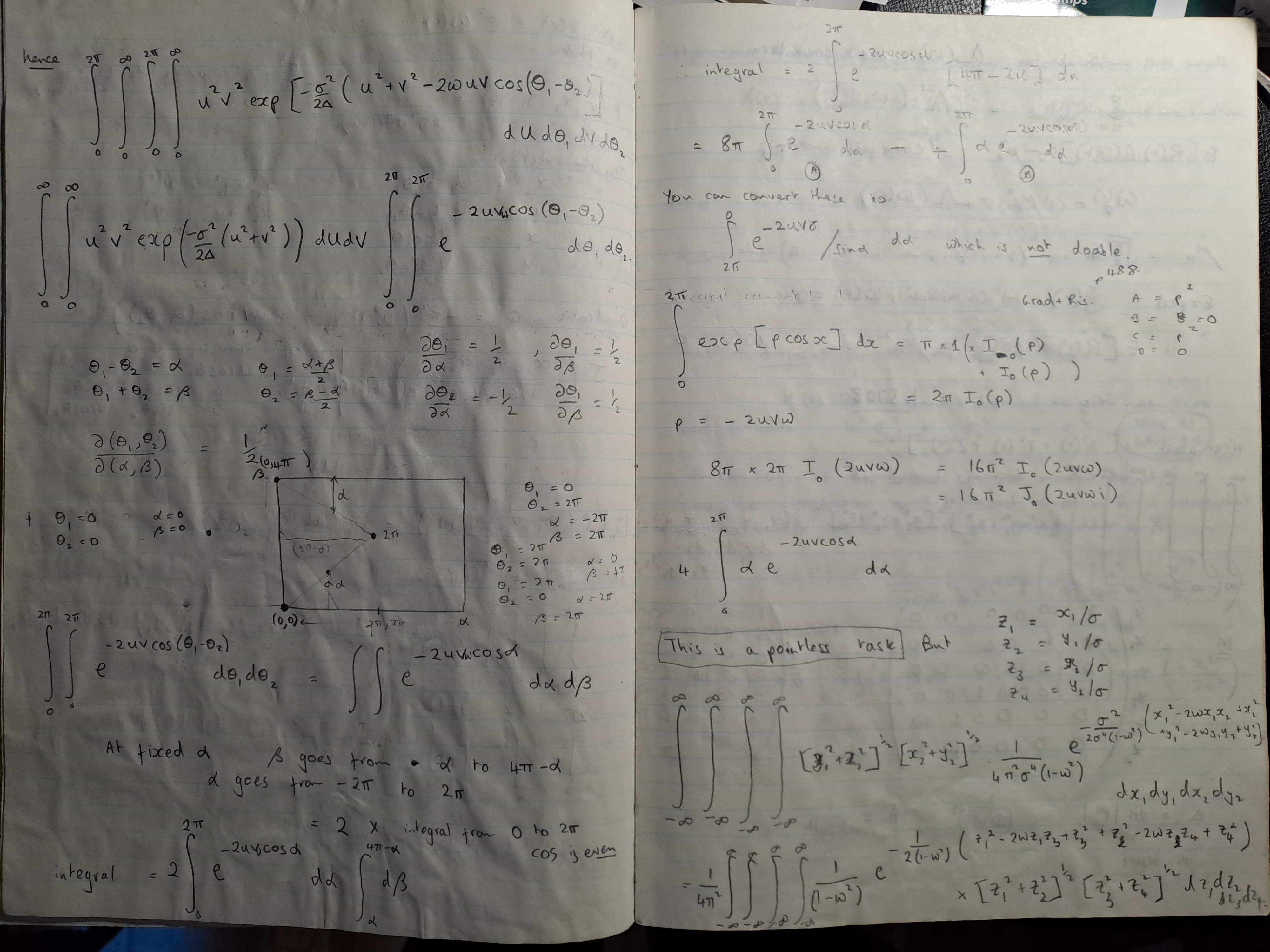
Yesterday I was tidying up a bit and came across the old notebooks I used when I was a research student. As I suppose is the case with everyone else, there’s quite a lot in them that never went anywhere. If you can read the example above, about 3/4 of the way down the right-hand page I left a note saying “This is a pointless task”. I can’t remember if that referred to that particular integral or my research in general!

Some people who have seen this picture remarked on the size of my integral signs. That’s because I had to do quite a lot of integrals with complicated integrands, so I got into the habit of drawing big integral signs as a prelude to writing down what I assumed would be a horrible formula.

The way I worked in those days (1985-88) was to do a lot of rough scribblings on scrap paper. When I got to something I thought was promising I would write up a “neat” version in the notebook and throw away the workings. I know younger folks these days do most of their work on a screen but, as an old fogey, I still write a lot down on paper or on a blackboard. I didn’t have my own blackboard when I was a PhD student, but I did have plenty of notebooks – most of which I have kept. I think that I’ll always find an essential part of the mathematical thought process involves a pen or piece of chalk in my hand, moving around and guiding my brain.

Looking through these books I remember that I also wrote down ideas for follow-up projects. I managed to do very few of these, but some were done by other people elsewhere independently of me, so at least they were reasonable ideas!

No Second Troy, by W.B. Yeats

Posted in Poetry with tags , , on July 27, 2023 by telescoper

Why should I blame her that she filled my days
With misery, or that she would of late
Have taught to ignorant men most violent ways,
Or hurled the little streets upon the great,
Had they but courage equal to desire?
What could have made her peaceful with a mind
That nobleness made simple as a fire,
With beauty like a tightened bow, a kind
That is not natural in an age like this,
Being high and solitary and most stern?
Why, what could she have done, being what she is?
Was there another Troy for her to burn?


by William Butler Yeats (1865-1939)

R.I.P. Sinéad O’Connor (1966-2023)

Posted in Music, R.I.P. with tags , , on July 26, 2023 by telescoper

I just heard the truly awful news of the death at the age of 56 of Sinéad O’Connor. Words fail me, so here’s her classic Nothing Compares 2 U from 1990, when it was a worldwide hit.

There can’t be many pop videos done like this, entirely in close-up.

Incidentally I once saw Sinéad O’Connor in person, at the Zap Club in Brighton, when I literally bumped into her trying to get to the bar. When she turned around I was staggered to see such a beautiful face looking at me, although to be honest I did for a moment assume she was a boy. I was expecting an angry response to my clumsiness, but all I saw was an impish grin and those amazingly lovely eyes. That must have been in 1990 or earlier. Anyway, she was wearing the same leather jacket and cropped hair as in this picture, taken in 1988.

Back then, the time of the AIDS crisis, Sinéad O’Connor stood up for LGBTQ+ rights. She sang at Pride when it was far from fashionable to do so, and participated in the Red Hot and Blue album, which featured a wide range of artists doing covers of Cole Porter songs. I’ve always loved her satirical take on You So Something To Me, in which she is done up to resemble Veronica Lake:

Life had often been a struggle for Sinéad – she suffered from mental health problems and had to endure the loss of her son just 18 months ago – but she was a uniquely talented artist who enriched many lives. I just hope she knew how much she was loved by so many people.

R.I.P. Sinéad O’Connor (1966-2023).

R.I.P. Charles W. Misner (1932-2023)

Posted in R.I.P., Uncategorized with tags , , , on July 26, 2023 by telescoper
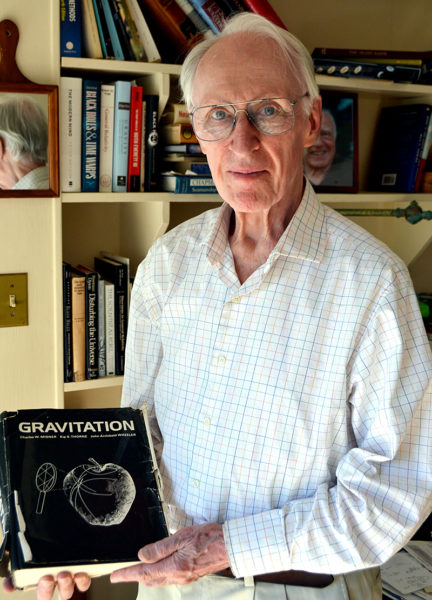
Charles Misner, pictured in 2016. (Picture credit: Maia Zewert)

Earlier this year I wrote a blog post pointing out that the classic textbook Gravitation by Misner, Thorne and Wheeler (above) is 50 years old this year. MTW (as it is usually known) was first published in 1973, and has has now been reprinted 24 times.

I was therefore saddened to learn that the eminent theoretical physicist Charles W. Misner, the first author of this famous tome, passed away a couple of days ago, on 24th July 2023, at the age of 91. A full obituary of Prof. Misner can be found here.

Rest in peace, Charles W. Misner (1932-2023)

The First Room-Temperature Superconductor?

Posted in The Universe and Stuff with tags , , , on July 25, 2023 by telescoper

This is outside my usual areas, but there’s a new paper on arXiv which, if verified, could be extremely important. It’s called The First Room-Temperature Ambient-Pressure Superconductor and it is written by three scientists based in Korea. High temperature superconductivity has been, er, a hot topic for some years. One must be cautious because (as far as I am aware) the article has not yet been refereed, but is this a breakthrough?

Here is the abstract:

It seems to me that 400K is a bit hot for a room, but the point is that the material behaves as a superconductor (i.e. zero resistivity) for T < Tc so cooler rooms would do! The current definition of “high temperature” is Tc > 77K which is much lower than the Tc = 400 K stated here.

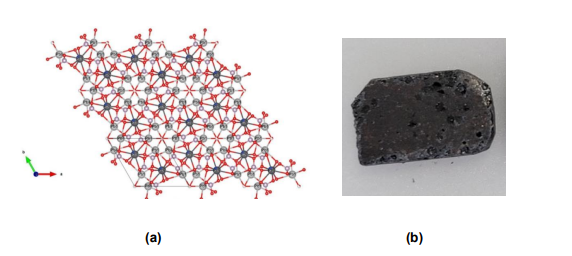
Here’s part of a figure from the paper showing (right) the material LK-99 and its structure (left):

I’m not an expert, but it looks like the material involved is neither particularly expensive nor particularly complicated so it should be relatively easy to determine whether these results are reproducible.

Comments from experts are welcome!

Something more than Night…

Posted in Literature with tags on July 24, 2023 by telescoper

Yesterday (23rd July) was the birthday of the late great American crime novelist Raymond Chandler, who was born on that day in 1888. A reminder of this factoid appeared on one of my social media feeds last night, along with this memorable quote:

The streets were dark with something more than night.

I assumed this came from one of his novels, perhaps The Big Sleep or Farewell My Lovely, but it is actually from an essay which serves as an introduction to a collection of four short novels, Trouble Is My Business, Finger Man, Goldfish, and Red Wind when they were published in a single volume in 1950. Since this is now in the public domain, as indeed are all his novels and stories, I thought I’d share the essay here, as it is a good description of the rise of the “hard-boiled” style of American crime fiction, exemplified by Chandler himself, Dashiell Hammett and others, as it compares with the more “refined” murder mysteries of, say, Agatha Christie. It’s a very perceptive piece, enhanced by Chandlers sharp wit and tight prose.

–o–

Some literary antiquarian of a rather special type may one day think it worth while to run through the files of the pulp detective magazines which flourished during the late twenties and early thirties, and determine just how and when and by what steps the popular mystery story shed its refined good manners and went native. He will need sharp eyes and an open mind. Pulp paper never dreamed of posterity and most of it must be a dirty brown color by now. And it takes a very open mind indeed to look beyond the unnecessarily gaudy covers, trashy titles and barely acceptable advertisements and recognize the authentic power of a kind of writing that, even at its most mannered and artificial, made most of the fiction of the time taste like a cup of lukewarm consommé at a spinsterish tearoom.

I don’t think this power was entirely a matter of violence, although far too many people got killed in these stories and their passing was celebrated with a rather too loving attention to detail. It certainly was not a matter of fine writing, since any attempt at that would have been ruthlessly blue-penciled by the editorial staff. Nor was it because of any great originality of plot or character. Most of the plots were rather ordinary and most of the characters rather primitive types of people. Possibly it was the smell of fear which these stories managed to generate. Their characters lived in a world gone wrong, a world in which, long before the atom bomb, civilization had created the machinery for its own destruction, and was learning to use it with all the moronic delight of a gangster trying out his first machine gun. The law was something to be manipulated for profit and power. The streets were dark with something more than night. The mystery story grew hard and cynical about motive and character, but it was not cynical about the effects it tried to produce nor about its technique of producing them. A few unusual critics recognized this at the time, which was all one had any right to expect. The average critic never recognizes an achievement when it happens. He explains it after it has become respectable.

The emotional basis of the standard detective story was and had always been that murder will out and justice will be done. Its technical basis was the relative insignificance of everything except the final denouement. What led up to that was more or less passagework. The denouement would justify everything. The technical basis of the Black Mask type of story on the other hand was that the scene outranked the plot, in the sense that a good plot was one which made good scenes. The ideal mystery was one you would read if the end was missing. We who tried to write it had the same point of view as the film makers. When I first went to work in Hollywood a very intelligent producer told me that you couldn’t make a successful motion picture from a mystery story, because the whole point was a disclosure that took a few seconds of screen time while the audience was reaching for its hat. He was wrong, but only because he was thinking of the wrong kind of mystery.

As to the emotional basis of the hard-boiled story, obviously it does not believe that murder will out and justice will be done—unless some very determined individual makes it his business to see that justice is done. The stories were about the men who made that happen. They were apt to be hard men, and what they did, whether they were called police officers, private detectives or newspaper men, was hard, dangerous work. It was work they could always get. There was plenty of it lying around. There still is. Undoubtedly the stories about them had a fantastic element. Such things happened, but not so rapidly, nor to so close-knit a group of people, nor within so narrow a frame of logic. This was inevitable because the demand was for constant action; if you stopped to think you were lost. When in doubt have a man come through a door with a gun in his hand. This could get to be pretty silly, but somehow it didn’t seem to matter. A writer who is afraid to overreach himself is as useless as a general who is afraid to be wrong.

As I look back on my stories it would be absurd if I did not wish they had been better. But if they had been much better they would not have been published. If the formula had been a little less rigid, more of the writing of that time might have survived. Some of us tried pretty hard to break out of the formula, but we usually got caught and sent back. To exceed the limits of a formula without destroying it is the dream of every magazine writer who is not a hopeless hack. There are things in my stories which I might like to change or leave out altogether. To do this may look simple, but if you try, you find you cannot do it at all. You will only destroy what is good without having any noticeable effect on what is bad. You cannot recapture the mood, the state of innocence, much less the animal gusto you had when you had very little else. Everything a writer learns about the art or craft of fiction takes just a little away from his need or desire to write at all. In the end he knows all the tricks and has nothing to say.

As for the literary quality of these exhibits, I am entitled to assume from the imprint of a distinguished publisher that I need not be sickeningly humble. As a writer I have never been able to take myself with that enormous earnestness which is one of the trying characteristics of the craft. And I have been fortunate to escape what has been called “that form of snobbery which can accept the Literature of Entertainment in the Past, but only the Literature of Enlightenment in the Present.” Between the one-syllable humors of the comic strip and the anemic subtleties of the litterateurs there is a wide stretch of country, in which the mystery story may or may not be an important landmark. There are those who hate it in all its forms. There are those who like it when it is about nice people (“that charming Mrs. Jones, whoever would have thought she would cut off her husband’s head with a meat saw? Such a handsome man, too!”). There are those who think violence and sadism interchangeable terms, and those who regard detective fiction as subliterary on no better grounds than that it does not habitually get itself jammed up with subordinate clauses, tricky punctuation and hypothetical subjunctives. There are those who read it only when they are tired or sick, and, from the number of mystery novels they consume, they must be tired and sick most of the time. There are the aficionados of deduction and the aficionados of sex who can’t get it into their hot little heads that the fictional detective is a catalyst, not a Casanova. The former demand a ground plan of Greythorpe Manor, showing the study, the gun room, the main hall and staircase and the passage to that grim little room where the butler polishes the Georgian silver, thin-lipped and silent, hearing the murmur of doom. The latter think the shortest distance between two points is from a blonde to a bed.

No writer can please them all, no writer should try. The stories in this book certainly had no thought of being able to please anyone ten or fifteen years after they were written. The mystery story is a kind of writing that need not dwell in the shadow of the past and owes little if any allegiance to the cult of the classics. It is a good deal more than unlikely that any writer now living will produce a better historical novel than Henry Esmond, a better tale of children than The Golden Age, a sharper social vignette than Madame Bovary, a more graceful and elegant evocation than The Spoils of Poynton, a wider and richer canvas than War and Peace or The Brothers Karamazov. But to devise a more plausible mystery than The Hound of the Baskervilles or The Purloined Letter should not be too difficult. Nowadays it would be rather more difficult not to. There are no “classics” of crime and detection. Not one. Within its frame of reference, which is the only way it should be judged, a classic is a piece of writing which exhausts the possibilities of its form and can hardly be surpassed. No story or novel of mystery has done that yet. Few have come close. Which is one of the principal reasons why otherwise reasonable people continue to assault the citadel.

Swan Update

Posted in Maynooth with tags , , on July 24, 2023 by telescoper

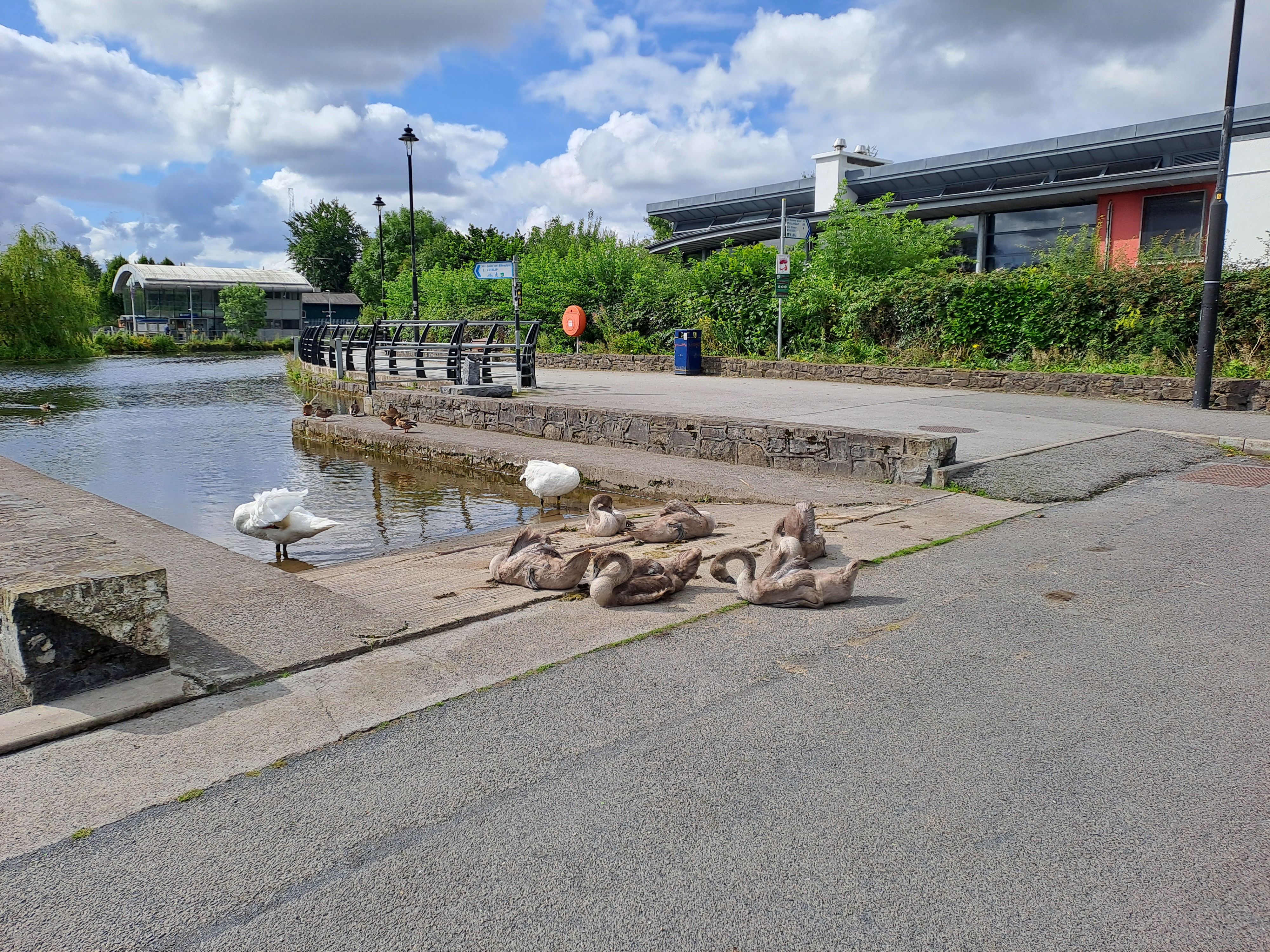
It has been not quite three months since I posted about the swans at Maynooth and, since I passed the family on the way in to work today I thought I’d give an update. Here they are on the left, compared with what they looked like in May.

You’ll notice two main differences.

One is that the cygnets are so much bigger, almost full size, although they still have their brownish colouring. They grow very quickly!

The other difference is that there are only six cygnets in the recent picture, while there were seven originally. It’s not unusual for one or two to fall by the wayside, but what happened in this case is that one of them had a damaged tail, and the others seemed to be bullying it. The wildlife people therefore decided that it was best to take it away, fix its injuries, and find it a home elsewhere. That was a few weeks ago. As far as I know, it survived.

All-Ireland Hurling Final Day!

Posted in GAA with tags , , on July 23, 2023 by telescoper

Today’s the day! It’s the All-Ireland Senior Hurling Championship Final at Croke Park, between Kilkenny and Limerick (reigning champions). The weather isn’t as bad as forecast, but it’s still a bit wet. I’m hoping for a cracking match. The atmosphere in Ireland on this very special day is very much like it used to be for the FA Cup Final when I was a kid. Maynooth is closer to Kilkenny than Limerick but I saw more green shirts than black-and-amber in town this morning. I hope it’s a cracking match between two fierce rivals. In fact it’s a repeat of last year’s final.

Anyway, we’ve just had the throw-in. Updates later!

Half Time: Kilkenny 1-09 Limerick 0-09

It’s not a disappointment so far, in front of a crowd of 82,300. In the words of commentator Marty Morrissey “It’s a right old battle”. Kilkenny, giving it everything in a frantic, bruising match, are deservedly leading by 3 courtesy of a goal by Eoin Cody in the 10th minute. But Limerick are a strong, physical side can they get back into the game? Can Kilkenny keep up the intensity?

Full Time: Kilkenny 2-15 Limerick 0-30

So, after a dominant second-half display, Limerick win it comfortably, by 9 points. Kilkenny just couldn’t keep up the pressure on in the middle third of the pitch, allowing Limerick to rack up a big score with points from long range. For Kilkenny it was like a boxer fighting an opponent with a much longer reach. The longer the game went on the stronger Limerick got, and the more Kilkenny’s brave challenge faded.

That’s four in a row for Limerick, deserved Champions yet again!

New Publication at the Open Journal of Astrophysics

Posted in OJAp Papers, Open Access, The Universe and Stuff with tags , , , , , , on July 22, 2023 by telescoper

Time to announce yet another new paper at the Open Journal of Astrophysics. This one was published yesterday, on 21st July 2023.

The latest paper is the 27th  so far in Volume 6 (2023) and the 92nd in all. The authors are Sohan Ghodla, Richard Easther, M.M. Briel and J.J. Eldridge, all of the University of Auckland in New Zealand.

The primary classification for this paper is Cosmology and Nongalactic Astrophysics and its title is “Observational implications of cosmologically coupled black holes”.  The paper elucidates some of the consequences of a suggestion that the interaction between black holes and the global properties of space-time underlying explanation for dark energy. The key result is that the existence of cosmologically-coupled black holes implies a much larger rate of black-hole merger events than is observed.

The papers to which this is a response are mentioned here. For reference ,these earlier works were published in The Astrophysical Journal and The Astrophysical Journal Letters. There is also a detailed twitter thread about this paper by Richard Easter, posted when it was submitted as a preprint to the arXiv last month:


Anyway, here is a screen grab of the overlay of the published version which includes the  abstract:


You can click on the image of the overlay to make it larger should you wish to do so. You can find the officially accepted version of the paper on the arXiv here.

R.I.P. Tony Bennett (1926-2023)

Posted in Jazz, R.I.P. with tags , , , , on July 21, 2023 by telescoper

I just heard that the great singer Tony Bennett has passed away, just a couple of weeks short of his 97th birthday. In 2021, Bennett revealed that he was living with Alzheimer’s, a condition that had been diagnosed in 2016, but he had continued to perform until that announcement. His death does not come as a shock, but it is always sad to hear of the death of a legend.

What can I say about about Tony Bennett, except that I absolutely adored his singing? In fact I think he got better with age, his older voice showing even greater artistry in phrasing and melodic invention than when he first emerged as a star performer in the 1950s. He was admired by people across the generations, across different musical genres, and by the harshest judges of all – other musicians.

By way of a tribute I thought I’d pick a tune from my favourite album of his, recorded back in 1975 with Bill Evans on piano. I think the intimate combination of his voice with only a piano accompaniment suited him very well indeed. I’ve picked this tune, Days of Wine and Roses, which Henry Mancini wrote for an excellent film of the same name.

I picked this track, partly because it is lovely, but also because its title reminds me of a little poem by Ernest Dowson entitled Vitae Summa Brevis Spem Nos Vetat Incohare Longam, which I translate from my half-remembered schoolboy Latin as something like “the brief span of Life forbids us from conceiving an enduring hope”. It’s a quotation from one of the Odes of Horace (Book I, Ode 4, line 15). These aren’t the lyrics of the song, but seem apt in the circumstances:

They are not long, the weeping and the laughter,
Love and desire and hate:
I think they have no portion in us after
We pass the gate.

They are not long, the days of wine and roses:
Out of a misty dream
Our path emerges for a while, then closes
Within a dream.

Rest in peace, Anthony Dominick Benedetto (1926-2023).