When I visited Cardiff recently one of the things I did was read the electricity and gas meters (and take photographs of both as proof of the accuracy of the readings. It was only when logged onto the SSE website to enter the numbers that I realised a bill had already been issued (on 1st September) for the amount above.
I know gas has got more expensive, but really…
The bill above is based on an ESTIMATED reading for three months in the summer for an empty house. The energy company know that the house is unoccupied but nevertheless chose to produce an estimate of the amount of gas used that is orders of magnitude higher than any amount I have ever used there, even when the house was occupied in the depths of winter. The reading I took shows that the amount of gas used since the last reading was minimal. I uploaded the reading as soon as I could but am yet to receive a corrected bill.
Why they have come up with such a ridiculous figure is beyond me, but it did make me glad that I don’t pay this bill by direct debit. If I did so I would have been charged automatically which would have emptied my bank account (and more) and caused all kinds of problem with payments for other services.
When I logged onto WordPress yesterday I received a message that it was the 14th anniversary of my registration with them, which is when I took my first step into the blogosphere; that was way back on 15th September 2008.
I actually wrote my first post on the day I registered but unfortunately I didn’t really know what I was doing on my first day at blogging – no change there, then – and I didn’t actually manage to figure out how to publish this earth-shattering piece. It was only after I’d written my second post that I realized that the first one wasn’t actually visible to the general public because I hadn’t pressed the right buttons, so the two appear in the wrong order in my archive.
Such was the inauspicious beginning of this “shitty wordpress blog”!
If you’re interested in statistics then, as of 9.00am Irish Summer Time today, I have published 6060 blog posts posts and have received a total of 4.99 million hits; I expect to pass the 5M mark sometime next week. The largest number of hits I have received in a single day is still 8,864 (at the peak of the BICEP2 controversy).
The last 14 years have been eventful, to say the least, both personally and professionally. I started blogging not long after I’d moved into my house in Pontcanna, Cardiff. Since then I moved to Sussex, then back to Cardiff, and then to Ireland. The last couple of years have been dominated by the Covid-19 pandemic.
Scientifically we’ve seen the discovery of the Higgs Boson and gravitational waves, both of which resulted in Nobel Prizes, as did the studies of high-redshift supernovae. The Planck mission mission was launched, did its stuff, and came to a conclusion in this time too. Most recently we have had the launch of JWST and have started to see the first science results. Science at least has moved forward, even many other things have not.
I didn’t see it myself but there were hundreds of reports last night of a very bright fireball over Ireland and the UK at around 9pm. Here is an example video of the phenomenon:
Quite a few people have asked me today what this object, most people assuming that it was space junk coming back down to Earth. I gave the most accurate answer possible which is that I didn’t know, but I thought that to be that bright it would have to be quite large and if it were that large a bit of space debris we would (a) know what it was and (b) it seemed to me that it would probably have broken up a bit more. While that seemed to rule out, e.g. a rogue bit of one of Elon Musk’s constellations , I am not an expert and thought I could well be wrong.
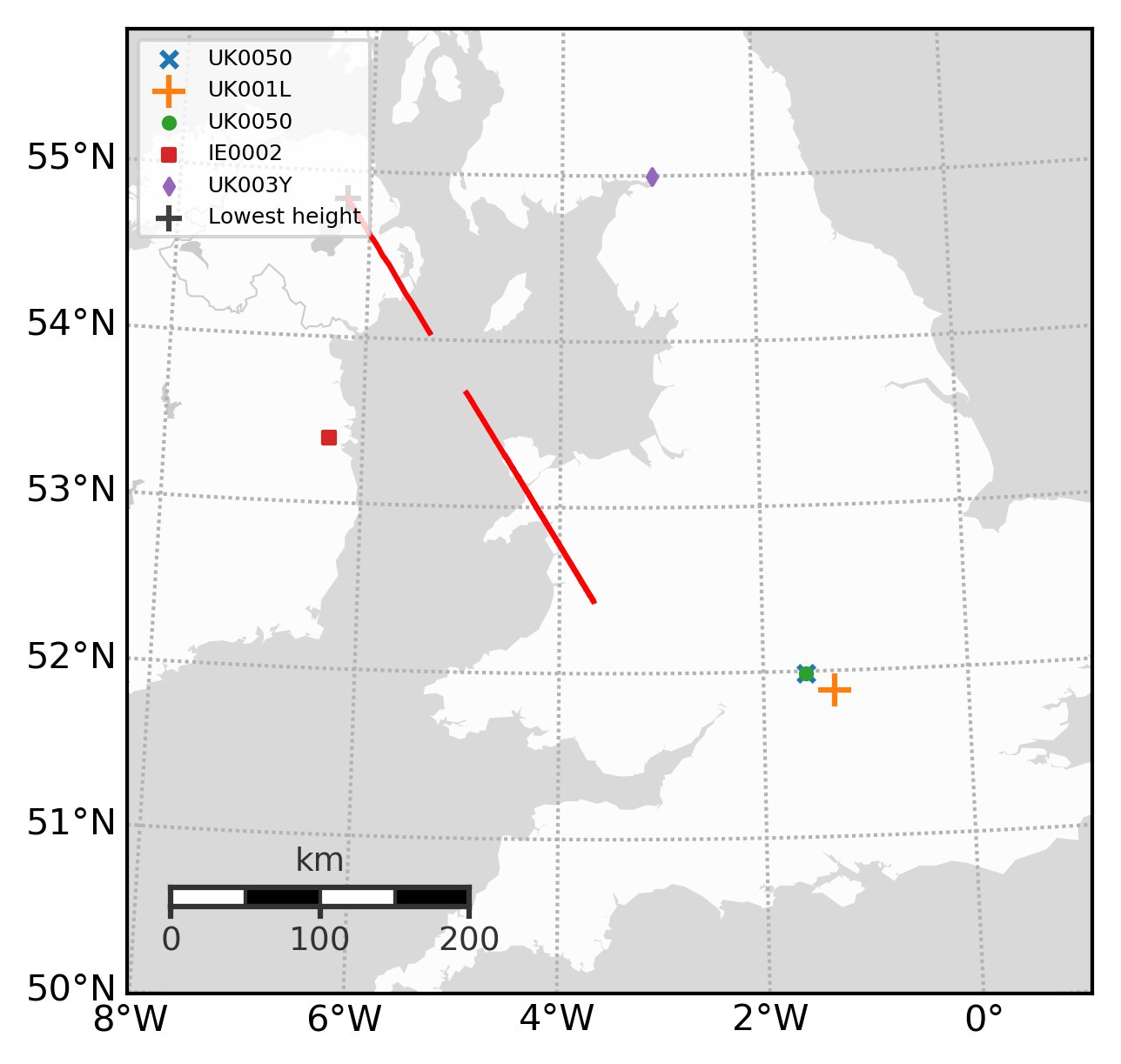
Anyway, the Jury has now returned to deliver a verdict. After collating and cross-referencing all the reports from tracking stations, the UK Meteor Observation Network is now 100% convinced that it was a meteor (rather than space debris). Its trajectory took it in a roughly north-westerly direction, passing directly over Belfast, and it came down in the Atlantic somewhere near the Hebrides.
There is enough data about this object to infer its orbit of the asteroid of which it was originally part: Semi-major axis 1.36A.U., eccentricity 0.33, inclination 8.77°, Period 1.59Y, LA Sun 171.72°, last Perihelion 2021-03-24.
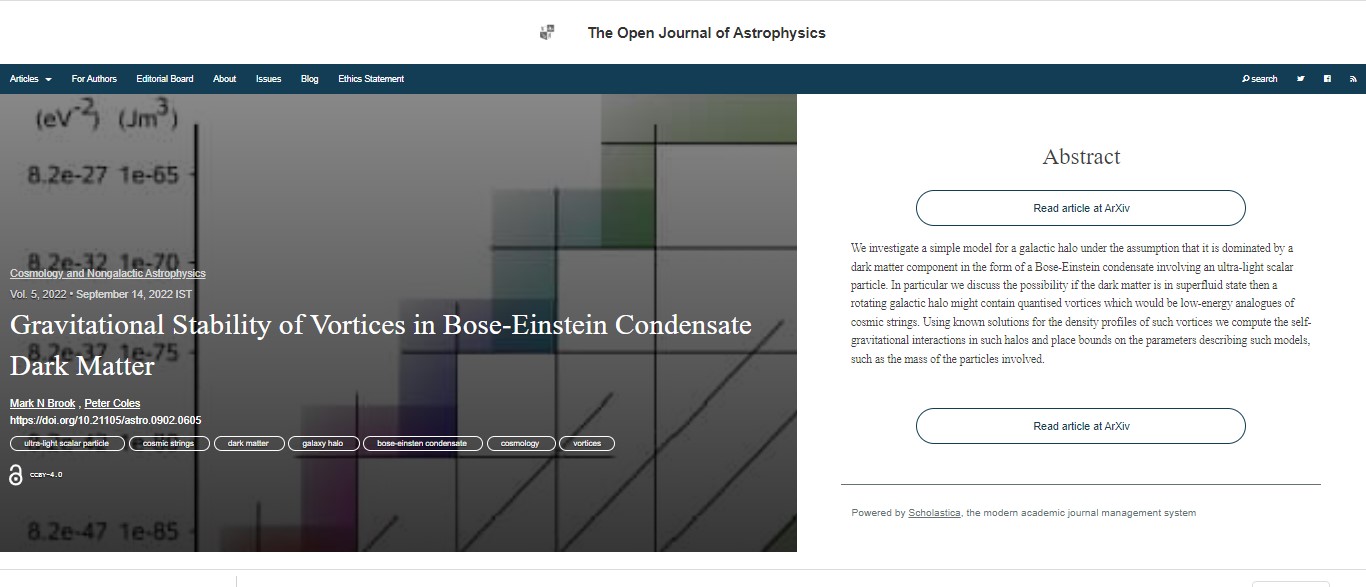
It’s time once again for me to announce the publication of another paper at the Open Journal of Astrophysics. The new paper, published last week, is the 14th paper in Volume 5 (2022) and the 62nd in all. The latest publication is entitled “Gravitational Stability of Vortices in Bose-Einstein Condensate Dark Matter”. This paper is another one for the folder marked Cosmology and Non-Galactic Astrophysics and the authors are Mark N Brook Now at the Institute for Cancer Research in London) and Peter Coles (Who he? Ed).
There is a bit of a story behind this one. The work on which this paper is based was done while both authors (Mark and I) were at the University of Nottingham. Mark was my PhD student at the time. I left Nottingham for Cardiff in 2007 but Mark stayed behind to finish his thesis and write this paper, which appeared on the arXiv in 2009. The paper wasn’t accepted in its original form, Mark left the field after obtaining his PhD, and I was working on other things at Cardiff so the paper remained unpublished on the arXiv.
Last year, however, I was updating my publication list and noticed the old preprint so looked it up on NASA/ADS. Although not Earth-shattering, I found it had been acquiring a reasonable number of citations (16 according to ADS, including some this year) as an unpublished work largely because of increased interest in the field of condensate dark matter. I therefore approached the Editorial Board of the Open Journal of Astrophysics to ask their opinion about whether it would be appropriate to consider it for publication. They agreed and the paper was assigned to an Editor. Obviously I recused myself from the process.
Somewhat to my surprise, given that it’s basically an old paper, the referee comments were supportive. I’ve been very busy for the past year and communication with Mark was slow so it’s taken a while to revise and update the paper in line with the referee requests. We also took the opportunity to include a brief review of some papers that had come out since the original version of the paper appeared. Mark and I agreed a final text l and the paper was accepted last week. I uploaded the agreed version to arXiv and now the paper is now published. It was all a bit unconventional but there we are. It was interesting to be on the author side of the process for a change!
Anyway, here is a screen grab of the overlay which includes the abstract:
You can click on the image to make it larger should you wish to do so. You can find the accepted version of the paper on the arXiv here.
I learned yesterday from Keith Flett’s blog that the new King of England appears to have had a bit of problem with his writing equipment. It must be difficult to face such a severe challenge at such an early stage of his reign but I’m sure he’ll sort it out, or perhaps his servants will.
As a result of this important news I was thinking that I must be very old-fashioned in continuing to use fountain pens. I have four different pens like that, three for everyday use, and one for “best” i.e. mainly for signing important letters. Although I don’t have a blotter, I do fill my pens with ink from a bottle rather than from cartridges. I have noticed, however, that it is rather difficult to buy bottles of ink these days so I tend to buy several bottles at a time. Another issue is that not all forms of paper are suitable for writing on with a fountain pen. I use this as an excuse to buy quite posh notebooks. In particular, fountain pens are useless for doing crosswords as the ink spreads into an illegible smudge on the paper,
You might think I’m an old fuddy-duddy for using such pens rather than biros or even doing everything using a word processor but old habits die hard. When I was at school my handwriting was very bad so a teacher suggested I start using a fountain pen in order to improve it. That didn’t work, but I got into the habit of using that sort of pen and I’ve never broken it (though I have broken many nibs).
I use a keyboard when writing documents nowadays but whenever I have to do calculations, I write out the complete thing (with equations), when I’ve checked it, using a fountain pen. After that I type them up using LaTex. The chaotic scribbles I produce during the actual process of calculating are usually done in pencil or biro, but the final version to go in my notebook is written out with actual ink.
Another example is when I am preparing to give a lecture. Although we have printed notes – like a textbook – I never lecture directly from them. I think a lecture should have a coherent structure to it so I always write out what I want to say with a beginning, middle and end. Writing it out longhand means it enters my mind far better than just reading from the notes.
On reflection, I think these approaches are extensions of the technique for taking lecture notes I used as an undergraduate student. Another teacher at school spent one lesson teaching us all how to write very quickly without looking at the paper. Doing that means you don’t waste time moving your head to and fro between paper and screen or blackboard.
Of course, the notes I produced using this method weren’t exactly aesthetically pleasing, but my handwriting is awful at the best of times so that didn’t make much difference to me. I always wrote my notes up more neatly after the lecture anyway, using a fountain pen. But the great advantage was that I could write down everything in real time without this interfering with my ability to listen to what the lecturer was saying.
An alternative to this approach is to learn shorthand, or invent your own form of abbreviated language. This approach is, however, unlikely to help you take down mathematical equations quickly.
My experience nowadays is that many students simply aren’t used to taking notes like this – I suppose because they get given so many powerpoint presentations or other kinds of handout – so they struggle to cope with the old-fashioned chalk-and-talk style of teaching that some lecturers still prefer (and which actually works very well in mathematically-based disciplines). That’s probably because they get much less practice at school than my generation did. Most of my school education was done via the blackboard..
Even if I hand out copies of slides or other notes, I always encourage my students to make their own independent set of notes, as completely as possible. I don’t mean by copying down what they see on the screen and what they may have on paper already, but by trying to write down what I say as I say it. I don’t think many take that advice, which means much of the spoken illustrations and explanations I give don’t find their way into any long term record of the lecture.
And if the lecturer just reads out the printed notes, adding nothing by way of illustration or explanation, then the audience is bound to get bored very quickly.
My argument, then, is that regardless of what technology the lecturer uses, whether he/she gives out printed notes or not, then if the students can’t take notes accurately and efficiently then lecturing is a complete waste of time. In fact for the modules I’m doing this term I don’t intend to hand out lecture notes at all during the lectures, although I do post lecture summaries and answers to the exercises online after they’ve been done.
As a further study aid, most lectures at my previous institutions (Sussex University and Cardiff University) are recorded and made available to students to view shortly after the event. I have seen no evidence that availability of recorded lectures lowers the attendance at lectures. It appears that students use the recordings for revision and/or to clarify points raised in the notes they have taken, and if anything the recordings allow the students to get greater value from lectures rather than persuading them that there’s no need to attend them. Unfortunately we don’t have lecture capture at Maynooth, and a recent policy decision at high level is basically to ban lecture recordings here. I think that is regrettable to say the least, but since we don’t have proper equipment we can’t do it anyway so there’s nothing I can do.
I do like lecturing, because I like talking about physics and astronomy, but as I’ve got older I’ve become less convinced that lectures play a useful role in actually teaching anything. I think we should use lectures more sparingly, relying more on problem-based learning to instill proper understanding. When we do give lectures, they should focus much more on stimulating interest by being entertaining and thought-provoking. They should not be for the routine transmission of information, which is far too often the default.
As a matter of fact don’t think I ever learned very much about physics from lectures – I found problem-based learning far more effective – but I’m nevertheless glad I learned out how to take notes the way I did because I find it useful in all kinds of situations. Effective note-taking is definitely a transferable skill, but it’s also in danger of becoming a dying art. If we’re going to carry on using lectures, we old fogeys need to stop assuming that students learnt it the way we did and start teaching it as a skill.
A couple of days ago I announced the publication of a new paper in the Open Journal of Astrophysics called Making (dark matter) waves: Untangling wave interference for multi-streaming dark matter by Alex Gough and Cora Uhlemann. I forgot on that occasion to mention that there is a video of a talk by the first author in the series Cosmology at Home, so I’m remedying that now by posting the video here. Enjoy!
(The word “deported” alongside the dates of birth and death of a child at the beginning is of course euphemistic; the poem tells us what really happened.)
When I heard that King Charles III has conferred the title “Prince of Wales, Tywysog Cymru”, on his eldest son and heir William, I was intrigued by the appearance of the Welsh word Tywysog because of its similarity to the Irish word Taioseach. There aren’t that many words that sound so similar in Welsh and Irish because the two language groups to which they belong diverged in the distant past. Their similarity suggests to me a common etymology that pre-dates the development of the two distinct branches of the Celtic languages that we now refer to as Goidelic and Brythonic. There isn’t any literature to go on, as ancient Celtic languages were primarily oral, but the theory is that both words are derived from a Proto-Celtic form towissākos.
The Goidelic group comprises Irish, Manx and Scottish Gaelic; and the Brythonic group comprises Welsh, Cornish and Breton. These are sometimes referred to as q-Celtic and p-Celtic, respectively, although not everyone agrees that is a useful categorization. It stems from the fact that the “q” in Indo-European languages morphed into a “p” in the Brythonic languages. The number five in Irish is a cúig which has a q sound (though there is no letter q in the Irish alphabet); five in Welsh is pump. Contrast with the number two: a dó in Irish and dau in Welsh.
Incidentally, Scottish Gaelic is not the language spoken by the Picts, the Celtic people who lived in Scotland at the time of the Romans, which is lost. Scottish Gaelic is actually descended from Middle Irish due to migration and trading contacts. The Ulster dialect of Irish is in turn much influenced by reverse migration from Scotland. Languages do not evolve in isolation or in any simple linear trajectory.
Contrary to popular belief, Breton is not a Continental Celtic language but was taken to Brittany by a mass migration of people, which peaked in the 6th Century AD, from South-West Britain, fleeing the Anglo-Saxons. The Saxons won a great victory in battle at Dyrham (near Bath) in 577 after which they advanced through Somerset and Devon, splitting the Celts of Cornwall and Wales and leading to the formation of two distinct Brythonic language groups, Welsh and Cornish. Breton is much closer to Cornish than it is to Welsh.
The Continental Celtic languages are all extinct, except for fascinating remnants that linger here and there in local dialect words in French and Spanish.
Anyway, both modern words tywysog and taioseach originally meant “leader”. In Scots Gaelic, tòiseach was the name given to a clan chief; the Irish taioseach had a similar usage. The capitalized form “Taioseach” has only been used for the Head of the Irish Government since 1937 when the name was introduced in the Constitution. It was remarked at the time that An Taoiseach – the equivalent of Prime Minister – has the same literal meaning as “Il Duce” or “Die Führer“…
The last native Welsh Tywysog was Owain Glyndŵr after whose demise in c1415 the title was appropriated by the English monarchy no doubt as part of its rigorous suppression of Welsh identity. The term doesn’t actually mean “Prince” and the “Prince of Wales” is certainly not a leader. If anything the word should be applied to the First Minister of Wales, an office currently held by Mark Drakeford.
P.S. The presence of the “e” in taioseach indicates that the “s” is pronounced like “sh” (as in “Seán”) so the word should not be pronounced “tea sock”…
It’s time once again for me to announce another new paper at the Open Journal of Astrophysics. The new paper, published last week, is the 13th paper in Volume 5 (2022) and the 61st in all. The latest publication is entitled “Making (dark matter) waves: Untangling wave interference for multi-streaming dark matter” and the authors are Alex Gough and Cora Uhlemann (both of Newcastle University). The paper is another one for the folder marked Cosmology and Non-Galactic Astrophysics.
Here is a screen grab of the overlay which includes the abstract:
You can click on the image to make it larger should you wish to do so. You can find the accepted version of the paper on the arXiv here.
This is a paper that’s close to one of my current research interests. I think it’s really excellent and I am very happy the authors chose to publish it in the Open Journal of Astrophysics.
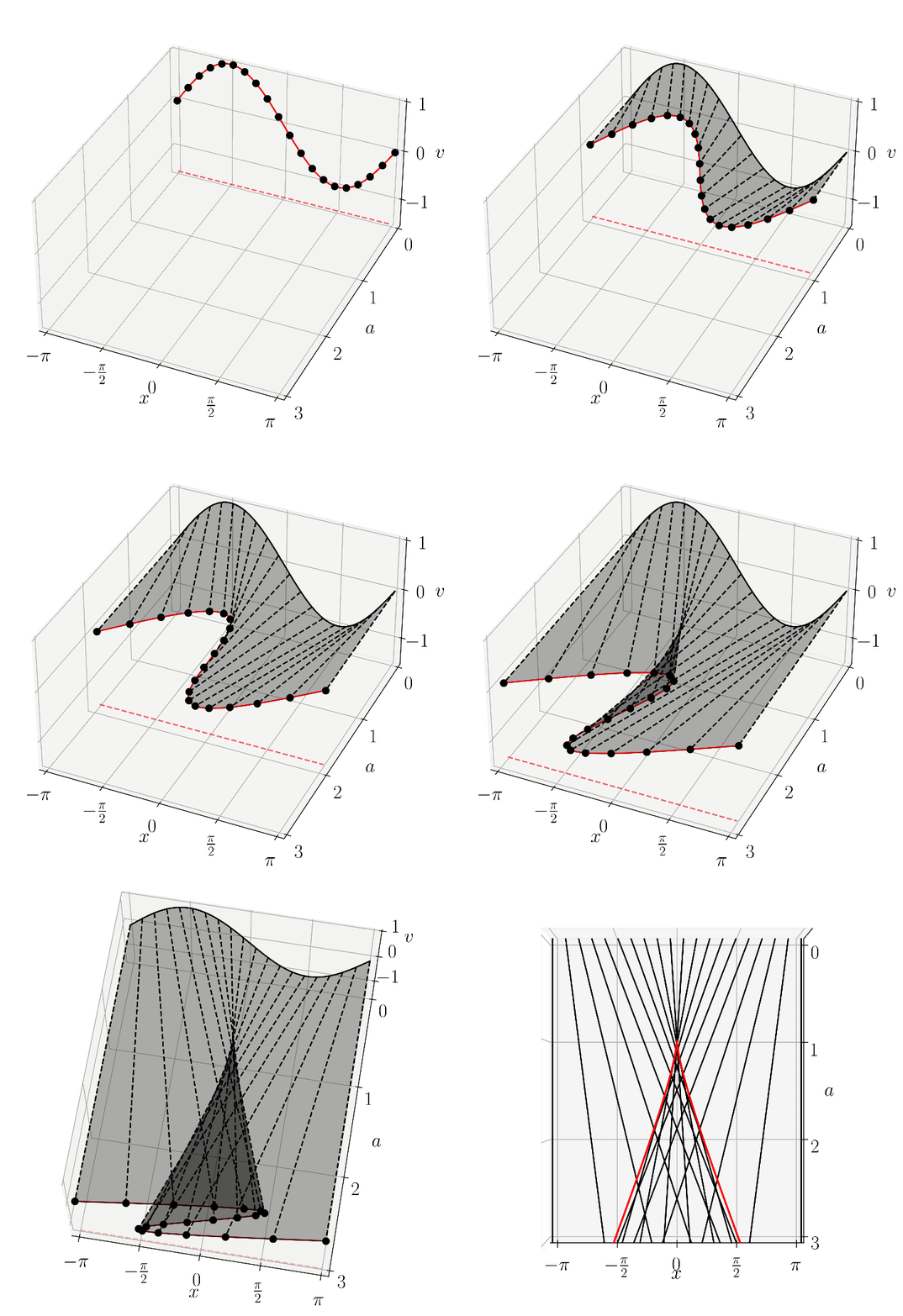
As a bonus here is a groovy animated version of Figure 1 from the paper showing the development of a multi-stream region.
And if that weren’t enough here is a short talk about their work in the Cosmology From Home series by the first author Alex Gough.
Last night I made it to the National Concert Hall in Dublin for the opening concert of the season for the National Symphony Orchestra directed by Chief Conductor Jaime Martín. It’s been three years since the last full season of these weekly concerts so let’s hope we get a complete set this time.
The programme for last night’s concert comprised two works by Austrian composers, Alban Berg‘s Violin Concerto (with soloist Simone Lamsma) and Gustav Mahler‘s Fifth Symphony. Each of these great pieces in its own way explores a vast emotional landscape and together they made for a compelling and moving performance.
Berg’s Violin Concerto, composed in 1935, is dedicated “to the memory of an Angel”, namely Manon Gropius, who died of polio at the age of just 18. She was the daughter of Alma Mahler and Walter Gropius (Alma Mahler’s second husband, whom she married four years after Mahler’s death).
The work is divided into two movements, each of which is in two parts. It is often described as a completely atonal (serialist) piece but it’s is composed in such a way that the twelve tones are sometimes grouped in such a way as to suggest an underlying tonality. Emotionally the piece ranges from the poignant to the fiery. Anyone who has experienced grief will recognize the sense of rage that at times bursts through. In other passages, though, the music has an austere beauty that is completely compelling.
After the wine break we had Mahler’s Fifth Symphony. This work is best known for the 4th movement Adagietto but I’ve always felt that section fits rather uncomfortably with the rest of the composition. That’s not to say that I dislike the Adagietto, which I think is one of the most beautiful movements in all music, and regularly makes me shed a tear. I just think it’s a bit of a detour from the rest of the work. I suppose one should think of it as a restful interlude before the journey reaches its climax in the 5th movement Rondo which was played with electrifying passion last night.
Like the Berg piece, Mahler’s Fifth Symphony veers across a vast emotional landscape. The conductor Bruno Walter described it as “passionate, wild, pathetic, buoyant, solemn, tender, full of the sentiments of which the human heat is capable, but still ‘only’ music”. Although by no means an atonal work, there isn’t really a clear tonal signature: at least five different keys are used and there are passages in which the key is ambiguous.
The first movement begins with a funeral march, introduced with a solo trumpet statement like a fanfare, followed by lyrical passages from the strings. The second movement is extremely tempestuous, contrasting moods of melancholy and frenzy, with the trumpet theme from the first movement returning. The third movement, a long Scherzo, is unexpectedly playful, with two thematic forms bouncing off each other. Then there’s the soulful longing of the Adagietto, beautifully played last night to a rapt audience and the joyful finale in an unambiguously major key.
Overall this was a superb concert, with the large orchestral forces marshalled superbly by Jaime Martín. I have to mention the brass section in particular, who were brilliant. It wasn’t a full house, which is a shame for the season’s curtain-raiser, but those who were there clearly enjoyed it enormously.
As it happens, last night was the first of five concerts by Garth Brooks (who he? Ed) at Croke Park. The train from Maynooth unto Dublin earlier in the evening was absolutely crammed with people (many in cowboy hats) going there and the train back was similarly full with people leaving. Fortunately I was only slightly delayed getting home by the congestion, though I think there were seriously issues with later trains. There is another concert by him next Friday, when there is another concert at the NCH so fingers crossed that my travel to and from that isn’t too badly affected either…
The views presented here are personal and not necessarily those of my employer (or anyone else for that matter).
Feel free to comment on any of the posts on this blog but comments may be moderated; anonymous comments and any considered by me to be vexatious and/or abusive and/or defamatory will not be accepted. I do not necessarily endorse, support, sanction, encourage, verify or agree with the opinions or statements of any information or other content in the comments on this site and do not in any way guarantee their accuracy or reliability.






 In the Dark