Time to announce another publication in the Open Journal of Astrophysics. This one is the eighth paper in Volume 4 (2021) and the 39th in all.
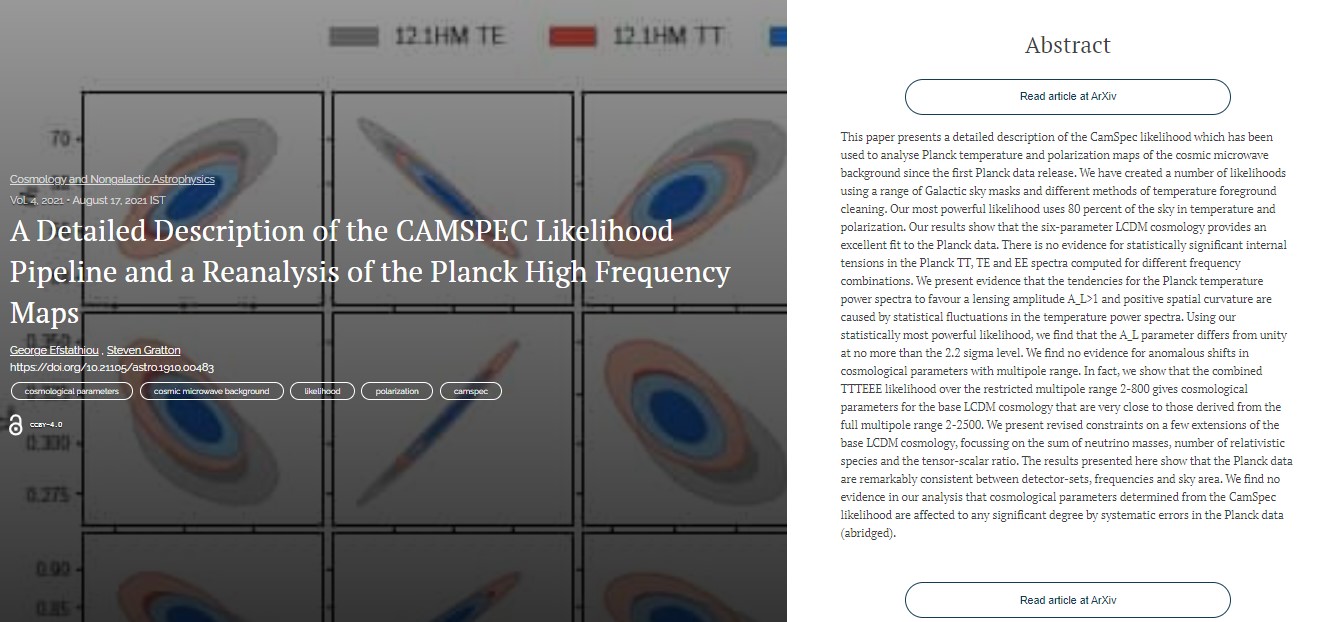
The latest publication is entitled A Detailed Description of the CAMSPEC Likelihood Pipeline and a Reanalysis of the Planck High Frequency Maps. The authors are George Efstathiou and Steven Gratton of the Kavli Institute for Cosmology at the University of Cambridge.
Here is a screen grab of the overlay which includes the abstract:
You can click on the image to make it larger should you wish to do so. You can find the arXiv version of the paper here. This one is also in the folder marked Cosmology and Nongalactic Astrophysics.
This is a long and detailed paper, running to 92 pages in PDF form. Our Editorial process relies on referees being willing to volunteer their time to read and comment on submissions and this one in particular required a great deal of effort. I am always grateful to referees but in this case I am even more grateful than usual the diligence displayed during and the many useful comments received. I know who our reviewers are and they know who they are, but shall remain anonymous!
It is now time for a quick public information broadcast.
Did you know about the scheme run jointly between the Royal Society and Science Foundation Ireland that enables early career researchers in Ireland access to University Research Fellowships?
This scheme provides five years of research funding (with the possibility of renewal) and has proved to be a stepping stone to their first permanent academic position for a great many scientists. Here are a couple of items about the eligibility and duration.
Eligibility: The scheme is open to early career Post Doctoral Researchers with between 3-8 years of actual research experience since their PhD (date on which the degree was approved by board of graduate studies) by the closing date. You cannot apply if you hold a permanent post in the university or have held (or currently hold) an equivalent fellowship that provides the opportunity to establish independence. Please see call notes for further details.
Funding and Duration: Funding consists of the research fellow’s salary and research expenses for an initial period of 5 years with the possibility to apply for a further 3 years. Research expenses cover the standard consumables/materials, equipment up to €15,000, travel, training and public engagement in the first year and €13,000 thereafter. Fellowships are expected to have commenced by October 2022.
The scheme covers a wide range of disciplines. including physics and astronomy. Of course if you want to do cosmology, the best place here to do it is here in Maynooth! The deadline if you want to apply to hold a URF from 2022 in Ireland is 28th September 2021, which is a bit later than for the UK version but still not far off, so please get cracking!
P.S. Five years residency in Ireland qualifies you for Irish citizenship. Just saying…
I first heard the track below on Humphrey Lyttelton*’s Radio 2 show The Best of Jazz, which I used to listen to every Monday night when I was at School. I must have heard this sometime around 1981, i.e. about thirty years ago. From the moment I heard the first achingly beautiful phrases of theme of this tune, called Ophelia, I was entranced and it did more than any other single record to fill me with a love of modern jazz. Although I’d always loved jazz, I had tended to think of it as music “of the past” – even the “modern” jazz of e.g. Charlie Parker fell into that category – and usually made in a recording studio. This sounded so new, so exciting, and indeed so beautiful, that it filled me with the urge to hear live jazz whenever and wherever I could. It cost me a lot of money and a lot of late nights, but I think it was worth it.
The performance was recorded live at Ronnie Scott’s Club in London in June 1980 and released on the small British record label Mole Jazz, an offshoot of the famous (and sadly now defunct) record shop of the same name that used to be on Gray’s Inn Road. I loved the track Humph played so much I got the album Blues for the Fisherman straight away (by mail order) and, although I still have it, I have almost worn it away by playing it so much. It’s a brilliant, brilliant album, with the intense atmosphere of a live performance adding to the superb playing of the musicians.
The band is listed as the “Milcho Leviev Quartet featuring Art Pepper”, although that was probably for contractual reasons, as this was the same band that toured extensively as “The Art Pepper Quartet”: Art Pepper on alto saxophone, Milcho Leviev on piano, Tony Dumas on bass and Carl Burnett on drums. I was lucky enough to see this band play live at the Newcastle Jazz festival not long after I got the record and they were great then too. Art Pepper sadly passed away in 1982.
As far as I’m aware this record wasn’t released on CD until very recently and, fortunately, a public-spirited person has put the tracks from the original album and some previous unreleased material on Youtube, so I’ve seized the opportunity to post the track which did so much to inspire me about jazz when I was 18 years old. There’s so much to enjoy in this piece, including the superb drumming of Carl Burnett and virtuosic piano of Milcho Leviev, but the star of the performance for me is Art Pepper (who also wrote the tune). His playing is at times lyrical and at times agonized, but always compelling and this band was especially good at spontaneous transitions of mood and dynamic. I love this performance, and I hope some of you will too.
P.S. Incidentally, Humphrey Lyttelton was born in May 1921 so he would have been 100 this May had he lived.
Well, as promised yesterday I went back into my office at Maynooth University this afternoon. I didn’t achieve very much apart from resetting some of the sophisticated equipment (see above) but it’s a start…
To be honest I was a little distracted by the cricket at Lord’s where there was a remarkable turnaround in Indian’s favour on the last day. Looking like they were going to struggle to save the game with six wickets down for 181, a lead of just 154 overnight, and losing two quick wickets in the morning, India went on to declare on 298 for 8, then bowled England out this evening for just 120. It’s been an excellent Test Match, full of twists and turns, ending in a result that seemed very unlikely at the start of the day.
Call me old-fashioned but you can’t beat Test cricket. Nothing compares to it!
It’s been a rather busy weekend as I’ve tried to complete the grading my repeat examinations. I’m almost done but I have six more scripts to do, which I will finish tomorrow morning. Once again I’ve set a bad example by being later than everyone else, but at least I’m not going to miss the deadline. We have our Examination Board on Friday and they’ll all be done and dusted by then.
Friday is 20th August, which means it’s exactly a month from then until the start of teaching in Semester 1 of the new academic year. We have now received draft instructions on how this is planned to start. They are not in final form yet, having been circulated to Heads of Department for comments. I’ll refrain from saying more in public until they are published but in a nutshell we are anticipating more-or-less a full return to on-campus teaching with no reduced capacity in lecture theatres but with slightly shorter lectures and staggered start and end times.
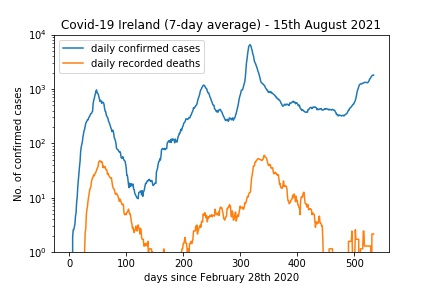
That is if everything is under control in a month. The latest Covid-19 figures are not reassuring. The latest 7-day rolling average is about 1800 new cases to day, which is as high as it was in January. Hospitalizations are increasing, though at a lower level than before presumably because of the vaccination effect. Mortality rates are unclear (to me) because of the continuing disruption to reporting caused by the HSE computer problem. I’m very conscious that all our plans were changed at the last minute at the start of last academic year, so we’ll just have to wait and see. Hopefully the incidence rate will stop rising over the next few weeks.
On Friday I took a prospective PhD student and his family for a walk around campus, mainly to introduce them to the famous Library Cat (who is fine, by the way, but bothered by wasps getting into his dish when I fed him). Most staff and research students in the Department are still working from home, but there were one or two people around to say hello. When I entered my office I saw I hadn’t changed the date on my calendar since June 15th, two months ago. By the look of the sports fields at the back of the college they haven’t been mown for much longer than that: at the moment they look more like hayfields!
I have been fairly content working from home over the summer (with two interruptions for travelling to Cardiff and back), but I really have to get into the habit of going to the office if we’re going to welcome students in person. I think when I’ve finished my marking tomorrow morning I’ll start trying to get back into the routine. For one thing quite a few things we moved before lockdown need to be moved back to their proper places. When I was waiting for the train from Cardiff on Thursday I saw railway workers removing the social distancing signs from the platform. I guess we’ll be doing that too.
I do hope all this isn’t premature, but I have a nagging feeling…
I was reminded yesterday that today, 14th August, is the 30th anniversary of the start of the arXiv so I thought I’d send a quick birthday greeting to mark the occasion. In case you weren’t aware, arXiv is a free distribution service and an open-access archive containing (currently) 1,928,825 scholarly articles in the fields of physics, mathematics, computer science, quantitative biology, quantitative finance, statistics, electrical engineering and systems science, and economics.
There was a precursor to the arXiv in the form of an email distribution list for preprints, but arXiv proper started on 14th August 1991. It was based at Los Alamos National Laboratory (LANL) with a mirror site in SISSA (Trieste) that was used by those of us in Europe. In the beginning, arXiv was quite a small-scale thing and it wasn’t that easy to upload full papers including figures. In fact the SISSA system was run from a single IBM 386 PC (called “Babbage”). As it expanded, the running of arXiv was taken over Cornell University. You can read more about the history here.
You have to remember that journals didn’t generally have electronic submission in those days: you had to send paper manuscripts in the post to the Editorial office. Likewise many of us carried on sending out paper preprints for some time after the arXiv was set up. Younger researchers should be grateful they don’t have to put up with the absolute chore of producing papers the old-fashioned way!
The astrophysics section of arXiv (“astro-ph”) started in April 1992. Although astrophysicists generally were quick to latch on to this new method of distributing preprints, it took me a little time to get onto arXiv: my first papers did not appear there until February 1993; my first publication was in 1986 so there are quite a few of my early papers that aren’t on arXiv at all. In 1993 I was working at Queen Mary & Westfield College (as it was then called). I was working a lot with collaborators based in Italy at the time and they decided to start posting our joint papers on arXiv. Without that impetus it would have taken me much longer to get to grips with it.
In case you’re interested, my first paper to appear on the arXiv was this one on 23rd February 1993 but it was followed a day later by two others, this one and that one. I don’t remember very well, but this was an exercise in catching up and all three of those papers were actually published in journals before we put them on arXiv. It was only later that we got into the habit of posting papers on arXiv at the same time as submitting to a journal, which I think is the best way to do it!
The Open Journal of Astrophysics would not have been possible without the arXiv but in a wider sense the astrophysics community has a very great deal to thank the arXiv for, but remember that it is funded by donations and is run on a shoestring. If you agree that it’s a tremendously useful asset for your research then please consider making a donation.
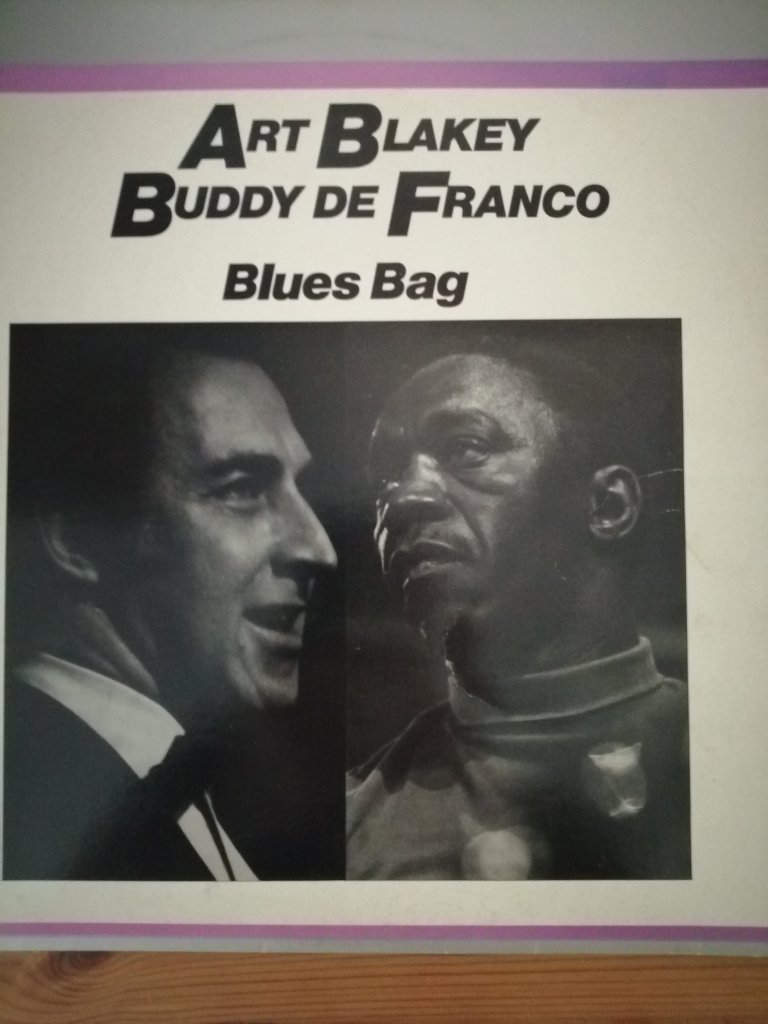
One of the things I did during my recent visit to Wales was to pack up my old vinyl LPs for removal to Ireland. I have quite a lot of them on digital formats now but that’s not true of all of them so I’m looking forward to listening to the others very soon.
I bought this particular album Blues Bag as a curiosity as it features the unlikely combination of Buddy De Franco on clarinet (bass clarinet on several tracks, including the one below) and Art Blakey on drums.
Whatever I thought the combination of the smooth style and impeccable technical virtuosity of Buddy De Franco with the powerful and aggressive drum foundryman Art Blakey would be like before I bought the LP, when I first heard it the thing that struck me was how superbly they complemented each other.
Anyway, I thought I would post a track so you can decide what you think. This is Dizzy Gillespie tune called Kush. I think this version is great, with very fine work on the drums by Blakey.
Back from my short trip, I now have time to announce another publication in the Open Journal of Astrophysics. This one was published at the end of last month, but owing to the holiday season there was a delay in activating the DOI and registering the metadata so I have delayed posting about it until just now. It is the seventh paper in Volume 4 (2021) and the 38th in all.
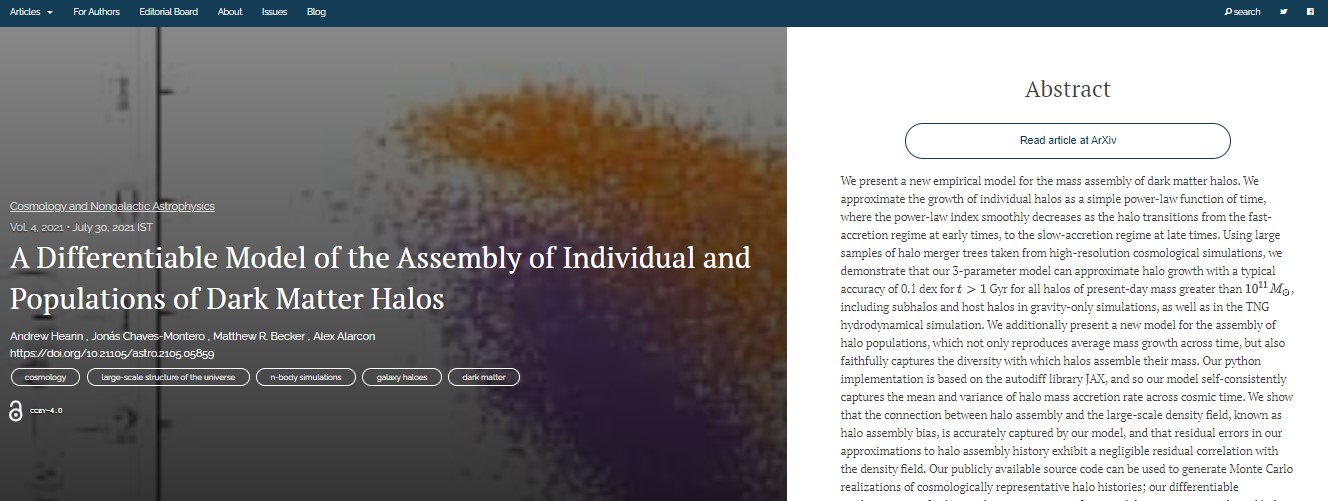
The latest publication is entitled A Differentiable Model of the Assembly of Individual and Populations of Dark Matter Halos. The authors are Andrew P. Hearin, Jonás Chaves-Montero, Matthew R. Becker and Alex Alarcon, all of the Argonne National Laboratory.
Here is a screen grab of the overlay which includes the abstract:
You can click on the image to make it larger should you wish to do so. You can find the arXiv version of the paper here. This one is also in the folder marked Cosmology and Nongalactic Astrophysics.
We’ve had a bit of a surge in submissions over the last few weeks – no doubt due to authors using their “vacation” to finish off papers. August is not the best month for finding referees, but we’ll do our best to process them quickly!
Posted in Biographical on August 12, 2021 by telescoper
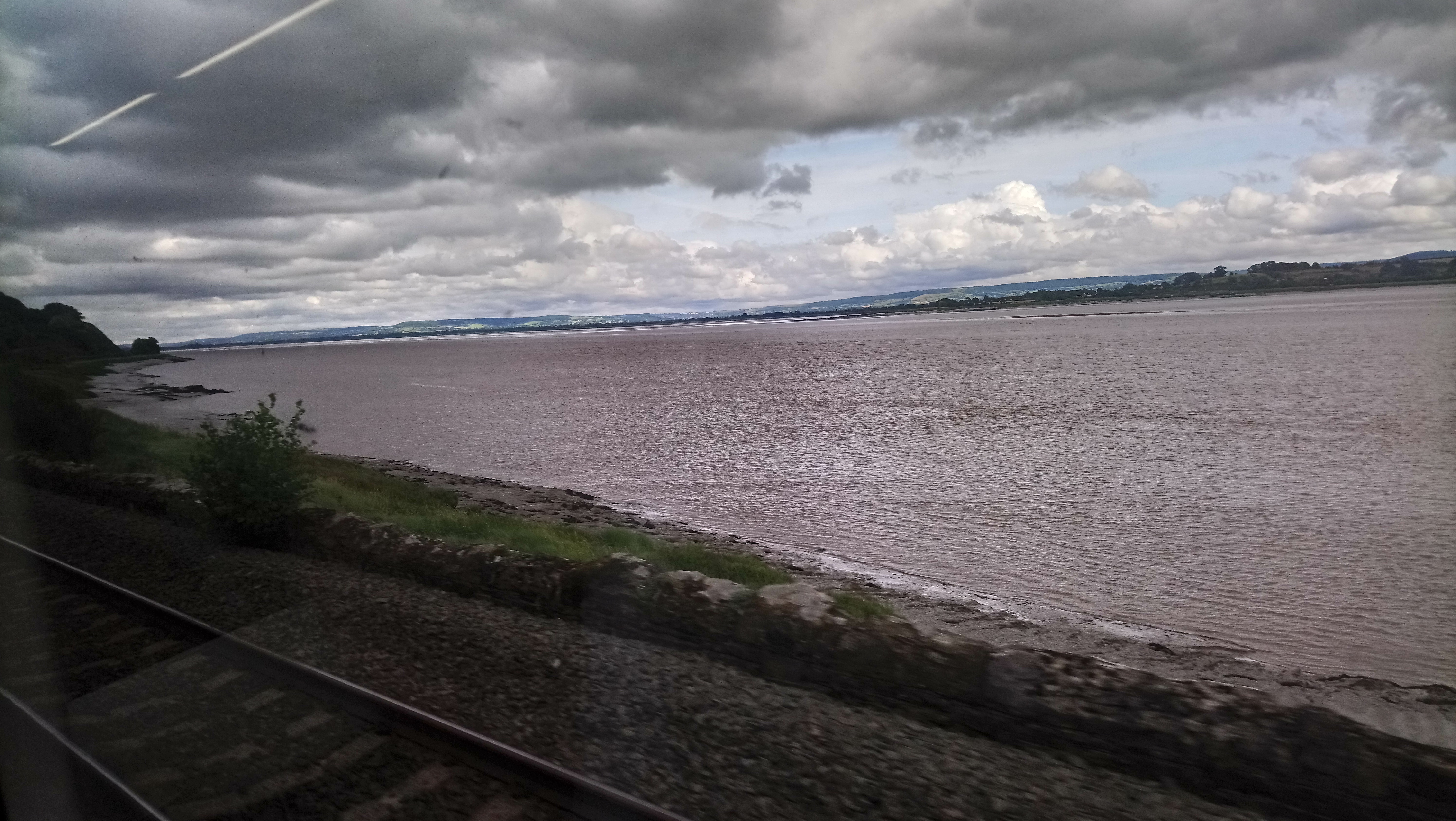
Missions accomplished, I’m now on my way back to Ireland via Birmingham. The trip by train from Cardiff is quite pleasant, a large part of it alongside the mighty River Severn..
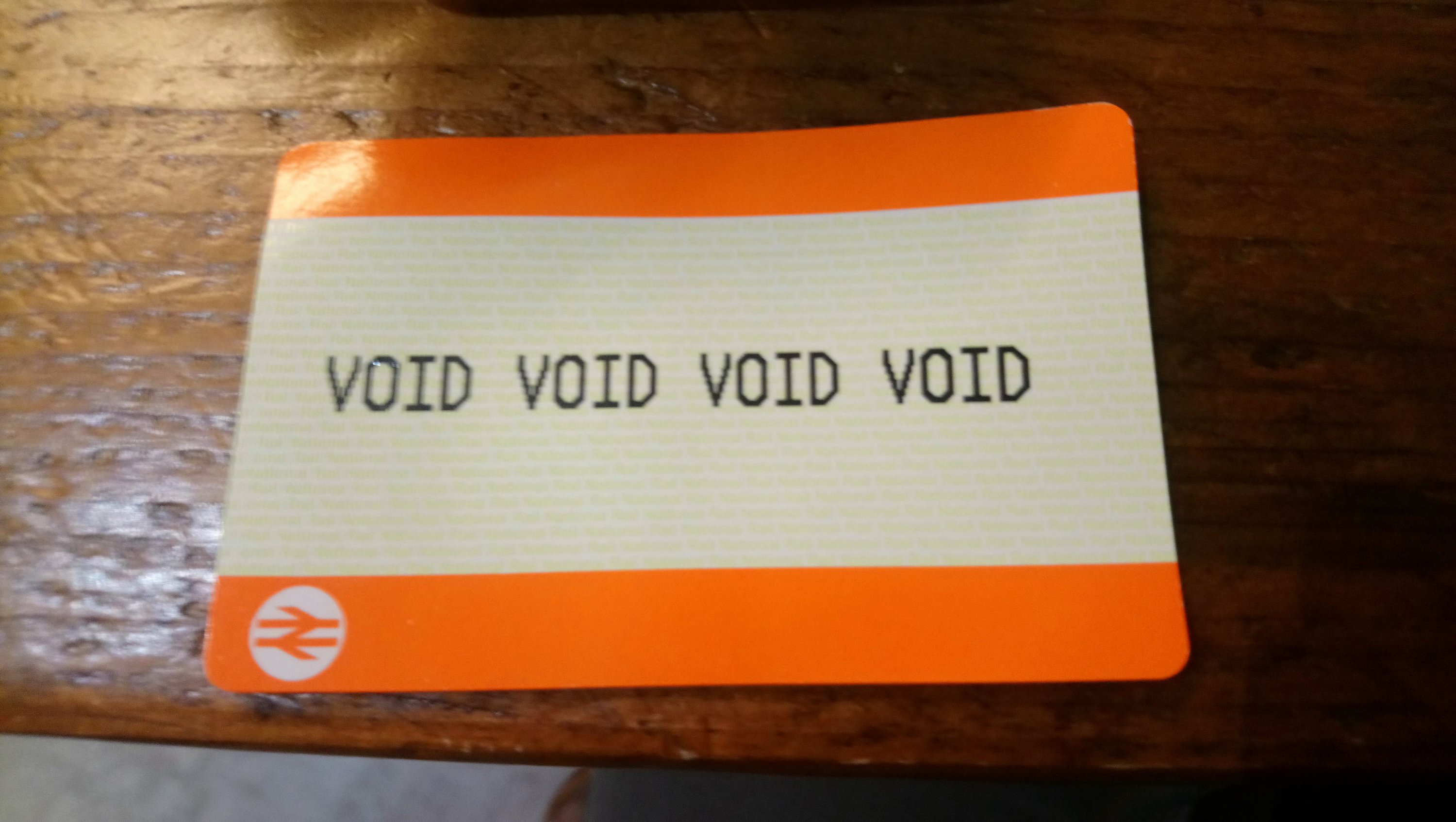
At any rate the journey was more interesting than this ticket suggested:
Anyway I’ll be back in Maynooth this evening and then I’ll have a weekend mostly spent marking examinations..
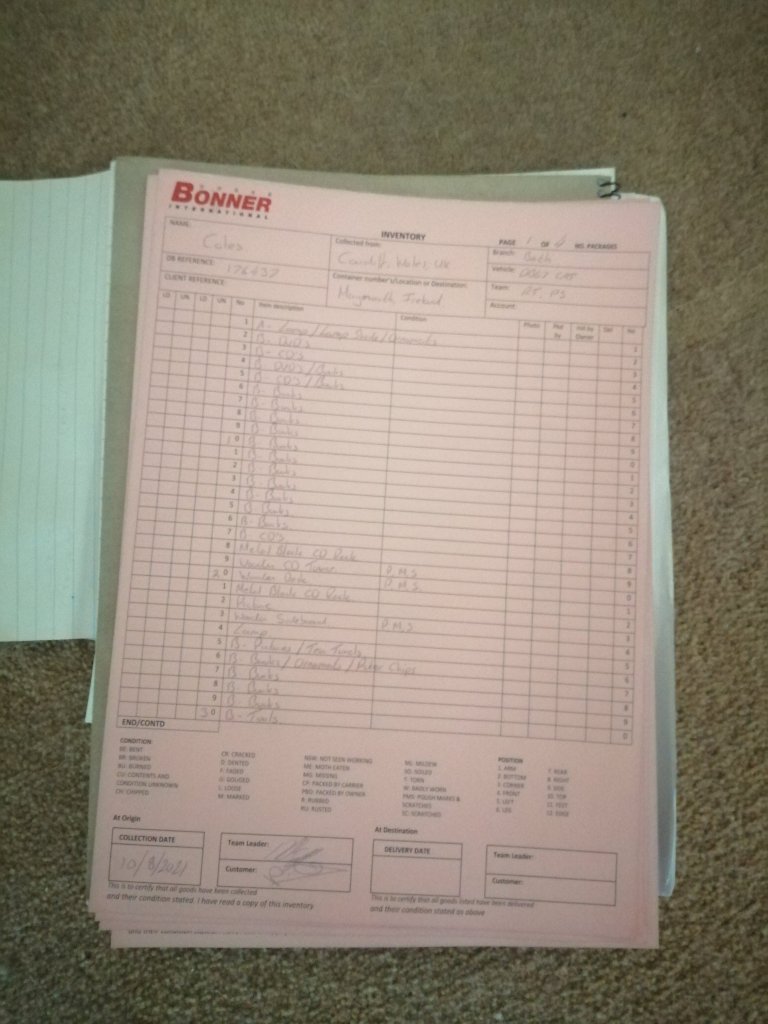
So here I am sitting in a virtually empty house in Cardiff, the bulk of my worldly goods now in transit to Ireland. The house seems a lot bigger with nothing in it. It also feels a bit strange to see all your possessions listed in an inventory.
The 9th and 10th of August were the first opportunities to do the removal from my Pontcanna residence, so I flew over at the weekend to be here to supervise the packing. I paid for the removals firm to do the actual packing, which was well worth the extra money. The company told me it would take two full days to pack up, which surprised me. In fact they did most of it on Monday arriving at 9.30am and departing around 3pm. Yesterday they arrived at 8.30am and were finished by 10.30am. They could easily have done it all in one day but they only had a smallish van which they filled up before leaving on Monday.
My stuff now gets stored in a container in a warehouse for a couple of weeks or so before being delivered to Maynooth by ferry. They’re doing this removal as a return load, which means waiting for a lorry to arrive to the UK from Ireland which would otherwise return empty. Taking my stuff on the return journey makes it more efficient for them and also quite a lot cheaper for me. This seemed the best option as I am not in a particular rush to receive delivery. I’ve waited a year so a couple more weeks won’t matter!
The fact they finished early yesterday got me out of an awkward situation. The powers that be scheduled three repeat examinations simultaneously at 2.30pm yesterday so I assumed I would have to be scrabbling around with my mobile phone in amongst the boxes and packing materials, which might have been awkward.
As it turned out I had plenty time to walk across Bute Park to Cardiff University where a former colleague in the School of Physics & Astronomy was kind enough to let me use an empty office and eduroam did the rest. All three papers passed without incident, and I had the added bonus of a few pints in the Flute and Tankard afterwards.
Yesterday was A-level results day so there was much talk about the new academic year. It seems Cardiff University is going to resume face-to-face teaching in September. I hope the School of Physics & Astronomy gets a good intake of first-years and that all goes well for all students and staff as they prepare to resume some form of normality. Cardiff has been very good to me over the years and I wish everyone there all the best for the future.
Incidentally I popped in to the Data Innovation Research Institute (where I used to work) while I was at the School of Physics and Astronomy, just to see if I could say hello to anyone I used to work with. The office is just over the other side of a car park from the Queen’s Buildings. I found that the folks are being relocated from the old office to a new building along with Mathematics and Computer Science up near Cathays Station. There was only one person there, packing up his stuff for removal…
The views presented here are personal and not necessarily those of my employer (or anyone else for that matter).
Feel free to comment on any of the posts on this blog but comments may be moderated; anonymous comments and any considered by me to be vexatious and/or abusive and/or defamatory will not be accepted. I do not necessarily endorse, support, sanction, encourage, verify or agree with the opinions or statements of any information or other content in the comments on this site and do not in any way guarantee their accuracy or reliability.





 In the Dark