Bloomsday!

Posted in Literature with tags , , on June 16, 2020 by telescoper

So it’s 16th June, a very special day in Ireland – and especially Dublin – because 16th June 1904 is the date on which the story takes place of Ulysses by James Joyce. Bloomsday – named after the character Leopold Bloom – is an annual celebration not only of all things Joycean but also of Ireland’s wider cultural and literary heritage.

If you haven’t read Ulysses yet then you should. It’s one of the great works of modern literature. And don’t let people put you off by telling you that it’s a difficult read. It really isn’t. It’s a long read that’s for sure -it’s over 900 pages – but the writing is full of colour and energy. It’s a wonderful book.

(There’s also quite a lot of sex in it….)

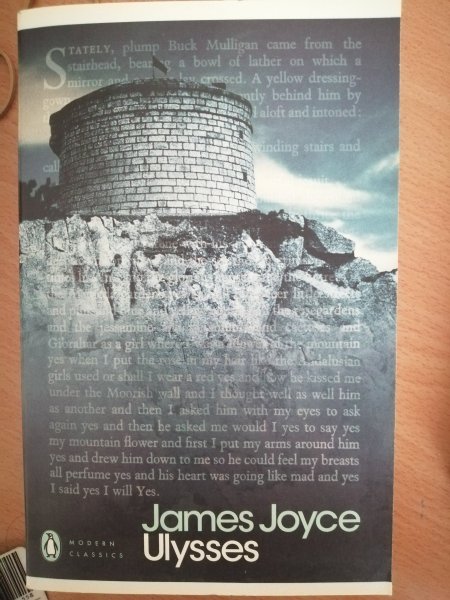
I’ve read it twice, once when I was a teenager and once when I was in my thirties. I then lent my copy to someone and never got it back. The copy shown above is a new one I bought last year with the intention of reading the novel again now that I live in Ireland but I sadly have not had the time yet. I will, though.

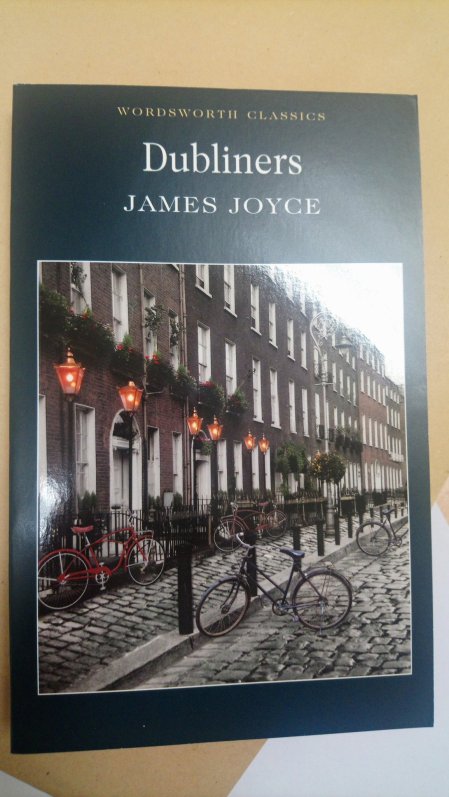
Incidentally if you would like to limber up before making an attempt on Ulysses I recommend this set of short stories.

But if you don’t fancy reading it you can listen to an epic 29 hour dramatisation of Ulysses on the radio via RTÉ; see here for details.

Straight from Ireland

Posted in mathematics with tags on June 15, 2020 by telescoper

I came across this the other day. I think it’s fun because it’s a bit counterintuitive and it has generated quite a lot of discussion so I thought I would share it here. Two things are worth amplifying:

  1. By “in a straight line” I assume it means “along a great circle“.
  2. As it states in the small print on the diagram all lines originate at the geographical centre of Ireland which apparently lies at a place called Carnagh East, close to the border between County Roscommon and County Westmeath.

The main bone of contention is why the USA looks so small, in the matter of which I direct you to this reddit thread. The answer is clear when you look at what a great circle from Ireland to the USA looks like: most great circles from Ireland to the Eastern seaboard pass over Canada:

Monthly Notices goes Online-only

Posted in Open Access with tags , , on June 14, 2020 by telescoper

I just heard that the journal Monthly Notices of the Royal Astronomical Society which has been publishing astronomy research since 1859, is no longer producing a print edition and instead will be publishing online.

The decision is in response to falling demand for the printed version which has made it no longer economically viable profitable to continue producing it. I choose the ‘profitable’ because the prime purpose of MNRAS is no longer the dissemination of scientific results but the generation of income to fund other activities of the Royal Astronomical Society. Despite the move to the much cheaper digital-only publishing mode, the annual cost of an institutional subscription to this journal is over $10,000. Most of that is goes as profit to Oxford University Press (the actual publisher) and to the Royal Astronomical Society.

Much of what the RAS does with this income is laudible of course, but I don’t think it is fair to inflate institutional subscription costs in order to fund it. University libraries are meant to provide access to research, not to act as cash cows to be milked by learned societies. The Royal Astronomical Society society isn’t the only learned society to use its journals this way, nor is it the most exploitative of those that do, but I believe the approach is indefensible.

My very first research paper was published in MNRAS way back in 1986 and I’ve published many others there over the years, so it’s with a certain amount of nostalgia that I look back on the old style journal. As. Fellow of the Royal Astronomical Society I used to get my own copy in the post at a discounted rate but had to stop and dispose of the old ones when I moved to Nottingham as they took up too much room.

My own belief is that it’s not only the print edition that has had its day but the whole idea of a traditional academic journal.

I’ll just take this opportunity to remind you that The Open Journal of Astrophysics publishes papers (online only) in all the areas of Astrophysics covered by MNRAS, and more, but is entirely free both for authors and readers.

And so it begins..

Posted in Film, Politics on June 13, 2020 by telescoper

Pepys Tweets the Dutch Raid on the Medway

Posted in History with tags , , , , on June 13, 2020 by telescoper

The Dutch burn the English fleet at Gillingham

I couldn’t resist doing a quick post inspired by the fact that I follow the Twitter feed of Samuel Pepys, whereon excerpts from his famous diaries are posted as if live. The year currently being tweeted is 1667 and there is great excitement because of the Raid on the Medway in which a Dutch fleet sailed up the River Medway and destroyed many ships of the Royal Navy.

Much has been written about the background to this event (and, unsurprisingly, the version taught in Dutch schools is somewhat different than from the English side) so I’ll just post here how it panned out from the point of view of Samuel Pepys.

The first inkling of what was to come is on 3rd June (note the Old Style dates were still in use in England at the time of the events in question; add 10 days to get the New Style dates the Dutch and other European countries were using then):

That was almost a week before the battle commenced and although he was clearly apprehensive, for the next few days life for Pepys carried on pretty much as normal:

It was not until 8th June that we find

Even this news did not seem to concern him unduly, however

Later that day preparations were stepped up

(The Hope is the name given to the stretch of the Thames from Tilbury to the mouth of the Medway). Pepys was sceptical of the likely efficacy of the military commanders

The following day the sense of urgency increases

Later that day it seems to have dawned that Chatham might be the target:

Pepys is annoyed at the slow preparations:

and

On 10th June the Dutch land 800 marines and attack Sheerness, destroying Garrison Point Fort. Pepys does not know this yet when he writes:

It is only the following day that he realises Sheerness has fallen and the way is open for the Dutch to attack the Royal Navy at anchor in the Medway at Gillingham and Chatham:

Every available soldier being sent to defend Chatham, Pepys is worried that London itself is now very vulnerable:

Meanwhile, on the Medway, the only thing protecting the British fleet is the huge chain blocking the river. Pepys’s optimism about this was short-lived

It gets worse:

The flagship of the Royal Navy has been taken as a prize – the humiliation! There is now panic in London:

On 13th June, fearing all is lost and that London will be attacked, Pepys makes arrangements to send his money to the country:

That’s how things stood on 13th June 1667, with a Dutch/French invasion of England seemingly imminent and widespread unhappiness at the indolence and incompetence of those in charge.

On 14th June Pepys notes that many English sailors are either refusing to fight or even fighting on the Dutch side because they have not been paid for some time (receiving tickets in lieu of cash):

In the event, the Dutch withdrew on 14th June and there was no invasion by either them or the French, but over the next days and weeks there were lingering fears of other raids. A peace treaty was rapidly negotiated on very favourable terms to the Dutch and thus the Second Anglo Dutch War came to an end.

There was in the mind of Pepys and others the possibility of a popular uprising against the King for the ineptitude of the military response to this Raid. The monarchy had only been restored in 1660. Would it be swept away again so soon?

We know the answer to this question now, but nobody knew it then, which makes a contemporary accounts like that of Pepys so very fascinating. You get a real sense of the mixture of confusion and despair circulating at the time.
Songs of Comfort and Hope

Posted in Covid-19, Music with tags , , on June 12, 2020 by telescoper

I was just looking back at a post I wrote early in the New Year and saw that top of the list of things I resolved to do more of in 2020 were (1) to go to more live concerts and (2) to see more of Ireland. Unfortunately the Covid-19 Pandemic put paid to both of those (and the other things on the list too). I haven’t listened to live music since March and haven’t set foot outside Maynooth in that time either!

Anyway, someone at the National Concert Hall in Dublin hit on the idea of putting on live concerts without an audience. I wasn’t sure it would work but based on this concert, broadcast a couple of weeks ago, and now available as a recording on Youtube I think it does. This recital features wonderful Irish mezzo-soprano Tara Erraught and pianist Dearbhla Collins in a programme of songs by Franz Liszt, Franz Schubert, Aaron Copeland and Richard Strauss followed by some Irish folk songs. I think it’s a lovely performance, and I found the setting of an empty hall unexpectedly moving.

Marking Time

Posted in Covid-19, Education, Maynooth with tags , , on June 12, 2020 by telescoper

In among all the other things I have to do I’ve just finished marking my portion of examinations and other assessments in time for next week’s Examination Boards. I have to attend two (virtually), one for Theoretical Physics and one for Engineering Mathematics. You may recall that, this year, along with many other universities, we switched from the usual examination format to online timed assessments.

Obviously I can’t talk about any actual results here but I can relay a few general points.

First, there were remarkably few hitches in the examination process. I would like to say that I was totally confident that the new system would work, but I’m afraid I was very nervous during the examination period. I’m glad that I was proved wrong. That’s not only due to very hard work by the teaching staff in getting everything together to go online and the technical support staff for ensuring the submission portals could handle the load, but also due to the students who coped admirably well with the new assessment style.

That said, I think if we are going to have such assessments again in the future there are things we could improve.In particular the mathematical nature of our work means that students have to do their working, diagrams etc by hand and sometimes the quality of scanning made the resulting submissions very difficult to read. If we had had time we could have offered more training to the students on how to scan their work more legibly, so next time we will probably do that too. Indeed we will probably be doing most of the coursework that way next term so they will probably get more practice anyway.

Printing the work out usually made the legibility problem worse, so I generally marked as much as I could on the screen. We don’t have very good software for doing this in bulk so it was painfully slow. I estimate it took me about three times as long to mark an examination script this way than doing it on paper. I’d be very interesting to hear via the comments box of any suggestions or recommendations of software to help this process!

The main purpose of this post however is to say a very public thank you to all the teaching staff in the Department of Theoretical Physics and to our admirable Departmental Administrator Suzie  for working so hard in difficult circumstances to get everything done in time!


The Chameleon, by A.P. Herbert

Posted in Poetry with tags , , , on June 11, 2020 by telescoper

A Chameleon, in Dublin Zoo.

The chameleon changes his colour;
He can look like a tree or a wall;
He is timid and shy and he hates to be seen,
So he simply sits down on the grass and grows green,
And pretends he is nothing at all.

I wish I could change my complexion
To purple or orange or red:
I wish I could look like the arm of a chair
So nobody ever would know I was there
When they wanted to put me to bed.

I wish I could be a chameleon
And look like a lily or rose;
I’d lie on the apples and peaches and pears,
But not on Aunt Margaret’s yellowy chairs—
I should have to be careful of those.

The chameleon’s life is confusing;
He is used to adventure and pain;
But if he ever sat on Aunt Maggie’s cretonne
And found what a curious color he’d gone,
I don’t think he’d do it again.

by A.P. Herbert (1890-1971)


Cosmology Talks – Clare Burrage on Chameleon Dark Energy

Posted in The Universe and Stuff with tags , , , , , , on June 11, 2020 by telescoper

Here is another one of those Cosmology Talks curated on YouTube by Shaun Hotchkiss.

In this talk, Clare Burrage of Nottingham University explains how chameleon dark energy models can be very tightly constrained by laboratory scale experiments (as opposed to particle accelerators and space missions). Chameleon models were popular for dark energy because their non-linear potentials generically create screening mechanisms, which stop them generating a fifth force despite their coupling to matter, the net effect of which is to make them hard to detect on Earth. On the other hand , in a suitably precise atomic experiment the screening can be minimised and the effect of the Chameleon field measured. Such an experiment has been constructed, and it rules out almost all of the viable parameter space where a chameleon model can explain dark energy.

The paper that accompanies this talk can be found here and the talk is here:

#ShutDownSTEM & #ShutDownAcademia

Posted in Politics on June 10, 2020 by telescoper

For more information see here (or here or here).