Cosmology Talks: Julien Lesgourgues on Neutrino Masses

Posted in The Universe and Stuff with tags , , , on April 3, 2020 by telescoper

If you are missing your regular seminar experience because of the Coronavirus lockdown, Shaun Hotchkiss has set up a YouTube channel just for you!

The channel features technical talks rather than popular expositions so it won’t be everyone’s cup of tea but for those seriously interested in cosmology at a research level they should prove interesting.

Here’s an example in which Julien Lesgourgues talks about (not measuring neutrino masses with cosmological data.

Winging IT

Posted in Biographical, Covid-19, Education with tags , , , , , on April 2, 2020 by telescoper

The current restrictions resulting from the Covid-19 outbreak have forced many of us academics to adapt to using IT in ways we hadn’t even imagined just a month ago. It’s not only remote teaching via virtual learning environments with live and/or prerecorded video lectures, but also meetings held by videoconferencing platforms such as Zoom or Microsoft Teams.

Few of us have had much training in the use of these things, so when it comes to Information Technology we’re all winging it. Still, necessity is the mother of invention and we just have to get on with it.

I’m gradually getting used to Microsoft Teams, for example. I’ve even got proper kit to wear.

Incidentally, yesterday I learned that the expression ‘to wing it’ actually comes from the Theatre, where it alludes to an actor studying their lines in the wings (at the side of the stage) because they haven’t had time to learn their part before the performance (usually because they are replacing another actor at short notice).

Nowadays ‘winging it’ means generally improvising or making it up as you go along. I’m finding winging it to be rather hard work but quite fun, actually. While we’ve been trying to flatten the Covid-19 curve the learning curve has definitely been getting steeper.

The 2km Limit

Posted in Biographical, Maynooth with tags , , on April 2, 2020 by telescoper

Under the Covid-19 restrictions currently in force in Ireland we’re not supposed to journey further than 2km from home.

The other day I went to the shops near me and decided to try out a helpful app that draws the 2km limit on a map.

Here’s what I got:

So it seems I can go anywhere in Maynooth without breaking the rules. Alarmingly, however, I see that if I’m not careful I could end up crossing the border from County Kildare into County Meath!

Towards the South is the famous Junction 7 on the M4 which in normal times features on the traffic news on the radio with alarming frequency because of one snarl up or another. I don’t suppose there will be much more of that for a while.

One of the pleasant side effects of the lockdown is a drastic reduction in vehicle traffic. That in turn means that I wake up to the sound of birdsong rather than car engines. That’s one part of this I’ll enjoy while it lasts.

Responsible SciComm

Posted in Uncategorized on April 1, 2020 by telescoper

One of the things I’ve written about on this blog quite frequently is how important the treatment of uncertainty is in science, both in the application of the scientific method itself and in the communication of results to a wider audience. This blog post makes a similar point about the presentation of results from modelling the spread of Covid-19.

...and Then There's Physics's avatar...and Then There's Physics

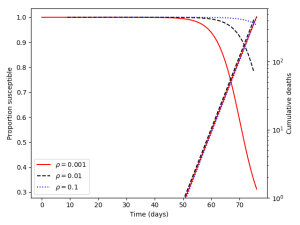
Yesterday, a group in Oxford released a paper that implied that a signifcant fraction of those in the UK may already have been infected. This was quickly picked up by numerous media outlets who highlighted that coronavirus could already have infected half the British population. James Annan has already discussed it in a couple of post, but I thought I would comment briefly myself.

To be clear, I certainly have no expertise in epidemiology, but I do have expertise in computational modelling. So, I coded up their model, which is described in Equations 1-4 in their paper. They were also doing a parameter estimation, while I’m simply going to run the model with their parameters.

The key parameter is $latex rho$, which is the proportion of the population that is at risk of severe disease, a fraction of whom will die (14%). They explicitly assume that only…

View original post 856 more words

On Boredom

Posted in Biographical, Covid-19, Television with tags , , on April 1, 2020 by telescoper

During this time of isolation and social distancing I’ve noticed how many people are posting messages on social media about being bored.

Conscious that I am in danger once again of being excluded from a popular cultural phenomenon I have been trying recently to join in this craze. Unfortunately whenever I try to experience a bit of boredom I find there is far too much to distract me.

There’s working from home, of course: lecture recordings to make, notes to prepare, assignments to correct, virtual meetings to attend, papers to write, and so on

But outside of work it’s just as difficult. Whenever I try to interrupt my day with a bit of boredom I find that there’s so much music to listen to, so many books and newspapers to read, so many crossword puzzles to solve so many other things to do, that I always get distracted and fail dismally.

Perhaps it is the fact that I don’t have a television set that makes me such a failure? It seems that there may be a strong correlation between possession of a TV and being susceptible to boredom. Perhaps if I bought one I could be more like normal people?

Anyway, never let it be said that I don’t know when I’m beaten. That is why I am asking readers of this blog for help. Could anyone who is expert in being bored please send tips on how to achieve it? I’d be quite interested in your suggestions.

Your advice through the comments box would be greatly appreciated as I fear that without it I may always remain a social outcast.

P. S. Before anyone says it: if you are yourself struggling to get bored you could try reading through the back catalogue of posts on this blog!

The Goats of Llandudno

Posted in Covid-19 on March 31, 2020 by telescoper

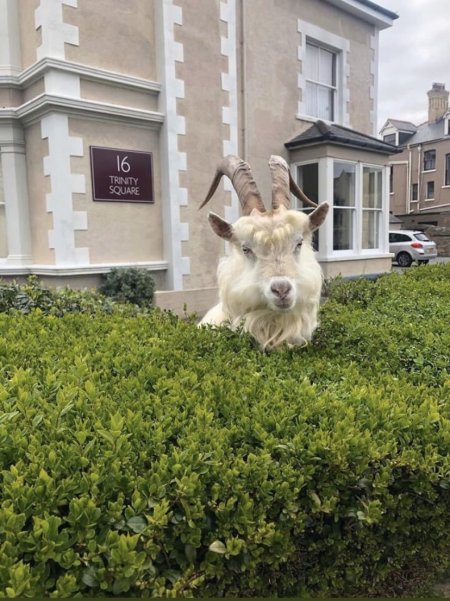
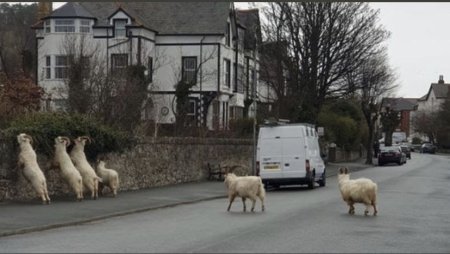
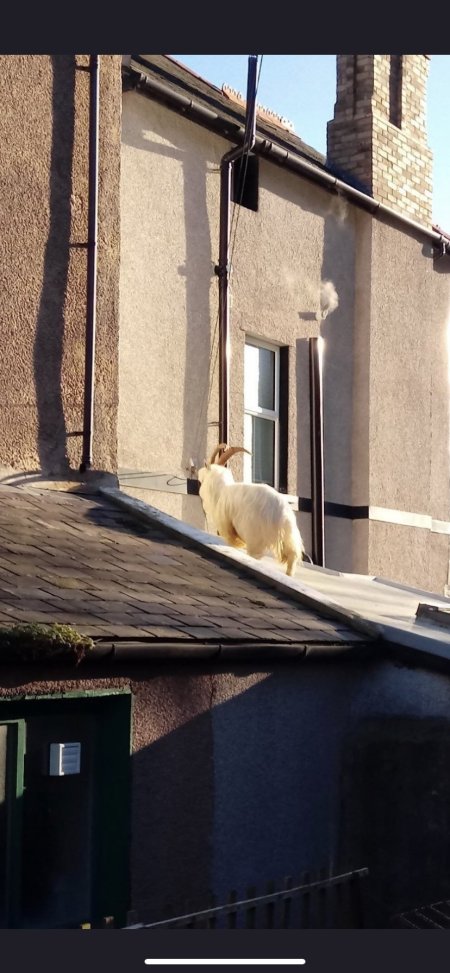
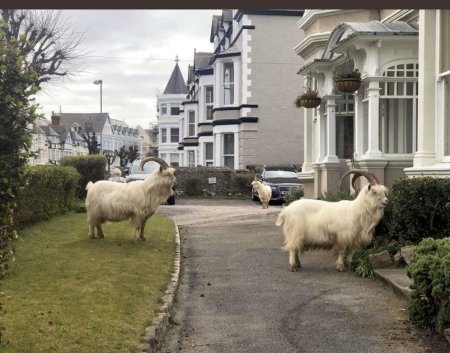
If you’ve ever been to the seaside town of Llandudno in North Wales, you’ll know that there are mountain goats living on the nearby headland known as the Great Orme. Well, the streets of Llandudno are very quiet right now because of the Covid-19 measures and the goats have come down into the town to investigate!

(I got these pictures from Stuart Maher on Twitter.)


Flattening the Covid-19 Curve in Ireland

Posted in Covid-19, Maynooth with tags , , , on March 31, 2020 by telescoper

Last night a statement was issued by Ireland’s National Public Health Emergency Team (NPHET) , accompanied by a press conference part of which is shown below.

On the right is the Chair of the Irish Epidemiological Modelling Advisory Group (IEMAG), Professor Philip Nolan, who gives a very clear explanation of the situation, especially with respect to the uncertainties in data and modelling. Professor Philip Nolan is President of Maynooth University.

R.I.P. Phil Anderson (1923-2020)

Posted in Uncategorized with tags , , on March 30, 2020 by telescoper

I heard this morning via a friend who knew him personally of the death, yesterday at the age of 96, of condensed matter physicist and Nobel Laureate Professor Philip Warren Anderson. He will perhaps be best remembered known for Anderson Localization but he worked on a huge range of topics in physics and his influence was felt across many branches of science (including astrophysics). It’s too early for obituaries to have been published yet but I will add links when they become available.

Update: here is the New York Times obituary.

R.I.P. Philip W Anderson (1923-2020).

The Open Journal of Astrophysics and the Free Journals Network

Posted in Uncategorized with tags , , , on March 30, 2020 by telescoper


I am pleased to announce that The Open Journal of Astrophysics is now a member of the Free Journal Network.

We are in fact the 51st member of the network, which exists

…to promote scholarly journals run according to the Fair Open Access model (roughly, journals that are controlled by the scholarly community, and have no financial barriers to readers and authors.

A full list of the illustrious journals belonging to this network can be found here.


The Slouch Hat Question

Posted in History with tags , , , on March 29, 2020 by telescoper

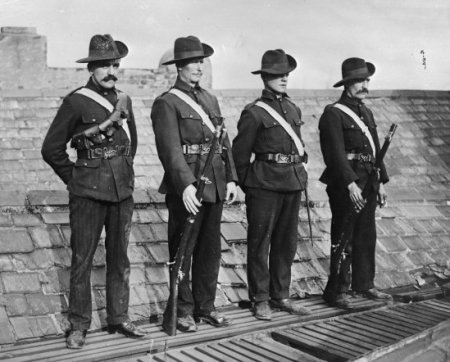
Yesterday I was reading a book about Irish history – I’m reading quite a lot these days – and was intrigued by the headgear worn by members of the Citizens Army during the 1916 Easter Rising:

This type of broad-brimmed hat seems to have been quite thing among volunteers of the time:

Described as a ‘Boer Hat as worn by the American Army’ (?) this is usually called a ‘Slouch Hat’ and is also associated with the Australian Army and other Commonwealth forces.

I can understand the utility of the broad brim in hotter climes though not perhaps in Ireland…

The main question that struck me, though, is why it is so often worn with the brim folded up on one side?

See if you can guess. I reveal the answer below.

Continue reading