The Arrival of the Bee Box

Posted in Literature with tags , , , on January 9, 2019 by telescoper

I ordered this, clean wood box
Square as a chair and almost too heavy to lift.
I would say it was the coffin of a midget
Or a square baby
Were there not such a din in it.

The box is locked, it is dangerous.
I have to live with it overnight
And I can’t keep away from it.
There are no windows, so I can’t see what is in there.
There is only a little grid, no exit.

I put my eye to the grid.
It is dark, dark,
With the swarmy feeling of African hands
Minute and shrunk for export,
Black on black, angrily clambering.

How can I let them out?
It is the noise that appalls me most of all,
The unintelligible syllables.
It is like a Roman mob,
Small, taken one by one, but my god, together!

I lay my ear to furious Latin.
I am not a Caesar.
I have simply ordered a box of maniacs.
They can be sent back.
They can die, I need feed them nothing, I am the owner.

I wonder how hungry they are.
I wonder if they would forget me
If I just undid the locks and stood back and turned into a tree.
There is the laburnum, its blond colonnades,
And the petticoats of the cherry.

They might ignore me immediately
In my moon suit and funeral veil.
I am no source of honey
So why should they turn on me?
Tomorrow I will be sweet God, I will set them free.

The box is only temporary.

by Sylvia Plath (1932-1963)


Cosmological Simulations down Memory Lane

Posted in Biographical, LGBTQ+, The Universe and Stuff with tags on January 8, 2019 by telescoper

On Friday I have to be in London to give a keynote talk at this year’s LGBT+ STEMinar, which is taking place at the new Institute of Physics Building near King’s Cross. I’ve been struggling to think what to say but a conversation this afternoon with some of our PhD students gave me an idea. I won’t spoil it for those going to the event by giving too much detail away, but it involves going over the past 30 years of cosmology and LGBT+ rights alongside each other, pointing out that in both areas there has been great progress but there is also still very much to do.

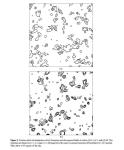
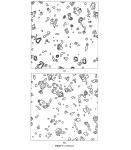
Anyway, in the course of this I had a look at my thesis (vintage 1988) and came up with the following pictures, in glorious monochrome:

You can click on them to make them bigger. When I started my graduate studies in 1985 my thesis was supposed to be about the statistical analysis of the cosmic microwave background. The problem was that way back then there weren’t any measurements, so I had to make simulations to test various analysis methods on. The above images are examples that ended up in a published paper.

You have no idea what a pain it was to make these images. I had very limited access to a graphics terminal so I had to send these to a special printer in the computer room  (which was behind closed doors and an airlock) and then wait (sometimes for days) for the operators to process the files and produce a the printout. If they came out wrong the process had to be repeated. It was all frustratingly slow as my programs were quite buggy, at least to begin with.

For those of you interested, these simulations were made using a (two-dimensional) Fast-Fourier Transform method, using a pseudo-random number generator to set up appropriate amplitudes and phases for the Fourier modes. The only even remotely clever bit was to find a way of generating Gaussian and non-Gaussian maps with the same two-point correlations.

In all it took me several months of work to complete the work that went into that paper (which was essentially a thesis chapter). When I look back on it I think if I’d been cleverer – and had a decent graphics screen like you find on a modern PC – I could have done it all in a couple of days!

And now, of course, we have real data as well as simulations!

My point is that things that seem very difficult at the time often look extremely easy in retrospect. And that’s not just the case in cosmology.


The Book Cover Challenge

Posted in Biographical, Literature with tags , , , , , , , , , , , on January 7, 2019 by telescoper

Over the past week I’ve been participating in the Book Cover Challenge on Twitter, in which you are invited to post every day for a week an image of the cover of a book you love without any further comment or explanation. I’ve now finished the challenge and I thought I’d put the seven books I selected up here.

Since the challenge is over I am absolved of the requirement not to add comments, so I’ll make a few brief observations here. One is that I found it very hard to select just seven books. I love far too many books to do this in any systematic way. The seven picked are just meant to be vaguely representative of the sort of books I read, but they are not really the seven I definitely consider the best. On a different day I could easily have picked a completely different seven.

Anyway, here are some comment on my selections.


Book 1 is A Boy’s Own Story by Edmund White. I read this as a teenager, and it had a profound effect on me. It’s the story of an adolescent boy coming to terms with his sexuality in the American mid-West during the 1950s. It is as frank about the description of gay sex as it is truthful about the confusion that goes with being a teenager. When I bought it I didn’t realize it was going to be so sexually explicit or so unflinching in its description of the selfishness of the central character.

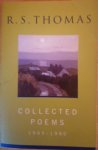
Book 2 is a collection of poems by R.S. Thomas. I had to include at least one book of poetry and found it hard to select which. I feel a bit ashamed to have omitted T.S. Eliot’s Four Quartets and Sylvia Plath’s Ariel, but there you go. I only discovered R.S. Thomas when I moved to Wales in 2007, and still cannot understand why his poetry is not appreciated more widely, and I included this collection to encourage more people to explore his verse.

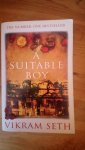
Book 3 is A Suitable Boy by Vikram Seth. I bought this soon after it came out in 1993 and although it is almost 1500 pages long I devoured it very quickly. The novel follows the story of four families over a period of 18 months, and centres on Mrs. Rupa Mehra’s efforts to arrange the marriage of her younger daughter, Lata, to the `suitable boy’ of the title.  Lata is a 19-year-old university student who refuses to be influenced by her domineering mother or opinionated brother, Arun. It’s beautifully written, weaving together the protagonists stories against a vividly painted backdrop of post-Partition India.

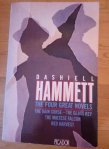
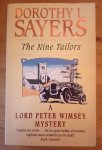
Books 4 & 5 are both from the Golden Age of detective fiction, but from either side of the Atlantic.  I’ve cheated a bit with Book 4, as it is actually 4 novels in one book but I had to have something by the greatest American writer of the period, Dashiell Hammett. By contrast I have also included a fine example of the English detective novel, The Nine Tailors by Dorothy L. Sayers. Both Hammett and Sayers managed to transcend the genre of crime fiction and produce genuine works of literature. The Nine Tailors, has an extraordinary sense of detail and atmosphere and a wonderfully imaginative ending. Among the many ingenious features of this novel is the very prominent central theme of bell-ringing (campanology).


Book 6 is The Age of Wonder by Richard Holmes. This book describes the scientific discoveries of the polymaths of the late eighteenth century, and describes how this period formed the basis for modern scientific discoveries. It focuses particularly on the lives and works of such characters as Sir Joseph Banks, the astronomers William and Caroline Herschel, and chemist Humphry Davy and also explores the interaction between science and the art and literature of the period, especially poetry. It covers a lot of ground but it’s very wittily done and never gets bogged down.

Book 7, my last choice, is In Cold Blood by Truman Capote. You would probably describe this as True Crime, a genre that is generally typified by crudely sensationalistic works of very little literary (or other) merit. This one is in a very different league, and some regard it as the first ever non-Fiction novel. Based on the real-life murders of four members of a family in rural Kansas in 1959 by Richard Hickock and Perry Smith (for which they were later executed), In Cold Blood has been lauded for its eloquent prose, extensive detail, and simultaneous triple narrative, which describes the lives of the murderers, the victims, and other members of the rural community in alternating sequences. The psychologies and backgrounds of Hickock and Smith are given special attention, as well as the complex relationship that existed between them during and after the murders. Not a comfortable read by any means, but a masterpiece by any standards.
Nollaig na mBan

Posted in Uncategorized on January 6, 2019 by telescoper

In the Liturgical Calendar today (6th January) is the date of Epiphany, when according to tradition Three Wise Men (Magi) arrived bearing gifts for the infant Jesus.

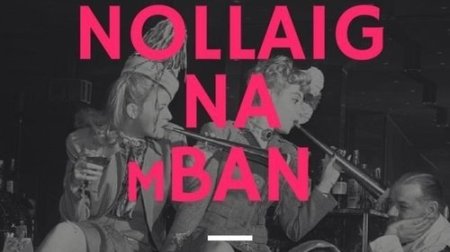
A bit under the weather today I’ve been taking it easy and listening to the radio, in the course of which I discovered that today is also Nollaig na mBan (Women’s Christmas).

Nollaig na mBan is a day in Ireland on which it is traditional for women to get together and enjoy their own Christmas, while the menfolk stay at home and handle the chores.

Although an old tradition, emanating from the West of Ireland, Nollaig na mBan tradition has apparently had a bit of a resurgence in recent years. In particular the radio station RTÉ Lyric FM has been marking the occasion with lots of very fine music written and/or performed by women.

It seems that hardly a day goes by without me learning something new about Ireland!

Nollaig na mBan Shona Daoibh!

Waves Breaking on the Rocks at Kilkee

Posted in Art with tags , , , on January 5, 2019 by telescoper

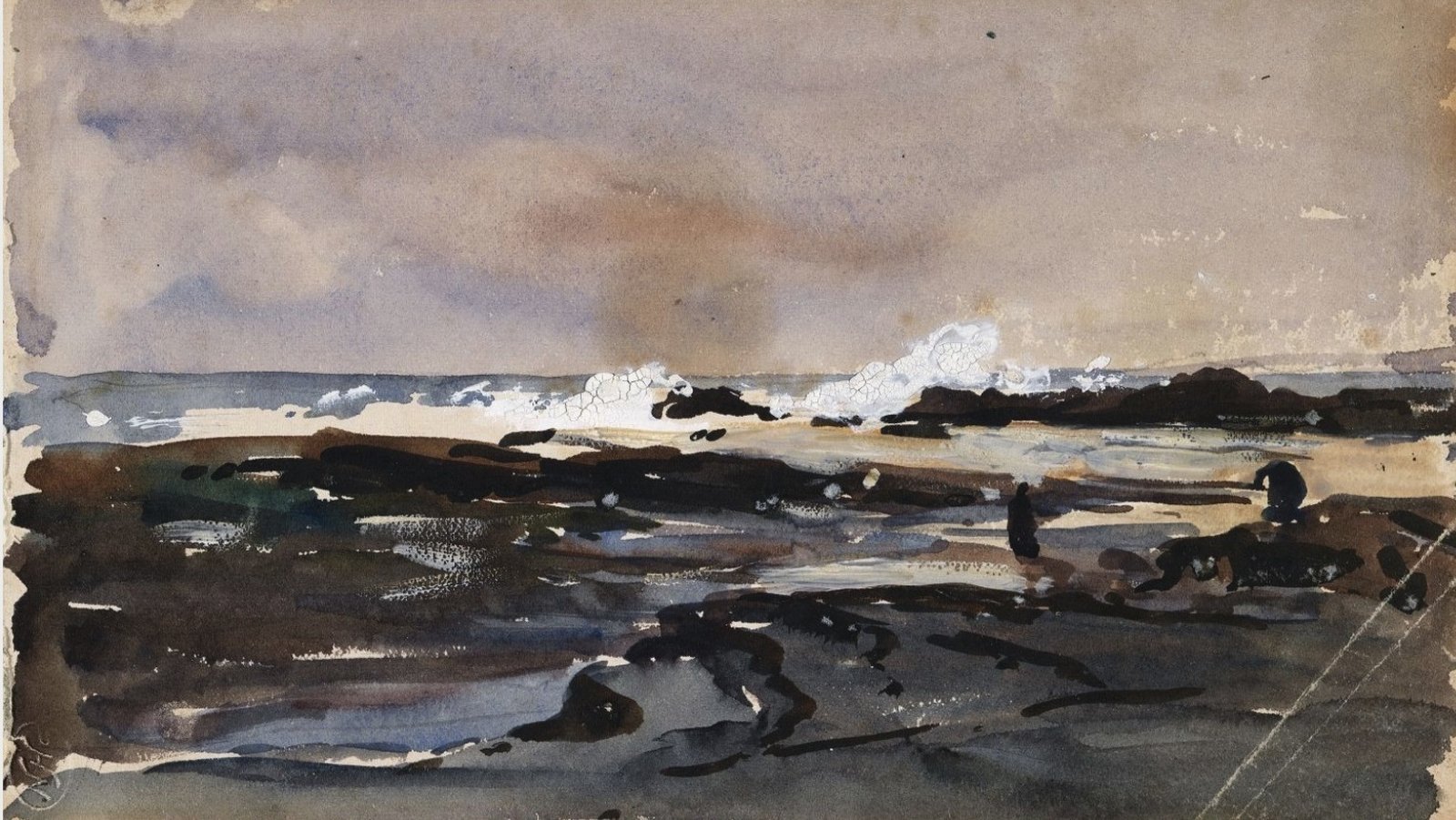
Back in Ireland on Thursday I was pottering about in my flat listening to the radio when I heard an interesting discussion about the work of art shown above, by Nathaniel Hone the Younger. It’s not a finished painting, but a small sketch made in watercolours, probably a study for a larger work. Hone made lots of these sketches over the years; this one was made in about 1890 at Kilkee and is in the National Gallery of Ireland. The dark palette and rough texture created by very thick application of the paint is unusual for a watercolour. No doubt all that is at least partly because of the windswept location in which the artist was working!

Back to Exams

Posted in Education on January 4, 2019 by telescoper

Well here I am, back in my office at Maynooth University, although I wish I could say the same about the heating. The Christmas closure officially ended yesterday (3rd January) but there are very few people about today and no heating in my office. I doubt there will be anywhere open to get lunch later, either. And did I mention there’s no heating?

We have a short hiatus between now and Friday 11th January in advance of the start of the examination period, during which I plan to try to finish off a few papers that I failed to complete over the holiday. As it happens, my examination on Astrology Astrophysics & Cosmetics Cosmology is one of the first, next Friday morning. No doubt I’ll get more than a few inquiries from students between now and then.

I’ll actually be in London next Friday when the examination takes place, as I’m giving the closing keynote talk at the annual LGBT Steminar which this year takes place at the brand new IOP Building in King’s Cross. I’m looking forward to that, but have no idea what I’m going to talk about.

Anyway, back to the topic of examinations, I noticed a piece in the Irish Times a few days ago concerning the fact that the proportion of First and Upper-Second Class degrees awarded by Irish universities has increased. The same thing has happened in the UK recently too.

Responses to this from most media pundits have generally been to accuse universities of `dumbing down’ their examinations. Responses from university staff, on the other hand, have included complaints that they are being forced by senior management to inflate grades awarded to students. All I can say to the latter is that I’ve never experienced, at any University I’ve ever worked in, even as a Head of School, any pressure whatsoever to increase the grades for any category of student in any course. That’s not to say that it doesn’t happen anywwhere. I just don’t know. I just say I’ve no experience of it happening.

I would like to say to those who jump to conclusion that universities are making it easier for students to get high grades by lowering standards is to set aside your prior prejudice and imagine, for the sake of argument, that universities are actually getting better at teaching students. How would that improvement manifest itself in the proportion of students awarded 1st and 2.1 degrees?

The answer to that question is that the proportion of good degrees would increase. One can’t therefore argue on that evidence alone whether examinations are being made easier or teaching is getting better (or indeed that students find examinations easier because they are better taught). In other words, the assumption that it’s all about dumbing down, is based on something other than the grade award data. If you have other evidence, that’s fine. Let’s hear it.

What I have seen is better training for teaching staff, better facilities for studying, and (yes) more motivated students. Given all that, why would you not expect students to get better results?

Turning a Corner after Brexit

Posted in Politics on January 3, 2019 by telescoper

As I wait at Cardiff Airport for my flight back to Ireland, I see Theresa May has said that the UK ‘can turn a corner’ if MPs back her Brexit plan.

I’ve found a helpful graphic to show how that would work.

Turning a Blind Eye

Posted in History, Politics with tags , , on January 2, 2019 by telescoper

As my little festive sojourn in Wales draws to a close, there’s no sign of the Brexit Pantomime season doing likewise. The latest episode of this tragicomedy saw Transport Secretary Chris Grayling dishing out £14 million of taxpayers’ money to a ‘company’ called Seaborne Freight to operate ferries between Ramsgate and Ostend when, in less than 90 days, the UK leaves the EU.

As his name suggests, there’s something very fishy about Grayling’s decision to hand out a lucrative contract, without any proper procurement process, to a company that has only existed for a few months, has never operated a ferry, has no trained staff and, above all, has no ships!

Is this lawful? I doubt it. Is it ethical? Certainly not. Will Grayling get away with it? Almost certainly. Recent events have shown that illegality, fraud and corruption are all part of the job description for a Brexiter.

Perhaps Grayling is trying to channel Lord Nelson who, in legend anyway, at the Battle of Copenhagen in 1801, held a telescope to his blind eye when ordered to retreat, saying “I see no ships”. The difference here is of course that the ships can’t be seen because they don’t exist.

“I see no ships” is actually a misquote: what Nelson said was something like “I have a right to be blind sometimes. I really do not see the signal”. This event is not the origin of the phrase ‘to turn a blind eye’, either: the OED gives an example of its usage from 1698..

Anyway I think we can all see what the signal is in this case, a desperate government throwing public money down the drain without a shred of accountability. Get used to it. There will be a lot more of that in Brexit Britain. It’s what you voted for, isn’t it?

The Old Year’s Blog Statistics

Posted in Biographical on January 1, 2019 by telescoper

Here we are then, in 2019. I’ve been vegetating most of the day but now, before I try to figure out which assortment of bins to put out for tomorrow, I thought I’d do a quick blog about this blog.

Once upon a time, in the good old days, in the dim and distant past, WordPress used to publish an annual statistical summary page for its bloggers, but it has discontinued that practice so now I’ll just write my own brief summary based on the data available via the usual dashboard.

For those interested I got about 425K hits this year, just over 1160 a day, with about 221K unique views. That’s up a bit since last year. In fact 2018 has been the busiest year on here since 2014. Interestingly, a much larger proportion of traffic was from the USA in 2018 than in any previous year.

In 2018 there were 2625 comments on this blog, similar to 2017. No prizes for guessing who wrote the most comments. Posts received 1153 ‘likes’ during the course of the year.

Altogether, since this blog started in 2008 to the end of 2018, it has been viewed 3,795,323 times by a total of 1, 315,185 unique visitors (though, obviously, all my visitors are unique). On this basis I’d expect my 4,000,000th read sometime during 2019.

It just remains for me to pass on a message from my employer.

I’ll be back at work on Friday!

All the Best for 2019!

Posted in Uncategorized on December 31, 2018 by telescoper

It’s not quite here yet where I am, but 2019 has already started happening elsewhere in the world, so let me just wish everyone* reading this a very happy new year!

*Apart from my annoyingly persistent homophobic troll David Hine, who can fuck off.