Chemists against Plan S..

Posted in Open Access, The Universe and Stuff with tags , , , , on November 6, 2018 by telescoper

There’s an `Open Letter’ doing the rounds which rails against the European Plan S for open access to research papers . You can find it here on Google Docs. It is apparently initiated by some chemists, and there are very few signatories who are not chemists, though the language used in the letter suggests that the authors are talking for a much broader group.

My own thoughts on Plan S can be found here. I’m basically supportive of it. I suggest you read the letter for yourself and decide what you think. I think there are many rather inaccurate statements in it, including the idea that the journals run by Learned Societies are not profit-making. In my experience some of the most exploitative publishing practice comes from these organizations, though it takes something to beat the likes of Elsevier and Springer in that regard.

I share the concern about some researchers being driven to expensive `Gold’ Open Access modes of publication,  which is why I started the Open Journal of Astrophysics which I think offers a viable route to peer-reviewed publication that’s not only low-cost, but entirely free for authors and readers. Open Access publication is really not expensive to do. It’s just that some organizations see it as an opportunity to make enormous profits.

Incidentally, I just came across this summary of different routes to open access and their implications here:

In my opinion, Column H is the place to be!

I’ve given quite a few talks about Open Access recently and one of the things that struck me in the Q & A sessions after them is the extent to which attitudes differ in different disciplines. My own research area, astrophysics and cosmology, embraced open access over twenty-five years ago. Virtually every paper published in this discipline can be found for free on the arXiv, as is the case for particle physics. More recently, condensed matter physics and some branches of mathematics have joined in.

Chemistry, by contrast, is conspicuous by its absence from the arXiv. I don’t know why. Moreover, those who have expressed the most negative attitudes to Open Access whenever I’ve given talks about it have always been chemists. And now there’s this letter. It’s definitely part of a pattern. If any chemists out there are reading this, perhaps they could tell me why there’s such an enormous cultural difference between physics and chemistry when it comes to research publication?

The Letter states (paragraph 4):

Plan S has (probably) a much larger negative effect on chemistry than on some other fields.

Maybe so, but isn’t that just another way of saying that chemistry is more in need of cultural change than other disciplines?

P.S. I’d be happy to advise anyone interested in setting up an Open Journal of Chemistry, but if you want it to run like the Open Journal of Astrophysics you will have to set up a chemistry arXiv first – and that’s a much bigger job!

P.P.S. Thanks to a comment below I now know that there is a Chemistry archive, but it only has a small number (hundreds) of papers on it. Moreover, it does not host final refereed versions of papers. It is run by the American Chemical Society, German Chemical Society, and the Royal Society of Chemistry all learned societies who are opposed to Open Access no doubt because it threatens their funding models.

A Familiar Sight

Posted in Maynooth with tags , on November 5, 2018 by telescoper

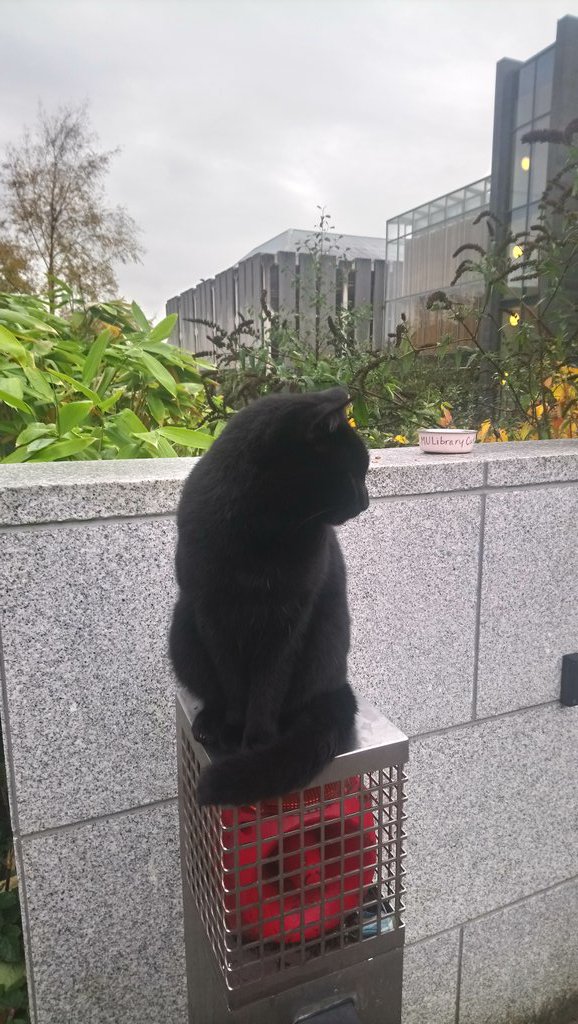
It’s been a busy day today back at work after Study Week. Before this week’s telecon,  I thought I’d take a few minutes to share a picture of the local celebrity feline, who was on his perch this morning as I walked across campus. This splendid cat seems to have no name other than Maynooth Library Cat – see the dish on the wall behind – and he roams freely around Maynooth University. I don’t know where he sleeps, but he’s well nourished, in good health is a familiar sight, especially in the area in front of the library.

He’s also quite friendly, and likes to be petted, although he turned his head away when I took this picture (presumably because I didn’t bring any food with me…).

Arms and the Boy, by Wilfred Owen (who died on 4th November 1918)

Posted in Poetry with tags , , , on November 4, 2018 by telescoper

Wilfred Owen, probably the greatest poet of the First World War, died precisely 100 years ago today, on 4th November 1918, aged 25, just one week before the Armistice that brought the war to an end. I am posting this poem in his memory.

Let the boy try along this bayonet-blade
How cold steel is, and keen with hunger of blood;
Blue with all malice, like a madman’s flash;
And thinly drawn with famishing for flesh.

Lend him to stroke these blind, blunt bullet-leads,
Which long to nuzzle in the hearts of lads,
Or give him cartridges of fine zinc teeth
Sharp with the sharpness of grief and death.

For his teeth seem for laughing round an apple.
There lurk no claws behind his fingers supple;
And God will grow no talons at his heels,
Nor antlers through the thickness of his curls.

by Wilfred Owen (1893-1918).

On the Naming of the Plimsoll

Posted in Biographical on November 3, 2018 by telescoper

The items of footwear depicted photographically above are usually named ‘plimsolls’, ‘plimsoles’, or ‘pumps’. They were originally developed for use as beachwear way back in the 1830s which is no doubt why, when I was a lad growing up on Tyneside, they were invariably known as ‘sandshoes’.

Recently, however, I have discovered that in Wales (at least in Cardiff) these canvas and rubber shoes are called ‘daps’ and, in parts of Scotland, ‘gutties’. Does anyone out there in the interwebs know any other names for them?

Please let me know through the comments box below..

Stokes, Lonsdale and DCU

Posted in Cosmic Anomalies, Maynooth, Talks and Reviews, The Universe and Stuff with tags , , , on November 2, 2018 by telescoper

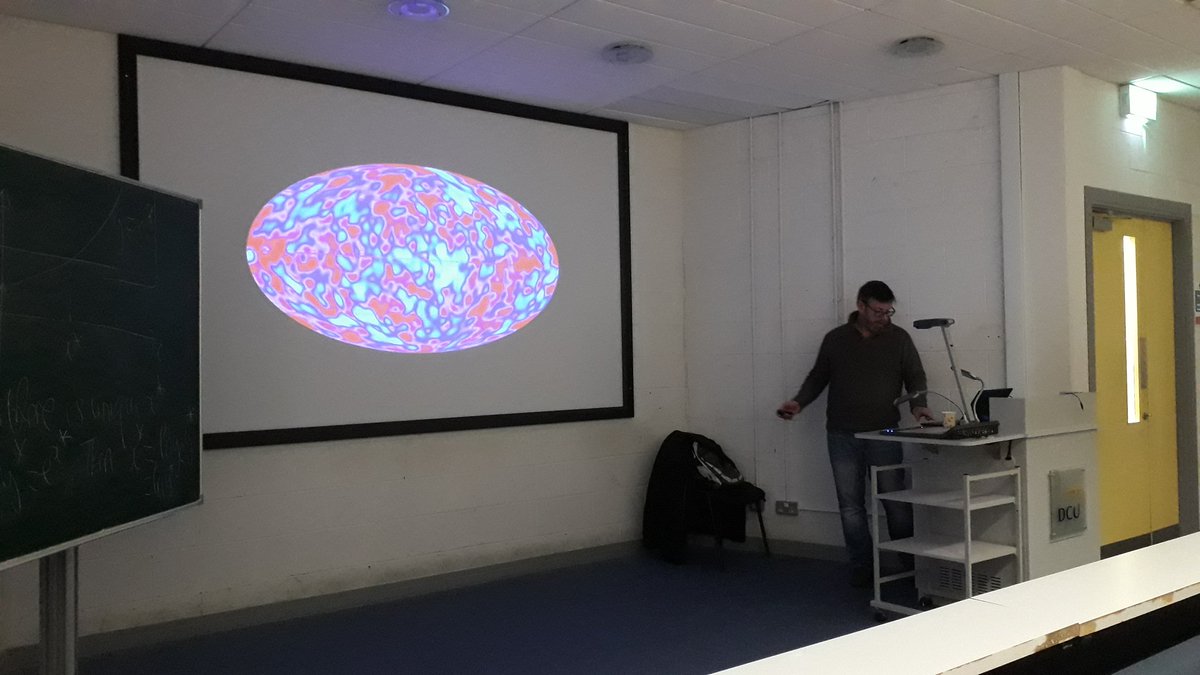
On Wednesday I took a trip from Maynooth into Dublin to give a talk at the Centre for Astrophysics and Relativity at Dublin City University (DCU). I’ve stolen the above picture, which someone took near the start of the talk, from Twitter.

My talk was very general, as it was not a specialist cosmology audience, and was similar to the talks I was giving a few years ago about the Axle of Elvis Axis of Evil. If anyone is interested in the slides, here they are.

Confusingly, Dublin City University (DCU) consists of the same combination of quarks as University College Dublin (UCD), but I managed to find my way to the correct campus via Drumcondra Railway Station (which is next to historic Croke Park). Anyway, there was quite a big audience and not all of them fell asleep (even though I did go on too long) so by that measure at least the talk was moderately successful. Thanks to everyone there for their hospitality during the afternoon!

Incidentally, my talk was in the Lonsdale Building which is right next to the Stoke Building. Both are named in honour of famous Irish-born scientists. physicist George Stokes (who was born in Skreen, in County Sligo, but spent most of his adult life in Cambridge) and crystallographer Kathleen Lonsdale (who was born in Newbridge, County Kildare, but moved to England when she was only five).

Grave Wave Doubts?

Posted in Bad Statistics, The Universe and Stuff with tags , , , , on November 1, 2018 by telescoper

coverns

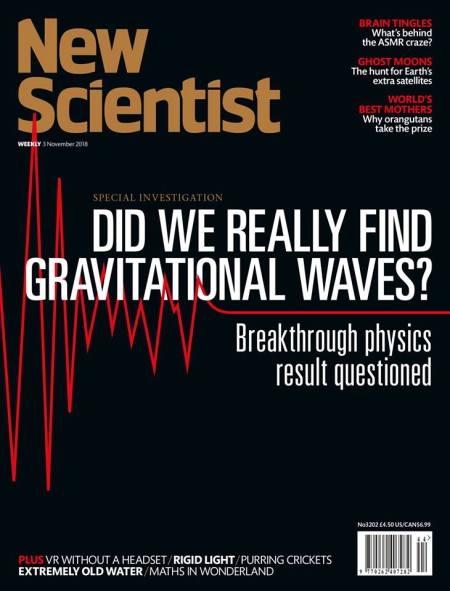
I noticed this morning that this week’s New Scientist cover feature (by Michael Brooks)is entitled Exclusive: Grave doubts over LIGO’s discovery of gravitational waves. The article is behind a paywall – and I’ve so far been unable to locate a hard copy in Maynooth so I haven’t read it yet but it is about the so-called `Danish paper’ that pointed out various unexplained features in LIGO data associated with the first detection of gravitational waves of a binary black hole merger.

I did know this piece was coming, however, as I spoke to the author on the phone some time ago to clarify some points I made in previous blog posts on this issue (e.g. this one and that one). I even ended up being quoted in the article:

Not everyone agrees the Danish choices were wrong. “I think their paper is a good one and it’s a shame that some of the LIGO team have been so churlish in response,” says Peter Coles, a cosmologist at Maynooth University in Ireland.

I stand by that comment, as I think certain members – though by no means all – of the LIGO team have been uncivil in their reaction to the Danish team, implying that they consider it somehow unreasonable that the LIGO results such be subject to independent scrutiny. I am not convinced that the unexplained features in the data released by LIGO really do cast doubt on the detection, but unexplained features there undoubtedly are. Surely it is the job of science to explain the unexplained?

It is an important aspect of the way science works is that when a given individual or group publishes a result, it should be possible for others to reproduce it (or not as the case may be). In normal-sized laboratory physics it suffices to explain the experimental set-up in the published paper in sufficient detail for another individual or group to build an equivalent replica experiment if they want to check the results. In `Big Science’, e.g. with LIGO or the Large Hadron Collider, it is not practically possible for other groups to build their own copy, so the best that can be done is to release the data coming from the experiment. A basic problem with reproducibility obviously arises when this does not happen.

In astrophysics and cosmology, results in scientific papers are often based on very complicated analyses of large data sets. This is also the case for gravitational wave experiments. Fortunately, in astrophysics these days, researchers are generally pretty good at sharing their data, but there are a few exceptions in that field.

Even allowing open access to data doesn’t always solve the reproducibility problem. Often extensive numerical codes are needed to process the measurements and extract meaningful output. Without access to these pipeline codes it is impossible for a third party to check the path from input to output without writing their own version, assuming that there is sufficient information to do that in the first place. That researchers should publish their software as well as their results is quite a controversial suggestion, but I think it’s the best practice for science. In any case there are often intermediate stages between `raw’ data and scientific results, as well as ancillary data products of various kinds. I think these should all be made public. Doing that could well entail a great deal of effort, but I think in the long run that it is worth it.

I’m not saying that scientific collaborations should not have a proprietary period, just that this period should end when a result is announced, and that any such announcement should be accompanied by a release of the data products and software needed to subject the analysis to independent verification.

Given that the detection of gravitational waves is one of the most important breakthroughs ever made in physics, I think this is a matter of considerable regret. I also find it difficult to understand the reasoning that led the LIGO consortium to think it was a good plan only to go part of the way towards open science, by releasing only part of the information needed to reproduce the processing of the LIGO signals and their subsequent statistical analysis. There may be good reasons that I know nothing about, but at the moment it seems to me to me to represent a wasted opportunity.

CLARIFICATION: The LIGO Consortium released data from the first observing run (O1) – you can find it here – early in 2018, but this data set was not available publicly at the time of publication of the first detection, nor when the team from Denmark did their analysis.

I know I’m an extremist when it comes to open science, and there are probably many who disagree with me, so here’s a poll I’ve been running for a year or so on this issue:

Any other comments welcome through the box below!

UPDATE: There is a (brief) response from LIGO (& VIRGO) here.

Halloween in the Dark

Posted in Biographical, Maynooth with tags , on October 31, 2018 by telescoper

Although it’s Study Week here in Maynooth I am back at work for the morning and then this afternoon I have to go to Dublin City University to give a seminar. It’s Hallowe’en, of course, so no doubt there will be weirdly dressed scary people about, but one gets used to that at seminars. I just hope the talk isn’t an unintentionally horrible experience.

Anyway, it’s a whole decade since I posted my first blog about the real horror of Hallowe’en so I’ll take the excuse of a busy day to repeat it here.

–o–

We never had Halloween when I was a kid. I mean it existed. People mentioned it. There were programmes on the telly. But we never celebrated it. At least not in my house, when I was a kid. It just wasn’t thought of as a big occasion. Or, worse, it was “American” (meaning that it was tacky, synthetic and commercialised). So there were no parties, no costumes, no horror masks, no pumpkins and definitely no trick-or-treat.

Having never done trick-or-treat myself I never acquired any knowledge of what it was about. I assumed “Trick or Treat?” was a rhetorical question or merely a greeting like “How do you do?”. My first direct experience of it didn’t happen until I was in my mid-thirties and had moved to a suburban house in Beeston, just outside Nottingham. I was sitting at home one October 31st, watching the TV and – probably, though I can’t remember for sure – drinking a glass of wine, when the front door bell rang. I didn’t really want to, but I got up and answered it.

When I opened the door, I saw in front of me two small girls in witches’ costumes. Behind them, near my front gate, was an adult guardian, presumably a parent, keeping a watchful eye on them.

“Trick or Treat?” the two girls shouted.

Trying my best to get into the spirit but not knowing what I was actually supposed to do, I answered “Great! I’d like a treat please”.

They stared at me as if I was mad, turned round and retreated towards their minder who was clearly making a mental note to avoid this house in future. Off they went and I, embarrassed at being exposed yet again as a social inadequate, retired to my house in shame.

Ever since then I’ve tried to ensure that I never again have to endure such Halloween horrors. Every October 31st, when night falls, I switch off the TV, radio and lights and sit soundlessly in the dark so the trick-or-treaters think there’s nobody at home.

That way I can be sure I won’t be made to feel uncomfortable.


Hawking Points in the CMB Sky?

Posted in Astrohype, Bad Statistics, The Universe and Stuff with tags , on October 30, 2018 by telescoper

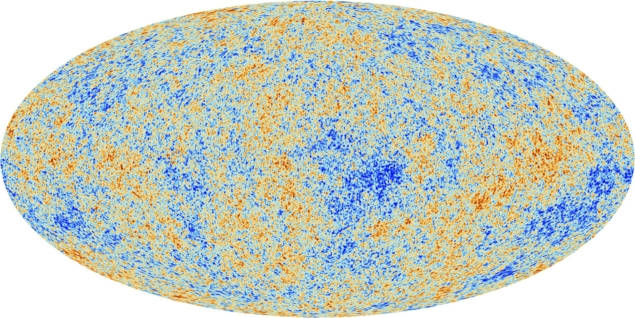
As I wait in Cardiff Airport for a flight back to civilization, I thought I’d briefly mention a paper that appeared on the arXiv this summer. The abstract of this paper (by Daniel An, Krzysztof A. Meissner and Roger Penrose) reads as follows:

This paper presents powerful observational evidence of anomalous individual points in the very early universe that appear to be sources of vast amounts of energy, revealed as specific signals found in the CMB sky. Though seemingly problematic for cosmic inflation, the existence of such anomalous points is an implication of conformal cyclic cosmology (CCC), as what could be the Hawking points of the theory, these being the effects of the final Hawking evaporation of supermassive black holes in the aeon prior to ours. Although of extremely low temperature at emission, in CCC this radiation is enormously concentrated by the conformal compression of the entire future of the black hole, resulting in a single point at the crossover into our current aeon, with the emission of vast numbers of particles, whose effects we appear to be seeing as the observed anomalous points. Remarkably, the B-mode location found by BICEP 2 is at one of these anomalous points.

The presence of Roger Penrose in the author list of this paper is no doubt a factor that contributed to the substantial amount of hype surrounding it, but although he is the originator of the Conformal Cyclic Cosmology I suspect he didn’t have anything to do with the data analysis presented in the paper as, great mathematician though he is, data analysis is not his forte.

I have to admit that I am very skeptical of the claims made in this paper – as I was in the previous case of claims of a evidence in favour of the Penrose model. In that case the analysis was flawed because it did not properly calculate the probability of the claimed anomalies in the standard model of cosmology. Moreover, the addition of a reference to BICEP2 at the end of the abstract doesn’t strengthen the case. The detection claimed by BICEP2 was (a) in polarization not in temperature and (b) is now known to be consistent with galactic foregrounds.

I will, however, hold my tongue on these claims, at least for the time being. I have an MSc student at Maynooth who is going to try to reproduce the analysis (which is not trivial, as the description in the paper is extremely vague). Watch this space.

Another Pembrokeshire Dangler

Posted in Cardiff with tags , , on October 29, 2018 by telescoper

Taking the opportunity of  the Irish Bank Holiday Monday to spend a long weekend in a rather chilly Cardiff,  I find that Wales is once again under the influence of a Pembrokeshire Dangler:

The Northerly airflow that is responsible for this phenomenon (which I first encountered last year)  is causing a bit of a cold snap here in Cardiff, and has even brought snow to  parts of Wales,  but hopefully the Pembrokeshire Dangler will not interfere with my flight back to Ireland.

Uachtarán na hÉireann

Posted in Uncategorized with tags , , on October 29, 2018 by telescoper

To nobody’s great surprise, Saturday’s count saw Michael D Higgins reelected as President of Ireland by a considerable margin. His acceptance speech on Saturday night was very eloquent and statesmanlike: you can listen to it here.

The Presidency of Ireland is a ceremonial rather than an executive office, and it has little actual power associated with it. It is nevertheless important in that the President is the guardian of the Constitution as well as representing the Irish Nation as a kind of ambassador and as patron of many good causes.

The way the election worked is that voters rank all six candidates. In the first round of counting, first preference votes are totted up and if one candidate has more than 50% he/she is elected. If not an Instant Runoff method is used, with votes of lower-ranked being reallocated until there’s a winner (ie until one candidate gains a majority).

On Saturday, Michael D Higgins gained 56% on the first round so no further counting was necessary. The turnout was very low at 44%. I think this was mainly down to the enormous lead for the incumbent in opinion polls in advance of the voting, but the decision to hold the election on the Friday of a Bank Holiday weekend may have contributed.

The candidate in second place, Peter Casey, had 23% of the first-preference votes. This is worryingly high for a man so clearly unsuited to the role of President. Casey cynically played the populist game, particularly with his incendiary remarks about Travellers. All five other candidates condemned his obvious racism, and the Taioseach urged people not to vote for him. That identified Casey as the anti-establishment ‘protest’ vote and his vote share surged.

Now 23% of a 44% turnout is less than 10% of the electorate, but there’s no room for complacency with gobshites like Peter Casey. In the UK the ghastly Nigel Farage was treated as a joke for decades by many establishment figures, but he nevertheless managed to attract sufficient support to cause irrevocable damage to the UK.

Anyway, that concern aside, sincere congratulations to Michael D Higgins on his reelection. He is a worthy winner and I for one am proud to have him as my President.