The de Valera connection

Posted in History, mathematics, Maynooth with tags , , on February 14, 2018 by telescoper

This morning I took the early flight to Dublin, which was on time, and thence via the Airport Hopper to Maynooth. There were only two passengers on the bus, both going to the terminus, so it made good time, travelling all the way along the motorway.

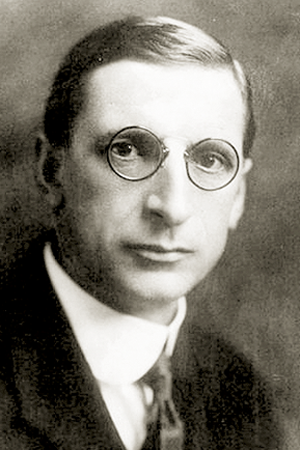
Walking into the Maynooth campus I remembered an interesting little historical fact that I stumbled across last week, concerning Éamon de Valera, founder of Fianna Fáil (one of the two largest political parties in Ireland) and architect of the Irish constitution. De Valera (nickname `Dev’) is an enigmatic figure, who was a Commandant in the Irish Republican Army during the 1916 Easter Rising, but despite being captured he somehow evaded execution by the British. He subsequently became Taoiseach (Prime Minister) and then President (Head of State) of the Irish Republic.

Eamon de Valera, photographed sometime during the 1920s.

The point of connection with Maynooth, however, is less about Dev’s political career than his educational background: he was a mathematics graduate, and for a short time (1912-13) he was Head of the Department of Mathematics and Mathematical Physics at St Patrick’s College, Maynooth, which was then a recognised college of the National University of Ireland. The Department became incorporated in Maynooth University, when it was created in 1997. It is said that one of the spare gowns available to be borrowed by staff for graduation ceremonies belonged to de Valera. Mathematical Physics is no longer a part of the Mathematics Department at Maynooth, having become a Department in its own right and it recently changed its name to the Department of Theoretical Physics.

De Valera missed out on a Professorship in Mathematical Physics at University College Cork in 1913. He joined the the Irish Volunteers, when it was established the same year. And the rest is history. I wonder how differently things would have turned out had he got the job in Cork?

That’s one connection, but when I arrived in the office this morning I found another. An email had arrived announcing a conference later this year in honour of Erwin Schrödinger.  It was de Valera – a notable advocate for science – who in 1940 set up the Dublin Institute for Advanced Studies (DIAS); Schrödinger became the first Director of the School of Theoretical Physics, one of the three Schools in DIAS.

LGBT+ Physical Sciences Climate Survey

Posted in LGBTQ+ with tags , on February 13, 2018 by telescoper

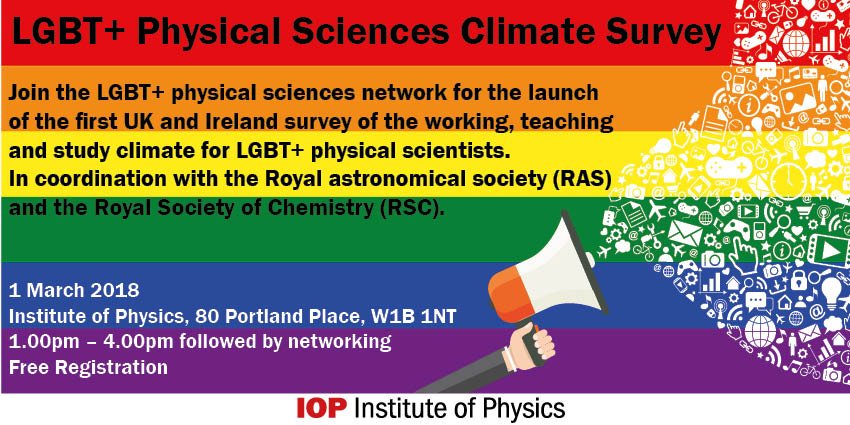
Very busy day today so I only have time to post a quick notice about an event coming up in a couple of weeks (on 1st March 2018) at the Institute of Physics in London:

This event celebrates the launch of the LGBT+ physical sciences survey, the first UK and Ireland survey of the working, teaching and studying climate for LGBT+ physicists, astronomers and chemists and those in related sciences.

Speakers from the community will be sharing their perspectives on the successes and challenges of creating a climate that enables everyone to be fully themselves in the workplace and place of study. The event is also an opportunity to find out more about the survey and meet other members of the network at an informal reception with drinks and snacks.

I am greatly honoured to have been asked to give a talk to introduce the event and chair the session, which ends in a panel discussion.The event is open to all, but space is limited at the venue so you will have to sign up if you want to go. You can sign up here.

See you there!

WNO Tosca

Posted in Opera with tags , , , , on February 12, 2018 by telescoper

My current schedule takes me back and forth across the Irish Sea, making it a bit of challenge to take in as many musical events as I’d like to, but I did manage to get to see yesterday’s performance of Tosca at Welsh National Opera. I don’t usually go for afternoon performances, but this was basically my option. Not surprisingly there was a packed house in the Wales Millennium Centre for a tale of jealousy and murder set to gorgeous music by Giacomo Puccini.

Tosca is an opera in three acts (which means two intervals wine breaks…). It’s a melodrama, and is set in Rome in 1800. Each act takes place in a very specific location within the Eternal City. Act I is in the Church of  Sant’Andrea della Valle, Act II in the Palazzo Farnese, and the final denouement of Act III takes place among the battlements at the top of the Castel Sant’ Angelo overlooking the Tiber. The setting is so specific to time and place that it resists being monkeyed about with, done in modern dress, staged in a chip shop or whatever. Thankfully, Michael Blakemore’s production (of which this is a revival) is very firmly of the period and location required. As a longstanding opera bore, I have to admit that I have been on a Tosca pilgrimage and have visited all three locations in Rome. The scenery used in last night’s performance isn’t exactly as the real locations but it definitely evokes them very well.

Floria Tosca (Claire Rutter) is a celebrated opera singer who is in love with an artist (and political radical) by the name of Mario Cavaradossi (Hector Sandoval), who helps to hide an escaped political prisoner while working on a painting in Act I. The odious Baron Scarpia (Mark Doss), Chief of Police, comes looking for the convict and decides to catch Tosca and Cavaradossi too. He lusts after Tosca and hates Cavaradossi. In Act II, we find Scarpia at home eating dinner for one while Cavaradossi is being tortured in order to find out the location of the escapee. Tosca turns up to plead for his life, but she hasn’t bargained with the true depths of Scarpia’s depravity. He wants to have his way with her, and to put pressure on he lets her listen to the sound of her lover being tortured. She finally consents, in return for Scarpia’s promise to let Cavaradossi go and grant free passage to the two of them. This he seems to do, but while she is waiting for him to write the letter of conduct she sees a knife. Instead of letting Scarpia defile her, she grabs it and stabs him to death. Act III begins with Cavaradossi facing execution, sure he is about to die. Tosca is convinced that this is just a charade and that Scarpia ordered them to pretend to shoot Cavaradossi so he wouldn’t look like he was being merciful, which would be out of character. The firing squad fire and Cavaradossi falls. But it was no fake. He is dead. Tosca is distraught and bewildered. Shouts offstage reveal that the police have found Scarpia’s body and that Tosca must have murdered him. To avoid capture she hurls herself from the battlements. Her last words are “O Scarpia, avanti a Dio!” – “I’ll meet you before God, Scarpia”.

Hector Sandoval (Cavaradossi) and Claire Rutter (Tosca). Picture credit: WNO.

The opera wasn’t particularly well received when it was first performed in 1900, being famously described by one critic as “a shabby little shocker”, but it has become a firm favourite with audiences around the world and is now acknowledged as a masterpiece of music drama. So how did Puccini manage to transform a penny-dreadful plot into a great work of art? I don’t think it’s hard to see why it works so well.

First and foremost, there’s the music, which  is wonderful throughout, but it is always plays an essential part in keeping everything moving. Of course there are the great arias: Vissi d’arte, Vissi d’amore sung by Tosca in Act II and E Lucevan le Stelle from Act III, sung by Cavaradossi; but even apart from those tremendous set-pieces, Puccini uses the music to draw out the psychology of the characters and underline the drama. Although not usually associated with the use of leitmotifs, Puccini deploys them throughout: Scarpia’s arrival is announced with a suitably menacing theme that recurs whenever he is present or even just referred to.  This theme is actually the first thing we hear as the Opera starts. It also plays Scarpia out at the end of Act 1 when he sings his magnificently chilling Va Tosca over a setting of the Te Deum. Time does stand still for Tosca’s great Act II aria, the dramatic fulcrum of the Opera, but that just emphasises the pace of the rest of the piece. This is a work with no spare flesh or padding anywhere, and a perfect interplay between music and action. The moment when Tosca sees the knife with which she will kill Scarpia is signalled by the orchestra.

And that leads to the second point. Each of the three principals could have been very two-dimensional: Cavaradossi the good guy.; Scarpia the bad guy; Tosca the love interest. But all the characters have real credibility and depth. Cavaradossi is brave and generous, but he succumbs to despair before his death. No superhero this, just a man. Scarpia is a nasty piece of work all right, but at times he is pathetic and vulnerable. He is monstrous, but one is left with the impression that something made him monstrous. And then there’s Tosca, proud and jealous, loving but at the same time capable of violence and spite. It is a truly shocking moment when she kills Scarpia. In this production, she doesn’t just stab him once: she chases him around the room repeatedly plunging the knife into him, then stands over him  as he begs for help. There’s no attempt to sanitise the violence of his death. It’s all so real. I guess that’s why this type of opera is called Verismo!

Top marks for the Orchestra of Welsh National Opera, under the direction of Carlo Rizzi, who did full justice to Puccini’s magnificent score. Claire Rutter has a fine voice for the role, and I thought Hector Sandoval sang and acted wonderfully. The big numbers in Tosca are quite familiar, but they still sounded fresh and were performed with great feeling. Best of all, Mark Doss has a dark baritone voice that gave Scarpia a tremendous sense of power and danger. He even got a few pantomime boos at the end.


A Good Day

Posted in Beards, Biographical, Football with tags , , , , , , on February 11, 2018 by telescoper

It’s been a good day. First of all I was officially presented with the Beard of Winter 2018 Award by the inestimable Keith Flett (right):

The picture was taken (by Megan Davies) outside The Small Bar in Cardiff after a celebratory tipple.

After that it was down to Cardiff Bay, where the Wales Millennium Centre was resplendent in the winter sunshine for an excellent afternoon performance of Tosca (which I’ll review more fully tomorrow):

And if that wasn’t enough, I emerged from the Opera to find that Newcastle Utd had beaten Manchester Utd in the Premiership, a game I had expected them to lose…

So yes, it’s been a good day..

Lunch with Pugin

Posted in Architecture, Maynooth with tags , , , on February 9, 2018 by telescoper

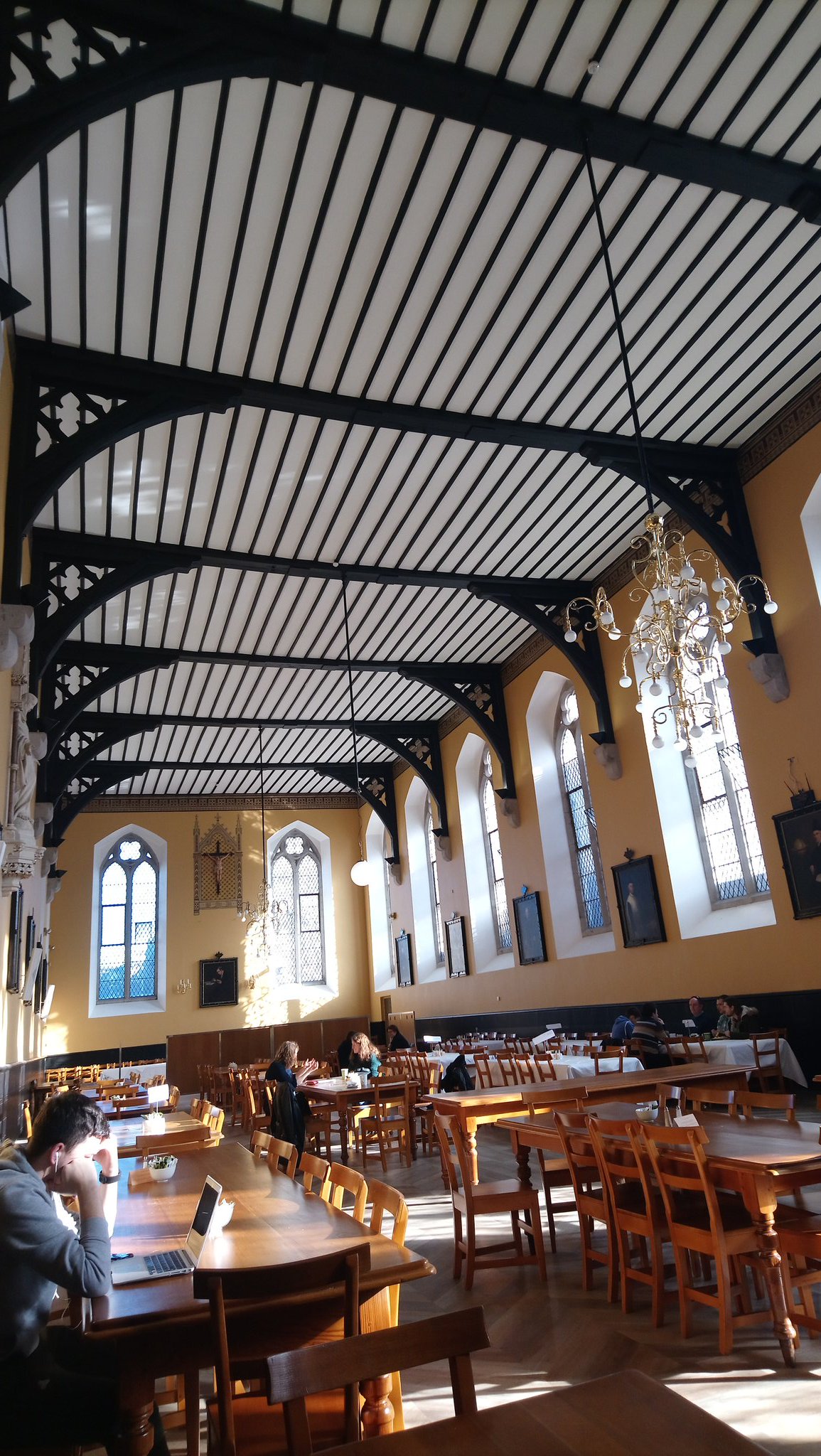
I usually have a sandwich lunch when I’m in Maynooth because I’m quite busy, but it’s rather cold (though bright) today so I decided to get myself a hot lunch at Pugin Hall, which is situated in St Patrick’s House on the South Campus of Maynooth University. I stayed in St Patrick’s House briefly before Christmas, and had my breakfasts in Pugin Hall. It’s a nice place to have an expensive but filling meal. It was particularly cosy today because of the sunlight streaming in through the windows:

The hall is named, of course, in honour of architect Augustus Pugin. He didn’t design St Patrick’s House itself – construction of that building started before he was born – but did lay out the quadrangles elsewhere that make up much of the South Campus.

A Guest Paradox

Posted in Cute Problems, The Universe and Stuff with tags , , , on February 9, 2018 by telescoper

Here’s a short guest post by my old friend Anton. As usual, please feel free to discuss the paradox through the comments box!

–0–

I thought of a physics paradox the other day and Peter has kindly granted me a guest post here about it, as follows. Consider a homogeneous isotropic closed universe as described by general relativity. Let it contain a uniform density of a single species of electrically charged particle, so that this universe has a net charge. The charged particle density is sufficiently low, however, that the perturbation from the regular uncharged metric is negligible. Since this universe is homogeneous and isotropic the electric field in it is everywhere zero. BUT if I consider a conceptual 3-dimensional sphere, small enough for space-time curvature to be neglected, then it contains a finite amount of electric charge, and therefore by Gauss’ theorem a nonzero electric field points out of it at every point on its surface. This contradicts the zero-field conclusion based on the metric.

Here are three responses (one my own) and my further responses to these, in brackets:

  1. In a closed universe it is not clear what is the outside and what is the inside of the sphere, so Gauss’ law is not trustworthy (tell this to a local observer!);
  2. the electric field lines due to the charges inside this (or any) conceptual sphere wrap round the universe an infinite number of times (this doesn’t negate Gauss’ theorem!);
  3. the curved rest of the Universe actually adds a field that cancels out the field in your sphere (neither does this negate Gauss’ theorem!)

The Success of LISA Pathfinder

Posted in The Universe and Stuff with tags , on February 8, 2018 by telescoper

Back in Maynooth, in between lecture and computer lab session, I only have time for a quick post so I’ll take the opportunity to share the recent news from LISA Pathfinder (which is basically a technology demonstrator mission intended to establish the feasibility of a proposed space-based gravitational wave facility called LISA). LISA Pathfinder is ostensibly an extremely simple experiment, consisting of two metal cubes (made of a gold-platinum mixture) about 38cm apart. The question it tries to answer is how accurately these two cubes can be put an ideal “free-fall” state, i.e. when the only force acting on them is gravity. I say `ostensibly’ however, in full knowledge that is an extremely challenging task that requires lots of clever design and painstaking work.

Initial signs were promising, and the confidence has now been justified by a paper in Physical Review Letters. Here is the abstract:

This is the key figure:

This confirms that the spacecraft has more than matched the sensitivity requirement demanded of it. Congratulations to the LISA Pathfinder mission on an outstanding success!


The Manor Farm, by Edward Thomas

Posted in Literature with tags , on February 7, 2018 by telescoper

The rock-like mud unfroze a little, and rills
Ran and sparkled down each side of the road
Under the catkins wagging in the hedge.

But earth would have her sleep out, spite of the sun;
Nor did I value that thin gliding beam
More than a pretty February thing
Till I came down to the old manor farm,
And church and yew-tree opposite, in age
Its equals and in size.
The church and yew
And farmhouse slept in a Sunday silentness.

The air raised not a straw.
The steep farm roof,
With tiles duskily glowing, entertained
The mid-day sun; and up and down the roof
White pigeons nestled.
There was no sound but one.

Three cart horses were looking over a gate
Drowsily through their forelocks, swishing their tails
Against a fly, a solitary fly.

The winter’s cheek flushed as if he had drained
Spring, summer, and autumn at a draught
And smiled quietly.
But ’twas not winter–
Rather a season of bliss unchangeable,
Awakened from farm and church where it had lain
Safe under tile and latch for ages since
This England, Old already, was called Merry.


by Edward Thomas (1878-1917; he died at Arras, France, in April 1917).


R.I.P. Donald Lynden-Bell (1935-2018)

Posted in The Universe and Stuff with tags , on February 6, 2018 by telescoper

I woke this morning to the very sad news that we have lost one of our great astrophysicists, Donald Lynden-Bell (above). He had suffered a stroke before Christmas but despite the best efforts of the medical staff at Addenbrooke’s Hospital in Cambridge, he never fully recovered. He passed away peacefully, at home, yesterday at the age of 82. The Cambridge University announcement of his death can be found here.

I saw Donald qjust a few months ago at the RAS Club where he seemed in good health. I was lucky enough to sit with him for dinner and he was excellent company, as he always was on such occasions. It’s very sad that he is no more. Sincere condolences to his family, friends and colleagues and especially to his wife Ruth (herself a distinguished chemist).

Donald is probably best known for his theoretical work on the idea that galaxies contain massive black holes at their centre, and that such black holes are the principal source of energy in quasars. He was also a member of a group of astronomers that became known as the ‘Seven Samurai’ who postulated the existence of the Great Attractor, a concentration of matter that might explain the observed peculiar motion of the Local Group of galaxies. What was most remarkable about him, however, was the creativity he brought to a huge range of disparate topics, from data analysis to telescope design, and from thermodynamics to general relativity. Donald refused to be pigeonholed, and worked on whatever took his fancy. He brought unique imagination and insight to everything he did.

I first encountered Donald Lynden-Bell when I was an undergraduate at Cambridge. He taught a first year Mathematics course for Natural Sciences students on how to solve Ordinary Differential Equations. I wouldn’t say he was the most organized lecturer I’ve ever had, but he was enormously entertaining and his remarkably loud voice meant you could never doze off! That was in 1983. I remember being terrified to see he was in the audience when I gave a talk at a conference in Cambridge as a PhD student a few years later, in 1987. He asked a question at the end that completely wrong-footed me, but I soon realised that he had a habit of doing that and it wasn’t at all malicious: he just had an unexpectedly different way of looking at things. It was quite extraordinary in that he stayed that way all through his career. It’s also remarkable how little he seemed to change in the thirty-odd years I knew him. In fact, in pictures of him taken in the 1960 he looks much the same as he did last year. I think that’s at least partly why his death was such a shock. He seemed timeless. One assumed he would live forever.

At first I found Donald Lynden-Bell intellectually intimidating but it didn’t take long to find that, inside, he was actually a very amiable and kind-hearted character who was extremely generous with his time, especially with early career researchers. A couple of years ago in the occasion of his 80th birthday, a friend and former student of Donald’s, Manuela Magliocchetti, wrote an open letter to him on here. Many of his former students have posted similar messages on social media. The sense of loss is everywhere.

I find then when I know someone a bit personally, no matter how much I admire them as a scientist, it’s often other things about them that I remember better than their scientific work. My most vivid memory of Donald is from a visit to India over twenty years ago. I ended up playing croquet with him on the lawn of the Director’s House at the Inter-University Centre for Astronomy and Astrophysics in Pune (where I visited last year). Donald seemed entirely unconcerned with his own progress in the game but concentrated fiercely on sending his opponents’ balls into the shrubbery whenever the rules allowed. That is, of course, a major part of the game but I didn’t expect a distinguished Cambridge Professor to take such impish delight. The game was a blast, but had to be called off in the deepening twilight, with bats circling overhead, as we could no longer see well enough to continue but I’ll remember Donald’s constant laughter. A very serious and brilliant scientist he may have been, but he also had an intensely human capacity for having a bit of fun.

Rest in peace, Donald Lynden-Bell (1935-2018).

A Comment on Anonymous Comments

Posted in Biographical with tags , , , on February 5, 2018 by telescoper

My post last week has generated quite a lot of traffic among which is a larger-than-usual crop of abusive comments. Here’s just one example, a response to a comment of mine describing people posting such comments anonymously as `cowardly’.


Charming. I hope I don’t have to point out that the allegation therein is completely false and defamatory. Fortunately the WordPress software blocked it, along with several more of similar ilk. I don’t see why I should allow stuff like this to be published on my blog, especially if it’s anonymous, so I deleted them all. I thought I’d take this opportunity to remind readers of what it says on the front page of this blog:

Feel free to comment on any of the posts on this blog but comments may be moderated; anonymous comments and any considered by me to be abusive will not be accepted. I do not necessarily endorse, support, sanction, encourage, verify or agree with the opinions or statements of any information or other content in the comments on this site and do not in any way guarantee their accuracy or reliability.

I don’t mind people posting contrary views as long as they’re not abusive, but if you use a fake email address and/or a fake name then your comment will be blocked. If you’ve got something to say then at least have the courage to identify yourself!

When I first started blogging, almost a decade ago, I decided to have an open comment policy so that anyone and everyone could comment without any form of intervention. That turned out to be a disaster because of the number of automatically generated  SPAM comments that clogged up the boxes. I therefore switched on a SPAM filter so it could veto obvious garbage, but otherwise kept an open policy. The alternatives offered by WordPress include one that requires all comments to be from people registered at the site (which I thought would probably be a deterrent to people only wanting to comment on the odd post). Another option is to maintain a blacklist which treats all messages from persons on the list as SPAM. It’s also possible to block all comments entirely, of course, but I enjoy reading most of them so I think it would be a shame to do that just because of a few breaches of netiquette.

All went fairly well and I only had to ban a couple of individuals for abuse. I did for a time receive a stream of crudely abusive comments (of a personal nature) from various anonymous sources. These were mostly depressingly puerile and they didn’t affect me much but I did find it very disconcerting to think that there are people sitting out there with nothing better to do.

Since WordPress notifies me every time a  comment is posted, it is quite easy to remove this junk but I found it very tiresome (when there were several per day) and eventually decided to change my policy and automatically block comments from all anonymous sources. Since this requires a manual check into whether the identity information given with the comment is bona fide, comments from people who haven’t commented on this blog before may take a little while to get approved.

There are still comments on here which may appear to a reader anonymous (or with a pseudonym) on here, but these are from people who have identified themselves to me with a proper email address or who the software has identified through their IP address or information revealed by their web browser (which is probably more than you think…). I’m happy for people to comment without requiring they release their name to the world, and will do my best to ensure their confidentiality, but I’m not happy to publish comments from people whose identity I don’t know.

If you’re interested, as of today, 28,781 comments have been published on this blog. The number rejected as SPAM or abuse is 1,802,214. That means that fewer than 1 in 60 are accepted. I simply don’t have time to go through all the flagged comments individually, so I usually just delete them all.

Am I denying freedom of speech by rejecting anonymous comments? I don’t think so. If you want freedom of speech that much, you can write your own blog (anonymous or otherwise). And if every sight of this blog makes you want to write abusive comments, perhaps you should exercise your freedom not to read it.

I’d be interested to know from any fellow bloggers if they have the same problems with abusive comments. If not, perhaps I should start taking it personally!

More generally, I will not accept anonymous comments on the subject of the anonymity of comments, but any other contributions are welcome via the box.

Unless you’re banned.