Dublin, by Louis MacNeice

Posted in Poetry with tags on November 4, 2017 by telescoper

Grey brick upon brick,
Declamatory bronze
On sombre pedestals –
O’Connell, Grattan, Moore –
And the brewery tugs and the swans
On the balustraded stream
And the bare bones of a fanlight
Over a hungry door
And the air soft on the cheek
And porter running from the taps
With a head of yellow cream
And Nelson on his pillar
Watching his world collapse.

This never was my town,
I was not born or bred
Nor schooled here and she will not
Have me alive or dead
But yet she holds my mind
With her seedy elegance,
With her gentle veils of rain
And all her ghosts that walk
And all that hide behind
Her Georgian facades –
The catcalls and the pain,
The glamour of her squalor,
The bravado of her talk.

The lights jig in the river
With a concertina movement
And the sun comes up in the morning
Like barley-sugar on the water
And the mist on the Wicklow hills
Is close, as close
As the peasantry were to the landlord,
As the Irish to the Anglo-Irish,
As the killer is close one moment
To the man he kills,
Or as the moment itself
Is close to the next moment.

She is not an Irish town
And she is not English,
Historic with guns and vermin
And the cold renown
Of a fragment of Church latin,
Of an oratorical phrase.
But oh the days are soft,
Soft enough to forget
The lesson better learnt,
The bullet on the wet
Streets, the crooked deal,
The steel behind the laugh,
The Four Courts burnt.

Fort of the Dane,
Garrison of the Saxon,
Augustan capital
Of a Gaelic nation,
Appropriating all
The alien brought,
You give me time for thought
And by a juggler’s trick
You poise the toppling hour –
O greyness run to flower,
Grey stone, grey water,
And brick upon grey brick.

by Louis MacNeice (1907-1963)


The Emerson Quartet

Posted in Biographical, Music with tags , , , , , on November 3, 2017 by telescoper

It’s been an enjoyably rich week for me in terms of cultural pursuits, rounded off in fine style last night with a visit to the Royal Welsh College of Music and Drama for a concert by the Emerson String Quartet of music by Purcell, Britten and Beethoven. On Wednesday I made the mistake of going to a concert without having had any food, so this time I sampled the bar menu at the College before the performance. Very nice fish and chips, with very prompt service.

The first half of the concert consisted of three pieces by Henry Purcell, the Chacony in G Minor and two Fantazias (in D Minor and G Major, respectively). The Chacony (from the Spanish `Chacona’ via the French `Chaconne’) is a set of variations over a ground bass, while the Fantazias have a much freer structure with the instruments often mimicking vocal lines. This was followed by the String Quartet No. 2 in C by Benjamin Britten, the last movement of which includes a Chacony as a deliberate homage to Purcell (whose music Britten admired enormously). It was actually written to commemorate Purcell’s death (on 21st November 1695). Overall, though, this is more reminiscent of the approach of Britten’s friend Dmitri Shostakovich. It is full of jagged figures emerging from a background that alternates between dark and frenetic.

After the interval wine break, it was time for one of my favourite pieces in all music, the sublime String Quartet No. 15 (in A minor) by Ludwig van Beethoven (Opus 132). I’ve loved this piece for many years and it became even more special to me five years or so ago when I was recovering from illness. Until last night, though, I had never heard it live.

This is a long work, taking over 40 minutes to perform, dominated by the central third movement, which is headed with the words

Heiliger Dankgesang eines Genesenen an die Gottheit, in der lydischen Tonart

I take the liberty of translating the first two words, using my schoolboy German, as “A Holy Song of Thanksgiving”; Beethoven wrote the piece after recovering from a very serious illness which he had feared might prove fatal. The movement begins in a mood of quiet humility but slowly develops into a sense of hope and deeply felt joy. The most remarkable  thing about this movement to me, though,  is that the music seems to possess the same restorative powers that it was written to celebrate. I certainly found it extremely therapeutic when I was unwell.

Hearing the whole piece live has a much greater impact than hearing one movement on record, and I have to admit I found last night’s performance quite overwhelming. Judging by the rapturous applause from the audience in the Dora Stoutzker Hall, I think a great many people realised that they had just heard something very special.

Music from three very different periods, by three very different periods, all played beautifully with great passion and imagination. What more could you ask for?

Well, we did get something extra – an encore in the form of one of Dvorak’s Cypresses (No. 7 to be precise):

The Hallé at St David’s

Posted in Biographical, Music with tags , , , , , , on November 2, 2017 by telescoper

Last night, as part of an ongoing effort to enjoy as much culture as I can while I still have the chance, I went to St David’s Hall in Cardiff for a concert of music by Ravel, Debussy and Mussorgsky given by the Hallé Orchestra under the direction of Sir Mark Elder. It was a wonderful programme of music, performed with all the colour and verve and professionalism you’d expect from the Hallé.

First up we had the Rapsodie Espagnole, one of Ravel’s first compositions for the full orchestra (although in the original version was for two pianos, he orchestrated it a year after that version was published). For a piece of only about 15 minutes duration its four movements are full of changes of mood, tempo and tonality, which makes it a great piece to warm up both orchestra and audience.

Following that, we had the gorgeous Première Rhapsodie for orchestra and clarinet soloist by Claude Debussy. Written just a couple of years after the Ravel, and inhabiting a similarly impressionistic sound world, this was originally as a test piece for clarinettists at the Paris Conservatoire. The solo part was played with great agility and feeling by young Spanish musician Sergio Castello López. I’d never noticed before how similar the way the clarinet ends this piece is to the opening statement of Gershwin’s Rhapsody in Blue, written about 14 years later…

And then it was time for Ravel’s little inspiration, Boléro, which is easily his most famous composition despite the fact that, as Ravel himself put it, `it has no music in it’. What he meant by that is that it doesn’t have any variation or thematic development or invention, but was written deliberately as an experiment to see how far he could get in writing a work that was entirely based on rhythm and repetition. The result was a smash hit and earned him a very great deal of money, but he grew to resent the fact that it was so much more popular than the other works he himself thought were much better. I know some people who hate this piece, but I think it’s great fun and always enjoy hearing it. Last night was no exception.

The composition of Boléro is so simple that even a non-musician like me can play it. It’s basically written in a slow 3/4 time signature on which is superimposed the following figure:

The second part is basically a repeat of the first, with the last two eighth notes replaced with triplet. The whole pattern consists of 24 notes. I once tried to count how many times it is repeated in a performance of Boléro, but gave up when I got to 100. I think it must be over 200 times.  This figure is introduced first on a single snare drum, which carries on playing it for the duration, i.e. for about 15 minutes in total. As the piece develops the same pattern is picked up by various other instruments, either alone in combination. A second snare drum joins in too. The key to the piece is to keep this all very strictly in tempo, as the piece gradually gets louder.

As I’ve mentioned before on this blog, my Father was a (jazz) drummer. I remember once borrowing his snare drum and attempting to play along with a recording of Boléro. The pattern shown above is not that hard to play in itself, but it’s not as easy as you probably think to keep in tempo as you play it louder and louder. At the start it’s fine: you begin by tapping the sticks on the skin of the drum very close to the rim. To increase the volume you gradually move the point of impact closer to the centre of the drum, which naturally makes it louder. However, to get louder still you have to increase the distance the sticks move, and that makes it tougher to keep to tempo. Playing along at home is one thing, but playing the percussionist playing this in an orchestra must leave the drummer feeling very exposed. One mistake, any speeding up or slowing down, and the whole performance will be ruined.  Percussionists very often have little to do for long passages in an orchestral work, but this takes it to the opposite extreme. It requires constant concentration, but no variation or embellishment is allowed.  I suppose professional musicians just get into the zone and don’t think about the possibility of screwing up. Last night, Principal Percussionist David Hext looked as relaxed as anyone I’ve ever seen starting this piece and seemed even to be enjoying it too, thoroughly deserving the warm applause he got at the end of the performance.

The bolero rhythm is just one element of the composition, of course. There is a melody, in two parts. The first simple and catchy, the second bluesier and a bit syncopated. Each part is played twice, passed around the instruments of the orchestra, first individually and then in combinations. Sometimes the melodic line is doubled, but there are no complicated harmonies and the piece stays in C major throughout, apart from a sudden change of key near the very end. The second part of the melody allows the musicians to release their inner jazz a bit, playing behind or across the beat to generate the feeling that the tune is trying to escape the confines of the incessant rhythm. As is the case in jazz, this sense of tension only works if the basic rhythm is kept strictly in tempo as the crescendo builds

The third element of the composition is the simplest of all, but I feel that it is very important in determining whether a performance of Boléro really rocks. That is a rhythmic pulse based on the three beats of the underlying 3/4. When they’re not playing the melody or shadowing the bolero pattern, the orchestra play this figure and it ends up being boomed out by the timpani in tremendous style but also as the piece progresses the stress shifts between the three beats as different instruments contribute.

I know it’s a familiar piece but I really enjoyed last night’s performance. I’ll also reiterate that as well as making a great sound, a full symphony orchestra playing during a piece like this is a tremendous thing to watch, especially with the percussion section giving it some good old-fashioned welly.

Anyway, after the ensuing wine break interval we resumed with Mussorgsky’s Pictures at an Exhibition (as orchestrated by that man Maurice Ravel).  I remember studying this in music lessons at school,as it was one of the teacher’s approved works. He never told us, however, that the `pictures’ concerned were not large-scale canvases but tiny drawings and design sketches done by one Victor Hartmann, whose sudden death led to the exhibition in question but also affected his friend Mussorgsky very deeply and inspired him to make a musical tribute based on the artwork displayed therein. Mussorgsky thus wrote the piano version which was then subsequently orchestrated by Maurice Ravel.

This is another extremely popular piece, also for good reason. It’s a set of ten movements linked by a `Promenade’ theme that represents the viewer walking around the exhibition (in different moods determined by the pictures). It ends with the most famous section, the magnificent Great Gate of Kiev which provided a suitable finale to a most enjoyable and varied evening of music.

The Cherry Orchard

Posted in Theatre with tags , , , , , , , , on November 1, 2017 by telescoper

Last night I found a way of avoiding the trick-or-treaters by spending the evening at the Sherman Theatre in Cardiff (which is just round the corner from my place of work) for a performance of an updated and adapted version of Anton Chekhov’s last play, The Cherry Orchard.

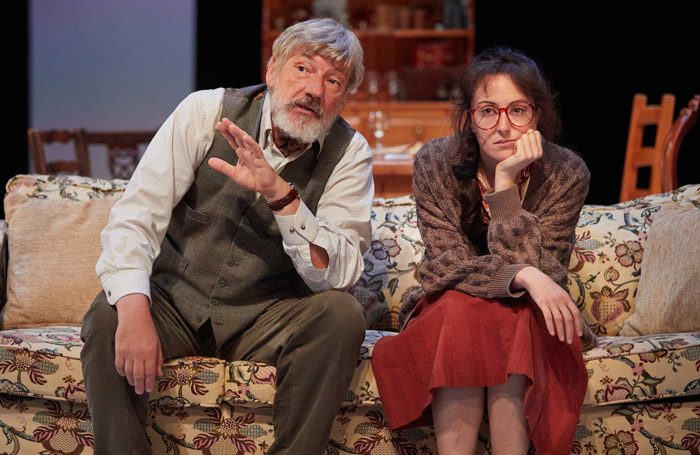
Simon Armstrong (Gabriel) with Hedydd Dylan (Valerie)

Picture credit here.

Chekhov’s masterpiece was written in 1903 at a time of social and economic upheaval in Russia, as the power and wealth of the old aristocracy faded and the abolition of serfdom gave rise to a new middle class. This remarkably compelling production translates basically the story to rural West Wales (Pembrokeshire, to be precise) in the era of the Thatcher government (1982 to be precise). The overall structure of the original is kept, but the number of characters is reduced (by eliminating and merging some roles) and the text substantially changed. What emerges remains faithful to Chekhov’s intention to combine comedy with tragedy. This version is witty in a way that’s a bit gentler than the original, and is frequently extremely funny, but the undertone is always one of of impending loss and heartbreak. And it’s not just the sale of the orchard to pay off debts and the general decline of the aristocratic lifestyle that affects the family at the centre of the play, it’s also the tragic death of a young boy in the past that brings back memories that they have tried to forget and provides – appropriately enough for Hallowe’een – an element of a ghost story.

The plot revolves around the Mother, Rainey (cf. Madame Lyubov Andreievna Ranevskaya of the original), who returns to Bloomfield farm just as the orchard is about to sold off to pay the farm’s debts. In this production. Played by Denise Black, Rainey is a bitter, drunken woman with a capacity for cruelty to family and strangers alike. Gradually, though, we come to feel some sympathy for her as it becomes clear that beneath her acerbic exterior there is a deep sorrow (caused by the death of her son years previously). It’s an utterly convincing performance.

Other characters are engagingly drawn too. Richard Mylan is Ceri, an unemployed leather-clad `anarcho-socialist’ who forms a relationship with Rainey’s rather posh daughter, Anya (Morfydd Clark). Their romance provides a number of memorable comic moments. Gabriel (Simon Armstrong) the eccentric and clueless `uncle’, at one point proposes to the maid Dottie (Alexandria Riley) who is the most sensible character in the play and who gives him very short shrift. Matthew Bulgo is Lewis, a former ditch-digger, who hits on the idea to buy the orchard and chop down the trees so he can build houses on the land. The other character is Hedydd Dylan as Valerie (Rainey’s adopted daughter) who seems to be in charge of keeping the struggling farm going, and who is in a strange kind of relationship with Lewis whose nature is never really elucidated.

This a great production that manages to be extremely inventive at the same time as being very real, brought vividly to life by a great ensemble performance by the cast. Well done to everyone involved for a thoroughly superb night at the theatre!

The Zurich Letters

Posted in Uncategorized with tags , , , , , , on October 31, 2017 by telescoper

Just time for a quick post following up my previous piece on the Bullying Scandal at ETH Zurich.

As pointed out in a comment on that post, a letter of support for one of the named Professors (Marcella Carollo) has been signed by a number of astronomers, including some prominent senior professors. That letter can be found here (PDF).

A version of that letter which has been annotated by Chris Lintott to draw attention to some of its shortcomings can be found here. I won’t add much to Chris’s comments, but will mention that a dropout rate of 30% of students funded by the UK  Science and Technology Facilities Council would lead to financial penalties on the institution responsible. Moreover, ETH Zurich is a prestigious institution with a highly selective admissions policy for postgraduate students and a high level of funding. It is not unreasonable to expect a high completion rate under these circumstances.

Other than that, the two main messages of the first letter seem to be (a) `some people did well so it must all be OK’ and (b) `the ends justify the means’. I can’t agree with either of these points. Reaction I have seen on social media to the letter have been overwhelmingly negative, to the extent that Prof. Bryan Gaensler has drafted an alternative letter, in support of the ETH Researchers, and is collecting signatures. You can find that letter here, where you can also find a list of more than 300 nearly 700 signatories across all walks of astronomical life. You can add your name to this letter at any time until 2359 UTC on Wednesday November 1st, after which the letter and list of signatories will then be delivered to the researchers affected by this sorry affair.

P.S. I’ll just mention that as well as attracting a very large number of visitors (hopefully not all of them lawyers), my original post on this matter is the first I have written to generate over a hundred comments. The previous record was 98.

UPDATE: There’s an item about the second letter here.

Dark Matter Day

Posted in History, The Universe and Stuff with tags , , , , , on October 31, 2017 by telescoper

As a welcome alternative to the tedium of Hallowe’en (which I usually post about in this fashion), I notice that today (31st October 2017) has been officially designated Dark Matter Day. I would have sent some appropriate greetings cards but I couldn’t find any in the shops…

All of which gives me the excuse to post this nice video which shows (among other things) how dark matter plays a role in the formation of galaxies:

P.S. Lest we forget, today is also the 500th anniversary of the day that Martin Luther knocked on the door of All Saints’ Church in Wittenberg and said `Trick or Theses?’ (Is this right? Ed.)

Night of the Octopodes

Posted in Uncategorized with tags , , on October 30, 2017 by telescoper

They have arrived! All hail our Octopus overlords!

This is not normal: universities in the news

Posted in Education, Politics on October 30, 2017 by telescoper

A reaction to recent news coverage of UK universities, among other things.

I particularly liked “the degraded language of TEF, REF and KEF, which confuses bureaucracy with vision”. Well said.

amcrae2014's avatar[ex-] HEAD OF DEPARTMENT’S BLOG

It is not normal for universities to occupy the front pages of national newspapers. Granted, at any time there is a vital, occasionally tense, dialogue between universities and the nations in which they are situated. The line between ideals of academic freedom on the one hand, and the realities of finances and state oversight on the other hand, is notoriously fuzzy. The extent to which universities reflect or represent their nations is always a potential point of controversy.

But these are not normal times. Over the past few months, debate has swirled frenetically around questions including university funding, whether we have too many universities, what our top managers are paid, free speech on campus, how we select our students, and what we teach. We appear now to be at the point where even what academics think might be a point for national outrage.

It seems to me that much of…

View original post 767 more words

The Joy of Viz

Posted in Uncategorized on October 29, 2017 by telescoper

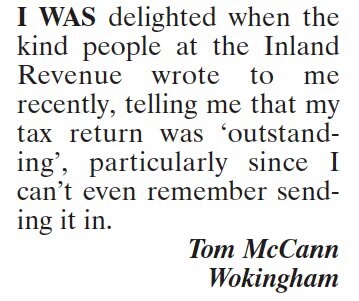
This letter from Viz Comic tickled my fancy, so I thought I’d share it here…

National STFC Data-Intensive Science Launch Event

Posted in Science Politics, The Universe and Stuff with tags , , , , , on October 27, 2017 by telescoper

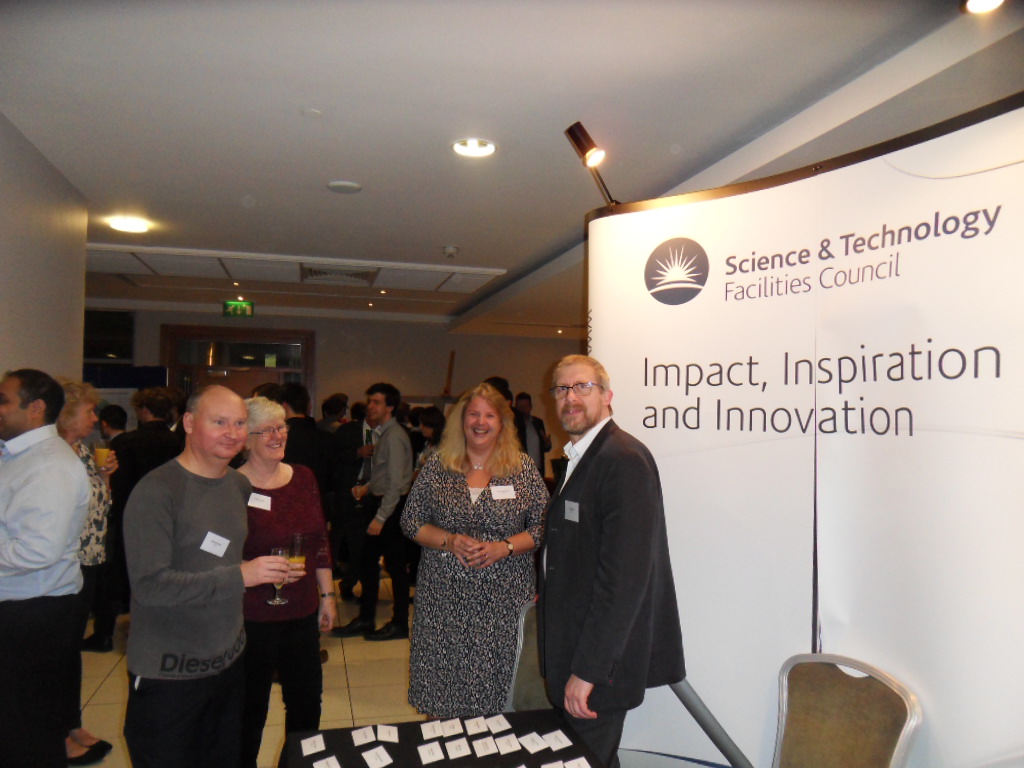
It’s been a very busy week here in Cardiff, as we have been hosting a National Event to launch the Science and Technology Facilities Council (STFC)’s new Centres for Doctoral Training in Data-Intensive Science. There are eight new CDTs involving 19 institutions across the country (including the local one that involved the Universities of Cardiff, Bristol and Swansea). We were delighted to be chosen to host this event, which has had a tremendous buzz about it, as 120 new PhD students met with academics from all the CDTs, STFC staff, and representatives of industry partners, for a mixture of training and networking activities. I took part in a panel discussion this morning about careers, which was very interesting.

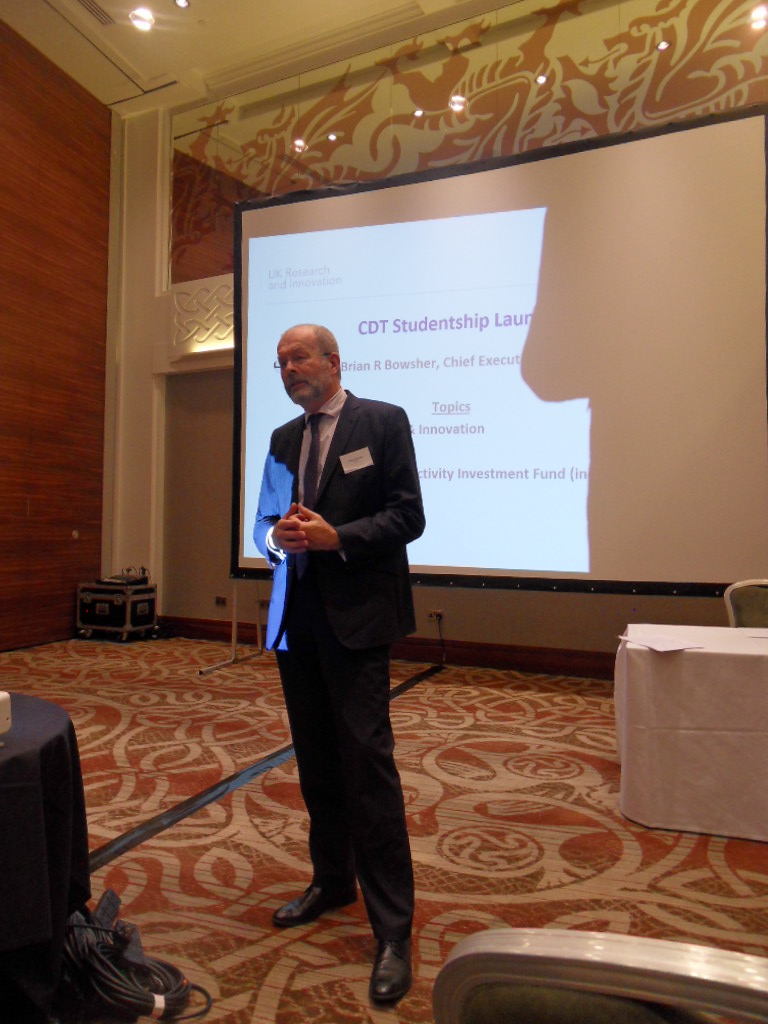
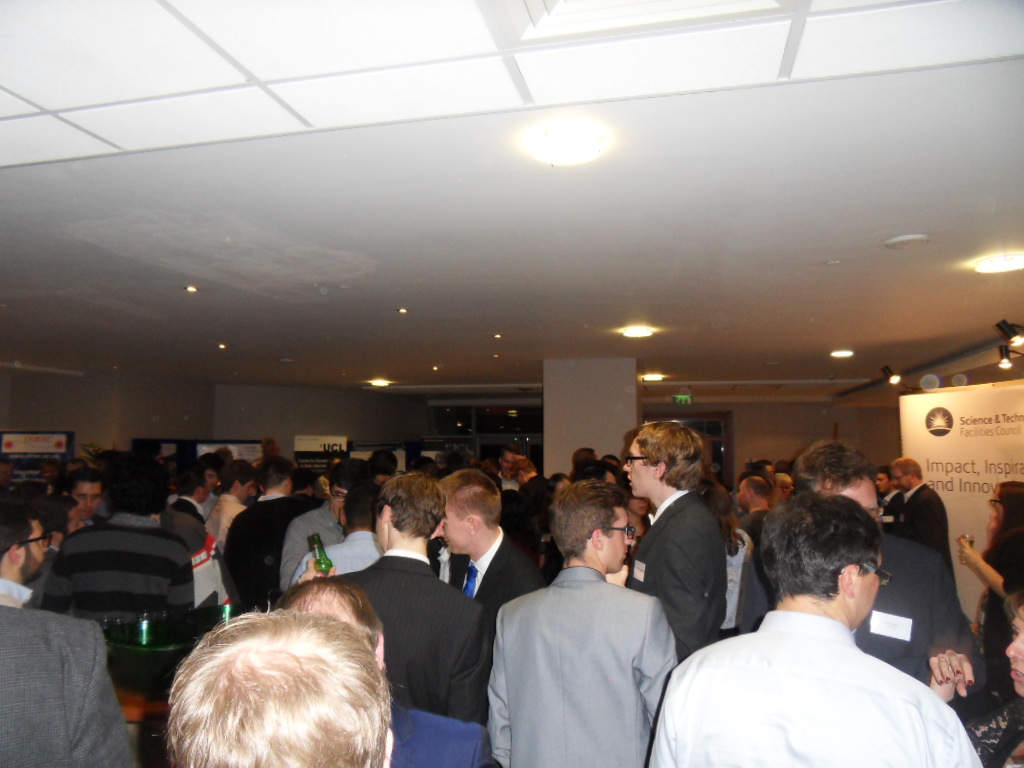
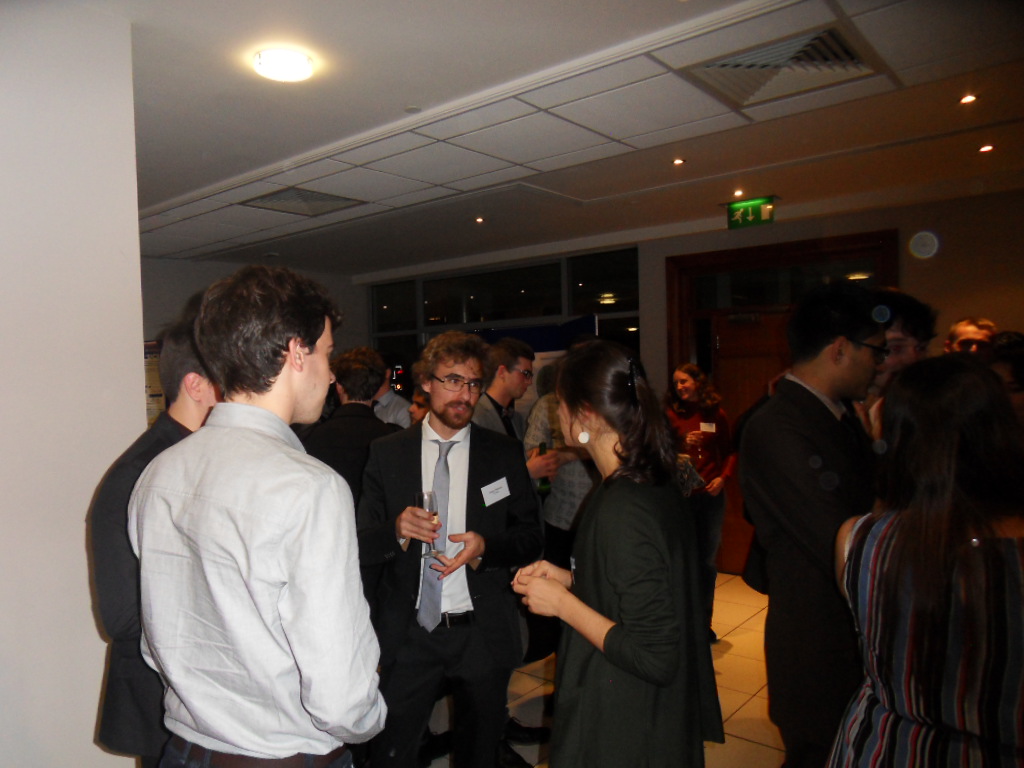
Last night we had a dinner at the Mercure Hotel in Cardiff (where the Real Madrid team stayed just before this summer’s UEFA Champions League Final in Cardiff). The dinner was preceded by a welcome from Professor Karen Holford (Deputy Vice-Chancellor of Cardiff University), a talk by Brian Bowsher (Chief Executive of STFC) and Prof. Patrick Sutton of the Gravitional Physics group at Cardiff who gave an outstanding talk about the latest developments in gravitational waves. There was then a `showcase’ event to allow students and staff to talk about their work over a few drinks.

Here are some pictures of yesterday’s activities.

Prof. Karen Holford giving her welcome speech.

Dr Bian Bowsher, STFC Chief Executive

I noticed in Dr Bowsher’s talk that STFC has apparently moved the Boulby Mine from North Yorkshire (near Whitby) to Northumberland:

STFC sites (some of them in the correct geographical location).

Professor Mark Walport was unable to attend the event in person but did at least appear on a slide about the new UK Research and Innovation entity, which formally comes into existence in April 2018!

Professor Sir Mark Walport

Patrick Sutton doing his gravitational waves talk…

The Showcase Event

Showcase Event

And here are some of the members of the team from STFC who did most of the organization for this very successful and enjoyable event.

Some members of the STFC team!

The event finishes this afternoon, after which I think I’ll have a lie down!

Update: there’s a Cardiff University News item about this here.