As promised here are the slides I used for my talk yesterday at Imperial College. I stole some of them from an old presentation given by Chris Short, who was a PhD student of mine when I was at Nottingham. Chris now works for the Met Office, working on rather different application of fluid mechanics!
Follow @telescoperCosmological Wave Mechanics
Posted in The Universe and Stuff with tags Cosmological reconsrtruction, Cosmology, Schrodinger Equation, structure formation, Wave Mechanics on June 15, 2017 by telescoperOne Day in London
Posted in Biographical, Books, Talks and Reviews with tags Astrophysics, Grenfell Towers, Imperial College on June 15, 2017 by telescoperAs it happens, I was in London yesterday to give an Astrophysics seminar at South Kensington Technical Imperial College. In due course I’ll post the slides as I normally do on such occasions.
It was an enjoyable day, with a train journey from Cardiff nice lunch followed by a question-and-answer session with students followed by the talk followed by a cup of tea, followed by a train ride home – all (for a change) running exactly to schedule. It was also extremely hot which meant the walk between Paddington and Imperial (across Hyde Park) left me rather sweaty. Better than getting rained on I suppose.
My hosts gave me an espresso cup, with an interesting motto on the back.
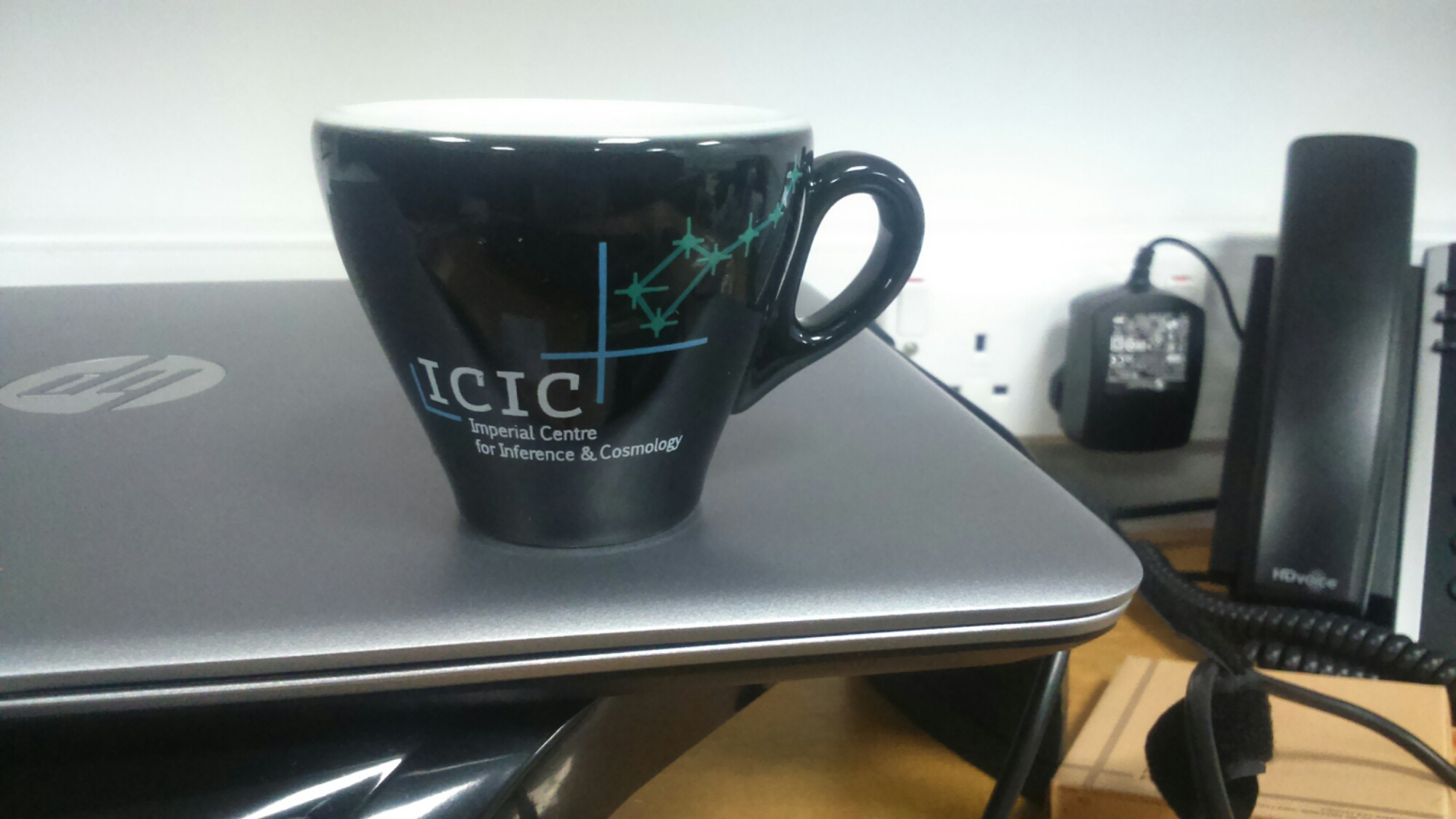

Usually when I go to Imperial or thereabouts I have a minor quandary about whether to walk or take the tube, with such factors as time, weight of baggage and weather taken into consideration before making a decision. This time, however, there was no decision to make because there were problems on the Underground in the area because of the terrible fire at Grenfell Towers, which has claimed the lives of at least 17 people (and possibly many more). The fire itself was near Latimer Road station, which is not on the line I would have taken, but there were apparently fears that the building might collapse near the line (which is overground at that point) so trains were suspended all the way from Hammersmith to Edgware Road, which disrupted the running of the Circle Line.
The venue for my talk was two or three miles away from Grenfell Towers, but in mid-afternoon you could still see smoke in the distance. It was a grim sight. I think I’ll remember yesterday afternoon very well, not because I gave a seminar, but because of the terrible events that happened earlier the same day.
There are many questions that urgently require answers. How did the fire start? Why did it spread so rapidly? Did the smoke alarms work (and if not why not)? Did the cladding on the outside of the building play a role? Did the fact that there was only a single stairwell – astonishing to my mind for a 20-storey residential building – cost lives?
I hope we’ll find the answers to these questions through a proper public inquiry. In the meantime all I can do is express my deepest condolences to those bereaved by this disaster, and wish a speedy recovery for those injured. They will need to understand what happened, urgently.
On the train home yesterday I looked at Twitter and saw this picture, of grim-faced and exhausted firefighters taking a break. I found it almost unbearably moving. We take these people for granted so much of the time, but they’re heroes – every single one of them:

KCTMO – Playing with fire!
Posted in Uncategorized on June 14, 2017 by telescoperThis blog post was written in November 2016. Today the building went up in flames. We can only hope that no lives were lost.
Take Five with Joe Morello
Posted in Jazz with tags Dave Brubeck, Jazz, Joe Morello, Paul Desmond, Take five on June 13, 2017 by telescoperNot long ago I posted a clip of a drum solo by the great Joe Morello which has proved to be extremely popular. Since a meeting I thought I had this afternoon has been cancelled I’ve decided to take five minutes out to post another terrific drum solo.
The tune Take Five, composed by alto saxophonist Paul Desmond and recorded by the Dave Brubeck Quartet in 1959, became a hit at the second attempt when it was re-released in 1961. It proved so popular that the band performed many versions of it live, manu of which can be found on youtube. This one is not unusual in that it is performed at a faster tempo than the version that was released as a single. I read an interesting blog post a while ago that explains how Joe Morello’s arrival almost broke up the Dave Brubeck Quartet, as Paul Desmond and he had clashing personalities. I think Part of that was Morello’s predilection for tempos that were a bit faster than Desmond was comfortable with; Paul Desmond had a beautiful tone, but in contrast to many of his Jazz contemporaries on the instrument, he was never a speed merchant on alto saxophone. He seems to be less fluent than usual on this track, at least at first, probably because of the speed.
Joe Morello’s drum solo, on the other hand, is characteristically wonderful. Just watch his superb left-hand technique, from a relatively gentle opening to when he turns down the strainer on the snare drum he starts to build up to a stunning climax in which his hands are far too fast for the camera. It’s a great solo, not only because of it’s technical brilliance but because it’s so beautifully constructed. All in 5/4 time too…
Follow @telescoperCosmology at a Crossroads – Poll
Posted in The Universe and Stuff with tags cosmological distance scale, Cosmology, Hubble constant, Wendy Freedman on June 13, 2017 by telescoperA short comment piece by Wendy Freedman has appeared in Nature Astronomy; there’s a free version on the arXiv here. It gives a nice perspective on the current debate about the value of the Hubble constant from the point of view of an expert on cosmological distance scale measurements.
The abstract is here:
We are at an interesting juncture in cosmology. With new methods and technology, the accuracy in measurement of the Hubble constant has vastly improved, but a recent tension has arisen that is either signaling new physics or as-yet unrecognized uncertainties.
For the record, I’d go for `as-yet unrecognized uncertainties’, primarily because this field has a long history of drastically underestimated error-bars!
However, the publication of this piece gives me the excuse to resurrect the following poll, in which I invite you to participate:
Follow @telescoperTory MP author of ‘How To Win a Marginal Seat’ … lost his marginal seat on Thursday
Posted in Politics on June 11, 2017 by telescoperSometimes irony is too delicious for words…

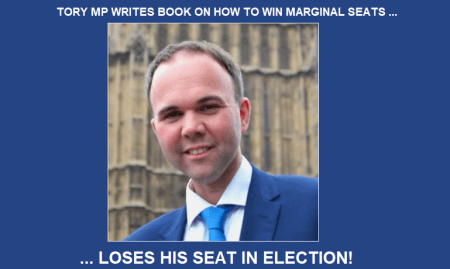
Gavin Barwell’s book ‘How To Win a Marginal Seat‘ was heavily praised by top Tories as a textbook on effective campaigning:

Boris Johnson wrote highly of the book:

Unfortunately for poor Gavin such hubris didn’t help him on Thursday – he lost his marginal Croydon seat to Labour’s Sarah Jones.
And even more hilariously – Gavin has just been put in charge of Theresa May’s campaigning.
Although I’m not sure May needs advice from anyone on how to f*ck up election campaigns …
Poster Syndrome
Posted in Uncategorized on June 10, 2017 by telescoper
I’ve taken these posters down from my window, now that the General Election is over, but I haven’t thrown them away. Something tells me I might be needing them again before too long..
Follow @telescoperThe Great Election Gamble
Posted in Cardiff, Politics with tags General Election, Spread betting, Theresa May on June 9, 2017 by telescoperWell, yesterday’s general election didn’t exactly go to plan for the Tories, did it?
It turns out that, yet again, most of the opinion polls were way off the mark and the Labour Party’s share of the vote exceeded most expectations, including mine. Theresa May’s decision on calling the election was a silly gamble to try to increase her majority in the House of Commons which, having failed spectacularly, has resulted in her losing that majority altogether. Theresa May nevertheless continues as Prime Minister courtesy of leading the largest party and doing a deal with the Democratic Unionist Party, a reactionary group of homophobes and young-earth creationists. We’ll have to wait and see how long that unholy alliance lasts. My bet would be for another election in October…
he PM was quoted last night that she had `no intention of resigning’ in the aftermath of the election she previously said she had no intention of calling. I infer that means she will soon resign. I don’t have any sympathy for her: if there’s one kind of politician I really dislike it’s the kind that takes the electorate for granted.
Although I’m personally delighted to see the Tories given a smackdown, it’s best not to get too carried away. For one thing, we’re still up Brexit Creek without a paddle and the UK’s already weak negotiating hand just got considerably weaker. The other thing worth saying is that although Jeremy Corbyn has gone up enormously in my estimation by the way he led his party, Labour still didn’t win even against a Conservative campaign that was unspeakably dire.
Anyway, regular readers of this blog (Sid and Doris Bonkers) will know that I like to place wagers on elections. My normal strategy of the compensation bet – putting money on the outcome I don’t want to happen – would have been useless in this situation as the Conservatives were odds-on to win so the return would have been poor. I therefore decided to use the occasion for my first foray into spread betting.
I took this decision when I saw that the spread being offered on the number of seats won by Labour was (205-212). In a spread bet you place a deposit (`margin’) and then wager on whether the actual total is above or below the spread by £X per seat; if it’s inside the spread you lose your deposit. In the lingo, placing a bet to win above the spread is called a `buy’; below is `sell’. The danger of spread betting is that if you bet high and the actual result is low then you lose £X per seat. Losses can therefore exceed your deposit if you’re badly wrong. This is why I’ve never bet this way before. Believe it or not, I’m actually very cautious when it comes to gambling.
The quoted spread seemed to me to be centred very low (in line with the majority of opinion poll predictions), but I felt it highly unlikely that even a bad night for Labour would have them ending up on fewer than 200 seats, because there are so many safe Labour seats. I therefore wasn’t too concerned about the possibility of a truly disastrous loss. So I paid my deposit and bought at £100 per seat.
Suffice to say that it’s my round in the pub tonight….
P.S. I forgot to mention another memorable event last night: the first seat to declare was Newcastle Central, who beat arch-rivals Sunderland to the prize for the fastest count.
P.P.S. A couple of other things worth mentioning are that Kevin Brennan won my seat (Cardiff West) with a hugely increased majority. In fact all seats in Cardiff went to Labour, including Cardiff North which had previously been held by the Conservatives. Brighton Kemptown, in which constituency I lived before coming back to Cardiff and which was also previously held by the Tories, also went to Labour.
Follow @telescoperThe Great Dark Energy Poll
Posted in The Universe and Stuff with tags Dark Energy, Euclid, modified gravity on June 8, 2017 by telescoperYesterday was a very busy day: up early to check out of my hotel and head to the third day of the Euclid Consortium meeting for the morning session, then across to the Institute of Physics for a Diversity and Inclusion Panel meeting, then back to the Euclid Consortium meeting for the last session of the day, then introducing the two speakers at the evening event, then to Paddington for the 7.15 train back to Cardiff. I was not inconsiderably tired when I got home.
I had to bale out of the evening session to get the train I was booked on, but it seemed to be going well. Before I left, Ofer Lahav asked for an informal show of hands about a few possibilities relating to the nature of Dark Energy. Since today is polling day for the 2017 General Election, I thought it might be a good idea to distract people from politics for a bit by running a similar poll on here.
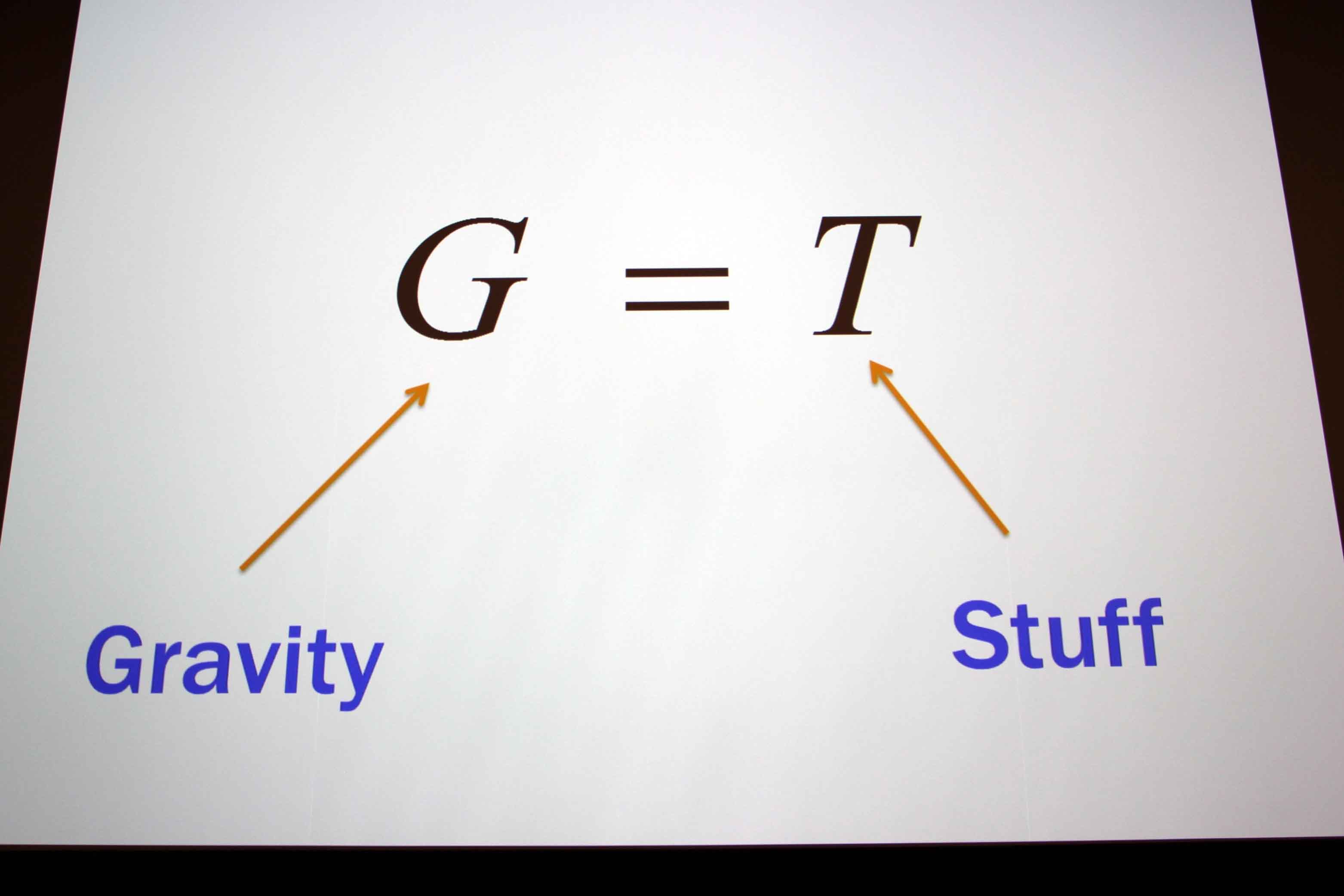
There are lots of possibilities for what dark energy may turn out to be, but I’ve decided to allow only six broad classes into which most candidate explanations can be grouped:
- The cosmological constant, originally introduced as a modification of the left hand side of Einstein’s general theory of relativity – the side that describes gravity – but more often regarded nowadays as a modification of the right-hand-side representing a vacuum energy. Whichever interpretation you make of this, its defining characteristic is that it is constant.
- Modified gravity, in other words some modification of the left-hand-side of Einstein’s equations that manifests itself cosmologically which is more complicated than the cosmological constant.
- Dynamical dark energy, i.e. some other modification of the energy-momentum tensor on the right-hand side of Einstein’s equation that looks like some form of “stuff” that varies dynamically rather than being cosmologically constant.
- Violation of the cosmological principle by the presence of large-scale inhomogeneities which result in significant departures from the usual Friedman-Robertson-Walker description within which the presence of dark energy is
- Observational error, by which I mean that there is no dark energy at all: its presence is inferred erroneously on the basis of flawed measurements, e.g. failure to account for systematics.
- Some other explanation – this would include the possibility that the entire standard cosmological framework is wrong and we’re looking at the whole thing from the wrong point of view. If you choose this option you might want to comment through the box below what you have in mind.
Well, there are the six candidates. Make your choice:
Follow @telescoperCosmology beyond the Centenary of Λ
Posted in Talks and Reviews, The Universe and Stuff with tags cosmological constant, Einstein, Euclid on June 6, 2017 by telescoperI didn’t expect to be doing anything other than listening to the talks and getting updated on the progress of the Euclid project at this meeting in London, but this morning I was roped in to introduce a public event tomorrow evening, called Cosmology beyond the Centenary of Λ:
This will take the form of a dialogue/discussion/debate between two leading cosmologists taking a `big picture’ view of the state of cosmology now and likely future developments. I’m sure it will be very friendly so I won’t use any form of language that suggests confrontation but it features, in the red corner, George Efstathiou of the University of Cambridge and, in the blue corner, Ofer Lahav of University College London.
Incidentally, I posted some months ago about the fact that this is the centenary year of Einstein’s introduction of the cosmological constant into the field equations of general relativity in this paper:

I recommend anyone attending this Euclid meeting and indeed anyone with a passing interest in cosmology to read that paper – it’s very different from what you might probably imagine it to be!
Follow @telescoper
 In the Dark