La Bohème at WNO

Posted in Opera with tags , , , on January 30, 2017 by telescoper

So, to get away from the world for a short while I went on Saturday to the opening night of the new season by Welsh National Opera at the Wales Millennium Centre in Cardiff – a tale of poverty and doomed love, ending in a tragic death. Well, what did you expect from an Opera, a happy ending?

I suppose the story of La Bohème will be familiar to anyone with even a passing interest in Opera, but I’ll give a quick synopsis anyway.  It’s a boy-meets-girl love story, of course. The boy in this case is the poet Rodolfo (Dominick Chenes) and the girl, actually named Lucia but known  as Mimi (Marina Costa-Jackson).  The setting is Paris around 1830, and the poet and his painter friend Marcello (Gary Griffiths) are starving and freezing, as it is winter and they have no money.  Act I is set on Christmas Eve, but the two friends have nothing to eat and nowhere to go. Fortunately, their musician friend Schaunard (Gareth Brynmor John) turns up with money and provisions. After various comings and goings – including the arrival of philosopher Colline (Jihoon Kim) and an untimely visit from the landlord (Howard Kirk) everyone but Rodolfo leaves to spend Christmas Eve out on the town; Rodolfo has to finish a piece for a journal, and promises to join them when he is done. However, he is interrupted by the arrival of Mimi, who lives nearby and whose candle has gone out. It’s love at first sight…

The later stages of Act I are built around Rodolfo’s aria Che Gelida Manina (“your tiny hand is frozen”) and Mimi’s Mi Chiamano Mimi. These beautiful songs follow one another in quick succession, and are then rounded off with a wonderful duet O Soave Fanciulla  in a manner guaranteed to melt the stoniest of hearts. And, before you ask, yes I did cry again. Just a little bit. I don’t think anyone noticed.

But it’s not just the ravishing music that makes this passage so special, it’s also Puccini’s gift as a story-teller: after the two arias by Rodolfo and Mimi, the audience knows everything they need to know about these characters. It’s a great example of why I think Puccini is a far greater writer of Opera than, say, Wagner. Puccini understood much better than Wagner how to vary  pace and colour  without allowing the story to bogged down, and he knew exactly how to use his big tunes to maximum dramatic effect (i.e. without excessive repetition). In fact, La Bohème is in four acts, but its running time is just about 2 hours and 15 minutes, packed full of gorgeous music and compelling drama. It’s a supreme example of Puccini’s artistry as a composer of Opera.

Anyway, back to the plot. Act II finds Rodolfo and Mimi joining in the party started by Marcello and his buddies. There’s a huge contrast here between the dingy garret in which Act I is set, as this is set in the Latin Quarter of gay Paris (with a few drag queens in this production thrown in to make the point). Marcello gets off with the object of his desire, the coquettish Musetta (Lauren Fagan), and all seems well with the world as we go into the interval.

In Act III we find things have changed. Rodolfo’s love for Mimi has soured and, overcome by jealousy and suspicion, he has left her. Clearly unwell, Mimi wanders around looking for Rodolfo and he hears her coughing. They clearly still love each other, but find it difficult to live with each other. If Opera were Facebook they would both have “It’s complicated” on their status.

The last act finds us back in the garret, Rodolfo and Mimi having separated. But Mimi has been wandering the streets in the freezing cold and turns up, clearly gravely ill. Rodolfo’s friends quickly pawn some meagre possessions and Marcello and Musetta rush out to buy medicine and summon a doctor. They return with the medicine but, before the doctor arrives, Mimi dies.

People say that this is a romantic opera but it’s a pretty bleak story when you think about it. The lovers’ happiness is brief and it all ends in despair and death in surroundings of poverty and squalor. That’s what Opera Verismo is all about. In this production Mimi really does looks ill at the end, making the ending all the more heartbreaking.

All the principals were very good. I thought the voice of Dominick Chenes sounded a little thin at the start and was worried that he might have to force it during the big arias, but he warmed up magnificently. Lauren Fagan was a very sassy as the “tart-with-a heart” Musetta. The other person who deserves a particular mention was the bass Jihoon Kim as Colline, who has a superb voice.

And a word for the production. This revival of Annabel Arden’s design – slightly different from the last time I saw it, with a different case, five years ago – managed to bring fresh elements to what is basically a straightforward interpretation of the Opera. The visual effects, such as the animated snow,  were clever but not intrusive. There was no attempt to translate the action into a different period or location nor was there an attempt to preach about disease as a metaphor for moral failings. In this respect it’s very faithful to what I think Puccini’s intentions were, i.e. to let the audience make their own mind up about what message they want to take away. The only slight departure I spotted was that in Act I Mimi actually blows her own candle out deliberately in order to get Rodolfo to light it again. Methinks she’s a bit more forward than usual in this production.

This was the first performance of this run of La Bohème. If you love Opera and can get to Cardiff, then do go and see it. It’s very special.

P.S. I was a little amused by the image of the skyline of 19th Century Paris projected in front of the curtains before the show started. It did much to set the atmosphere, but I really don’t think those TV aerials should have been there…


Refugee Blues

Posted in Poetry, Uncategorized with tags , , , on January 29, 2017 by telescoper

Say this city has ten million souls,
Some are living in mansions, some are living in holes:
Yet there’s no place for us, my dear, yet there’s no place for us.

Once we had a country and we thought it fair,
Look in the atlas and you’ll find it there:
We cannot go there now, my dear, we cannot go there now.

In the village churchyard there grows an old yew,
Every spring it blossoms anew:
Old passports can’t do that, my dear, old passports can’t do that.

The consul banged the table and said,
“If you’ve got no passport you’re officially dead”:
But we are still alive, my dear, but we are still alive.

Went to a committee; they offered me a chair;
Asked me politely to return next year:
But where shall we go to-day, my dear, but where shall we go to-day?

Came to a public meeting; the speaker got up and said;
“If we let them in, they will steal our daily bread”:
He was talking of you and me, my dear, he was talking of you and me.

Thought I heard the thunder rumbling in the sky;
It was Hitler over Europe, saying, “They must die”:
O we were in his mind, my dear, O we were in his mind.

Saw a poodle in a jacket fastened with a pin,
Saw a door opened and a cat let in:
But they weren’t German Jews, my dear, but they weren’t German Jews.

Went down the harbour and stood upon the quay,
Saw the fish swimming as if they were free:
Only ten feet away, my dear, only ten feet away.

Walked through a wood, saw the birds in the trees;
They had no politicians and sang at their ease:
They weren’t the human race, my dear, they weren’t the human race.

Dreamed I saw a building with a thousand floors,
A thousand windows and a thousand doors:
Not one of them was ours, my dear, not one of them was ours.

Stood on a great plain in the falling snow;
Ten thousand soldiers marched to and fro:
Looking for you and me, my dear, looking for you and me.

written in 1939 by W.H. Auden (1907-1973)

R.I.P John Hurt (1940-2017)

Posted in Film, Television with tags , , on January 28, 2017 by telescoper

I just heard today of the death (on Wednesday 25th January, aged 77) of the great British actor John Hurt. 

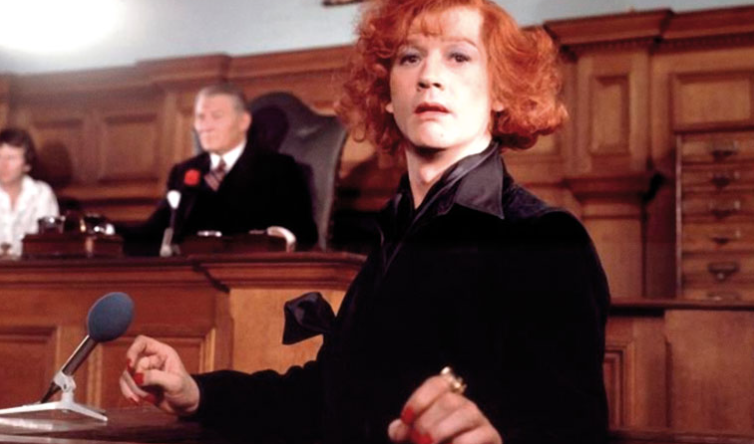
John Hurt was an extremely versatile actor who starred in many different roles, from Elephant Man to Alien, but I shall always remember him best as Quentin Crisp (above) in the 1975 television drama adapted from Crisp’s book The Naked Civil  Servant which I saw on TV when it was first broadcast.

Rest in peace, John Hurt (1940-2017).

Splitting from Euratom

Posted in Politics, Science Politics with tags , , , , on January 27, 2017 by telescoper

This week the government published a short bill in response to the Supreme Court’s decision, announced on Tuesday morning, that Parliament should be involved in the process of notifying the European Union if and when the United Kingdom decides to leave. The Supreme Court (by a majority of 8-3) upheld the earlier decision of the High Court that  the Executive could not take a decision of such magnitude (effectively using the Royal Prerogative) without explicit Parliamentary approval.

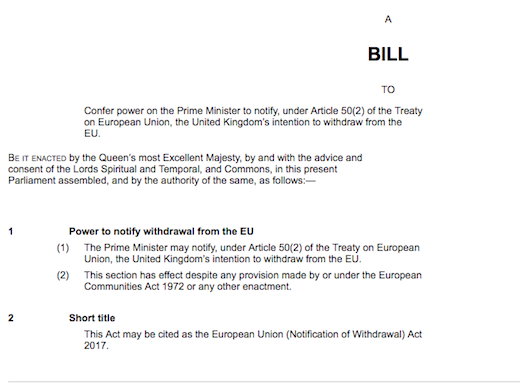
The Article 50 Bill is very short. In fact this is it in full:

billarticle50

The government plans to force this  through both the House of Lords and the House of Commons in five days, although will undoubtedly be attempts to amend it.  It has subsequently emerged that a White Paper concerning the process of negotiating the withdrawal will be published, but not until after the Article 50 Bill is enacted. It’s readily apparent that the government is merely playing grudging lip-service to the sovereignty of Parliament. Let’s hope Parliament shows some guts for once and stands up for the interests of the United Kingdom by refusing the give the Executive Carte Blanche and insisting on full Parliamentary scrutiny of the process, including giving MPs the chance to call off the whole fiasco when it becomes obvious that we’re better off not leaving the EU after all.

As another example of the contempt for open government, news broke today that in the explanatory notes for the Article 50 bill, the UK government indicates that it intends for the UK to leave the European Atomic Energy Community (Euratom). This organization has a number of regulatory roles concerning nuclear energy supply and distribution, but also has a major research focus on the International Thermonuclear Experimental Reactor (ITER), a project aimed at constructing a fusion reactor, which currently involves a significant number of UK scientists. This project is truly international: involving the EU, Russia, the USA, Japan, Korea and India.

Unlike, e.g. CERN and ESA, the organization of Euratom is legally linked to the European Union, so one can argue that withdrawal from the EU necessarily means leaving Euratom, but to announce this in the explanatory notes without any attempt to discuss it either in Parliament or with the organizations involved seems to me yet another manifestation of the UK government’s desire to avoid any consultation at all, wherever this is possible. The Supreme Court prevented them from excluding Parliament, but it is clear that they will continue to avoid due process whenever they think they can get away with it. This announcement now puts a big question mark over the futures of many scientists involved in nuclear research. You can find a blog post on this by a nuclear physicist, Paul Stevenson of the University of Surrey, here.

The decision to withdraw from Euratom poses very serious questions about our nuclear industry as well as nuclear physics and engineering research so it should be discussed and evaluated. Whatever you think about BrExit, trying to force through such important decisions without consultation is not the proper way for a government to carry on.

Working for the Yankee Dollar

Posted in Biographical, Music with tags , on January 27, 2017 by telescoper

While bracing myself to endure the nauseating spectacle of a British Prime Minister grovelling to the abominable Donald Trump in a desperate attempt to interest him in a trade deal, and sacrifice the National Health Service in the process, I suddenly had two flashbacks to the days of my youth (specifically 1979).

The first was to the TV series Tinker Tailor Soldier Spy. Near the end, Bill Haydon, who has been revealed as a Russian “mole” and traitor to his country laments his country’s abject willingness to prostitute itself on behalf of the United States of America and explains that he decided to become a Soviet agent when he realised that “Britain had become America’s streetwalker”.

Coincidentally (?), this record by Scottish punk band The Skids was was also released in 1979:

Given the recent antics of the UK government I feel more confident than ever that Scottish independence will be a reality very soon.

Bewitched, Bothered and Bewildered

Posted in Music with tags , , on January 26, 2017 by telescoper

Given that I love the Opera so much, I often wonder why it is that I dislike musicals so much. I’ve heard people say that it’s snobbery of some sort. I don’t think that’s true at all. After all, I do love a lot of the songs that appear in musicals – especially those from the classic American composers, such as Cole Porter, George and Ira Gershwin, Rodgers and Hammerstein and (in this particular case) Rodgers and Hart. I’d say some of these songs are among the cleverest, wittiest and most engaging musical pieces ever composed. I suppose it must be that I just don’t find the shows themselves as interesting as some of the songs in them.

Anyway, I’ve had this one at the back of my mind since I heard it on Private Passions recently. It is from the musical Pal Joey was picked by Alan Bennett who praised it for its brilliant lyrics, full of cheeky rhymes, such as:

Vexed again, perplexed again
Thank God, I can be oversexed again

And this great song is made greater still in this performance by the sublime vocal artistry of the late great Ella Fitzgerald.

GRAVITY now DEBUNKED ????

Posted in Uncategorized on January 25, 2017 by telescoper

The writer of this post – known as “GavTheBrexit” on Twitter – invites readers to share it, so I’m doing so now.
Anyone with any knowledge of physics whatsoever (even pre-GCSE) is invited to comment on the “theory” presented in the post.

Is it now official UKIP policy to repeal the laws of gravity?

P.S. Note the widespread use of “FASHCAPS”…

THE GAVZETTE's avatarTHE GAVZETTE

WHAT IS GRAVITY ?????????

Well science tells us GRAVITY is a magnetic force keeping us and all on the PLANET EARTH.

So let’s go with SCIENCE even though i have little respect for it in many cases as much of it are THEORIES , just as it is with GRAVITY ??,

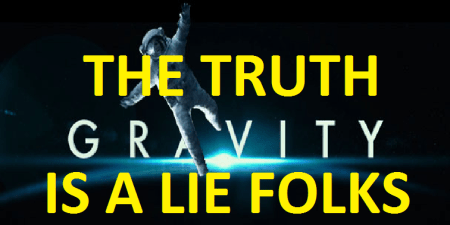
We are told a man called ISAAC NEWTON gravity-is-a-liediscovered gravity and what its effects are after seeing an APPLE fall from a tree.Well i am here to say this is UTTER RUBBISH.

So let’s go with Newton’s THEORY and that’s all it is a theory ?? no PROOF whatsoever exists to this day to conclusively PROVE GRAVITY.But for the sake of this article we will go along with Newton’s theory.

Now Newton’s THEORY is basically we are stuck to earth due to a MAGNETIC force or an ATTRACTION of sorts ?.

Now this would make sense if we didn’t have MASS…

View original post 706 more words

Chance’s Beard to Darwin

Posted in Beards, History with tags , , , , on January 25, 2017 by telescoper

One of my global team of unpaid researchers emailed me to tell about this short video, one of a series called Curious Objects commissioned by Cambridge University, which tells the story of a rather hairy encounter between Charles Darwin and a man called Dr Frank Chance. Dr Chance attempted to counter Darwin’s claim in Descent of Man that beard hair is always lighter than hair on the head – and went as far as sharing some of his own trimmings with the great man himself (although he seems to have had plenty of his own).

Is it true that beard hair is always lighter than scalp hair? And what about other hair…..the downstairs kind even?

Sci-Comm: What is to be done?

Posted in Uncategorized on January 25, 2017 by telescoper

Very important post which articulates some serious issues around science communication, especially that “outreach” needs to be far more than a problem exercise or an element of a recruitment strategy, which is how it has come to be viewed in many universities.

Literacy of the Present's avatarLiteracy of the Present

Science communication has failed

Rearranging the furniture in the White House are a President who said climate change was a hoax, and a Vice-President who does not accept the theory of evolution. The rest of Trump’s cabinet is an equally deplorable bunch when it comes to science (or, indeed, anything else when it comes to being decent and humane).

I’m not blaming science communication for the election of Trump. But Trump’s Presidency is evidence that science communication has failed.

You might say that this has little to do with science communication, that Trump won the election on other issues but this only shows that science-based issues were not seen as important enough – also a failure.

And Brits should not be so smug either, with their vote for Brexit and their “had enough of experts”.

What we have clearly seen in recent months is that facts are not enough no…

View original post 1,043 more words

Back to the (Early) Universe

Posted in Education, The Universe and Stuff with tags , , , on January 24, 2017 by telescoper

After what seems like ages away from the lecture theatre, today I resuming teaching duties with the first session of my module on The Physics of the Early Universe; the link there gives Enzo Pascale as being in charge of the module, but he has left BrExit Britain for his native Italy so I’ve taken his place. I actually wrote the syllabus for this module about five years ago when I worked in Cardiff previously, and was scheduled to deliver it in 2013, but I left for Sussex before it started and never actually lectured it. It’s nice to be able to teach this material at long last – at least it’s stuff that I should know something about.

This lectures are attended by students on the 4th year of the integrated Masters programme (MPhys) and also on stand-alone MSc courses in Physics or Astrophysics. I have about 25 students enrolled, which is not bad for a specialist module.

In fact Enzo recommended the book I wrote with Francesco Lucchin when he taught the module, and I’m happy to use it as the main text. I won’t cover all the material in the book – there isn’t time, and some of the book is out of date (written in 2002) – but at least almost everything I do in the lectures has a counterpart in the book.

Chapter 3 of Coles \& Lucchin has a chapter that may prove particularly popular in this era of ‘Alternative Facts’:

cosmology

I did however resist the temptation to hire a group of people to sit at the front of my first lecture cheering and clapping wildly.

I’ve asked to have my lectures timetabled in two-hour chunks. That’s partly because I only work part-time and I wanted to be able to maximize the flexibility with which I can use the rest of the time by concentrating my teaching commitments. The other reason is that I like the extended format. I don’t talk continuously for the whole time, of course. That would be unbearable for me and for the students. We have a ten-minute break in the middle. However, the two-hour block allows a wider range of activities – lecturing, discussion and worked examples – which is harder to do in the usual (50-minute) slot without being excessively rushed. When I taught postgraduates at Queen Mary we used two-hour blocks, which worked out quite well. The only problem is that I’m now a lot older, and having finished my first double-lecture I think it’s fair to say I’m more than a little knackered.

Another innovation is the use of Cardiff’s new lecture-capture system (called Panopto), which allows the lecturer to record everything – powerpoint, data visualizer, whiteboard and live action – for posterity. I recorded this morning’s lecture in toto and at some point when I get a moment I’ll do a quick edit and put it on Learning Central for the students to view at their leisure. I’m not sure how useful my ramblings will prove to be, but it’s fun to try these things. It’s a significantly more sophisticated and flexible system than the one we used when I was at Sussex, and I’m also lucky to be in a nice, clean and recently refurbished lecture theatre…

Anyway, this gives me the excuse to refloat an old opinion poll about lecture capture. Such facilities are of course very beneficial for students with special learning requirements, but in the spirit of inclusive teaching I think it’s good that all students can access recorded lecture material. Some faculty are apparently a little nervous that having recordings of lectures available online would result in falling attendances at lectures, but in fact the available evidence indicates precisely the opposite effect. Students find the recorded version adds quite a lot of value to the “live” event by allowing them to clarify things they might not have not noted down clearly.

I like the idea of lecture capture a lot and am very happy to do it with my own lectures. It does seem to be the case however that some university staff are wary of this innovation, but opinion may be changing. Please let me know what you think via the poll:

If you don’t like the idea I’d welcome a comment explaining why. I’d also be interested in comments from colleagues in other institutions as to the extent to which lecture capture technology is used elsewhere..