Interesting “inside” story by a student of the discovery of gravitational waves, from the Classical and Quantum Gravity Website.
Professor Stephen Fairhurst (mentioned in the post) is a member of the Gravitational Physics group at Cardiff University, and Director of the Data Innovation Research Institute.

Written by Samantha Usman, who is currently pursuing an MPhil at Cardiff University, UK under the supervision of Prof. Stephen Fairhurst. She graduated in May 2016 with a BS in Mathematics and Physics at Syracuse University. While at Syracuse, Usman worked with Prof. Duncan Brown on improving LIGO’s sensitivity to gravitational waves from binary star systems. In her spare time, Usman trains in Brazilian jiu jitsu and Muay Thai kickboxing and enjoys walks with her Australian Shepherd, Marble.
The discovery of gravitational waves from an undergraduate’s perspective
 Author Samantha Usman training for competition in Brazilian jiu jitsu.
The first time I learned LIGO might have detected a gravitational wave, I was listening in on a conference call on September 16, 2015. Two days earlier, ripples in the fabric of space from massive black holes crashing into each other at half the speed of light had passed through the…
View original post 1,036 more words




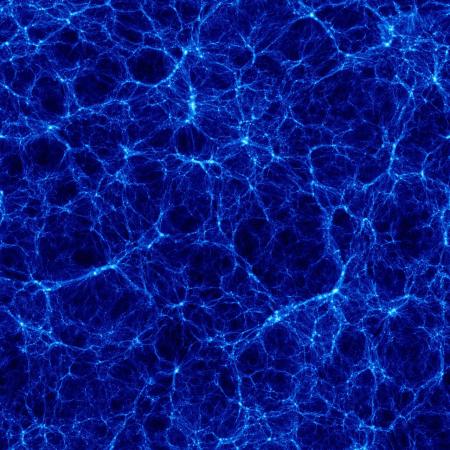
 The lecture will focus on the large-scale structure of the Universe and the ideas that physicists are weaving together to explain how it came to be the way it is. Over the last few decades, astronomers have revealed that our cosmos is not only vast in scale – at least 14 billion light years in radius – but also exceedingly complex, with galaxies and clusters of galaxies linked together in immense chains and sheets, surrounding giant voids of (apparently) empty space. Cosmologists have developed theoretical explanations for its origin that involve such exotic concepts as ‘dark matter’, ‘dark energy’ and ‘cosmic inflation’, producing a cosmic web of ideas that is, in some ways, as…
 In the Dark