As it happens, I went to school with the author of this piece and have had no contact with him for over thirty years. I agree wholeheartedly with what Jerry Hogg says, and am glad at least that these dark times have renewed an old acquaintance!
Brexit – The downside of pulling up the drawbridge is that you’re trapped inside
Posted in Uncategorized on October 9, 2016 by telescoperThe Hallé at St David’s
Posted in Music with tags Antonin Dvorak, Benjamin Grosvenor, Franz Liszt, Ludwig van Beethoven, Pastoral Symphony, Piano Concerto No. 2, Sir Mark Elder, St David's Hall, Symphony No 6, The Golden Spinning Wheel on October 9, 2016 by telescoperOn Friday evening I kept up the concert-going, this time at St David’s Hall in Cardiff (which I haven’t been to for far too long). This was the first in the new season of concerto that will run until next summer.
On the bill on Friday was the Hallé Orchestra from Manchester (which is in the Midlands) under the direction of Sir Mark Elder.
The first half of the concert featured two works, the symphonic poem The Golden Spinning Wheel by Antonín Dvorak and Liszt’s Piano Concerto No. 2, with soloist Benjamin Grosvenor.
The Dvorak piece is full of energy and colour and nice tunes, but I found it rather long for what it has to say. Still, it was a good workout with which to get the Hallé warmed up.
I’m not a huge fan of Liszt. I often find his compositions showily virtuosic but rather shallow. Liszt’s Second Piano Concerto is actually much less like that than I expected. Consisting of a single movement lasting just over 20 minutes, it certainly has its pyrotechnical passages, but the piano also takes a back seat too. It’s a very enjoyable work, dazzlingly played at this concert by youthful star soloist Benjamin Grosvenor.
The second half was devoted to a very well-known piece, Beethoven’s Sixth Symphony (“The Pastoral”). It was, however, played in an unusual way that gave it a very fresh sound. Instead of having the basses and cellos in one block, Sir Mark Elder divided them into two groups either side of the stage, one with the first violins and one with the second violins. This simple device managed to create a much more solid sound from the orchestra, as well as seeming to lower its centre of gravity, as it were. This heightened the impact of the excellent Hallé strings and gave the whole orchestra a rich sonority that perfectly suited the elemental power expressed by Beethoven’s composition.
A very enjoyable concert. Next one, in a couple of weeks, will be Mahler’s Symphony No. 2 (“The Resurrection”). I can’t wait for that!
Follow @telescoperVariations on the Theme of Vegetables
Posted in Biographical with tags Riverford, Romanesco, Scurvy, vegetables, Vitamin C, Vitamin K, Vitamins on October 7, 2016 by telescoperWhen at school I had an English teacher who encouraged us to practice writing skills through a series of exercises that required us to write a piece that successfully connected two different events or ideas. I found those exercises very useful and I sometimes try the same thing when I’m stuck for something to write about on this blog. So here’s a hamfisted attempt to shoehorn two things that happened this week into one blog post.
One of the first things I did when I moved back to Cardiff in the summer was to reinstate weekly deliveries of fresh organically-gown vegetables direct from a farm via a company called Riverford. I blogged about the the reasons for doing this some years ago, including the following:
I have a standing order for a small box of vegetables every week costing about £10. The composition varies from week to week and with the time of year. The company does email and post on its website the contents of the following week’s boxes, but I generally don’t look at it. When the box arrives, it’s usually a mixture of staples (potatoes, carrots, onions, etc) plus things that are not so familiar, and often things that I’ve often never cooked before. If it hadn’t been for the veggie box, I would probably never have found out about how to cook chard, romanesco, jerusalem artichokes and celeriac. I look forward to these surprises. Not knowing exactly what’s coming forces me to cook new things, and if I don’t know how to cook them there’s always google.
Here’s an example here from this week’s box:

This extraordinary fractal object is Romanesco. It’s obviously related to the cauliflower, but has a much firmer texture and has a distinctive “nutty” flavour. I am looking forward to cooking and eating this at the weekend!
Another reason for resuming the veggie box service (still only £10, by the way) is that I’ve had medical advice to increase my consumption of fresh vegetables, especially those rich in Vitamin K (which includes the various Brassica that includes Romanesco, but also cabbages, broccoli, kale, spinach, chard and a host of other things that I really enjoy eating anyway.
This brings me to another topic that has been on my mind this week. A chance conversation with a friend who happens to be a GP revealed that she’s seen a worrying upturn in the number of (male) university students presenting with symptoms of scurvy, an extremely unpleasant and potentially life-threatening condition caused by a deficiency of Vitamin C. University students are not famed for their healthy eating habits, and the prevalence of fast-food outlets combined with inadequate knowledge of even basic cooking techniques among young men is probably responsible for this regrettable phenomenon. The human body is not able to make its own Vitamin C so we have to make sure we eat enough food containing it. However, the recommended daily intake is actually rather small and is easily met by a modest intake of fruit and vegetables. Sailors on a diet of hard tack and salt pork had an excuse for developing scurvy, but there’s no reason at all for anyone – even students – to suffer the same fate by living on crisps and kebabs.
Anyway, if you work in a university I hope you’ll consider passing this advice onto your students. Indeed if you’re at a proper university that still does small-group teaching in tutorials, why not offer your students some fresh fruit or orange juice? Just a thought.
Follow @telescoperLlŷr Williams plays Beethoven
Posted in Music with tags Diabelli Variations, Llŷr Williams, Ludwig van Beethoven, Opus 10, Opus 120, Royal Welsh College of Music and Drama, Three Piano Sonatas on October 7, 2016 by telescoperDetermined to enjoy civilisation as much as I can while we still have it, last night I went to a splendid concert at the Royal Welsh College of Music and Drama in Cardiff featuring acclaimed Welsh pianist Llŷr Williams in an all-Beethoven programme.
The first half of the recital consisted of the three piano sonatas (Opus 10), which are his fifth, sixth and seventh sonatas altogether. Although these are still early works by Beethoven you can already see him pushing back the restrictions of the sonata form. The first two sonatas of this set are of the standard three movement fast-slow-fast format – the first, to my mind, very reminiscent of Haydn – whereas the third has four movements and is looking ahead to what Beethoven would do in future compositions; the second movement of this third Sonata is particularly beautiful, in a darkly sombre way. None of these pieces reach the heights of his later works, but there is much to enjoy in listening to them.
After the interval we had the Diabelli Variations (Opus 120). The amusing story behind this much later work was recounted by Llŷr Williams before he started to play it. In 1819 the music publisher and composer Anton Diabelli hit on an idea for a kind of publicity stunt for his publishing business. He wrote a little tune (a waltz, in fact) and sent it to a number of prominent Viennese composers (Beethoven amongst them) with the invitation to write a variation on it. The plan was to parcel all the individual variations together and sell the work as a kind of advertising brochure for Austrian culture. Beethoven wasn’t keen at first – at least in part because he thought the tune was too dull – but he then he decided to turn the project on its head by writing a complete set of variations himself. He wrote the first 19 in quick succession in 1819 and wrote another 14 a few years later. The 33 variations he produced altogether cover an astonishing musical and emotional range: sometimes witty, sometimes tragic, always fascinating. Llŷr Williams aptly described this collection as “one of the pinnacles of the piano repertoire”. Being almost an hour long it must be a demanding work to play, but he clearly relished performing it.
As a Jazz fan it has often struck me how great musicians in that idiom can find inspiration in seemingly unpromising tunes, turning base metal into gold through their gifts for improvisation. Last night it struck me how similar that is to Beethoven’s use of a simple little tune as the basis for the Diabelli variations. Theme and variation, that’s what it’s all about!
Llŷr Williams is currently doing a concert series exploring all of Beethoven’s piano works at the Wigmore Hall in London and these are being recorded for broadcast by BBC Radio 3. In fact, next week (on Tuesday 11th October, at 7.30) you have the chance to hear exactly the same programme that we heard last night. I’ll certainly be listening!
P.S. I’ll leave the pronunciation of “Llŷr” as an exercise to the reader…
Follow @telescoper
Lord Rees on the Threat to UK Science
Posted in Politics, Science Politics, The Universe and Stuff with tags Lord Rees, Martin Rees, Nobel Prize Physics, Science on October 6, 2016 by telescoperIn case you missed the comments by Lord Rees on Newsnight in the wake of the announcement of this year’s Nobel Prizes for Physics, here is a video.
Martin is always impeccably polite but I sense he must have been outraged by the statements made by Home Secretary Amber Rudd at the Conservative Party Conference this week, some of which seem to have been taking directly from Mein Kampf. Prior to this interview, the most extreme word I’ve ever hard Martin use was “reprehensible” – and that on an occasion when he was clearly angry. His use of the word “deplorable” here is very significant.
Quite apart the threat to science, I have to admit I’m extremely worried about the direction this country is taking. Perhaps someone should tell Prime Minister Theresa May that the referendum wasn’t about leaving the League of Nations and that this isn’t 1933. The parallels with Germany are striking. In that case it didn’t end with the identification and deportation of foreign workers. Yesterday Theresa May stated that anyone who describes themselves as a “Citizen of the World” is really a “Citizen of Nowhere”. I’ve never felt less at home in my own country than I do now.
A few days before the referendum a wrote a post that included this:
Of course I’m not saying that all those who want the UK to Leave the EU are fascists. Far from it. Many – indeed the majority – are reasonable, civilised people. But like it or not, if you vote Leave you’re voting the way the far right want you to vote. I for one will not take a single step in that direction. Fascism only needs a foot in the door. I fear that the domestic political consequences of BrExit will give it far more than that. Once they get hold of it, we’ll never get our country back.
My fear is even more real now than it was then.
Follow @telescoper
A Day in Autumn – National Poetry Day
Posted in Poetry with tags A Day in Autumn, National Poetry Day, Poetry, R. S. Thomas on October 6, 2016 by telescoperIt will not always be like this,
The air windless, a few last
Leaves adding their decoration
To the trees’ shoulders, braiding the cuffs
Of the boughs with gold; a bird preening
In the lawn’s mirror. Having looked up
From the day’s chores, pause a minute,
Let the mind take its photograph
Of the bright scene, something to wear
Against the heart in the long cold.
by R.S. Thomas (1913-2000)
Posted to mark National Poetry Day.
Follow @telescoeprAnnouncing…’The Age of the Beard”
Posted in Uncategorized on October 5, 2016 by telescoperImportant beard history event…

I’m delighted to be able to announce the launch, in November 2016, of the exhibition linked to my Wellcome Trust project on the history of facial hair in Britain.
Between Mid November and March 2017, the Florence Nightingale Museum in London will host ‘The Age of the Beard’ – a photographic exhibition of some of the finest examples of Victorian facial hair, along with a range of other fantastic exhibits including Victorian razors and shaving paraphernalia, advertising and all sorts of other beard-related facts and figures.
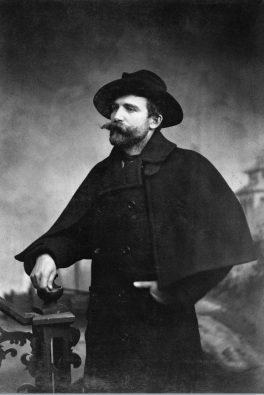
(Henry Wellcome, to whom I owe my career! – copyright Wellcome Images)
Along with the exhibition will be a series of public events, including talks, family activities and even a production of the pantomime ‘Bluebeard’.
Full details are available from the museum’s website here
I hope that many of you can come and join us, and celebrate the golden age of the hirsute face…
View original post 4 more words
Cable St 4th Oct 1936: why taking sides in history & now is important
Posted in History with tags Battle of Cable Street on October 4, 2016 by telescoperEighty years on from the Battle of Cable Street, I hope this generation will be brave enough when the time comes to say “They Shall Not Pass”..

Cable St & why it is important to remember history

The Battle of Cable St took place 80 years ago on 4th October 1936 and there will be events to mark the anniversary this coming weekend.
Why remember it?
After all the media in particular is full of pieces remembering anniversaries of events and occasions. Not all of what is printed or posted is that historically accurate and a good deal of it is not particularly enlightening. We might call it an anniversary culture.
Of course as an historian I contribute to it myself though I do try and look at events that are less well remembered either because they are genuinely obscure (but hopefully of interest) or because they present awkward questions for the present.
The 80th anniversary of Cable St probably falls into the latter category. You won’t find too many today who will argue that…
View original post 200 more words
The 2016 Nobel Prize for Physics goes to David Thouless, Duncan Haldane and Michael Kosterlitz
Posted in Science Politics, The Universe and Stuff with tags David Thouless, Duncan Haldane, Michael Kosterlitz, Nobel Prize, Nobel Prize for Physics 2016, Scotland, Topological Phase Transitions, Topological Phases on October 4, 2016 by telescoperWell, as I suspected, the Nobel Prize Committee for Physics played with a very straight bat and did not award this years Prize to gravitational waves. I thought there was a reasonable chance they might bend the rules, and the polling was very even , so clearly some people thought so too. Anyway, I don’t think any bookmakers will be taking bets on next year!
Anyway, none of this should detract at all from the winner. Half this year’s prize was awarded to David J. Thouless (University of Washington, Seattle, WA, USA) and the other half to F. Duncan M. Haldane (Princeton University, NJ, USA) and J. Michael Kosterlitz
(Brown University, Providence, RI, USA)
”for theoretical discoveries of topological phase transitions and topological phases of matter”
Although they now live and work in the USA, all three of the winners were born in the United Kingdom (two of them, Kosterlitz and Thouless, in Scotland); Haldane retains British nationality, Kosterlitz is now an American citizen and Thouless has joint US/UK nationality.
And here’s the text of the citation:
This year’s Laureates opened the door on an unknown world where matter can assume strange states. They have used advanced mathematical methods to study unusual phases, or states, of matter, such as superconductors, superfluids or thin magnetic films. Thanks to their pioneering work, the hunt is now on for new and exotic phases of matter. Many people are hopeful of future applications in both materials science and electronics.
The three Laureates’ use of topological concepts in physics was decisive for their discoveries. Topology is a branch of mathematics that describes properties that only change step-wise. Using topology as a tool, they were able to astound the experts. In the early 1970s, Michael Kosterlitz and David Thouless overturned the then current theory that superconductivity or suprafluidity could not occur in thin layers. They demonstrated that superconductivity could occur at low temperatures and also explained the mechanism, phase transition, that makes superconductivity disappear at higher temperatures.
In the 1980s, Thouless was able to explain a previous experiment with very thin electrically conducting layers in which conductance was precisely measured as integer steps. He showed that these integers were topological in their nature. At around the same time, Duncan Haldane discovered how topological concepts can be used to understand the properties of chains of small magnets found in some materials.
We now know of many topological phases, not only in thin layers and threads, but also in ordinary three-dimensional materials. Over the last decade, this area has boosted frontline research in condensed matter physics, not least because of the hope that topological materials could be used in new generations of electronics and superconductors, or in future quantum computers. Current research is revealing the secrets of matter in the exotic worlds discovered by this year’s Nobel Laureates.
It’s not my field, but I send my heartiest congratulations to Professors Thouless, Haldane and Kosterlitz. Enjoy your trip to Stockholm – it’s lovely in December!
Note that the Thomson-Reuters Nobel Prize “predictor”“, which is not often right, was wrong again!
Follow @telescoper
The Merchant of Venice at Welsh National Opera
Posted in Opera with tags Andre Tchaikowsky, Feargal Mostyn-Williams, Merchant of Venice, Welsh National Opera on October 3, 2016 by telescoper
Last Friday (30th September 2016) I got another fix of opera in the form of a new Welsh National Opera production of The Merchant of Venice by André Tchaikowsky at the Wales Millennium Centre in Cardiff Bay (above; the people in the bottom left of the picture were having an important discussion about the location of the nearest Fish & Chip shop).
The Opera sticks very closely to Shakespeare’s play of the same name, even to the extent that the libretto uses some of the original text verbatim. That creates the opposite problem to that which I mentioned in my review of Verdi’s Macbeth. In Verdi’s case the text was excessively abridged with many memorable passages omitted entirely, but in this case the Opera struggles to under the weight of so many words. It’#s not just that the Opera has to be rather long in order to accommodate so much of the original play, more that Shakespeare’s verse has a compelling rhythm to it that echoes but also amplifies the cadences of natural English speech. Unless it is done exceptionally well, setting the words to music actually detracts from the poetry rather than adding anything to it. Take for example, Portia’s wonderful speech in the courtroom scene (Act IV of the play; Act III of the opera):
The quality of mercy is not strained;
It droppeth as the gentle rain from heaven
Upon the place beneath. It is twice blest;
It blesseth him that gives and him that takes:
‘T is mightiest in the mightiest; it becomes
The throned monarch better than his crown:
His sceptre shows the force of temporal power,
The attribute to awe and majesty,
Wherein doth sit the dread and fear of kings;
But mercy is above this sceptred sway;
It is enthronèd in the hearts of kings,
It is an attribute to God himself;
And earthly power doth then show likest God’s
When mercy seasons justice. Therefore, Jew,
Though justice be thy plea, consider this,
That, in the course of justice, none of us
Should see salvation: we do pray for mercy;
And that same prayer doth teach us all to render
The deeds of mercy. I have spoke thus much
To mitigate the justice of thy plea;
Which if thou follow, this strict court of Venice
Must needs give sentence ‘gainst the merchant there.
These words have music to them in their own right, a music that, frankly, I preferred to what Tchaikowsky added which seemed to distort their proper metre.
I’m not saying that I didn’t like the music; the score is often highly effective. Rigorously atonal – in fact somewhat reminiscent of Alban Berg – it generates great psychological tension and carries considerable emotional force. I just think it was a mistake to take such a literal approach to Shakespeare’s text.
That said, there is a great deal to savour in this production. The staging is extremely well done, with each scene having a completely different look and feel, and the principals sang their roles extremely well. Lester Lynch was a particularly fine Shylock, managing to transcend the stereotypical aspects of his character with a performance of great nobility. The antisemitism of Shakespeare’s play is certainly present in the Opera, but casting Shylock as a black actor turns it into a more general statement about the evil of prejudice. The play only hints that the relationship between the two men Antonio and Bassanio is more than just a friendship, but the Opera clearly suggests that there is a sexual element to it. Antonio is left alone and distraught at the end, as Bassanio abandons him for Portia, but sympathy for him is limited by his awful behaviour towards Shylock. That suggests (at least to me) that the abuse Antonio directs at Shylock is born of his own internal conflict. At any rate he ends the Opera as he starts it, on a psychiatrist’s couch.
A word must be said about Antonio. The role (for a counter-tenor) was supposed to be sung by Martin Wölfel but he was indisposed by laryngitis. In stepped Feargal Mostyn-Williams at very short notice in what must be an immensely demanding role. I thought he was very good indeed. He held the stage well and though he struggled to project over the orchestra at the start (presumably due to nerves) he grew into the role very well.
This is a production that’s well worth seeing, and I enjoyed it a lot despite the difficulties I tried to explain above. Sadly there were only two performances in Cardiff, so if you want to see it you’ll have to catch it on tour or next summer when it is to be staged at the Royal Opera House in Covent Garden.
Follow @telescoper

 In the Dark