Euclid finds an Einstein Ring

Posted in Euclid, The Universe and Stuff with tags , , , , , , on February 10, 2025 by telescoper

What better way to start a cold February morning than with a lovely image from Euclid? The picture above on the left shows an image of the galaxy NGC 6505 and on the right a closer view of the central portion that reveals a near perfect Einstein Ring. This phenomenon is caused by gravitational lensing and is quite a rare occurrence because it requires a perfect alignment between a background source, a concentration of mass that acts as a lens, and the observer (in this case the Euclid telescope):

This find is all the more extraordinary because it was made using observations made during Euclid’s commissioning phase when the telescope was not yet fully focussed. The first release of (a small sample) of full-quality data from Euclid – the so-called Q1 release – will actually be announced next month.

The published paper by O’Riordan et al is available here, from which I have taken this image showing the two relationship between the two images above:

There has already been quite a lot of media coverage of this discovery (even in Ireland). Here is the Press Release from the European Space Agency explaining the background and some comments from people involved in the work:

–0–

Euclid blasted off on its six-year mission to explore the dark Universe on 1 July 2023. Before the spacecraft could begin its survey, the team of scientists and engineers on Earth had to make sure everything was working properly. During this early testing phase, in September 2023, Euclid sent some images back to Earth. They were deliberately out of focus, but in one fuzzy image Euclid Archive Scientist Bruno Altieri saw a hint of a very special phenomenon and decided to take a closer look.

“I look at the data from Euclid as it comes in,” explains Bruno. “Even from that first observation, I could see it, but after Euclid made more observations of the area, we could see a perfect Einstein ring. For me, with a lifelong interest in gravitational lensing, that was amazing.”

The Einstein Ring, an extremely rare phenomenon, turned out to be hiding in plain sight in a galaxy not far away. The galaxy, called NGC 6505, is around 590 million light-years from Earth, a stone’s throw away in cosmic terms. But this is the first time that the ring of light surrounding its centre is detected, thanks to Euclid’s high-resolution instruments.

The ring around the foreground galaxy is made up of light from a farther out bright galaxy. This background galaxy is 4.42 billion light-years away, and its light has been distorted by gravity on its way to us. The far-away galaxy hasn’t been observed before and doesn’t yet have a name.

“An Einstein ring is an example of strong gravitational lensing,” explains Conor O’Riordan, of the Max Planck Institute for Astrophysics, Germany, and lead author of the first scientific paper analysing the ring. “All strong lenses are special, because they’re so rare, and they’re incredibly useful scientifically. This one is particularly special, because it’s so close to Earth and the alignment makes it very beautiful.”

Albert Einstein’s general theory of relativity predicts that light will bend around objects in space, so that they focus the light like a giant lens. This gravitational lensing effect is bigger for more massive objects – galaxies and clusters of galaxies. It means we can sometimes see the light from distant galaxies that would otherwise be hidden.

If the alignment is just right, the light from the distant source galaxy bends to form a spectacular ring around the foreground object. These Einstein rings are a rich laboratory for scientists. Studying their gravitational effects can help us learn about the expansion of the Universe, detect the effects of invisible dark matter and dark energy, and investigate the background source whose light is bent by dark matter in between us and the source.

“I find it very intriguing that this ring was observed within a well-known galaxy, which was first discovered in 1884,” says Valeria Pettorino, ESA Euclid Project Scientist. “The galaxy has been known to astronomers for a very long time. And yet this ring was never observed before. This demonstrates how powerful Euclid is, finding new things even in places we thought we knew well. This discovery is very encouraging for the future of the Euclid mission and demonstrates its fantastic capabilities.

By exploring how the Universe has expanded and formed over its cosmic history, Euclid will reveal more about the role of gravity and the nature of dark energy and dark matter. The space telescope will map more than a third of the sky, observing billions of galaxies out to 10 billion light-years. It is expected to find around 100 000 strong lenses, but to find one that’s so spectacular – and so close to home – is astonishing. Until now, less than 1000 strong lenses were known, and even fewer were imaged at high resolution.

“Euclid is going to revolutionise the field, with all this data we’ve never had before,” adds Conor.

Although this Einstein ring is stunning, Euclid’s main job is searching for the more subtle effects of weak gravitational lensing, where background galaxies appear only mildly stretched or displaced. To detect this effect, scientists will need to analyse billions of galaxies. Euclid began its detailed survey of the sky on 14 February 2024 and is gradually creating the most extensive 3D map of the Universe yet. Such an amazing find, so early in its mission, means Euclid is on course to uncover many more hidden secrets.

Book of the Week

Posted in Education, The Universe and Stuff with tags , on February 9, 2025 by telescoper

This week’s particularly exciting choice for Book of the Week was selected by Dr Joost Slingerland.

Industrial Action at BIMM Dublin

Posted in Politics with tags , , , , on February 8, 2025 by telescoper

I heard today that after a strike ballot, members of the Irish Federation of University Teachers at the BIMM Institute in Dublin (Francis Street, Dublin 8) will be taking industrial action from Monday 10th February in response to proposed redundancies. The proposed dates are:

  • Monday, 10th February                  From 0830 to 1600
  • Tuesday, 11th February                 From 0830 to 1600
  • Saturday, 15th February (Open Day)  Time to be confirmed
  • Wednesday, 19th February              From 0830 to 1600
  • Thursday, 20th February                From 0830 to 1600

I understand the students at BIMM are organizing demonstrations in support of staff threatened with redundancy. As an IFUT member I wish to take the opportunity provided by this blog express solidarity with those taking part in industrial action and hope for a negotiated resolution to the dispute. I am not based in Dublin, so I can’t attend the picket lines in person to show support on weekdays, but I am planning to attend on Saturday 15th February. I will also be wearing my IFUT badge…

Weekly Update from the Open Journal of Astrophysics – 08/02/2025

Posted in OJAp Papers, Open Access, The Universe and Stuff with tags , , , , , , , on February 8, 2025 by telescoper

It’s Saturday morning, so once again it’s time for an update from the Open Journal of Astrophysics. Since the last update we have published one new paper, which brings the number in Volume 8 (2025) up to 12 and the total so far published by OJAp up to 247.

Galaxy evolution in the post-merger regime. III – The triggering of active galactic nuclei peaks immediately after coalescence” was written by Sara Ellison, Leonardo Ferreira, Robert Bickley & Tess Grindlay (U. Victoria, Canada), Samir Salim (Indiana U., USA), Shoshannah Byrne-Mamahit (Victoria), Shobita Satyapal (George Mason U., USA), David R. Patton (Trent U., Canada) and Jillian M. Scudder (Oberlin College, USA).  It was published on 4th February 2025 and is in the folder marked Astrophysics of Galaxies. The paper describes an investigation into the timescale of triggering of AGN activity after galaxy mergers and concluding that most occurs immediately after coalescence. 

You can find the officially accepted version of this paper on arXiv here.

That’s all for this week. I’ll have more updates next Saturday.

Big Things in the Universe

Posted in Bad Statistics, The Universe and Stuff with tags , , , , on February 7, 2025 by telescoper

About a year ago I wrote a couple of articles (here and here) in response to the discovery of a very large structure (“The Big Ring“) and claims that this structure and others – such as a Giant Arc – were inconsistent with the standard model of cosmology; the work concerned was later submitted as a preprint to arXiv. In my first post on the Big Ring I wrote

To assess the significance of the Big Ring or other structures in a proper scientific fashion, one has to calculate how probable that structure is given a model. We have a standard model that can be used for this purpose, but to simulate very structures is not straightforward because it requires a lot of computing power even to simulate just the mass distribution. In this case one also has to understand how to embed Magnesium absorption too, something which may turn out to trace the mass in a very biased way. Moreover, one has to simulate the observational selection process too, so one is doing a fair comparison between observations and predictions.

Well on today’s arXiv there is a preprint by Sawala et al. with the title aims to assess the significance of structures comparable to the Giant Arc. The title of the paper is The Emperor’s New Arc: gigaparsec patterns abound in a ΛCDM universe from which you can guess the conclusions. The abstract is

Recent discoveries of apparent large-scale features in the structure of the universe, extending over many hundreds of megaparsecs, have been claimed to contradict the large-scale isotropy and homogeneity foundational to the standard (ΛCDM) cosmological model. We explicitly test and refute this conjecture using FLAMINGO-10K, a new and very large cosmological simulation of the growth of structure in a ΛCDM context. Applying the same methods used in the observations, we show that patterns like the “Giant Arc”, supposedly in tension with the standard model, are, in fact, common and expected in a ΛCDM universe. We also show that their reported significant overdensities are an algorithmic artefact and unlikely to reflect any underlying structure.

arXiv:2502.03515

Here’s a picture of a large structure (a “Giant Arc”) taken from a gallery of such objects found in the simulations


I quote from the conclusions:

We hope that our results will dispel the misconception that no inhomogeneity can be found in the standard model Universe beyond some finite size. Instead, any given realisation of the isotropic universe comprises a time- and scale-dependent population of structures from which patterns can be identified on any scale.

I have nothing to add.

The Threat to the Astrophysics Data System

Posted in Open Access, The Universe and Stuff with tags , , on February 6, 2025 by telescoper

Many times on this blog (e.g. here) I have mentioned the SAO/NASA Astrophysics Data System which (for the uninitiated) is a Digital Library portal for researchers in astronomy and physics, operated by the Smithsonian Astrophysical Observatory (SAO) under a NASA grant. The ADS maintains three bibliographic databases containing more than 14.0 million records covering publications in Astronomy and Astrophysics, Physics, and (of course) the arXiv e-prints. In addition to maintaining its bibliographic corpus, the ADS tracks citations and other information, which means, that among many other things, it is an important tool for evaluating publication impact. I use it very frequently.

I’m not the only person to be worried about this, see e.g. here.

After the Trump administration’s sudden and devasting cuts to Federal science agencies such as the National Science Foundation, it seems very likely that NASA programmes will also be severely cut which calls the future of the ADS system into doubt. This facility is used by astronomers around the world and its loss would have serious consequences for the global research community. I sincerely hope that astronomical organizations around the world will get together and ensure that data is not lost and a replacement website is set up. If your’e an astronomer please put pressure on your national funders to look at this as a matter of agency. We NASA/ADS is a wonderful resource, and is not by any standards expensive to run. We will all regret it if it is lost.

Until about 5 years ago, when ADS underwent a major overhaul, there were mirror sites all around the world. These are all still listed by ADS but do not seem to be functional. At the very least these should be reactivated.

P.S. I have been asked if arXiv is under a similar threat. I don’t believe it is – yet – as it is not run by a Federal organization. We do have secure backups of all OJAp published articles, though, in case you were wondering.

A Campus Incident

Posted in Biographical, Maynooth, Mental Health with tags , , on February 5, 2025 by telescoper

I received an alarming “All Staff” email yesterday from Maynooth University that contained the following:

 I am writing to inform you of a serious incident on South Campus last night (Monday, February 3rd). An individual entered the campus and engaged in unprovoked physical altercations against a small group of students and staff. Based on our current understanding, this appears to be an isolated incident. The suspect has been arrested, and the Gardaí are investigating.  

That was all it said about the nature of the incident which took place on Monday evening at about 18.50. The University was closed all day Monday for the Bank Holiday and I knew nothing about it until I received the email. I found the lack of information very concerning. More details were available in the local news (e.g. here), however, including the fact that a person had been arrested and charged and was due to appear in the District Court at Naas this morning. The fact that the matter was in front of the courts was no doubt the reason no further information was disclosed to staff.

After the hearing, the case was covered in the usual court reporting (e.g. here) which reveals that the victim of the serious assault was a priest who needed treatment in hospital; three students were also attacked and some property damaged. The accused was charged with four counts of assault causing harm, two counts of criminal damage and one count of burglary; he has a history of psychiatric problems and was remanded without bail for evaluation in the medical wing of Cloverhill prison. It seems the individual concerned may have experienced some kind of psychotic episode.

All we can hope is that the victims recover speedily from their injuries and the shock caused by such an episode. I hope they all receive counselling. This looks like very much like a failure of Ireland’s mental health system to take proper care of the person responsible. In the long term I hope that he gets proper treatment. That way at least some good might come out of this awful incident.

Back to Teaching

Posted in Biographical, Education, Maynooth, The Universe and Stuff with tags , , , on February 4, 2025 by telescoper

After yesterday’s holiday it was back to teaching full-time this morning with the first lecture of my module on Particle Physics. I just about managed to get everything ready in time for the teaching session at 1pm which, because it was an introductory lecture with lots of pictures, I decided to do via powerpoint rather than my usual chalk-and-talk. That didn’t get off to a very good start because the podium PC in my room had decided to do a Windows update just before I started and I had to wait for that to finish before I could show my slides. I suppose that happened because this was the first day of teaching after a lengthy break so nobody had used the room recently.

Most of the lecture was devoted to introducing natural units, which I intend to use throughout the module, like I have on previous occasions I have taught this sort of material for reasons I explained here. The last time I taught particle physics was some 15 years ago, so I had to update some things, especially the picture of the components of the standard model to include the Higgs. After extensive research (by which I mean looking at wikipedia) I found the above; the Higgs is on the right. Unfortunately the particle masses – which reveal themselves if you click on the image above – are not given in natural units, but have pesky factors of c-squared in them. You can’t have everything.

The bit I’m looking forward to most is doing the Dirac Equation which, years ago when I was at Sussex, was once the subject of a cake:

That particular cake was a lemon drizzle cake which unfortunately is not one of the flavours represented in the standard model.

Who will stand up for LGBTQ+ Diversity?

Posted in Biographical, Euclid, LGBTQ+, Politics with tags , , , on February 3, 2025 by telescoper
Progress Pride flag

The only thing that has surprised me about Donald Trump’s assault on Diversity, Equity and Inclusion is the speed with which he has imposed his bigotry on individuals and federal institutions. The first step came within hours of the Felon-in-Chief assuming office with an Executive Order intended to dismantle crucial protections for transgender people and deny the validity of gender identity itself. The new order withdraws a range of executive orders issued by Joe Biden, including those allowing transgender people to serve in the military, advancing the health and well-being of lesbian, gay, bisexual, and transgender (LGBT) youth, and interpreting federal sex discrimination protections in domains like education, housing, and immigration to prohibit discrimination based on sexual orientation or gender identity. And this is just the start, and I don’t think it will be confined to the USA for very long.

The attack on LGBTQ+ rights is part of a wider assault on the Diversity, Equity and Inclusion policies intended to create a level playing field for women and minorities. The intention is to turn the Federal government into a system of oppression operated by people of Trump’s hate-filled mindset that diversity is a threat to white male privilege and must be crushed. He and his crony Elon Musk got where they are not by merit but through inherited wealth. It’s no surprise that they wish to deny others the chance to succeed.

I have addressed the question “why should we care about diversity?” many times on this blog in many contexts, though usually in science and usually in reference to LGBTQ+ rights. The obvious answer _ think – is based on notions of fairness: we should do everything we can to ensure that people have equal opportunity to advance their career in whatever direction appeals to them. But I’m painfully aware that there are some people for whom arguments based on fairness simply don’t wash. Trumpists, for example. For them there’s another argument that should work better. As scientists whose goal is – or should be – the advancement of knowledge, the message is that we should strive as hard as possible to recruit the brightest and most creative brains into our subject. That means ensuring that the pool from which we recruit is as large and as diverse as possible. In large and complex research collaborations, such as the Euclid Consortium (of which I am a member), the range of ideas and perspectives is a real asset when it comes to solving problems. The problem is that this argument doesn’t work either as they are driven purely by mean-spirited ideology and the desire to fill the institutions of state with those of a similar ilk.

The effects of the latest reactionary steps are already starting to show in the area of astronomy. The Diversity and LGBT+ channels on the Vera Rubin-LSST Slack (which is a Federal project, funded by the National Science Foundation and the Department of Energy) have already been deleted. A similar fate has befallen the Space Telescope Science Institute (funded by NASA). It seems to me unlikely that NASA itself will survive long as Musk will have his eyes on dismantling it and using its resources for his own vanity projects.

Over the past year I have given a few talks about my own career in research as an LGBTQ+ person; see for example here. In giving these talks I tried to strike a relatively positive tone, showing how LGBTQ+ rights have improved over the 40 years or so I’ve been involved in cosmological research since I started my graduate studies in 1985. I have, however, ended with a warning that the forces of reaction were gathering, and all the progress we have made could easily be put into reverse. That is exactly what is happening now in the USA.

The question in my mind is who will stand up for diversity? I can quote examples from my own life that prove that some individual institutions have never really taken LGBTQ+ bullying and discrimination seriously. Others may be genuinely supportive, but perhaps that is wishful thinking. It is notable how enthusiastically some US organizations have preemptivly cooperated with Trump’s edicts, even when paused through legal challenge. I grew up in the 1980s when the climate was filled with homophobic hate. It is naive to imagination that all that hate simply disappeared. We will find out very soon whether our self-styled “allies” have only ever been fair weather friends who will happily abandon us when we become politically inconvenient.

The Quickening of the Year Again

Posted in Biographical, History, Maynooth with tags , , , , , , , on February 3, 2025 by telescoper

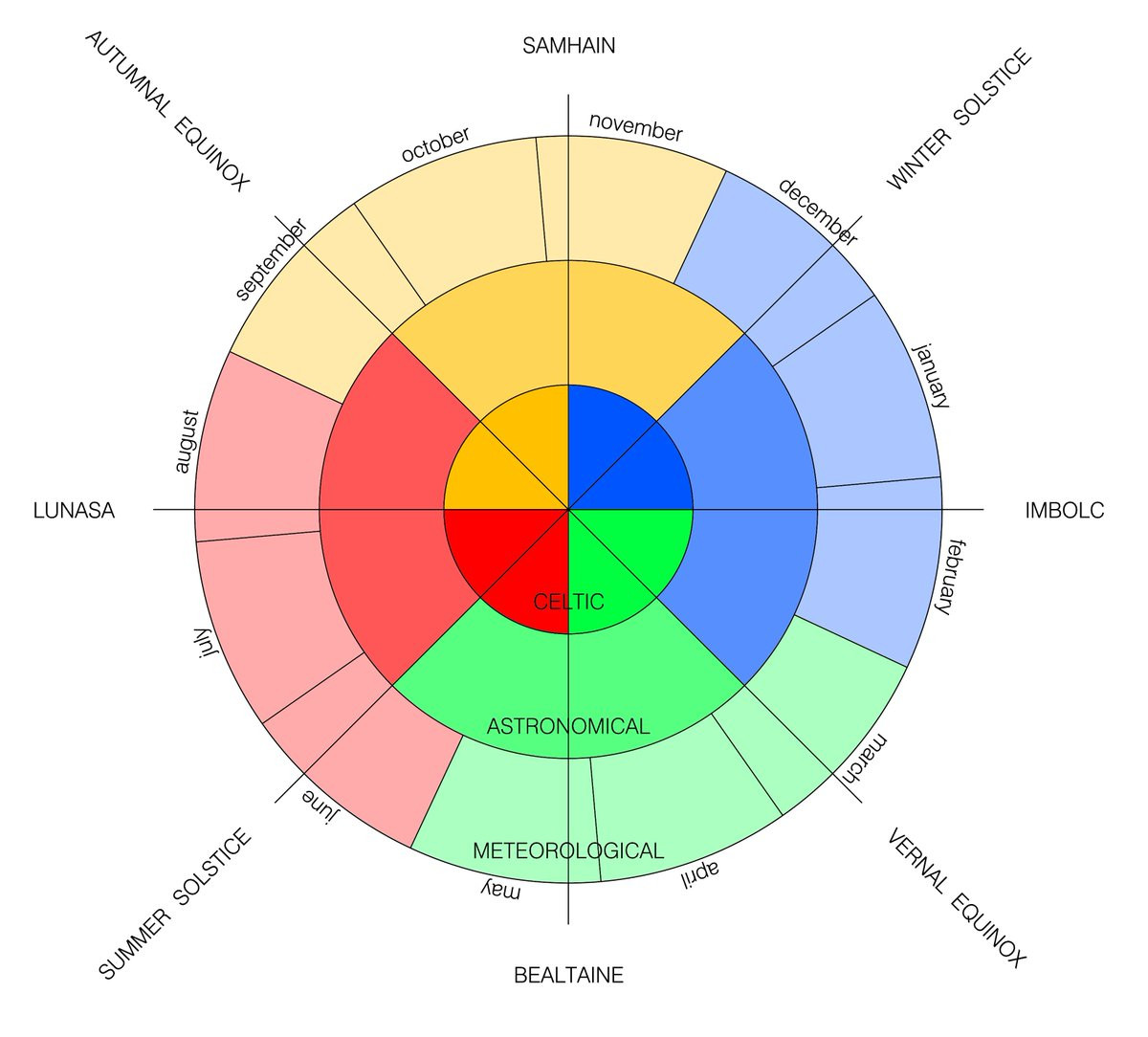
Today would be the first day of teaching in Semester 2 at Maynooth University, were it not for the fact that it is a Bank Holiday in Ireland. The holiday marks Imbolc, an old Celtic festival occurring halfway between the winter solstice and vernal equinox in the Northern hemisphere. In the modern calendar the date is 1st February. In Ireland Imbolc is often referred to as a Lá Fhéile Bríde,  St Brigid’s Day, after St Brigid of Kildare, whose feast day is 1st February. In the old pagan calendar, this day is regarded as the first day of spring, as it is roughly the time when the first spring lambs are born, daffodils, etc, start to appear, and the days get noticeably longer. It corresponds to the Welsh Gŵyl Fair y Canhwyllau and is also sometimes called, rather beautifully, The Quickening of the Year. It’s a time for rebirth and renewal after the darkness of winter.

I noticed some scepticism on social media about 1st February being the first day of spring, but it makes sense to me. I feel the same way about May being the start of summer too. From living 7 years in Ireland, I’ve always found May/June the most summery months – as far as that means anything in Ireland!

In the Northern hemisphere, in astronomical terms, the solar year is defined by the two solstices (summer, around June 21st, and winter, around December 21st) and the equinoxes (spring, around March 21st, and Autumn, around September 21st). These four events divide the year into four roughly equal parts of about 13 weeks each. If you divide each of these intervals in two you divide the year into eight pieces of six and a bit weeks each. The dates midway between the astronomical events mentioned above are the cross-quarter days, of which Imbolc is one. Here they are represented on a diagram:

The timings are rough because the dates of the equinoxes and solstices vary from year to year. Imbolc is often taken to be the 2nd of February (Groundhog Day) and Samhain is sometimes taken to be October 31st, Halloween but hopefully you get the point that although the Pagan festivals have been appropriated by the Christian church, they have much older origins.

Until 2023 only three of the four cross-quarter days were associated with public holidays in Ireland; there wasn’t a holiday for Imbolc. In 2022 however, the Government decided to create a new Bank Holiday that corrected this anomaly by introducing a new St Brigid’s Day holiday on the first Monday on or after 1st February (or on Friday if 1st February falls on that day), which also happens to be the first national holiday in Ireland to be named after a woman. The first such holiday was Monday, 6th February 2023 and the second was on Monday 5th February 2024. This is the third.

But I digress.

I am glad to have today’s holiday just before teaching starts. Having completed my examination marking duties promptly I was planning to use last week to get my teaching materials ready. Unfortunately I wasn’t at all well for most of the week – though I recovered by Friday – and am way behind schedule. Fortunately, I’ve taught one of the modules (Computational Physics) many times before so not much preparation is required although it is a bigger class than I’ve had on previous occasions which means extra work in due course grading the CA components. The other module, Particle Physics is new for me at Maynooth, though I have taught it elsewhere. This also has a bigger class than I was expecting for a final-year module and my first lecture on it is tomorrow. I’m going to have to spend most of today quickening the writing of the lecture notes and preparing assignments.

P.S. Not particularly relevantly, Particle Physics is an anagram of Happier Cyclists.