R.I.P. Charles Townes, the physicist whose work touched all our lives

Posted in The Universe and Stuff with tags , , , , on January 28, 2015 by telescoper

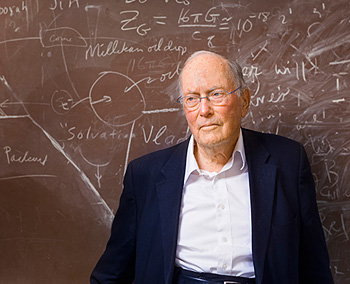
Just a short post to mark the passing of a truly great physicist, Charles H. Townes, who died yesterday at the age of 99.

Charles Townes, pictured in 2013

Charles Townes, pictured in 2013

Townes came to fame for his pioneering work on the theory and applications of the maser , which he then followed up by designing the first laser. Lasers are used in many common consumer devices such as optical disk drives, laser printers, barcode scanners and fibre-optic cables. They are also used in medicine for laser surgery and various skin treatments, and in industry for cutting and welding materials.

The work of Charles Townes in physics has thus had an enormous impact on everyday life; he was awarded the Nobel Prize for is his work on quantum electronics, especially lasers and masers.

It’s very sad that he didn’t quite make his century, especially because this year is the International Year of Light, which will involve many activities and celebrations relating to his work on lasers. Much of our experimental work in Physics here in the Department of Physics and Astronomy at the University of Sussex involves lasers in various ways, and we will find an appropriate occasion to celebrate the life and achievements of a truly great physicist. Until then let me just express my condolences to the friends, family and colleagues of Charles Townes on the loss not only of an eminent scientist but of an extremely nice man.

R.I.P. Charles Townes, physicist and gentleman (1915-2015).

A whole lotta cheatin’ going on? REF stats revisited

Posted in Education, Science Politics with tags , , , on January 28, 2015 by telescoper

Here’s a scathing analysis of Research Excellence Framework. I don’t agree with many of the points raised and will explain why in a subsequent post (if and when I get the time), but I reblogging it here in the hope that it will provoke some comments either here or on the original post (also a wordpress site).

dereksayer's avatarcoasts of bohemia


1.

The rankings produced by Times Higher Education and others on the basis of the UK’s Research Assessment Exercises (RAEs) have always been contentious, but accusations of universities’ gaming submissions and spinning results have been more widespread in REF2014 than any earlier RAE. Laurie Taylor’s jibe in The Poppletonian that “a grand total of 32 vice-chancellors have reportedly boasted in internal emails that their university has become a top 10 UK university based on the recent results of the REF”[1] rings true in a world in which Cardiff University can truthfully[2]claim that it “has leapt to 5th in the Research Excellence Framework (REF) based on the quality of our research, a meteoric rise” from 22nd in RAE2008. Cardiff ranks 5th among universities in the REF2014 “Table of Excellence,” which is based on the GPA of the scores assigned by the REF’s “expert panels” to the three…

View original post 2,992 more words

The Map is not the Territory

Posted in History, The Universe and Stuff with tags , , , , , , , , on January 27, 2015 by telescoper

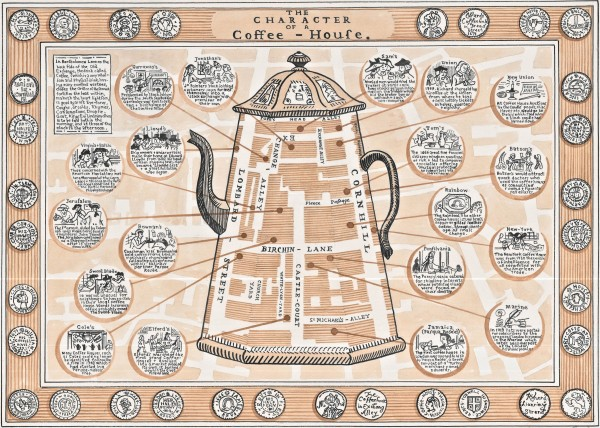
I came across this charming historical map while following one of my favourite Twitter feeds “@Libroantiguo” which publishes fascinating material about books of all kinds, especially old ones. It shows the location of London coffee houses and is itself constructed in the shape of a coffee pot:

Coffee
Although this one is obviously just a bit of fun, maps like this are quite fascinating, not only as practical guides to navigating a transport system but also because they often stand up very well as works of art. It’s also interesting how they evolve with time  because of changes to the network and also changing ideas about stylistic matters.

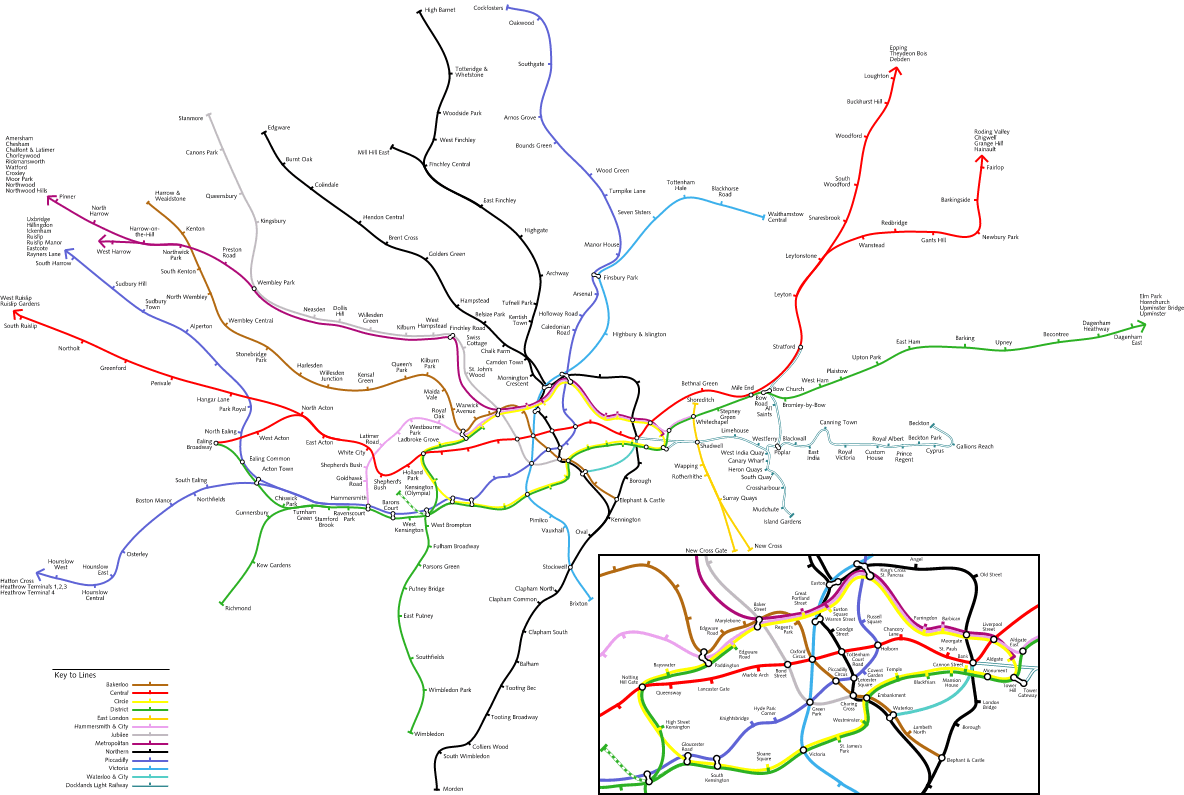
A familiar example is the London Underground or Tube map. There is a fascinating website depicting the evolutionary history of this famous piece of graphic design. Early versions simply portrayed the railway lines inset into a normal geographical map which made them rather complicated, as the real layout of the lines is far from regular. A geographically accurate depiction of the modern tube network is shown here which makes the point:

tubegeo

A revolution occurred in 1933 when Harry Beck compiled the first “modern” version of the map. His great idea was to simplify the representation of the network around a single unifying feature. To this end he turned the Central Line (in red) into a straight line travelling left to right across the centre of the page, only changing direction at the extremities. All other lines were also distorted to run basically either North-South or East-West and produce a regular pattern, abandoning any attempt to represent the “real” geometry of the system but preserving its topology (i.e. its connectivity).  Here is an early version of his beautiful construction:

Note that although this a “modern” map in terms of how it represents the layout, it does look rather dated in terms of other design elements such as the border and typefaces used. We tend not to notice how much we surround the essential things, which tend to last, with embellishments that date very quickly.

More modern versions of this map that you can get at tube stations and the like rather spoil the idea by introducing a kink in the central line to accommodate the complexity of the interchange between Bank and Monument stations as well as generally buggering about with the predominantly  rectilinear arrangement of the previous design:

I quite often use this map when I’m giving popular talks about physics. I think it illustrates quite nicely some of the philosophical issues related with theoretical representations of nature. I think of theories as being like maps, i.e. as attempts to make a useful representation of some  aspects of external reality. By useful, I mean the things we can use to make tests. However, there is a persistent tendency for some scientists to confuse the theory and the reality it is supposed to describe, especially a tendency to assert there is a one-to-one relationship between all elements of reality and the corresponding elements in the theoretical picture. This confusion was stated most succintly by the Polish scientist Alfred Korzybski in his memorable aphorism :

The map is not the territory.

I see this problem written particularly large with those physicists who persistently identify the landscape of string-theoretical possibilities with a multiverse of physically existing domains in which all these are realised. Of course, the Universe might be like that but it’s by no means clear to me that it has to be. I think we just don’t know what we’re doing well enough to know as much as we like to think we do.

A theory is also surrounded by a penumbra of non-testable elements, including those concepts that we use to translate the mathematical language of physics into everday words. We shouldn’t forget that many equations of physics have survived for a long time, but their interpretation has changed radically over the years.

The inevitable gap that lies between theory and reality does not mean that physics is a useless waste of time, it just means that its scope is limited. The Tube  map is not complete or accurate in all respects, but it’s excellent for what it was made for. Physics goes down the tubes when it loses sight of its key requirement: to be testable.

In any case, an attempt to make a grand unified theory of the London Underground system would no doubt produce a monstrous thing that would be so unwieldly that it would be useless in practice. I think there’s a lesson there for string theorists too…

Now, anyone for a game of Mornington Crescent?


Luqman Onikosi

Posted in Education, Politics with tags , on January 27, 2015 by telescoper

Yesterday my attention was drawn to the case of Luqman Onikosi, a postgraduate student at the University of Sussex, who is originally from Nigeria. Luqman has been granted temporary permission to reside in the United Kingdom based on his medical circumstances; he is suffering from Hepatitis B, for which far better treatment is available in the UK than in his home country. His immigration status is yet to be definitely resolved and in the meantime he is being treated, entirely according to established policy and practice, as an Overseas Student. He is therefore  liable to pay full Overseas Fees if he is to continue on his course, an MA in Global Political Economy, and currently can not afford to pay them.

It would be inappropriate for me to comment in further detail on Luqman’s case – not least because I don’t have much in the way of further detail to comment on – but I am happy to use the medium of this personal blog to draw the attention of readers to a crowdsourcing appeal that has started with the aim of collecting sufficient funds to enable him to continue his studies. You can find the website where you can find more information about the issues surrounding his case, and instructions on how to make a donation, here.

Lines on the Death of Demis Roussos

Posted in Music with tags , on January 26, 2015 by telescoper

After all the sound and fury accompanying yesterday elections in Greece there’s one item of much sadder news. The legendary Demis Roussos has passed away. I can’t think of him without thinking of Abigail’s Party:


So, farewell then,
Demis Roussos.

“For ever
And ever
And ever
And ever
You’ll
Beeeeeee
The One!”

You sang.

But, alas,
Nothing
Ever
Lasts
For ever
And ever
And ever
And ever.
And now
You’ve Gone.

But at least
Alison Steadman
liked you.

(And so did
Keith’s Mum.)

 by Peter Coles (aged 51 ½).

Social Physics & Astronomy

Posted in The Universe and Stuff with tags , , , , , , on January 25, 2015 by telescoper

When I give popular talks about Cosmology,  I sometimes look for appropriate analogies or metaphors in television programmes about forensic science, such as CSI: Crime Scene Investigation which I watch quite regularly (to the disdain of many of my colleagues and friends). Cosmology is methodologically similar to forensic science because it is generally necessary in both these fields to proceed by observation and inference, rather than experiment and deduction: cosmologists have only one Universe;  forensic scientists have only one scene of the crime. They can collect trace evidence, look for fingerprints, establish or falsify alibis, and so on. But they can’t do what a laboratory physicist or chemist would typically try to do: perform a series of similar experimental crimes under slightly different physical conditions. What we have to do in cosmology is the same as what detectives do when pursuing an investigation: make inferences and deductions within the framework of a hypothesis that we continually subject to empirical test. This process carries on until reasonable doubt is exhausted, if that ever happens.

Of course there is much more pressure on detectives to prove guilt than there is on cosmologists to establish the truth about our Cosmos. That’s just as well, because there is still a very great deal we do not know about how the Universe works.I have a feeling that I’ve stretched this analogy to breaking point but at least it provides some kind of excuse for writing about an interesting historical connection between astronomy and forensic science by way of the social sciences.

The gentleman shown in the picture on the left is Lambert Adolphe Jacques Quételet, a Belgian astronomer who lived from 1796 to 1874. His principal research interest was in the field of celestial mechanics. He was also an expert in statistics. In Quételet’s  time it was by no means unusual for astronomers to well-versed in statistics, but he  was exceptionally distinguished in that field. Indeed, Quételet has been called “the father of modern statistics”. and, amongst other things he was responsible for organizing the first ever international conference on statistics in Paris in 1853.

His fame as a statistician owed less to its applications to astronomy, however, than the fact that in 1835 he had written a very influential book which, in English, was titled A Treatise on Man but whose somewhat more verbose original French title included the phrase physique sociale (“social physics”). I don’t think modern social scientists would see much of a connection between what they do and what we do in the physical sciences. Indeed the philosopher Auguste Comte was annoyed that Quételet appropriated the phrase “social physics” because he did not approve of the quantitative statistical-based  approach that it had come to represent. For that reason Comte  ditched the term from his own work and invented the modern subject of  sociology…

Quételet had been struck not only by the regular motions performed by the planets across the sky, but also by the existence of strong patterns in social phenomena, such as suicides and crime. If statistics was essential for understanding the former, should it not be deployed in the study of the latter? Quételet’s first book was an attempt to apply statistical methods to the development of man’s physical and intellectual faculties. His follow-up book Anthropometry, or the Measurement of Different Faculties in Man (1871) carried these ideas further, at the expense of a much clumsier title.

This foray into “social physics” was controversial at the time, for good reason. It also made Quételet extremely famous in his lifetime and his influence became widespread. For example, Francis Galton wrote about the deep impact Quételet had on a person who went on to become extremely famous:

Her statistics were more than a study, they were indeed her religion. For her Quételet was the hero as scientist, and the presentation copy of his “Social Physics” is annotated on every page. Florence Nightingale believed – and in all the actions of her life acted on that belief – that the administrator could only be successful if he were guided by statistical knowledge. The legislator – to say nothing of the politician – too often failed for want of this knowledge. Nay, she went further; she held that the universe – including human communities – was evolving in accordance with a divine plan; that it was man’s business to endeavour to understand this plan and guide his actions in sympathy with it. But to understand God’s thoughts, she held we must study statistics, for these are the measure of His purpose. Thus the study of statistics was for her a religious duty.

The person  in question was of course  Florence Nightingale. Not many people know that she was an adept statistician who was an early advocate of the use of pie charts to represent data graphically; she apparently found them useful when dealing with dim-witted army officers and dimmer-witted politicians.

The type of thinking described in the quote  also spawned a number of highly unsavoury developments in pseudoscience, such as the eugenics movement (in which Galton himself was involved), and some of the vile activities related to it that were carried out in Nazi Germany. But an idea is not responsible for the people who believe in it, and Quételet’s work did lead to many good things, such as the beginnings of forensic science.

A young medical student by the name of Louis-Adolphe Bertillon was excited by the whole idea of “social physics”, to the extent that he found himself imprisoned for his dangerous ideas during the revolution of 1848, along with one of his Professors, Achile Guillard, who later invented the subject of demography, the study of racial groups and regional populations. When they were both released, Bertillon became a close confidante of Guillard and eventually married his daughter Zoé. Their second son, Adolphe Bertillon, turned out to be a prodigy.

Young Adolphe was so inspired by Quételet’s work, which had no doubt been introduced to him by his father, that he hit upon a novel way to solve crimes. He would create a database of measured physical characteristics of convicted criminals. He chose 11 basic measurements, including length and width of head, right ear, forearm, middle and ring fingers, left foot, height, length of trunk, and so on. On their own none of these individual characteristics could be probative, but it ought to be possible to use a large number of different measurements to establish identity with a very high probability. Indeed, after two years’ study, Bertillon reckoned that the chances of two individuals having all 11 measurements in common were about four million to one. He further improved the system by adding photographs, in portrait and from the side, and a note of any special marks, like scars or moles.

Bertillonage, as this system became known, was rather cumbersome but proved highly successful in a number of high-profile criminal cases in Paris. By 1892, Bertillon was exceedingly famous but nowadays the word bertillonage only appears in places like the Observer’s Azed crossword.

The main reason why Bertillon’s fame subsided and his system fell into disuse was the development of an alternative and much simpler method of criminal identification: fingerprints. The first systematic use of fingerprints on a large scale was implemented in India in 1858 in an attempt to stamp out electoral fraud.

The name of the British civil servant who had the idea of using fingerprinting in this way was Sir William James Herschel (1833-1917), the eldest child of Sir John Herschel, the astronomer, and thus the grandson of Sir William Herschel, the discoverer of Uranus. Another interesting connection between astronomy and forensic science.


Last days on the Ice

Posted in The Universe and Stuff with tags , , on January 25, 2015 by telescoper

Earlier this month I reblogged a post about the launch of the balloon-borne SPIDER experiment in Antarctica. Here’s a follow up from last week. Spider parachuted back down to the ice on January 17th and was recovered successfully. Now the team will be leaving the ice and returning home, hopefully with some exciting science results!

I’d love to go to Antarctica, actually. When I was finishing my undergraduate studies at Cambridge I applied for a place on the British Antarctic Survey, but didn’t get accepted. I don’t suppose I’ll get the chance now, but you never know…

annegambrel22's avatarSPIDER on the Ice

Four of the last five of the SPIDER crew– Don, Ed, Sasha, and I– are slated to leave the Ice tomorrow morning. That means this is probably my last blog post– at least until SPIDER 2! It has been an incredible few months, but I can’t say I’m all that sad for it to be ending. I’m ready to have an adventure in New Zealand and then get home to all the people I’ve missed so much while I’ve been away.

As is the nature of field campaigns, it has been an absolute roller coaster, but the highs have certainly made the lows fade in my memory. We got SPIDER on that balloon, and despite all of the complexities and possible points of failure, it worked. That’s a high I won’t be coming down from any time soon.

On top of success with our experiment, we’ve also had the privilege of…

View original post 98 more words

The Dormouse

Posted in Jazz with tags , , , , , , on January 24, 2015 by telescoper

Just spent an extremely enjoyable Saturday morning on the Sussex University campus for one of our Applicant Visit Days; there’ll be several more of these occasions over the next few months and I only hope we have such glorious weather for the others!

I thought I’d celebrate the fact that it all went well by posting a bit of old-fashioned good-time jazz. It’s getting on for seven years since the death of the great Humphrey Lyttelton, who was not only a fine trumpeter and bandleader but also blessed with wickedly dry sense of humour. During the late 1940s and early 1950s Humph’s band had a terrific front line consisting of Wally Fawkes on clarinet and the superb Keith Christie on trombone, led by himself on trumpet. Apparently when they did late-night gigs, Keith Christie had a habit of occasional dozing off while someone else was soloing. Not unreasonably, this behaviour reminded Humph of the Dormouse at the Mad Hatter’s Tea Party in Alice’s Adventures in Wonderland, so he decided to write a tune with that name in honour of Keith Christie. I have the studio recording of The Dormouse, which was released on Parlophone as a 78rpm single, and it’s such a blast that I love it to bits, but this is a live performance which I just came across a few days ago. It comes from a famous concert at the Royal Festival Hall in July 1951 sponsored by the National Federation of Jazz Organizations (NFJO) which featured a number of bands as well as Humph’s.

Anyway, it’s a delicious helping of New Orleans jazz served with a generous side order of English eccentricity, guaranteed to bring a smile to the most crabbed of faces. The trombone introduction and fills by Keith Christie, in whose honour the tune was written, are typically full of humour, but the improvised ensemble playing is absolutely terrific, especially from about 1.55 onwards. Humph’s band of this time didn’t have the greatest rhythm section – Humph himself joked that they often sounded like they were wearing diving boots – but the front line was world class.

ps. It definitely should be “The Dormouse” not “The Doormouse”…

pps. Unless my ears deceive me I think this number is announced by Kenneth Horne…

Graduation Engagement

Posted in Education with tags , , on January 23, 2015 by telescoper

Yesterday I took part in the Winter Graduation ceremony for students in the School of Mathematical and Physical Sciences (MPS) at the University of Sussex; as Head of School it was my very pleasant duty to read out the names of the graduands as they passed across the stage at the Brighton Dome, where the ceremony takes place.

Let me first of all congratulate again all those who graduated yesterday!

The Winter ceremony is largely devoted to students graduating from postgraduate programmes, either taught (MSc or MA)  or research-based (PhD). We don’t have huge numbers of such students in MPS so I had relatively few names to read out yesterday. Most of our students graduate in the summer ceremony. Sharing the ceremony with us this time was the School of Business, Management and Economics which, by contrast, has huge taught postgraduate programmes so the acting Head of School for BMEC (as it is called) had a lot of work to do!

It was nice to have Sanjeev Bhaskar back in place as Chancellor (he was absent on filming duty for last year’s summer ceremonies), who is charming and friendly as well as frequently hilarious.

Anyway, getting to the point, graduation is a special moment for all students involved, but there was an extra extra special moment for two students in particular yesterday.

I was sitting in the front of the platform party very near Sanjeev when a male student from BMEC graduated. As well as shaking the Chancellor’s hand he had a fairly long discussion with him and slipped him what appeared to be a small box in such a way that the audience couldn’t see it. Then, after walking across the stage, the student waited at the far side instead of returning to the auditorium by going down the stairs.

Funny, I thought, but at that point I had no idea what was going on.

The next graduand was a female student. When she got to Sanjeev he shook her hand as usual but then called back the previous one, still standing on the stage, and gave the box back to him. Of course it contained an engagement ring. And so it came to pass that Jing Liu (kneeling) proposed to Qin Me (standing).

proposals

It was a wonderful moment, although it struck me as a high-risk strategy and it wasn’t at all obvious at first sight how it would turn out. She doesn’t look that sure in the picture, actually! She did, however, say “yes” and the couple are now engaged to be married. I wish them every happiness. I’m sure I speak for everyone at the ceremony when I say that it brought an extra dimension of joy to what was already a wonderfully joyous occasion.

Our lives seem to revolve around rituals of one sort or another. Graduation is one, marriage is another. This is definitely the first time I’ve seen this particular combination.

I love graduation ceremonies. As the graduands go across the stage you realize that every one of them has a unique story to tell and a whole universe of possibilities in front of them. How their lives will unfold no-one can tell, but it’s a privilege to be there for one important milestone on their journey.

UPDATE: Here’s a video of the ceremony. The big event happens about from 44:48…

Warmer and wetter. But not as wet as I thought.

Posted in Uncategorized on January 22, 2015 by telescoper

I reblogged the original article, so I should also reblog the correction and clarifications…

Michael de Podesta's avatarProtons for Breakfast

The Global Mean Temperature Anomaly compared to the average during the years 1951 to 1980. The data shows that 2014 was the hottest year on record. A link to the data source is shown at the end of this post. The Global Mean Temperature Anomaly compared to the average during the years 1951 to 1980. The data shows that 2014 was the hottest year on record. A link to the data source is shown at the end of this post.

Last week I wrote about how 2014 was warmest year in UK history.

This week two US labs have confirmed that 2014 also appeared to be the warmest year on Earth for many generations.

And looking at the graph above, it’s not hard to see why people – myself included – are alarmed by the trend. Hiatus? What Hiatus?

But on last week’s blog I also got something wrong. I said that

Roughly speaking, every 1 ºC causes…

View original post 766 more words