An Astronomical Teaser

Posted in Cute Problems, The Universe and Stuff with tags , , , , on January 1, 2014 by telescoper

For those of you who feel up to a little brain-teaser after last night’s revels, try this little problem which involves the use of everybody’s favourite type of astronomical measurement, the magnitude system. Answers through the comment box please!

A binary star at a distance of 100 pc has such a small separation between its component stars that it is unresolved by a telescope. If the apparent visual magnitude of the combined image of the system is 10.5, and one star is known to have an absolute visual magnitude of 9.0, what is the absolute visual magnitude of the other star?

To make an end is to make a beginning

Posted in Poetry with tags , , , on January 1, 2014 by telescoper

So, it’s New Year’s Day again. I’d like to take the opportunity to convey my very best wishes to everyone who follows this blog and to thank you all for showing an interest in my ramblings.

The beginning of a new year seems an appropriate time to post something from T.S. Eliot’s remarkable poetic meditation on the redemptive nature of time, Four Quartets. This is the last section, Part V, of the last of the four poems, Little Gidding.

What we call the beginning is often the end
And to make and end is to make a beginning.
The end is where we start from. And every phrase
And sentence that is right (where every word is at home,
Taking its place to support the others,
The word neither diffident nor ostentatious,
An easy commerce of the old and the new,
The common word exact without vulgarity,
The formal word precise but not pedantic,
The complete consort dancing together)
Every phrase and every sentence is an end and a beginning,
Every poem an epitaph. And any action
Is a step to the block, to the fire, down the sea’s throat
Or to an illegible stone: and that is where we start.
We die with the dying:
See, they depart, and we go with them.
We are born with the dead:
See, they return, and bring us with them.
The moment of the rose and the moment of the yew-tree
Are of equal duration. A people without history
Is not redeemed from time, for history is a pattern
Of timeless moments. So, while the light fails
On a winter’s afternoon, in a secluded chapel
History is now and England.

With the drawing of this Love and the voice of this
     Calling

We shall not cease from exploration
And the end of all our exploring
Will be to arrive where we started
And know the place for the first time.
Through the unknown, unremembered gate
When the last of earth left to discover
Is that which was the beginning;
At the source of the longest river
The voice of the hidden waterfall
And the children in the apple-tree
Not known, because not looked for
But heard, half-heard, in the stillness
Between two waves of the sea.
Quick now, here, now, always—
A condition of complete simplicity
(Costing not less than everything)
And all shall be well and
All manner of thing shall be well
When the tongues of flame are in-folded
Into the crowned knot of fire
And the fire and the rose are one.

Little Gidding, Part V, the last of the Four Quartets by T.S. Eliot.

2013 in review

Posted in Uncategorized on December 31, 2013 by telescoper

The WordPress.com stats helper monkeys prepared a 2013 annual report for this blog.

Here’s an excerpt:

The Louvre Museum has 8.5 million visitors per year. This blog was viewed about 440,000 times in 2013. If it were an exhibit at the Louvre Museum, it would take about 19 days for that many people to see it.

Click here to see the complete report.

Ring Out, Wild Bells

Posted in Poetry with tags on December 30, 2013 by telescoper

Ring out, wild bells, to the wild sky,
The flying cloud, the frosty light
The year is dying in the night;
Ring out, wild bells, and let him die.
Ring out the old, ring in the new,
Ring, happy bells, across the snow:
The year is going, let him go;
Ring out the false, ring in the true.
Ring out the grief that saps the mind,
For those that here we see no more,
Ring out the feud of rich and poor,
Ring in redress to all mankind.
Ring out a slowly dying cause,
And ancient forms of party strife;
Ring in the nobler modes of life,
With sweeter manners, purer laws.
Ring out the want, the care, the sin,
The faithless coldness of the times;
Ring out, ring out thy mournful rhymes,
But ring the fuller minstrel in.
Ring out false pride in place and blood,
The civic slander and the spite;
Ring in the love of truth and right,
Ring in the common love of good.
Ring out old shapes of foul disease,
Ring out the narrowing lust of gold;
Ring out the thousand wars of old,
Ring in the thousand years of peace.
Ring in the valiant man and free,
The larger heart the kindlier hand;
Ring out the darkness of the land,
Ring in the Christ that is to be.

by Alfred Lord Tennyson (1809-92)

The Jazz Legends we lost in 2013

Posted in Jazz with tags , , , , , , , on December 29, 2013 by telescoper

I’ve become rather slow to find out about things since I gave up buying  newspapers regularly. That’s why I only found out yesterday that Jazz musician Yusef Lateef had passed away on 23rd December, at the age of 93. He had a good innings, but it’s still sad to lose someone who was there at the birth of the modern era of jazz; Lateef played with Dizzy Gillespie’s band way back in the 1940s before going on to carve out his own career as a bandleader and a pioneering figure in the development of world music.

The death of Yusef Lateef got me thinking about all the other great jazz  musicians who also passed away in 2013 to whom I haven’t yet found time to pay tribute. The list I’ve selected is sadly rather long, and I could have included more. I’ve added links to examples of their playing:

  • Cedar Walton (August 19, aged 79).  Terrific piano player in the hard bop tradition, who came to prominence with Art Blakey’s band of the 1960s as pianist and arranger. Listen to him clearly enjoying himself playing Duke Ellington’s Satin Doll here.
  • Chico Hamilton (November 25, aged 92). Drummer and bandleader who, among many other things, sought to merge jazz with classical forms (e.g. by bring a flute and cello into his band). Check out Blue Sands Live , recorded at the Newport Jazz Festival in 1958.
  • Jim Hall (December 10, aged 83). Brilliant jazz guitarist, also played at the Newport Jazz Festival in 1958, with Jimmy Giuffre and Bob Brookmeyer on The Train and the River.
  • Donald Byrd (February 4, aged 80). Began his career as a bebop trumpeter, but later moved towards a more popular jazz funk/rhythm & blues/fusion style. Listen to him on his famous Blue Note recording of Cristo Redentor.
  • Marian McPartland (August 20, aged 95). British born pianist who presented a long-running radio series on piano jazz on US Radio. Here she is playing a duet with Dave Brubeck. You might just recognize the tune!
  • Stan Tracey (December 6, aged 86). Uniquely gifted British pianist with an instantly recognizable style.  House pianist at Ronnie Scott’s Club in London for many years, in which role he earned the respect and admiration of the very best musicians in the world.The one musician on this list that I’ve seen live. I’ve seen him several times, in fact, and could never take my eyes off his hands:

People such as these are irreplaceable, of course, but at least they will live on in our hearts through their music. I hope they all knew how much we loved them.

Von deiner Güt’, o Herr und Gott

Posted in Music with tags , on December 28, 2013 by telescoper

This morning I listened to Building a Library on BBC Radio 3, a programme in which music experts discuss the best available recordings of classic works; the work under consideration this time The Creation, by Joseph Haydn. I won’t comment on the final choice, as I haven’t heard it all the way through, but I do agree with the presenter that there are many superb versions of this wonderful oratorio. All this gives me an excuse to post one of my favourite pieces, Von deiner Güt’, o Herr und Gott from Part III. Here Adam and Eve are singing a prayer of thanks, to music that’s almost childlike in its simplicity. It’s so simple, in fact, that only a genius could have written it. Later a chorus of angels joins in, accompanied by gently rolling timpani, a moment which for some reason always brings me to the edge of tears. If there is music in Heaven, surely it sounds like this.

Like of each thing

Posted in Literature on December 27, 2013 by telescoper

At Christmas I no more desire a rose
Than wish a snow in May’s new-fangled mirth;
But like of each thing that in season grows.

William Shakespeare, in Love’s Labour’s Lost (Act 1, Scene 1)


Boxing Day in Warkworth

Posted in History with tags , , , on December 26, 2013 by telescoper

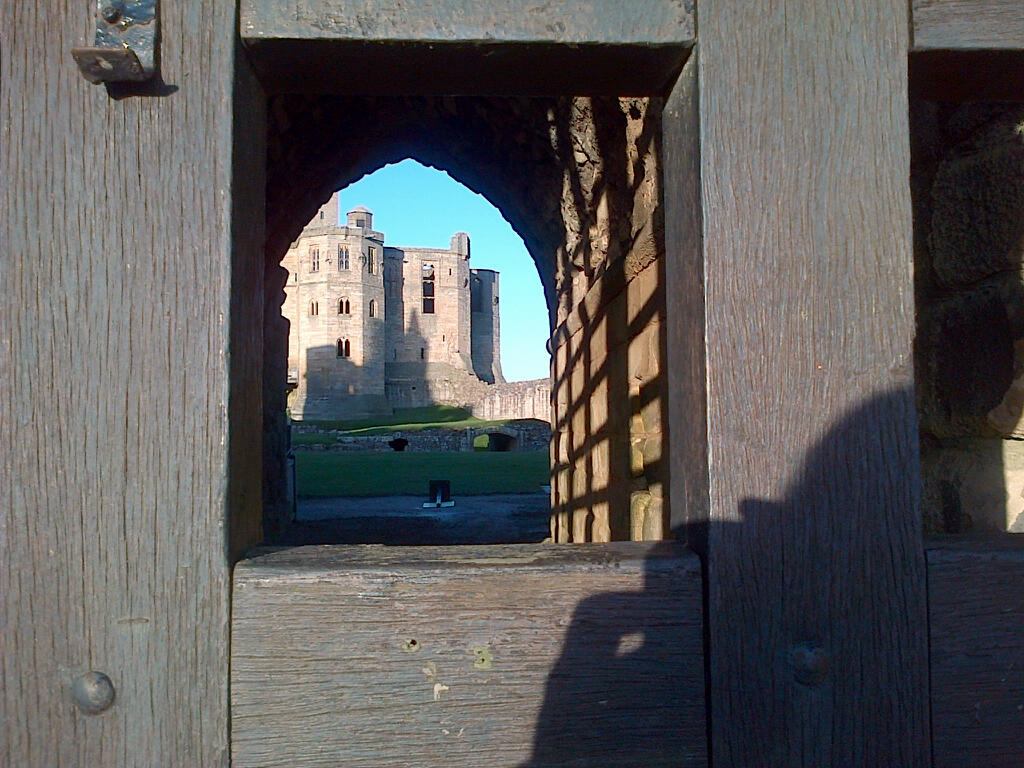
So the traditional Boxing Day spin around Northumberland took place this year in very nice weather (for change). Here are a few pictures of Warkworth Castle..

Incidentally, the decaying wooden structures that you see in the foreground of the last picture are the remains of disused coal staithes that were used to transfer coal onto ships. Amble (where the picture was taken from, with Warkworth Castle in the distance) was once a fairly busy coal port serving numerous local collieries, including Broomhill, Radcliffe, Shilbottle, Widdrington, Whittle, Togston and Hauxley. All are now closed and the harbour at Amble is now only used for fishing and leisure craft.

Yule Travel Blog

Posted in Uncategorized on December 24, 2013 by telescoper

10.30. So here I am, then, in Brighton on the morning of Christmas Eve. I have a flight from Gatwick Airport to Newcastle later this afternoon. The problem is that after last night’s storm there are no trains from Brighton to Gatwick. Today may therefore turn out to be something of an adventure. On the other hand the railway network does seem to be gradually recovering from flooding and fallen trees so perhaps all will be well before I have to leave. If not, I suppose I’ll just have to get a taxi to the airport, which may prove a tad expensive…

I’ll update this during the day in moments of heightened tedium.

11.50 Brighton station. The only way to get to Gatwick from here is to get a train to Haywards Heath, then a bus to Three Bridges, then another bus to Gatwick Airport. I told you it would be an adventure..

12.15 So the train to Haywards Heath was cancelled. A hastily-arranged taxi share ensued, and I’m now en route to Gatwick in a cab.

13.15 Made it to Gatwick. Some massive queues around the place probably because of problems at the North Terminal. The South Terminal isn’t particularly busy and I got through security quickly. Now having a beer and a spot of lunch!

14.45 Why do you have to show your boarding pass to buy a newspaper in Gatwick Airport?

21.15 Well, my battery went flat so I couldn’t update about how FlyBe sent us to a gate but didn’t provide and personnel to process us onto the plane, thus resulting in an hour’s delay while the plane and flight crew sat outside on the tarmac. Or the white knuckle landing in strong cross winds. Anyhow, I arrived just an hour late and have had a nice meal and a drink so am now filled with Christmas cheer..

So I wish you all a very Merry Christmas as I sign off for a couple of days of food and festivities!

23:43 And only now have I realised that I’ve left all the presents I bought in my flat in Brighton…

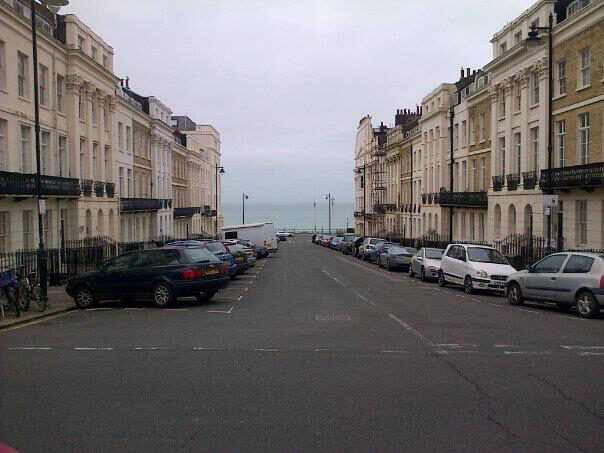
A Brief History of Portland Place, Brighton

Posted in Biographical, Brighton on December 23, 2013 by telescoper

Tidying up the flat before my Christmas travels, I found a little piece of paper in a drawer with the following potted history of Portland Place.

The development of Portland Place commenced around 1824, when Major Villeroy Russell commissioned Charles Augustus Busby as architect for the design of the street and houses. There was a most unfortunate incident on the night of 12th September 1825, during the building of the street, when the principal house caught fire and was totally destroyed. As it was not insured, Major Russell had to bear the estimated £12,000 loss himself. The first occupant moved into Number 11 in 1827 but the buildings to replace the one destroyed by fire were not completed until 1829. Building work continued in the street until almost up to the 1850s, so the dates of individual buildings may vary considerably.

That all explains why this street lacks the homogeneity of style possessed by some its grander neighbours, though the houses are still looking pretty good for their age!