Tuition Fee Caps

Posted in Education, Finance, Politics with tags , , , , , , , on May 27, 2013 by telescoper

I know it’s a Bank Holiday, but I’ve been thinking…

About a week ago I posted an item arguing that the current system of higher education funding is detrimental to the health of STEM disciplines (i.e. Science, Technology, Engineering and Mathematics). The main reason for this is that present funding arrangements fail to address the real difference in cost of degree courses in various disciplines: the income to a University for a student doing Physics is about £10.5K whereas for a student doing, say, English it is £9K. I would  estimate the extra cost for the former corresponds to at least a factor two and probably more. That’s partly because Physics requires laboratory space and equipment (and related technical support) that English does not, but also because Physics students receive many more contact hours with academic staff.  The issue is just as much about arts students being ripped off (as they undoubtedly are being) as it is a strategic failure to protect the sciences.

The problem is that the Council responsible for distributing funding (HEFCE) is strapped for cash, so is unable to fund STEM disciplines at the higher level of resource that it used to.  Since the government has decided, in its  (finite) wisdom, to transfer most of the cost of higher education to the students, HEFCE can now exert very little influence on how universities plan their portfolio of courses. Since it is a lot cheaper and easier to expand capacity in Arts & Social Sciences faculties than in the more expensive STEM disciplines, this is an incentive for Universities to turn away from the Sciences. Given our economic predicament this policy is simply perverse. We need more scientists and engineers, not fewer.

This morning I read an article in the Times Higher about the present £9K tuition fee cap. Not surprisingly the Russell Group of self-styled “elite” Universities wants it lifted, presumably so its Vice-Chancellors can receive even bigger pay rises. But that’s not the point. The article made me think of a cunning (or perhaps daft) plan, which I’m floating here with the prediction that people will shoot it down through the comments box.

Now before I go on, I just want to make it clear that I’m not – and never have been – in favour of the present funding system. I don’t object to the principle that students who can afford to should contribute to the cost of higher education, but the arrangements we’re stuck with are indefensible and I don’t think they will last long into the next Parliament. It’s telling that, only a decade after introducing tuition fees, Germany is now scrapping them. I’d prefer a hybdrid system in which the taxpayer funds scholarships for STEM disciplines and other strategically important areas, while leaving universities to charge fees for other disciplines.

However, since we’ve been lumbered with a silly system, it’s worth exploring what might be achieved by working within it. There doesn’t seem to be much creative thinking going on in the coalition, and the Labour Party just says it would reduce the fee cap to £6K which would squeeze all academic disciplines equally, without doing anything about the anomalies mentioned above.

My  idea is quite simple. I propose that universities be entitled to lift their fee levels for STEM subjects by an amount X, provide that they reduce the fees for Arts and Social Sciences students by the same amount. The current fee level is £9K for all disciplines, so an example might be for STEM subjects to charge £12K while A&SS (if you pardon the abbreviation) get £6K. That would achieve the factor of two differential I mentioned above.

The advantages of this proposal are that it gives an incentive for universities to promote STEM disciplines and more properly reflects the difference in cost of the different subjects, without increasing the cost to the Treasury. In fact only about 25% of students study in STEM disciplines, at least for the moment, so the cost of fee loans will actually go down

The biggest potential flaw is  that increasing the cost to STEM students would put them off. There’s simply no data on which to base an argument as to whether this would be the case or not. I suspect however that a difference in price would be perceived by many as a difference in value.

Anyway, it’s just an idea. That’s what blogs are for. Thinking out loud as it were. Feel free to object..

IQ in different academic fields – Interesting? Quite!

Posted in Bad Statistics with tags , , , on May 26, 2013 by telescoper

You all know how much I detest league tables, especially those that are based on entirely arbitrary criteria but nevertheless promote a feeling of smug self-satisfaction for those who lucky enough to find themselves at the top. So when my attention was drawn to a blog post that shows (or purports to show) the variation of average IQ across different academic disciplines I decided to post the corresponding ranking with the usual health warning that IQ tests only measure a subject’s ability to do IQ tests. This isn’t even based on IQ test results per se, but on a conversion between the Graduate Record Examination (GRE) results and IQ which may be questionable. Moreover, the differences are really rather small and (as usual) no estimate of sampling uncertainty is provided.

Does this list mean that physicists are smarter than anyone else? You might say that. I couldn’t possibly comment…

  • 130.0 Physics
  • 129.0 Mathematics
  • 128.5 Computer Science
  • 128.0 Economics
  • 127.5 Chemical engineering
  • 127.0 Material science
  • 126.0 Electrical engineering
  • 125.5 Mechanical engineering
  • 125.0 Philosophy
  • 124.0 Chemistry
  • 123.0 Earth sciences
  • 122.0 Industrial engineering
  • 122.0 Civil engineering
  • 121.5 Biology
  • 120.1 English/literature
  • 120.0 Religion/theology
  • 119.8 Political science
  • 119.7 History
  • 118.0 Art history
  • 117.7 Anthropology/archeology
  • 116.5 Architecture
  • 116.0 Business
  • 115.0 Sociology
  • 114.0 Psychology
  • 114.0 Medicine
  • 112.0 Communication
  • 109.0 Education
  • 106.0 Public administration

The Thought Fox

Posted in Poetry with tags , , on May 25, 2013 by telescoper

I imagine this midnight moment’s forest:
Something else is alive
Besides the clock’s loneliness
And this blank page where my fingers move.

Through the window I see no star:
Something more near
Though deeper within darkness
Is entering the loneliness:

Cold, delicately as the dark snow,
A fox’s nose touches twig, leaf;
Two eyes serve a movement, that now
And again now, and now, and now

Sets neat prints into the snow
Between trees, and warily a lame
Shadow lags by stump and in hollow
Of a body that is bold to come

Across clearings, an eye,
A widening deepening greenness,
Brilliantly, concentratedly,
Coming about its own business

Till, with sudden sharp hot stink of fox
It enters the dark hole of the head.
The window is starless still; the clock ticks,
The page is printed.


by Ted Hughes (1930-1998)

Buildings of Sussex (University)

Posted in Architecture with tags , , , , , on May 24, 2013 by telescoper

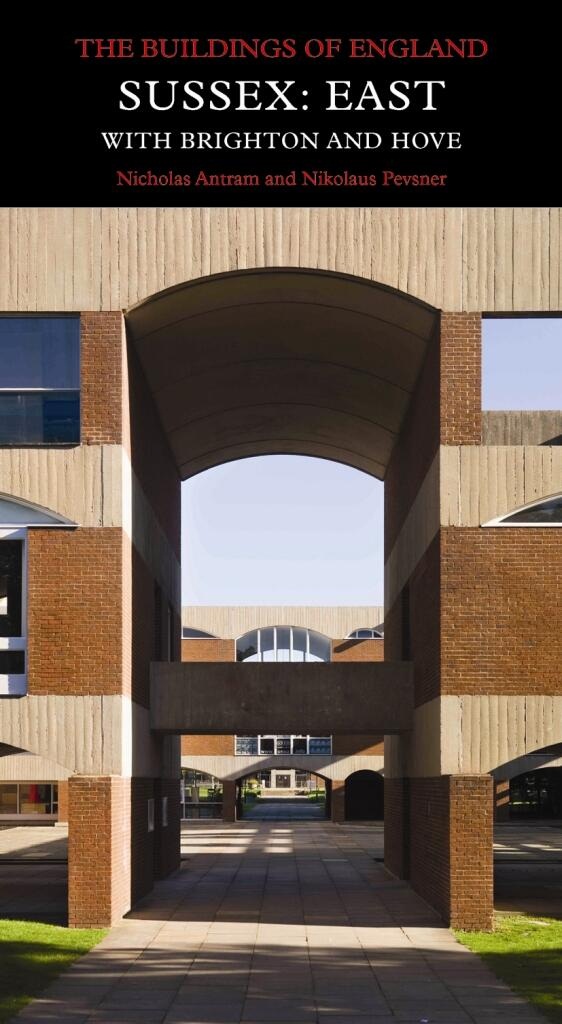
Shamelessly ripped off from the University of Sussex Staff News comes an interest snippet. Nearly 50 years after it first came out, the revised Sussex edition of a renowned series of architectural guides is about to be published – with our own Falmer House on the front cover.

Falmer House

The news item goes on

The Sussex volume of Sir Nikolaus Pevsner’s comprehensive and authoritative 46-volume series was first published in 1965. It includes seven pages on the “uncompromising” 1960s Sussex architecture by Sir Basil Spence – the subject of an exhibition on campus in 2012.

“The campus has worn well,” writes Antram, who is sensitive to the original, listed Spence buildings and those of the later, evolving campus.

“There is a carefully controlled relationship between landscape and buildings, sometimes formal, sometimes informal, the established park and Downland setting omnipresent …

“The buildings are remarkably homogeneous, their leitmotifs being heavy, chunky slabs of in situ cast concrete vaults, often used as bands, contrasted against the red brick walls …

“Roman indeed seems the epic monumentality of the Sussex buildings with their rhythmic arches and grand exterior staircases, even if that formality is softened by the materials and the asymmetrical layout.”

The campus tour of individual buildings begins with Falmer House, the first 1960s building in the country to be given Grade I listed status by English Heritage.

Pevensey 1 is described as “high drama”, the Chichester Lecture Theatre as an “awesomely plain brick drum” and the Library as a “rather brooding presence”.

Swanborough, meanwhile, is “unassuming”, and East Slope consists of 13 “troglodytic blocks stepped up the hillside”.

In my experience, opinions are generally rather divided about the architectural quality of the buildings on the University of Sussex campus. Mine are too, actually. I think the overall plan is wonderful with its accurately aligned central axis visible in the jacket photograph. On the other hand, some of the buildings – especially the John Maynard Smith Building (when I was a student here  it was called BIOLS) is not very good at all and may well be demolished soon to make way for new Science Buildings. I agree that East Slope is dire. The building I am in – Pevensey (formerly MAPS) -is actually rather nice, and most staff seem to like it here. My favourite building on the campus, however, is the Library; largely because Sussex still has a “library” as opposed to a “Learning Resources Unit” or some such nonsense. In any case I don’t find it at all “brooding” so I’m  mystified by that comment.

Some have called it brutalist but I think the relationship between the campus buildings and the surrounding countryside has been managed very sensitively. It’s purely a matter of taste, of course, and no doubt some locals will want to express differing opinions through the comment box!

Banksy on Advertising

Posted in Art with tags , on May 24, 2013 by telescoper

I came across this here piece by Banksy and couldn’t resist sharing it, especially in the light of the Royal Institution’s infamous trademarking..

banksy_nugget

Synchronicity

Posted in Music, The Universe and Stuff with tags , , , , , on May 23, 2013 by telescoper

I stumbled across this a while ago and, with my mind emptied by a day full of meetings, I thought I’d take the opportunity to post it today along with a couple of random connections that sprang into my mind when I saw it. The process by which 32 metronomes seem to synchronize themselves in the first video might look like magic at first glance, but it’s actually based on very simple physics…

And if you want to see an explanation of how it works with rather fewer metronomes, see

which brings me onto this remarkable piece of music by György Ligeti which is called Poème Symphonique and is written for 100 metronomes placed, hopefully, on a hard surface:

All this reminds me of the legendary Geordie darts commentator Sid Waddell, who once described the ebb-and-flow of a championship darts match in the following style…

the pendulum is swinging backwards and forwards, like a metronome…

The Moral Activity which Disentangles

Posted in Literature, The Universe and Stuff with tags , , , , , , , on May 22, 2013 by telescoper

I came across this last night and thought I would share it with you. It’s the preamble to Edgar Allan Poe‘s famous short story The Murders in the Rue Morgue, which is arguably the first-ever work in the genre of detective fiction. The piece is a bit dated (especially by the reference to the (now) discredited pseudoscience of phrenology, but Poe nevertheless says some very interesting things about a topic that I have returned to a number of times on this blog: the interplay between analysis and synthesis (and between deductive and inductive reasoning) involved not only in detective stories but also in card games and – I would contend – in the scientific method generally. I  agree with Poe when he says that the most fascinating part of such endeavours is the poorly understood yet vital element of intuition, that creative spark of ingenuity that sets apart a true genius, but am not sure about his contention that it is closely related to the analytic aspect. Anyway, see what you think…

–o–

IT is not improbable that a few farther steps in phrenological science will lead to a belief in the existence, if not to the actual discovery and location, of an organ of analysis. If this power (which may be described, although not defined, as the capacity for resolving thought into its elements) is not, in fact, an essential portion of what late philosophers term ideality, then there are, indeed, many good reasons for supposing it a primitive faculty. That it may be a constituent of ideality is here suggested in opposition to the vulgar dictum (founded, however, upon the assumptions of grave authority) that the calculating and discriminating powers (causality and comparison) are at variance with the imaginative — that the three, in short, can hardly co-exist. But, although thus opposed to received opinion, the idea will not appear ill-founded when we observe that the processes of invention or creation are strictly akin with the processes of resolution — the former being nearly, if not absolutely, the latter conversed.

It cannot be doubted that the mental features discoursed of as the analytical, are, in themselves, but little susceptible of analysis. We appreciate them only in their effects. We know of them, among other things, that they are always to their possessor, when inordinately possessed, a source of the liveliest enjoyment. As the strong man exults in his physical ability, delighting in such exercises as call his muscles into action, so glories the analyst in that moral activity which disentangles.  He derives pleasure from even the most trivial occupations bringing his talent into play. He is fond of enigmas, of conundrums, of hieroglyphics; exhibiting in his solutions of each a degree of acumen which appears to the ordinary apprehension præternatural. His results, brought about by the very soul ­and essence of method, have, in truth, the whole air of intuition.

The faculty in question is possibly much invigorated by mathematical study, and especially by that highest branch of it which, unjustly, and merely on account of its retrograde operations, has been called, as if par excellence, analysis.  Yet to calculate is not in itself to analyse. A chess-player, for example, does the one without effort at the other.  It follows that the game of chess, in its effects upon mental character, is greatly misunderstood. I am not now writing a treatise, but simply prefacing a somewhat peculiar narrative by observations very much at random; I will, therefore, take occasion to assert that the higher powers of the reflective intellect are more decidedly and more usefully tasked by the unostentatious game of draughts than by all the elaborate frivolity of chess. In this latter, where the pieces have different and bizarre motions, with various and variable values, that which is only complex is mistaken (a not unusual error) for that which is profound. The attention is here called powerfully into play. If it flag for an instant, an oversight is committed, resulting in injury or defeat. The possible moves being not only manifold but involute, the chances of such oversights are multiplied; and in nine cases out of ten it is the more concentrative rather than the more acute player who conquers. In draughts, on the contrary, where the moves are unique and have but little variation, the probabilities of inadvertence are diminished, and the mere attention being left comparatively unemployed, what advantages are obtained by either party are obtained by superior acumen. To be less abstract — Let us suppose a game of draughts, where the pieces are reduced to four kings, and where, of course, no oversight is to be expected. It is obvious that here the victory can be decided (the players being at all equal) only by some recherché movement, the result of some strong exertion of the intellect. Deprived of ordinary resources, the analyst throws himself into the spirit of his opponent, identifies himself therewith, and not unfrequently sees thus, at a glance, the sole methods (sometimes indeed absurdly simple ones) by which he may seduce into miscalculation or hurry into error.

Whist has long been noted for its influence upon what is termed the calculating power; and men of the highest order of intellect have been known to take an apparently unaccountable delight in it, while eschewing chess as frivolous. Beyond doubt there is nothing of a similar nature so greatly tasking the faculty of analysis. The best chess-player in Christendom may be little more than the best player of chess; but proficiency ­ in whist implies capacity for success in all those more important undertakings where mind struggles with mind. When I say proficiency, I mean that perfection in the game which includes a comprehension of all the sources (whatever be their character) whence legitimate advantage may be derived. These are not only manifold but multiform, and lie frequently among recesses of thought altogether inaccessible to the ordinary understanding. To observe attentively is to remember distinctly; and, so far, the concentrative chess-player will do very well at whist; while the rules of Hoyle (themselves based upon the mere mechanism of the game) are sufficiently and generally comprehensible. Thus to have a retentive memory, and to proceed by “the book,” are points commonly regarded as the sum total of good playing. But it is in matters beyond the limits of mere rule that the skill of the analyst is evinced. He makes, in silence, a host of observations and inferences. So, perhaps, do his companions; and the difference in the extent of the information obtained, lies not so much in the falsity of the inference as in the quality of the observation. The necessary knowledge is that of what to observe. Our player confines himself not at all; nor, because the game is the object, does he reject deductions from things external to the game. He examines the countenance of his partner, comparing it carefully with that of each of his opponents. He considers the mode of assorting the cards in each hand; often counting trump by trump, and honor by honor, through the glances bestowed by their holders upon each. He notes every variation of face as the play progresses, gathering a fund of thought from the differences in the expression of certainty, of surprise, of triumph or of chagrin. From the manner of gathering up a trick he judges whether the person taking it can make another in the suit. He recognises what is played through feint, by the air with which it is thrown upon the table. A casual or inadvertent word; the accidental dropping or turning of a card, with the accompanying anxiety or carelessness in regard to its concealment; the counting of the tricks, with the order of their arrangement; embarrassment, hesitation, eagerness or trepidation — all afford, to his apparently intuitive perception, indications of the true state of affairs. The first two or three rounds having been played, he is in full possession of the contents of each hand, and thenceforward puts down his cards with as absolute a precision of purpose as if the rest of the party had turned outward the faces of their own.

The analytical power should not be confounded with simple ingenuity; for while the analyst is necessarily ingenious, the  ingenious man is often remarkably incapable of analysis. I have spoken of this latter faculty as that of resolving thought into its elements, and it is only necessary to glance upon this idea to perceive the necessity of the distinction just mentioned. The constructive or combining power, by which ingenuity is usually manifested, and to which the phrenologists (I believe erroneously) have assigned a separate organ, supposing it a primitive faculty, has been so frequently seen in those whose intellect bordered otherwise upon idiocy, as to have attracted general observation among writers on morals. Between ingenuity and the analytic ability there exists a difference far greater indeed than that between the fancy and the imagination, but of a character very strictly analogous. It will be found, in fact, that the ingenious are always fanciful, and the truly imaginative never otherwise than profoundly analytic.
An Apology: The Royal Institution

Posted in Uncategorized with tags , , , on May 21, 2013 by telescoper

Earlier this year, in common with other media, this blog pledged its support to a campaign to save the Royal Institution from financial oblivion. In doing so I may have given the impression that the Royal Institution is a venerable and  highly esteemed organization dedicated to the task of bring science closer to the public and inspiring future generations with its exciting range of outreach activities, including its famous public lectures.

However, in the light of the Royal Institution’s recent decision to trademark the phrase “Christmas Lectures” , I now realize that this was misleading and in fact the Royal Institution is just another rapaciously self-serving organization, run by small-minded buffoons, which is dedicated to nothing but its own self-aggrandizement. It has further become clear that the RI will do anything it can to maintain its cushy existence in a  fancy property in Mayfair to the detriment of all  outreach activities elsewhere, and  should therefore be shut down immediately as a threat to the future health of UK science.

Moreover, as a protest, this blog calls upon all University science departments in the United Kingdom to organize their own series of  Christmas Lectures Yuletide Discourses  under the title Not the Royal Institution Christmas Lectures, beginning each presentation with a lengthy preamble describing the unpleasant and idiotic actions of the Royal Institution and explaining why its Christmas Lectures® should be boycotted.

I hope this clarifies the situation.

P.S. For more blog outrage, see here, here here…. (cont., p94).

Heiliger Dankgesang

Posted in Music, Poetry with tags , , , , , on May 20, 2013 by telescoper

Not much time to post these days, what with one thing and another, but music is always a good standby. In fact I’ve had this at the back of my mind for some time; hearing it on the radio last week gave me the nudge I needed to post it. I always feel a but uncomfortable about posting just a movement from a classical piece, but I think it is justifiable in this case. This is the 3rd Movement of String Quartet No. 15 (in A minor) by Ludwig van Beethoven (Opus 132).

The third movement is headed with the words

Heiliger Dankgesang eines Genesenen an die Gottheit, in der lydischen Tonart

I take the liberty of translating the first two words, using my schoolboy German, as “A Holy Song of Thanksgiving”; Beethoven wrote the piece after recovering from a very serious illness which he had feared might prove fatal. The movement begins in a mood of quiet humility but slowly develops into a sense of hope and deeply felt joy. The most remarkable  thing about this movement to me, though,  is that the music possesses the same restorative powers that it was written to celebrate. This music has a therapeutic value all of its own.

I don’t know if William Wordsworth (of whose poetry I am also extremely fond) ever had the chance to hear Beethoven’s Quartet No. 15 , and in Tintern Abbey he was writing about the therapeutic power of nature rather than music, but surely the  “tranquil restoration” described in that poem is exactly the feeling  Beethoven achieves in his music:

These beauteous forms,
Through a long absence, have not been to me
As is a landscape to a blind man’s eye:
But oft, in lonely rooms, and ‘mid the din
Of towns and cities, I have owed to them
In hours of weariness, sensations sweet,
Felt in the blood, and felt along the heart;
And passing even into my purer mind,
With tranquil restoration: — feelings too

Of unremembered pleasure: such, perhaps,
As have no slight or trivial influence
On that best portion of a good man’s life,
His little, nameless, unremembered, acts
Of kindness and of love. Nor less, I trust,
To them I may have owed another gift,
Of aspect more sublime; that blessed mood,
In which the burthen of the mystery,
In which the heavy and the weary weight
Of all this unintelligible world,

Is lightened: — that serene and blessed mood,
In which the affections gently lead us on, —
Until, the breath of this corporeal frame
And even the motion of our human blood
Almost suspended, we are laid asleep
In body, and become a living soul:
While with an eye made quiet by the power
Of harmony, and the deep power of joy,
We see into the life of things.

All that matters in football….

Posted in Cricket, Football with tags , , , on May 19, 2013 by telescoper

..is the relative position of the two teams in 16th and 17th place in the final Premiership table!

league

Of course, it would have been more satisfying if Sunderland had finished one place lower but then you can’t have everything!

Anyway, that’s the Premiership over for another season. Time to concentrate on the cricket. If the Ashes Tests producing anything like today’s play against New Zealand then it should be an exciting summer!