Cosmic Swirly Straws Feed Galaxy

Posted in The Universe and Stuff with tags , , , , , on June 5, 2013 by telescoper

I came across this video on youtube and was intrigued because the title seemed like a crossword clue (to which I couldn’t figure out the answer). It turns out that it goes with a piece in the Guardian which describes a computer simulation showing the formation of a galaxy during the first 2bn years of the Universe’s evolution. Those of us interested in cosmic structures on a larger scale than galaxies usually show such simulations in co-moving coordinates (i.e. in a box that expands at the same rate as the Universe), but this one is in physical coordinates showing the actual size of the objects therein; the galaxy is seen first to condense out of the expanding distribution of matter, but then grows by accreting matter in a complicated and rather beautiful way.

This calculation includes gravitational and hydrodynamical effects, allowing it to trace the separate behaviour of dark matter and gas (predominantly hydrogen).  You can see that this particular object forms very early on; the current age of the Universe is estimated to be about 13 – 14 billion years. When we look far into space using very big telescopes we see objects from which light has taken billion of years to reach us. We can therefore actually see galaxies as they were forming and can therefore test observationally whether they form as theory (and simulation) suggest.

How’s this for a Birthday Cake?

Posted in Biographical, Film with tags , , on June 4, 2013 by telescoper

DSCN0592

My birthday cake, featuring my favourite film! Many thanks to Dorothy Lamb and all the staff of MPS for such a lovely surprise!

My first half-century…

Posted in Biographical on June 4, 2013 by telescoper

NEOCN_fb65138x5wunk

Messages of condolence may be posted via the comments box.

Equal Marriage Bingo!

Posted in Politics with tags , , on June 3, 2013 by telescoper

If you’re following the debate in the House of Lords on the Second Reading of the Equal Marriage Bill, why not play Equal Marriage Bingo? Just cross off the predictable stock phrases as and when they occur, and you might win yourself a full House (of Lords). Although why you would want one is a mystery…

BL1_jx5CIAAcZBx

courtesy of Stonewall

Royal Institution: Crowdfunding the opposition?

Posted in Science Politics with tags , on June 3, 2013 by telescoper

Not long ago I posted an item about the Royal Institution’s daft attempt to trademark the title “Christmas Lectures”. Here’s a possible way to challenge it, suggested by fellow astroblogperson Dave Clements…

davecl's avatarDisturbing the Universe

Having had further discussion with my friend the IP lawyer, it seems the chances of invalidating the RI’s trademark claim on Christmas Lecture are rather good. But there would be costs and the need for a contingency if it goes to court and the RI win and are awarded costs.

So – anybody interested in crowdsourcing the costs? A sum of about 3k would be needed.

View original post

Lohengrin at WNO

Posted in Opera with tags , , , , on June 2, 2013 by telescoper

Yesterday evening I went to the Wales Millennium Centre in Cardiff Bay to see Welsh National Opera’s new production of Richard Wagner‘s Opera Lohengrin, along with an old friend who’s almost certain to add a comment or two to this post. I had been looking forward to this performance for ages, but my sense of anticipation was enhanced even further by reading the excellent reviews this Opera has been getting in the national newspapers recently. I don’t often agree with the critics, actually, but in this case I wasn’t disappointed. It was absolutely superb.

Lohengrin  is set in Germany in the 10th Century at a time of impending war with Hungarian tribes. In Act I Heinrich, the King, arrives in the province of Brabant in order to muster troops, but finds the place in turmoil because of the disappearance of  young Gottfried, the heir to the Dukedom of Brabant in mysterious circumstances. Telramund, who governs Brabant after the death of the Duke and is also guardian to Gottfried and his sister Elsa, accuses Elsa of having killed her younger brother Gottfried. The King eventually agrees to Elsa’s guilt being decided in a  trial by combat and Telramund prepares to fight Elsa’s champion. But who is her mysterious defender? You can tell that he’s no ordinary Joe because he arrives as if by magic in a boat pulled by a swan…

In this production the swan is represented by a handsome white-clad boy (played by Thomas Rowlands) who propels the boat on stage with sweeping gestures of his arm and the unfurling of a single wing, creating one of the most memorable entrances I’ve ever seen in an opera, but that turned out to be just one of many wonderful moments in this production:

Swan

The champion gets out of the boat and, pausing only to fall in love with Elsa and ask her to marry him, he defeats Telramund but spares his life. There’s only one condition to the marriage – Elsa must never ask the champion his name or where he comes from. She agrees.

In Act II, as preparations are being made for Elsa’s wedding, it is revealed that Telramund was duped into making his allegation about Elsa by his evil wife Ortrud. Unfortunately Elsa doesn’t understand the situation and takes pity on Ortrud, who then starts to sow the seeds of doubt about the identity of her champion, the mysterious knight, who has now been declared ruler of Brabant. Near the end of the Act, as Elsa is arriving at the church for her wedding, Ortrud intervenes again, and hatches a plot to reveal the identity of her husband.

Act III begins after the wedding, but instead of being filled with nuptial bliss, Elsa is wracked with doubt. Might there be something sinister about her husband, the knight? To make matters worse, Telramund breaks into the honeymoon suite, attacks the champion and gets himself killed in the process. At this point Our Hero has had enough. He tells Elsa that at dawn he will reveal his identity to the King and the assembled troops, who are preparing for battle expecting him to lead them to victory. However, when the appointed time comes, he explains that he can not after all lead them, but must return where he came from. In one of the most beautiful songs  in all opera, In fernem Land, unnahbar euren Schritten (“In a far-off land, beyond the realm of mortals..”), Lohengrin (for it is he) explains all. He is one of the Knights of the Holy Grail, none other than the son of the legendary Parsifal, licensed to travel about undertaking acts of chivalry and valour, but obliged to return home, licence revoked, whenever his identity is known. The boat (and swanboy) return to take him away, Elsa collapses in despair, and Ortrud is triumphant, but only until it is revealed that the swan is in fact Elsa’s lost brother Gottfried, who is installed as Brabant’s new leader, at which points she collapses too.

It’s an epic tale of, course, unfolding over almost five hours, but at its core it’s really not about swords and sorcery but about the conflicts between love and duty and between trust and doubt; themes that are timeless. I wasn’t particularly surprised, therefore, to see that the design of this production places it somewhere in the middle of the nineteenth century, a setting that works well because that was also avtime of great turmoil across mainland Europe. It is also interesting that the first ever performance of Lohengrin was in 1850. The set is rather spare, and the garb of the soldiers rather drab blue and khaki, with peaked caps and greatcoats. The exceptions are Lohengrin and Gottfried whose pure white costumes pick them out as being not quite of this Earth.

As for the performances, I have to pick out Emma Bell as Elsa. I had read great things about her before this performance, but I still wasn’t prepared for the combination of such a lovely voice and fine acting. Susan Bickley was a splendidly feisty badass as Ortrud, and Matthew Best played Heinrich  with great gravitas. I have to admit, though, that I found Peter Wedd a little less impressive as Lohengrin. He sang well enough, although his voice on a couple of occasions got lost in the orchestra, but I just felt he lacked the imposing stage presence that a Wagnerian hero demands.

Lothar Koenigs is  a particularly fine conductor of romantic music and he had the Orchestra of Welsh National Opera on fine form – there were a couple of ragged moments, but there were enough sublime moments to compensate. I’d pick out: the Prelude to Act I – surely the most beautiful overture in all Opera? – which unfolded in suitably majestic fashion; the Prelude to Act III, a rip-roaring piece totally different in character to that of Act I; and the passage in Act III that leads to the entrance of the King. For that piece, trumpets took up positions at various points around the hall, two of them right next to where we were seated. The effect of the fanfares calling and answering across the theatre was spine-tingling.

Above all, though, I have to take my hat off to the Chorus of  Welsh National Opera. I’ve been to many performances at the Wales Millennium Centre over the last six years or so. Some have been better than others, but the Chorus has always been excellent. Last night was no exception. They got the mixture of passion and control just right, and at times the power they generated was breathtaking.

I’ve tried to explain very often to people who don’t like Opera why I love it so much. That always involves explaining how you can take a piece of drama seriously when everyone is singing all the time. I have to say that somehow the music just creates an alternative universe and you fall into it. Sometimes that takes a while, and sometimes it doesn’t really happen at all. Yesterday, it only took about two bars of the Prelude to Act I to get me hooked and I stayed hooked for the whole performance.

It’s a wonderful thing, Opera. If you haven’t tried it before, you should. If you don’t like, fair enough. But if you never try you might just miss something that will change your life for the better. You won’t find many better productions to start with than this one!

Final Goodbyes

Posted in Biographical, Education, Literature with tags , , on June 1, 2013 by telescoper

Yesterday, as the week drew to a close, along with the month of May itself, I found myself in a visitor’s office in the School of Physics & Astronomy at Cardiff University, nursing a hangover, and finishing off a few final matters arising from my time as a member of staff here. I took part in a couple of viva voce examinations for 4th year project students. Now the reports are written up, marks agreed, and paperwork handed in. When I’ve handed in my keys and ID card that will be that. I’ll be back at the University of Sussex next week, having fulfilled my obligations (as best I could) to the students whose interest in their projects outweighed the virtually complete absence of their supervisor for half the year.

The project assessments and the examination period in general at Cardiff  now being over, it’s time for final-year undergraduate students to think about packing up their things and heading out into the big wide world, to return only briefly in July (perhaps) for their graduation ceremony. It seems that no sooner do students’ faces become familiar than they disappear, most of them never to be seen again, and sometimes without so much as a word of goodbye…

I don’t really know why but this reminded me of Brutus’ famous goodbye to Cassius on the plains of Philippi  in Scene V of Julius Caesar:

And whether we shall meet again I know not.
Therefore our everlasting farewell take:
For ever, and for ever, farewell, Cassius!
If we do meet again, why, we shall smile;
If not, why then, this parting was well made.

The More Loving One

Posted in Poetry with tags , , , on May 31, 2013 by telescoper

Looking up at the stars, I know quite well
That, for all they care, I can go to hell,
But on earth indifference is the least
We have to dread from man or beast.

How should we like it were stars to burn
With a passion for us we could not return?
If equal affection cannot be,
Let the more loving one be me.

Admirer as I think I am
Of stars that do not give a damn,
I cannot, now I see them, say
I missed one terribly all day.

Were all stars to disappear or die,
I should learn to look at an empty sky
And feel its total dark sublime,
Though this might take me a little time.


by W.H. Auden (1907-1973).

The Curious Case of Weinstein’s Theory

Posted in The Universe and Stuff with tags , , , , , on May 29, 2013 by telescoper

I’m late onto this topic, but that’s probably no bad thing given how heated it seems to have been. Most of you have probably heard that, last week,  Marcus du Sautoy (who is the Simonyi Professor for the Public Understanding of Science at the University of Oxford), wrote a lengthy piece in the Grauniad about some work by a friend of his, Eric Weinstein. The Guardian piece was headed

Eric Weinstein may have found the answer to physics’ biggest problems
A physicist has formulated a mathematical theory that purports to explain why the universe works the way it does – and it feels like ‘the answer’

I’m not sure whether du Sautoy wrote this heading or whether it was added by staff at the newspaper, but Weinstein is not actually working as a physicist; he has a PhD from Harvard in Mathematical Physics, right enough, but has been working for some time as an economics consultant. Anyway, Weinstein also presented his work in a two-hour lecture at the Mathematics Department at Oxford University. Unfortunately, it appears that few (if any) of Oxford’s physicists received an invitation to attend the lecture which, together with the fact that there isn’t an actual paper (not even a draft, unrefereed one) laying out the details, led to some rather scathing responses from Twitterland and Blogshire. Andrew Pontzen’s New Scientist blog piece is fairly typical. This talk was followed by a retraction of an allegation that physicists were not invited to the talk; it turns out the invitation was sent, but not distributed as widely as it should.

Anyway, what are we to make of this spat? Well, I think it would be very unfortunate if this episode led to the perception that physicists feel that only established academics can make breakthroughs in their own field. There are plenty of historical examples of non-physicists having great ideas that have dramatically changed the landscape of physics; Einstein himself wasn’t an academic when he did his remarkable work in 1905. I think we should all give theoretical ideas a fair hearing wherever they come from. And although Marcus du Sautoy is also not a physicist, he no doubt knows enough about physics to know whether Weinstein’s work is flawed at a trivial level. And even if it is wrong (which, arguably, all theories are) then it may well be wrong in a way that’s interesting, possibly precisely because it does come from outside the current mainstream (which, in my opinion, is too obsessed with string theory for its own good).

That aside, I do have a serious issue with the way Marcus du Sautoy used his media connections to plug some work that hasn’t even been submitted to, let alone passed, the gold standard of peer review. I can’t comment on the work because I wasn’t at the talk and there is no paper for me to study and form my own conclusions. The accompanying blog post isn’t enough to make an informed decision either. It may or not be brilliant. I assure you I have an open mind on that, but I don’t think it’s apppropriate for a Professor of Public Understand of Science to indulge in such hype. It reminds me of a recent episode involving another famous Oxford mathematician, Roger Penrose. Perhaps he’ll get together with Eric Weinstein and look for evidence supporting the new theory in the cosmic microwave background?

Don’t get me wrong. I don’t at all object to Weinstein being given an opportunity to air his work at a departmental seminar or colloquium. Actually, I wish more departmental talks were of a speculative and challenging nature, rather than just being rehashes of already published work. The problem with talking about work in progress, though, is (as I know from experience) is that if you talk too openly about ideas then someone quicker and cleverer than yourself can work out the details faster than you can; while it’s a bit frustrating when that happens, in the long run it’s good for science. Or so I tell myself. Anyway, the problem is not with that: it’s with airing this in the wider media inappropriately early, i.e. before it has received proper scrutiny. This could give the impression to the public that science is just a free-for-fall and that anyone’s ideas, however half-baked, are equally valid. That is irresponsible.

Anyway, that’s my take on this strange business. I’d be interested to hear other opinions through the comments box. Please bear in mind, however, that the word “defamation” has been bandied about, so be careful, and note that this piece expresses my opinion. That’s all.

Bang Goes the Accelerator

Posted in Uncategorized with tags , , , , on May 28, 2013 by telescoper

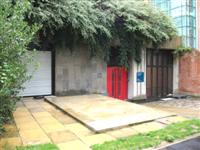
243679No time to post anything energetic today, so I just thought I’d pass on a little snippet of information that not a lot of people know. The BBC TV series Bang Goes the Theory – or at least the part of it that isn’t done on location – is filmed in the building shown on the left, the Accelerator Building, located just behind Pevensey 2 at the University of Sussex, where the Department of Physics & Astronomy is based (and wherein my own office is located). It’s actually quite a large space, extending underneath a car park, which was (as its name suggests) built to house a linear accelerator (which is no longer there). The building is currently leased out to the BBC by the University, but perhaps before too long it might once again be used for physics…